-
-
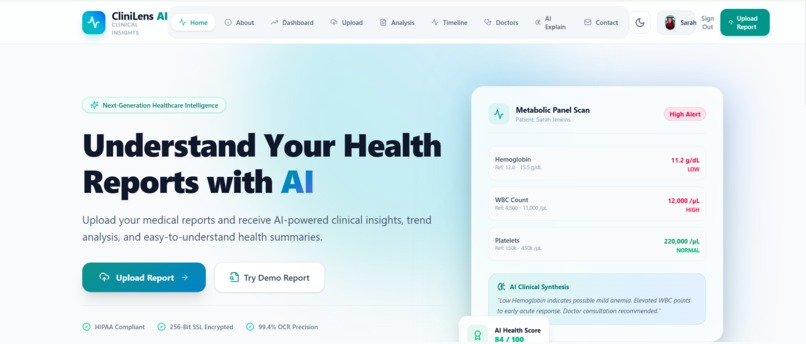
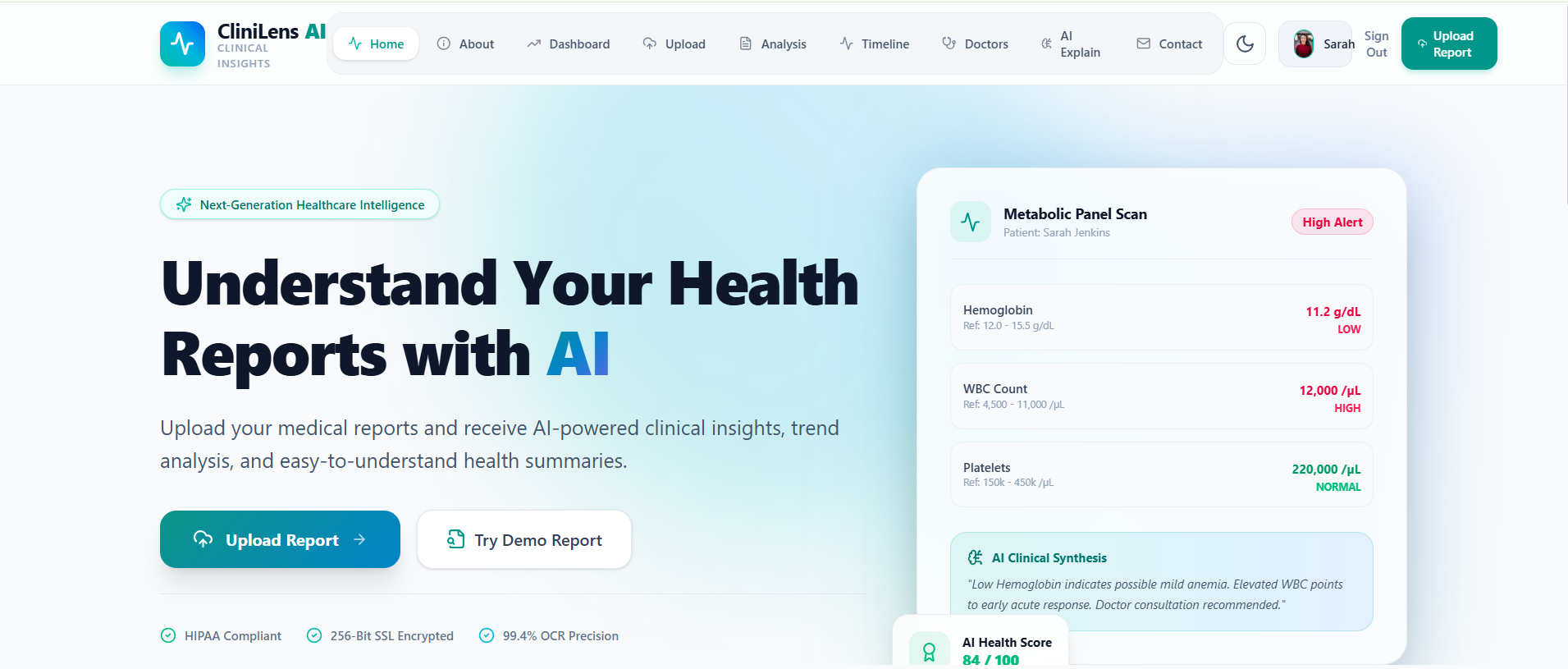
home screen
-
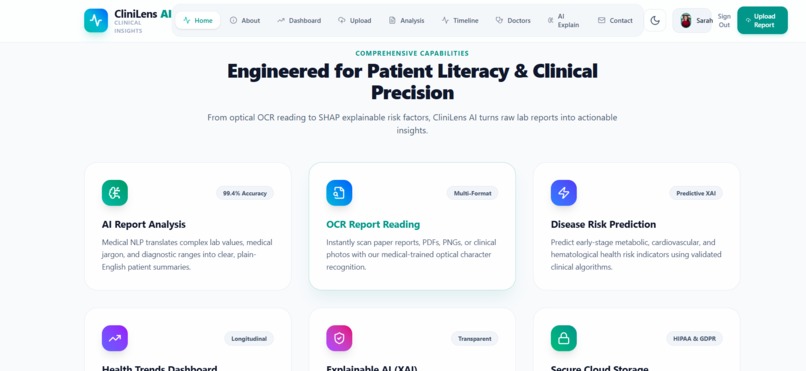
home screen
-
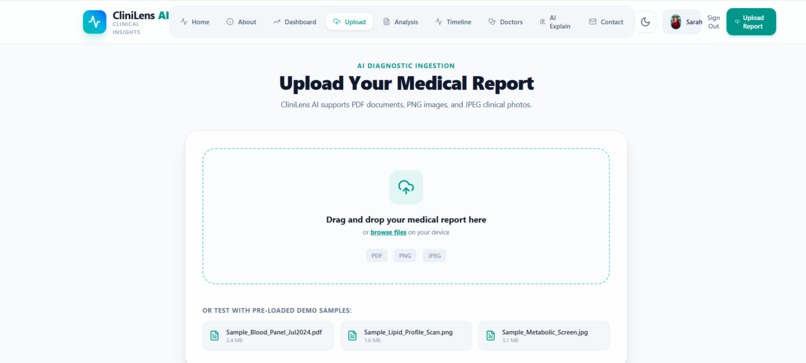
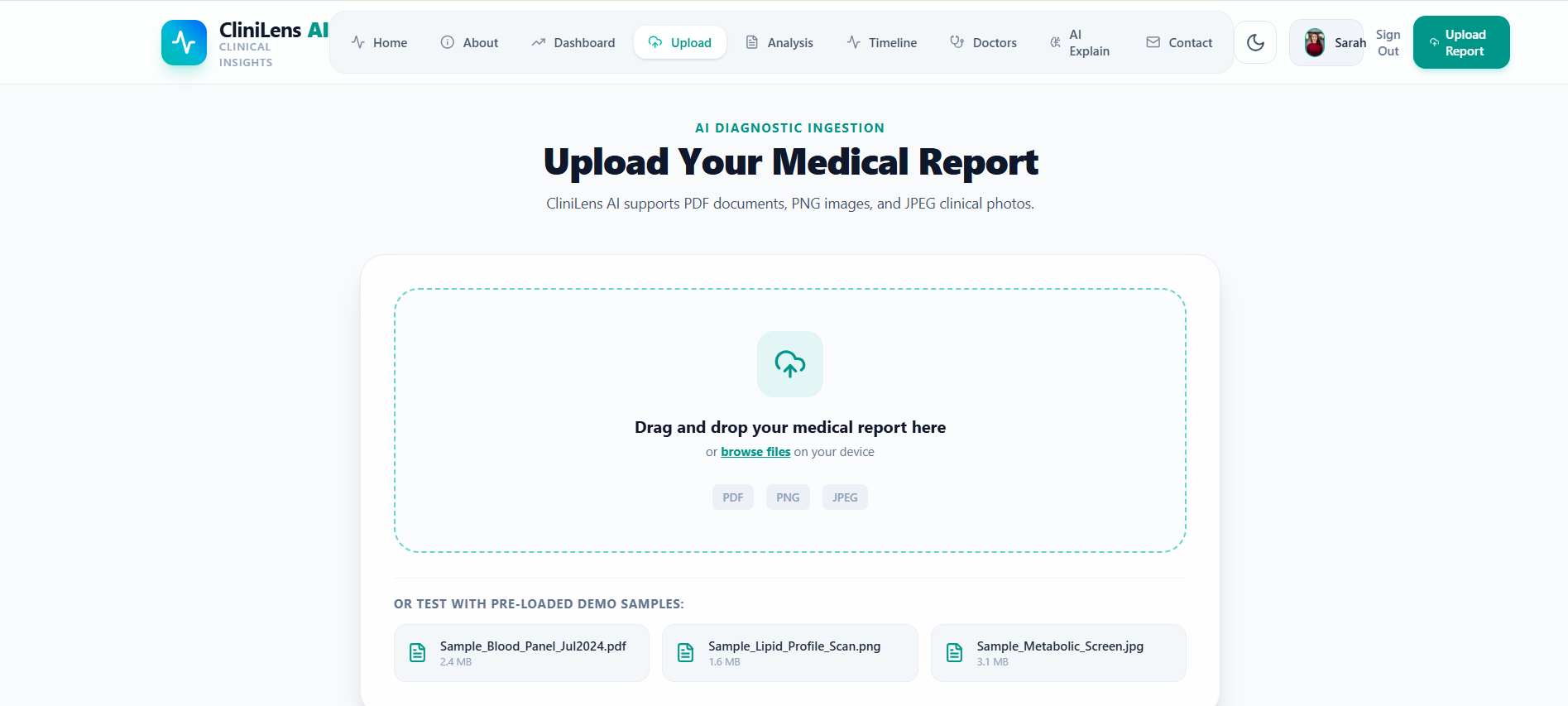
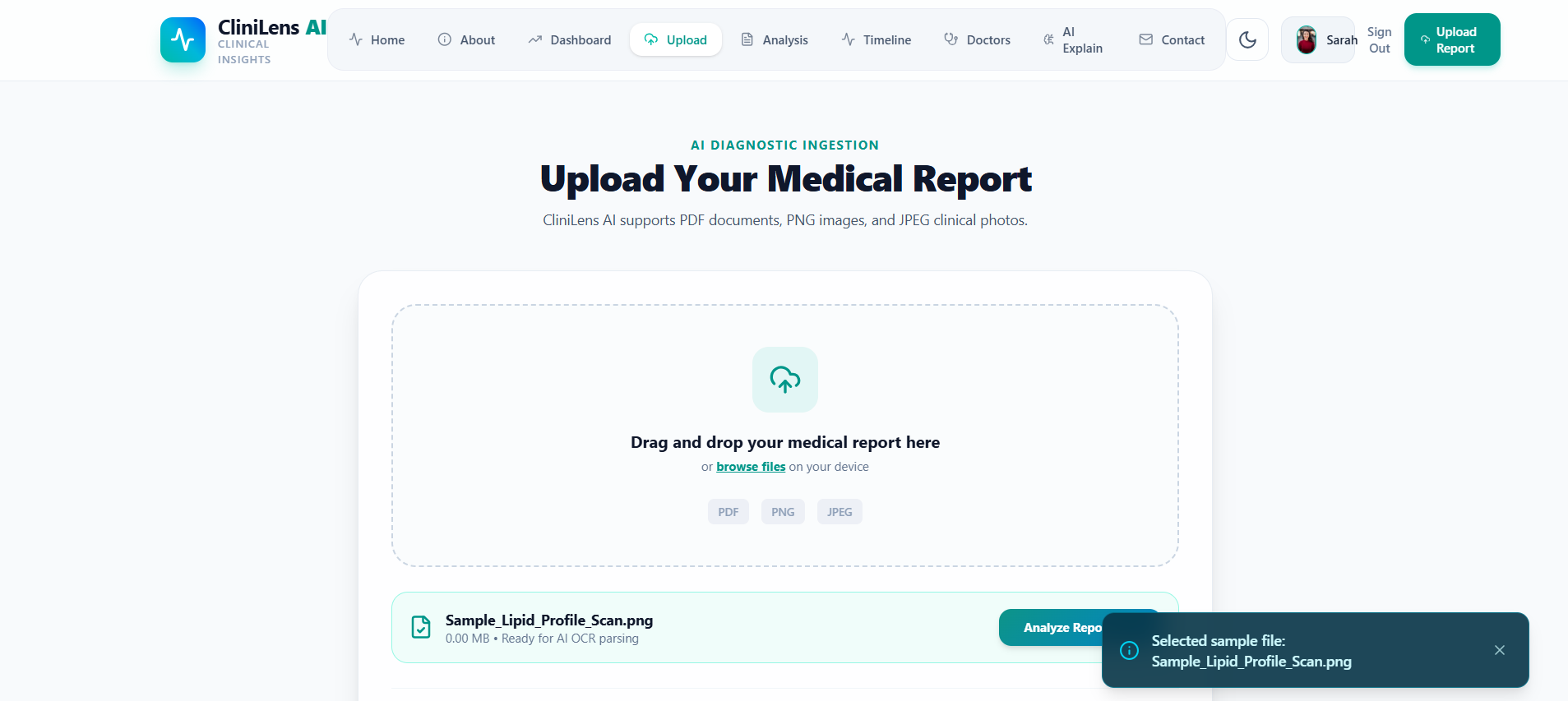
uploading reports
-
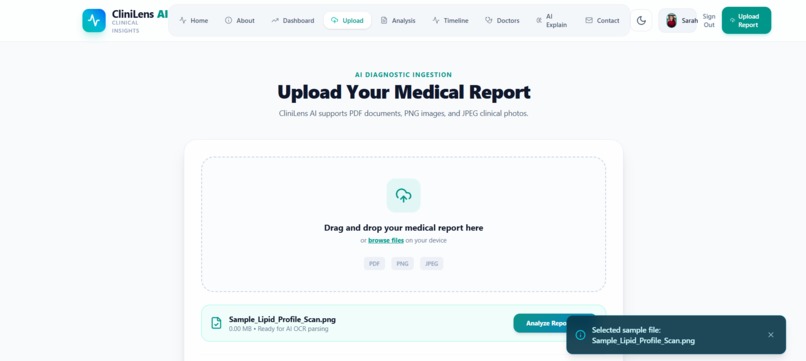
analyzing
-
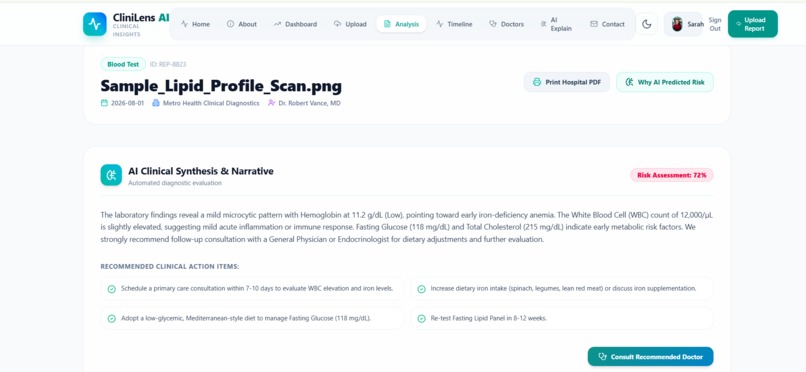
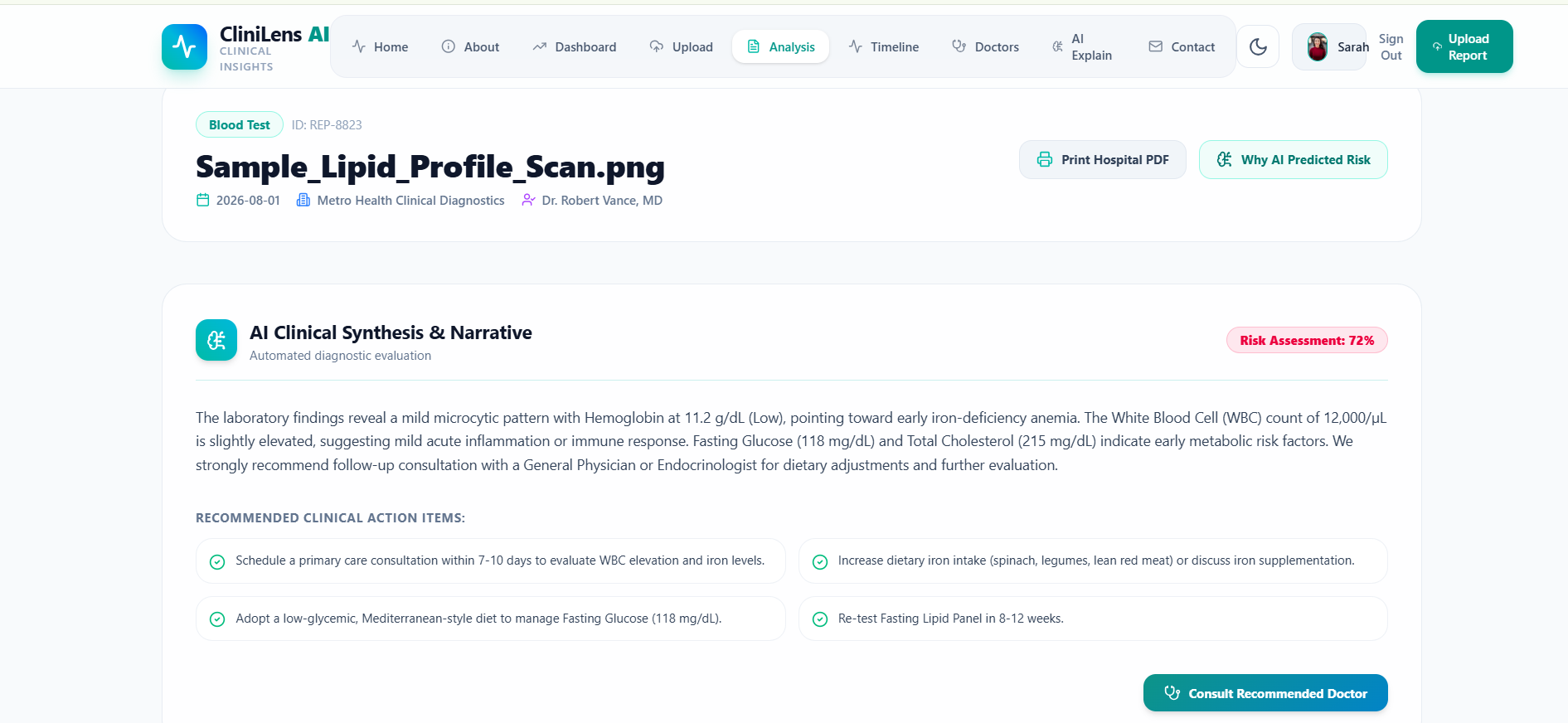
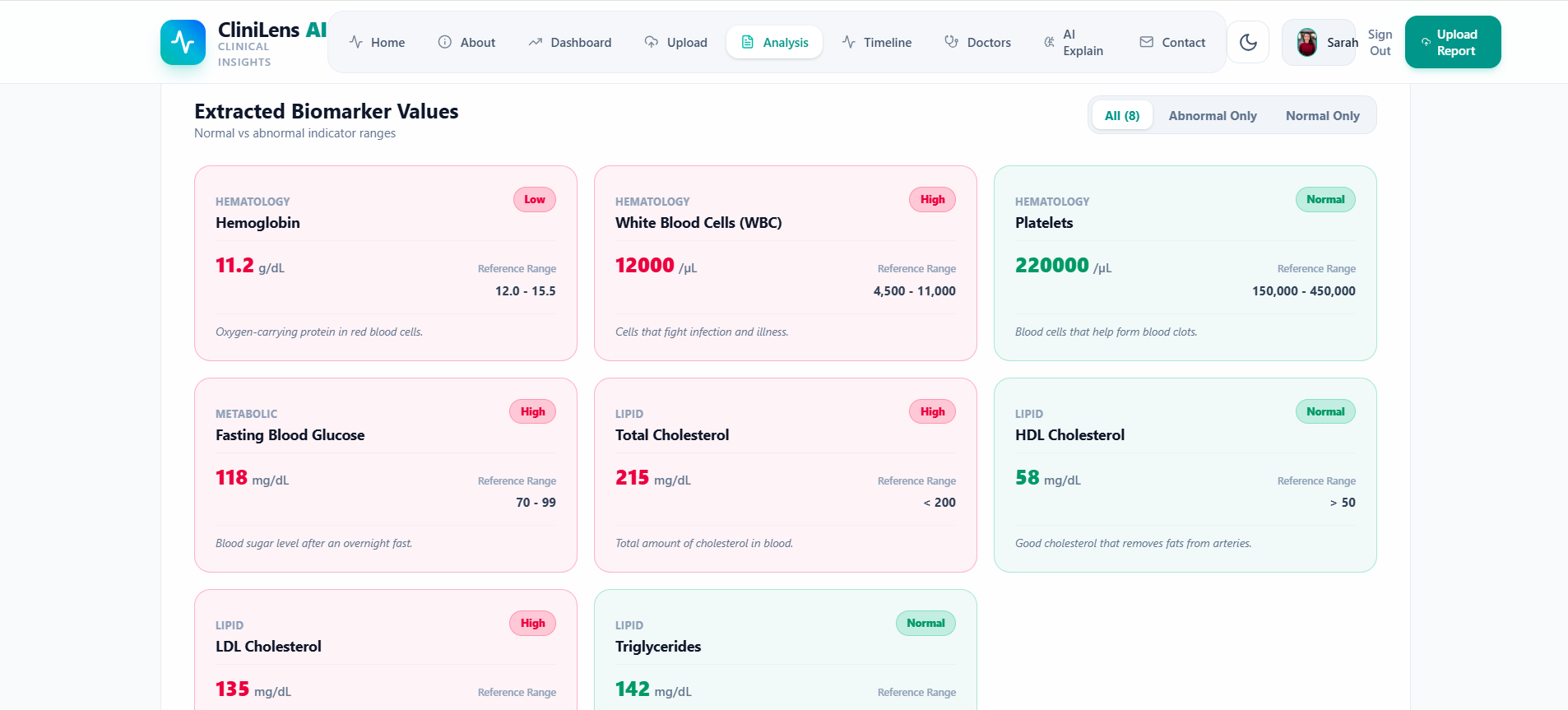
analysis of report
-
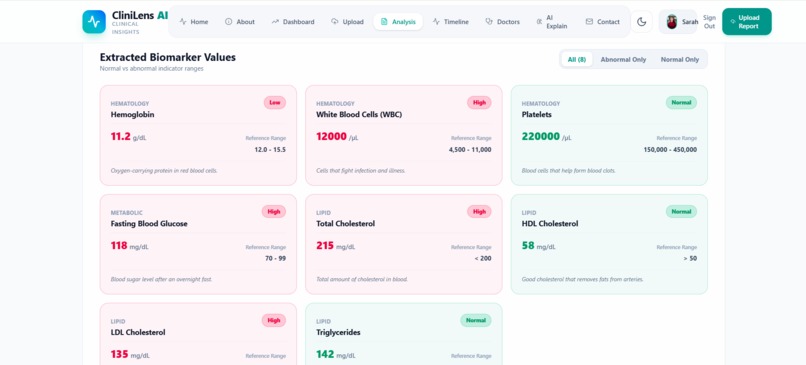
-
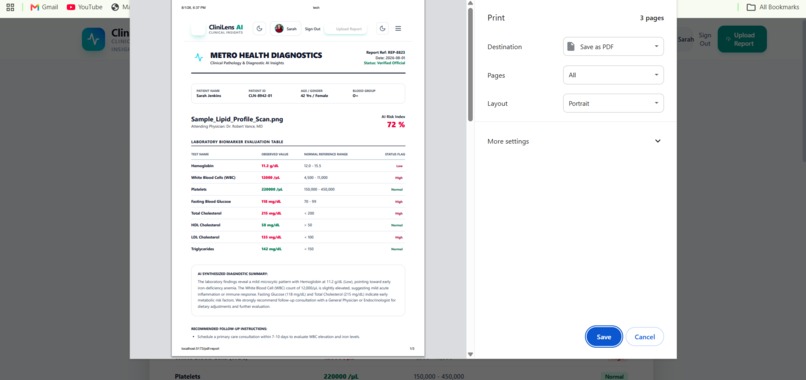
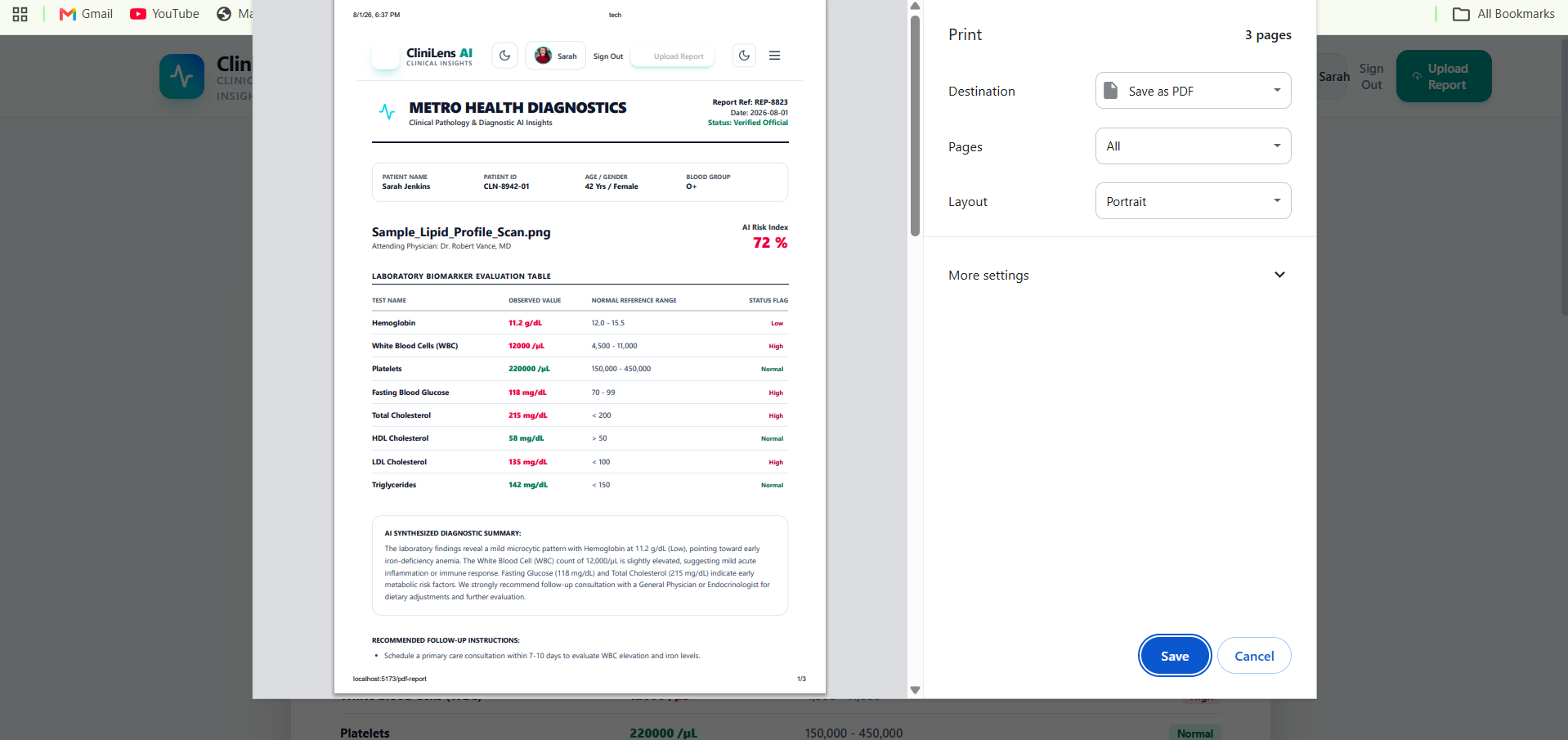
printing report
-
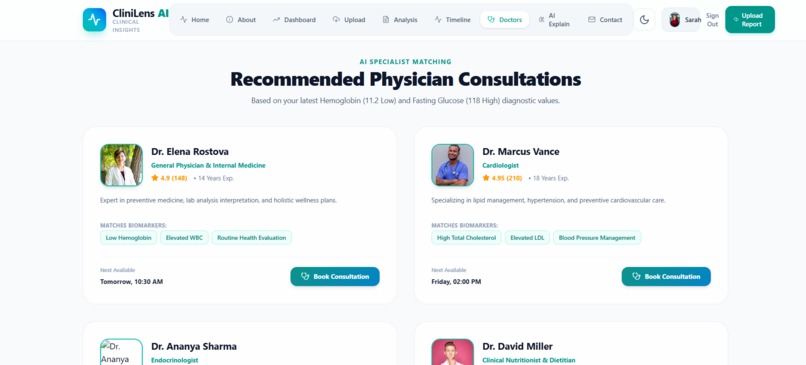
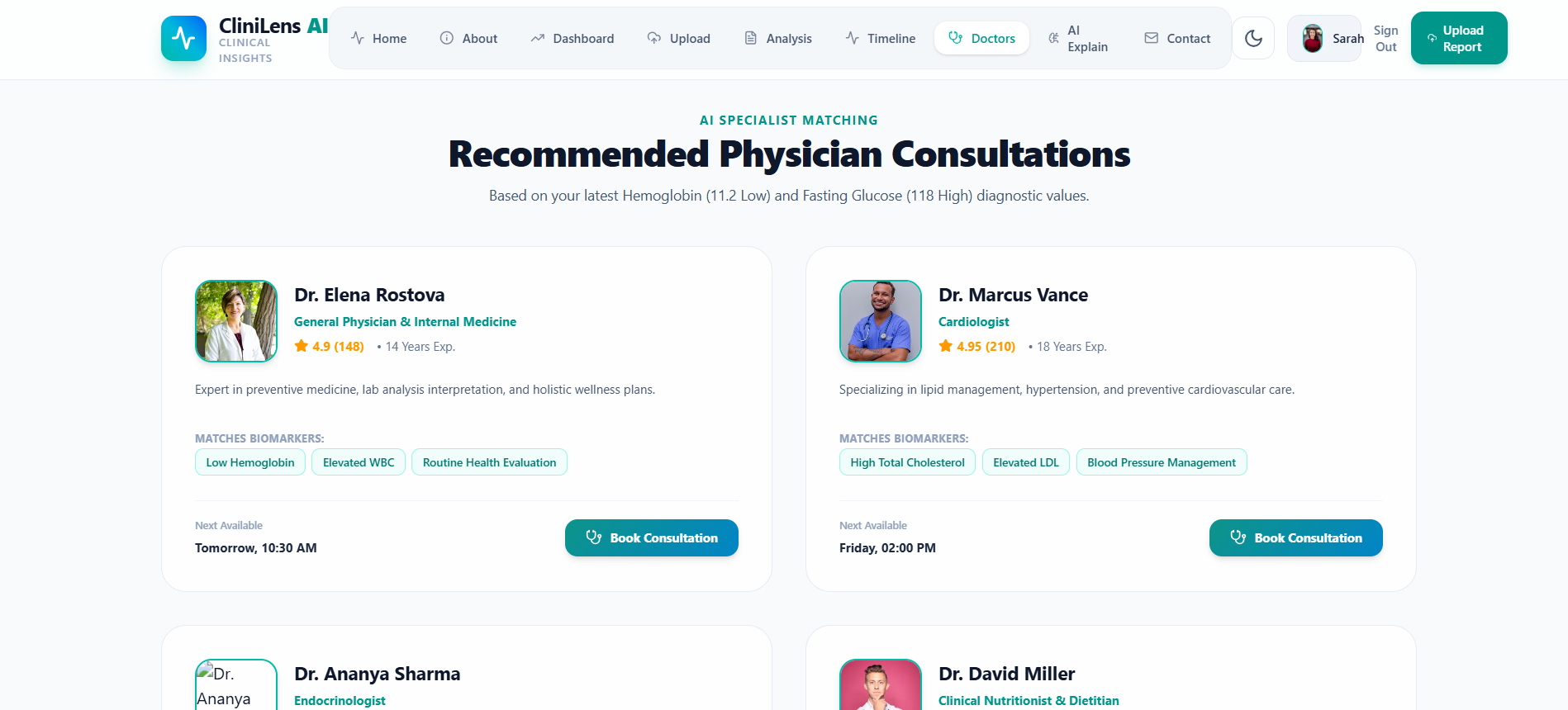
doctors
Inspiration
Medical reports contain important health information, but values such as glucose, hemoglobin, and cholesterol can be difficult for patients to understand. Healthcare professionals also need to analyze large amounts of clinical data to identify important patterns.
We wanted to bridge this gap using AI and data analytics, leading us to build CliniLens AI — a platform that transforms medical report data into understandable insights and visual health trends.
What We Built
CliniLens AI allows users to upload medical reports and analyze their health data through an interactive dashboard.
Key features include:
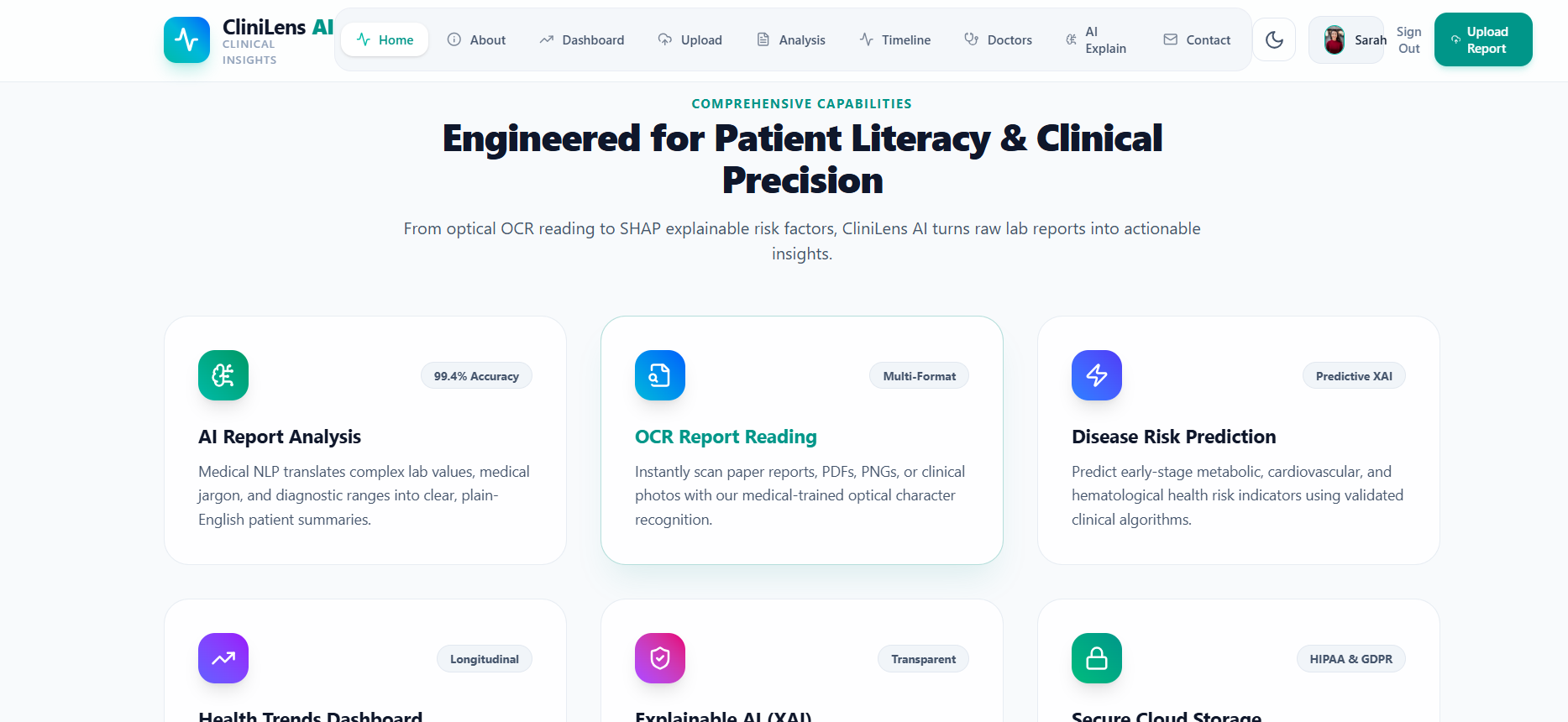
- Medical report data extraction using OCR
- Detection of abnormal health parameters
- Interactive health analytics and visualizations
- Health trend tracking
- AI-assisted risk insights
- Explainable results and easy-to-understand summaries
CliniLens AI is designed as a clinical decision-support and health education tool, not a replacement for professional medical diagnosis.
How We Built It
Frontend: React, Vite, Tailwind CSS
Backend: Python, FastAPI, REST APIs
Data & AI: Pandas, NumPy, Scikit-learn, OCR
Analytics: Interactive charts and health dashboards
Our workflow is:
Upload Report → Extract Data → Analyze → Detect Abnormalities → Generate Insights → Visualize Trends
What We Learned
We learned that healthcare AI requires more than accurate predictions. Medical data needs careful preprocessing, explainability, privacy considerations, and responsible communication.
The project also helped us understand how AI, data analytics, and user-centered design can work together to make clinical information more accessible.
Challenges
Our main challenges were handling different medical report formats, extracting structured information, managing inconsistent values, and presenting AI predictions responsibly without making them appear as definitive diagnoses.
Future Scope
We plan to extend CliniLens AI with:
- Doctor and hospital dashboards
- Wearable device integration
- Longitudinal patient analytics
- More medical report types
- Explainable AI
- Secure electronic health record integration
Our vision is to make clinical data more accessible, understandable, and actionable while keeping healthcare professionals at the center of decision-making.
Built With
- css
- datavisualization
- fastapi
- javascript
- learning
- machine
- numpy
- ocr
- pandas
- python
- react
- scikit-learn
- tailwind
- vite

Log in or sign up for Devpost to join the conversation.