
About the Project: ClinicStream
AI-powered patient feedback and review automation for modern clinics
Inspiration
While talking to people running clinics, I noticed that most had no reliable way to understand how their patients actually felt. Feedback was either not collected, ignored, or buried in inboxes. Happy patients rarely left reviews. Unhappy ones left quietly — or worse, left a bad review later.
I built ClinicStream to solve this gap — to give clinics a lightweight system to:
• Collect patient feedback right after a visit
• Use AI to extract real sentiment, issues, and urgency
• Trigger review requests to happy patients
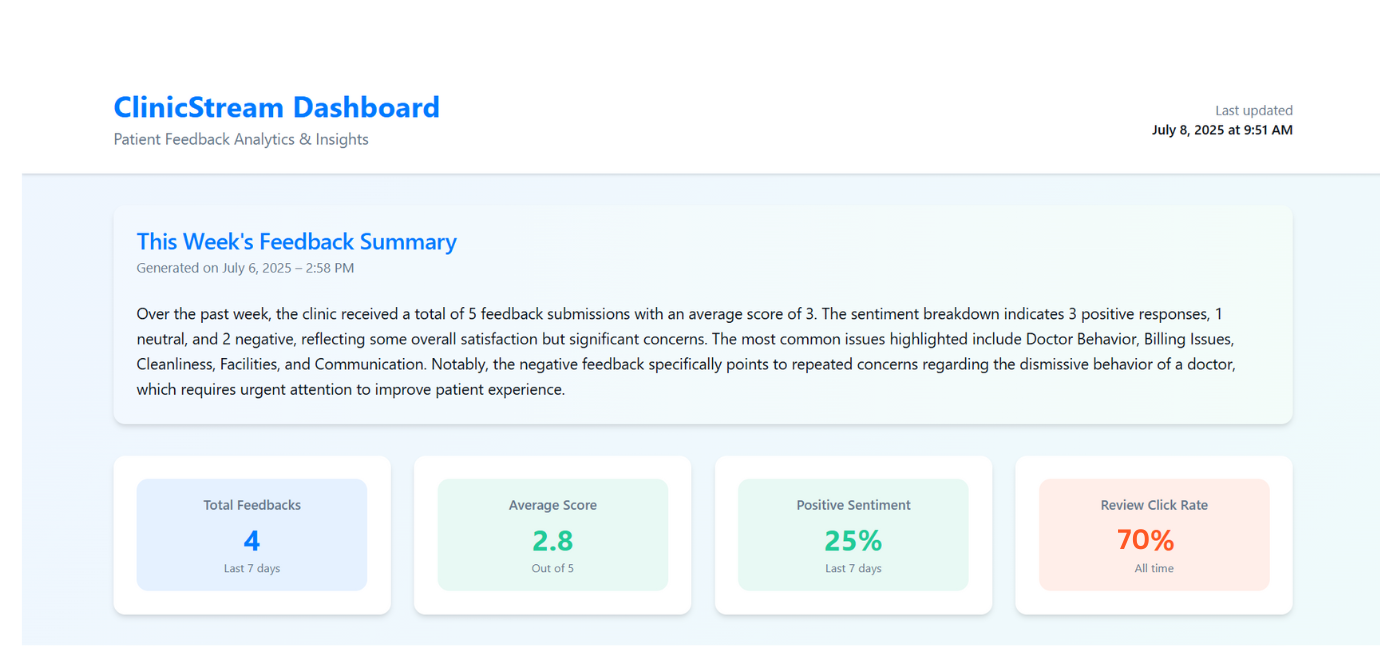
• Generate weekly summaries that reveal what’s working and what’s not
All of this happens automatically, with minimal effort from the clinic’s staff.
What I Learned
• Clinic staff don’t have time to collect or analyze feedback manually.
• Patients respond more when forms are short and focused.
• AI needs structured prompts to deliver clean, useful results — especially for tagging, summarizing, and scoring.
• Even a simple weekly report can surface valuable trends and internal issues early.
How I Built It
Backend & Data
I used Supabase to manage all data — patients, visits, feedback logs, AI insights, and summaries. Each patient entry is tied to a visit date and feedback record. Everything is tracked cleanly and queryable.
Automation I designed all workflows in Make.com to handle the full automation lifecycle:
• Patients who visited in the last 24 hours are automatically sent a feedback form.
• When they respond, their answers are passed to AI via OpenRouter.
• The AI analyzes the sentiment, detects any issues, assigns urgency, and generates a short summary.
• I log the structured results back into Supabase.
• If the sentiment is positive, I trigger a follow-up email requesting a public review.
• Every week, the system generates a summary of new feedback, issues, and patterns.
AI Integration
I wrote carefully structured prompts to extract:
• Sentiment (positive, neutral, negative)
• Issue summary (1-line recap from the patient’s comment)
• Urgency level (low, medium, high)
• Tags (either selected by the patient or inferred by AI)
This transforms raw comments into structured insight that clinics can actually use.
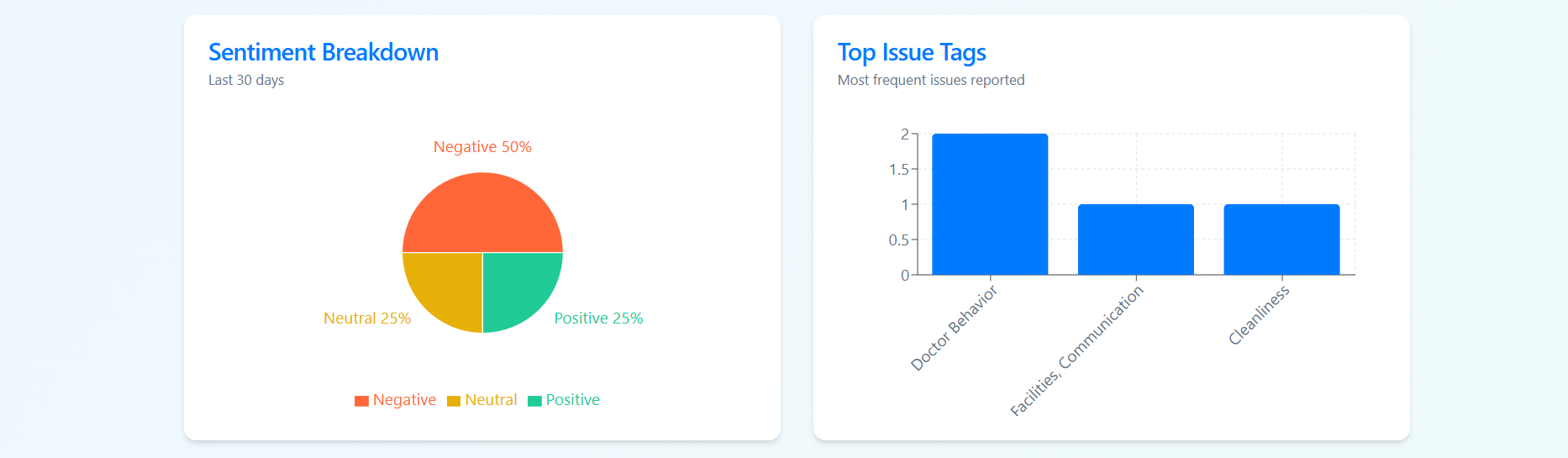
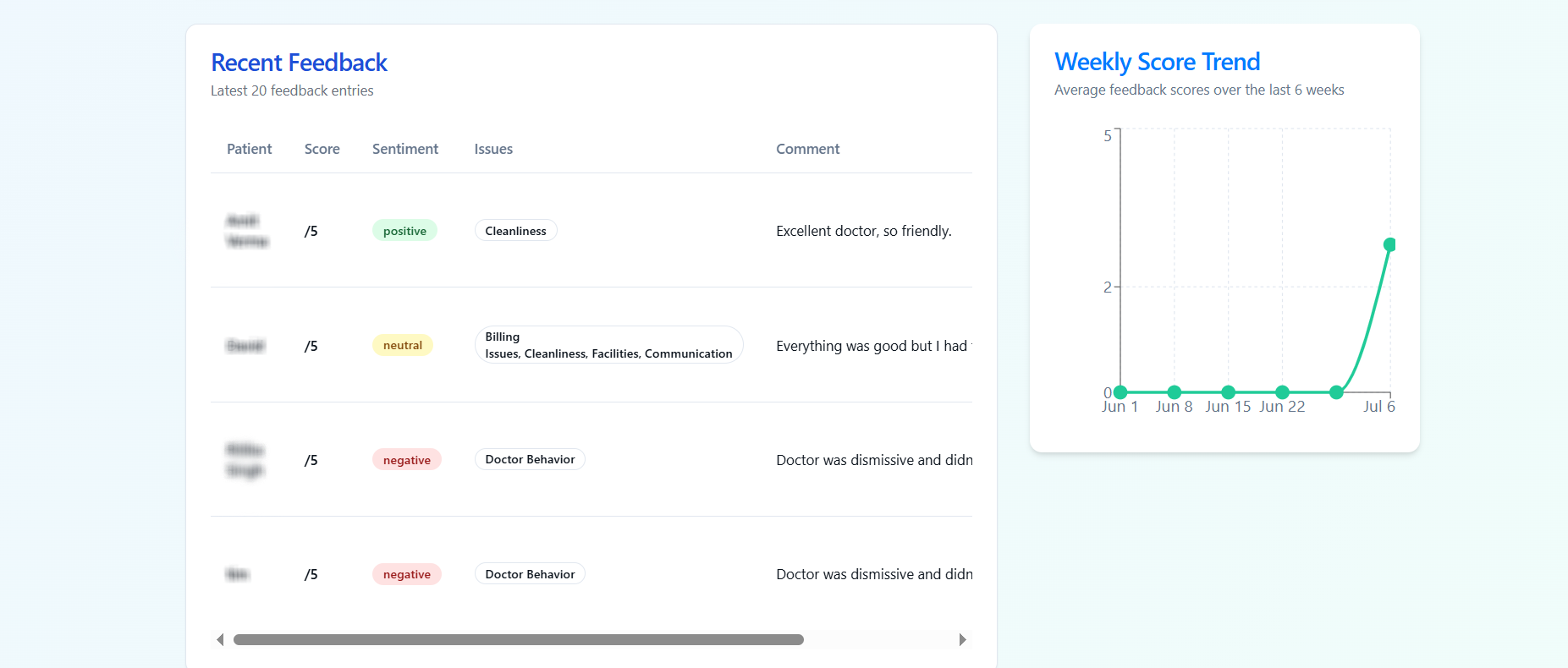
Dashboard I built a visual dashboard that connects directly to Supabase. It shows:
• Recent feedback
• Review request click-through rates
• Weekly summaries
• Tag and sentiment breakdowns
It’s simple, actionable, and requires zero training to understand.
Challenges I Faced
• Formatting data types correctly for Supabase, especially for arrays like issue_tags from the AI output.
• Designing prompts that could distinguish between user-selected tags and AI-generated summaries.
• Webhook error handling and branching logic in Make.com took time to get right.
• Producing a polished demo video while building the entire system in parallel was intense, but rewarding.
Future Improvements
• Add a conversational AI agent as an alternative to forms
• Alert clinic staff when high-urgency feedback is detected
• Add filters by doctor, sentiment, or issue tag
• Generate longer-term trend reports
• Introduce a feedback-to-reputation scoring model
Built With
- css
- html
- javascript
- openrouter
- rest
- supabase
- typescript
- webhooks

Log in or sign up for Devpost to join the conversation.