-
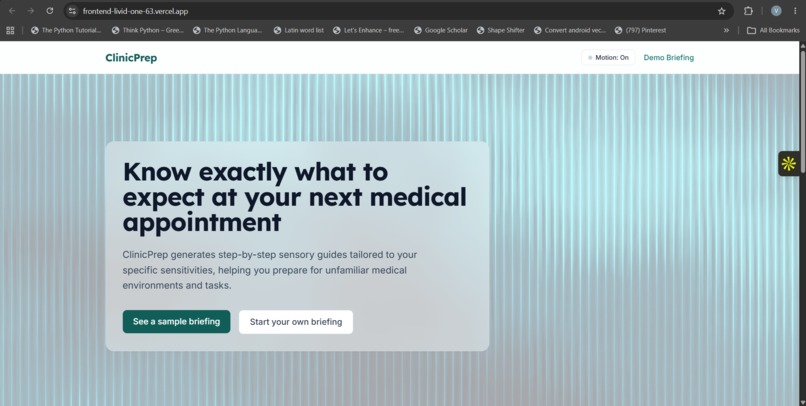
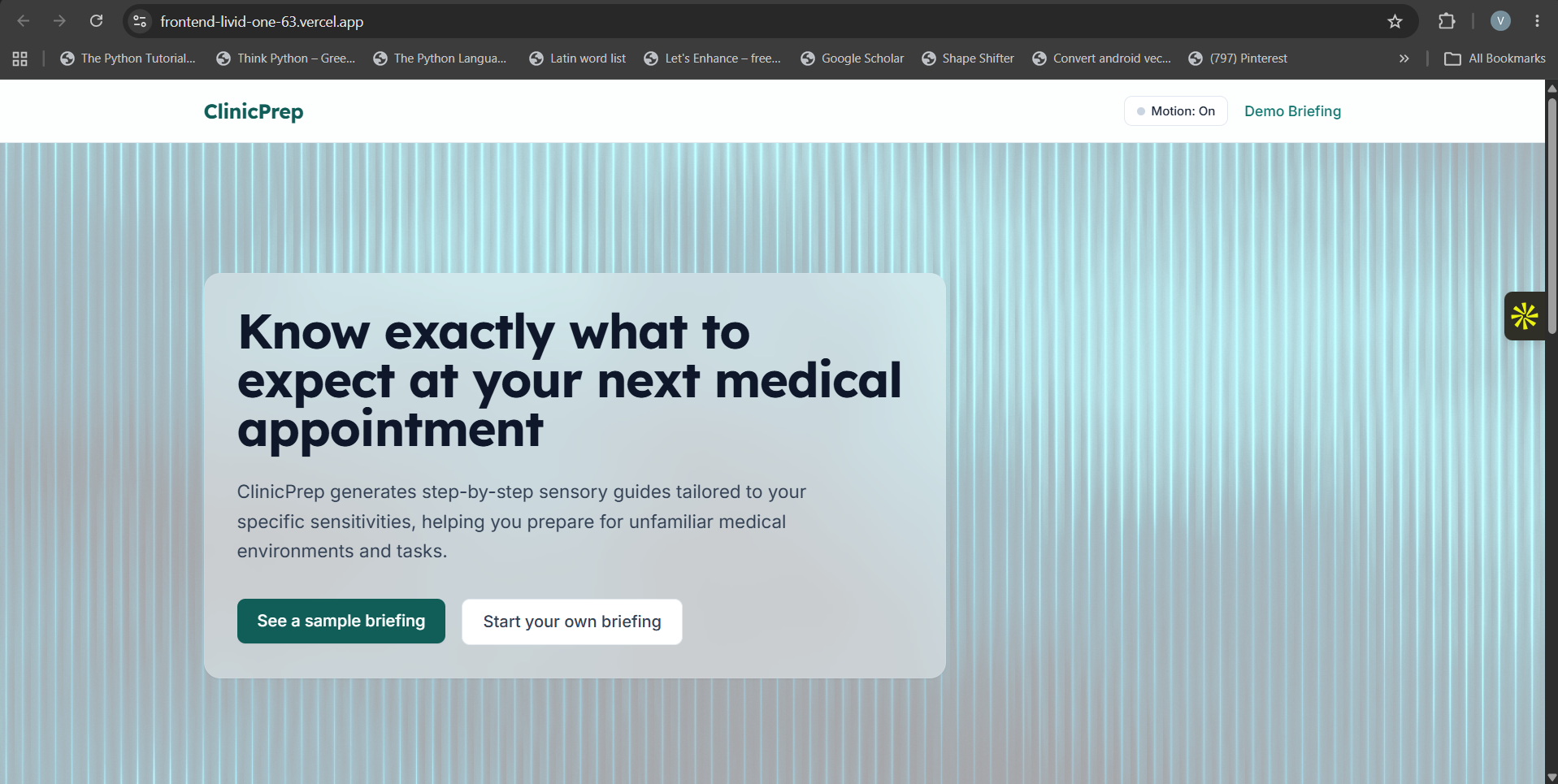
Landing page hero
-
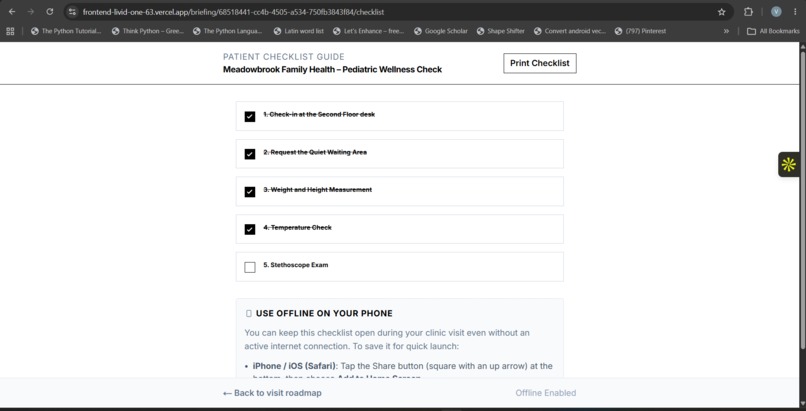
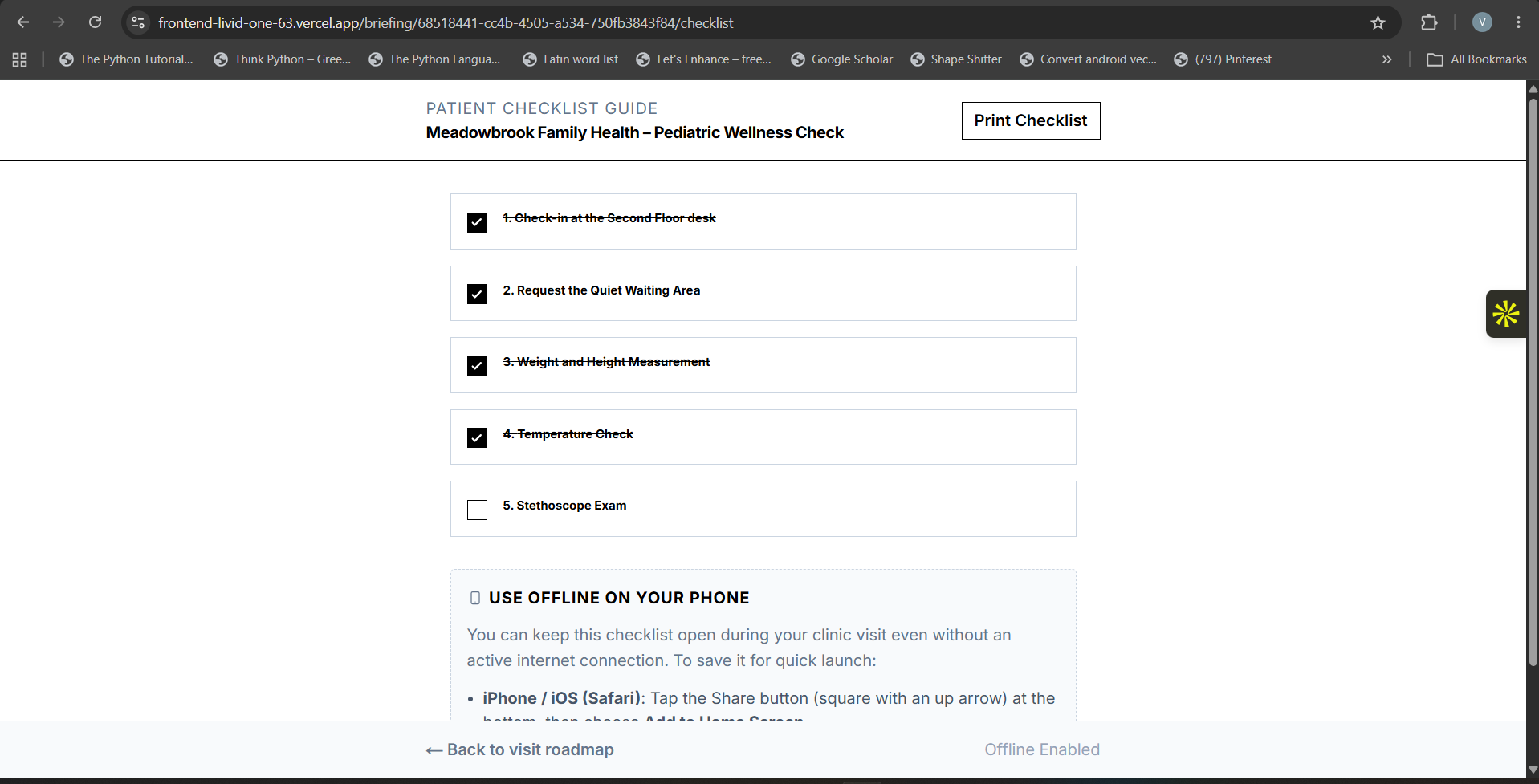
Checklist/print view
-
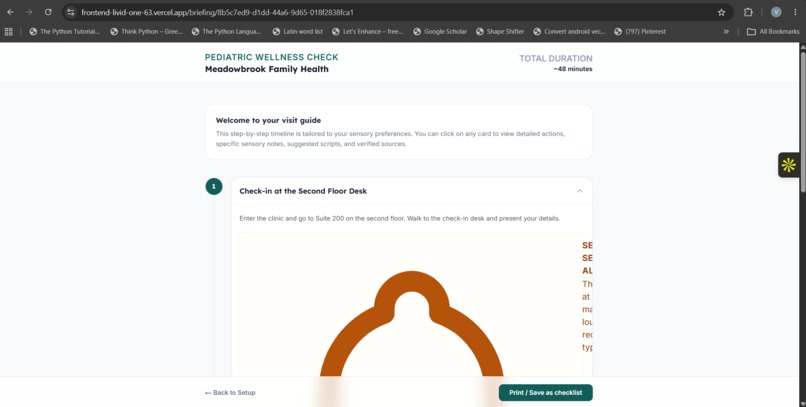
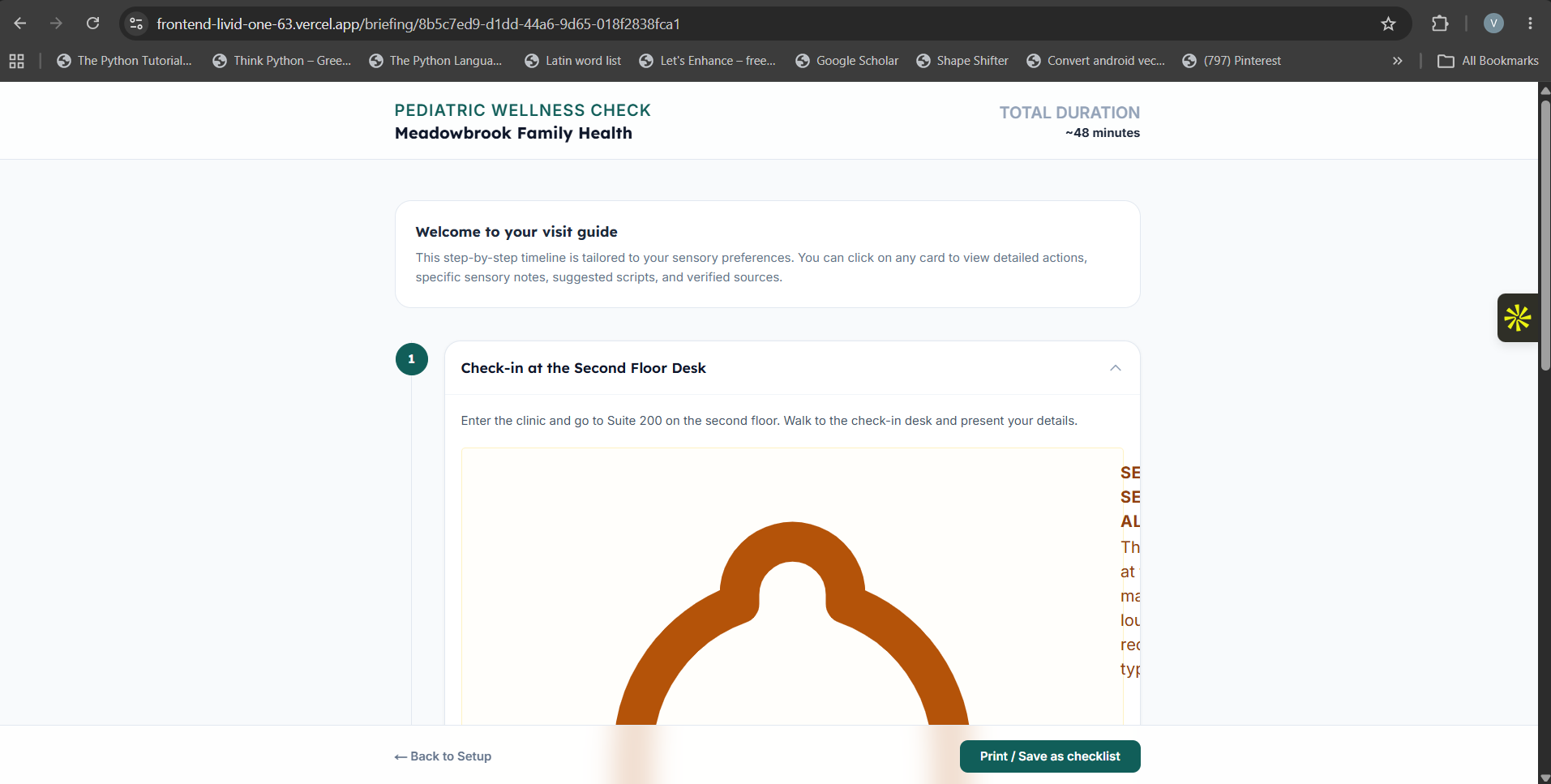
Generated briefing view
Inspiration
Unfamiliar medical appointments are one of the most common, least-discussed barriers to healthcare access for autistic and neurodivergent patients. It's rarely the medical care itself that causes anxiety or appointment avoidance — it's the unpredictability: not knowing the sequence of steps, the sensory environment, or the unspoken social scripts expected at check-in. That unpredictability leads to real avoidance of care and worse health outcomes for a population that's already underserved. We wanted to build something that attacks that specific, addressable gap rather than a generic "AI for healthcare" idea.
What it does
ClinicPrep turns a clinic's actual intake process into a personalized, step-by-step pre-visit briefing. A patient fills out a short preference questionnaire (sensory sensitivities, communication style, whether a support person is attending), and Gemini generates a numbered, predictable walkthrough of what to expect — including sensory notes for specific parts of the visit and scripted phrases the patient can use at check-in. Every step is grounded in the clinic's real intake documentation, with source citations, so nothing is invented. The briefing is also available as an offline-friendly, print-ready checklist for the day of the actual visit.
How we built it
Backend: FastAPI, Postgres with pgvector, Gemini via the google-genai SDK for both embeddings and generation. RAG pipeline: clinic intake documents are chunked and embedded on ingestion; briefing generation retrieves the top relevant chunks for a given clinic and appointment type, then Gemini generates a structured ListBriefingStep — if the retrieved documentation doesn't cover something, the model is instructed to say so rather than fabricate a plausible-sounding step. Frontend: Next.js 14, Tailwind, shadcn/ui, with a deliberate calm-UI design system (constrained palette, real typographic hierarchy, and full prefers-reduced-motion support built in from the start) since the target audience is sensory-sensitive by definition. We built the whole thing with an agentic coding workflow (Google Antigravity, Gemini-powered), working through a sequenced set of prompts covering scaffolding, the RAG pipeline, page-by-page UI, and an accessibility pass.
Challenges we ran into
The biggest technical challenge was grounding discipline: making sure the model would explicitly flag gaps in a clinic's documentation instead of generating a confident-sounding but invented step — for a product about reducing unpredictability, a hallucinated step would be actively harmful, not just wrong. We also had to hold a real design tension throughout the build: the product's own thesis is that unpredictability and sensory overload cause harm, which meant every UI decision — including some visually striking effects we experimented with — had to be evaluated against whether it made the patient-facing experience calmer or busier, not just whether it looked impressive. A few effects we tried were deliberately scoped down or kept off the core patient flow entirely for that reason. We also learned the hard way, working under a tight deadline, that agent-reported "verified" and "working in production" aren't the same thing — we caught at least one case where a visual feature was reported as implemented but wasn't actually rendering, which reinforced that browser-verified screenshots have to be the bar, not a written summary.
Accomplishments that we're proud of
Getting a real, traceable RAG pipeline working end-to-end — with source citations a patient or clinician can actually check — in the time available, without cutting corners on the accessibility requirements that matter most for this specific audience. We're also proud of treating the MVP/roadmap boundary honestly in the product itself rather than overclaiming what a hackathon build can responsibly do in a healthcare context.
What we learned
That designing "for" a sensory-sensitive audience only works if the product's own interface follows the same rules it's asking the world to follow — calm, predictable, literal. It's easy to say that and much harder to hold the line on it when a flashier UI choice is sitting right there. We also learned to verify AI agent output empirically rather than trust a written report, especially for anything visual or interaction-based.
What's next for ClinicPrep
Expand beyond a single demo clinic to a real multi-clinic pipeline, including the open-source CLI for clinics to self-onboard their own intake documentation without our involvement. Caregiver/child dual-preference profiles for pediatric use. Voice-mode briefing playback for patients who prefer audio over reading. Partnering with an actual clinic for a pilot to validate that the grounding and briefing quality hold up against real-world intake variability, not just our synthetic demo document.
Built With
- docker
- fastapi
- gemini
- google-antigravity
- next.js
- pgvector
- postgresql
- python
- shadcn/ui
- tailwind-css
- typescript
- vercel
- webgl


Log in or sign up for Devpost to join the conversation.