-
Message Home
-
-
-
-
Inspiration
In India, millions of patients leave their doctor's clinic every day holding a prescription they can't fully read or understand. Medical terms like "hypertension," "Type 2 Diabetes Mellitus," or "Metformin 500mg BD" mean little to a patient who speaks Tamil at home, has a 6th-grade education, and just wants to know: "Doctor saab, mujhe kya karna hai?" This communication gap is one of the biggest reasons for poor medication adherence and repeat hospital visits in Tier 2 and Tier 3 Indian cities. Doctors don't have the time to explain everything five times a day, and patients are often too hesitant to ask. We built ClinicFlow AI because we believe healthcare isn't complete until the patient actually understands what comes next. If a patient can't read their treatment plan, the prescription is just paper.
What it does
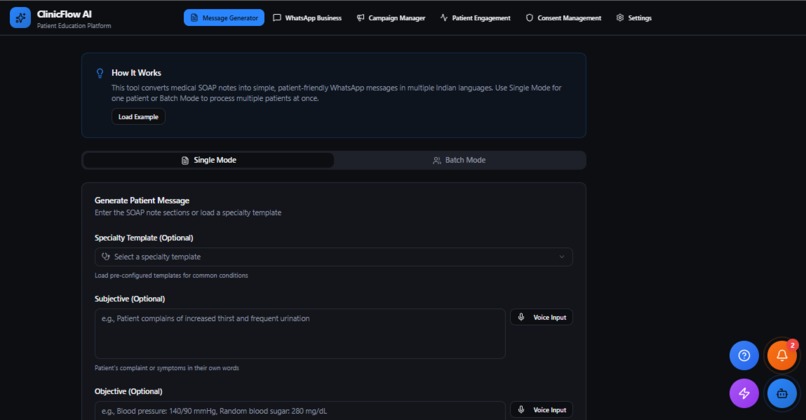
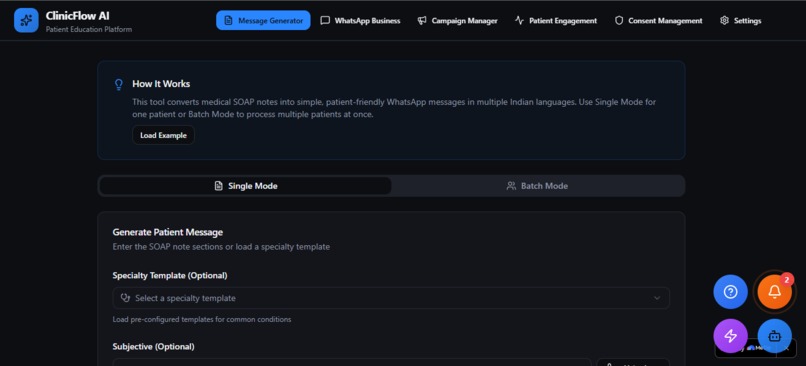
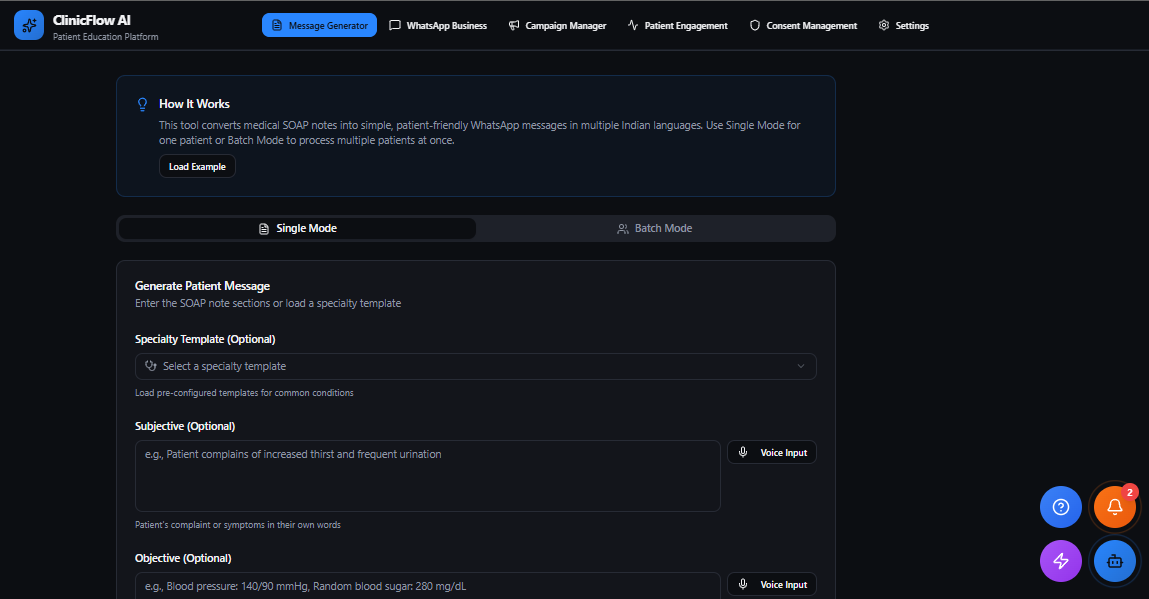
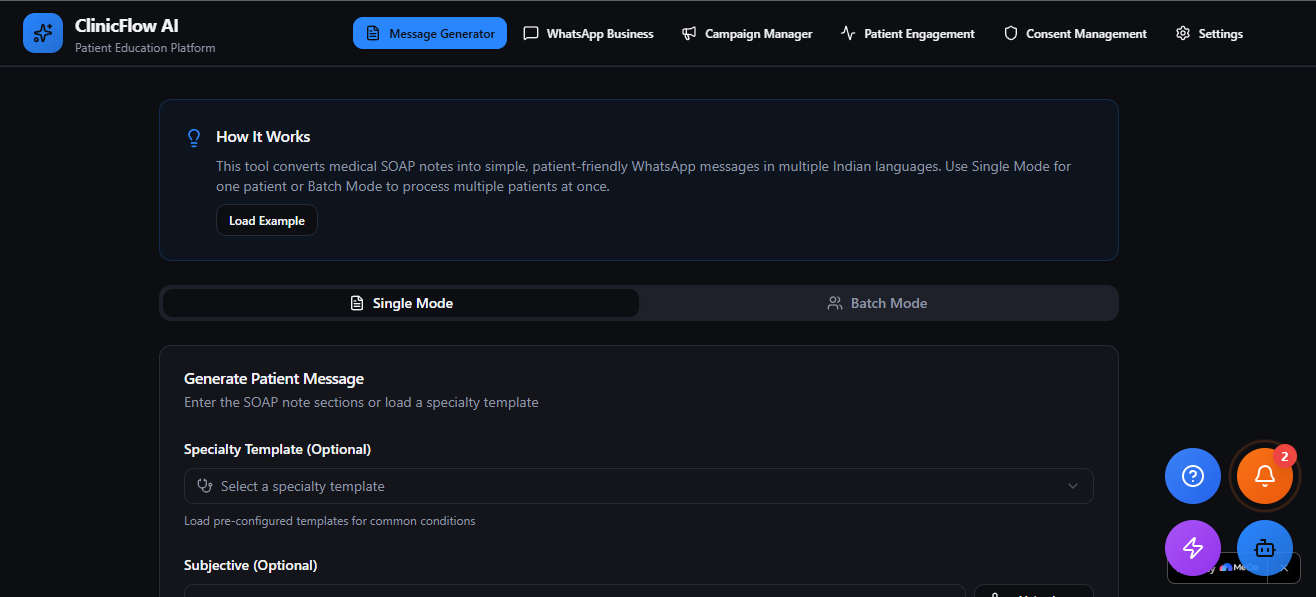
ClinicFlow AI is a clinical workflow copilot that turns a doctor's SOAP notes into simple, patient-friendly WhatsApp messages — in the patient's own language. Here's the flow:
Doctor inputs the Assessment and Plan sections from their SOAP notes. Selects a language — Hinglish, Tamil, Telugu, Bengali, or Marathi. AI generates a simplified message at a 6th-grade reading level, with emoji-formatted instructions (💊 for medications, 🩸 for lab tests, 🚶 for lifestyle changes). Doctor reviews and edits the draft, sees a confidence score, and approves it. Message is ready to send via WhatsApp — clear, accurate, and in the patient's language.
It also supports batch mode using the Gemini API batch endpoint, so doctors can process multiple patient messages at once and save on API costs. Every approved message is logged with the original AI draft for audit and model improvement.
How we built it
Frontend: React + Tailwind for a clean, mobile-friendly clinician interface with single and batch modes. Backend: Node.js / Python service handling input validation, prompt construction, and response post-processing. LLM: Google Gemini API for generation, with the batch endpoint for cost-efficient multi-patient processing. Temperature set to 0.1 for high factual consistency. Structured output: Predefined JSON schema enforced on every LLM response, with automatic rejection and regeneration if the output is malformed. Multilingual support: Carefully crafted prompts and few-shot examples for each of the 5 languages, preserving medical accuracy while shifting tone and script. Safety layer: A non-diagnostic guardrail that prevents the AI from inferring diagnoses not present in the input, plus a mandatory AI disclaimer appended to every message. Audit logging: Both the original LLM draft and the doctor-approved final version are saved with language metadata for accountability and future fine-tuning.
Challenges we ran into
Translating medical terminology across 5 languages without losing clinical accuracy. "Hypertension" becomes "high blood pressure" easily in English, but finding the right colloquial term in Tamil or Bengali that a low-literacy patient understands took multiple iterations. Hinglish is not a script — it's a vibe. Getting the LLM to write conversational Hindi in English letters (and not slip into pure Hindi or pure English) needed careful prompt engineering and example tuning. Hallucination risk in medical content is unacceptable. We had to enforce strict JSON schemas, low temperature, and a non-diagnostic guardrail to make sure the model never invents diagnoses or dosages. Reading-level calibration. Asking an LLM to write at a "6th-grade level" is vague. We had to define it concretely with sentence length, vocabulary constraints, and example outputs per language. Batch processing reliability. Handling partial failures gracefully — so one bad input doesn't break the whole batch — required careful error handling and per-message retry logic.
Accomplishments that we're proud of
Built a working multilingual clinical copilot covering 5 Indian languages in a single platform — most existing tools support English only or one regional language at best. Designed a doctor-in-the-loop workflow that keeps clinicians in control. The AI assists; it never replaces clinical judgment. Implemented a non-diagnostic guardrail and mandatory AI disclaimer, making the system safe to use in real clinical settings. Integrated Gemini's batch API to dramatically reduce per-message costs — making the tool viable for small clinics on tight budgets. Created an audit trail that captures both the AI draft and the doctor's edits, which can power future model improvements and meet compliance needs.
What we learned
Healthcare AI is 10% model, 90% workflow. The hard part wasn't generating the message — it was designing a system that doctors actually trust and want to use during a busy clinic day. Plain language is harder than it looks. Translating a medical instruction into something a patient understands is a craft, not a transformation. Cultural context matters as much as language. Prompt engineering for Indic languages is its own discipline. What works in English prompts can completely fail in Tamil or Marathi without language-specific few-shot examples. Safety guardrails are features, not constraints. The disclaimer, schema validation, and doctor approval gate aren't slowing the product down — they're what make it deployable in real clinics. Cost matters in emerging markets. Tier 2/3 clinics can't pay enterprise SaaS prices. Batch processing wasn't just a nice-to-have; it was essential for the business model to work.
What's next for ClinicFlow AI: Turning Doctor's Notes into Patient-Friendly
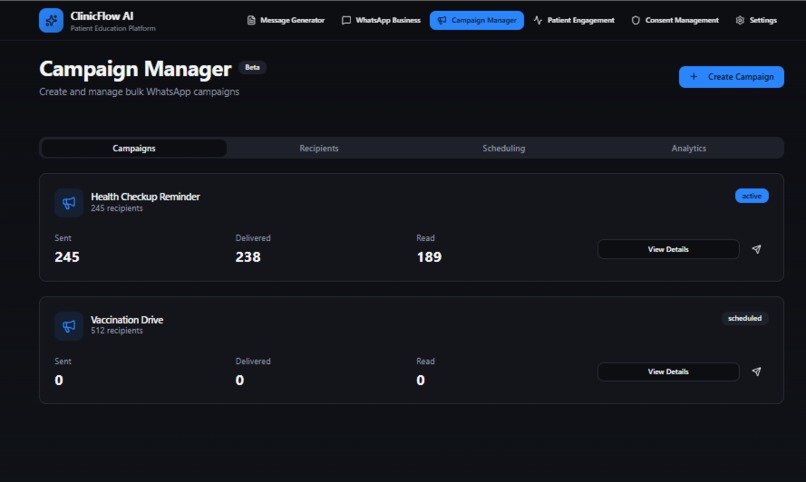
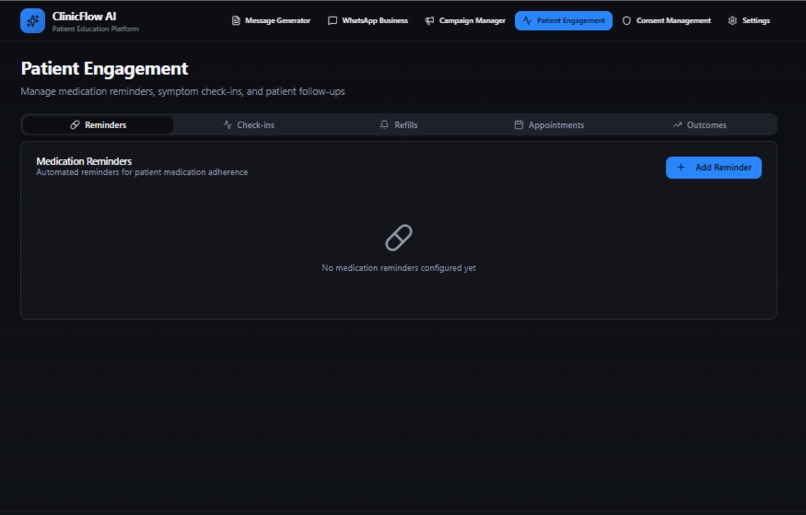
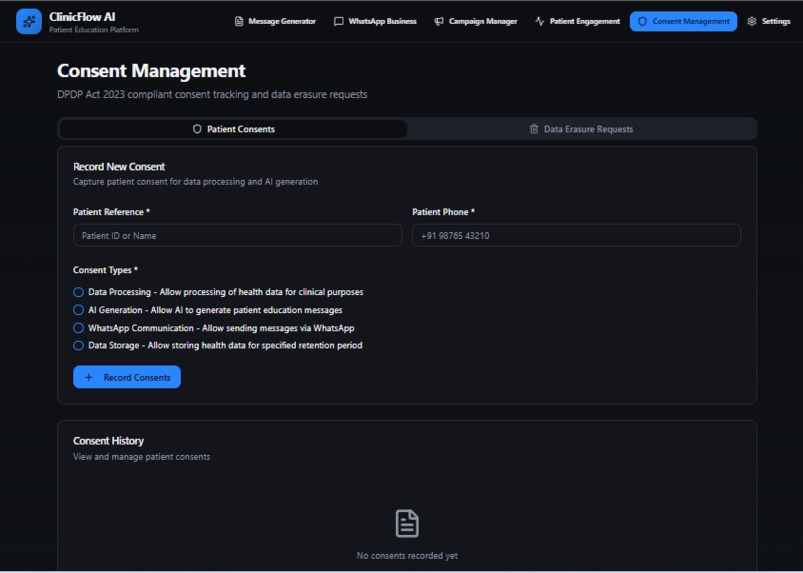
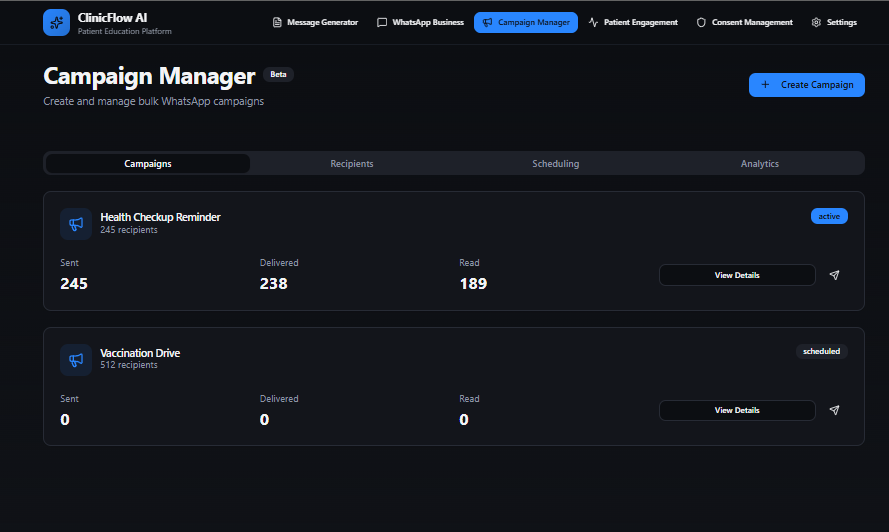
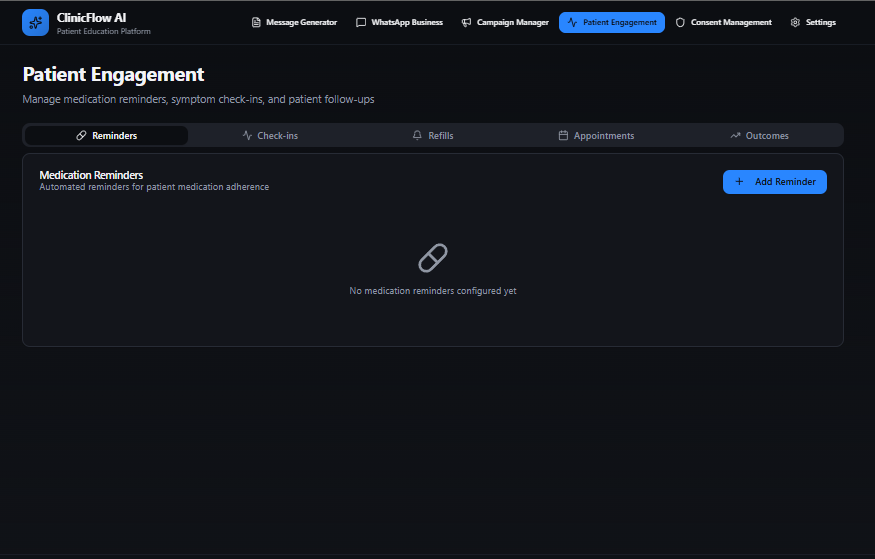
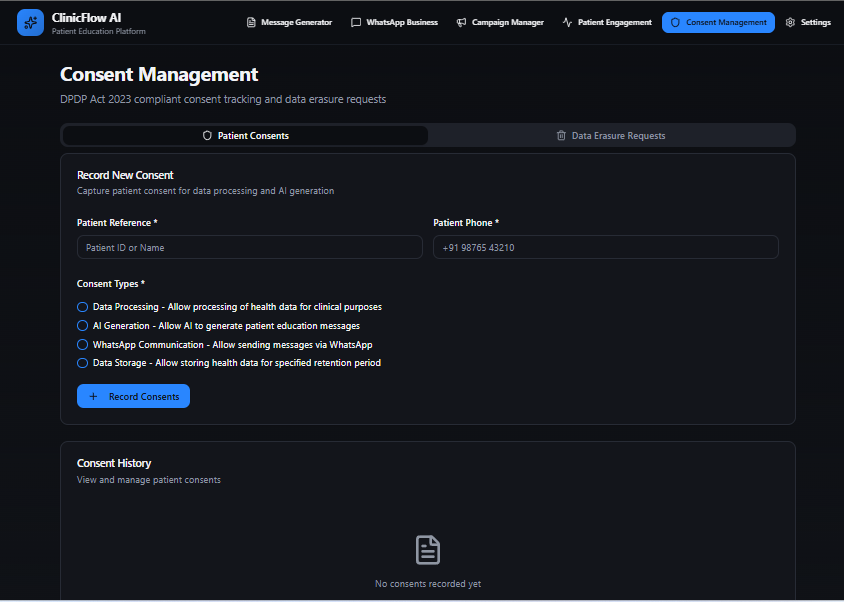
Voice input in Indic languages so doctors can dictate notes instead of typing — the #1 adoption blocker we heard from clinicians. WhatsApp Business API integration to actually send messages directly from the platform, not just generate them. More languages: Kannada, Malayalam, Gujarati, Punjabi, Urdu, and Odia to cover the rest of India. Voice messages and visual medication schedules for low-literacy patients who learn better through audio or images. Drug interaction and dosage safety checks before message generation, using Indian drug databases. Patient engagement loop: medication reminders, refill alerts, and symptom check-ins via WhatsApp. ABDM (Ayushman Bharat Digital Mission) and EHR integration to fit into the broader Indian digital health ecosystem. DPDP Act compliance with data localization, consent management, and tamper-proof audit logs — making ClinicFlow AI enterprise- and hospital-ready.
Built With
- gemini
- javascript
- next.js
- python
- react
- tailwind
- typescript


Log in or sign up for Devpost to join the conversation.