-
-
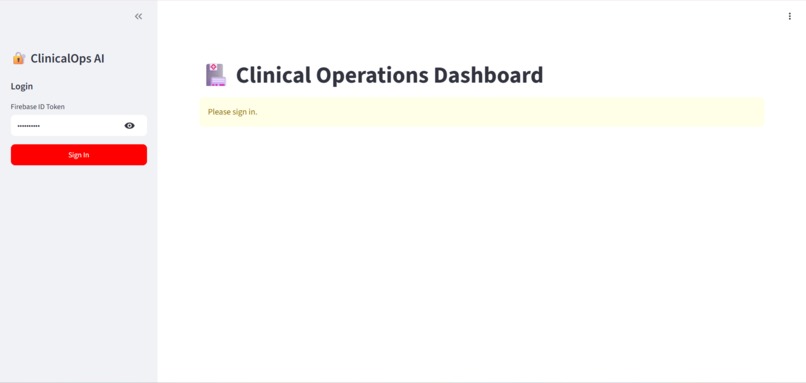
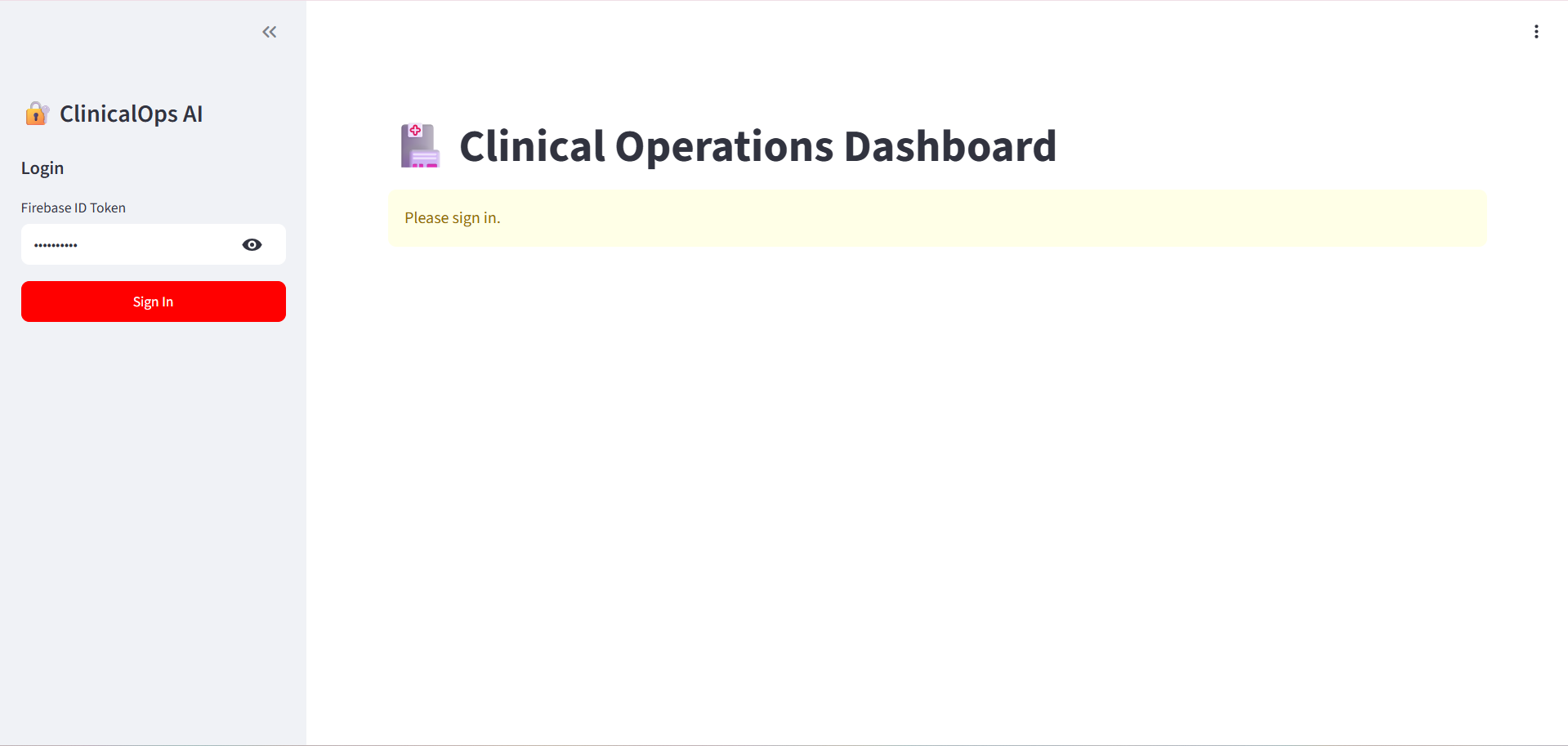
Auth screen
-
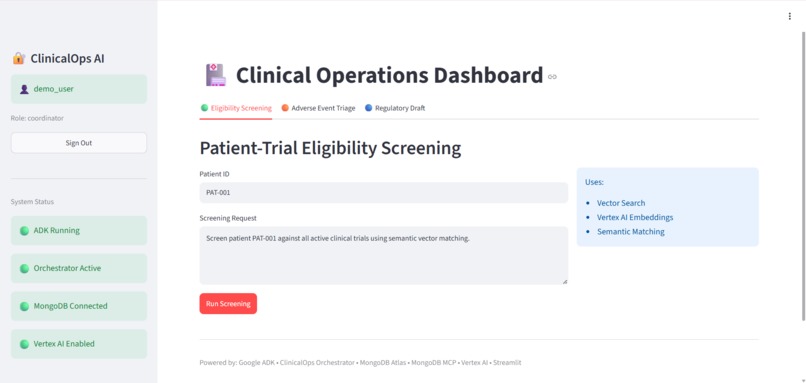
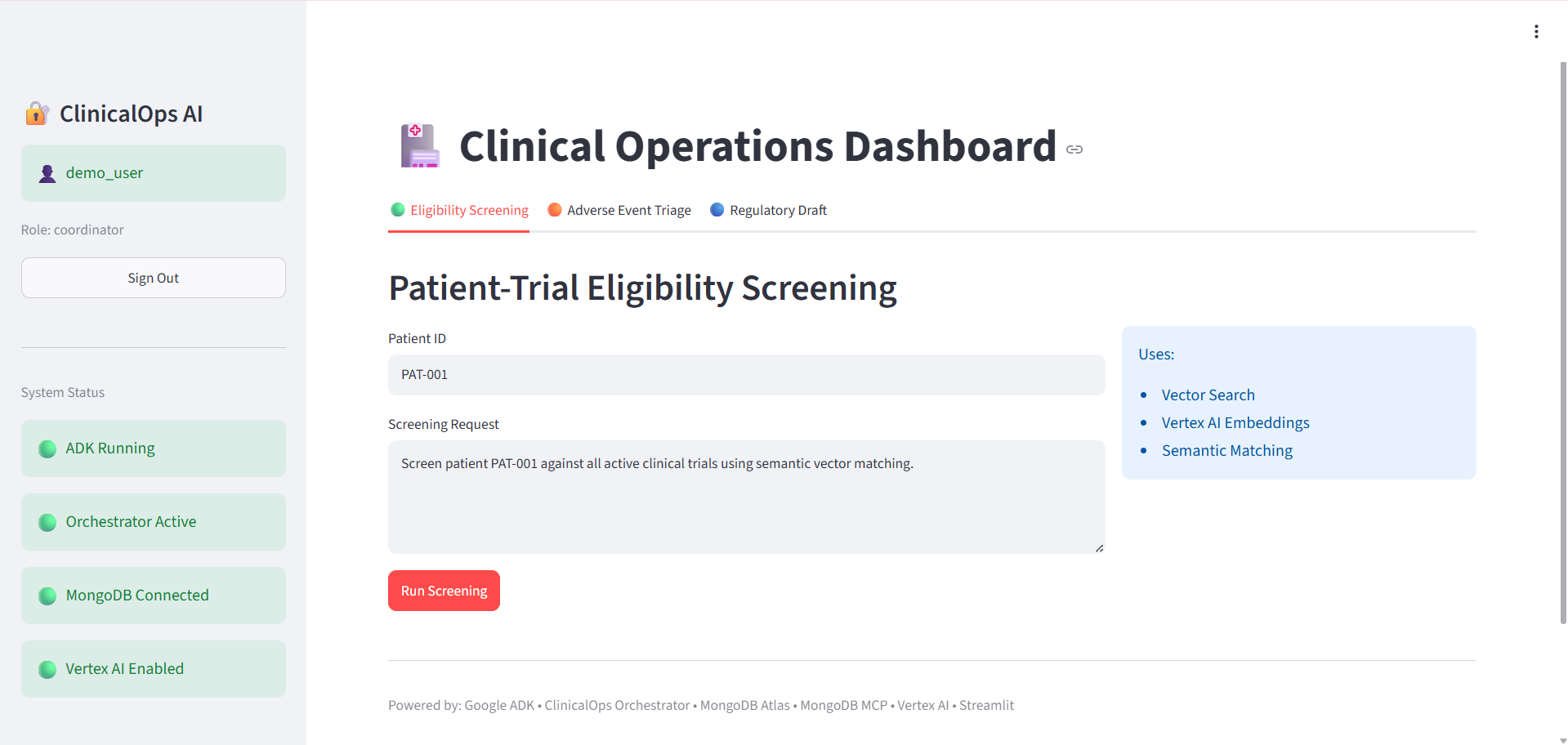
Dashboard with three functionalities
-
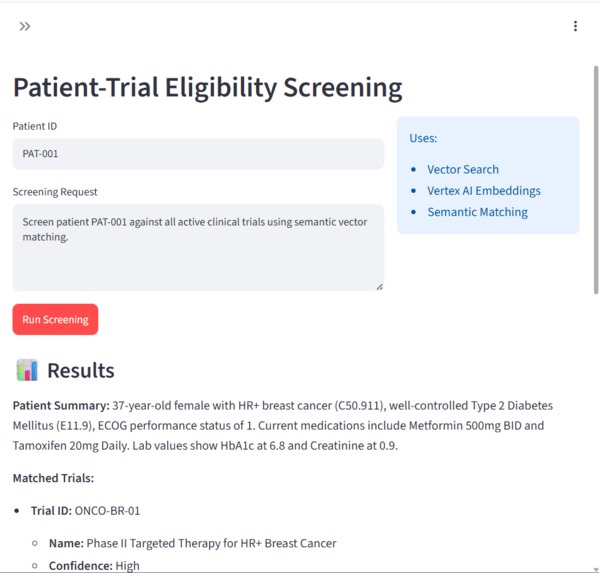
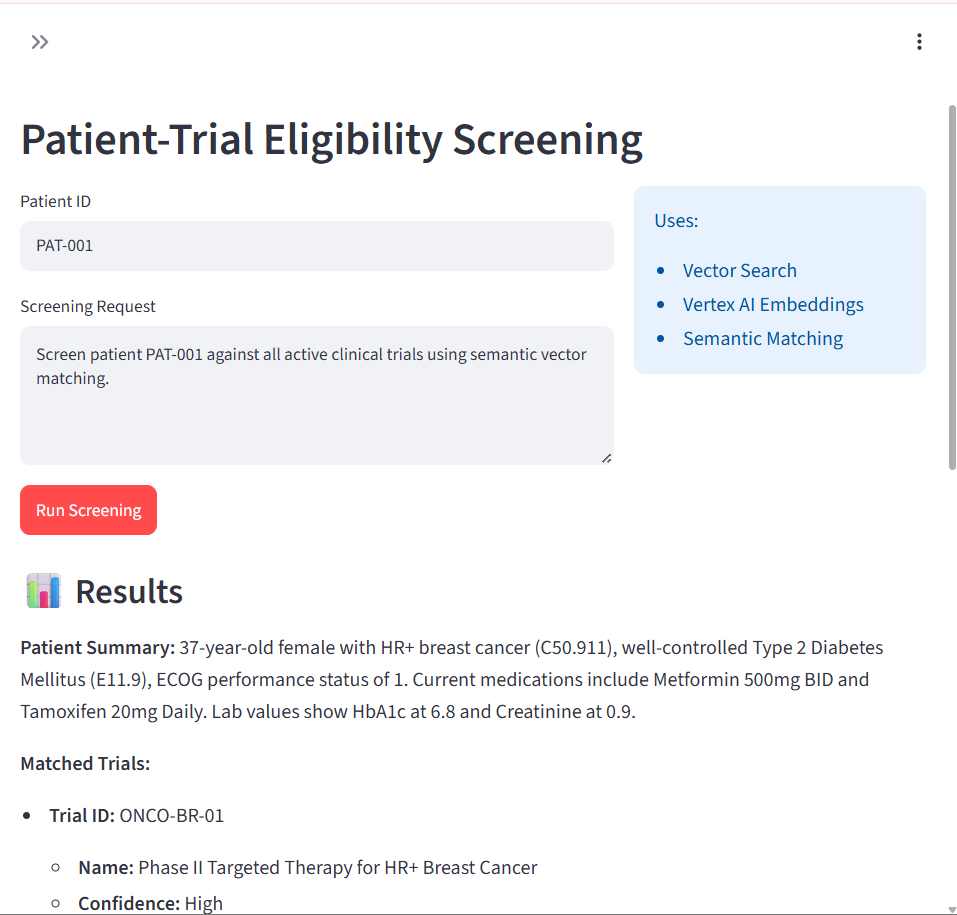
Output after running Patient trial screening
-
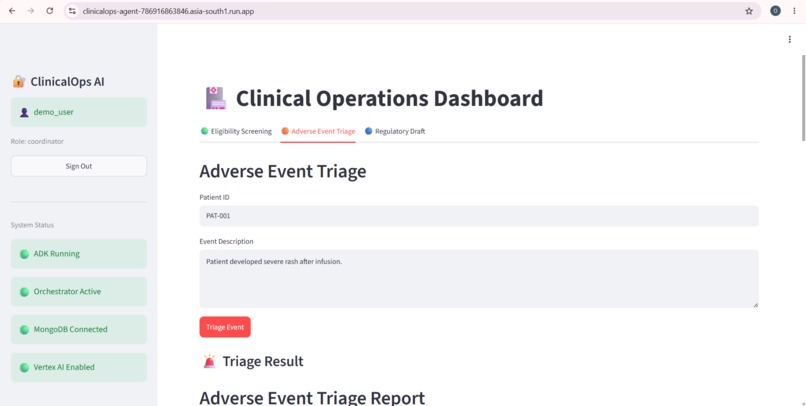
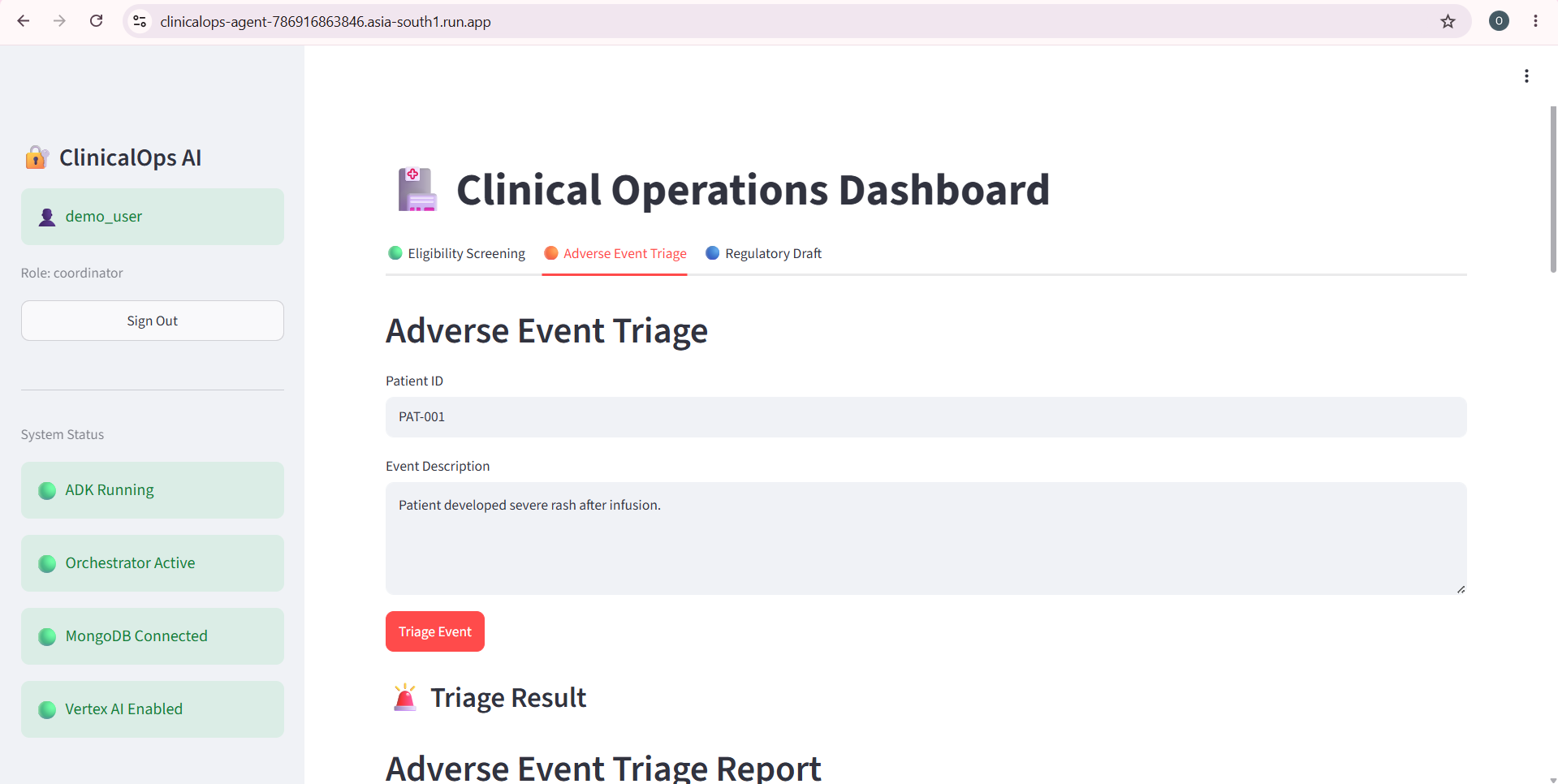
Second screen...
-
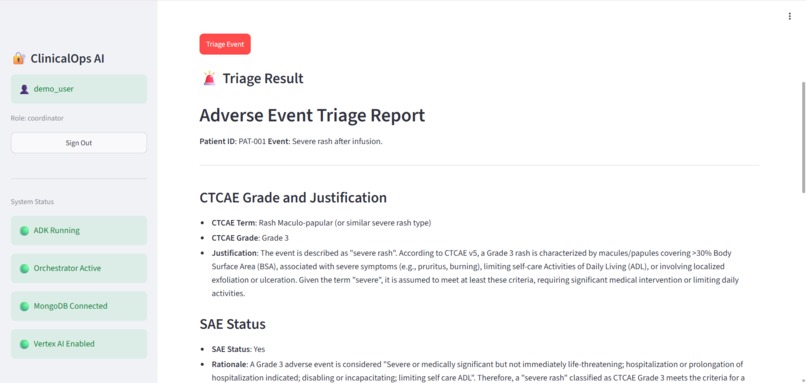
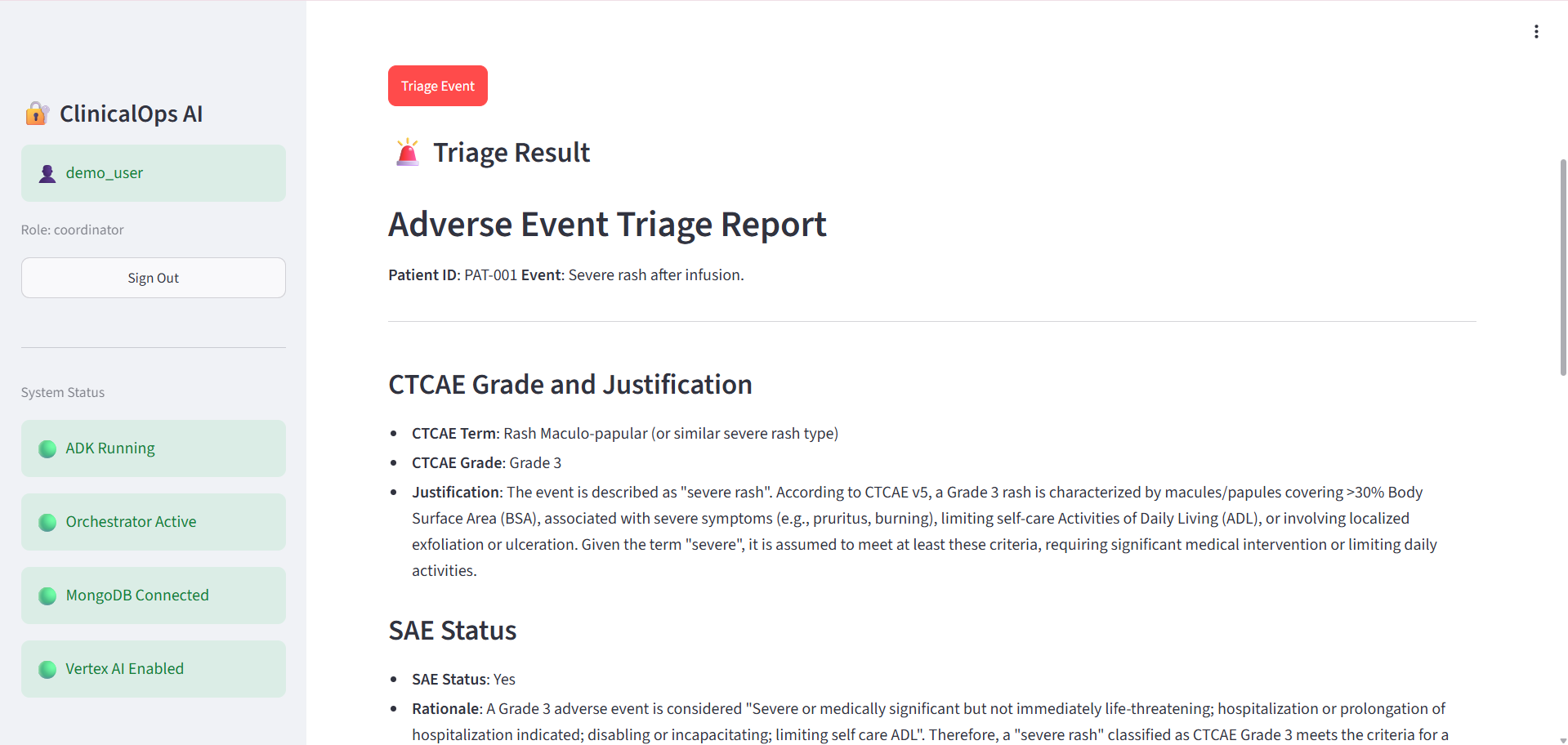
Output from second screen
-
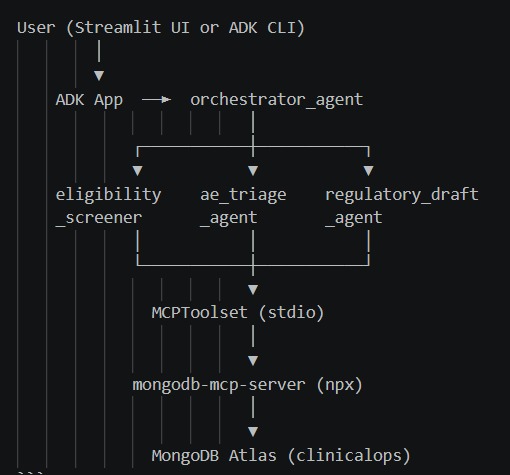
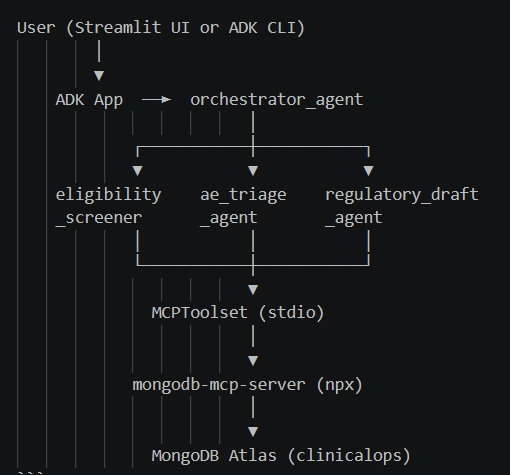
System Architecture - (Basic right now)
-
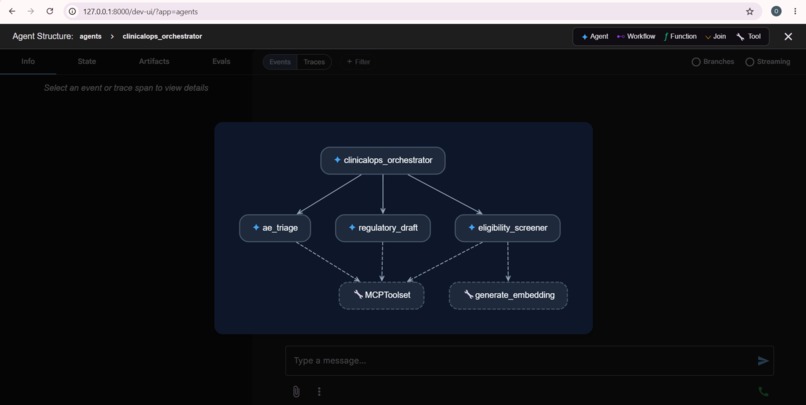
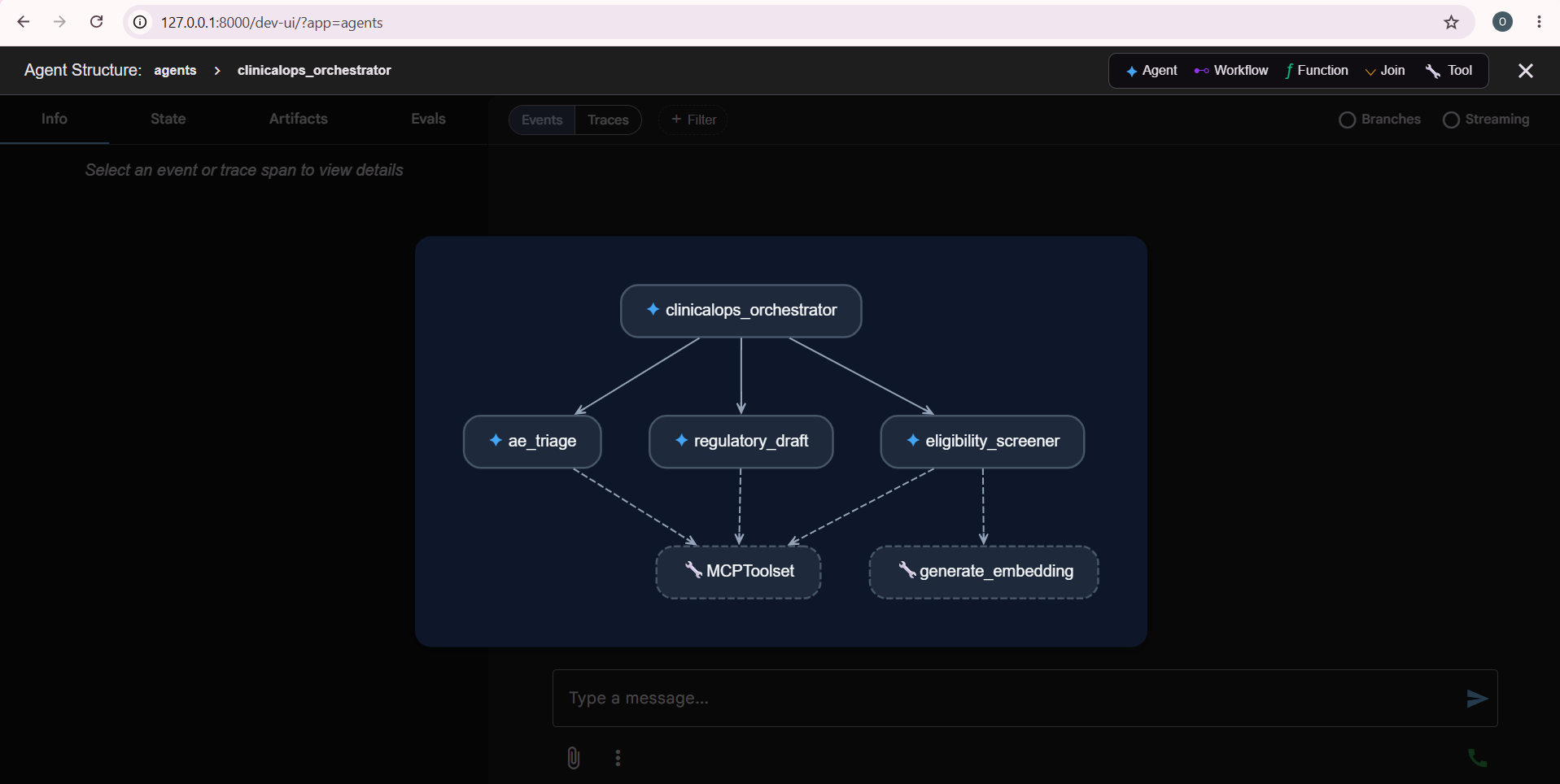
Image captured from adk web showing the agent orchestration and mcp in use.
Inspiration
The inspiration for ClinicalOps Agent came from a real-world observation. During a visit to a local healthcare clinic, I noticed how much time doctors and clinical staff spent managing paperwork, reviewing patient records, handling adverse event reports, and manually searching for relevant clinical trials. Valuable time that could have been spent with patients was instead consumed by repetitive administrative tasks.
This experience highlighted a significant challenge in healthcare operations: the growing volume of clinical data and documentation often overwhelms healthcare professionals. We wanted to explore how AI agents could assist clinical teams by automating routine operational workflows, improving efficiency, and enabling faster, more informed decision-making.
This led to the creation of ClinicalOps Agent — an AI-powered clinical operations assistant built using Google ADK, Gemini, MongoDB Atlas, and MCP.
What it does
ClinicalOps Agent is an intelligent multi-agent system designed to support healthcare and clinical research operations.
The platform provides three core capabilities:
Patient Eligibility Screening
Analyzes patient information and semantically matches patients to relevant clinical trials using Vertex AI embeddings and MongoDB Atlas Vector Search.
Adverse Event Triage
Evaluates adverse events, determines severity levels, identifies potential Serious Adverse Events (SAEs), and assists with regulatory reporting requirements.
Regulatory Draft Generation
Generates structured regulatory documents and clinical narratives to support compliance and documentation workflows.
Through a simple web interface, healthcare professionals can quickly access AI-powered insights without manually reviewing large amounts of clinical information.
How we built it
ClinicalOps Agent was built using a modern AI agent architecture powered by Google Cloud and MongoDB technologies.
Core Components
- Google ADK (Agent Development Kit) for agent orchestration
- Gemini 2.5 Flash on Vertex AI for reasoning and decision-making
- MongoDB Atlas for clinical data storage
- MongoDB MCP Server for database access through the Model Context Protocol (MCP)
- Vertex AI Embeddings for semantic understanding
- MongoDB Atlas Vector Search for intelligent patient-trial matching
- Streamlit for the user interface
- Cloud Run for deployment and scalability
- Firebase Authentication for secure access management
The system uses an orchestrator agent that routes requests to specialized agents responsible for eligibility screening, adverse event triage, and regulatory document generation.
Challenges we ran into
Building ClinicalOps Agent involved several technical and operational challenges.
Learning and Integrating ADK
Working with Google's Agent Development Kit required understanding multi-agent architectures, orchestration patterns, and tool integrations.
MCP Integration
Connecting AI agents to MongoDB through the Model Context Protocol required careful configuration and testing to ensure reliable communication.
Semantic Search Implementation
Designing an effective patient-trial matching system required generating embeddings, storing vectors, and configuring Atlas Vector Search for accurate retrieval.
Cloud Deployment
Deploying the application on Cloud Run introduced challenges related to containerization, environment configuration, authentication, and service integration.
MongoDB Connectivity
During development, DNS and Atlas connectivity issues caused deployment delays and required extensive debugging before establishing stable cloud connectivity.
Accomplishments that we're proud of
We are particularly proud of several aspects of ClinicalOps Agent.
- Successfully building a complete end-to-end AI healthcare application using Google ADK.
- Implementing a true multi-agent architecture with specialized clinical agents.
- Integrating MongoDB Atlas through MCP to enable standardized tool-based access to data.
- Leveraging Vertex AI embeddings and MongoDB Atlas Vector Search for semantic patient-trial matching.
- Deploying the solution successfully on Google Cloud Run.
- Building a practical healthcare solution that addresses real operational challenges faced by clinical teams.
Most importantly, we transformed an idea inspired by a real-world healthcare workflow into a fully functional cloud-hosted application.
What we learned
This project provided valuable insights into AI agents, healthcare workflows, and cloud-native application development.
Key learnings include:
- Designing and orchestrating multi-agent systems using Google ADK.
- Building tool-enabled AI agents through MCP.
- Implementing semantic search using embeddings and vector databases.
- Deploying production-ready AI applications on Google Cloud.
- Managing authentication, cloud infrastructure, and database integrations.
- Understanding the operational challenges faced by healthcare and clinical research professionals.
The project reinforced how AI can be used not only for conversation but also for solving real business and operational problems.
What's next for ClinicalOps Agent
I see significant potential for expanding ClinicalOps Agent beyond its current capabilities. I am planning to expand it for multiple uses. It already has auth using firebase, but would make it much better. Add multi tenant system, data transferring ease and some more.
Enhanced Clinical Trial Matching
Support larger trial databases, advanced eligibility reasoning, and explainable matching recommendations.
Real-Time Clinical Monitoring
Continuously monitor patient data and adverse events to identify risks earlier.
Electronic Health Record Integration
Connect directly with EHR and EMR systems to reduce manual data entry.
Advanced Regulatory Automation
Generate more comprehensive compliance documents and support additional regulatory frameworks.
Enterprise Readiness
Add audit logging, role-based access control, monitoring, and enterprise-grade security features.
Healthcare Ecosystem Expansion
Extend the platform to support hospitals, research organizations, pharmaceutical companies, and clinical research teams worldwide.
Our long-term vision is to build an intelligent clinical operations platform that reduces administrative burden and allows healthcare professionals to focus on what matters most: patient care.

Log in or sign up for Devpost to join the conversation.