Inspiration
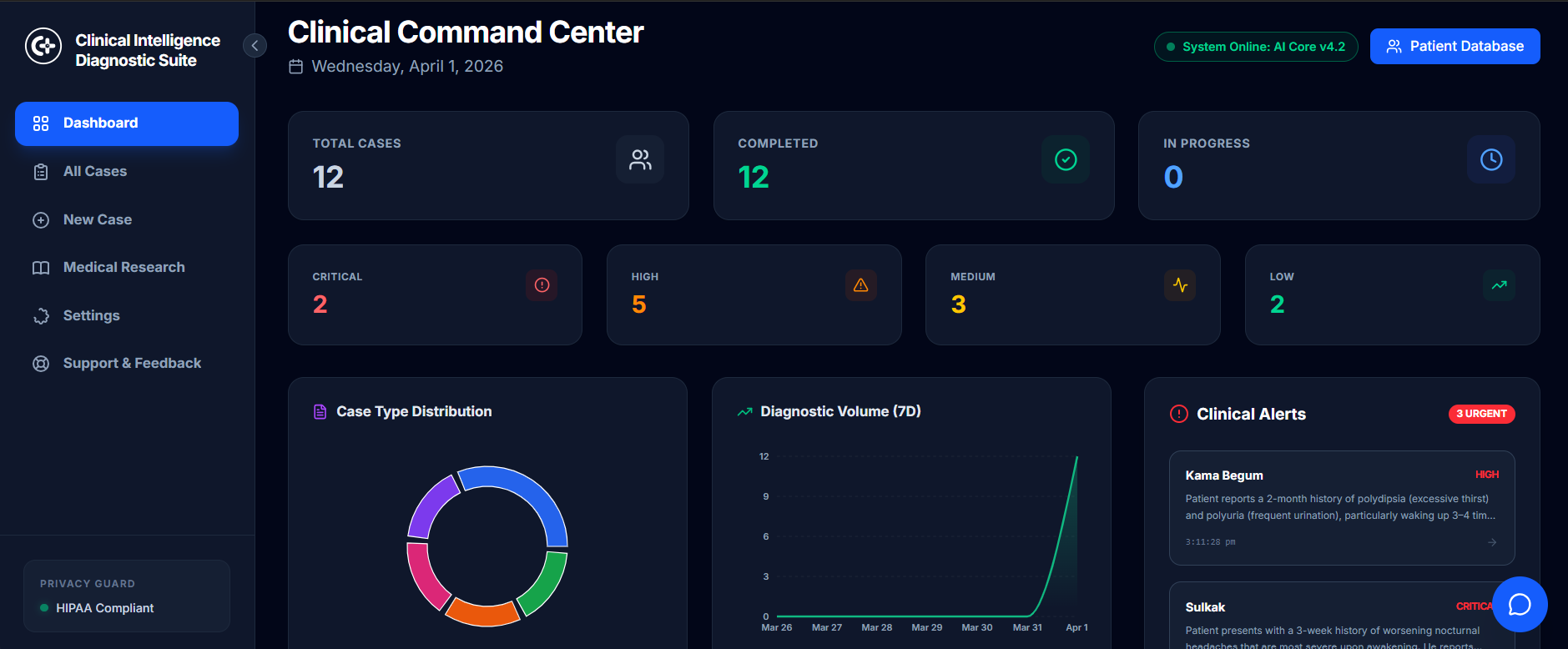
The inspiration for CIDS stems from the growing "Cognitive Load" crisis in modern medicine. In high-stakes environments like neuro-oncology, a single missed nuance in an MRI or a subtle trend in metabolic markers can change a patient's life. We wanted to build a "Digital Co-Pilot" that doesn't just store data, but actively "thinks" alongside the physician, turning overwhelming medical noise into clear, actionable clinical intelligence.
What it does
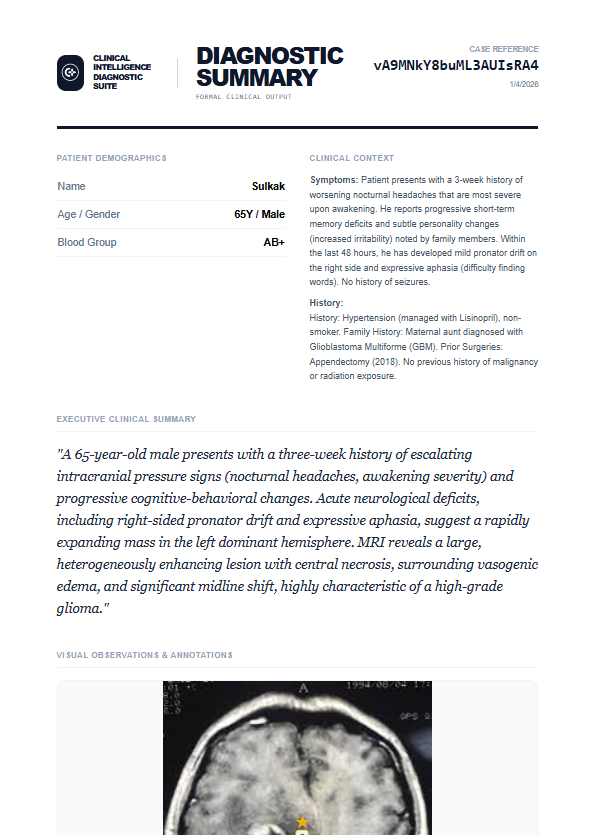
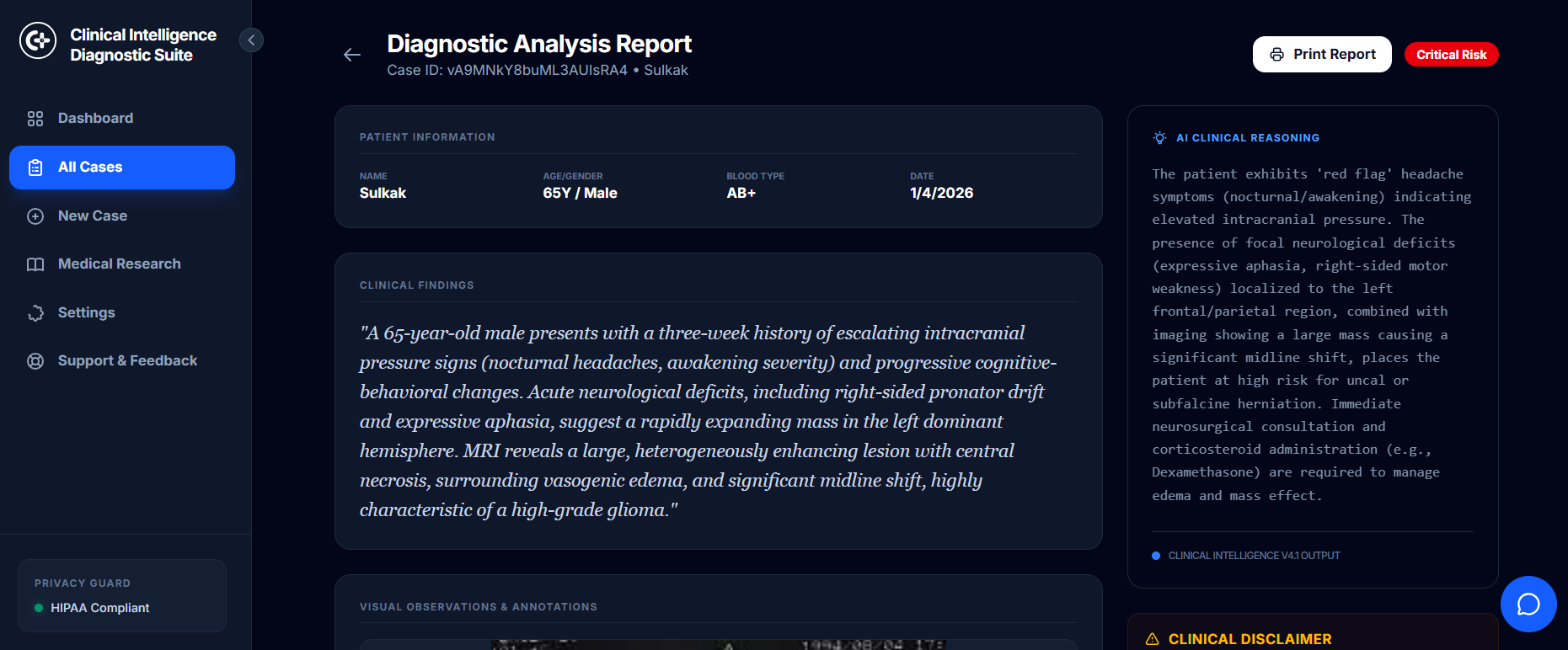
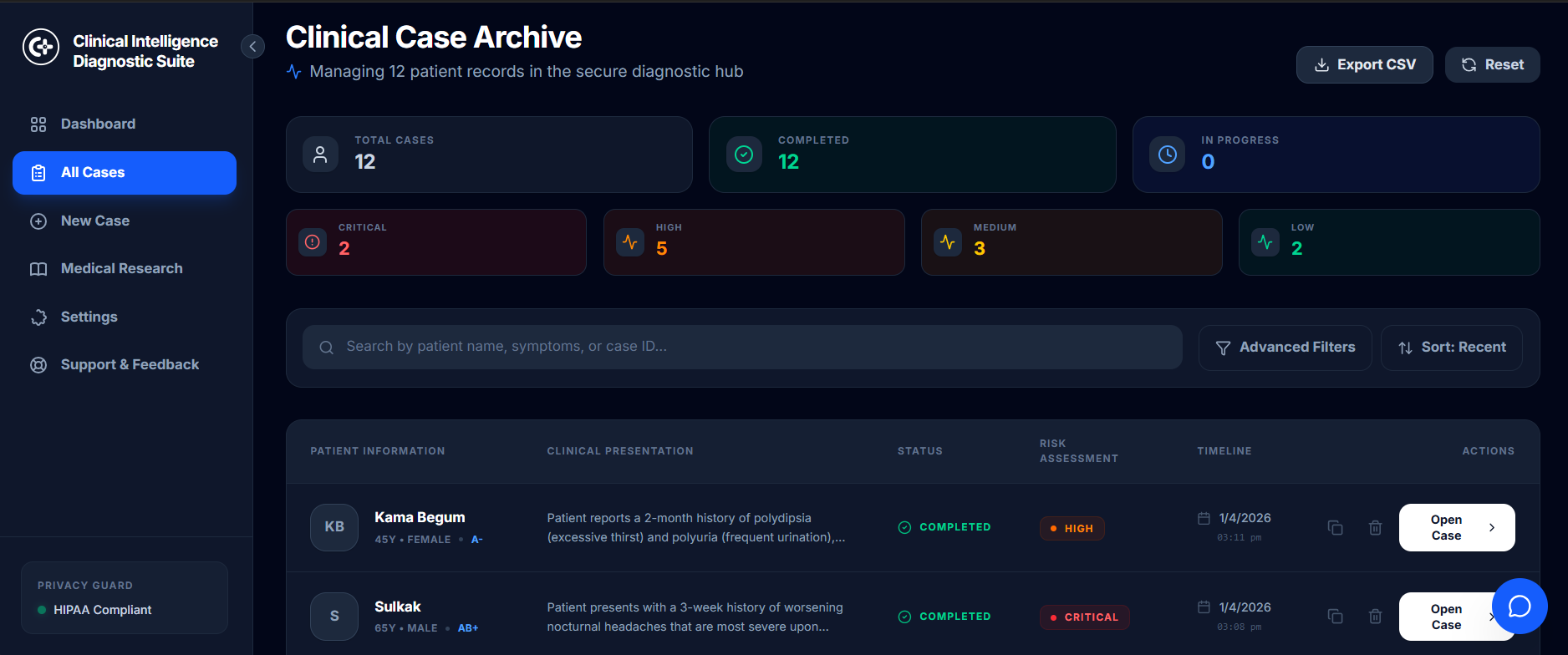
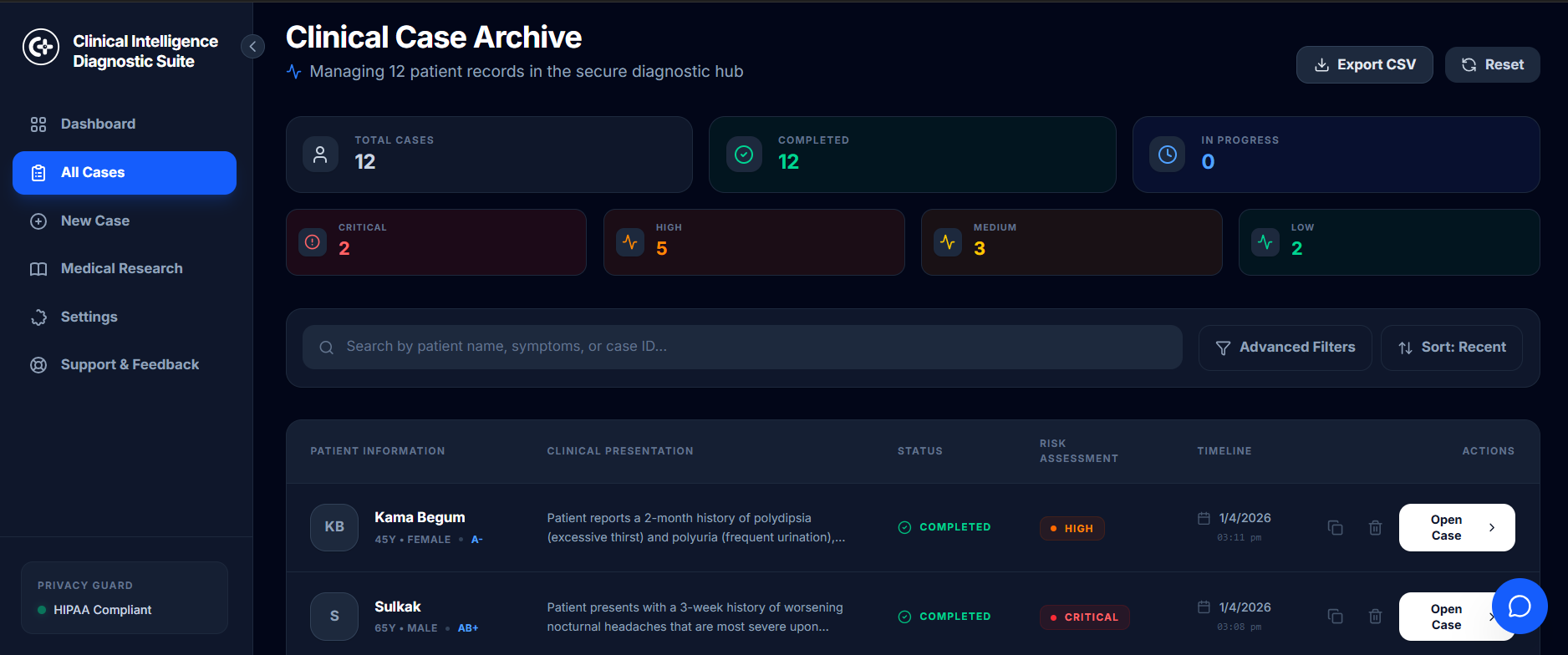
CIDS is a multimodal AI diagnostic suite that bridges the gap between raw data and clinical decisions.
Multimodal Analysis: It processes patient demographics, clinical symptoms, and complex imaging (like MRI/CT) simultaneously.
Specialized Simulations: From detecting 4.2cm ring-enhancing brain lesions to flagging early-stage diabetic neuropathy, it provides weighted differential diagnoses.
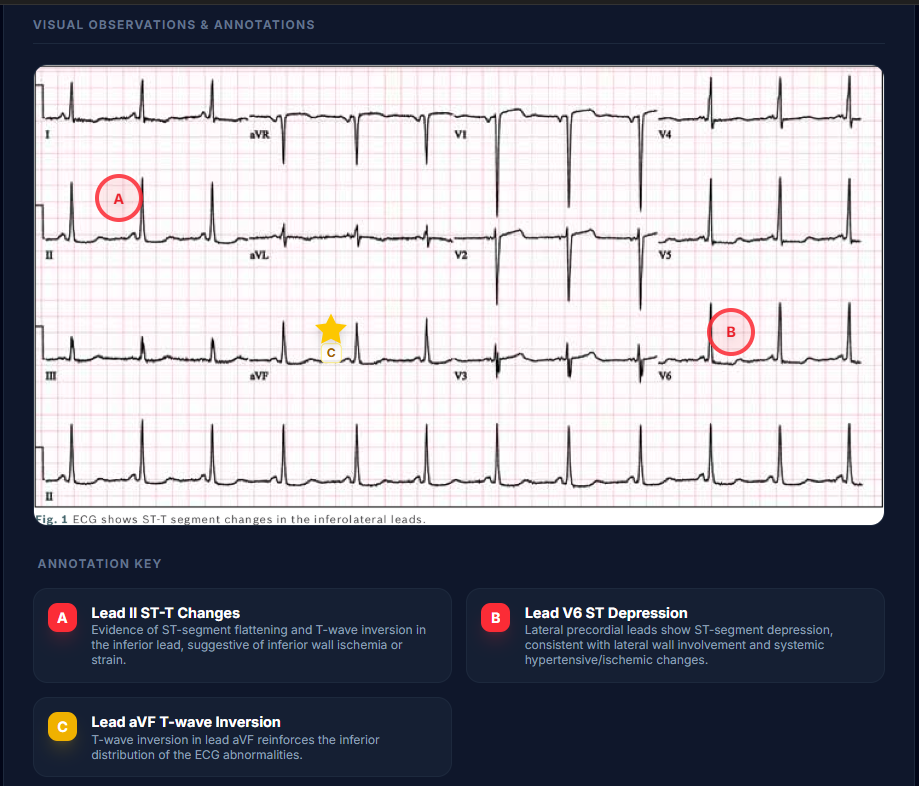
Visual Annotations: It "sees" pathology, highlighting areas of concern on scans to reduce diagnostic fatigue.
Professional Reporting: It transforms complex AI reasoning into HIPAA-aligned, branded formal reports with a single click.
How we built it
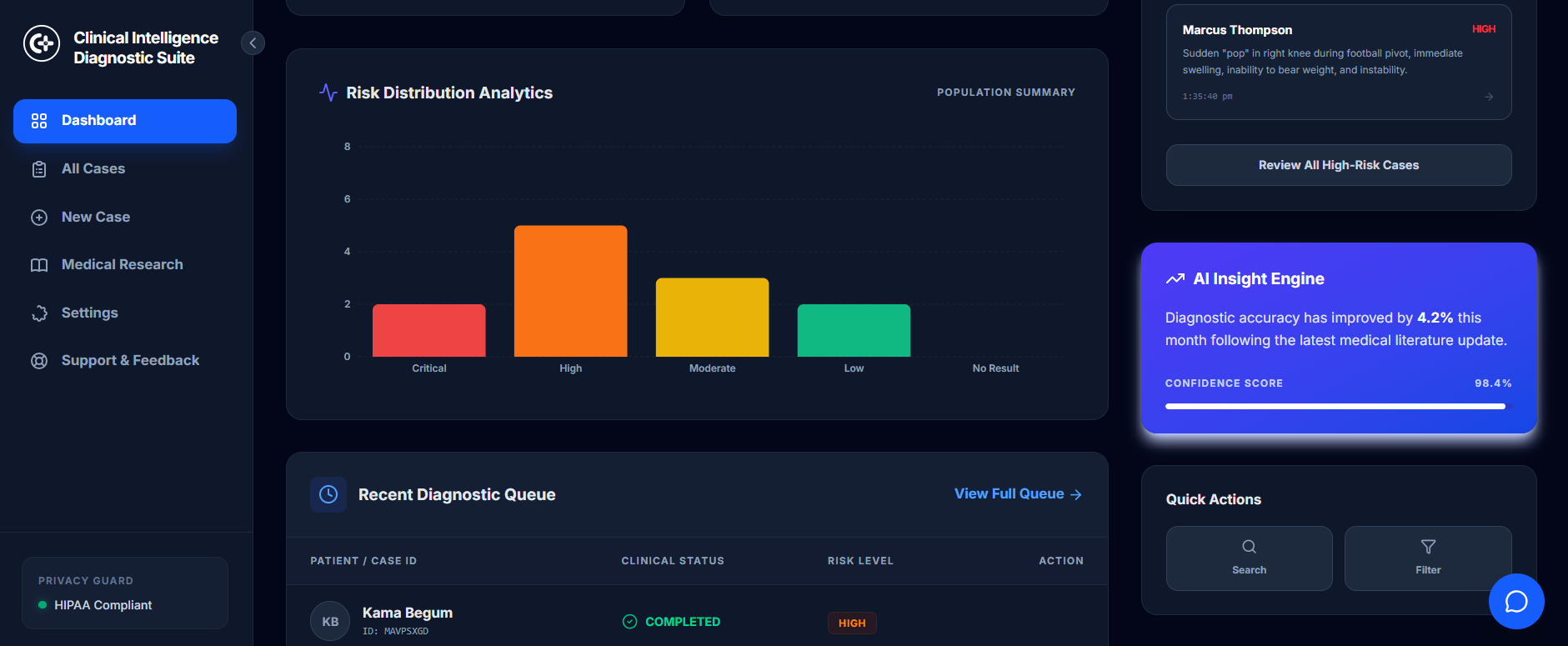
The core engine is built on Gemini 1.5 Pro (and tested with Flash for speed), utilizing advanced prompt engineering to ensure clinical accuracy and "Explainable AI" (XAI). The frontend is a high-performance React dashboard designed for "glanceability," featuring a dark-themed, professional-grade UI with a custom-designed circular branding system. We utilized a modular architecture to allow the suite to pivot between different medical domains like Neurology and Endocrinology seamlessly.
Challenges we ran into
The biggest technical hurdle was managing API Rate Limits (HTTP 429) during high-intensity analysis. We had to implement sophisticated "Exponential Backoff" logic and optimize our token usage to ensure the system remained stable during complex diagnostic tasks. Additionally, maintaining "Zero-Inference" medical safety—ensuring the AI only provides evidence-based insights rather than medical "hallucinations"—required rigorous grounding and iterative testing of the clinical simulations.
Accomplishments that we're proud of
We are incredibly proud of the multimodal reasoning capabilities of CIDS. Seeing the system successfully differentiate between a glioblastoma and a brain abscess based on surrounding edema and clinical history was a major milestone. We also successfully created a professional brand identity that feels at home in a world-class hospital, balancing cutting-edge AI aesthetic with clinical trust.
What we learned
Building CIDS taught us that in healthcare, "Explainability" is as important as "Accuracy." A doctor won't trust a black box; they need to see the "why" behind every flag. We also learned the vital importance of "API Resilience"—designing a system that can handle high loads and quota constraints without compromising the user experience or the speed of triage.
What's next for Clinical Intelligence Diagnostic Suite
The next frontier for CIDS is Predictive Digital Twins. We plan to move from static diagnostics to dynamic "What-If" simulations, allowing doctors to visualize how a patient’s health trajectory might change based on different treatment paths. We also aim to integrate DICOM native viewing directly into the dashboard and expand our "Medical Research" module to automatically pull the latest peer-reviewed literature to support every AI-suggested diagnosis.

Log in or sign up for Devpost to join the conversation.