-
-
Logo
-
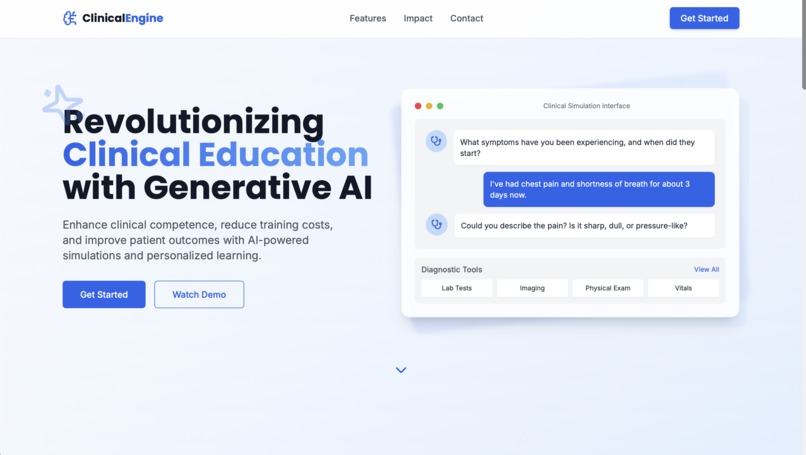
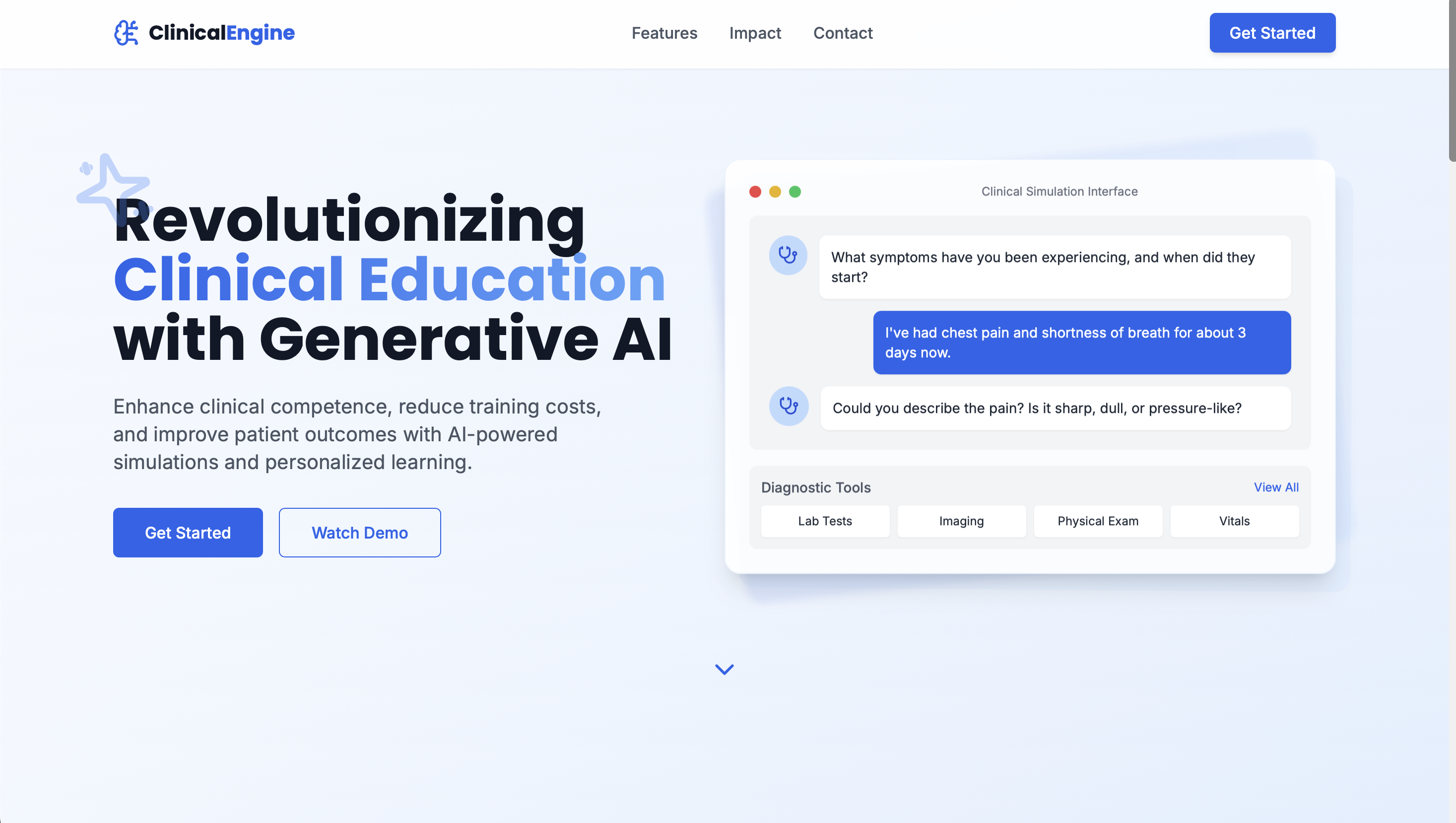
Landing Page - 1
-
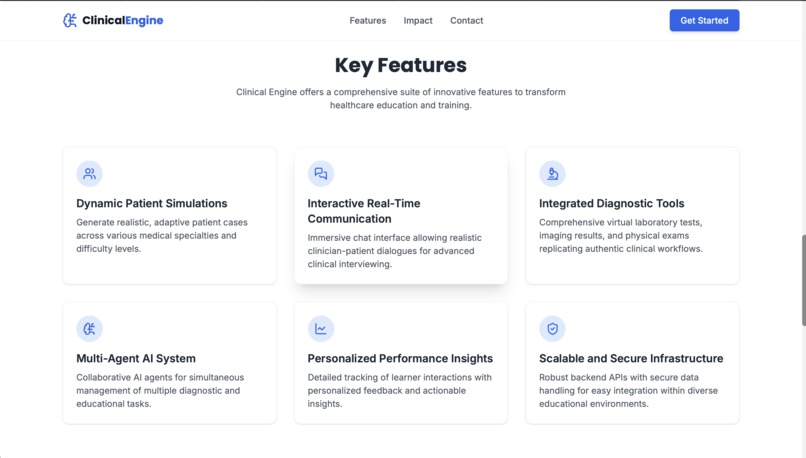
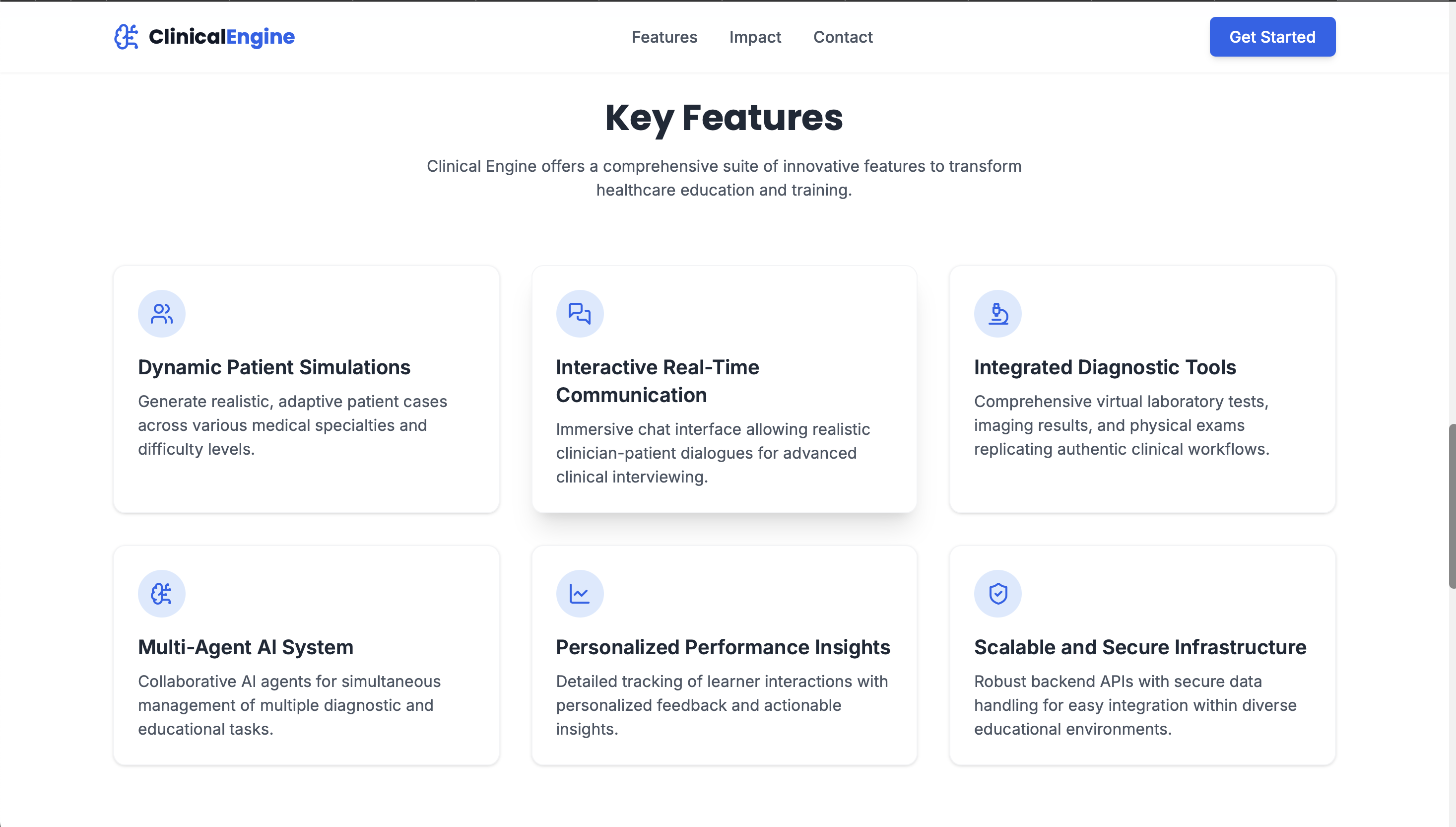
Landing Page - features
-
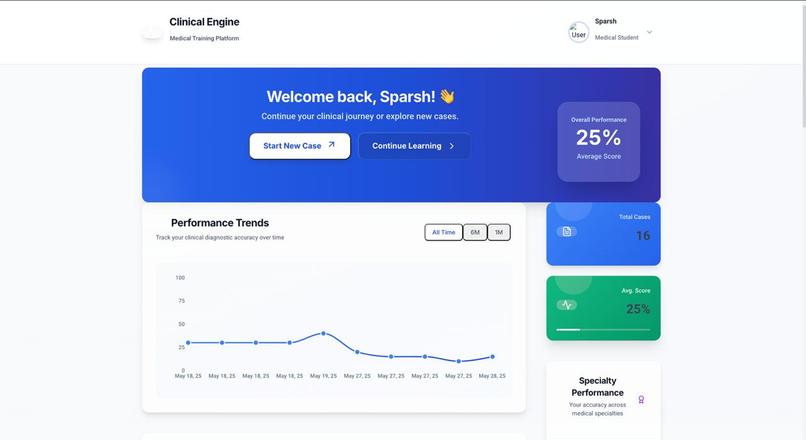
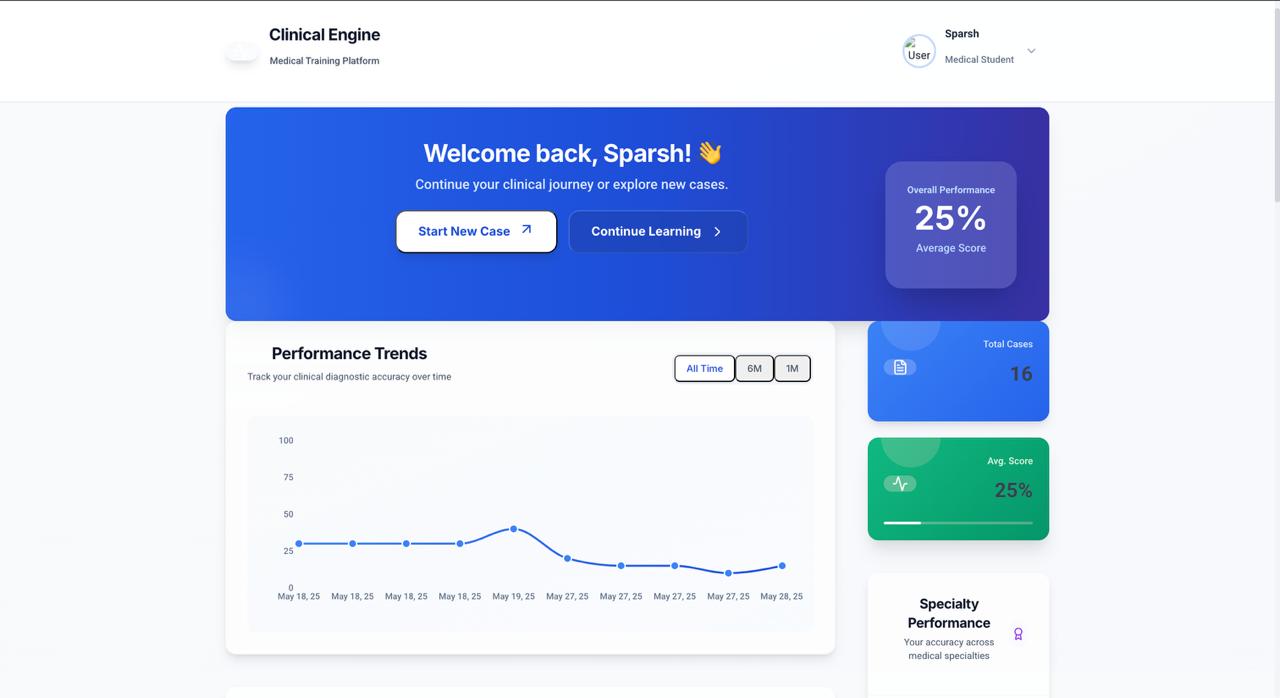
Dashboard
Inspiration
The inspiration behind Clinical Engine stemmed from a critical need in the healthcare and medical education sectors: the lack of effective, scalable, and realistic training environments. Current systems rely heavily on textbooks, costly physical simulations, and limited clinical rotations, resulting in inconsistent skill development and diagnostic proficiency. We saw an opportunity to use generative AI to transform medical training into something immersive, adaptive, and truly reflective of real-world clinical practice.
What it does
Clinical Engine is a generative AI-powered simulation platform that creates dynamic, evolving patient cases across multiple medical specialties. It allows users—primarily medical students and trainees—to interact with virtual patients via voice, text, and image modalities. The system integrates diagnostic tools such as lab tests, imaging, and physical exams, and provides real-time personalized feedback. It also tracks user performance in detail, giving deep insights into diagnostic accuracy and clinical decision-making.
How we built it
We developed Clinical Engine using a multi-agent AI architecture. Each agent handles specific tasks—such as patient interaction, diagnostics, and analytics—working collaboratively to deliver lifelike patient encounters. The platform is built with robust, secure backend APIs that ensure scalability and HIPAA-compliant data handling. We trained the models on diverse clinical data sets and incorporated NLP, image analysis, and structured output evaluation to support multimodal user engagement.
Challenges we ran into
- Balancing realism and technical feasibility in patient simulation logic
- Integrating multiple diagnostic modalities into a seamless user experience
- Managing the complexity of multi-agent AI systems and coordinating their outputs effectively
- Medical accuracy vs. AI limitations: Ensuring virtual patients respond realistically required careful prompt engineering and iterative testing
- Complex evaluation algorithms: Designing comprehensive evaluation systems across multiple medical specialties demanded advanced AI integrations and detailed assessment logic
- Data consistency: Managing complex case data structures while maintaining coherence across patient interactions, test results, and imaging findings required significant data engineering efforts
- Real-time performance: Optimizing performance for real-time interactions while handling multiple AI API calls posed infrastructure and optimization challenges
Accomplishments we’re proud of
- Developed personalized analytics that drive measurable learning outcomes
- Built a fully functional clinical simulation platform with end-to-end patient interaction workflows
- Integrated AI-generated medical imaging that creates case-specific imaging on demand
- Developed a sophisticated evaluation system providing detailed feedback on clinical decision-making patterns
- Created scalable case generation capable of producing diverse clinical scenarios across multiple specialties
- Implemented comprehensive user tracking with timeline visualization and detailed performance analytics
- Achieved seamless multimodal interaction combining text, voice, and visual elements in clinical workflows
What we learned
- Generative AI can transform not just content creation, but decision-making and skill-building
- Multimodal interaction—when done right—significantly improves user immersion and learning retention
- Real-time feedback and analytics are critical for driving engagement and improvement in clinical training
- Collaboration between AI agents enhances realism and provides nuanced, context-driven simulations
- AI-powered virtual patients can provide surprisingly realistic and educationally valuable clinical interactions when properly prompted and structured
- Contextual medical image generation significantly enhances realism in clinical simulations
- Real-time performance evaluation using AI can deliver insights difficult for human instructors to consistently capture
- Modern web technologies allow for the creation of engaging, professional-grade medical education tools that rival expensive commercial solutions
- A modular architecture is crucial for managing the complexity of clinical simulation systems effectively
What’s next for Clinical Engine
- Preparing for broader market entry and exploring partnerships in health tech education
- Expand case database with more diverse clinical scenarios and specialty-specific cases
- Improve voice interaction with emotive speech
- Add collaborative features supporting team-based clinical decision-making and peer learning
- Develop an instructor dashboard enabling educators to create custom cases and monitor student progress


Log in or sign up for Devpost to join the conversation.