-
-
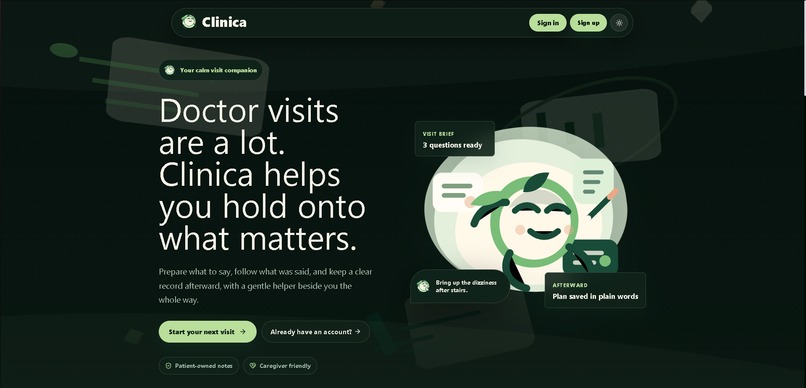
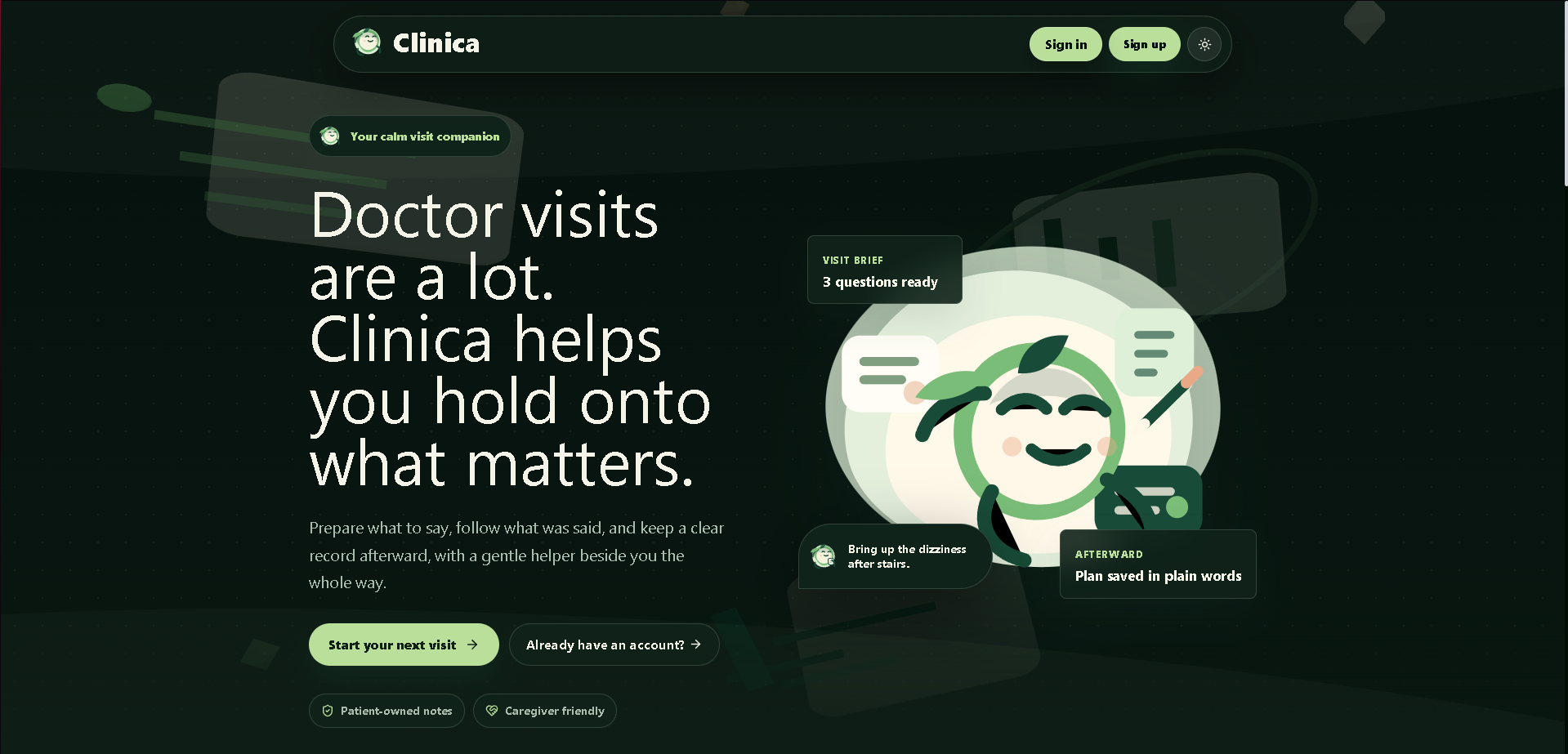
Hero Section
-
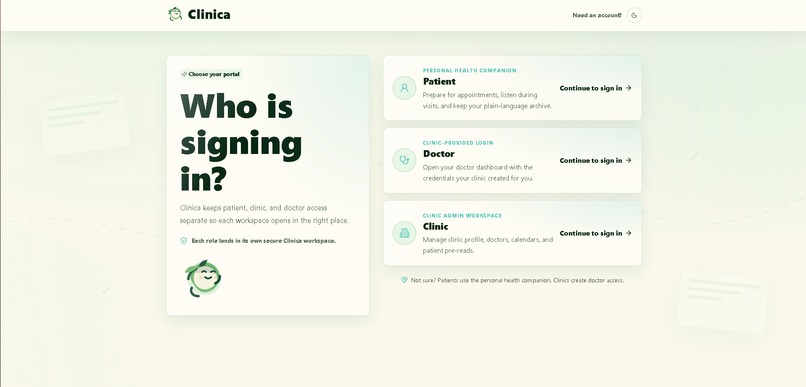
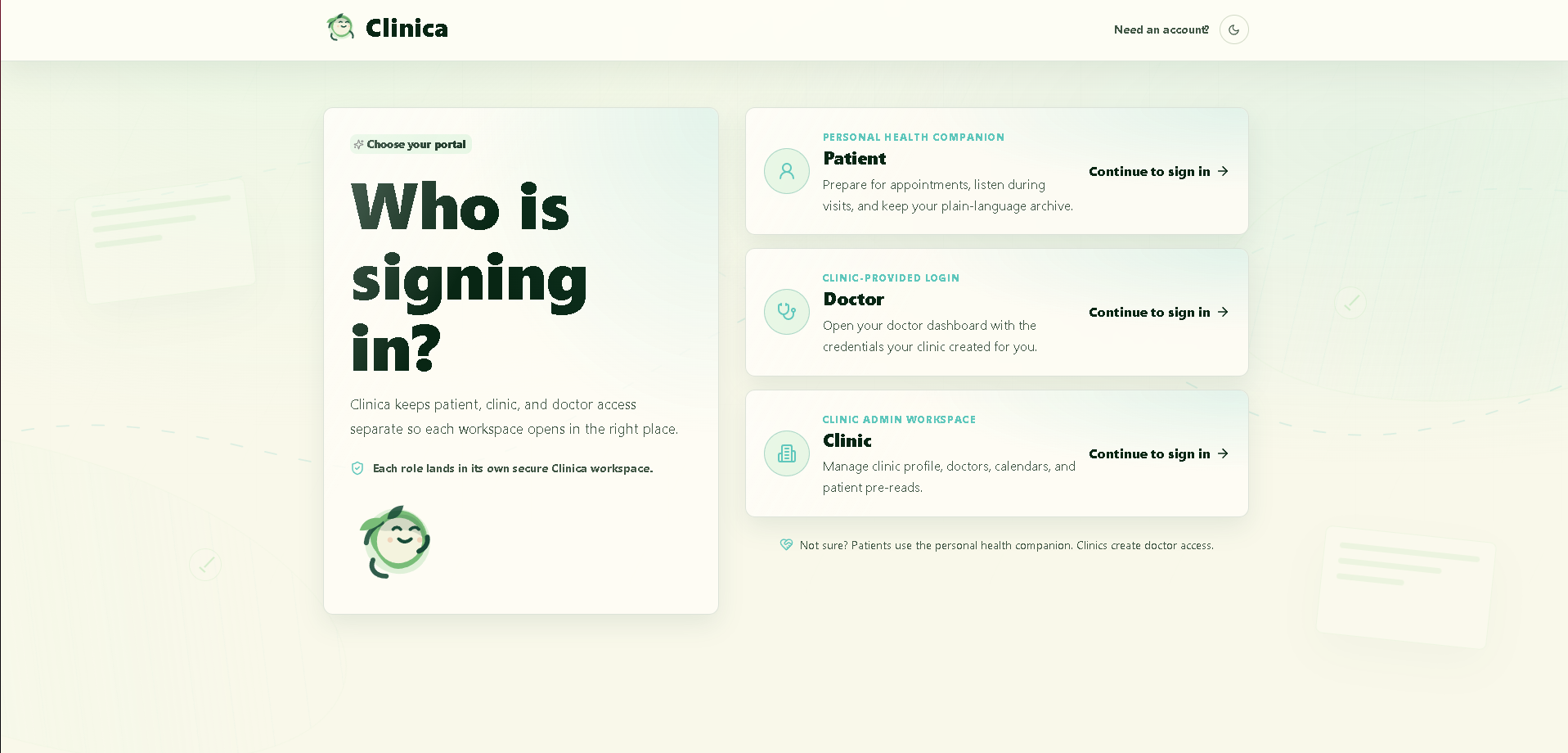
Sign-In
-
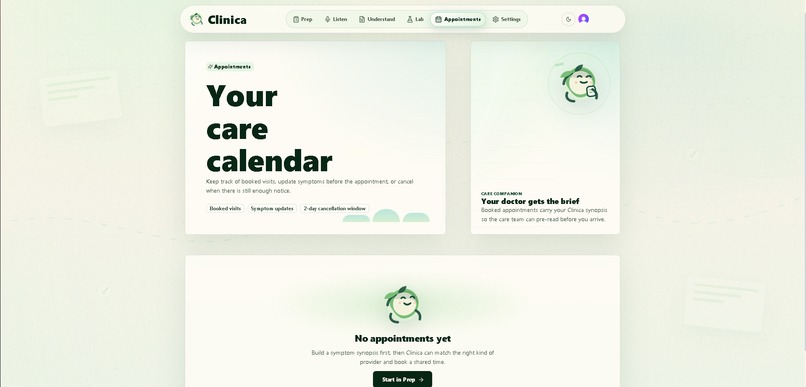
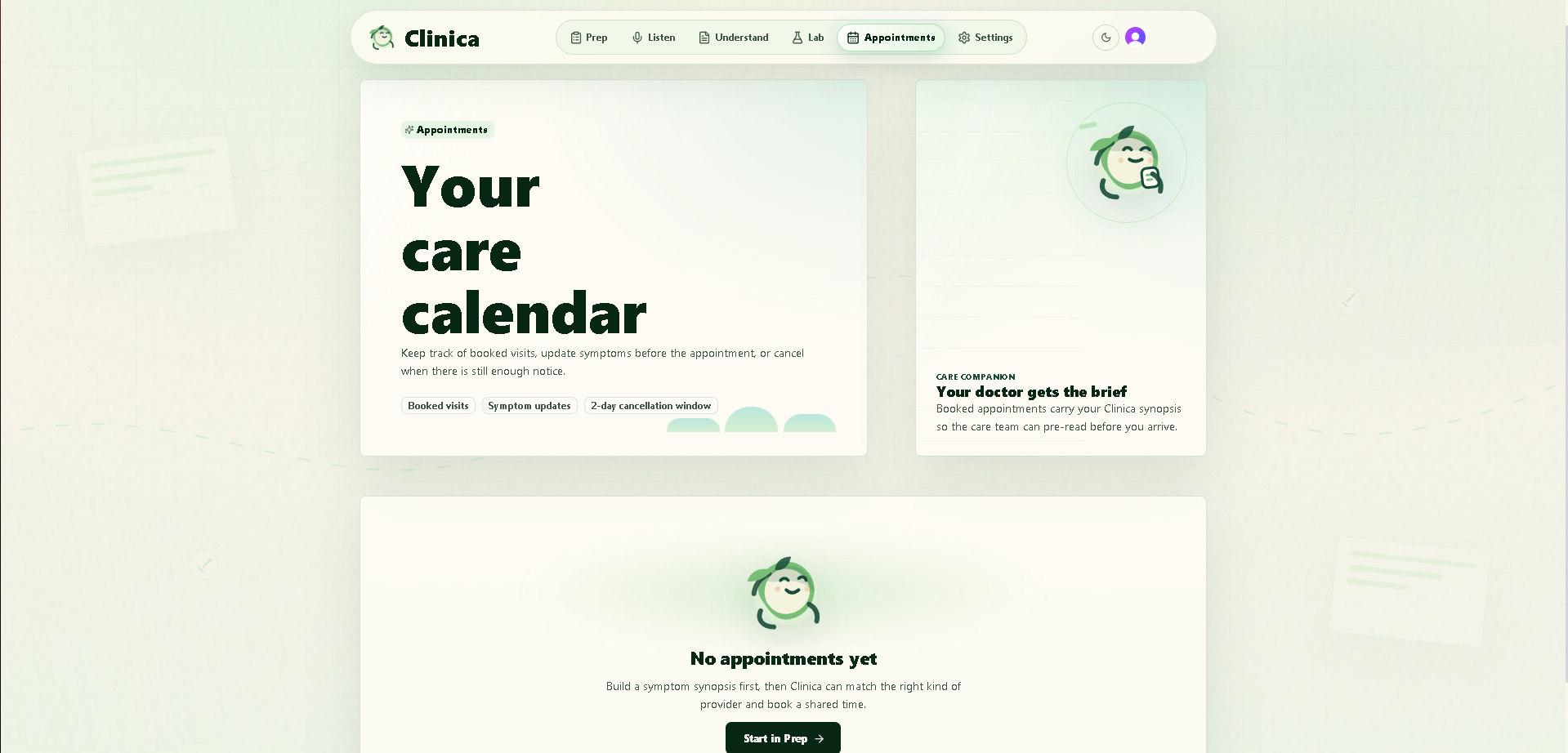
Appointments Tab
-
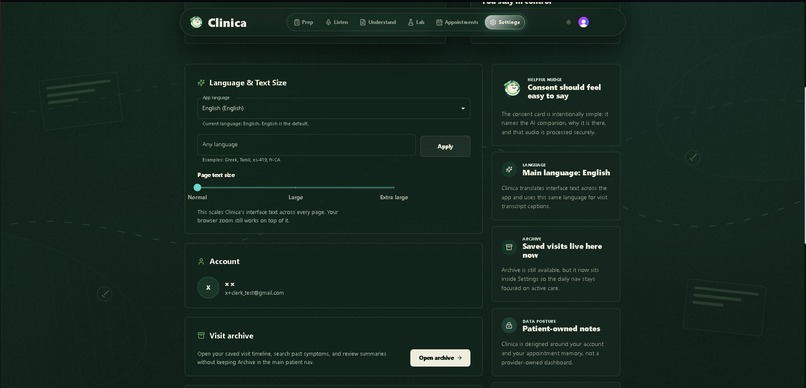
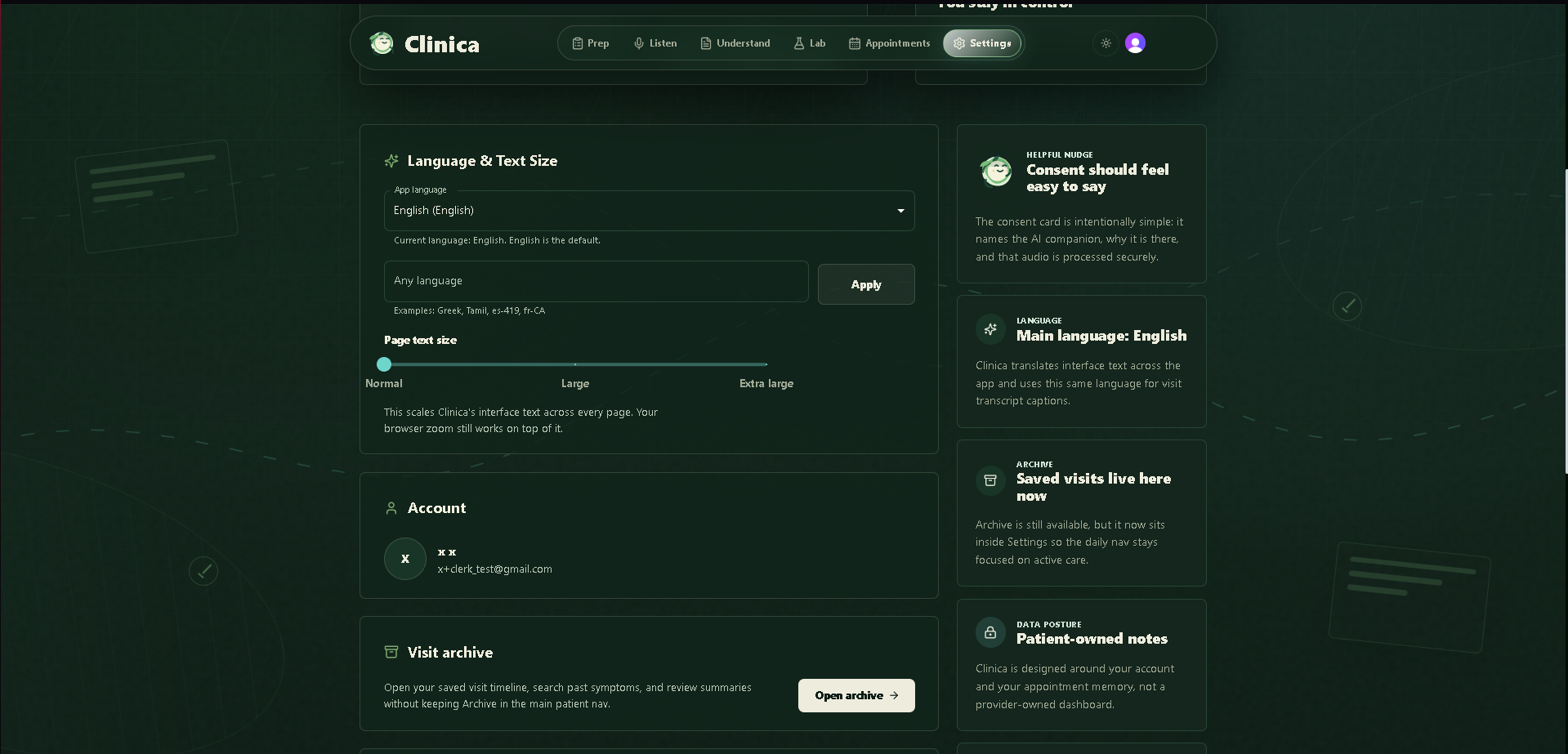
Settings (Archive + Accessibility)
-
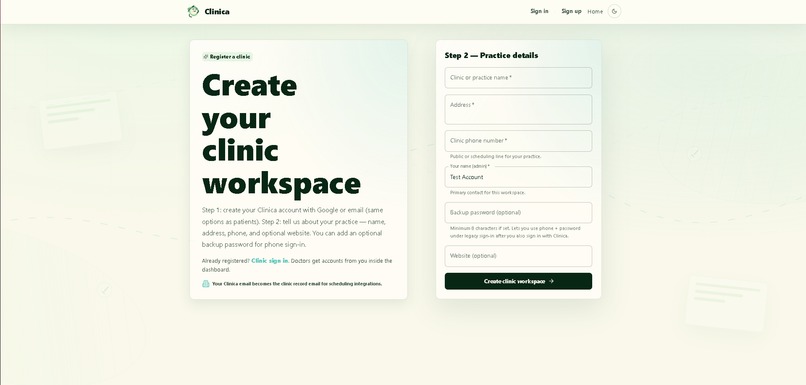
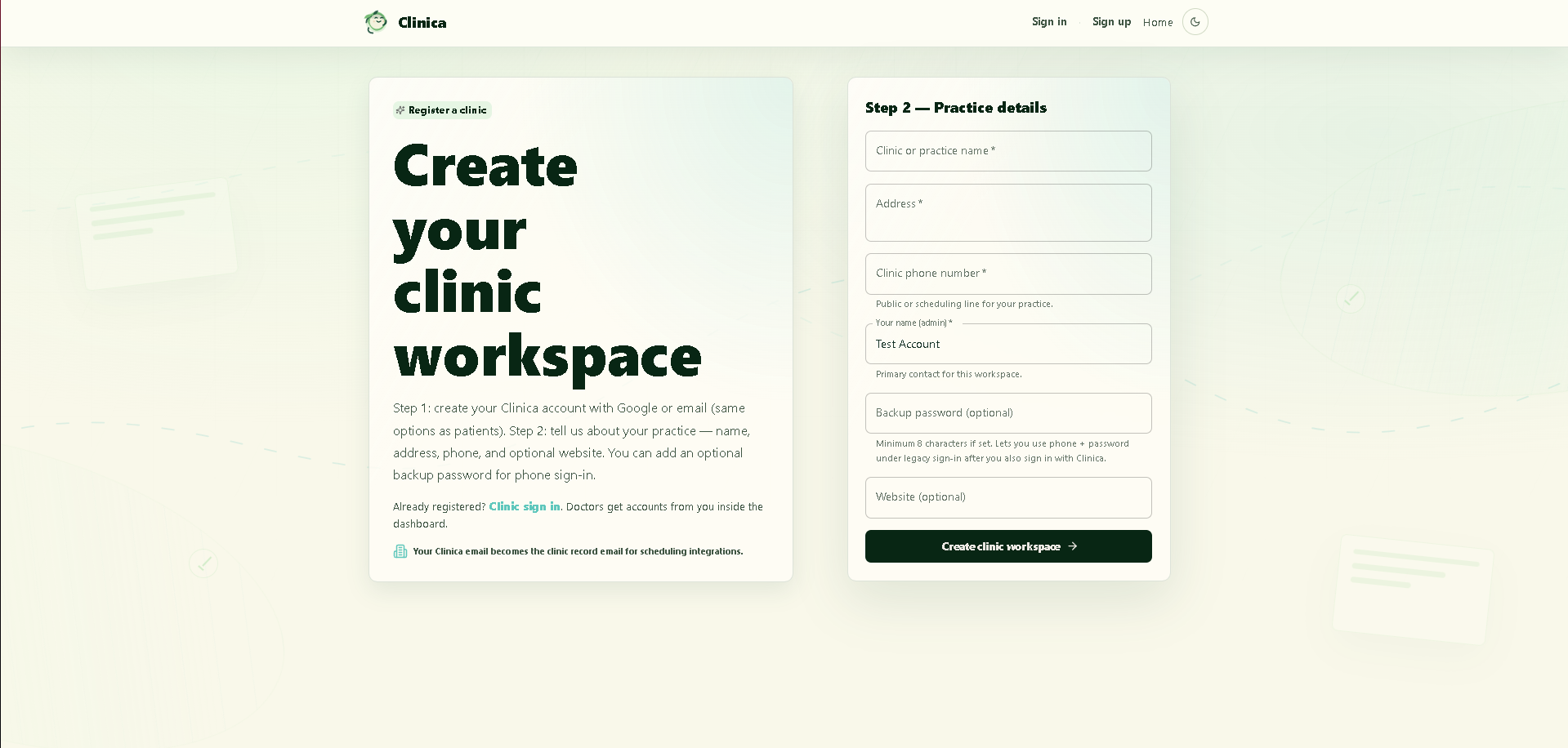
Clinic Sign-Up
-
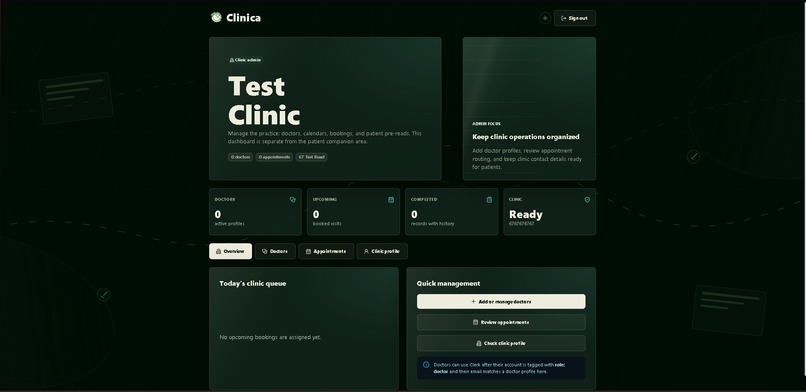
Clinic Dashboard
-
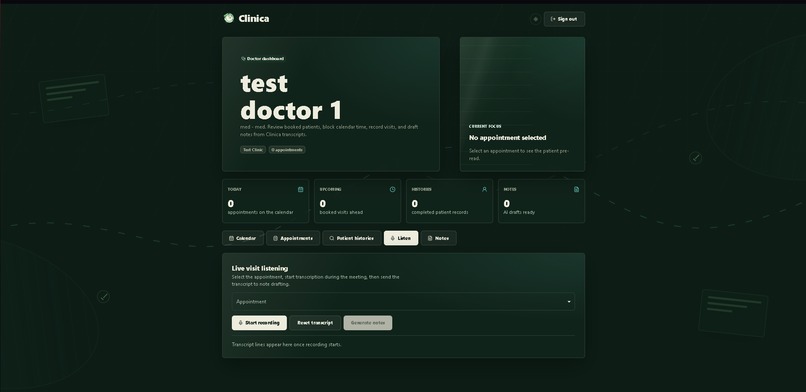
Doctor Dashboard
https://github.com/Adityasharma0101911/Clinica-Frontend
Inspiration
( 9/10 ) patients leave the doctor’s office without fully understanding or remembering what to do next.
Doctor visits are short, stressful, and packed with information. Patients walk in nervous, forget the questions they meant to ask, hear medical terms they do not fully understand, and leave with instructions they are expected to remember perfectly.
For caregivers, chronic patients, immigrants, and anyone navigating healthcare alone, that gap can become dangerous.
Clinica was inspired by a simple idea:
$$ \text{Healthcare access} \neq \text{Healthcare understanding} $$
Getting into the appointment is only one part of care. Real access means understanding what happened, remembering what matters, and knowing what to do next.
Clinica gives every patient the kind of support someone might get if they had a doctor in the family: calm preparation, real-time clarity, and a plain-English record afterward.
What it does
Clinica is an AI health companion that wraps around the full doctor visit journey:
$$ \textbf{Prep} + \textbf{Listen} + \textbf{Understand} = \textbf{Clarity} $$
1. Prep: before the visit
Patients describe symptoms naturally, the way they would text a friend. Clinica then:
- Translates casual symptoms into doctor-friendly clinical language
- Detects possible red flags
- Generates five prioritized questions
- Helps patients arrive prepared instead of overwhelmed
2. Listen: during the visit
Clinica listens with consent and provides real-time support:
- Live Deepgram transcription
- Medical jargon highlighting
- Plain-English explanations
- Question checklist support during the appointment
3. Understand: after the visit
Clinica turns the visit into something patients can actually use:
- A clean visit summary
- Action items and next steps
- Red flag warnings
- Lab result explanations
- A personal visit archive
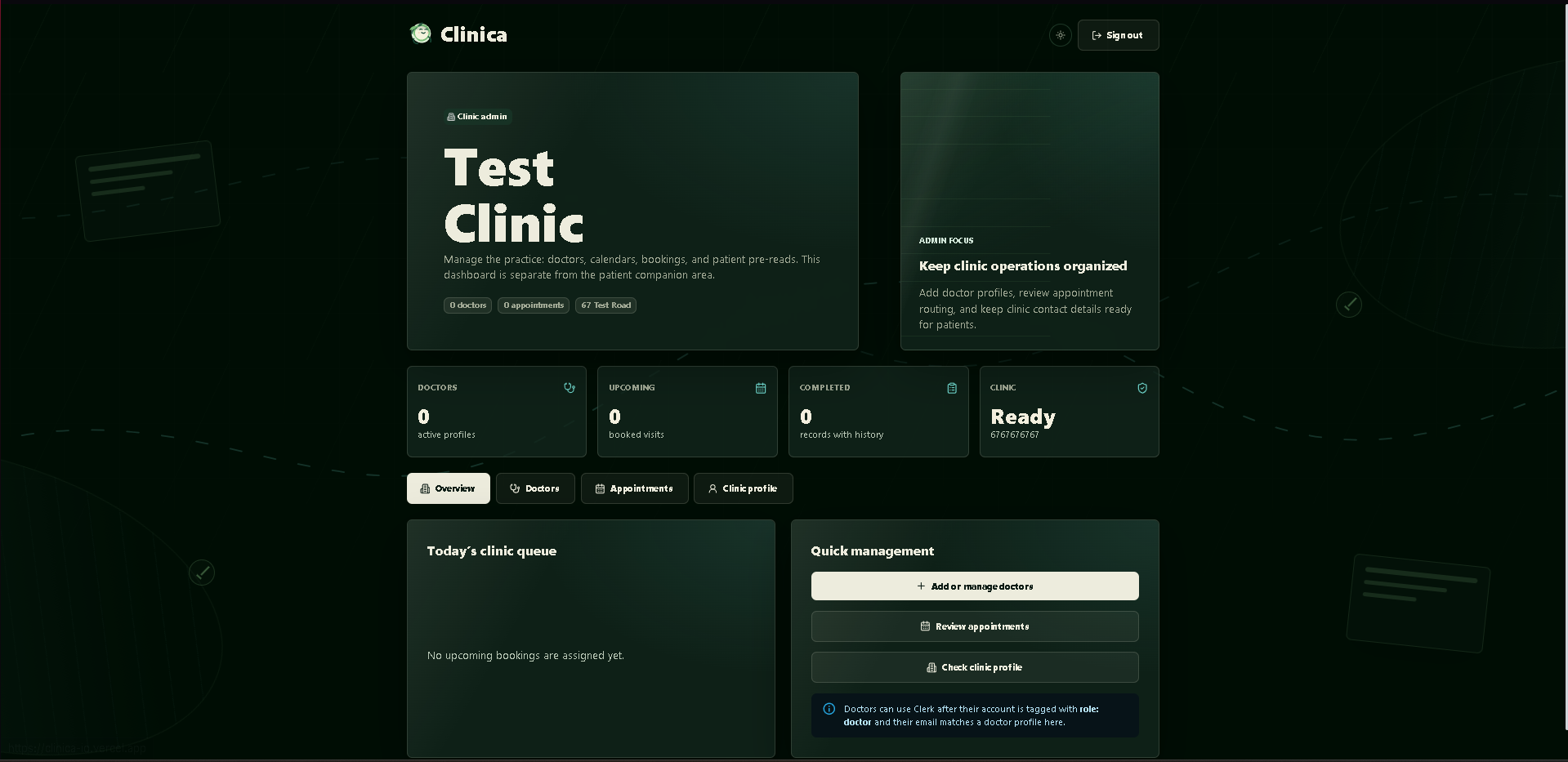
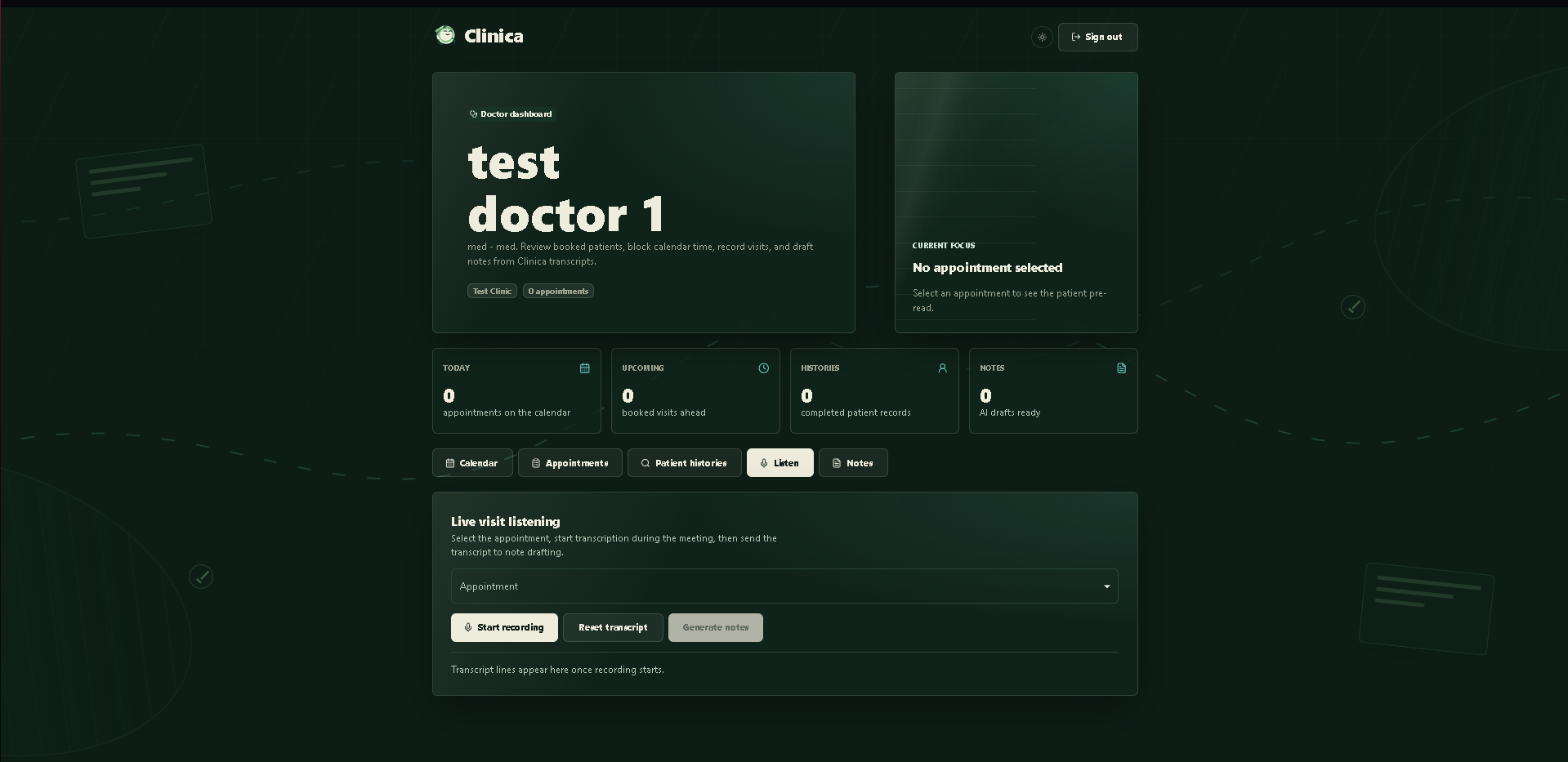
Clinica also includes a clinic and doctor side, where clinics can register supported locations, add doctors, manage availability, and let patients book appointments with the right care team.
How we built it
We built Clinica as a full-stack web application with a polished patient experience and real backend infrastructure.
| Layer | Technology |
|---|---|
| Frontend | Next.js, React, MUI, Tailwind |
| Animation | GSAP |
| Auth | Clerk |
| State | Zustand |
| AI | IBM watsonx.ai + Featherless AI |
| Transcription | Deepgram |
| Database | IBM Cloudant |
| Scheduling | Google Calendar integration |
| Deployment | Vercel |
All AI calls happen through server-side API routes, so private keys never reach the browser.
The app has multiple connected systems:
$$ \text{Patient App} \rightarrow \text{AI APIs} \rightarrow \text{Cloudant Records} $$
$$ \text{Clinic Dashboard} \rightarrow \text{Doctors} \rightarrow \text{Appointments} $$
Clinica uses Cloudant to store visits, clinic profiles, doctors, appointments, summaries, action items, lab results, and patient-owned health history.
Challenges we ran into
One of the biggest challenges was making AI output reliable.
Medical workflows cannot break because a model returns malformed JSON, partial data, or an unexpected response. We added parsing, normalization, and fallback logic so Clinica can still return useful results when the AI response is imperfect.
Real-time transcription was also challenging. Browser audio, WebSockets, and recording states can behave unpredictably, especially when users stop recording normally but the browser reports unusual close codes.
Another challenge was designing three different account flows:
- Patients use Clerk
- Clinic admins use Clerk
- Doctors use clinic-created credentials
Keeping those separate while still connecting everything through Cloudant took careful routing and data modeling.
Accomplishments that we're proud of
We are proud that Clinica feels like a real product, not just a hackathon demo.
It includes:
- A full Prep, Listen, Understand patient journey
- AI symptom articulation
- AI question generation
- Real-time transcription
- Visit summaries
- Lab decoding
- Cloudant persistence
- Appointment booking
- Clinic onboarding
- Doctor dashboards
- A polished, calm, accessible interface
The biggest accomplishment is the product structure itself:
$$ \text{Before the visit} \rightarrow \text{During the visit} \rightarrow \text{After the visit} $$
Most health tools solve only one moment. Clinica supports the entire journey.
We are also proud of the design. Clinica is intentionally warm, human, and calm. It avoids feeling like a cold medical portal and instead feels like a companion sitting beside the patient.
What we learned
We learned that healthcare software needs more than intelligence. It needs trust, clarity, and graceful failure.
AI in healthcare cannot just be impressive. It has to be:
$$ \text{Helpful} + \text{Understandable} + \text{Reliable} $$
We also learned the importance of separating identity from application data. Clerk manages who someone is, while Cloudant stores what matters inside Clinica: clinic profiles, doctors, appointments, visits, summaries, and patient records.
On the technical side, we learned a lot about:
- Real-time browser audio
- Deepgram WebSocket transcription
- AI response validation
- Cloudant document modeling
- Clerk authentication flows
- Clinic and doctor workflow design
- Patient-centered UX
Most importantly, we learned that small details matter. A confusing login path, missing clinic phone number, or unclear medical term can quickly break user trust.
What's next for Clinica
Clinica’s next step is to become a deeper patient-owned health memory system.
Future improvements include:
- Verified clinic profiles
- Insurance and specialty filters
- Better doctor calendar tools
- Editable doctor notes
- Caregiver sharing
- Encrypted exports
- Medication tracking
- Multilingual visit summaries
- Stronger consent controls
- Long-term health timelines
The long-term vision is simple:
$$ \boxed{\text{Clinica helps patients arrive prepared, stay present, and leave understood.}} $$
Clinica is not trying to replace doctors. It helps patients understand them.
Built With
- clerk
- css
- deepgram
- express.js
- featherless
- github
- google-calander-api
- gsap
- ibm-cloud
- ibm-cloudant
- ibm-watson
- lucide
- material
- mui
- next.js
- node.js
- react
- scrolltrigger
- tailwind
- tanstack
- typescript
- uiverse
- vercel
- vercel-analytics
- vercel-speed-insights
- zustand


Log in or sign up for Devpost to join the conversation.