
Project Description
Clinic Co-Pilot was born from a moment we could not ignore: a patient arrives scared, hours into a long wait, chest tightness and dizziness building in a crowded hallway. By the time a doctor appears, the story is already fragmented—scattered across hurried notes, half-remembered questions, and the anxiety of feeling unheard. This is not neglect. It is overload. And in that gap between arrival and attention, the details that could change care are the ones most likely to slip away.
We built Clinic Co-Pilot to close that gap. It captures the patient's story once, preserves it with empathy, and delivers the right clinical signals at the moment they matter most.
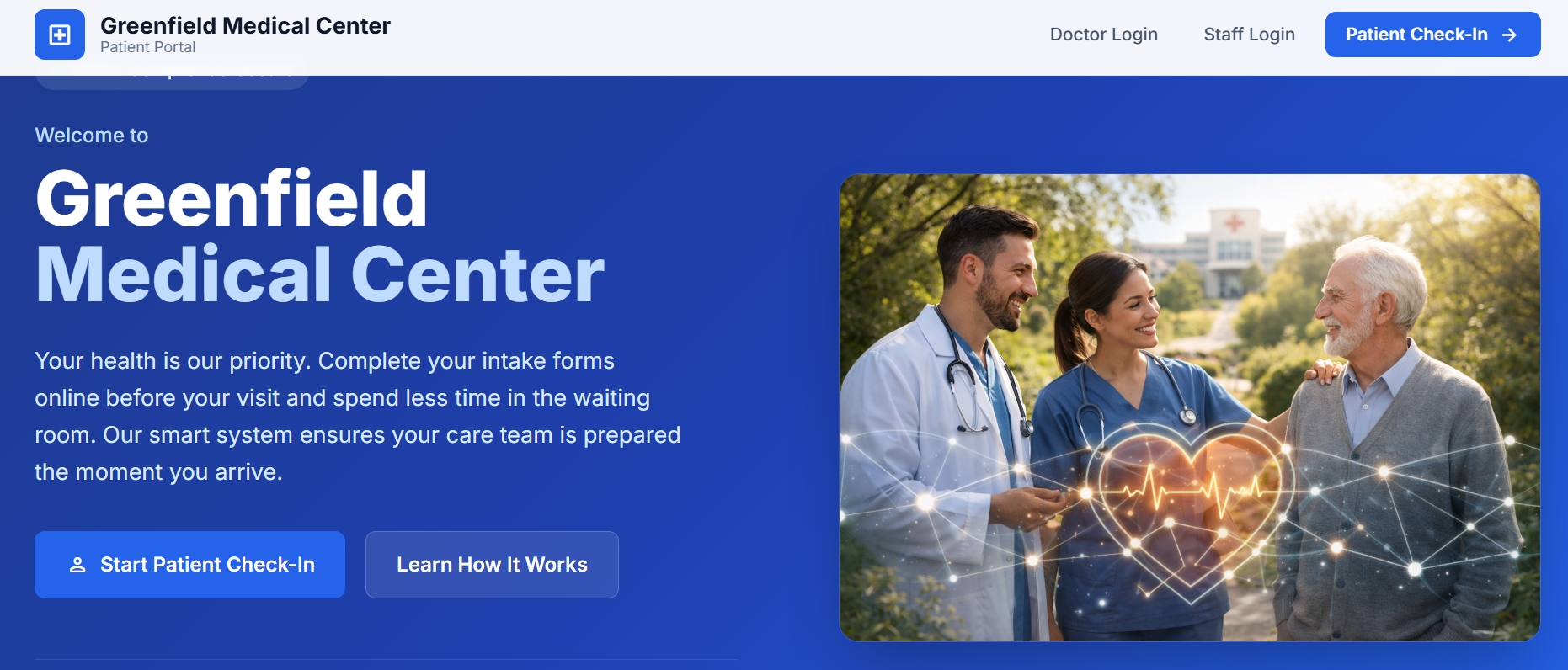
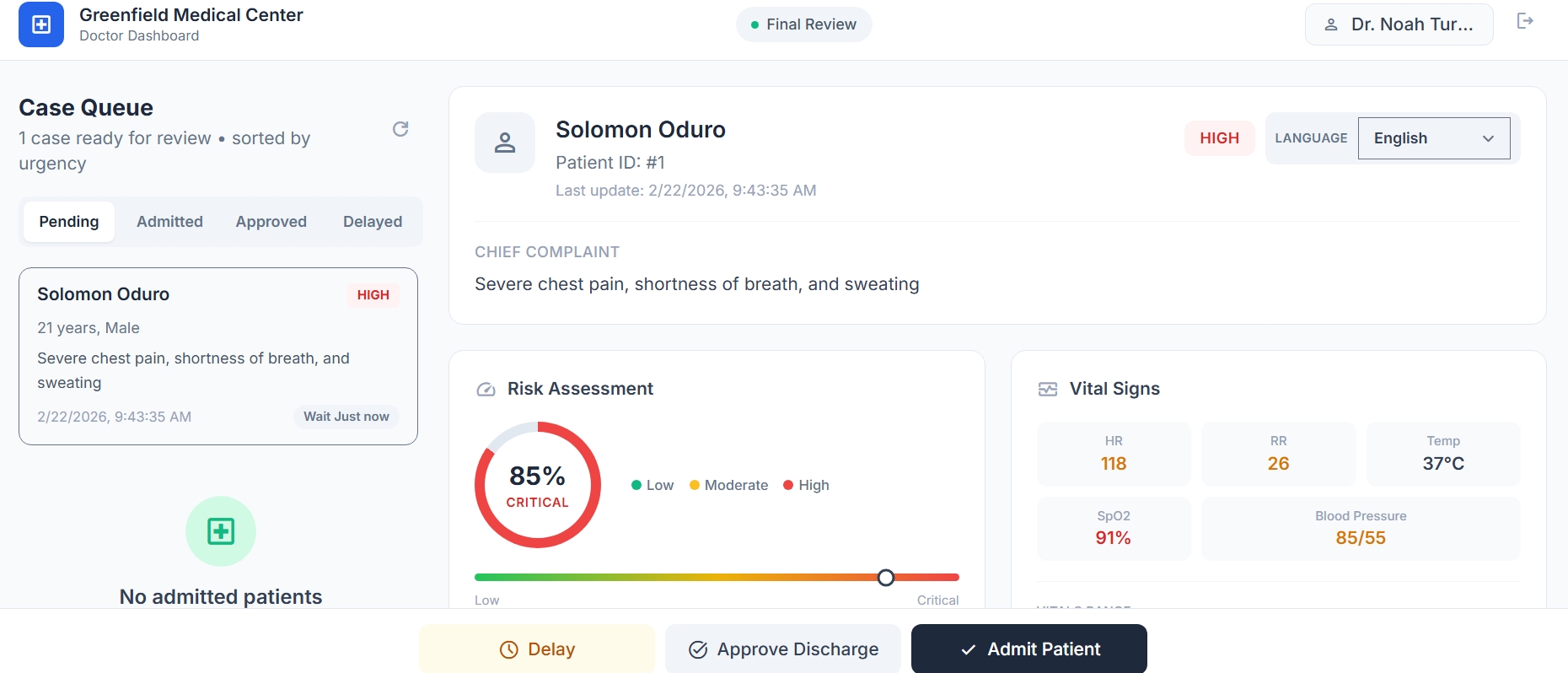
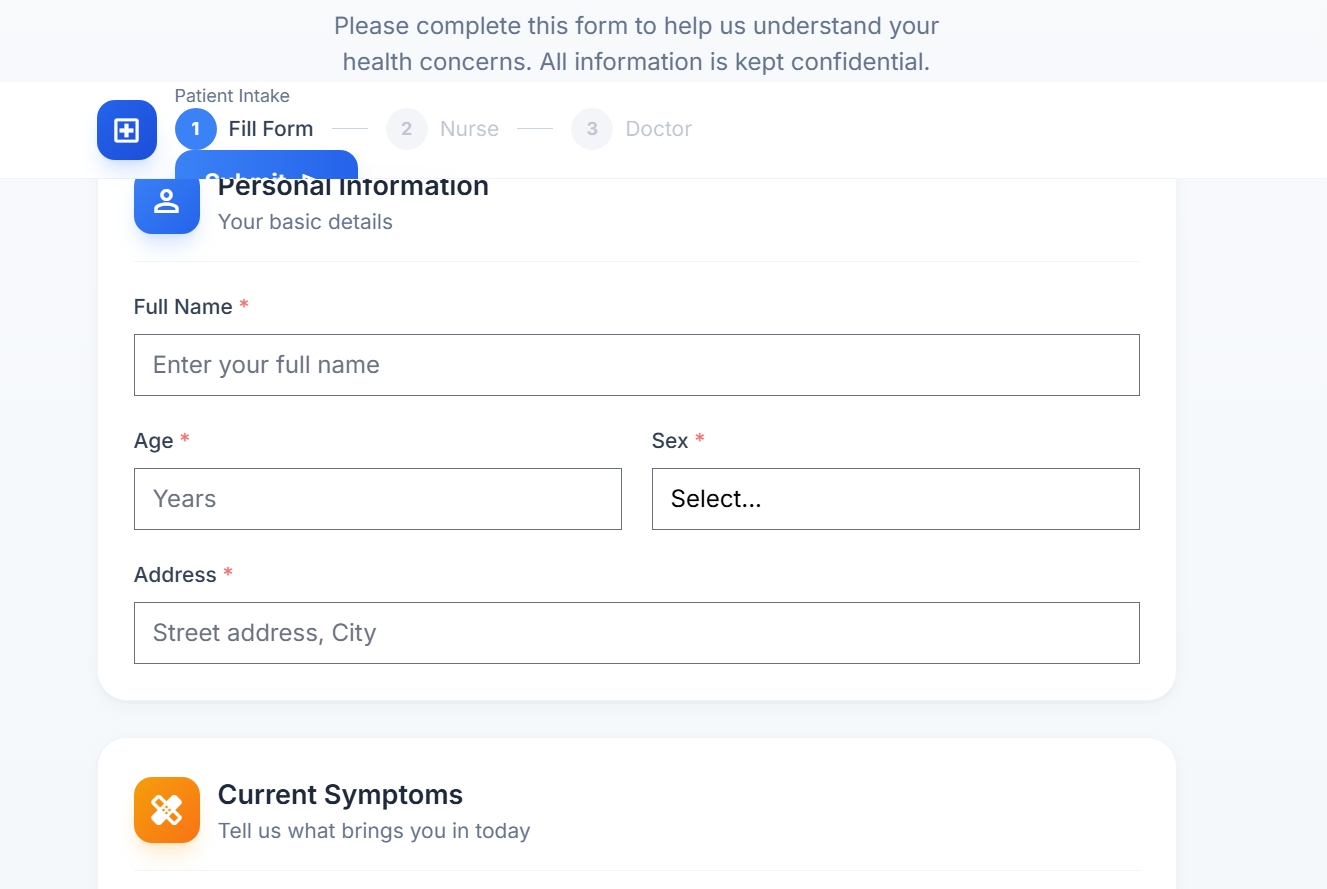
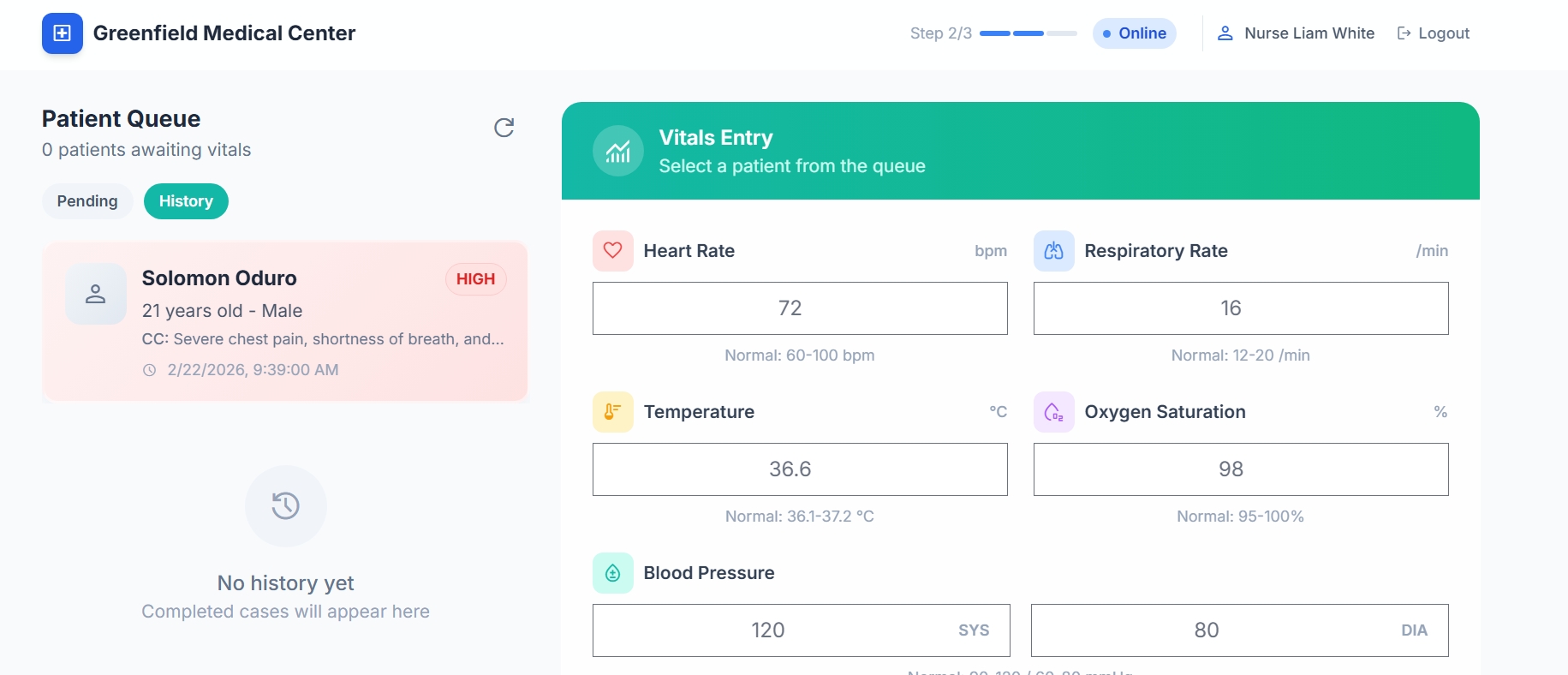
The journey begins when a patient selects their preferred language—English, Spanish, French, Arabic, or Portuguese—and completes a guided intake form in their own words. They describe symptoms, history, and severity without the pressure of a rushed conversation. The form adapts to their language, meeting them where they are, not where the system demands they be. A nurse then adds vitals to complete the clinical picture. The system produces a concise, clinician-ready brief with a priority level, red-flag alerts, differential considerations, and recommended next steps. And when the doctor reviews, they can choose to see the case in their own preferred language—the AI translates seamlessly, preserving clinical meaning while removing the friction of language barriers.
The doctor remains the final authority. They may admit, delay, or discharge, and the system records every decision clearly. This is not a diagnostic engine. It is a decision-support companion: one that reduces noise, restores clarity, and gives clinicians the space to move faster and with more confidence.
We think of the problem mathematically. The goal is reducing cognitive load $L$ by maximizing clinical clarity $C$ while keeping time $t$ low:
$$ C = \frac{S}{N}, \quad L \propto \frac{1}{C}, \quad t \downarrow $$
Where $S$ is clinical signal and $N$ is noise. Our work is to increase $C$—the ratio of signal to noise—without adding friction. Every design decision filters through that lens.
The architecture is intentionally practical: a lightweight FastAPI backend, a local SQLite store for resilience, and clean HTML/CSS/JS dashboards tailored to three distinct workflows—patient, nurse, and doctor. Google Gemini powers structured clinical summaries and real-time translation across five supported languages. A safety-first rules engine guarantees deterministic fallback when the AI is unavailable, because resilience in healthcare is not optional. We designed for it from the start.
The hardest challenges were reliability under AI service limits and clarity without overwhelm. Quota spikes and service interruptions required fallback logic that never leaves a clinician without an answer. Presenting dense clinical data without exhausting already-tired eyes took multiple design iterations—trimming, refining, testing—until the interface felt calm and trustworthy rather than clinical and cold.
What we learned is simple: patients want to be heard once, not five times. They want to tell their story in their own language and trust that it reaches the right person intact. Clinicians want to act with confidence, not hunt for context across scattered notes. If a patient can walk in anxious and walk out feeling understood—and if a clinician can see the right signals without delay—then we have done our job.
Safety note: Clinic Co-Pilot is a prototype decision-support tool. It does not diagnose, does not prescribe, and does not replace clinical judgment. All final decisions remain with licensed healthcare professionals.

Log in or sign up for Devpost to join the conversation.