Inspiration
Climate disasters are becoming more frequent, severe, and unpredictable across the world. Floods, wildfires, hurricanes, heatwaves, and earthquakes continue to affect millions of people, yet many communities still lack access to intelligent, real-time disaster response systems.
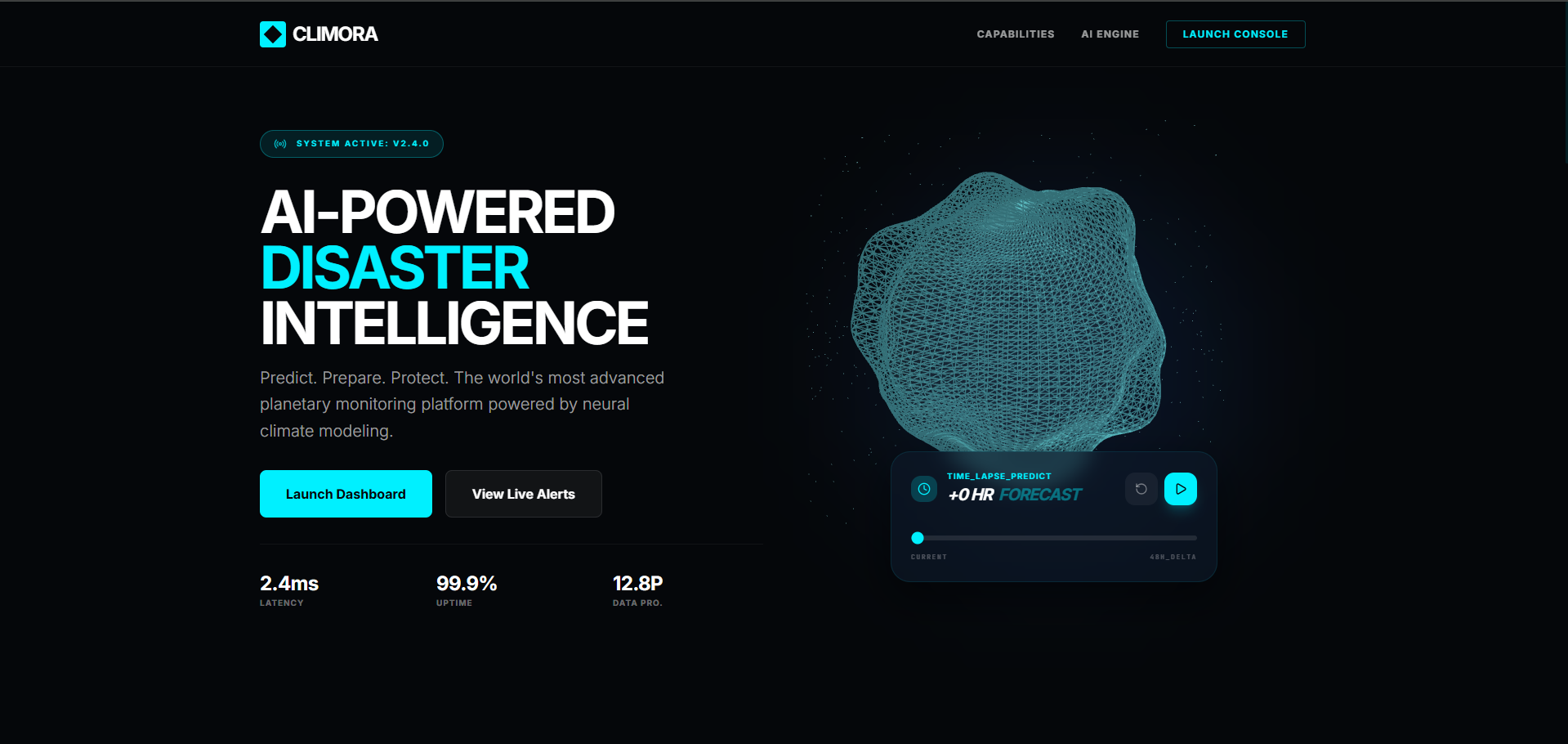
We wanted to build more than a weather app. Our vision for Climora was to create a futuristic “Mission Control” platform for climate resilience: a system capable of transforming massive amounts of environmental data into actionable insights that help people predict, prepare for, and respond to disasters before they escalate.
We were also inspired by the growing potential of AI, satellite monitoring, and predictive analytics to improve emergency response and protect vulnerable communities, especially in low-connectivity and rural regions.
What it does
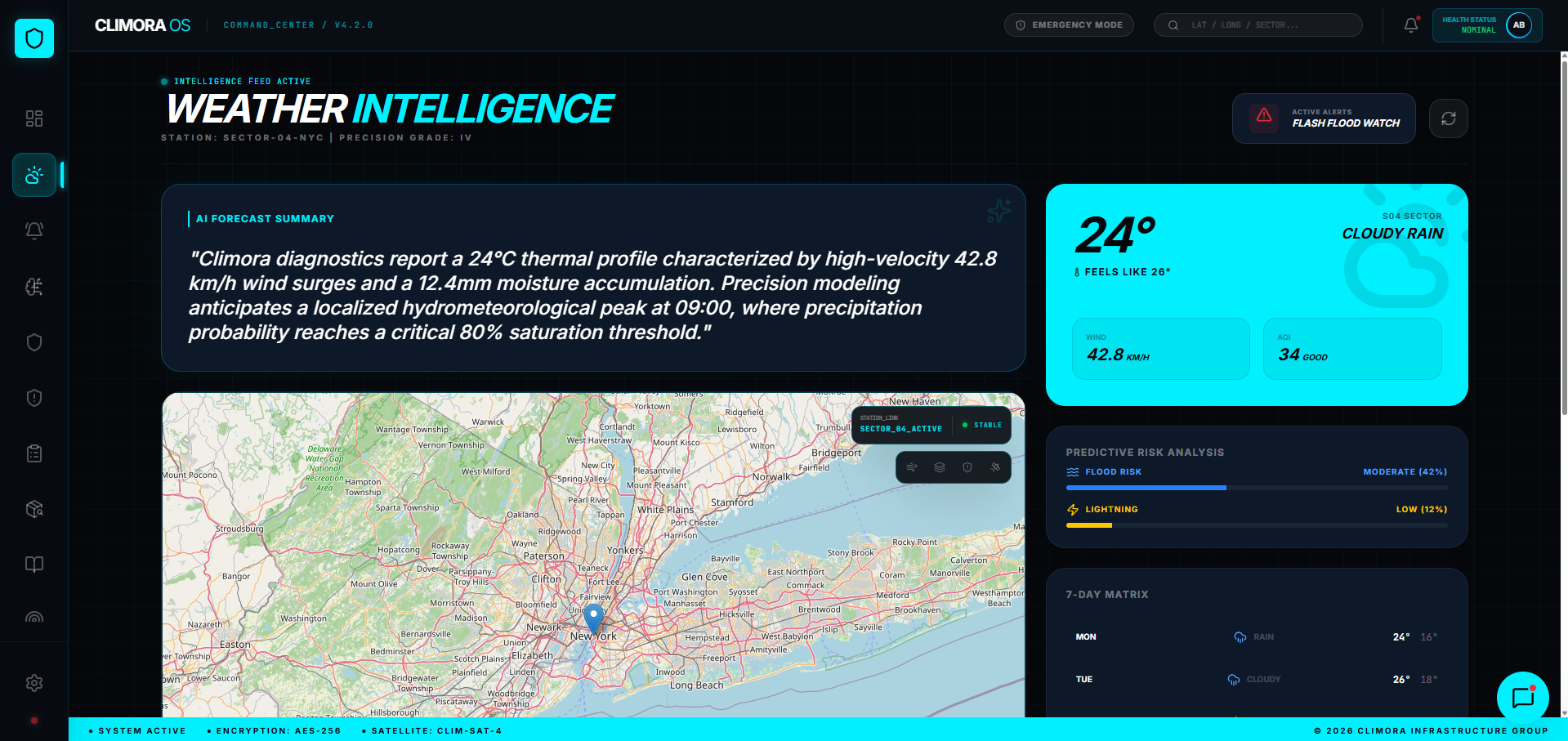
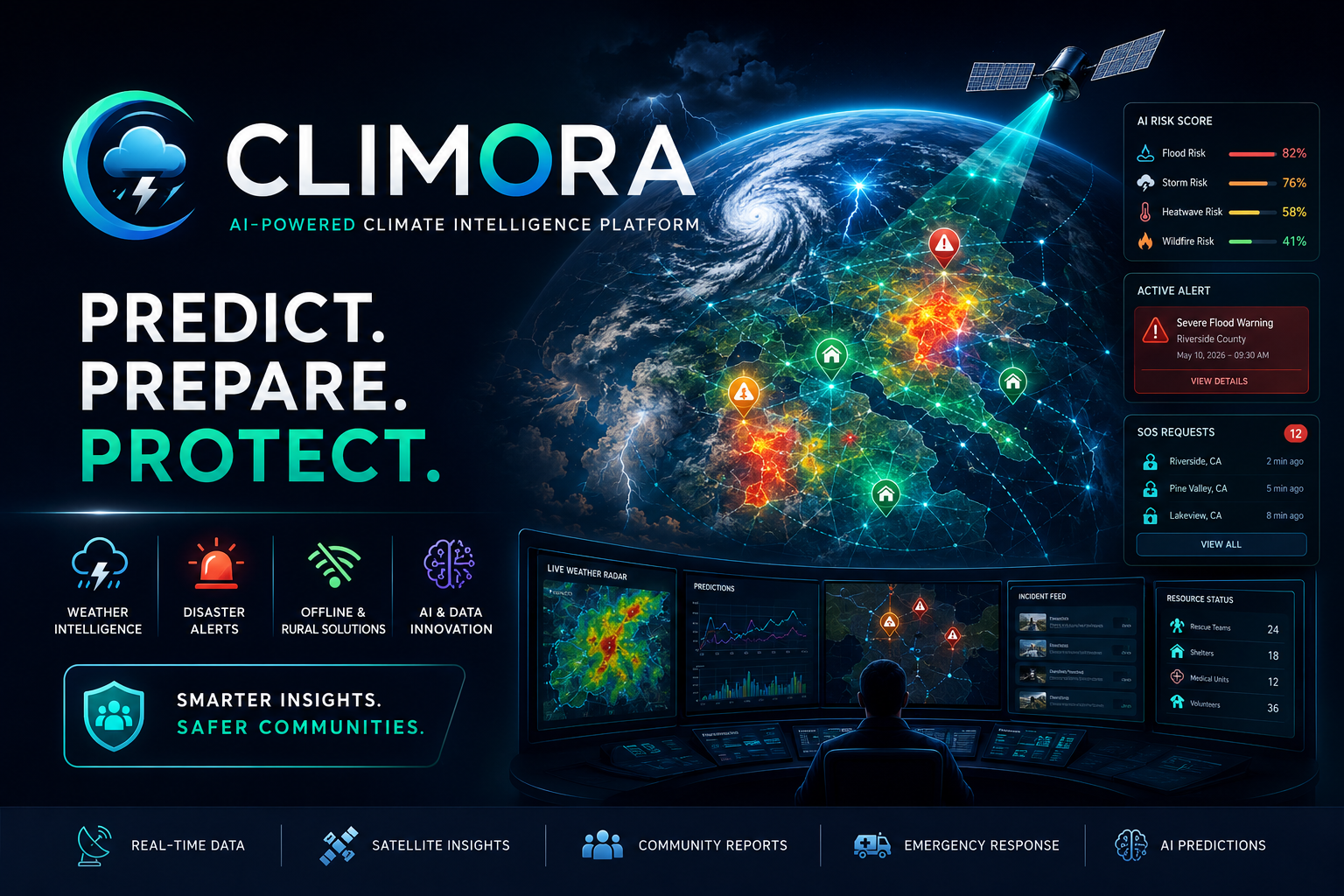
Climora is an AI-powered climate intelligence and disaster response platform designed to monitor environmental risks in real time and help communities stay safe during extreme weather events.
The platform combines:
- Real-time weather intelligence
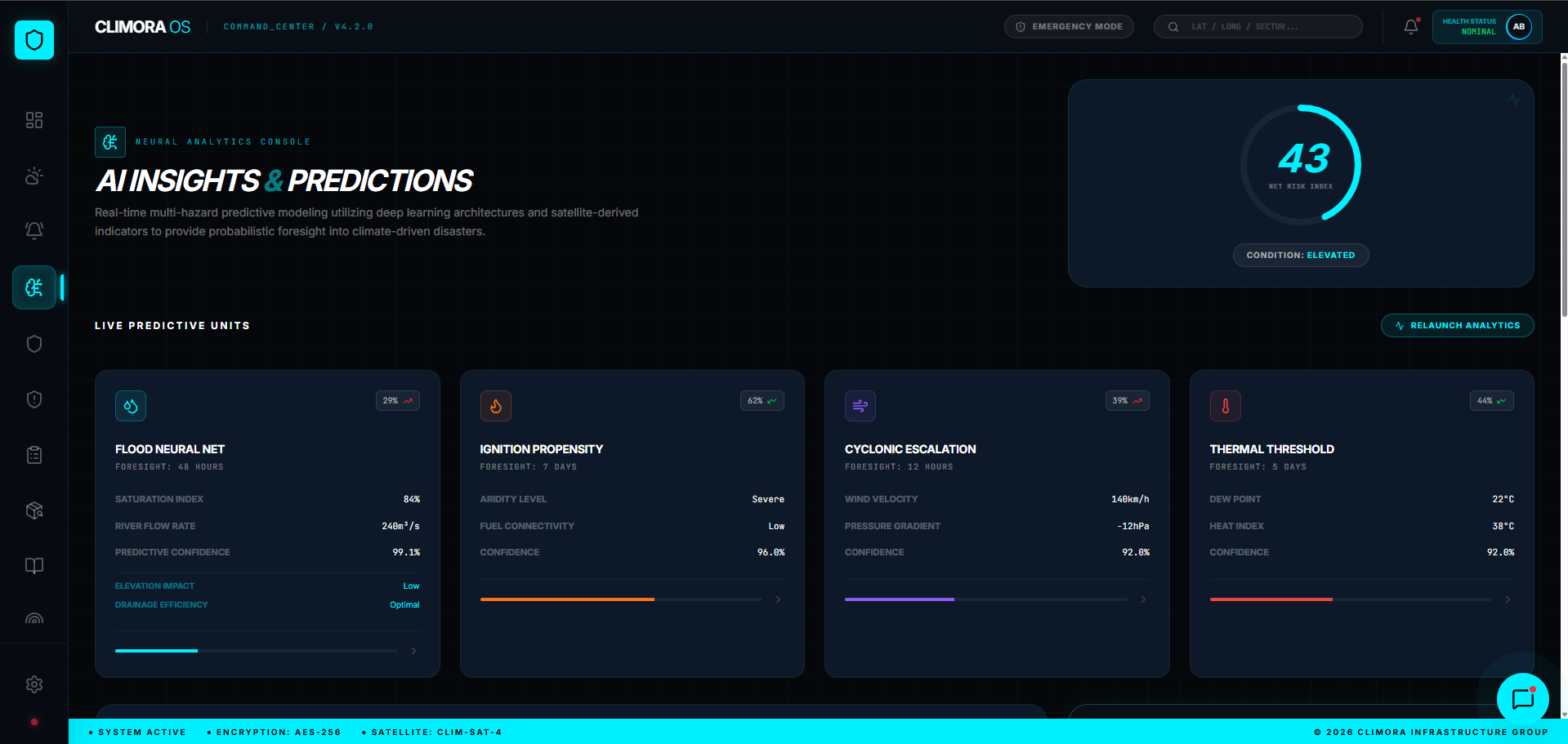
- AI-powered disaster prediction
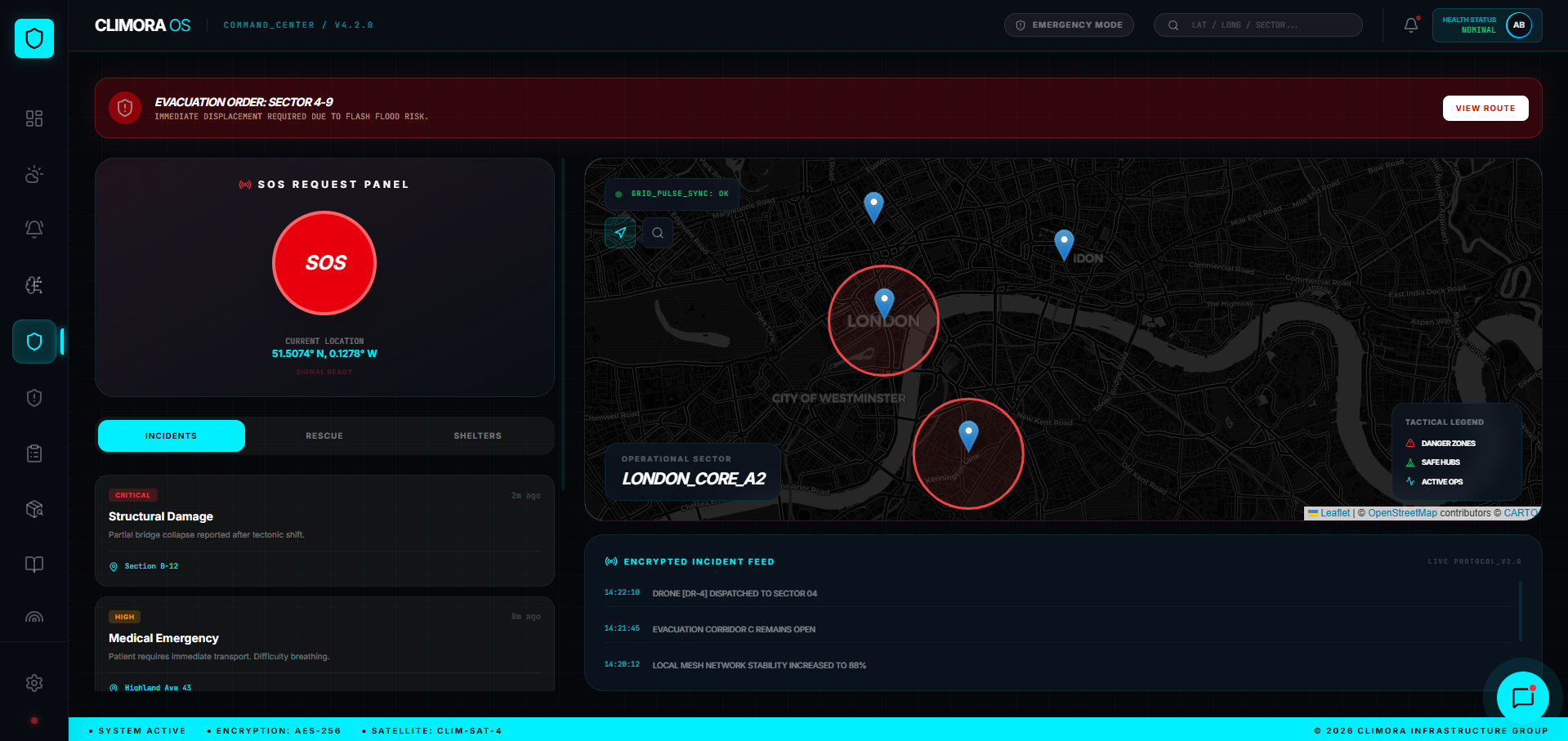
- Emergency alerts and SOS systems
- Community incident reporting
- Offline-first resilience tools
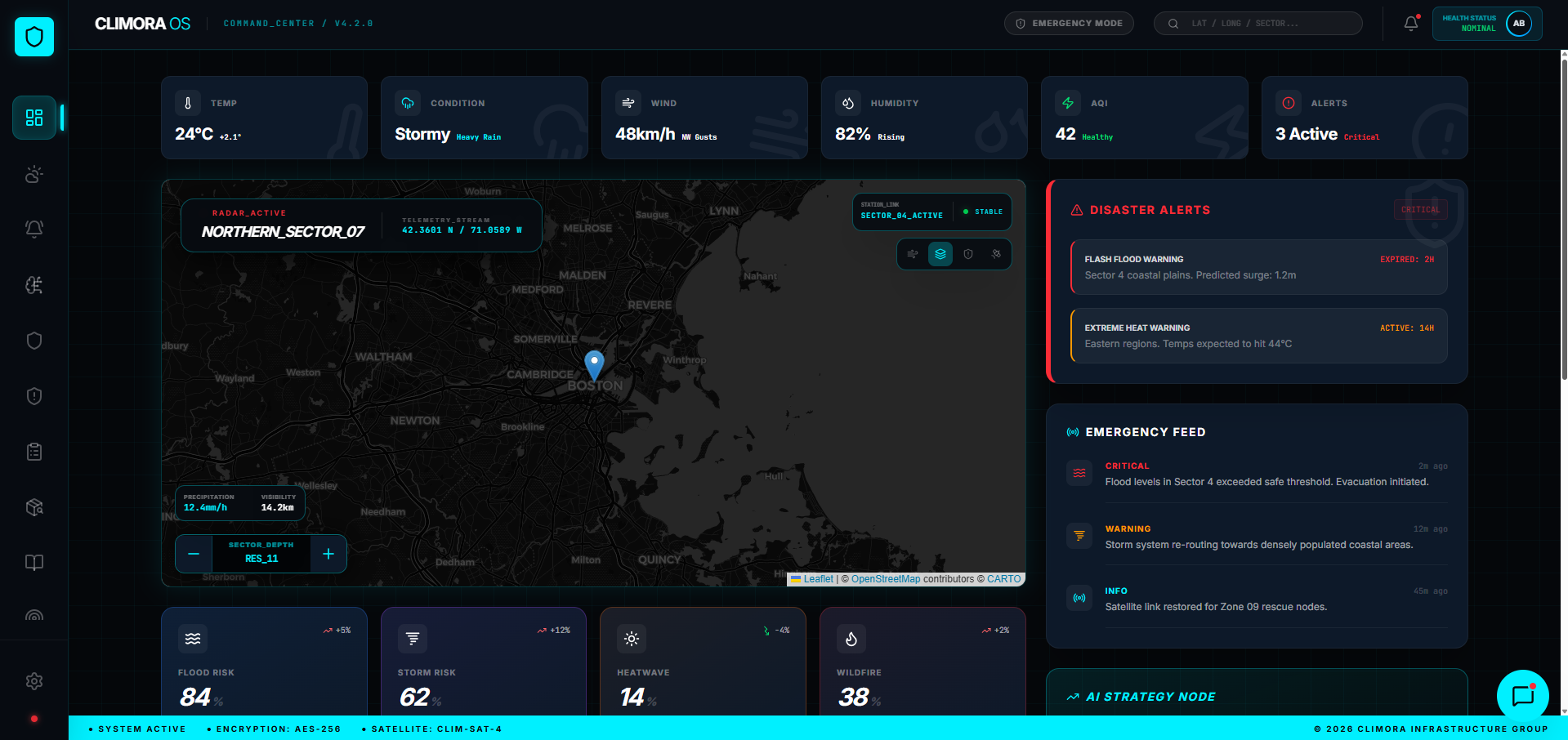
- Interactive global monitoring dashboards
Key features include:
- Hyper-local weather forecasting
- AI risk analysis for floods, storms, wildfires, and heatwaves
- Real-time disaster monitoring maps
- Emergency Mission Control dashboard
- SOS signaling and responder coordination
- Offline emergency toolkit
- Low-bandwidth and rural accessibility support
- AI-generated emergency recommendations
- Community-driven incident reporting
- Satellite-inspired climate monitoring visualization
Climora transforms raw climate data into clear, actionable emergency intelligence.
How we built it
We built Climora using a modern full-stack architecture designed for scalability, performance, and real-time responsiveness.
Frontend:
- React 19
- Vite
- Tailwind CSS
- Framer Motion
- Three.js
- Leaflet
- Recharts
The frontend was designed as a futuristic emergency operations center with immersive visualizations, animated dashboards, and interactive climate monitoring systems.
Backend:
- Node.js
- Express.js
- MongoDB Atlas
- JWT Authentication
The backend handles data orchestration, alerts, authentication, and communication between services.
AI Prediction Service:
We developed a separate Python FastAPI microservice using:
- Scikit-learn
- XGBoost
- Pandas
- NumPy
The AI engine analyzes environmental and historical climate patterns to generate disaster risk predictions and emergency recommendations.
Additional Systems:
- Progressive Web App (PWA) support for offline resilience
- Real-time emergency alert simulations
- Satellite-inspired global monitoring visualization
- Community reporting system
- Emergency response coordination tools
Challenges we ran into
One of the biggest challenges was balancing technical complexity with usability. We wanted Climora to feel like a professional emergency response platform while still remaining intuitive and accessible.
Some major challenges included:
- Designing real-time climate visualizations
- Building a responsive global monitoring dashboard
- Managing large amounts of live environmental data
- Simulating AI prediction workflows
- Creating an immersive futuristic UI without sacrificing performance
- Designing offline-first systems for low-connectivity environments
- Integrating maps, analytics, alerts, and AI into a unified experience
Another challenge was ensuring the platform felt impactful and realistic rather than just a collection of disconnected features.
Accomplishments that we're proud of
We are proud of creating a platform that feels like a real-world climate resilience system rather than a simple weather dashboard.
Some accomplishments we are especially proud of include:
- Building a cinematic “Mission Control” interface
- Designing a highly polished futuristic UI/UX
- Creating AI-powered disaster risk prediction systems
- Developing an integrated emergency response ecosystem
- Supporting offline and rural accessibility scenarios
- Combining weather intelligence, emergency coordination, and AI analytics into one platform
- Creating immersive visual assets and dashboard experiences
- Building a scalable architecture with separate AI and backend services
We are also proud that Climora addresses a real global problem with technology that could evolve into something impactful beyond the hackathon.
What we learned
Through building Climora, we learned a great deal about:
- Climate resilience technology
- Disaster response workflows
- AI-powered prediction systems
- Real-time geospatial visualization
- Designing large-scale dashboard interfaces
- Structuring scalable full-stack architectures
- Creating offline-first experiences
- Balancing technical depth with user experience
We also learned how important accessibility, speed, and clarity are during emergency situations where every second matters.
What's next for Climora
Our vision for Climora extends far beyond the hackathon.
Future plans include:
- Real-world satellite and IoT sensor integrations
- Live emergency data feeds from official agencies
- Advanced AI forecasting models
- Mobile-native applications
- Real-time responder coordination systems
- Community verification and trust scoring
- AR-powered shelter navigation
- Voice-based emergency assistance
- Mesh networking for disaster communication
- Expanded offline infrastructure for remote regions
Long-term, we hope Climora can evolve into a global climate resilience platform that helps communities prepare for an increasingly unpredictable world.
Built With
- express.js
- fastapi
- framer-motion
- jwt
- leaflet.js
- mongodb
- mongoose
- node.js
- numpy
- pandas
- python
- recharts
- scikit-learn
- tailwindcss
- three.js
- vite
- xgboost

Log in or sign up for Devpost to join the conversation.