Inspiration
The inspiration for Climaxplore came from the growing unpredictability of global weather patterns and the need for more than just a standard 5-7 day forecast. With climate change making extreme weather events more frequent, we wanted to build a platform that goes beyond generic forecasts. The NASA Space Apps Challenge 2025 provided the perfect opportunity to create a tool that not only tells you the weather but intelligently assesses the risk for your specific activities. We asked ourselves: "What if weather data could be transformed into actionable intelligence tailored to individual needs?"
What it does
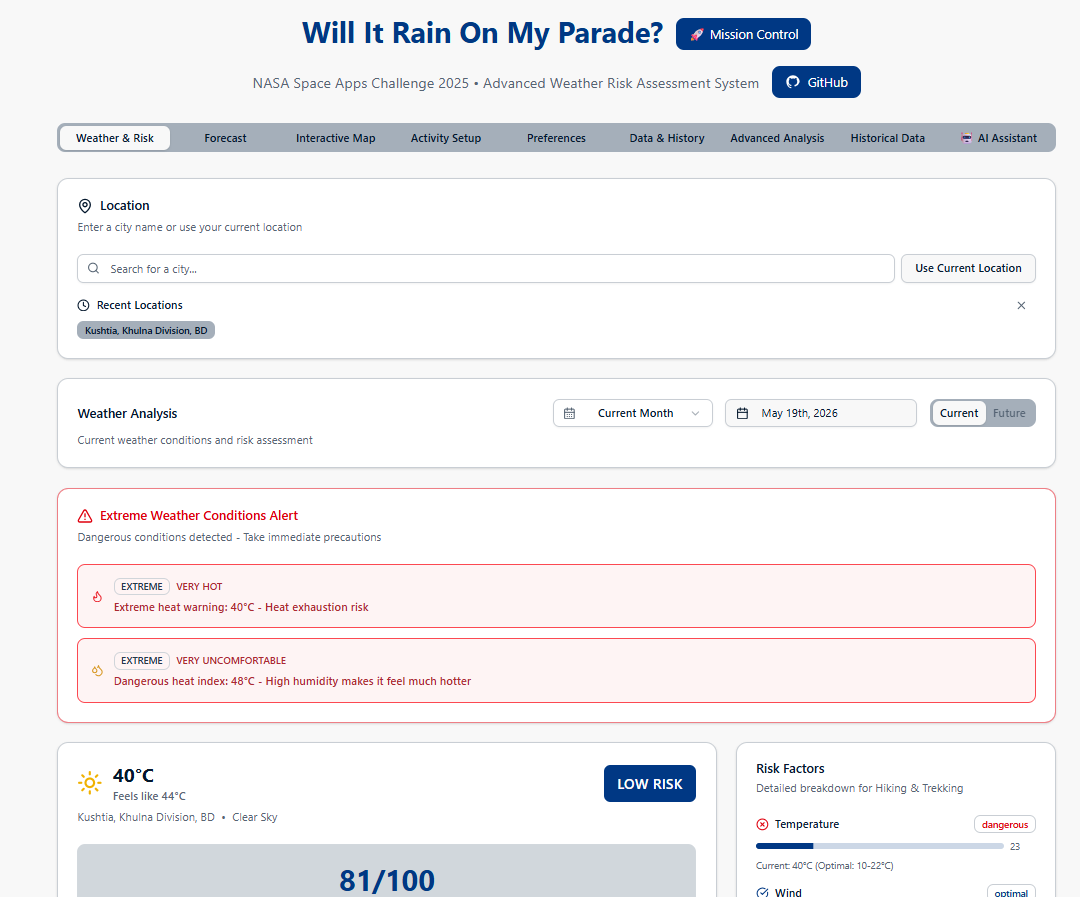
Climaxplore is an AI-powered advanced weather risk assessment system that transforms raw meteorological data into actionable insights. Unlike traditional weather apps, it features:
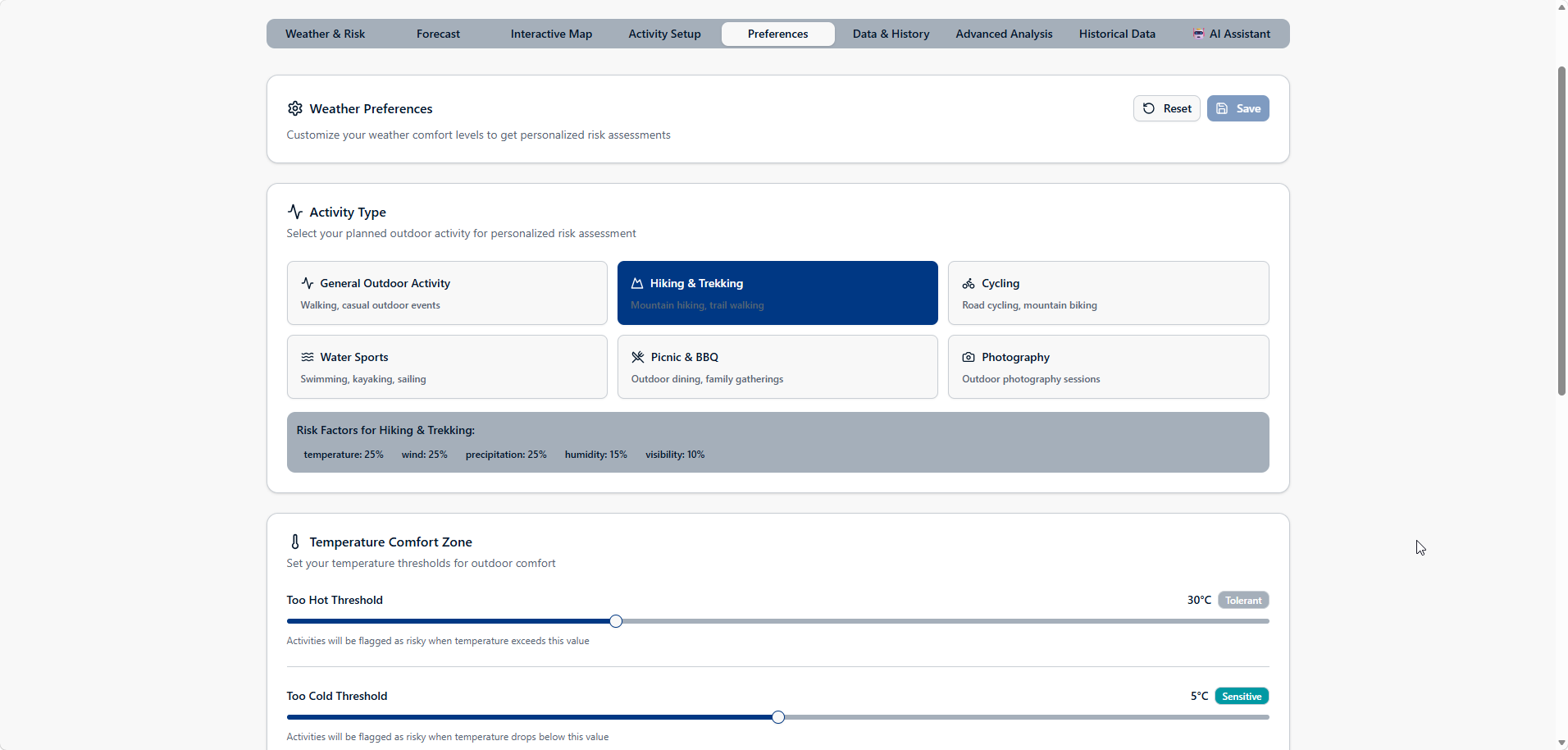
- Activity-Specific Risk Scoring: Calculates risk levels for over 15 activities (e.g., outdoor events, agriculture, construction, aviation) using multiple weather factors.
- Extended Predictions & Anomaly Detection: Offers monthly weather predictions up to 12 months ahead and identifies unusual patterns that indicate significant events.
- Interactive Visualization: Provides both 2D SVG maps and 3D interactive globes with real-time weather overlays (temperature, wind, precipitation).
- ARIA (AI Weather Assistant): A conversational chatbot powered by Google Gemini 2.0 Flash that answers natural language queries and gives intelligent recommendations.
- NASA Mission Control Mode: An immersive, space-themed dashboard for real-time monitoring of extreme weather conditions.
How we built it
We built Climaxplore utilizing a modern, robust tech stack:
- Frontend: Next.js 15 (React 18) and TypeScript 5.0 for a performant and type-safe architecture. We used Tailwind CSS v4 and
shadcn/uifor a sleek, responsive design. - Visualization: Three.js was implemented for the 3D interactive globe, while Recharts handled data visualization and Framer Motion powered the animations.
- APIs & Data: The OpenWeather API was heavily integrated to fetch real-time, 5-day forecasts, and historical weather data. We integrated Google Gemini 2.0 Flash API to drive the AI insights, natural language processing, and advanced risk assessment logic.
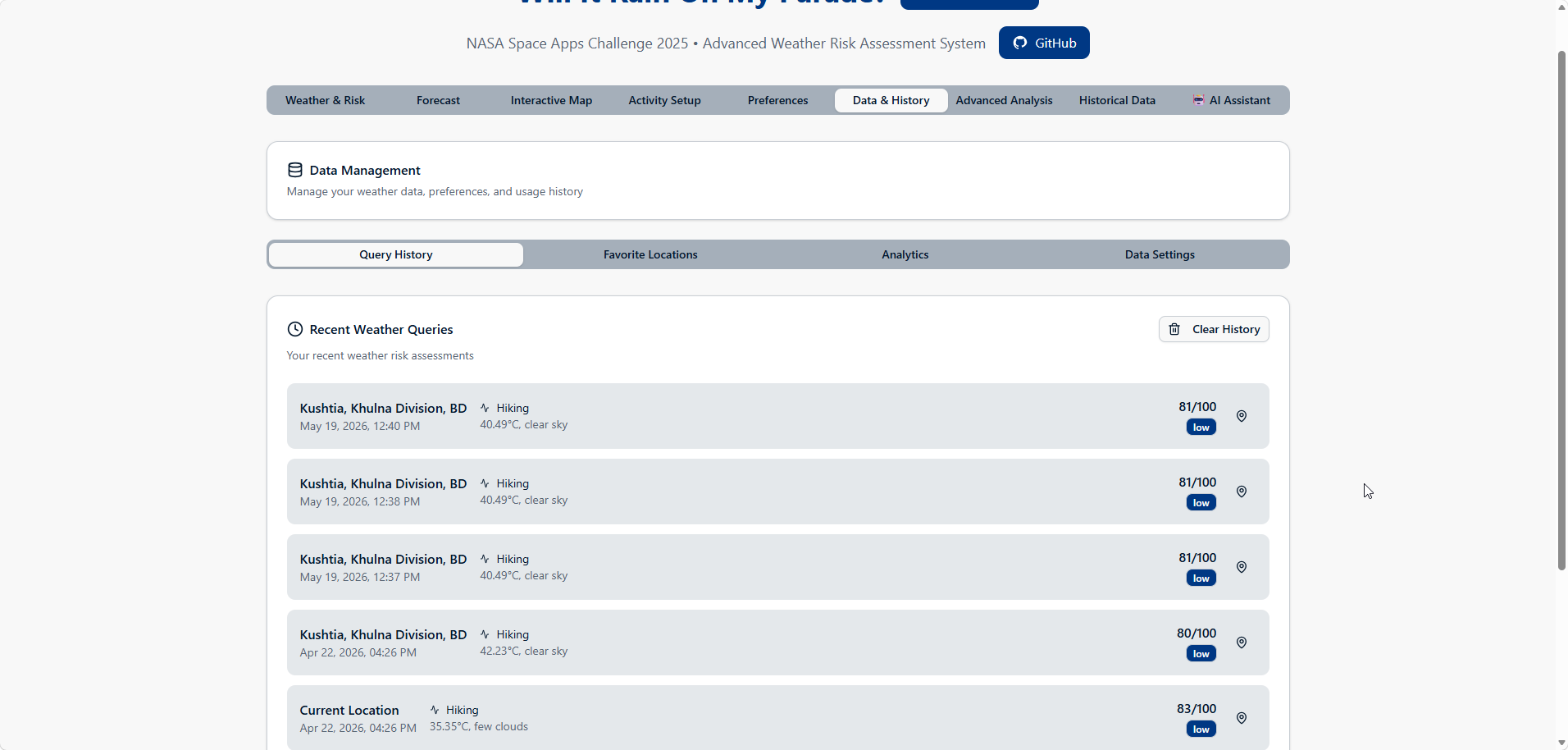
- State & Caching: We managed data persistence using React Hooks, SWR, and browser
localStorageto ensure quick load times and seamless user experiences. The app is deployed on Vercel.
Challenges we ran into
One of the primary challenges was harmonizing vast amounts of diverse meteorological data (temperature, wind, UV, humidity, air quality) into a single, cohesive risk score. Building an algorithm that could dynamically adjust its weights based on 15+ different activity types required rigorous testing and refinement.
Additionally, integrating Three.js within a Next.js environment to render a performant 3D interactive globe without sacrificing page load speed or mobile responsiveness was tricky. Fine-tuning the Google Gemini AI prompts to ensure the ARIA assistant delivered accurate, concise, and context-aware meteorological explanations also took significant iteration.
Accomplishments that we're proud of
We are incredibly proud of successfully merging hard meteorological data with generative AI to create a truly "smart" weather platform. Developing the NASA Mission Control Mode was a fun and challenging endeavor that resulted in a highly engaging user experience. Furthermore, we managed to process and display extended 12-month predictions and historical trend analyses in an intuitive, accessible way. Seeing the ARIA assistant seamlessly answer complex queries like "What's the best time this week for an outdoor wedding?" using real-time data was a major milestone.
What we learned
Building Climaxplore was a deep dive into advanced API orchestration and AI prompt engineering. We learned how to efficiently handle rate limits and caching when dealing with multiple data-heavy APIs (OpenWeather and Gemini). On the frontend, we leveled up our skills in 3D rendering with Three.js and optimizing state management in Next.js 15. Most importantly, we learned a great deal about meteorology and how specific weather parameters interact to create hazardous conditions.
What's next for Climaxplore
Moving forward, we plan to:
- Expand the AI Capabilities: Integrate even more granular climate models and predictive algorithms to improve the accuracy of our 12-month forecasts.
- Mobile Application: Develop dedicated iOS and Android applications using React Native to provide push notifications and real-time location tracking for extreme weather alerts.
- Community & Social Features: Allow users to share activity-specific weather reports and collaborate on event planning directly within the app.
- IoT Integration: Connect with local personal weather stations and smart home devices for hyper-local data analysis.
Built With
- 5-day-forecast
- air-quality
- css
- framer-motion
- gemini-api
- geocoding)-google-gemini-2.0-flash-api-(for-aria-conversational-ai-and-risk-assessment-logic)-platforms
- historical-data
- javascript
- next.js
- node.js
- openweather-api
- react
- recharts
- shadcn-ui
- swr
- tailwind-css
- three.js
- typescript
- vercel


Log in or sign up for Devpost to join the conversation.