Inspiration
Climate-related incidents such as flooding, heatwaves, and blocked drainage often go unreported until damage has already occurred. In many communities, especially in developing regions, there is no simple way for residents to document and share these incidents in real time. ClimateWatch was inspired by the need for a lightweight, accessible tool that empowers communities to report climate risks early and turn local observations into actionable data.
What it does
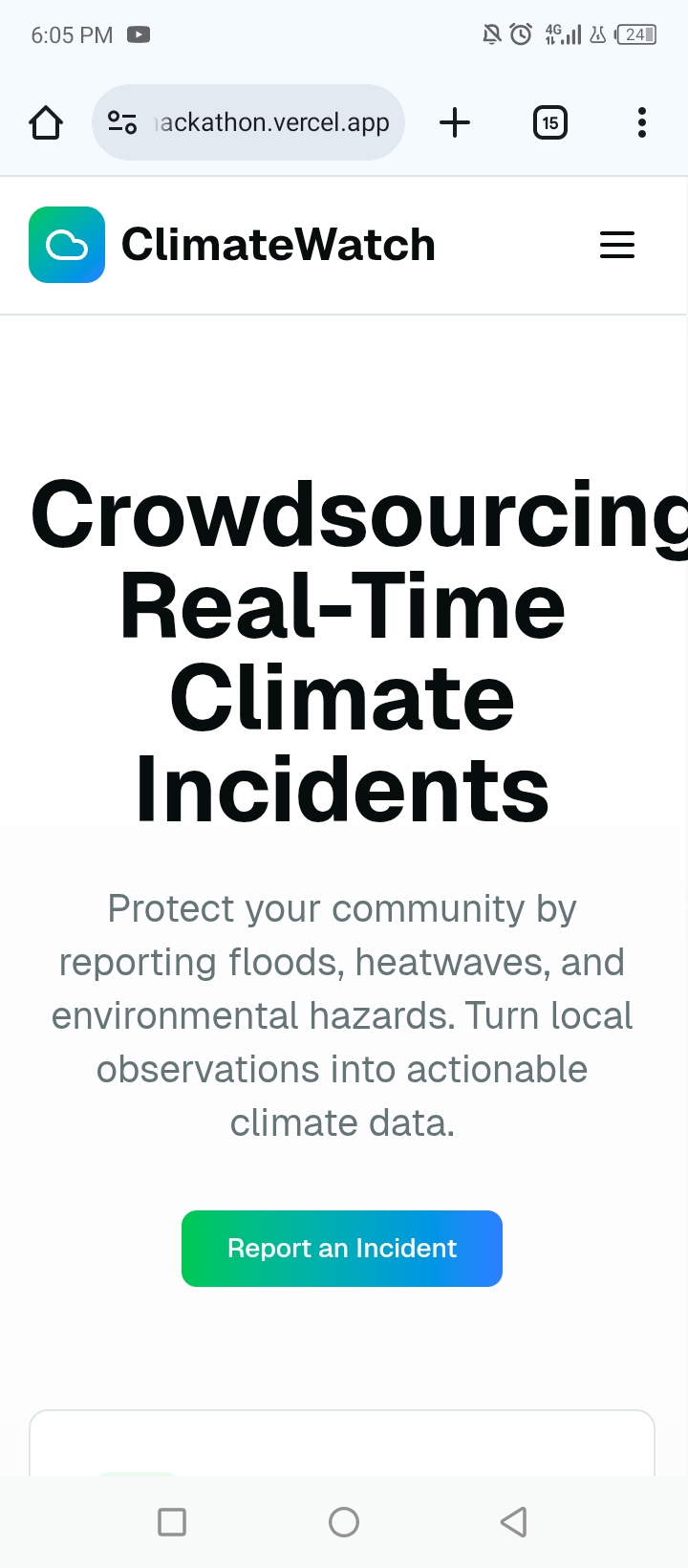
ClimateWatch is a web-based platform that allows users to report, view, and track climate-related incidents such as floods, extreme heat, and environmental hazards.
Users can:
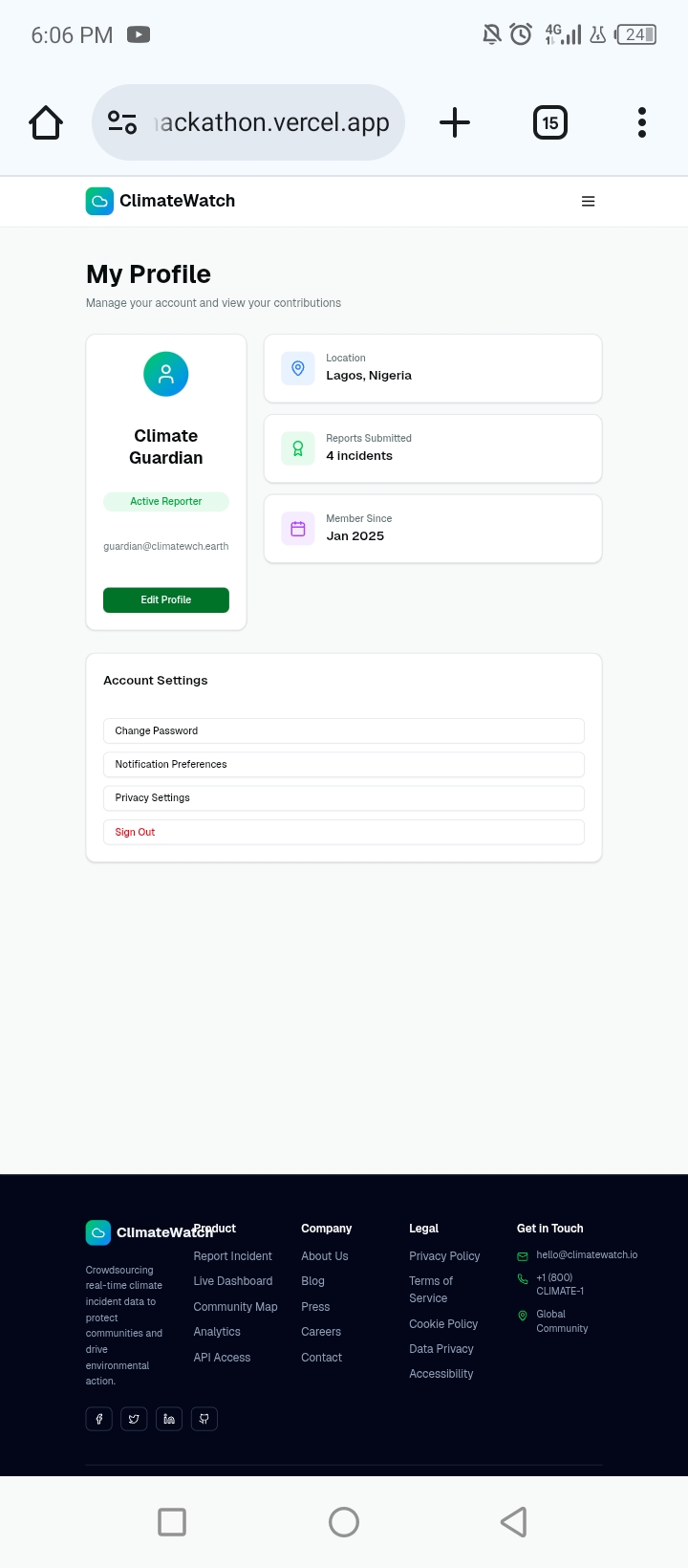
- Submit climate incident reports with location and details
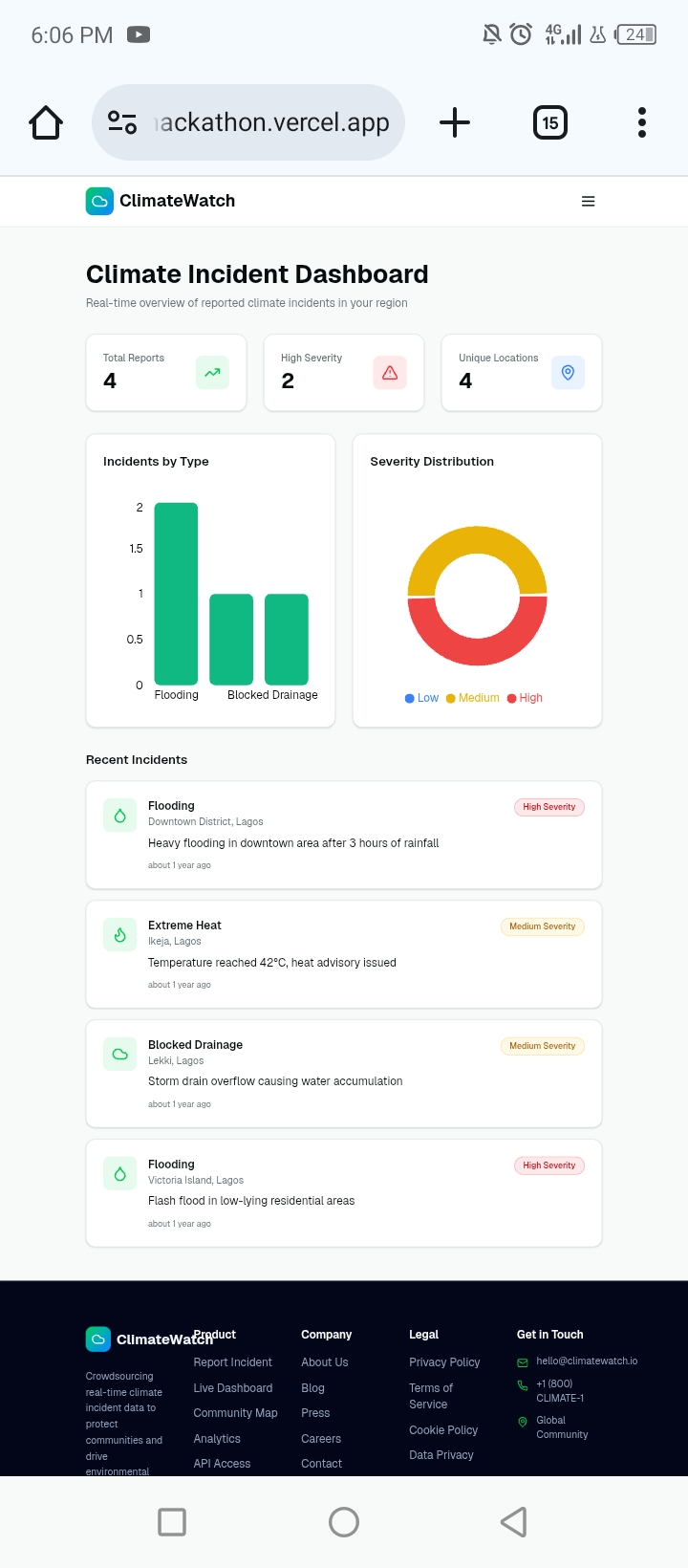
- View recent incidents reported by others
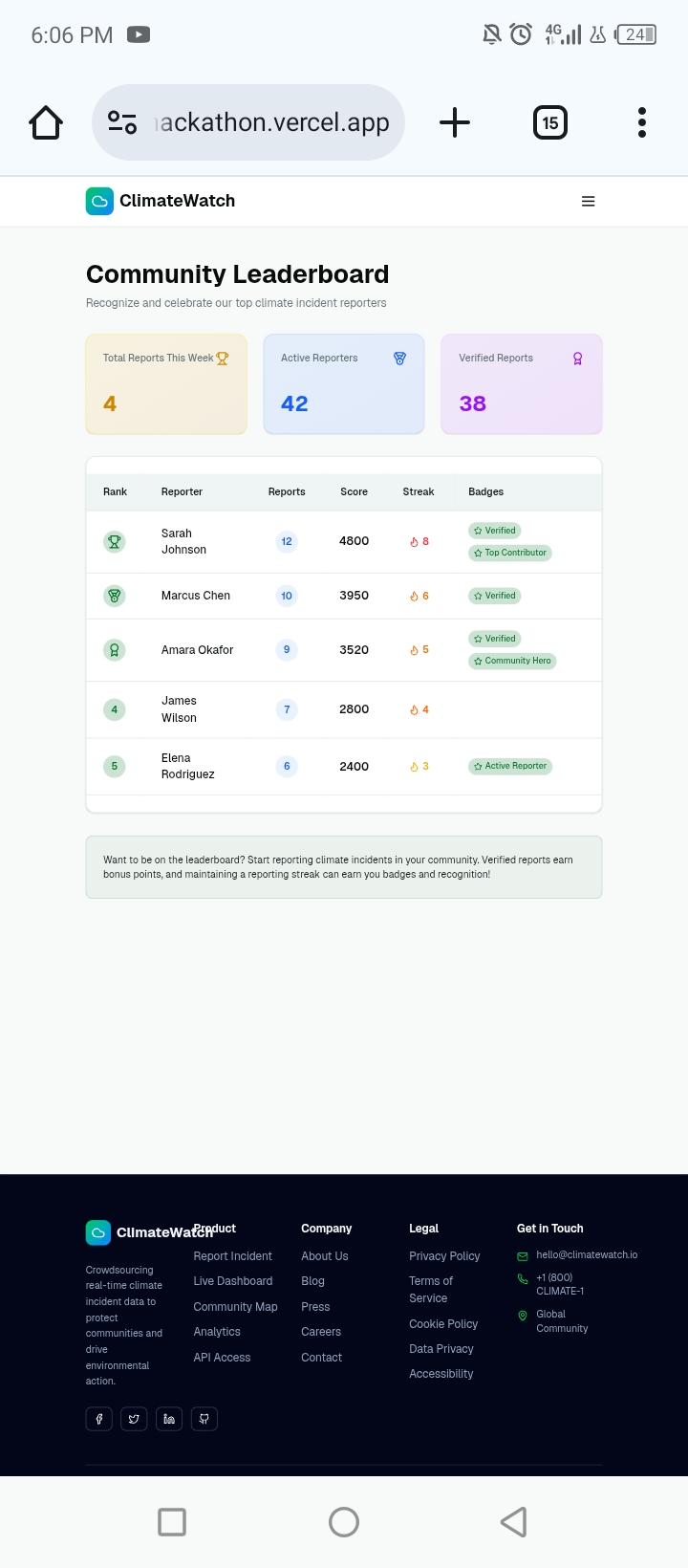
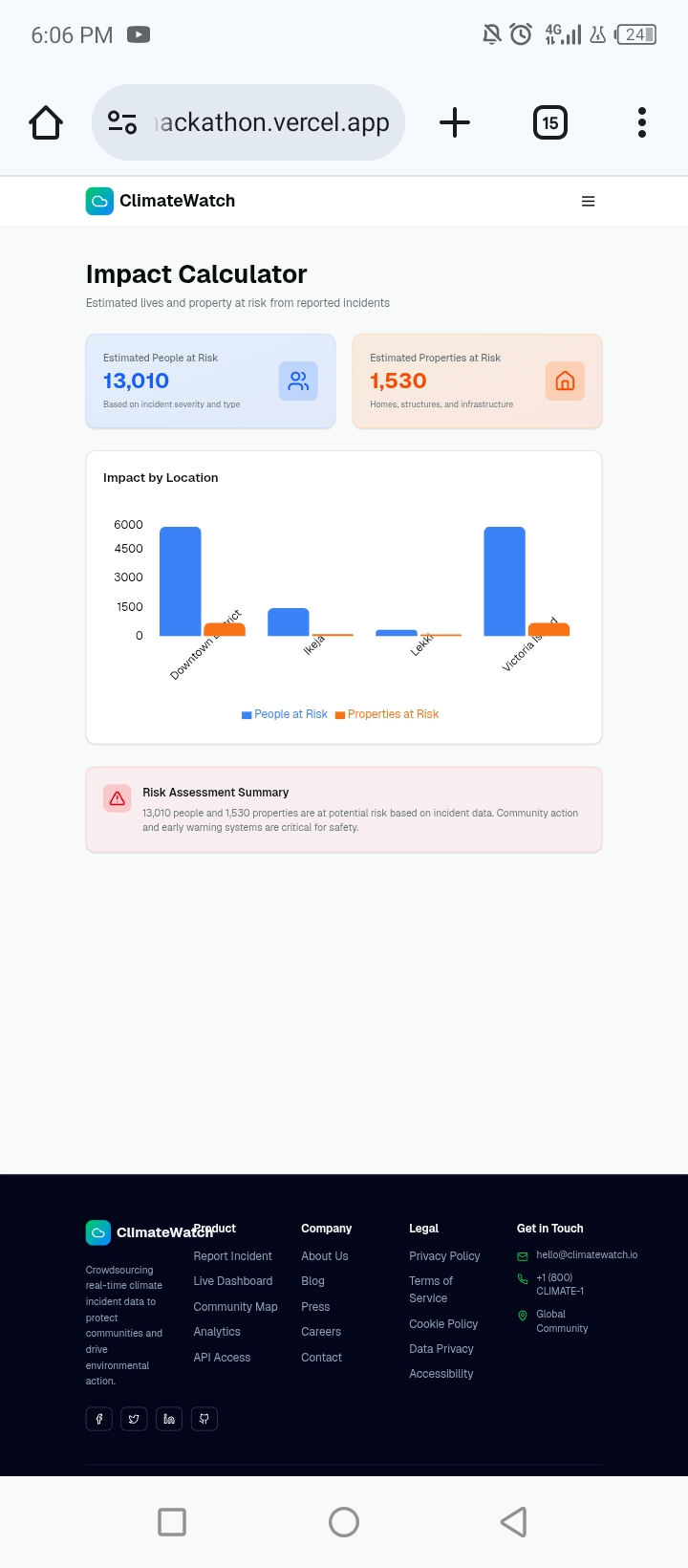
- See trends and summaries through a simple dashboard
The platform helps transform community input into useful insights that can support awareness, preparedness, and response.
How we built it
ClimateWatch was built as a web-first application with simplicity and accessibility in mind.
- Frontend: Modern web framework (React / Next.js) for a clean, responsive UI
- Backend & Database: Cloud backend (Supabase/Firebase) for data storage and authentication
- Visualization: Basic charts and lists to highlight trends
- Deployment: Hosted online for easy access and demo
The focus was on delivering a working, reliable core experience rather than unnecessary complexity.
Challenges we ran into
- Designing a solution that is impactful without relying on hardware or sensors
- Balancing simplicity with meaningful data collection
- Ensuring the platform remained usable with minimal user input
- Prioritizing features due to solo development constraints
These challenges helped refine the project’s scope and focus.
Accomplishments that we're proud of
- Building a fully functional prototype as a solo developer
- Delivering a clear, real-world sustainability use case
- Creating a simple reporting flow that anyone can use
- Completing the project end-to-end within the hackathon timeline
What we learned
- Clear problem definition is more important than feature quantity
- Sustainability solutions can be impactful even with simple software
- User-centered design greatly improves clarity and adoption
- Hackathons reward execution and clarity over hype
What's next for ClimateWatch
Future improvements include:
- Interactive map-based incident visualization
- SMS or low-bandwidth reporting for underserved areas
- Role-based dashboards for NGOs or local authorities
- Data export and analytics for climate research and planning
ClimateWatch aims to grow into a reliable community-driven climate reporting and awareness tool.
Built With
- github
- next.js
- postgresql
- supabase

Log in or sign up for Devpost to join the conversation.