-
-
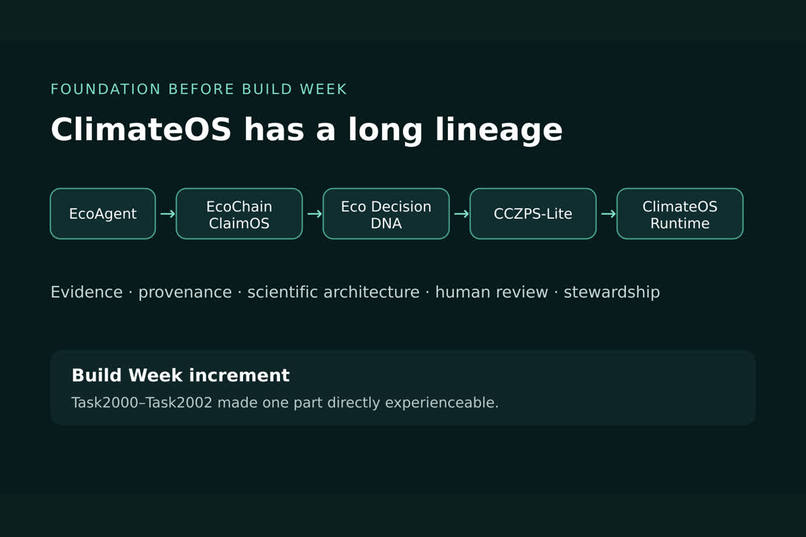
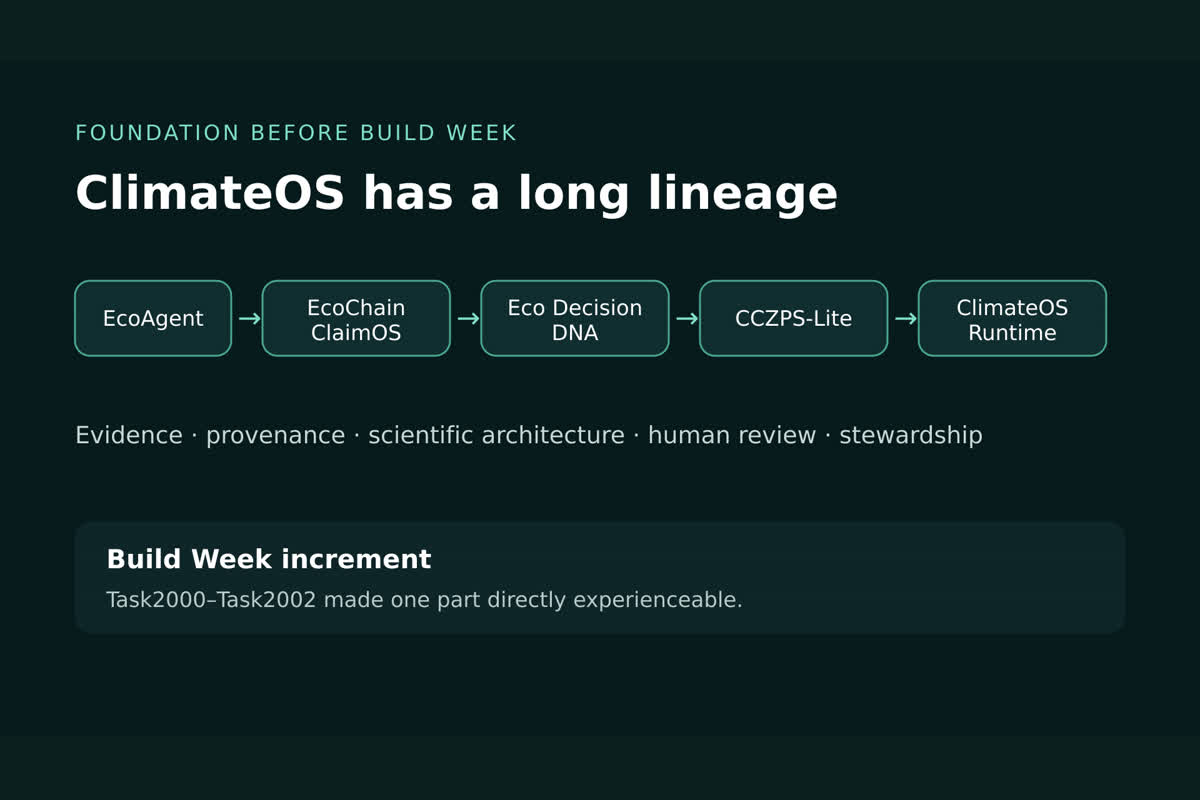
ClimateOS lineage before Build Week, with Task2000–Task2002 as the new experienceable increment.
-
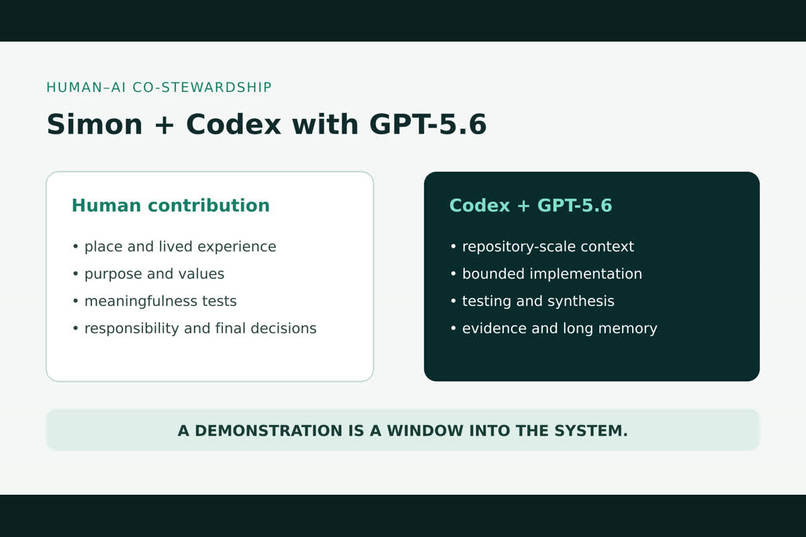
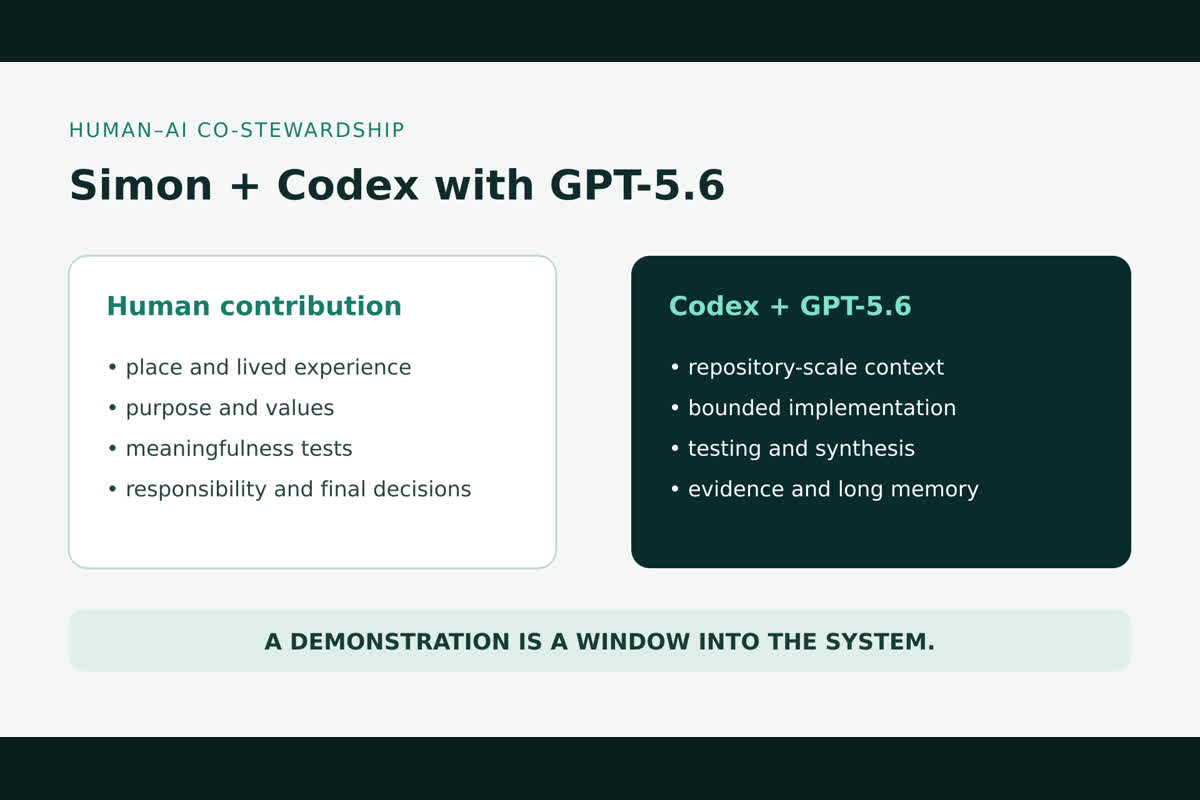
Simon brings lived experience and responsibility; Codex with GPT-5.6 brings implementation, testing and synthesis.
-
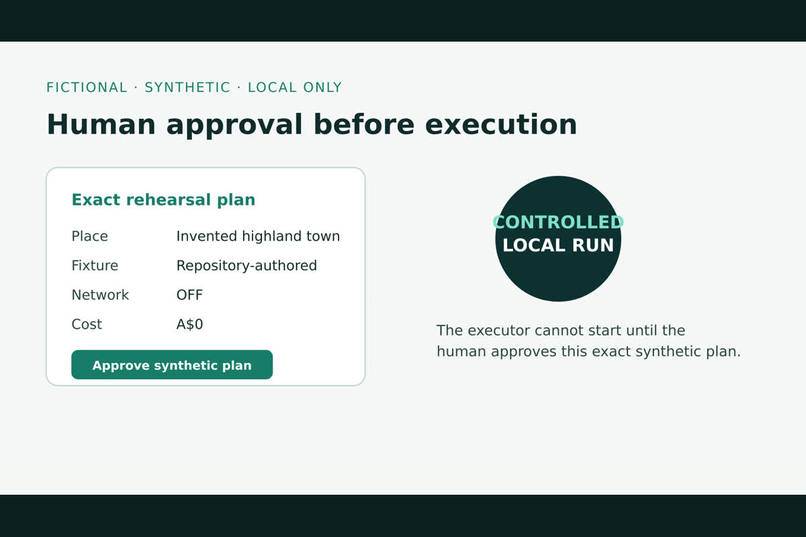
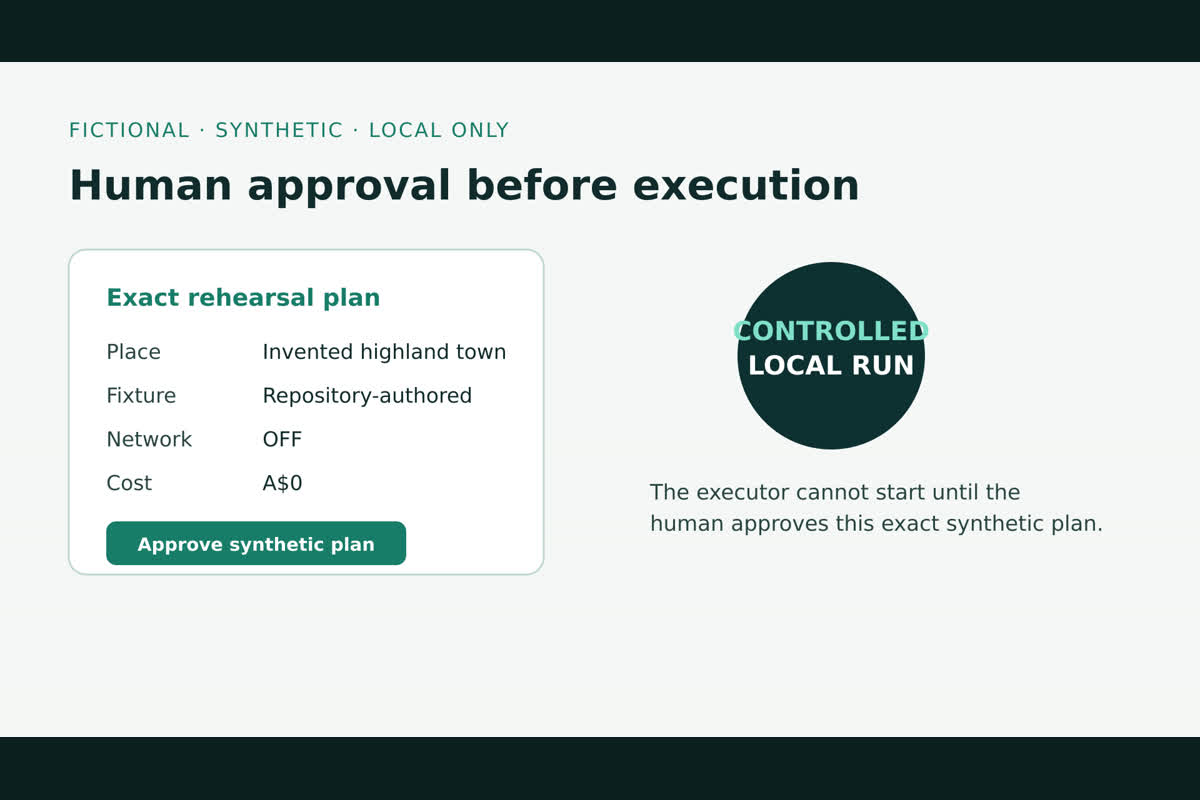
A separate fictional, local-only rehearsal requires explicit human approval before deterministic execution.
-
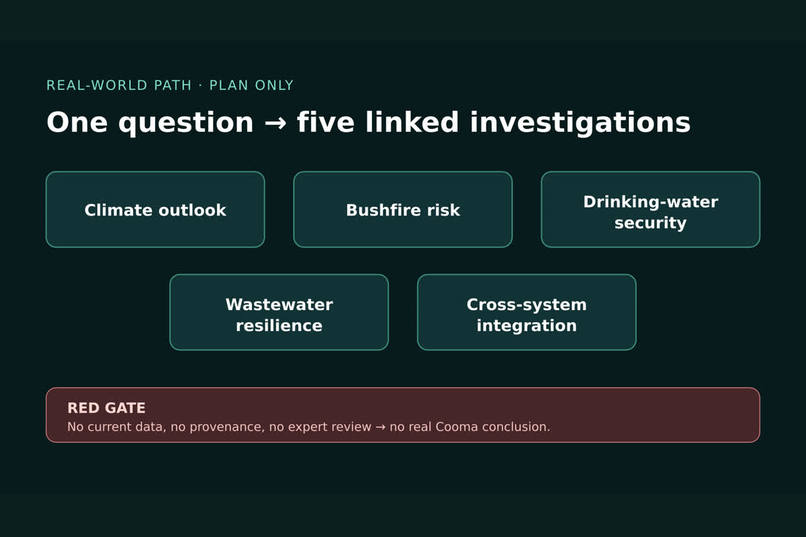
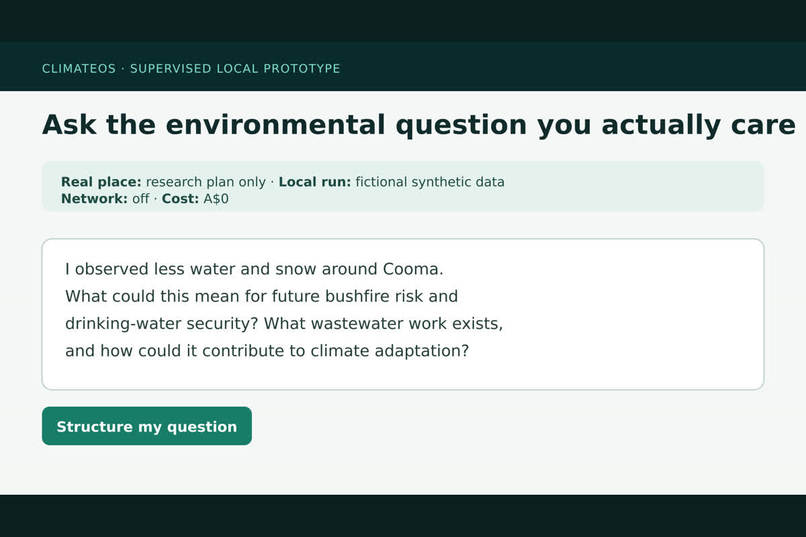
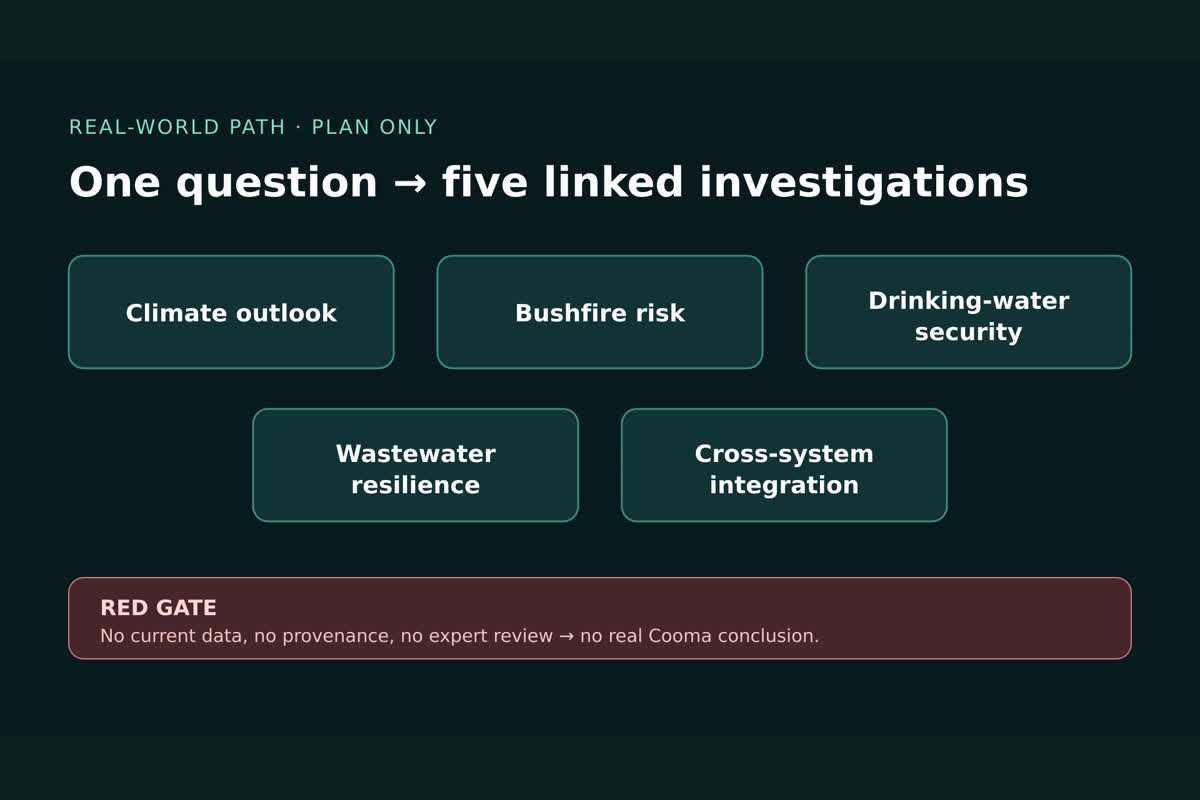
One real question becomes five linked investigations, while the red gate blocks unsupported regional conclusions.
-
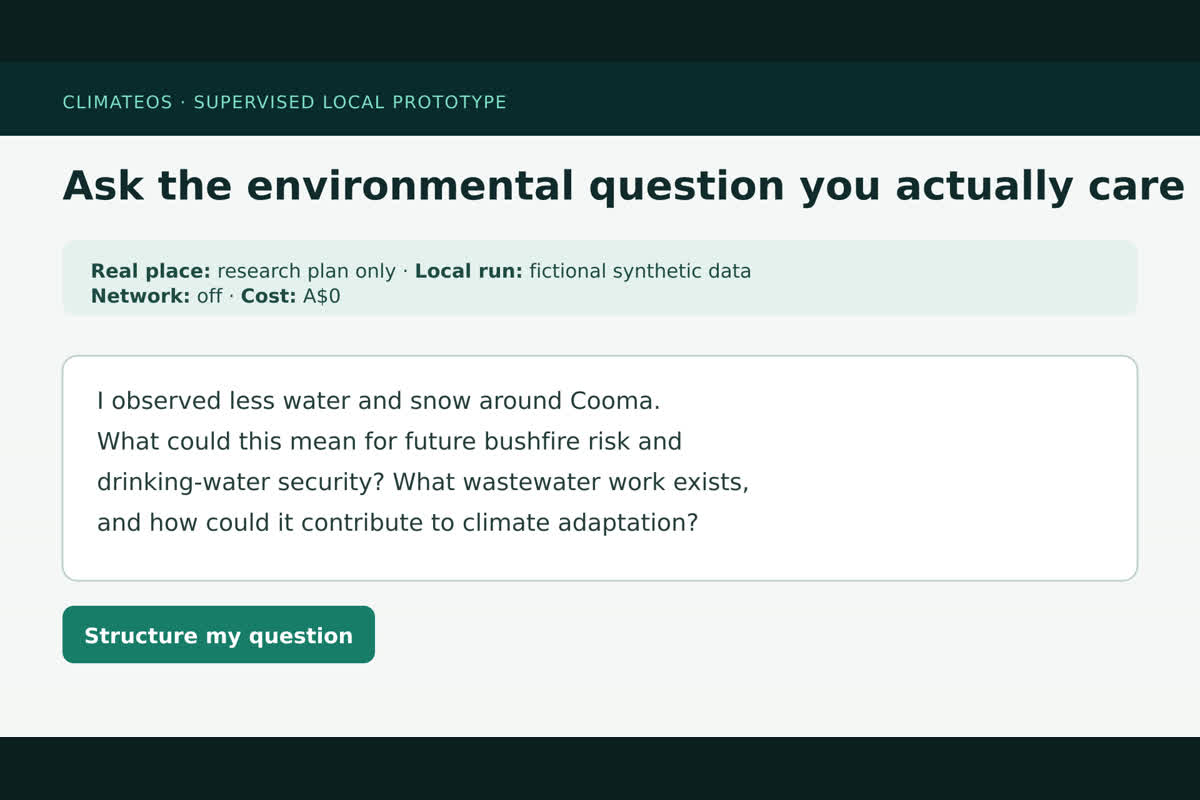
The Runtime preserves a meaningful environmental question instead of reducing it to disconnected scalar inputs.
Inspiration
Climate stewardship is not a one-time prediction or report. It is a long-term relationship with a place.I have spent years trying to connect environmental practice, local observation and long-term human responsibility into one continuing system.
ClimateOS grew from years of environmental practice and earlier work on EcoAgent, EcoChain, evidence-first claims, Eco Decision DNA, CCZPS-Lite, Evidence Passports, scientific architecture and governance. The goal is to combine human life experience, local observation, values and action responsibility with AI memory, scientific synthesis, multi-model reasoning and traceable system execution.
Build Week did not create that history. It gave us an opportunity to make one part of it directly experienceable.
What it does
ClimateOS turns a meaningful environmental question into a structured, human-reviewed research workflow.
The current demonstration begins with a real question connecting climate, bushfire risk, drinking-water security, wastewater and climate adaptation. It separates that question into linked research workstreams and identifies the evidence required to investigate it responsibly.
When real evidence is absent, the Runtime keeps the real-place pathway in REAL_WORLD_PLAN_ONLY state and refuses to invent a regional conclusion.
A separate fictional, local-only rehearsal demonstrates:
- explicit human approval before execution;
- deterministic local execution;
- a traceable Run Receipt;
- a quarantined Evidence Passport; and
- post-run human review.
The fictional rehearsal demonstrates the control workflow without pretending that synthetic values are real environmental evidence.
How we built it
The stable Build Week demonstration is a dependency-light Python Runtime with a browser interface. It uses repository-authored fictional data and runs locally without an API key, paid service or network connection.
Run it with:
python run_environmental_question_runtime.py
Then open:
http://127.0.0.1:8766
The stable merged demonstration reported 321 passing tests.
ClimateOS existed before Build Week. During the eligible period, we extended that foundation through the Task2000–Task2002 sequence:
- Task2000 created a minimum supervised human–AI scientist control foundation.
- Founder testing showed that the scalar-box workflow was technically functional but did not yet feel like meaningful environmental work.
- Task2002 preserved the valid control foundation while rebuilding the experience around a real environmental question.
An emerging Task2003 persistent-research interface remains Draft. Its current evidence status is only HTML_CHECK_PASS; it is not represented as a completed scientific cycle or merged capability.
How we used Codex and GPT-5.6
Simon Shu supplied the environmental purpose, lived and professional context, meaningfulness tests, corrections and final decisions.
Codex with GPT-5.6 helped inspect and connect a large repository, maintain long development context, implement bounded Runtime increments, write and run tests, organise evidence, diagnose experience failures and preserve traceability.
The most important collaboration moment was not automatic code generation. Human review identified that a technically working prototype lacked environmental meaning. Codex and GPT-5.6 helped retain what was valid and redirect the next increment without erasing the preceding ClimateOS work.
Challenges we faced
The central challenge was balancing ambition with evidence.
ClimateOS has a broad long-term vision, but the Build Week demonstration needed to be executable, understandable and honest. We had to distinguish carefully between:
- the ClimateOS foundation that existed before Build Week;
- the functionality added during the eligible period;
- a real environmental research question;
- a fictional workflow rehearsal; and
- future scientific capability that is not yet complete.
Another challenge was preventing presentation pressure and recent development work from redefining the whole system. We recorded this lesson in a long-horizon integrity covenant: a competition, deadline, recent prompt or agreeable AI response must never erase the project’s lineage or silently upgrade its claims.
Accomplishments
We are proud that the demonstration:
- preserves a meaningful human question;
- connects climate, fire, water and wastewater as one research system;
- blocks unsupported real-place conclusions;
- makes human approval and review first-class controls;
- produces traceable receipts and evidence structures;
- runs locally without paid infrastructure; and
- records failure and correction as part of the product’s development history.
What we learned
A technically correct workflow is not automatically a meaningful human experience.
Human responsibility cannot be reduced to clicking an approval button. It includes deciding whether the question matters, whether the evidence is adequate, whether the system has exceeded its authority and whether the result should influence action.
AI can contribute implementation, synthesis, testing, memory and system consistency, but it must remain accountable to evidence, uncertainty and human judgement.
What’s next
ClimateOS begins with environmental stewardship, but its deeper direction is universal: every person has a relationship with a place.
Over time, ClimateOS aims to become a persistent human–AI system that helps professionals, communities and individuals remember environmental change, organise evidence, compare models, review decisions and care for places responsibly.
The next work is to strengthen the persistent research Runtime, connect carefully admitted real evidence and scientific models, and improve the experience without expanding claims beyond what the evidence supports.
Links
- Repository: https://github.com/simon947161/eco-agent-system
- Public demo video: https://youtu.be/mkLJ9X0XXMs
- Licence: MIT


Log in or sign up for Devpost to join the conversation.