-
-
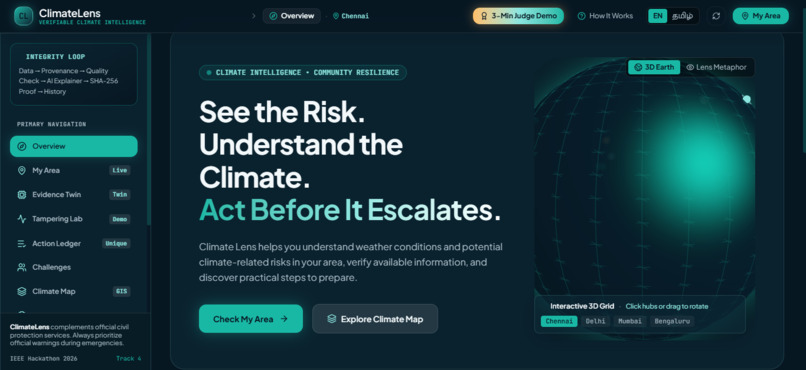
ClimateLens Main Dashboard
-
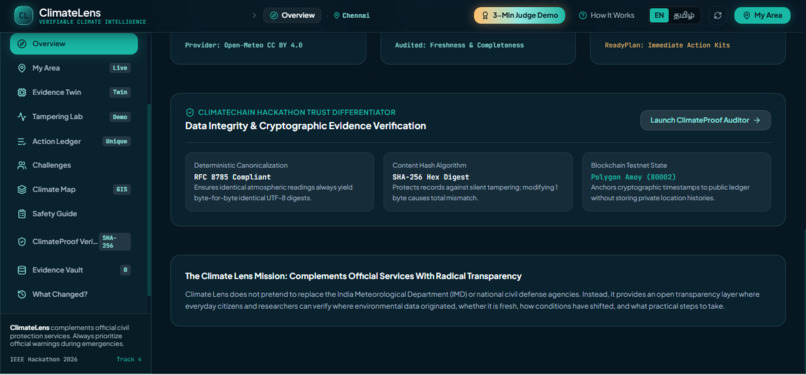
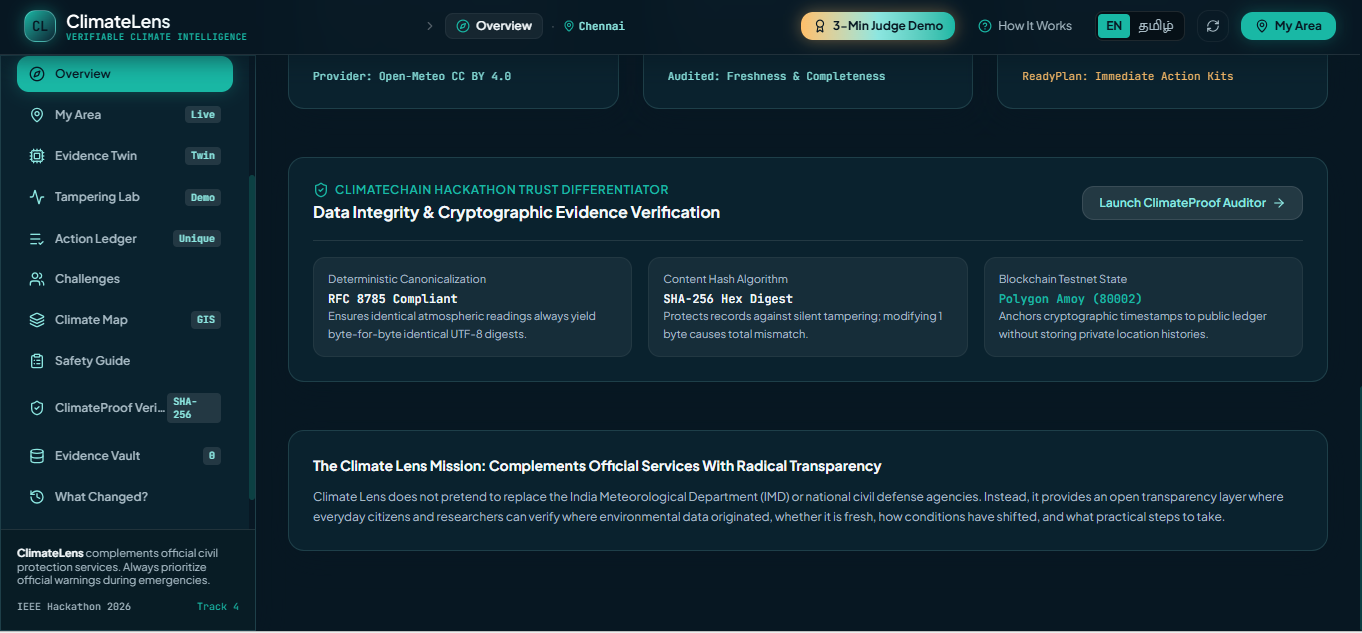
Blockchain Verification
-
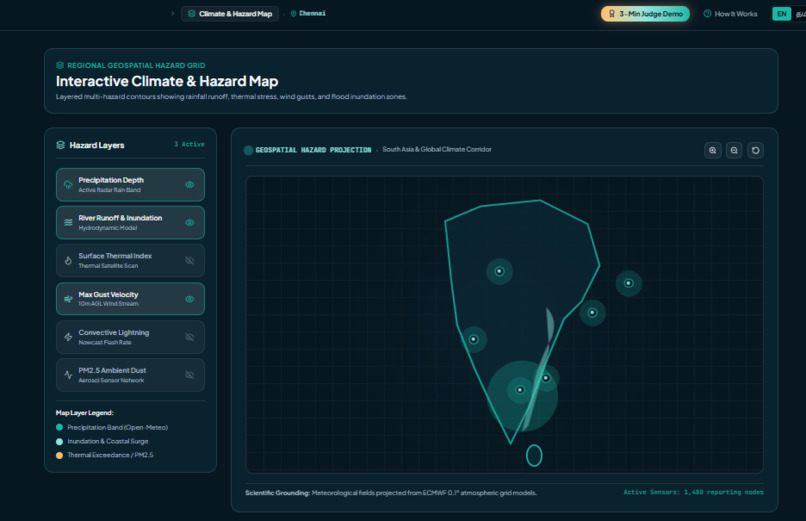
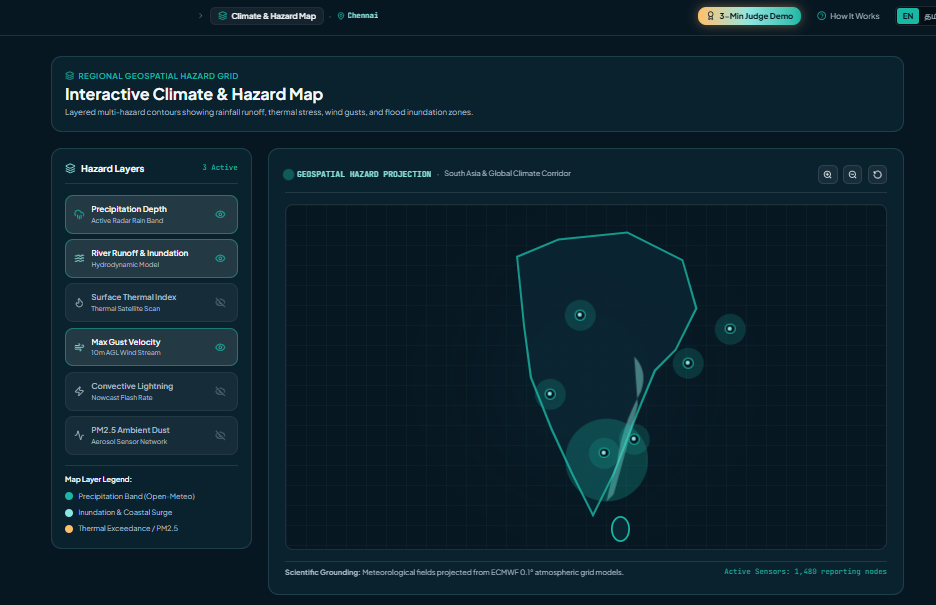
Interactive Climate & Hazard Map
-
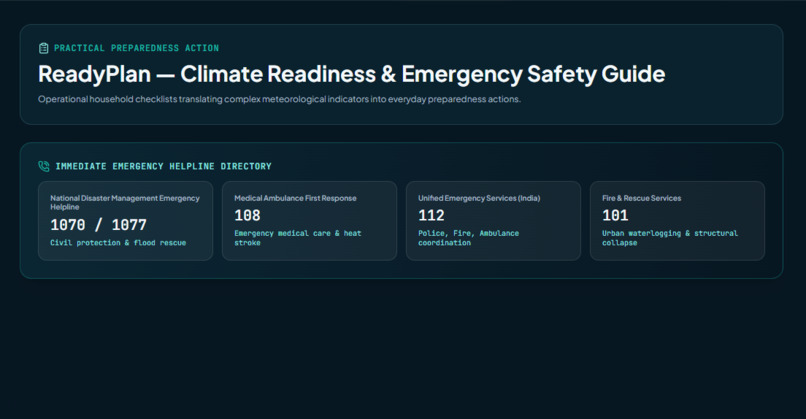
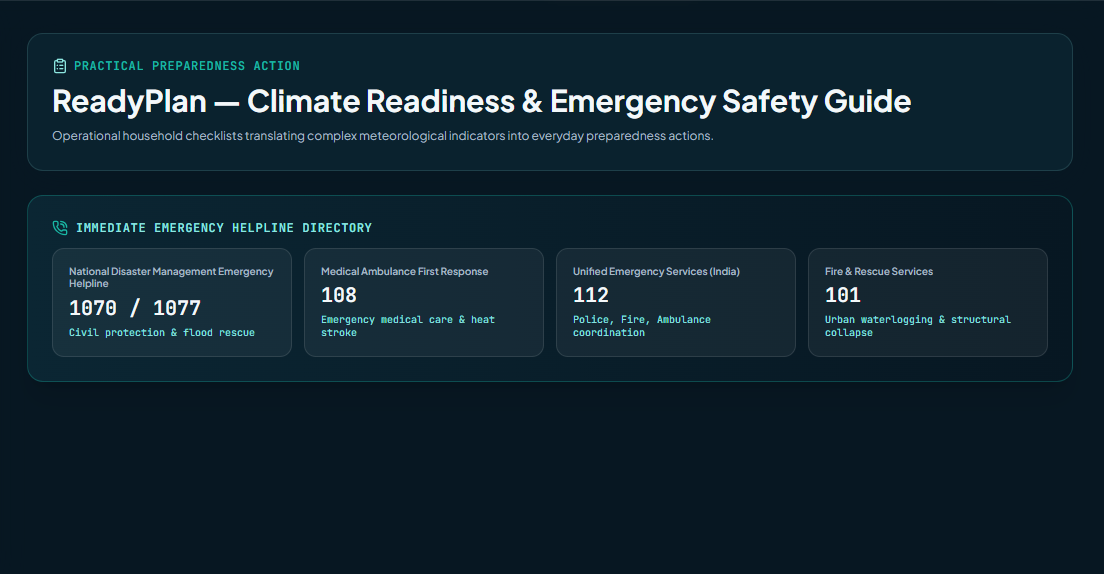
Safety Guide
-
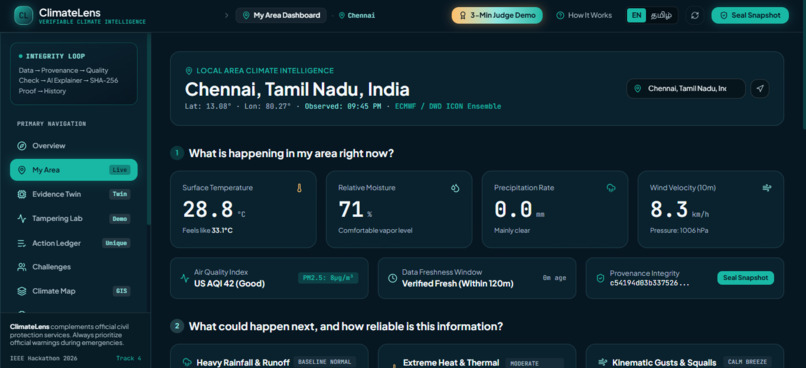
My Area
-
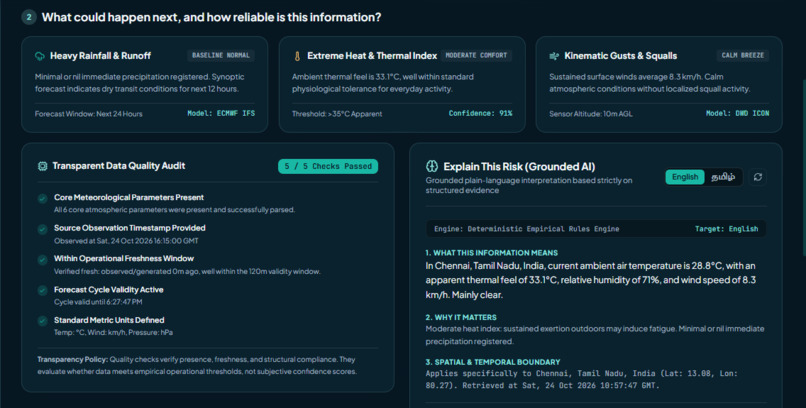
My Area 2
-
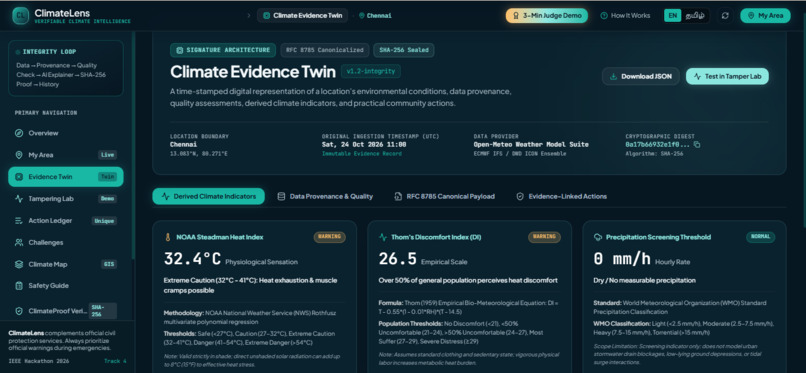
Climate Evidence Twin
-
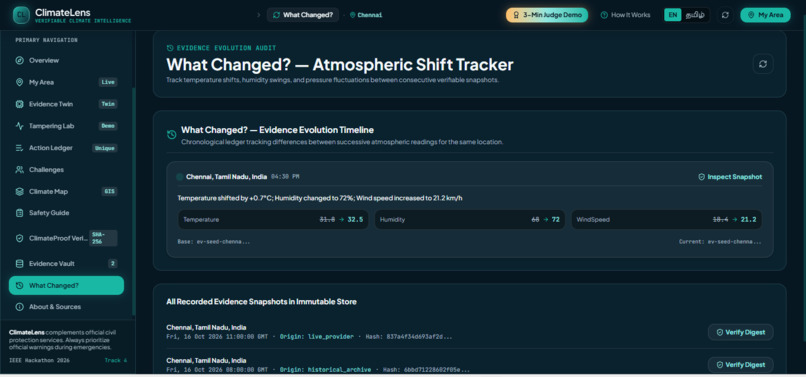
What Changed? — Atmospheric Shift Tracker
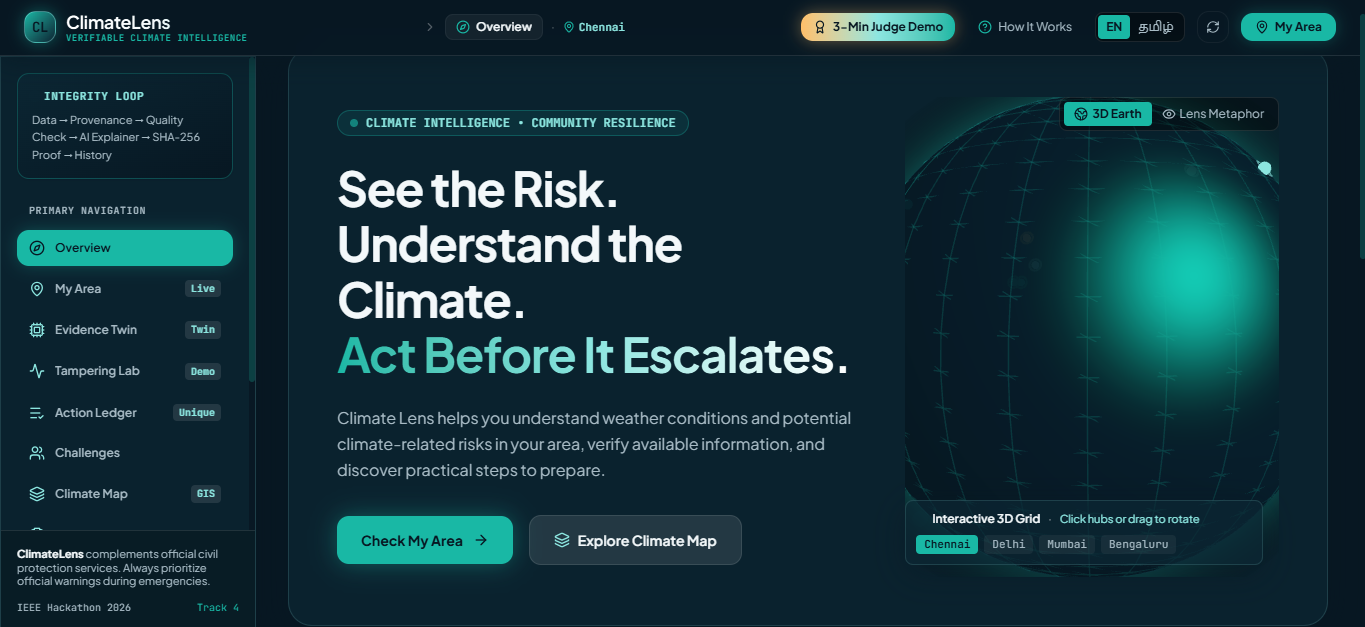
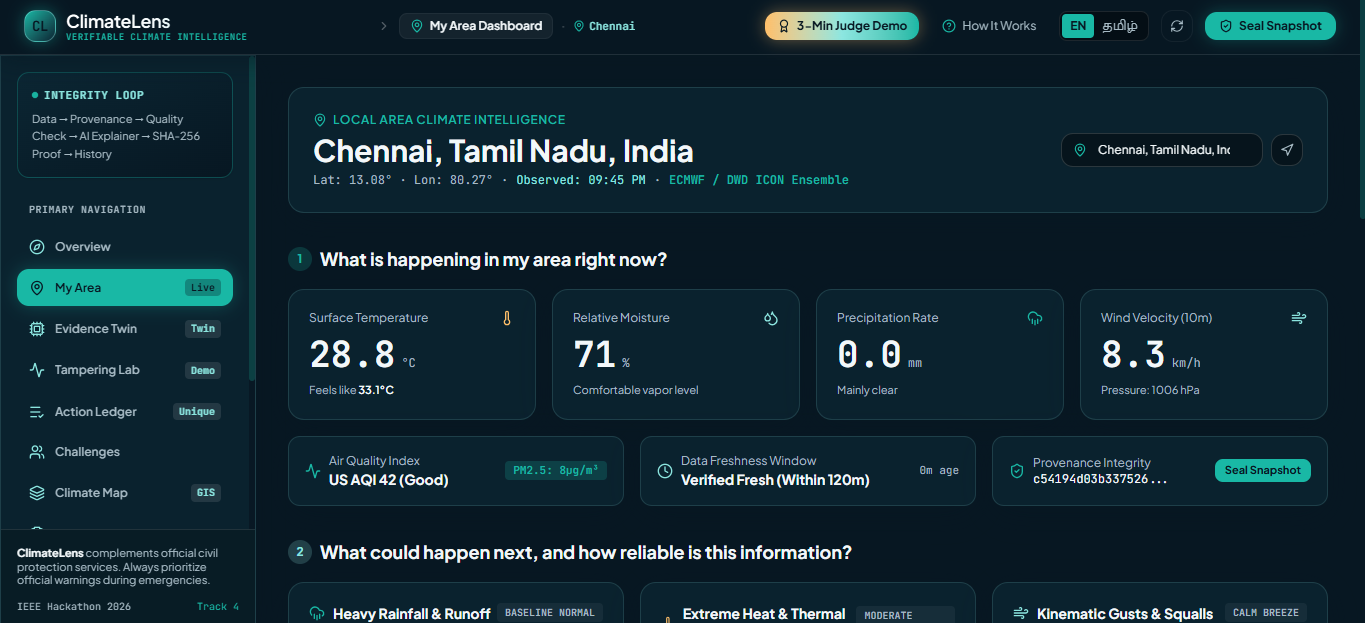
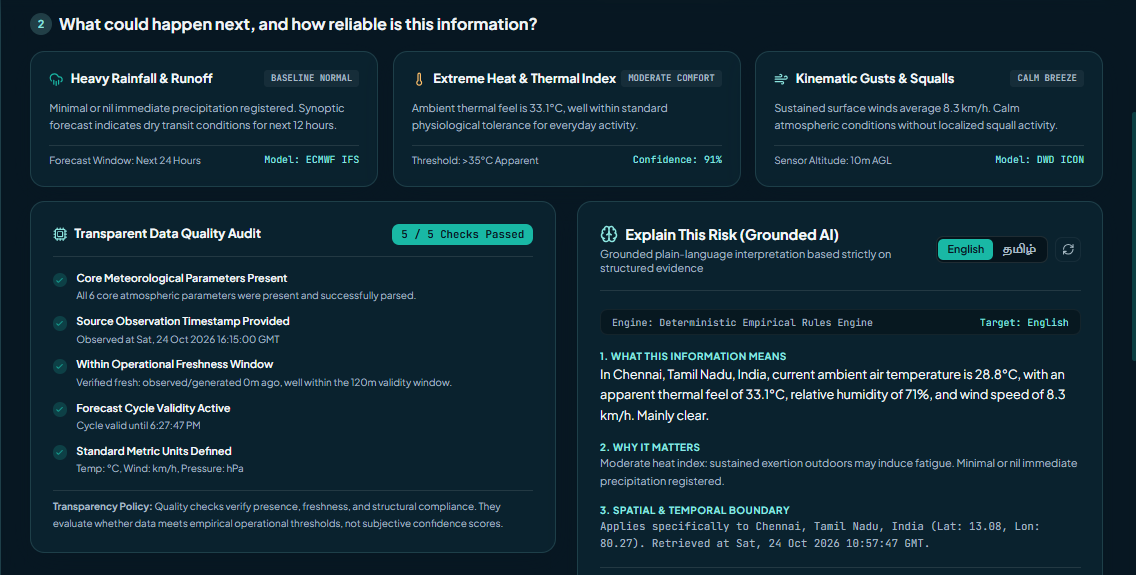
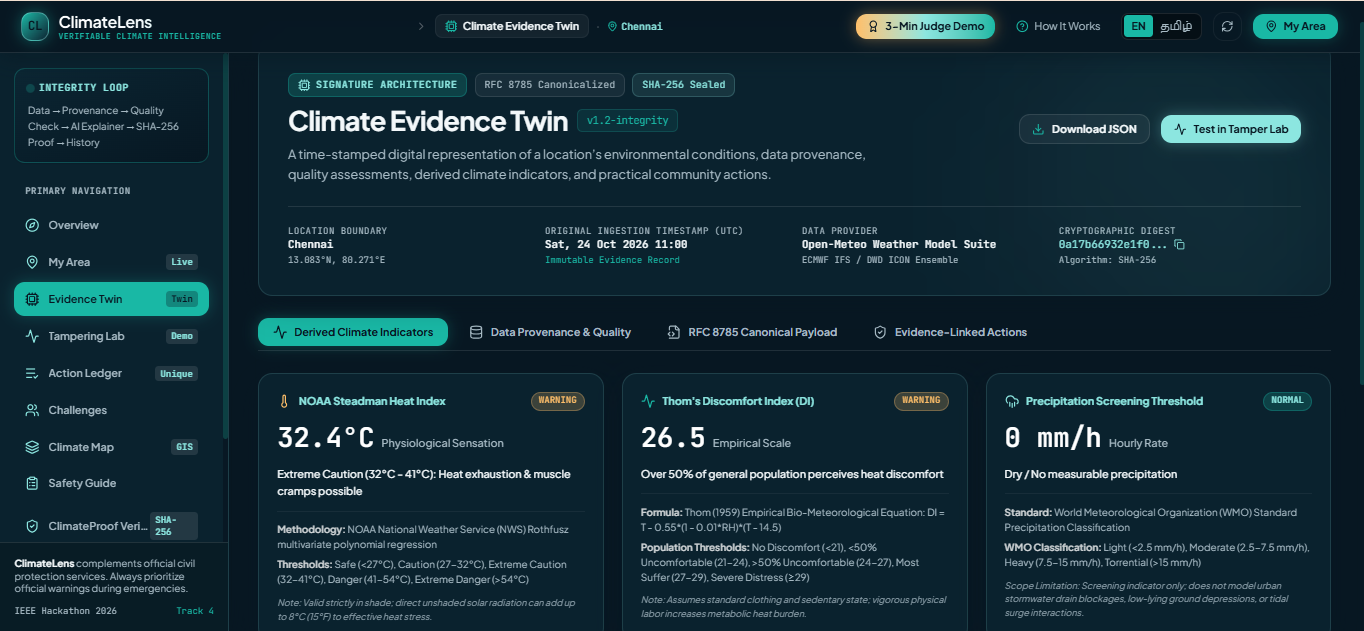
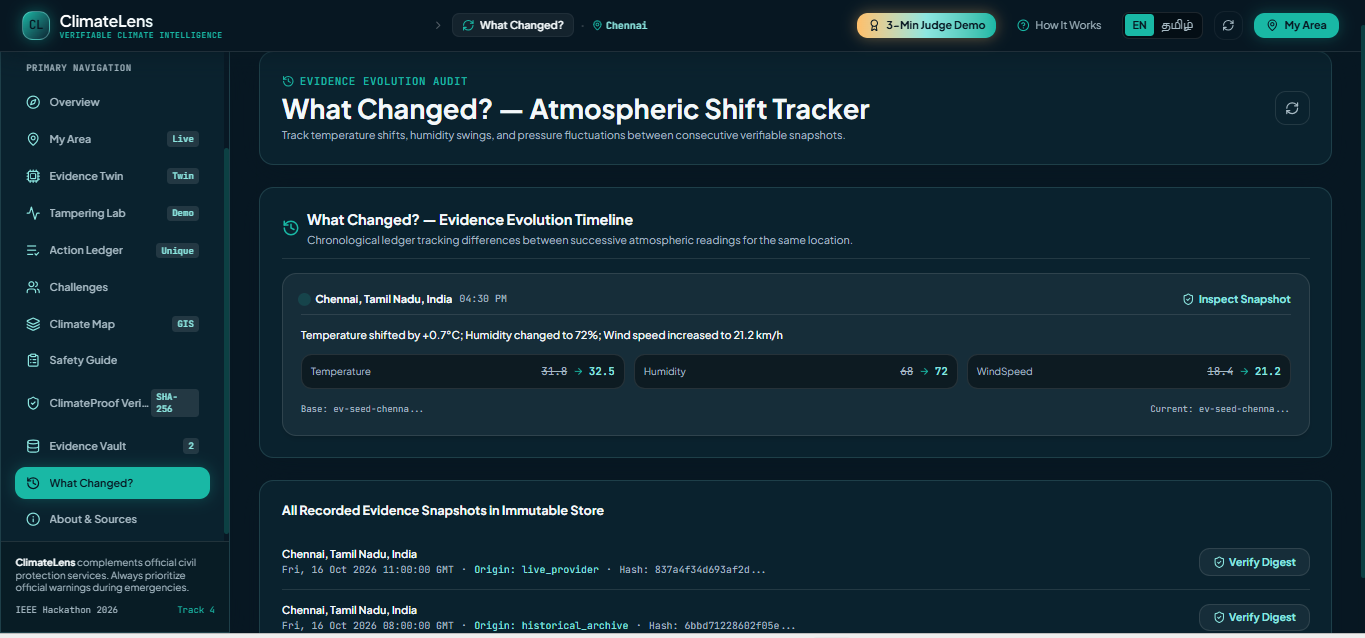
ClimateLens: Turning Climate Data into Trustworthy Evidence
The Problem
Climate data is essential for understanding environmental changes and making informed decisions. However, raw climate data can be difficult for ordinary people to interpret, and it is not always easy to determine where a dataset came from, whether it is current, or whether it has been modified.
For communities, students, researchers, and climate-conscious citizens, the challenge is not just accessing climate information. It is knowing whether the information is traceable, verifiable, and understandable.
I built ClimateLens to help address this challenge.
My Solution
ClimateLens is a climate-data transparency and evidence platform that combines environmental data, AI-powered explanations, data-integrity checks, and blockchain verification capabilities.
Instead of treating climate information as just numbers on a screen, ClimateLens helps users understand the data behind an environmental observation and inspect its integrity.
The platform brings together four key ideas:
- Climate Data & Provenance: Collects environmental information from supported climate-data sources and preserves important context such as source, timestamp, units, and available metadata.
- Data Quality & Tamper Detection: Checks data for quality issues and uses canonicalized data with SHA-256 cryptographic digests to help detect changes to recorded evidence.
- AI-Powered Climate Explanations: Uses AI to turn climate information into more accessible explanations, helping users understand what the data may mean.
- Blockchain-Ready Verification: Includes EVM-compatible anchoring and verification workflows designed to support independently verifiable evidence records when the blockchain configuration and deployment are available.
ClimateLens also includes a Climate Evidence Twin, community action tracking, climate challenges, and a guided demonstration to help users explore how climate evidence can connect with meaningful environmental action.
Inspiration
Climate data is essential for understanding environmental changes and making informed decisions. However, having access to climate data is not enough. People also need to understand where the data comes from, whether it is current, whether its quality is reliable, and whether it has been modified.
For communities, students, researchers, and climate-conscious citizens, raw environmental data can be difficult to interpret. At the same time, trusting climate information without being able to inspect its source and integrity creates challenges for transparency and accountability.
I was inspired to bridge this gap by exploring how Artificial Intelligence, cryptography, and blockchain technology could work together to make environmental evidence more transparent, understandable, and verifiable.
My goal was to build more than another climate dashboard. I wanted to create a platform that helps people explore environmental information, understand what it means, and inspect the evidence behind it.
That vision led to ClimateLens.
What it does
ClimateLens is an AI-powered climate-data transparency and evidence platform that combines environmental data, data-quality checks, cryptographic integrity verification, and blockchain-ready evidence anchoring.
Rather than displaying climate statistics alone, ClimateLens helps users understand the context behind environmental observations and examine the integrity of the associated evidence.
Key Features
- 🌦️ Climate Data Integration: Works with supported environmental data sources, including Open-Meteo and Copernicus ERA5-related data workflows.
- 🔎 Data Provenance: Preserves relevant information such as data sources, timestamps, units, and available metadata to help users understand where environmental evidence comes from.
- ✅ Data Quality & Freshness Checks: Examines characteristics such as completeness, freshness, units, and data quality to help identify potential issues.
- 🔐 Cryptographic Tamper Detection: Uses canonicalized data and SHA-256 cryptographic digests to create evidence fingerprints that can be compared to help detect changes.
- 🤖 AI-Powered Climate Explanations: Uses Gemini-powered explanations to make climate information easier to understand, with fallback handling where supported.
- 🔗 Blockchain-Ready Verification: Includes EVM-compatible anchoring and verification workflows designed to support independently verifiable evidence records when the required network and contract configuration are available.
- 🧬 Climate Evidence Twin: Provides a structured way to connect climate information with its associated evidence.
- 🌱 Community Action Ledger: Supports community-oriented climate participation and action tracking.
- 🎯 Climate Challenges: Encourages environmental awareness and engagement through climate-focused challenges.
- 🧭 Guided Demonstration: Helps users explore the main capabilities and understand how climate evidence moves through the platform.
How ClimateLens Works
The platform connects environmental data with a structured evidence workflow:
- Environmental information is obtained through supported data integrations.
- Relevant metadata and data-quality characteristics are examined.
- The data is represented consistently and processed to generate a SHA-256 cryptographic digest.
- AI-assisted explanations help users understand the environmental information.
- The integrity of evidence can be checked against its digest, while blockchain anchoring and transaction verification are available through the appropriate configured workflows.
- Community features help connect climate awareness with participation and action.
ClimateLens connects climate information, understandable explanations, and verifiable evidence in one experience.
How I built it
I developed ClimateLens as a web application that integrates environmental data processing, cryptographic integrity checks, AI-assisted interpretation, and blockchain-oriented verification.
I used Google AI Studio as part of my AI-assisted development workflow to help build and refine the application.
Technology Stack
- Frontend: React, TypeScript, and Vite.
- AI: Gemini integration for accessible climate explanations, with fallback handling where supported.
- Environmental Data: Open-Meteo and Copernicus ERA5-related data workflows.
- Cryptography: Canonicalized data representations and SHA-256 digests for integrity checking.
- Blockchain: EVM-compatible smart-contract and transaction-verification workflows.
- Data Validation: Metadata handling and checks for freshness, completeness, units, and data quality.
My Implementation Approach
1. Environmental Data Integration
I connected supported environmental data workflows and focused on retaining useful context, including source information, timestamps, units, and available metadata.
2. Data Quality and Provenance
I designed the evidence workflow to examine relevant data characteristics and help users understand the context and limitations of the information they are viewing.
3. Cryptographic Evidence Generation
I used canonicalized data representations before generating SHA-256 digests. This creates a consistent fingerprint that can be recalculated and compared to detect changes to the represented evidence.
4. AI-Assisted Interpretation
Gemini-powered explanations help translate environmental information into more accessible language, making the platform more approachable for people without a technical background.
5. Blockchain Integration
I implemented EVM-compatible anchoring and verification workflows intended to support evidence-digest anchoring and transaction-receipt verification. I also designed the system to distinguish simulated or local verification from confirmation of an actual on-chain transaction.
6. Community Engagement
I incorporated climate challenges and an action ledger to connect environmental awareness with community participation.
Throughout development, I focused on separating data handling, integrity verification, AI interpretation, and blockchain operations into distinct responsibilities. This approach helps make the system easier to maintain and makes it clearer what each verification result actually means.
Why Blockchain Matters
Climate-related decisions benefit from evidence that can be examined rather than simply trusted.
A cryptographic digest acts as a fingerprint of a particular representation of data. If that data changes, its digest will generally change as well. This makes it possible to compare evidence against a previously recorded digest and identify potential modifications.
Blockchain can provide an additional verification layer by recording an evidence digest in a transaction that can be independently inspected.
ClimateLens brings these concepts together:
- Environmental data provides the underlying information.
- Provenance and metadata provide context about the evidence.
- Cryptographic digests help verify data integrity.
- Blockchain anchoring can provide an independently inspectable record when a real transaction has been successfully recorded.
- AI-powered explanations help users understand the information without replacing the underlying evidence.
I believe blockchain is most useful when it serves a clear purpose. Recording a digest does not automatically prove that the original environmental data is accurate; instead, it can help establish whether the evidence matches what was previously recorded.
ClimateLens is designed to distinguish simulated or local verification from actual on-chain confirmation. Live blockchain verification depends on the appropriate network configuration, deployed contract, and available transaction evidence.
What Makes ClimateLens Different?
ClimateLens brings together environmental data transparency, AI-powered explanations, cryptographic integrity, and blockchain-oriented verification in one climate-focused application.
Many platforms focus primarily on displaying environmental measurements or presenting information through visualizations. ClimateLens also focuses on the trustworthiness and traceability of the evidence behind that information.
It encourages users to ask important questions:
- Where did this environmental data come from?
- What timestamps, units, and metadata accompany it?
- Are there freshness, completeness, or quality concerns?
- Can changes to the recorded evidence be detected?
- Can a blockchain anchor be independently verified when one exists?
- Can complex climate information be explained in a way that everyday users understand?
The combination of these capabilities makes ClimateLens relevant to environmental monitoring, climate education, data transparency, community engagement, and future evidence-driven sustainability workflows.
My key differentiator is the connection between climate data, understandable AI explanations, and evidence integrity—not just the display of environmental information.
Challenges I ran into
One of my biggest challenges was bringing multiple technologies together while keeping the application understandable, reliable, and transparent.
1. Handling Environmental Data
Environmental datasets can differ in format, units, timestamps, completeness, and availability. Preserving relevant metadata and checking data quality were important for building a useful evidence workflow.
2. Maintaining Data Integrity
Cryptographic verification requires a consistent representation of the information being checked. I needed to account for canonicalization so that integrity comparisons would be meaningful and reproducible.
3. Integrating AI Responsibly
AI can help make technical information accessible, but an AI-generated explanation should not be treated as proof that the underlying data is accurate. I focused on keeping interpretation separate from evidence verification.
4. Making Blockchain Verification Trustworthy
Blockchain integration involves more than generating a hash. Network configuration, smart-contract deployment, transaction receipts, and event verification all matter.
I therefore emphasized clear verification states so that a simulated or local result would not be confused with a confirmed on-chain record.
5. Balancing Technical Depth with Accessibility
I wanted ClimateLens to be useful to both technical and non-technical users. Explaining concepts such as cryptographic digests, provenance, and blockchain verification without overwhelming users required careful organization of the application.
These challenges reinforced an important principle: climate technology should not simply present information. It should help users understand the evidence, its limitations, and the meaning of its verification status.
Accomplishments that I'm proud of
I am proud to have developed ClimateLens as an integrated climate-data transparency platform that brings together multiple technologies around a clear environmental purpose.
My key accomplishments include:
- Building a climate-focused application that connects environmental data with provenance and evidence verification.
- Implementing a cryptographic integrity workflow using canonicalized data and SHA-256 digests.
- Incorporating data-quality and freshness-related checks into the evidence workflow.
- Integrating AI-powered explanations to make environmental information more approachable.
- Developing EVM-compatible anchoring and transaction-verification workflows.
- Designing verification states that distinguish local or simulated behavior from actual on-chain confirmation.
- Including a Climate Evidence Twin, climate challenges, and community action tracking.
- Focusing on making technical verification concepts easier to understand for users without specialized knowledge.
Beyond the features themselves, I am proud of the engineering principle behind ClimateLens: environmental evidence should be easier to inspect and verify, rather than something people are expected to trust without explanation.
I also value the emphasis on responsible technology integration—particularly the distinction between checking data integrity, explaining climate information, and verifying a blockchain transaction.
What I learned
Building ClimateLens taught me that trustworthy climate technology requires more than collecting environmental data or generating an AI explanation.
I learned the importance of preserving data provenance, validating inputs, handling data quality carefully, and using consistent data representations for cryptographic integrity checks.
I also learned that blockchain must have a specific and clearly defined role. A blockchain transaction can provide an independently inspectable record of an evidence digest when it has actually been recorded, but it does not automatically establish that the original environmental measurements are correct.
Another important lesson was the need to separate AI-generated interpretation from verifiable evidence. AI can help explain information, while data validation and cryptographic or blockchain checks address different questions.
Finally, I learned that advanced technologies become more valuable when their results are understandable to everyday users. Accessibility and transparency are not optional additions; they are essential to making climate information useful.
These lessons shaped ClimateLens into a project focused on evidence, responsible verification, and accessible climate technology.
What's next for ClimateLens
My next goal is to evolve ClimateLens into a more comprehensive platform for climate evidence, environmental monitoring, and informed community participation.
Potential future improvements include:
- Expanded Climate Data Coverage: Integrating additional trusted environmental datasets and indicators.
- Live Blockchain Anchoring: Deploying and configuring the required smart contract and network integration to support independently verifiable on-chain evidence records.
- Independent Evidence Verification: Making it easier for users and researchers to inspect evidence digests, transaction receipts, and related provenance information.
- Enhanced Data Quality Insights: Providing clearer explanations of missing data, stale observations, and other quality concerns.
- Improved Accessibility: Refining the interface and explanations to make climate information easier for non-technical users to understand.
- Community Participation: Expanding climate challenges and action tracking to encourage meaningful environmental engagement.
- Further Validation: Testing with additional datasets, real-world scenarios, and more verification cases.
My long-term vision is to make environmental evidence more transparent, understandable, and independently verifiable, helping people make better-informed climate decisions.
My Vision
ClimateLens aims to turn climate data into trustworthy, understandable, and verifiable evidence.
By combining environmental data, Artificial Intelligence, cryptography, and blockchain verification capabilities, I want to help create a future where people can better understand the information behind climate-related decisions and use that knowledge to support meaningful environmental action.
ClimateLens — See the data. Understand the evidence. Build trust in climate action.
Built With
- artificial
- blockchain
- change
- climate
- contracts
- copernicus
- cryptography
- data
- development
- environmental
- ethereum
- gemini
- integrity
- intelligence
- monitoring
- open-meteo
- react
- smart
- sustainability
- tech
- typescript
- visualization
- vite
- web


Log in or sign up for Devpost to join the conversation.