Inspiration
Carbon credits were meant to be a solution — a way for companies to balance emissions by funding climate-positive projects. But in reality, the current carbon offset system is broken. Many offsets are unverifiable, double-counted, or simply fraudulent. Trust in the carbon market is eroding, and so is our time to act.
We asked ourselves: “What if offsets were backed by real-time data, stored immutably, and could be experienced visually by anyone, anywhere?” That led us to build ClimateChain — a platform where IoT sensors, blockchain, and AR converge to rebuild trust in climate action.
What it does
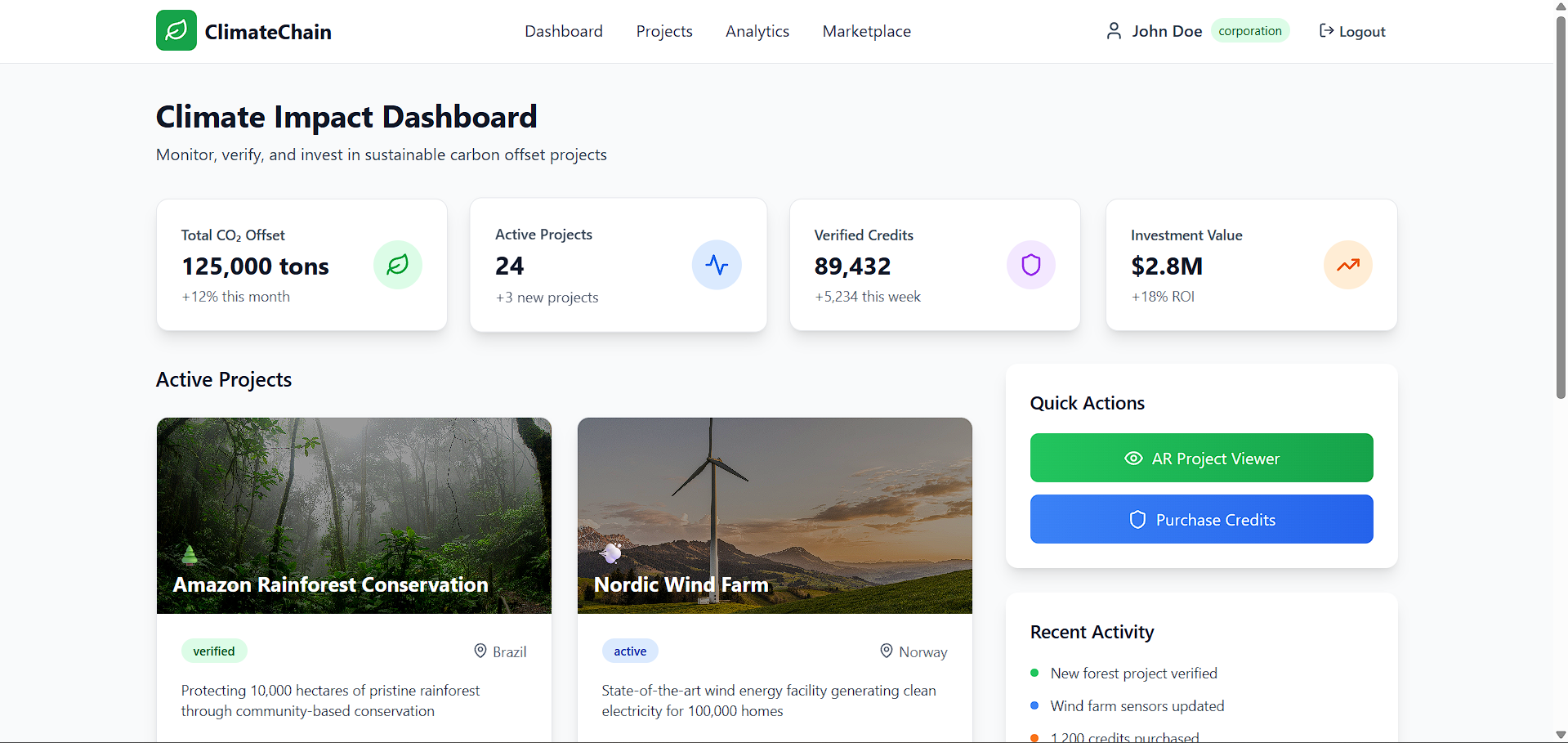
ClimateChain transforms traditional carbon offsets into verifiable, transparent, and immersive carbon credits. It does this by:
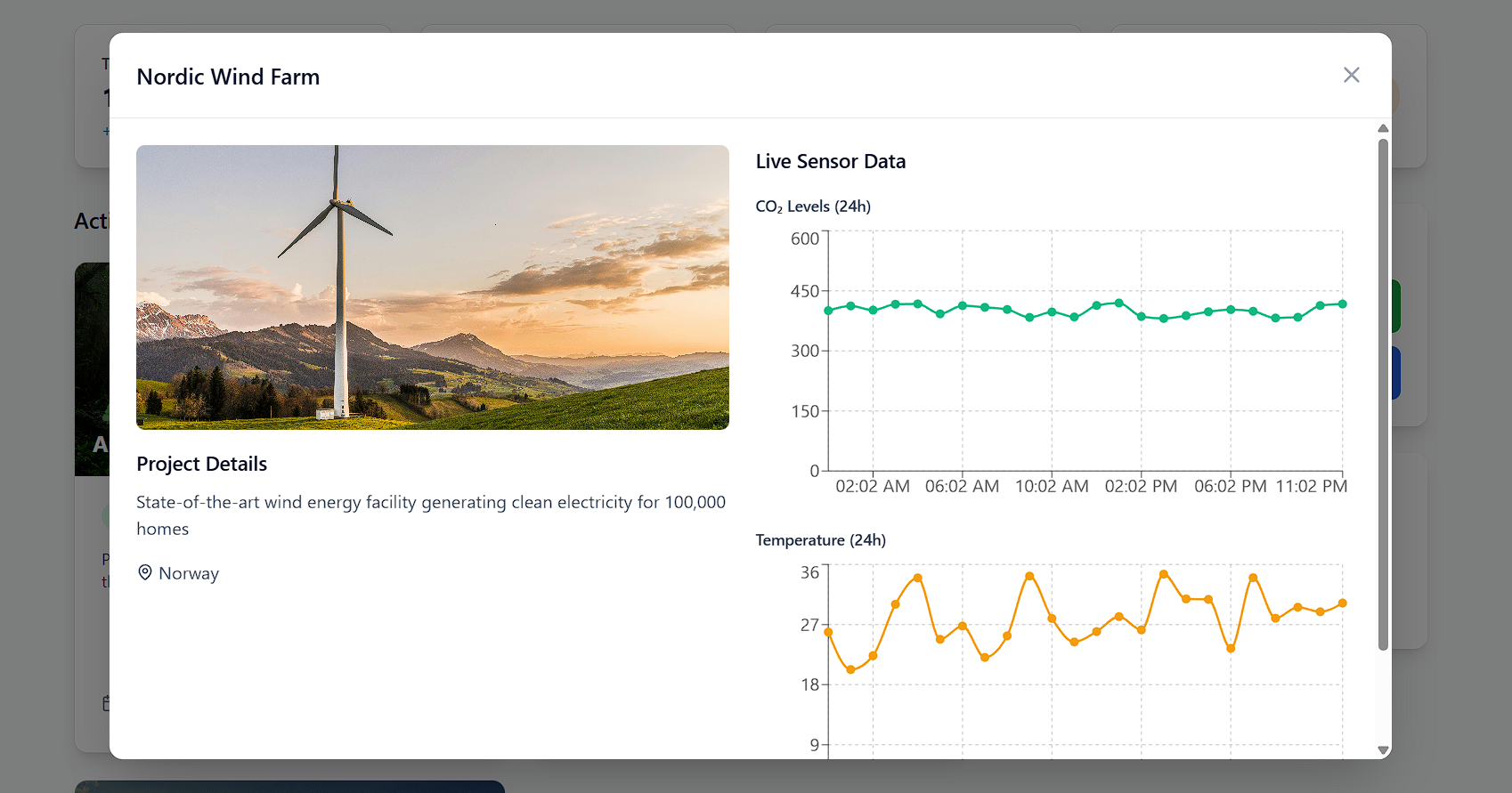
Tracking environmental impact in real time using IoT sensors (simulated in this version).
Minting carbon tokens on the blockchain only when verified data meets impact criteria (e.g., X tons of CO₂ captured).
Visualizing each offset project in AR, allowing buyers and the public to scan a QR code and see the project’s location, activity, and live data through their phone.
Whether you're a climate-conscious individual or a multinational buyer, ClimateChain lets you see and verify the positive impact your offsets are having.
How we built it
Frontend (AR Interface): Built with WebAR (8thWall) and Three.js to create an immersive view of real offset projects with live data overlays.
IoT Simulation: We wrote Python scripts to simulate CO₂ sensor data, reforestation metrics, and temperature, streaming to our backend as if sourced from real devices in the field.
Smart Contracts: Developed in Solidity and deployed on the Polygon Mumbai Testnet via Hardhat, smart contracts handle verification logic and tokenize verified carbon offsets.
Backend Infrastructure: Node.js + Firebase to handle metadata storage, coordinate data from simulated IoT, and sync real-time updates to the AR layer.
Challenges we ran into
Reliable IoT simulation: Generating realistic environmental data with variability and aligning it to blockchain logic was tricky.
Blockchain constraints: Designing smart contracts that could securely verify thresholds without being exploitable took several iterations.
AR performance: Keeping the AR lightweight enough for mobile devices while displaying meaningful real-time data was a major balancing act.
Accomplishments that we're proud of
Built a fully working prototype that connects simulated environmental conditions to blockchain token issuance and AR visualization in under 48 hours.
Created a truly novel approach to climate accountability that hasn’t been seen in hackathons or real-world apps.
Developed a user journey that’s both technical and emotionally compelling, making carbon offsets engaging for the first time.
What we learned
How smart contracts can be used not just for finance, but for enforcing environmental integrity.
The power of AR in driving user trust and transparency — "seeing is believing."
IoT data is messy and must be filtered, secured, and contextualized before use in automated decision-making systems like blockchain.
What's next for ClimateChain
Integrate real IoT devices (e.g., CO₂ sensors, LiDAR drones) with edge computing for actual deployment.
Launch a pilot with verified offset providers (e.g., reforestation NGOs) to prove ClimateChain’s credibility in the field.
Build a secondary marketplace for individuals and companies to trade, donate, or bundle verified carbon tokens.
Develop a mobile-native AR app for a seamless scanning and immersive experience.

Log in or sign up for Devpost to join the conversation.