-
-
Overview
-
Real-Time Threat Detection Pillars
-
How Climate360 Works
-
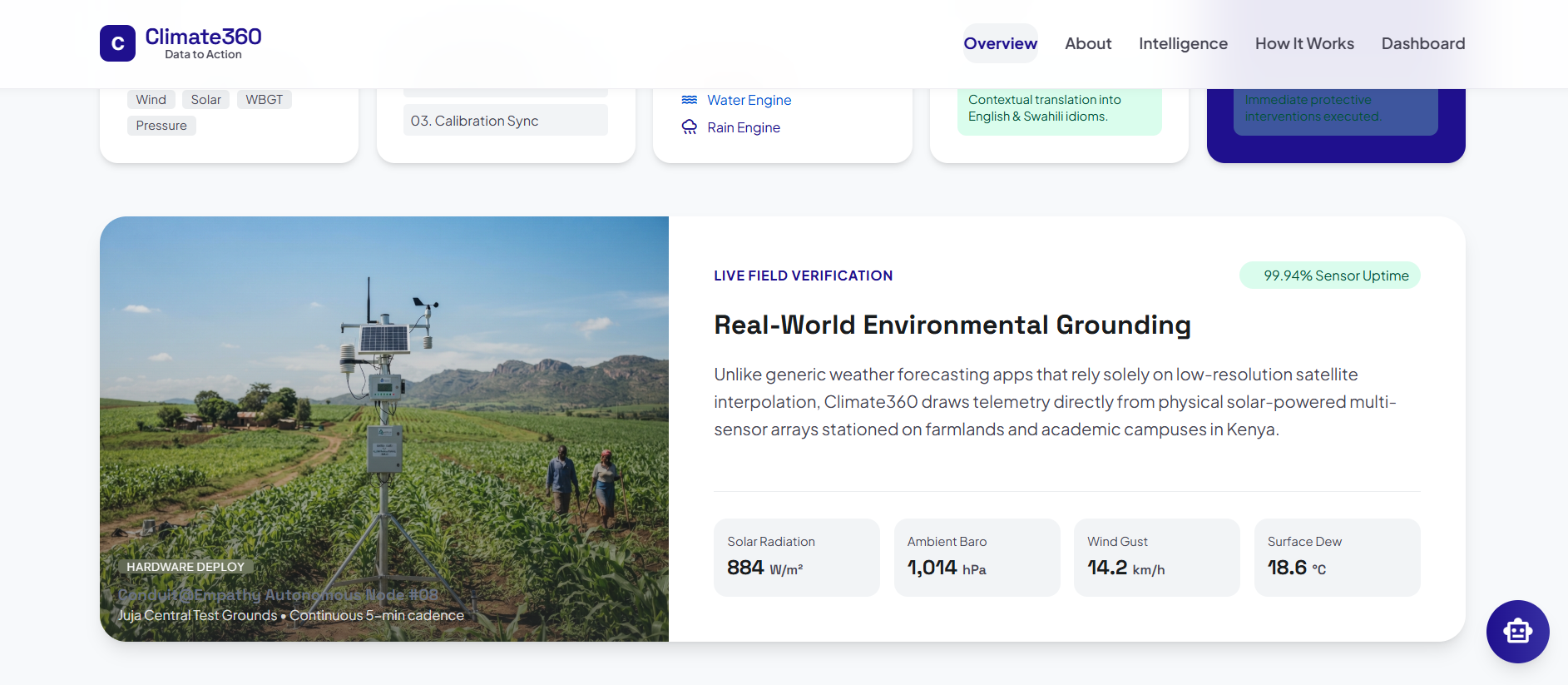
Real-World Environmental Grounding
-
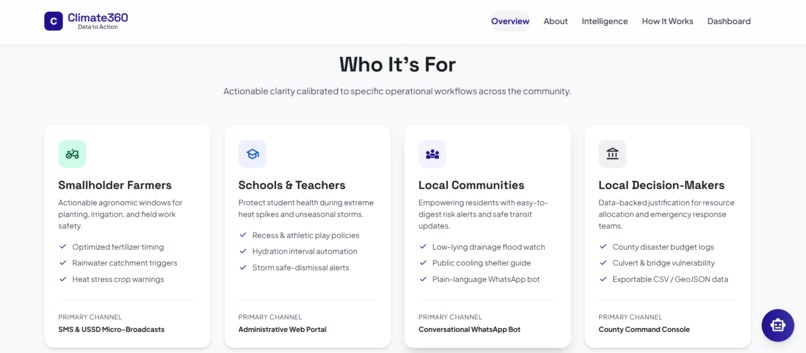
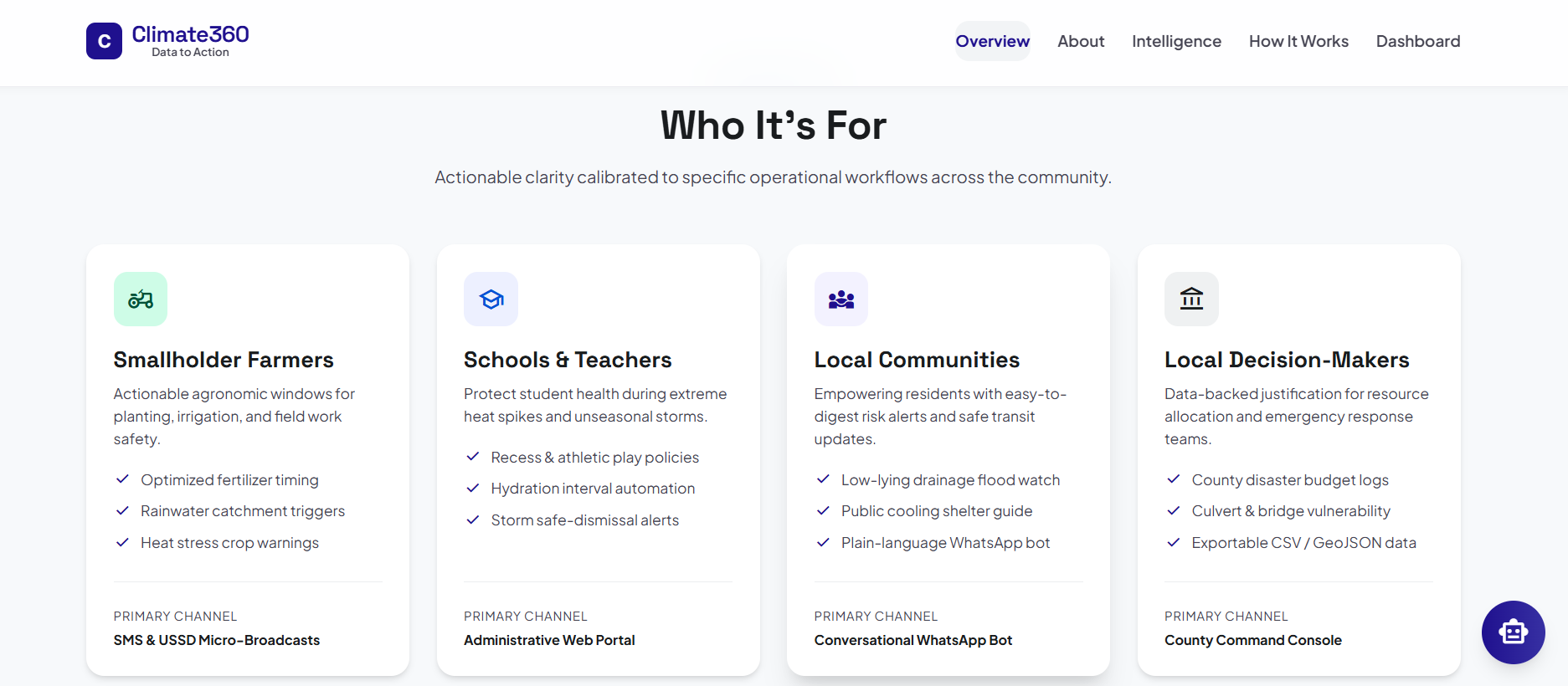
Who It's For
-
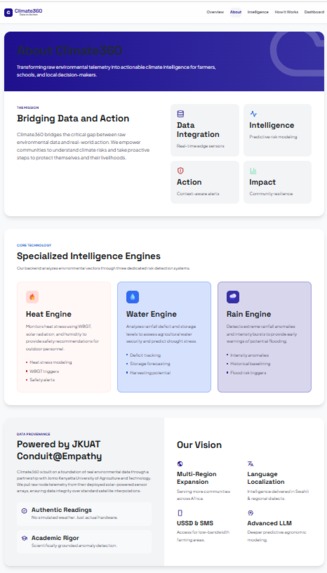
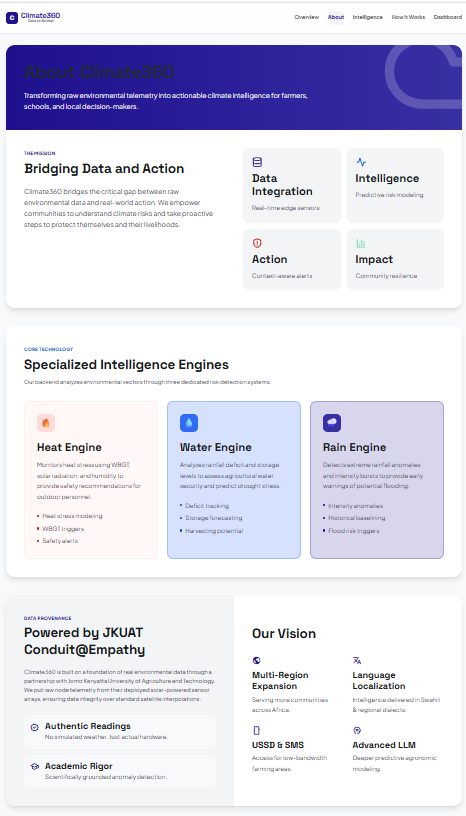
About
-
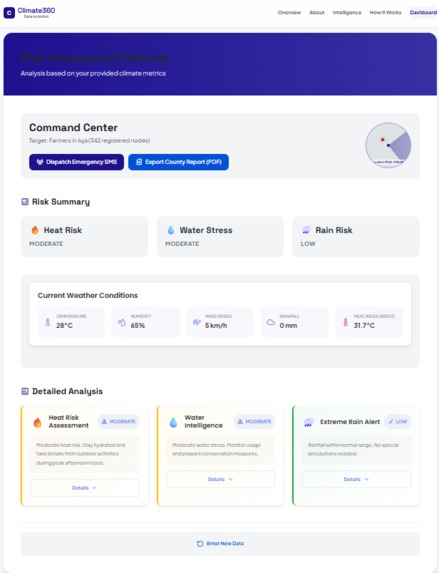
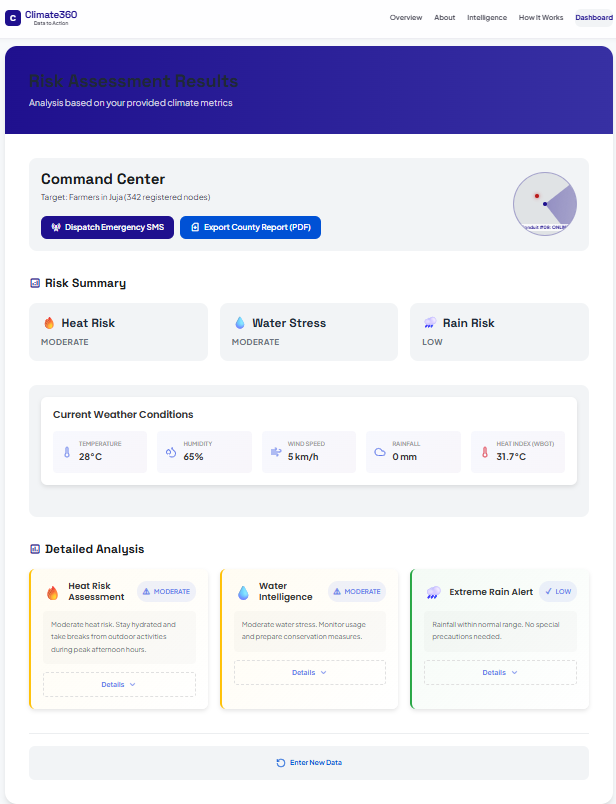
Results
-
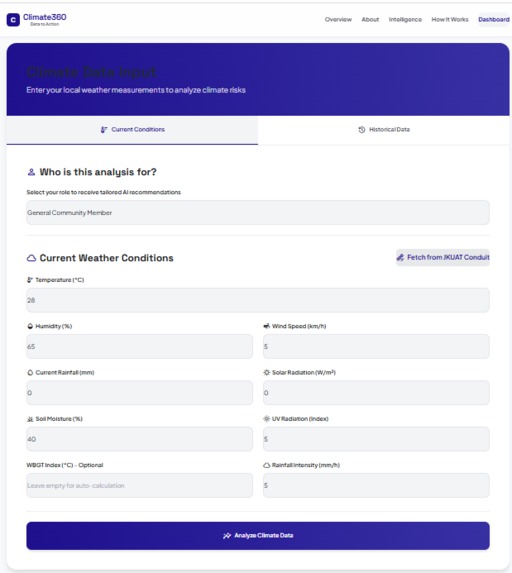
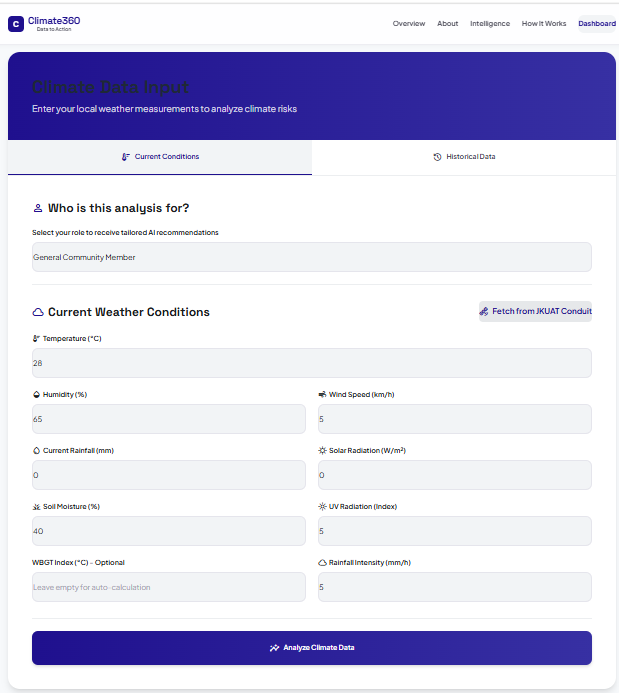
Climate Data Input - Current Weather Conditions
-
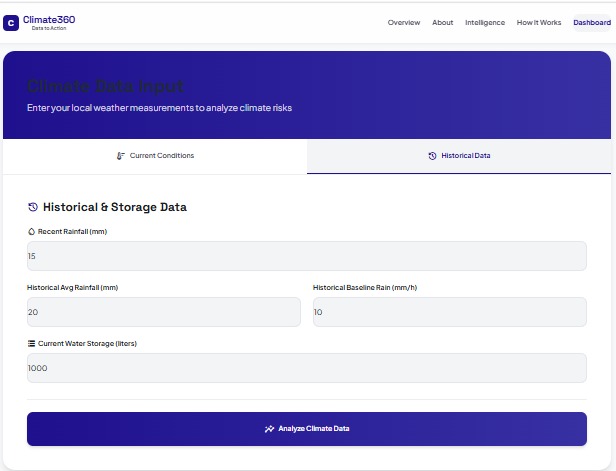
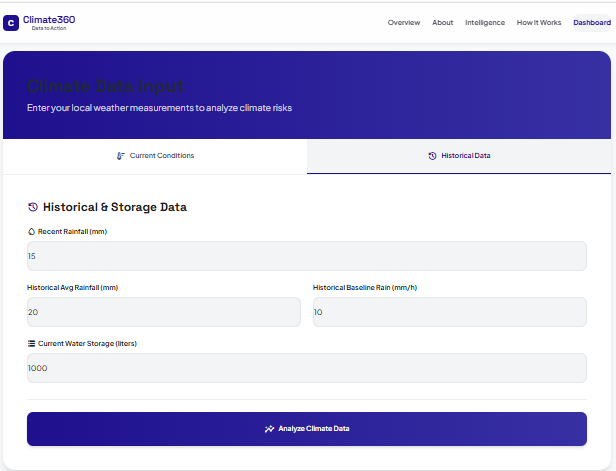
Climate Data Input - Historical & Storage Data
Inspiration
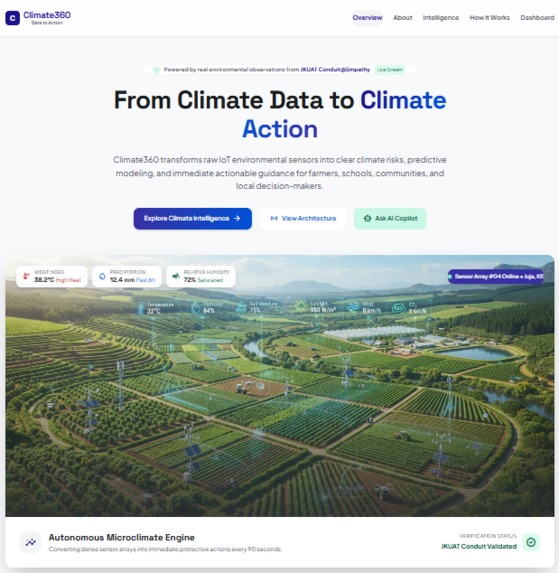
Climate data is widely available, but raw numbers do not always tell people what the risk is or what action they should take. We were inspired to build Climate360 to bridge this gap by transforming real environmental data into clear climate intelligence and practical actions.
What it does
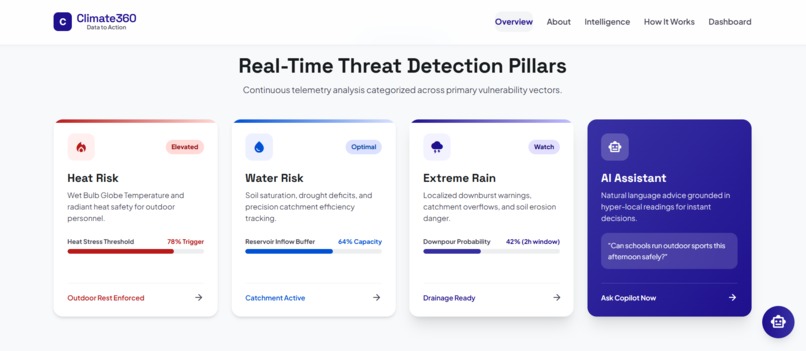
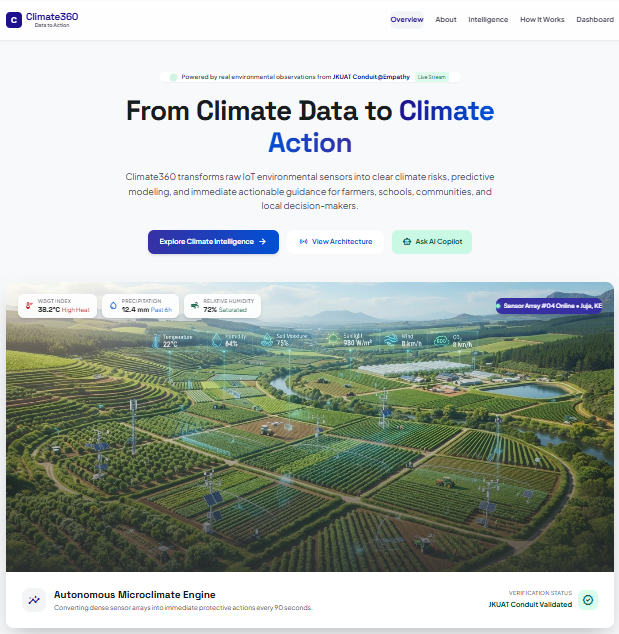
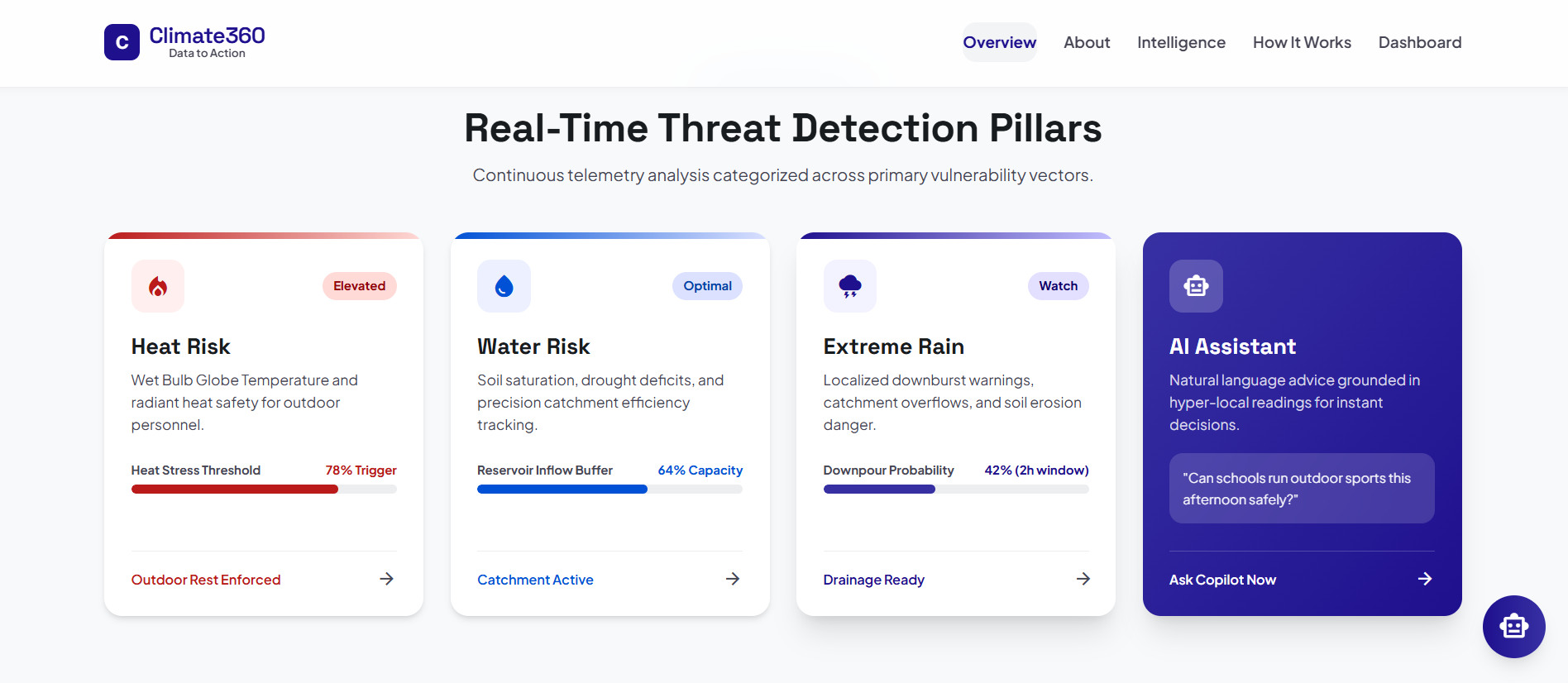
Climate360 is a climate intelligence platform that analyzes environmental conditions and provides insights in three key areas:
- Heat Risk: Identifies heat-stress conditions using temperature, humidity, wind, solar radiation, and WBGT.
- Water Intelligence: Analyzes rainfall and environmental conditions to identify water stress and rainwater-harvesting potential.
- Extreme Rain Risk: Analyzes rainfall patterns and supporting data to identify potential extreme-rain and flood risks.
- AI Action Assistant: Explains detected risks in simple language and provides practical recommendations.
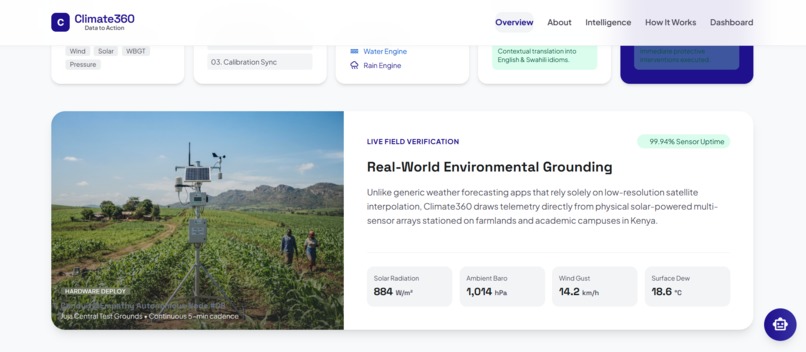
The platform uses data from the JKUAT Conduit@Empathy platform as a core environmental data source and applies analysis to turn the data into meaningful insights rather than simply displaying it.
How we built it
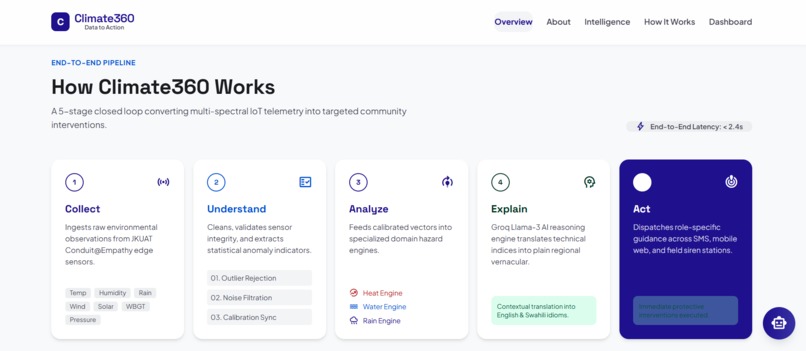
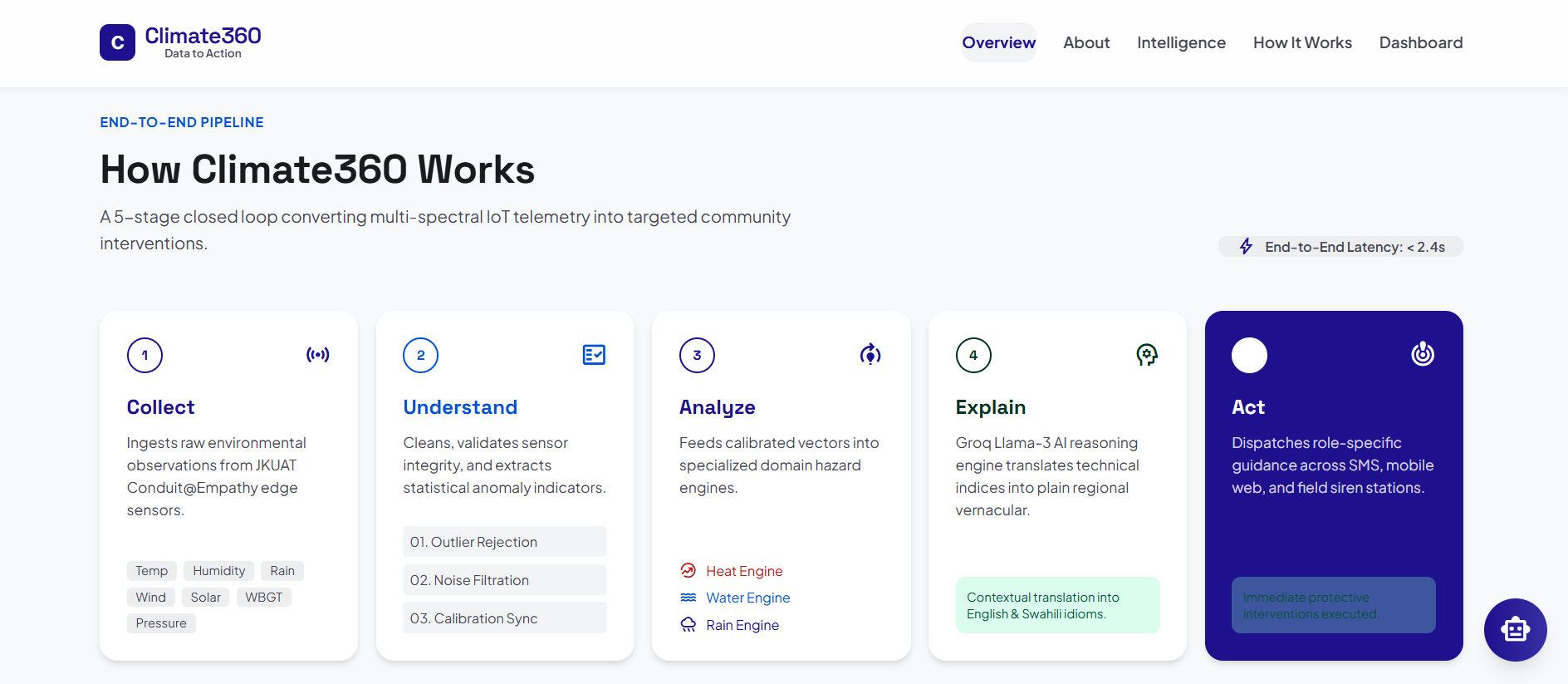
Climate360 follows a simple workflow:
Data → Processing → Risk Analysis → AI Explanation → Action
We collect environmental observations from Conduit@Empathy and combine them with supporting weather, historical, and geospatial data. The data is cleaned and processed before being passed through climate-risk analysis modules.
The frontend provides an intuitive dashboard, while the backend handles data processing, APIs, risk calculations, and AI integration. Groq is used to convert detected risks into clear explanations and actionable recommendations.
Challenges we ran into
Our biggest challenge was avoiding the creation of another basic weather application. We wanted to make climate data meaningful and actionable.
We also faced challenges in combining different data sources, converting raw environmental measurements into useful risk indicators, and designing AI responses that explain the analysis without replacing the underlying climate-risk calculations.
Accomplishments that we're proud of
We are proud of building a platform that connects real environmental observations with practical real-world actions.
Our key achievement is the complete workflow:
Climate Data → Risk Detection → AI Explanation → Recommended Action
We also designed Climate360 so users can access the core climate intelligence without creating an account, making the platform simple and accessible.
What we learned
We learned that climate technology is not only about collecting data. Its real value comes from making data understandable, contextual, and actionable.
Through this project, we gained experience working with environmental sensor data, data processing, risk-analysis logic, API integration, and using AI as an explanation and decision-support layer.
What's next for Climate360
We plan to expand Climate360 with:
- More locations and localized climate intelligence
- Satellite and Earth-observation data
- Advanced GIS-based flood and climate-risk mapping
- Personalized early-warning alerts
- Voice-based AI assistance
- Agriculture and community-focused insights
- Long-term climate trend and scenario analysis
- More advanced predictive ML models
Our long-term vision is to make Climate360 a decision-support platform that helps people understand climate risks early and take appropriate action.
Built With
- analytics
- api
- climate
- conduit@empathy
- css
- data
- fastapi
- geospatial
- groq
- html
- learning
- machine
- numpy
- pandas
- postgresql
- python
- react.js
- rest
- scikit-learn
- visualization
- weather

Log in or sign up for Devpost to join the conversation.