-
-

Home Page
-
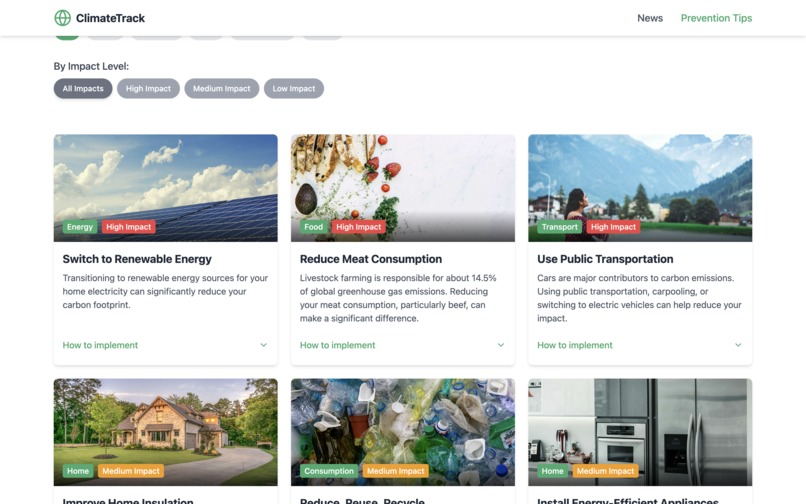
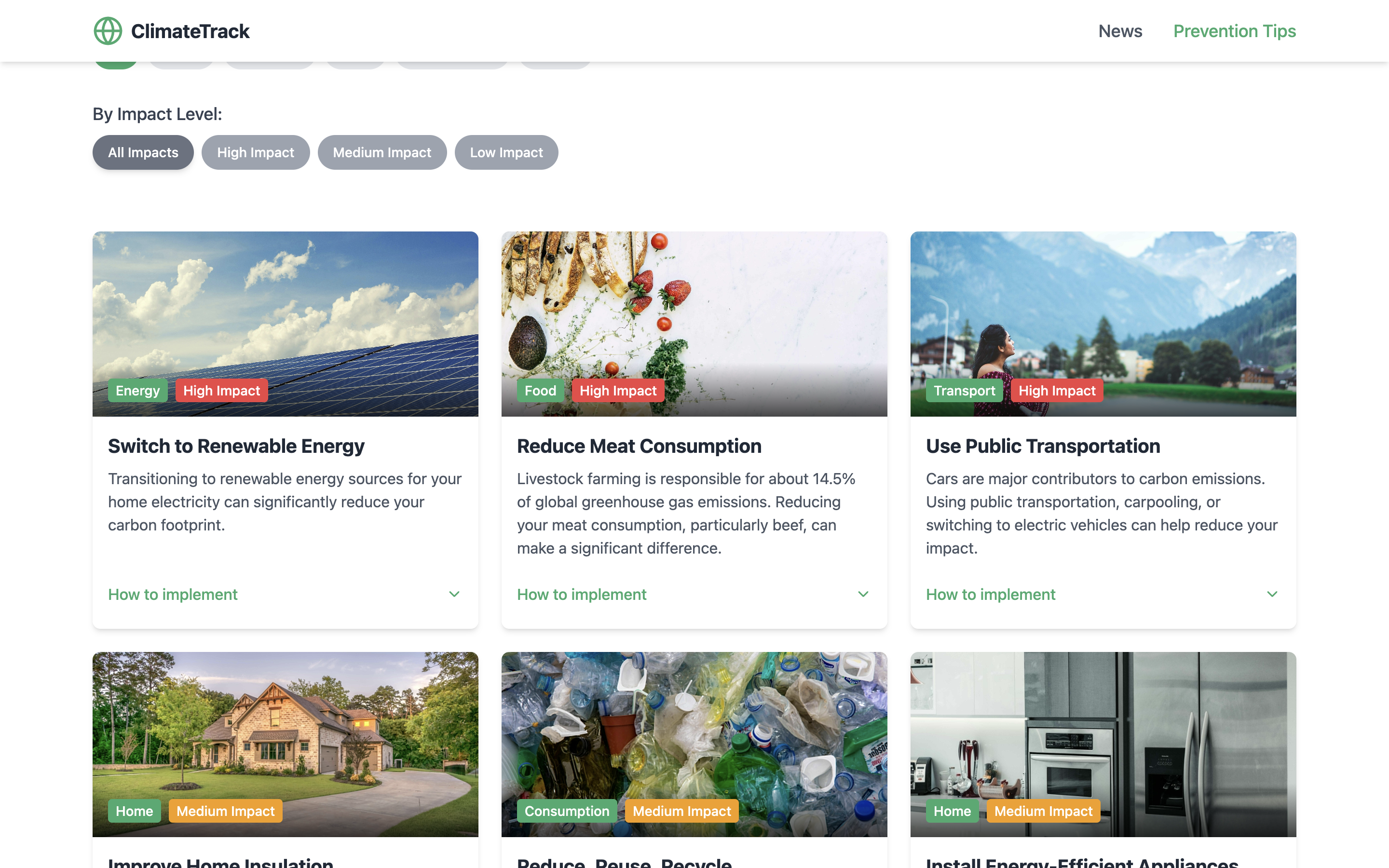
Prevention tips

Inspiration
Concerned by scattered, outdated climate information and inspired by the need for a single, up-to-date hub, I set out to build a site that brings real-time data, news, and actionable strategies into one place.
What it does
- Curated News Feed: Automatic roundup of the latest climate stories from trusted outlets.
- Prevention Techniques Page: Practical tips—from home energy audits to community tree-planting guides.
How we built it
- Front-end: React with Typescript + Tailwind CSS for a responsive, accessible UI.
- Deployment: Hosted on Vercel
Challenges we ran into
- API Rate Limits: Staggered requests and built a simple caching layer to avoid hitting quotas.
- Data Gaps & Normalization: Some sources used different units/timestamps—wrote transformation scripts to reconcile them.
Accomplishments that we're proud of
- Seamless, real-time integration of multiple data streams without noticeable lag.
- A clean prevention techniques module that users can filter by lifestyle, region, or cost.
- Automated news curation that updates every hour, reducing manual maintenance.
What we learned
- Best practices for API orchestration and caching in a scalable web app.
- The importance of data visualization ethics—labeling uncertainty and sourcing every dataset.
- How to optimize performance for large charts on low-powered devices.
What’s next for Climate Tracking Website
- Predictive Insights: Add simple forecasting models (e.g., short-term temperature trends).
- User Accounts & Alerts: Let users set thresholds (e.g., “notify me when CO₂ > 420 ppm”).
- Multilingual Support: Translate prevention tips & news summaries into additional languages.
Built With
- css3
- html5
- tailwind
- typescript
- vite


Log in or sign up for Devpost to join the conversation.