Inspiration
Climate change is often discussed using numbers, graphs, and future timelines that feel distant and hard to relate to. While people frequently hear about years like 2050 or 2100, it’s difficult to truly understand what those changes mean for their own city.
Climate Time Machine was inspired by the idea of making climate change personal and visual. Instead of just showing data, the project focuses on helping users see how their surroundings could change over time, making the impact of climate change easier to understand and harder to ignore.
What it does
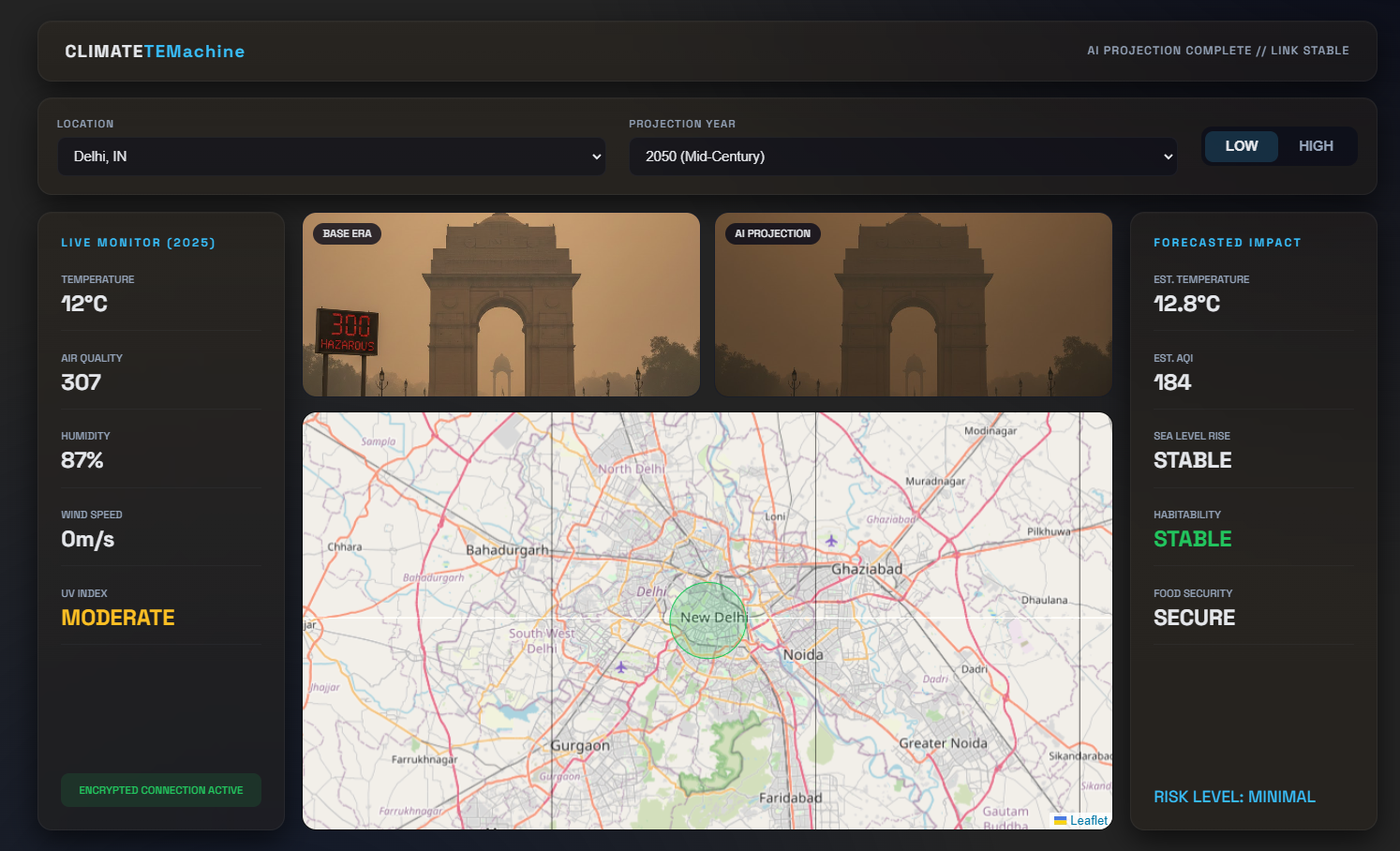
Climate Time Machine is an interactive web application that allows users to explore how different cities may change over time due to climate change.
Users can:
- Select a city to explore localized climate impact
- Compare present-day conditions with future projections
- Switch between low-emission and high-emission scenarios
- Visually understand long-term environmental changes
- Learn the reasoning behind climate shifts in a simple, intuitive way
How we built it
The project was built as a lightweight, browser-based web application.
- HTML, CSS, and JavaScript were used to ensure fast performance and simplicity
- A dark, immersive UI was designed to keep focus on visuals and storytelling
- JavaScript manages city selection, scenario changes, and dynamic content updates
- The structure was kept modular so new cities and features can be added easily
Challenges we ran into
- Translating complex climate concepts into clear visual representations
- Finding the right balance between accuracy and simplicity
- Managing smooth visual transitions without affecting performance
- Designing an interface that informs users without overwhelming them
Accomplishments that we're proud of
- Creating an engaging way to visualize climate change at a city level
- Building a clean and intuitive interface within a limited time
- Making climate education more interactive and approachable
- Delivering a complete, functional project during a hackathon
What we learned
Through this project, we learned:
- The importance of visual storytelling in communicating complex issues
- How design decisions affect user understanding
- Ways to simplify scientific concepts responsibly
- Rapid development and teamwork under time constraints
What's next for Climate Time Machine
Future plans include:
- Integrating real-time climate and AQI data APIs
- Expanding support to more cities and regions
- Adding animated timelines to show gradual environmental change
- Including educational insights and action-oriented recommendations
- Improving mobile responsiveness and accessibility
Built With
- aqi-api
- css
- html
- javascript
- weather-api


Log in or sign up for Devpost to join the conversation.