-
-
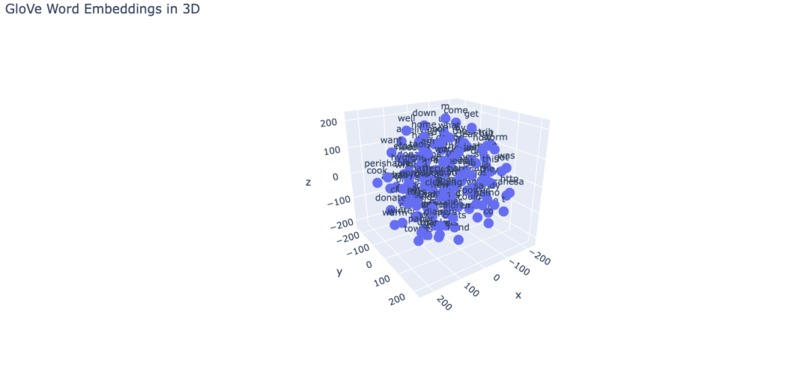
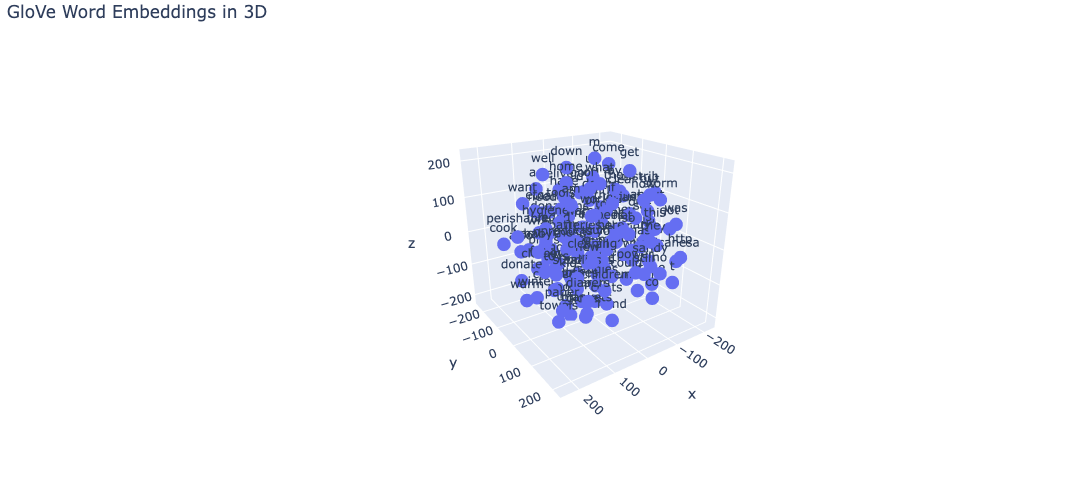
tsne_plot_3d(model)
Inspiration
I was inspired by the impact of natural disasters, which can cause over a billion dollars in damages and overwhelm disaster relief agencies. To solve this issue, people have used AI to analyze data from social media, aiding in disaster response efforts. This inspired me to create my own AI model.
What it does
I developed an AI in Python that converts words into vectors using the University of Oregon's public word2vec database and another database of categorized tweets from natural disasters. This data is used to train the model, enabling it to compute the cosine similarity of words and categorize tweets on its own.
How I built it
I created an AI in python that coverts words into vectors. This was done using the University of Oregon public word to vector data base and another database of tweets during natural disaster that categories the tweets. This is used to train the data and covert the words into vectors which will allow to find the cosine similarity of words. This should allow the AI to categories tweets on it's own.
Challenges I ran into
One major challenge was finding a large, public, and categorized dataset of tweets.
Accomplishments that I'm proud of
I successfully modeled 2D and 3D visualizations of word vectors and their similarities, which look really cool and provide useful data.
What I learned
I discovered numerous websites offering free and public databases of tweets, which can be incredibly useful for training AI models. I also learned more about how AI works.
What's next for Climate Relief Using AI
The next steps involve implementing the AI on Twitter to analyze tweets in real-time and provide valuable insights during disasters.


Log in or sign up for Devpost to join the conversation.