-
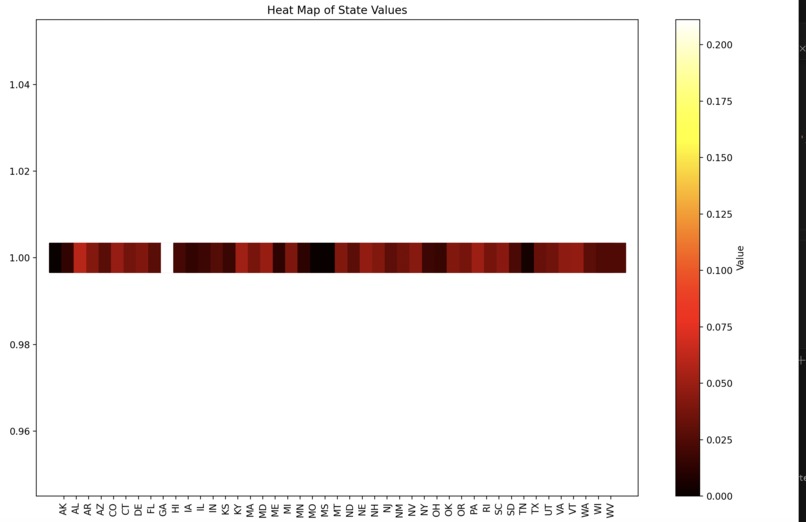
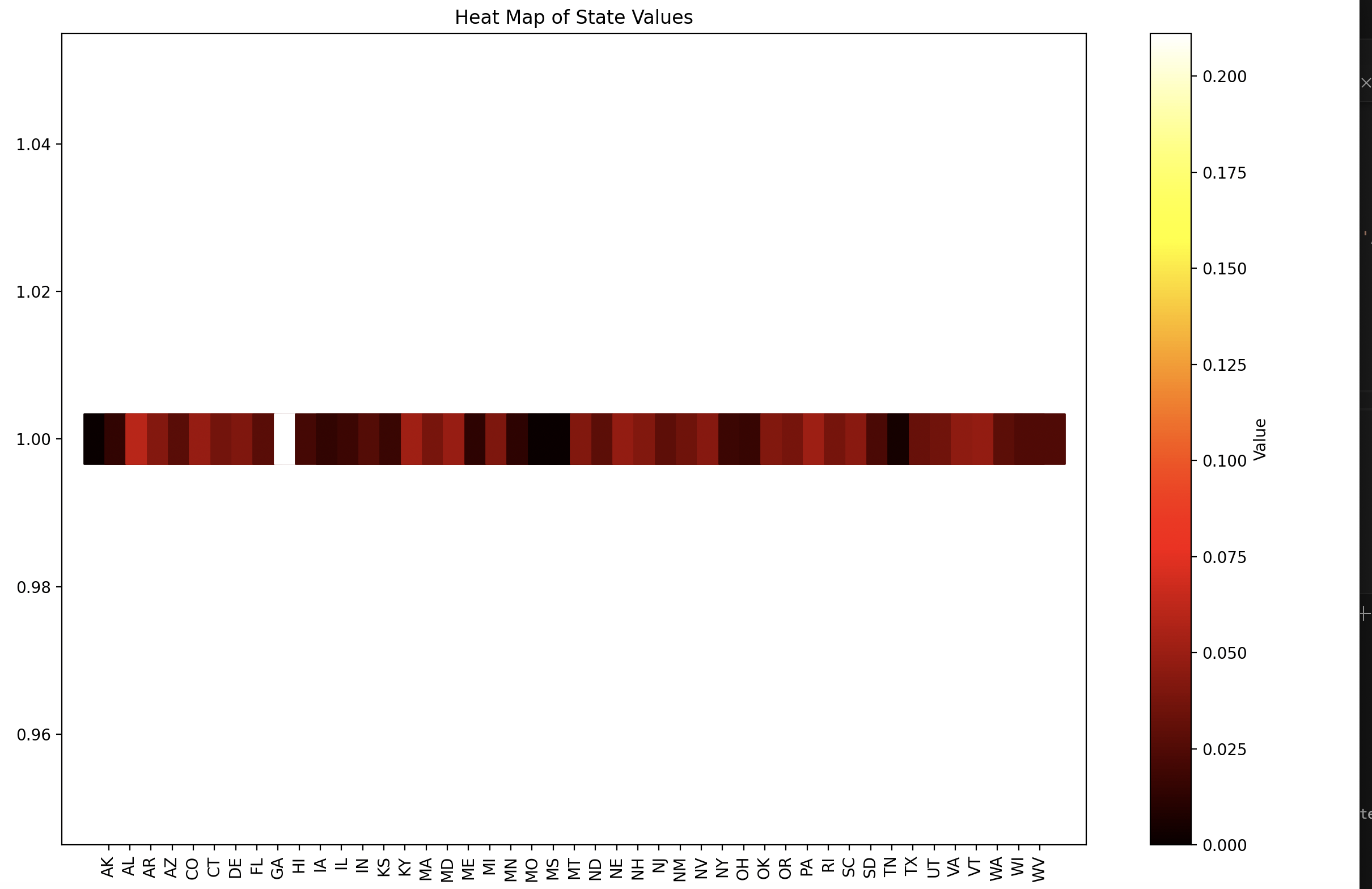
The heat map of states and correlation number. Shows how severe the climate change is going to be in some states
-
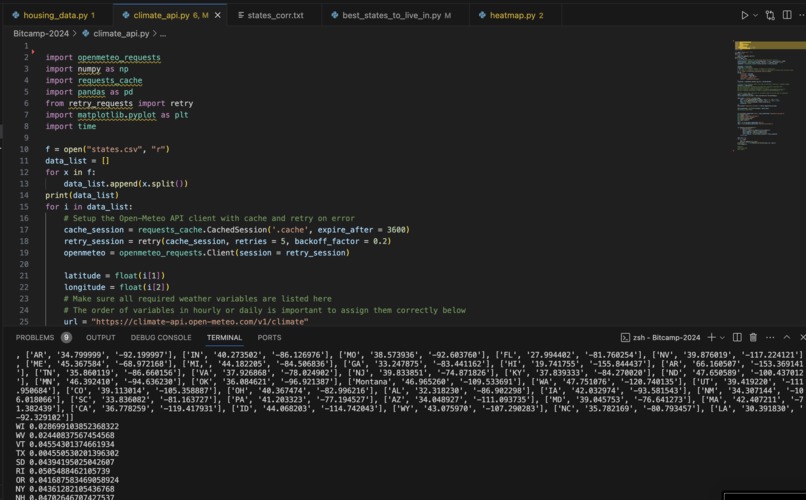
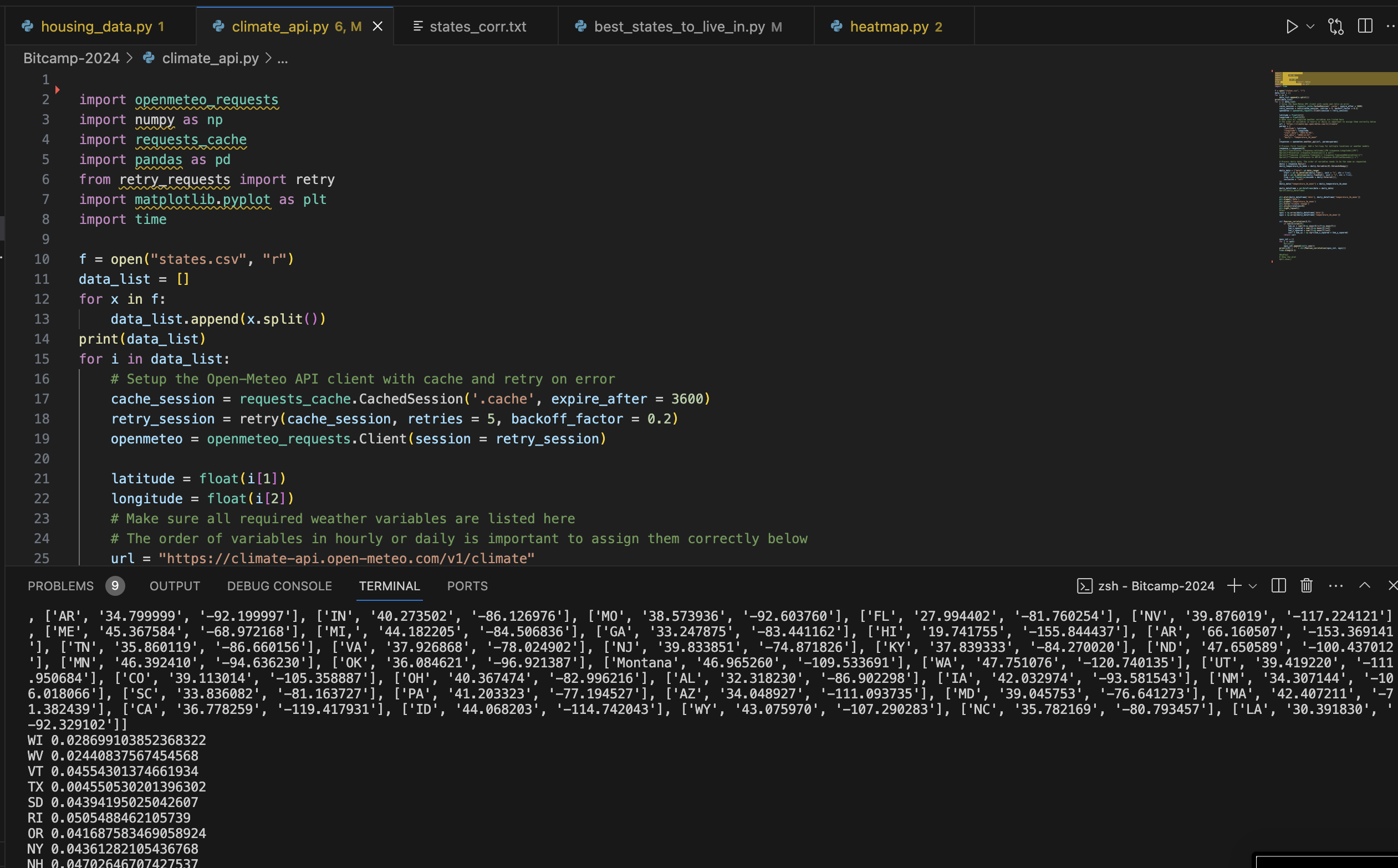
The climate api that will map a state to a corresponding correlation number
-
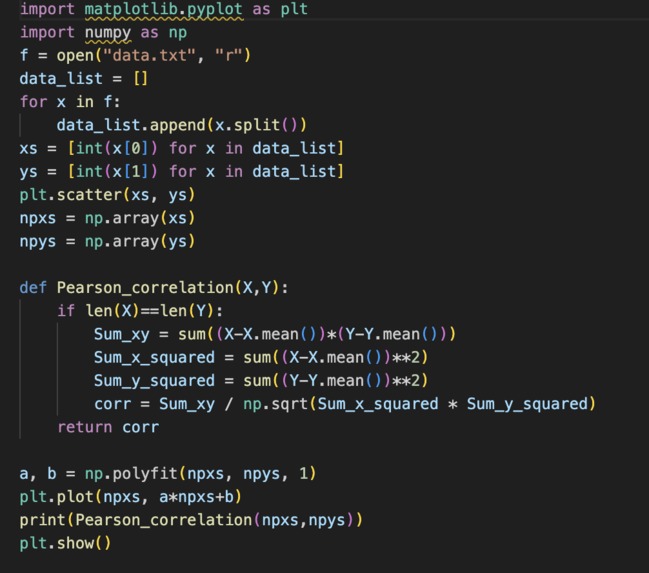
Will produce a heat map that of states and correlation number.
-
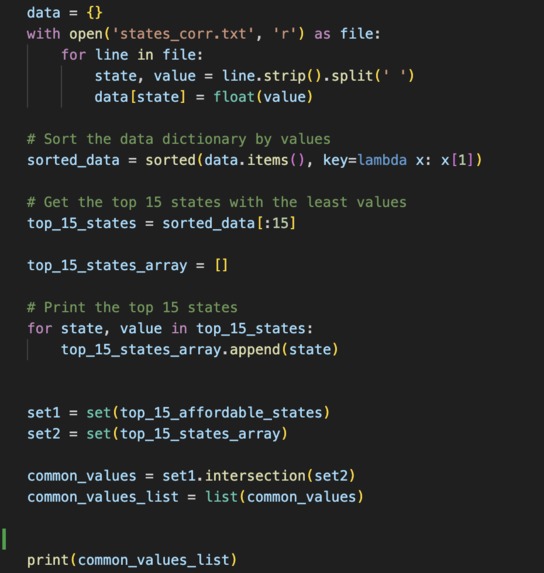
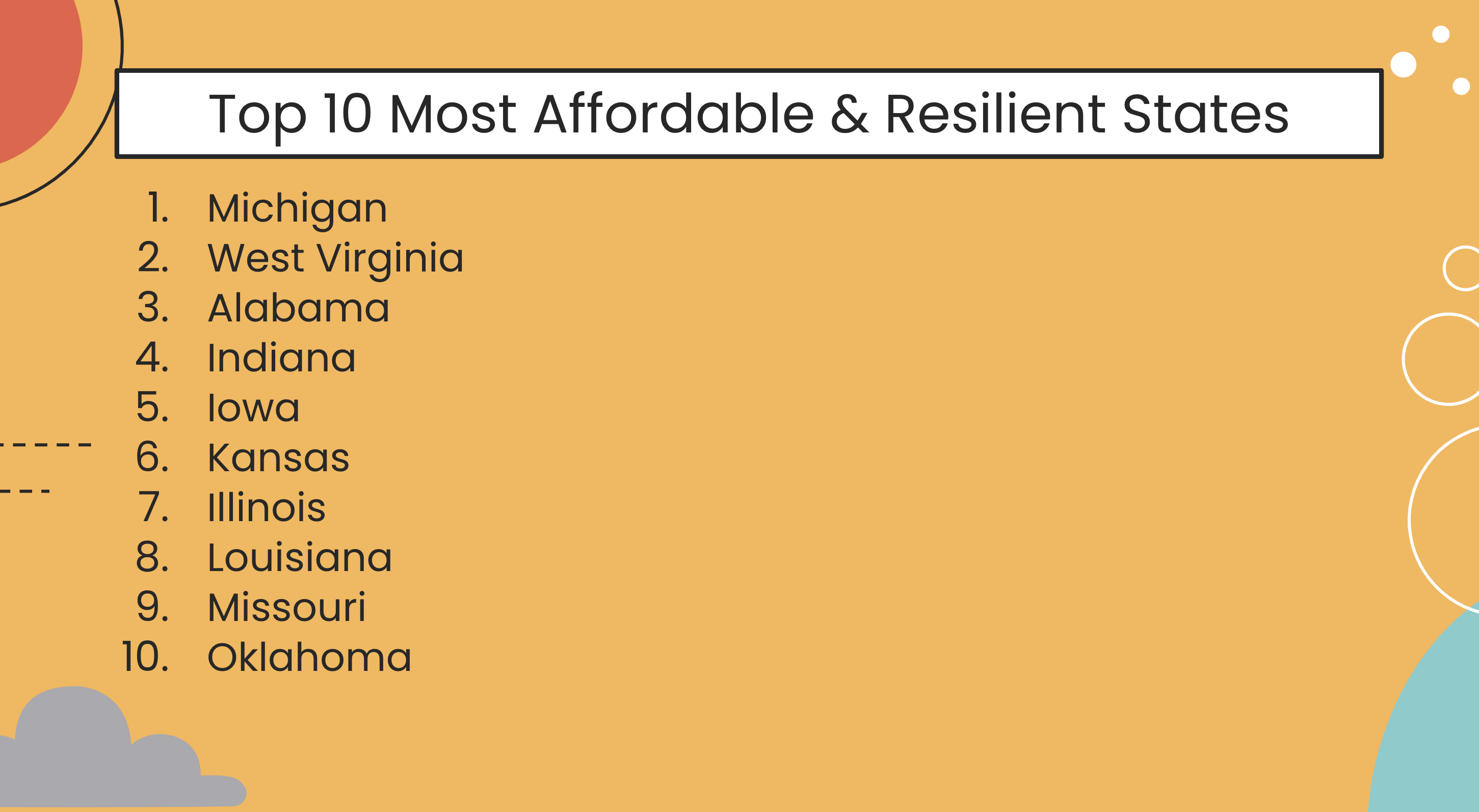
Produce a list of most climate resilient and affordable to states to live in
-
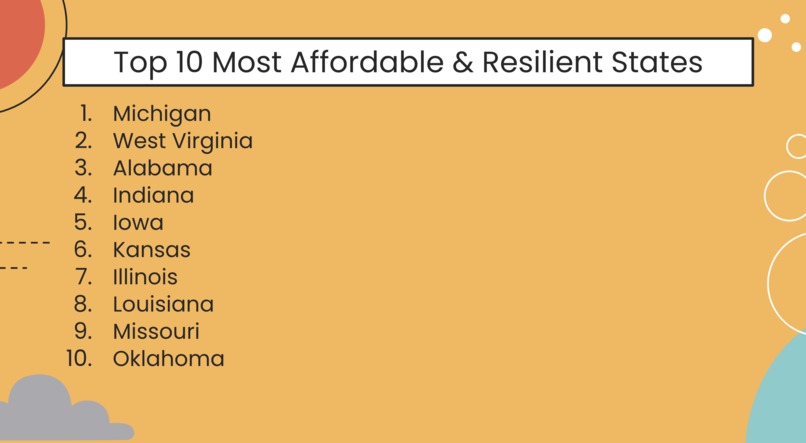
These are the states that will be safe to live in the future!
Inspiration
We're driven by the understanding that climate change is going to shake up where and how we live, affecting everything from our homes to our wallets. But we're not just sitting back and waiting for it to happen. We're on a mission to find the best places to live – ones that can weather the storm of climate change while still being affordable for everyday folks like you and me.
Our idea came from a simple truth: we all deserve to live in places where we feel safe and secure, no matter what's going on with the weather. So, we're using smart technology to figure out which states are going to be the safest bets in the face of climate change.
But it's not just about climate – it's about making sure these places are places we can actually afford to live in. We're digging into data on things like housing prices and cost of living to find places where we can live comfortably without breaking the bank.
At the end of the day, our goal is simple: to give people like you and me the tools we need to make smart decisions about where to live, so we can build futures that are strong, stable, and secure – no matter what the weather throws at us.
What it does
The result of our analysis yields the best 11 states to live in, balancing climate resilience with housing affordability, making them ideal choices for individuals and families seeking a secure and comfortable living environment in the face of climate change.
How we built it
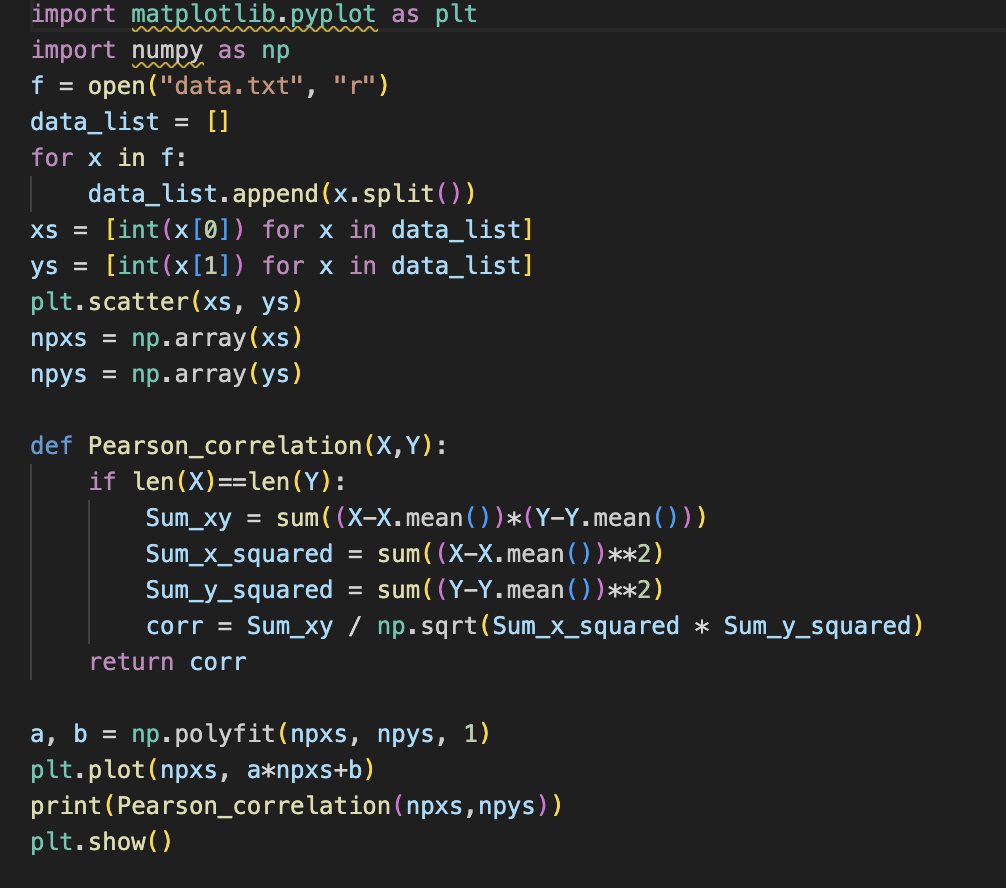
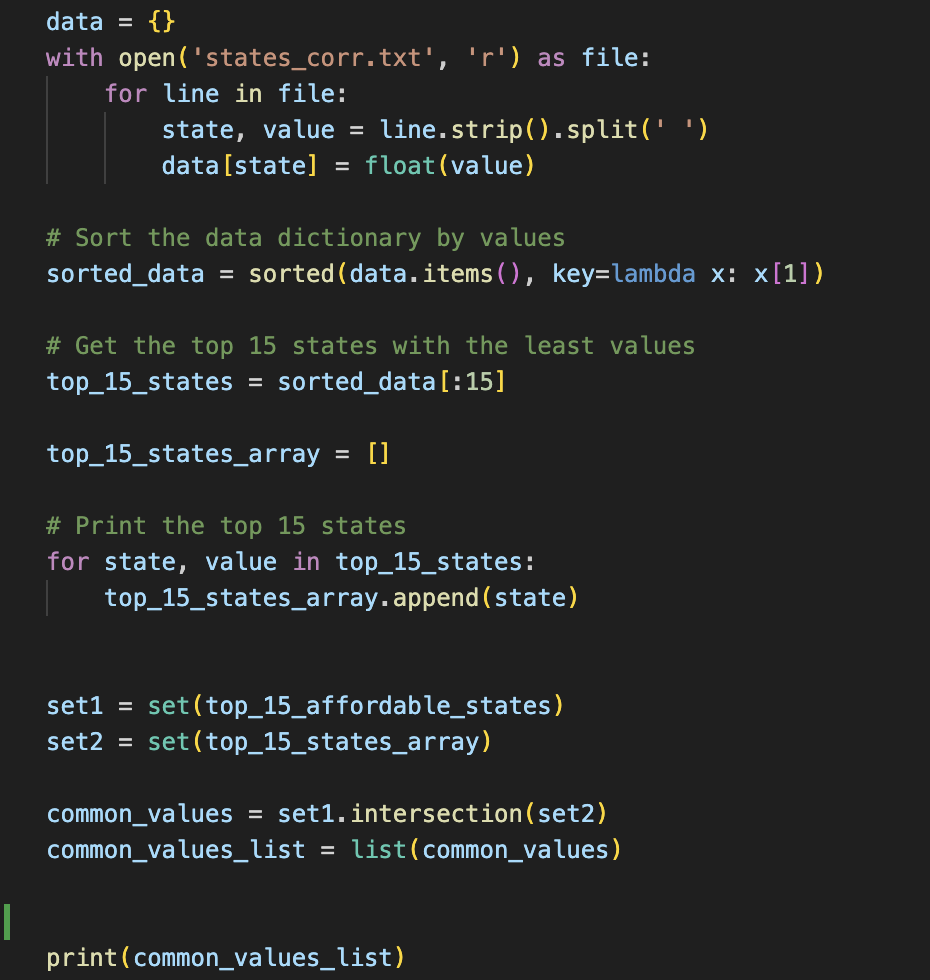
Climate Forecast API: The program utilizes the Open-Meteo climate forecast API to retrieve climate data for different states over a period of 25 years. This data includes correlation numbers that indicate how much each state's climate has changed over that time span. A higher correlation number suggests a greater impact from climate change. Extracting Top 15 States with Least Correlation Number: After retrieving the climate data, the program identifies the top 15 states with the least correlation numbers. These states are considered to be less affected by climate change based on the data provided by the API. Kaggle's Dataset on Affordability: The program accesses a dataset from Kaggle containing information about the affordability of housing in various states. This dataset likely includes factors such as median home prices, cost of living, income levels, and other relevant metrics. Extracting Top 15 Most Affordable States: From the Kaggle dataset, the program identifies the top 15 most affordable states based on the specified criteria. Comparing the Lists: The program compares the lists of the top 15 states with the least correlation numbers (indicating climate resilience) and the top 15 most affordable states. By finding the common states between these two lists, the program identifies the states that are both climate-resilient and affordable. Output: The program outputs the names of the 11 states that are identified as the most climate-resilient and affordable based on the comparison.
Challenges we ran into
We initially struggled to finding the proper APIs and how to use them. However, once we figured out how to expand the data, we were able to work much faster.
Accomplishments that we're proud of
We made the OpenMeteo API work.
What we learned
We learned how to use the Python libraries Numpy, Matplotlib, and Pandas, as well as how to use them to process large amounts of data.
What's next for Climate Change and Affordability in the United States
Now knowing which states are relatively affordable and resilient to the effects of climate change, we are interested in seeing what can incentivise people to move to those states.
Built With
- matplotlib
- numpy
- open-meteo-forecast
- pandas
- python

Log in or sign up for Devpost to join the conversation.