
ClimaShield – AI for Predictive Protection and Dignified Adaptation
ClimaShield was born from a single, urgent question: what if we could see displacement coming and act before lives are uprooted? As climate change accelerates, we are witnessing the largest wave of human movement in history. Floods, heatwaves, and droughts are displacing millions, not because people lack resilience, but because they lack time and tools to adapt. The inequity is striking, wealthier nations can forecast, plan, and rebuild, while vulnerable communities face the storm first and the support last. We wanted to change that imbalance. ClimaShield emerged from this moral conviction: that foresight is a human right, and that data and AI can transform fear into preparedness.
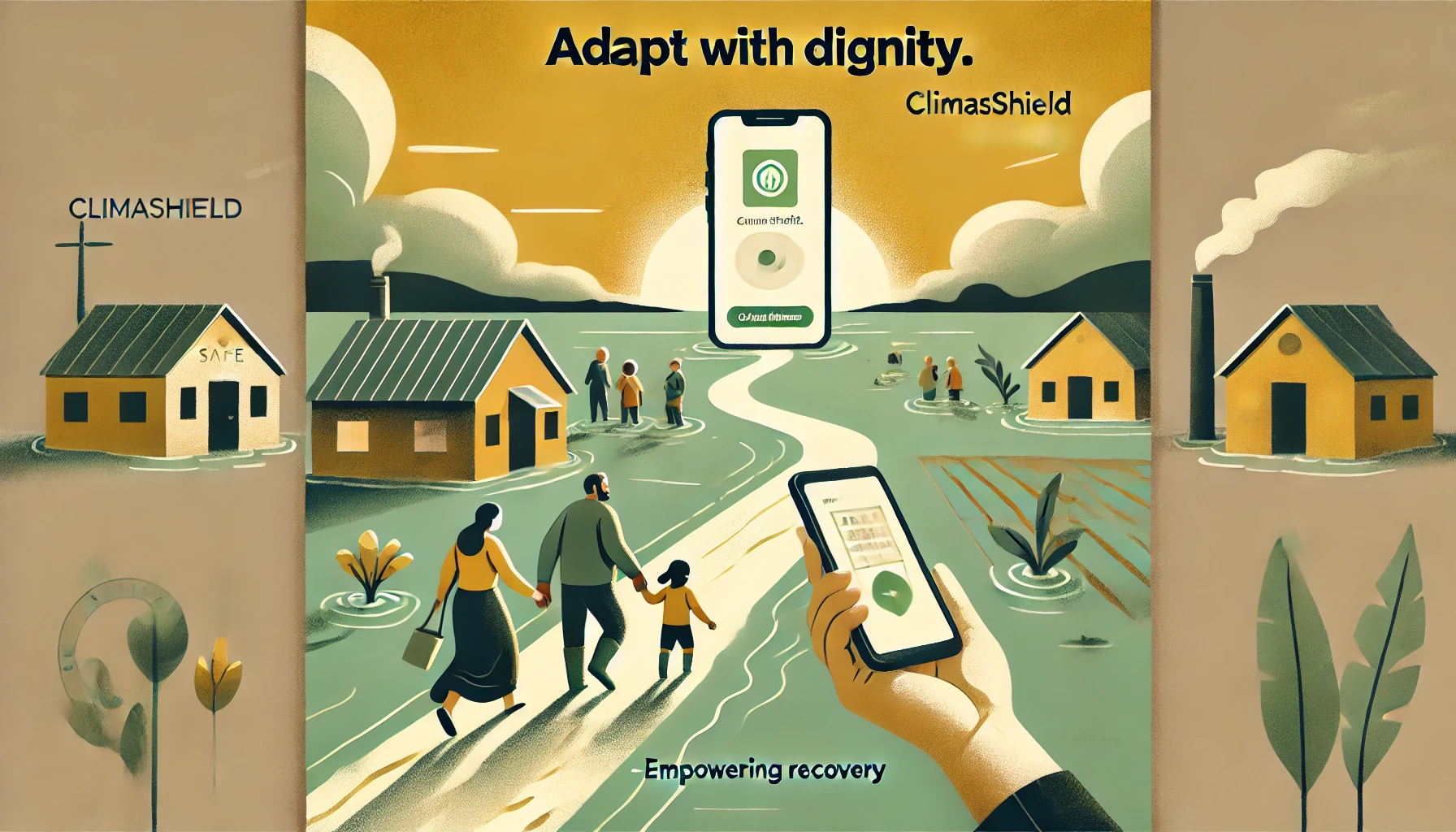
ClimaShield is an AI-powered, two-part solution that helps communities predict, prepare, and recover from climate-induced displacement. The first part , Predictive Protection, uses AI to identify regions at high risk of climate-driven migration and provide early alerts alongside adaptive micro-insurance. The second part, Dignified Adaptation, supports post-crisis relocation, helping affected families connect with safe zones, job opportunities, and local governments or NGOs for coordinated assistance. Together, these two components form an integrated ecosystem for proactive and dignified climate adaptation.
At the technical core of ClimaShield is a data-driven predictive model built on open datasets from the Amazon Sustainability Data Initiative (ASDI) and the Copernicus Climate Data Store. Using climate and socioeconomic indicators, we compute a composite risk index that highlights regions where environmental stress is likely to cause displacement.
$$ \text{Risk Index} = 0.4C + 0.3V + 0.3(1 - I) $$
Here, (C) represents climate exposure (e.g., drought frequency, temperature anomaly, flood risk), (V) denotes socioeconomic vulnerability, and (I) reflects infrastructure resilience. This risk score not only identifies which areas are most threatened but also feeds into a dynamic micro-insurance model, allowing for fair, adaptive coverage that evolves with real-time conditions.
$$ \text{Premium} = P_0(1 + \alpha \times \text{Risk Index}) $$
This ensures that families in higher-risk zones receive earlier support, affordable premiums, and faster payout after verified events. Our Random Forest model, implemented in scikit-learn, powers the risk predictions, while Folium and Streamlit visualize them in an interactive dashboard. Users can select their community, view localized risk forecasts, simulate insurance premiums, and receive guidance in the insurance process, ensuring inclusivity even in low-literacy regions.
The second layer of ClimaShield connects these insights to action. Using NLP-driven matching algorithms and structured data, the platform coordinates post-crisis migration by linking displaced families with available relocation programs, safe housing zones, and skill-based job opportunities. We aimed to design a two-part solution that could also provides NGO and municipal dashboards showing where help is needed most, allowing for evidence-based allocation of resources. However, within 24 hours of development, we confronted the immense complexity of migration modeling, the ethical sensitivity of tracking movement, the scarcity of consistent data, and the difficulty of simulating something so human within limited time and resources. Rather than forcing a feature that wasn’t ready, we chose to focus on what mattered most in the moment: the forecast prediction, the micro-insurance and the relocation process.
Throughout this process, we learned that AI can be empathetic, when designed with intention. We discovered how open data can bridge global inequality when made accessible and actionable. We also learned that transparency matters as much as accuracy. Instead of creating a “black box,” we designed explainable models using SHAP analysis and clear visualizations, so that decision-makers and citizens alike can understand why an area is at risk and how their actions make a difference.
We faced several challenges along the way, from integrating multiple datasets with different formats and scales, to balancing sensitivity with ethics when modeling displacement patterns. Migration data in particular is complex, tied to human stories, and must be handled responsibly. But rather than shying away from complexity, we built a modular system where every layer, predictive analytics, insurance modeling, and migration coordination, can evolve independently while staying connected through a shared purpose: reducing inequality through foresight and adaptation.
ClimaShield is more than a hackathon project; it’s a vision of fairness made tangible. It represents a world where data protects rather than excludes, where AI amplifies empathy instead of bias, and where no one is left behind simply because they live closer to the storm. In the face of growing climate displacement, ClimaShield stands as a blueprint for dignity, resilience, and technological compassion — a reminder that the future of innovation is not just intelligent, but humane.
Predict. Prepare. Protect. AI for Dignified Climate Adaptation.

Log in or sign up for Devpost to join the conversation.