-
-

ClimaBee!
-
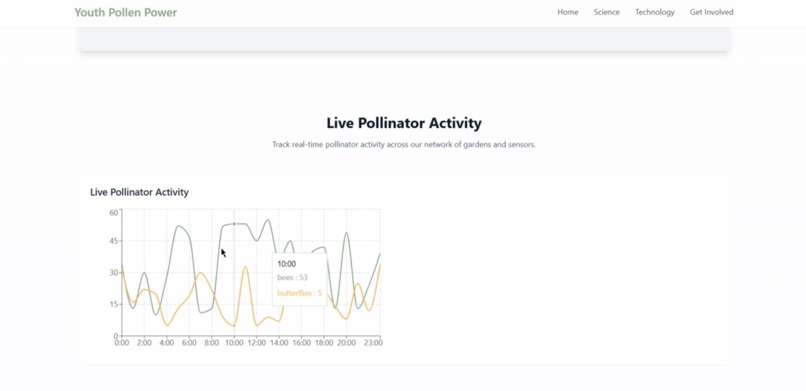
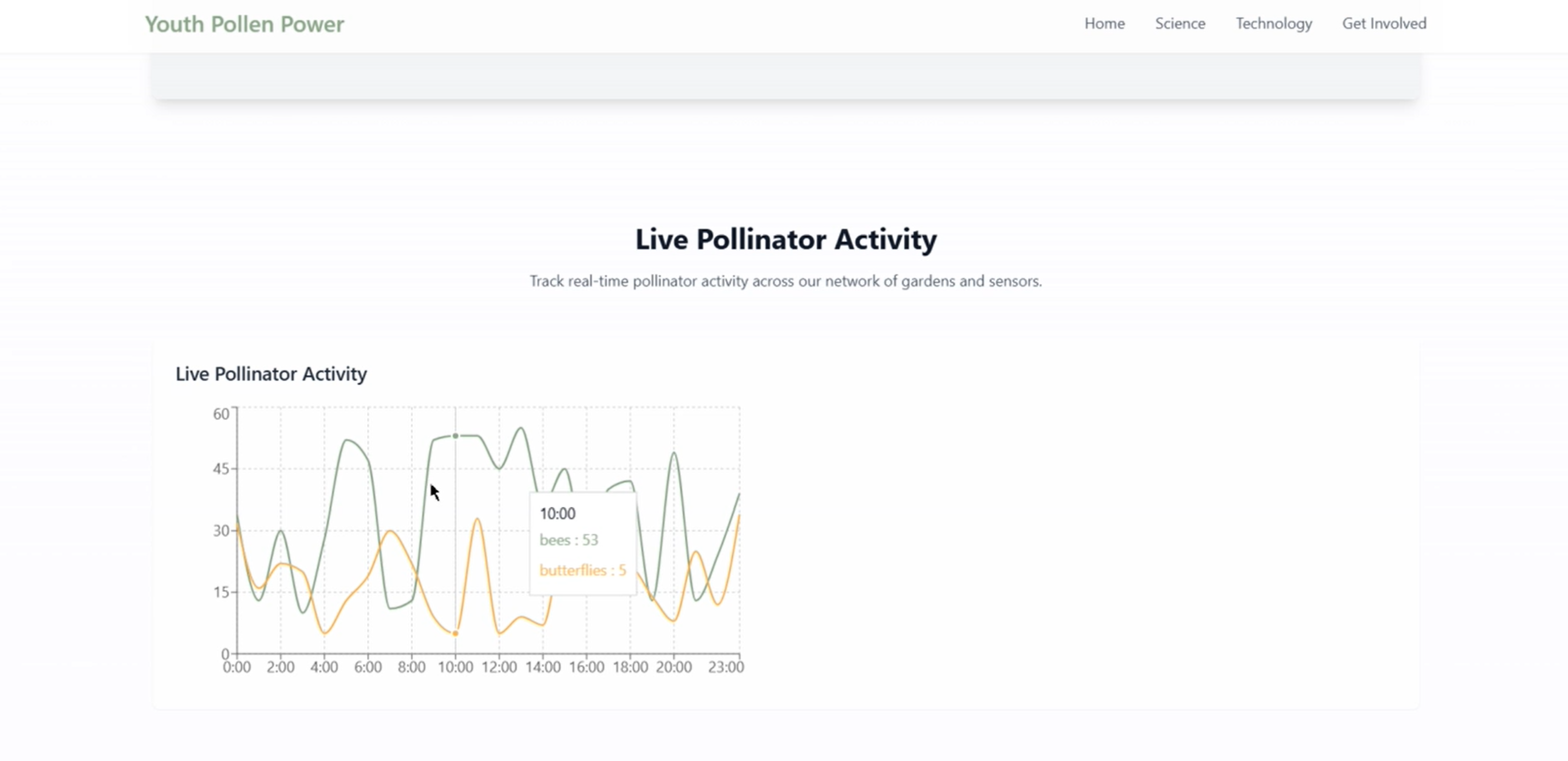
Our First Live Pollinator Activity Tracker which we will implement!
-
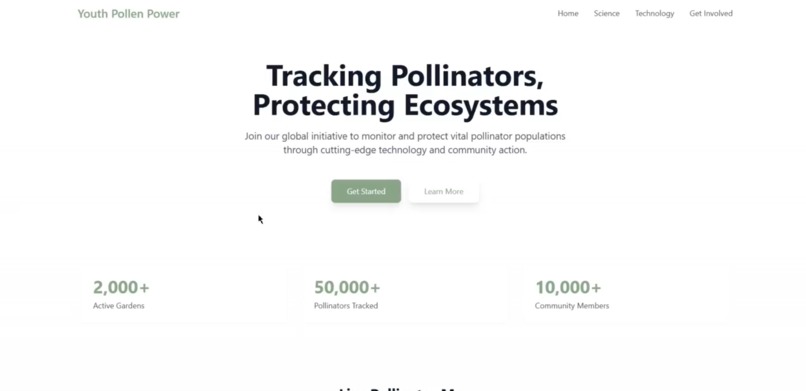
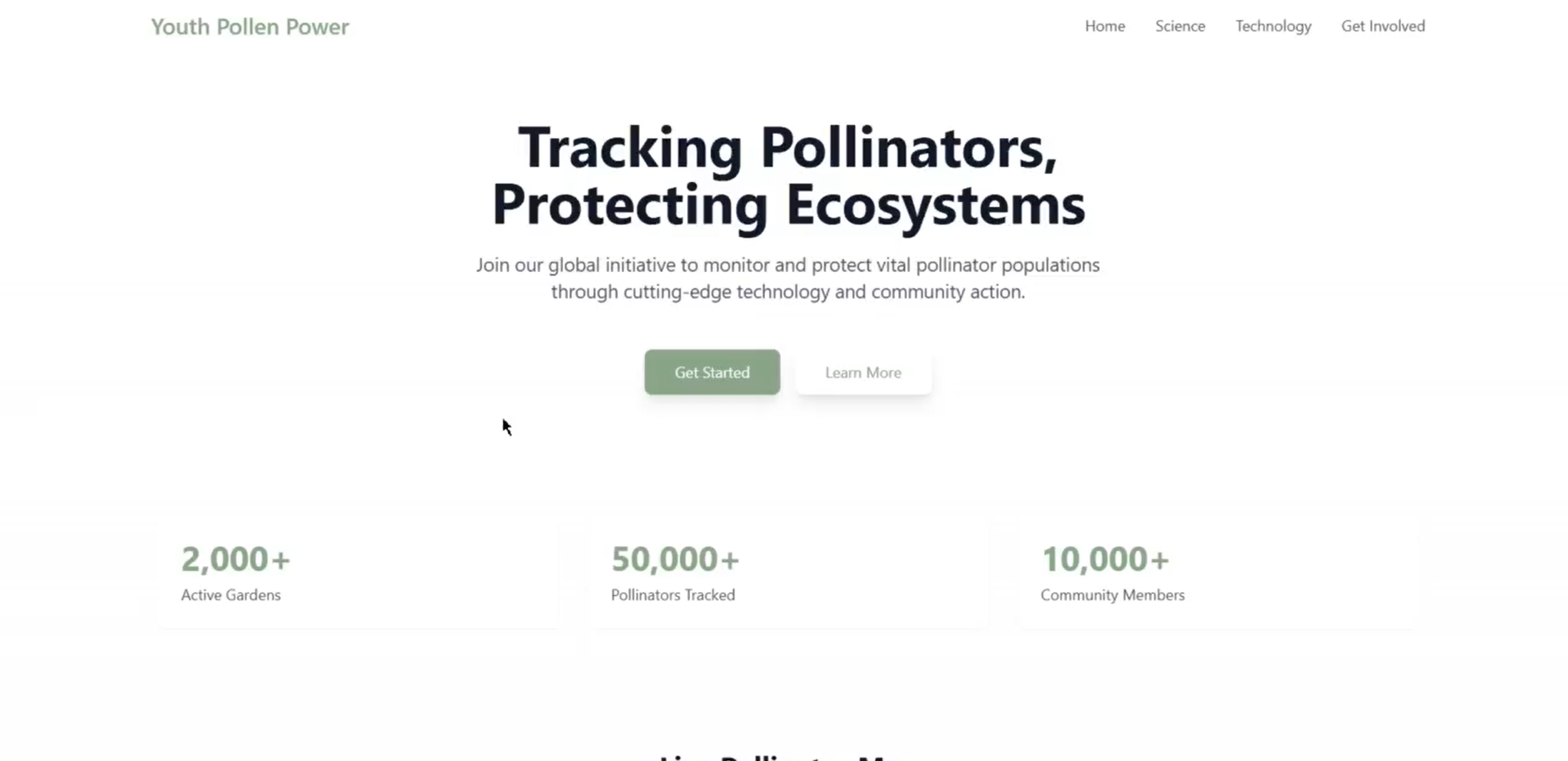
Main website page!
-
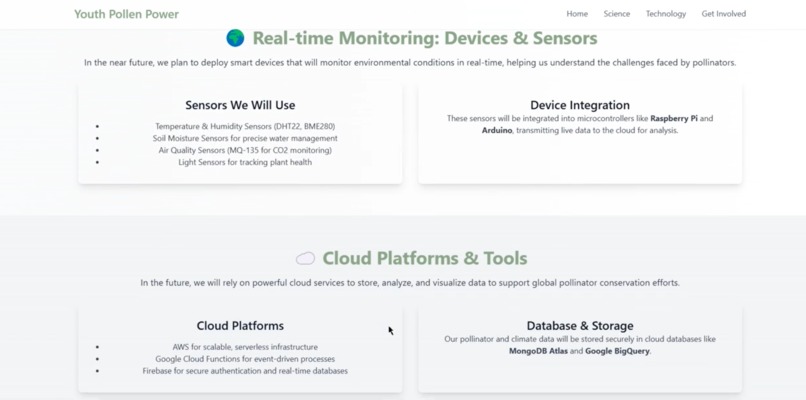
More about our ClimaBee initiatives!

Everyone talks about big things like planting trees and switching to solar power to fight climate change. And those are super important! But what if I told you that tiny bees and butterflies are also a HUGE part of the story?
Climate change is essentially messing with nature's timing. Imagine your favorite cartoon started playing at 3 AM instead of 3 PM – you would miss it! That is what's happening to flowers and bees. Flowers are blooming too early, and bees are missing out on their food. And guess what? A lot of the fruits and vegetables need bees to grow!
By helping these pollinators, we're doing more than just saving the insects. We are keeping our food safe, our air clean (because plants take in the carbon dioxide!), and our neighborhood healthy.
Inspiration
When we talk about climate change, we often think about big actions: carbon emission, solar energy, or fossil fuels. But some of the smallest creatures—bees and butterflies—play a crucial role in combating climate change!
What exactly is the problem?
Pollinators fertilize plants, ensuring the growth of fruits and vegetables. However, climate change is disrupting their natural rhythms, causing plant flowers to bloom out of sync with pollinator activity. Because of this off-sync caused by global warming, the food source for bees become limited as well as their reproductive success. Since 1991, the population of bees has declined about 50% which truly shows the severe impact of climate change on biodiversity!
The Significance
Pollinators also support ecosystems that absorb carbon dioxide. Many native plants that depend on bees and butterflies are essential for carbon sequestration. If these plants decline, it could also contribute to increased carbon in the atmosphere, further accelerating climate change.
That is where ClimaBee comes in. We’re raising awareness and taking action by planting native flowers, building bee hotels, and educating communities. But there’s also a bigger issue: the lack of publicly available data for researchers to study pollinator trends. Without this data, it is difficult to measure climate change’s true impact. Through online research, we learned that there is no standardized, real-time way to monitor pollinator populations, as conservation groups rely on inconsistent, manual observations!
In order for scientists and policymakers to create successful conservation programs and strategies to address population decline, more data-driven research needs to be conducted. Because of the lack of data, minimal scientific studies have previously been conducted in understanding the impact the climate has on pollinator species. We believe that data-driven research will be the biggest step toward increasing awareness.
We are changing this by creating an affordable, open-source data platform to help scientists, conservationists, and communities take action. This is an overlooked issue, and we’re here to make a difference!
What ClimaBee Does - Our Solution
A core component of ClimaBee is our sensor-based tracking system to monitor bee and butterfly populations. Using camera-based or infrared sensors, we detect pollinators, classify species with AI, and display real-time data on an interactive website. Scientists can also download the data as a CSV to analyze trends over time.
Current pollinator tracking systems are inconsistent and lack real-time visuals. ClimaBee directly addresses this gap in current technology by providing an open-source, real-time data platform that researchers and conservationists will use to make informed decisions.
The Costs We Considered
- Camera-based sensors ($30-$50) or Infrared sensors ($20-$50)
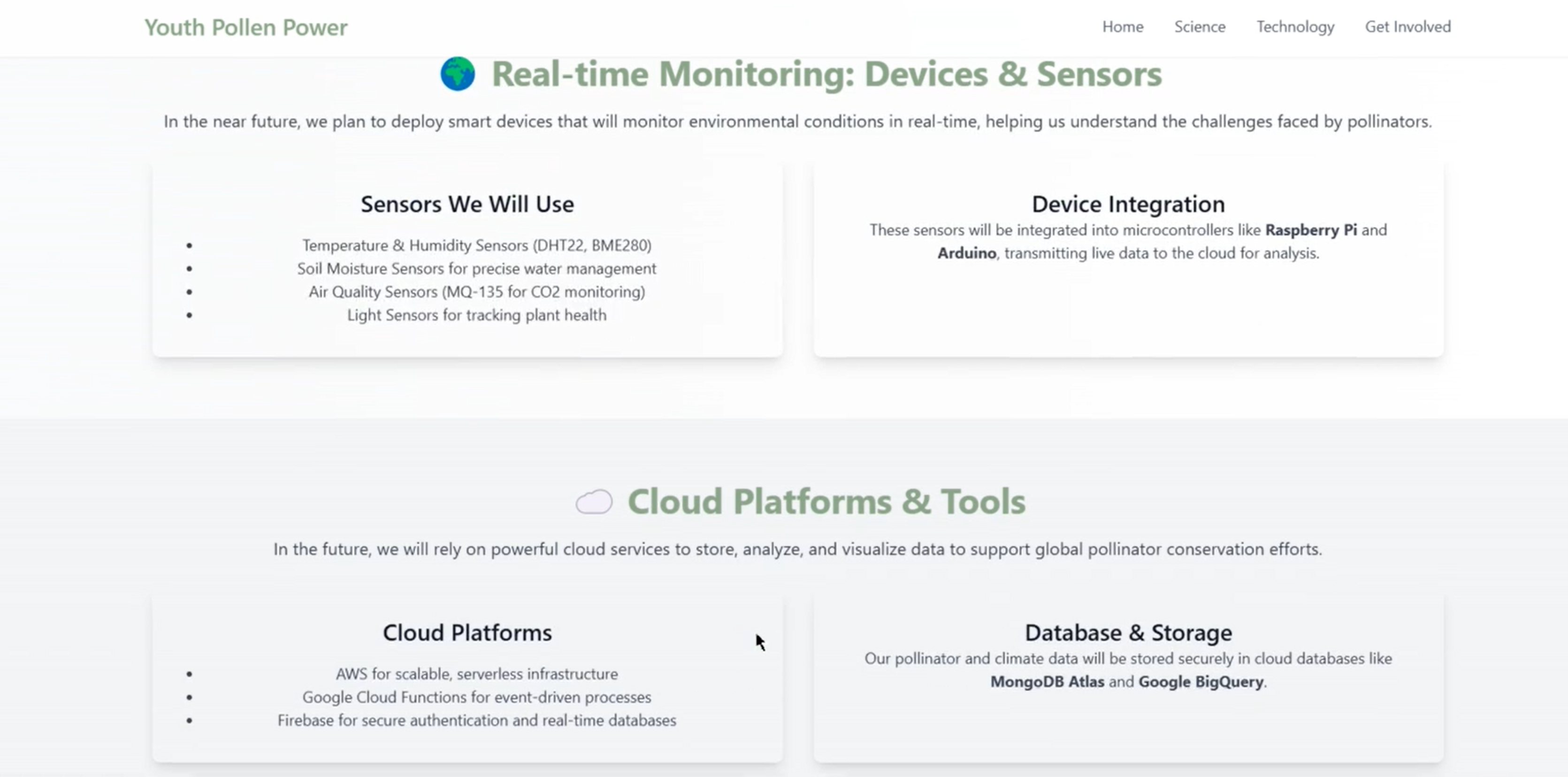
- Microcontrollers: Raspberry Pi or ESP32 ($15-$30 each) to process sensor data locally before sending it to the cloud
- Cloud Storage and AI model hosting ($5-$15/month) using low-cost platforms like AWS Free Tier, Google Cloud, or other open-source alternatives
Beyond data collection, ClimaBee focuses on three key goals:
Educating Communities 🌱
- Raising awareness about climate change and pollinator decline.
- Teaching people how their everyday actions impact pollinators.
- Encouraging schools, clubs, and communities to participate.
- Raising awareness about climate change and pollinator decline.
Creating Safe Habitats for Pollinators 🏡
- Planting native flowers to provide food for bees and butterflies.
- Constructing bee hotels as nesting spots for solitary bees.
- Installing butterfly houses as shelter from harsh weather.
- Planting native flowers to provide food for bees and butterflies.
Encouraging Sustainable Practices 🌎
- Reducing pesticide use that harms pollinators.
- Promoting organic gardening techniques.
- Reducing pesticide use that harms pollinators.
How We Built It
Research & Science-Backed Approach
We started with extensive background research to understand how climate change affects pollinators.
- Key Findings:
- Butterfly populations have nearly halved since 1991.
- Bee populations are in steep decline due to habitat loss and environmental changes.
- Mismatches between flowering times and pollinator activity disrupt the food chain.
- Butterfly populations have nearly halved since 1991.
🏗 Implementation
Our project aims to develop smart sensors to track bees and butterflies, analyzing their activity to address pollinator decline. The data will support farmers, scientists, policymakers, and conservationists in protecting pollinators and improving agricultural sustainability. Implementation of this sensor project will be done in 4 phases:
- Research & Development
- Identify the most effective sensor technology
- Conduct surveys on pollinator tracking methods
- Develop initial sensor prototypes for testing
- Prototype Testing and Refinement
- Test sensors in small-scale environments (e.g. controlled gardens)
- Analyze data and optimize sensor accuracy, battery life, and connectivity
- Large-Scale Development
- Partner with farms, conservation organizations, and urban planners
- Ensure sensor durability and environmental safety
- Data Analysis & Policy Integration
- Generate insights on pollinator health trends
- Share findings with stakeholders to guide conservation strategies
- Publish reports and open-source data to encourage further research
For our first prototype, we are considering to use Raspberry Pi-based sensors combined with TensorFlow for AI classification. The main challenges we may come across is ensuring battery efficiency of our cameras, setting up a testing environment to verify sensing, and most importantly, refining our pollinator identification AI models.
⚠️ Challenges We Faced
- Explaining the Project: It was initially challenging to break down the project in a way that was easily understandable for everyone.
- Team Coordination: Working across different time zones made collaboration quite tricky.
- Leaflet.js Integration: Displaying Leaflet.js on the website (we plan to integrate it with the real time data that we receive/install the sensors at particular gardens).
- Implementing Tailwind CSS for the first time was challenging and new, particularly with positioning and styling elements.
- Debugging unexpected React errors and bugs took more time than we expected.
- Project focus: Narrowing down the scope and structuring the project took the most time and effort.
Potential Future Challenges - the Feasibility of Our Solution:
- Hardware and AI Expertise: We may need additional team members with experience in hardware to work with our sensors and raspberry pi, and deep learning to tune our models
- Funding for Scaling: initial sensor deployment is feasible, but mass production will require extra support
- Public Engagement: Encouraging the widespread adoption of ClimaBee among conservation groups will require strong outreach strategies.
Accomplishments We're Proud Of - Our Current Progress!
- We developed ClimaBee! A platform that supports pollinator conservation and climate action.
- We tackled a problem that is not often discussed and researched ways to solve it. Our project raises awareness and helps communities take action.
- We completed extensive research on pollinator decline and climate change; this allowed us to build a strong foundation for our project.
- We have begun planning outreach efforts and have identified local organizations such as LEAF Center and the California Native Garden Foundation to collaborate with for conservation efforts.
- We successfully built and completed the MVP for our website page! - features a user-friendly interface for data visualization and community engagement!
What We Learned
Most importantly, we learned so much about the impact of climate change on pollinators. Our team was quite new to this field, and we learned a lot about the background!
Climate Change’s Direct Impact on Pollinators
- Rising temperatures and unpredictable weather patterns and extremely disruptive to the natural cycles of bees and butterflies
- The mismatch between plants blooming and pollinator activity is contributing to severe population declines
- Human activities, such as pesticide use and habitat destruction are further threatening pollinators’ survival!
The Lack of publicly available data
- Currently, there is no consistent system for monitoring real-time data on pollinator activities. Because of this, research studies is also limited on the impact of climate change on pollinators
The Role of Technology in Conservation
- Sensor-based monitoring provides real-time pollinator activity data --> help scientists track trends and threat-response
- Inexpensive AI-powered identification models --> accurate bee and butterfly species classification on the trained model
- Data visualization will be extremely helpful and easy to communicate findings to communities and stakeholders! (Hence we created the dynamic website!)
What's Next for ClimaBee
As ClimaBee grows, we’re looking ahead to bigger impact, smarter technology, and much stronger community connections. Here is ClimaBee’s agenda:
Building Strong Partnerships!
- One of our biggest goals is to collaborate with conservation and biodiversity organizations to expand our efforts and ensure our work aligns with existing pollinator conservation strategies. We will connect with groups like LEAF Center and California Native Garden Foundation to expand our efforts and integrate our data into larger biodiversity networks.
In the long term, we plan to seek funding from conservation grants, local governments, or science initiatives to assist with the costs of running AI models as well as camera/equipment costs.
Advancing our Sensor Technology!
- On the tech side, we’re working on building an AI-powered, camera-based model to detect and classify pollinators. Using machine learning, our system will analyze images, differentiate between different species, and help researchers better understand pollinator activity trends. Once developed, we’ll test and deploy the sensors in different locations to begin gathering the real-world data on pollinator populations.
Expanding Educational Outreach!
- We don’t just want to collect data, we want to inspire action! That’s why we are working on:
Using social media to empower more people to take actions in their communities
Promoting involvement in creating safe habitats. Encourage youth in schools to participate in the activities:
- Planting more native flowers
- Designing and constructing bee hotels for solitary bees
- Building butterfly houses for extreme weather shelter
Future Research!
Looking ahead, our future research will focus on using the data collected from our sensors to study the correlation between rising temperatures and location-specific pollinator counts. This is a significant field that lacks evidence-based statistics and we hope to truly bridge this gap.
Through these next steps, ClimaBees will continue bridging the gap between technology, education and conservation in the efforts of protecting our pollinators for a healthier planet.
Saving pollinators isn't just about protecting insects—it’s about securing our food, our air, and our planet's future.
Join us in making a difference, one flower at a time!
Together, we can create a world where pollinators thrive.


Log in or sign up for Devpost to join the conversation.