-
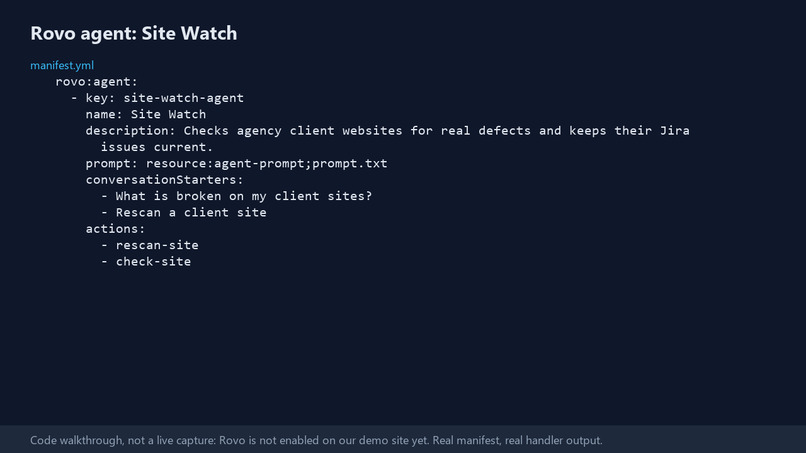
Rovo agent + MCP server + Teamwork Graph connector, from the app's manifest and real output (code walkthrough)
-
Client Site Watch: daily checks on client websites, filed as Jira issues with evidence
-
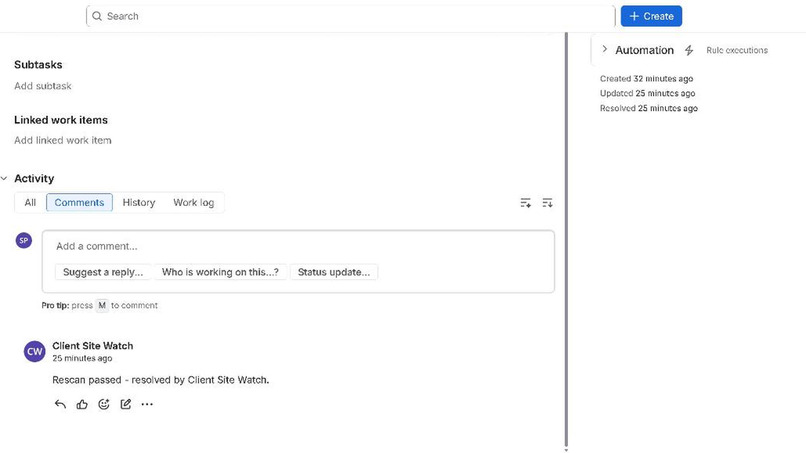
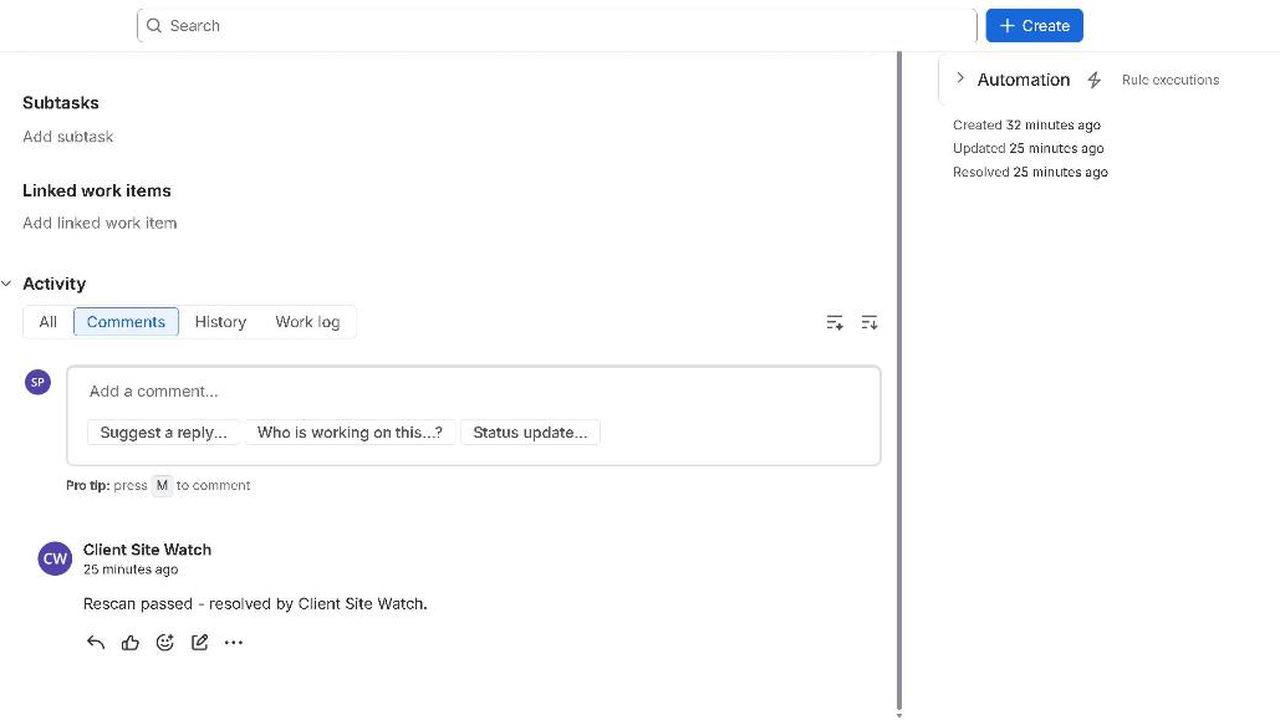
Auto-resolve: a rescan that passes moves the issue to Done with a comment
-
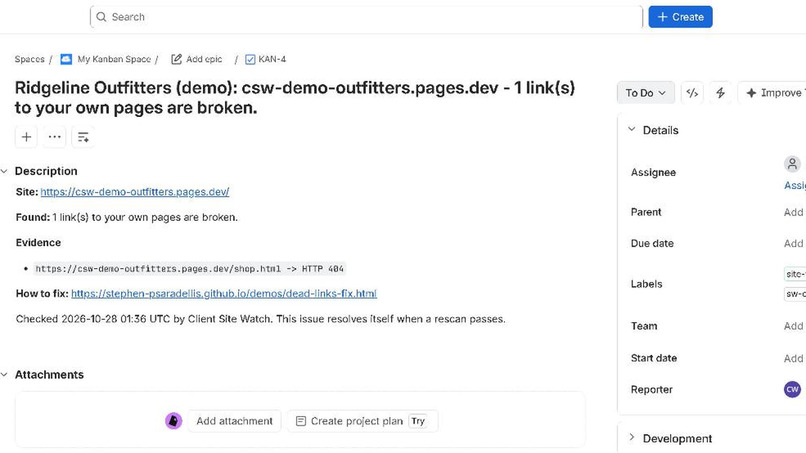
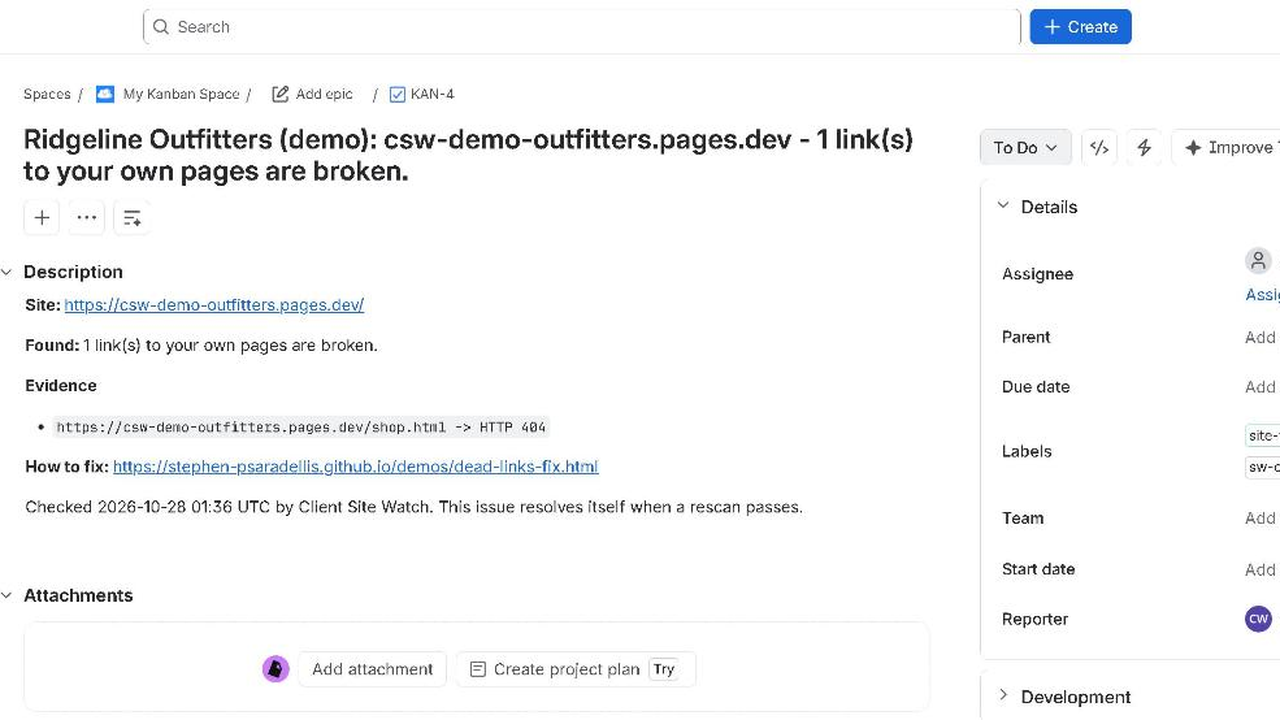
Each defect becomes one Jira issue with its evidence (here a dead link returning HTTP 404)
-
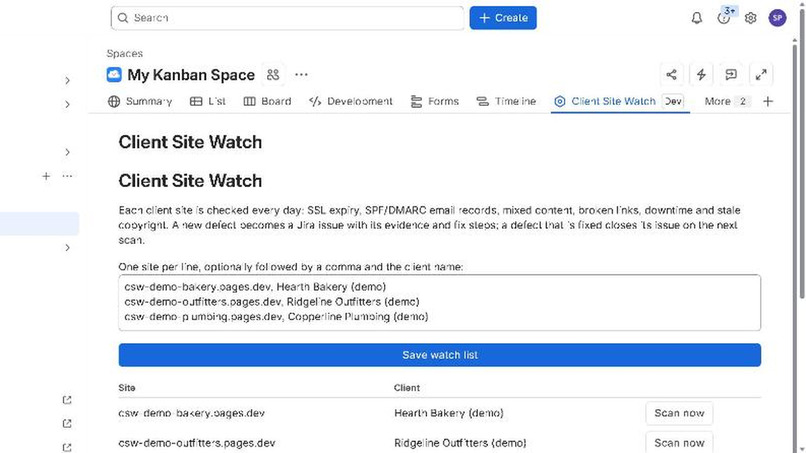
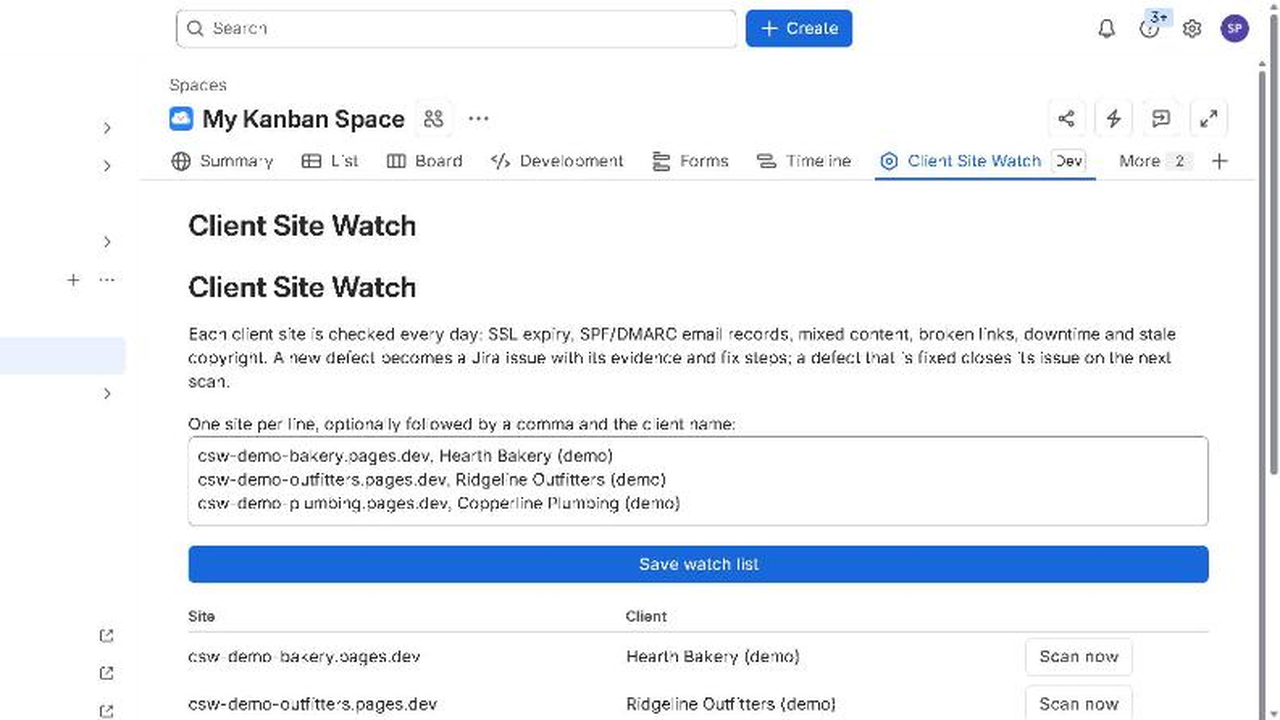
The watch list: add client sites, scan now or on the daily schedule
Inspiration
Web agencies keep their client work in Jira, yet the first sign that a client's site is broken is usually an annoyed email from the client. We had already scanned 43,077 small-business websites with a set of plain checks: of the 41,207 that answered, 51% had at least one problem a visitor would notice - a phone number you cannot tap on a phone (18.6%), a copyright year two or more years old (10.5%), images over 1 MB (8.2%), no mobile viewport (5.6%), the site down (5.3%). Every one of those is a ticket an agency would rather open itself.
What it does
Add client sites to a Jira project's watch list from the project page. Once a day the app checks every site and turns each defect into one Jira issue with the evidence - the HTTP status, the insecure URL, the oversized image and its size - and the steps to fix it. It never files the same problem twice, and when a rescan shows the problem gone it comments on the issue and moves it to Done. A site that does not answer closes nothing, so an outage cannot wipe the backlog.
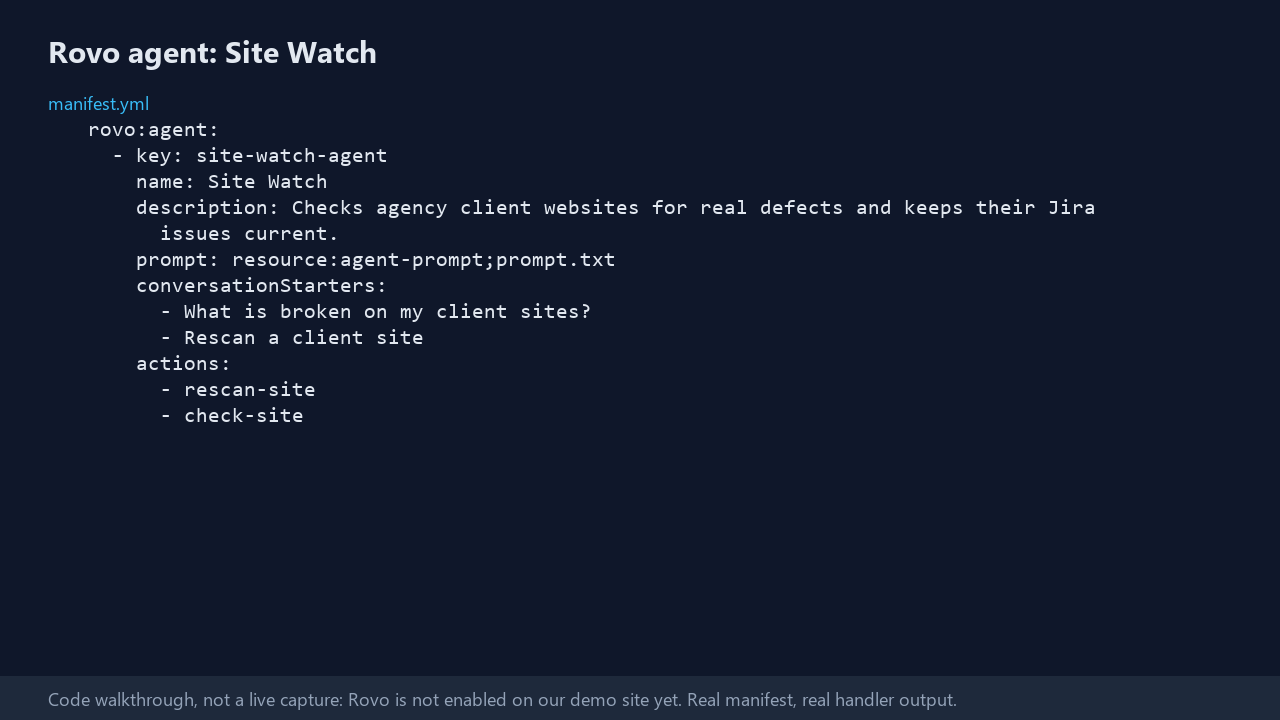
The Rovo agent "Site Watch" answers "what is broken on joes-plumbing.com?" for any public site, and rescans a watched site on request. The same two tools are exposed through a rovo:mcp server, so any MCP client connected to Rovo can use them. Each scan also upserts a per-site report into Teamwork Graph (a graph:connector), so Rovo search answers "what is wrong with this client's site" without opening Jira.
How we built it
Forge, all on Atlassian: a UI Kit project page, a daily scheduled trigger, Forge storage for the watch list, Jira REST as the app for issues and transitions, a Rovo agent with two actions, and a rovo:mcp module over the same functions. The checks are the ones from our open-source GitHub Action, vendored byte-for-byte and pinned by a test. The decision logic (labels, dedupe, create / keep / resolve, issue body in Atlassian Document Format) is a pure module with its own tests, so it is checked without a Jira site. Most of the code and text was written by an AI system (Claude) under the entrant's direction; the entrant chose the problem, reviewed the work and owns the project.
Challenges
- Outbound fetch to customer sites that cannot be listed in advance: the manifest declares allow-all egress, which keeps the app on "Runs on Atlassian" terms but has to be justified in the listing - the hosts contacted are the watched sites, plus two public lookup services that receive only the site's host name: crt.sh (certificate expiry) and dns.google (SPF/DMARC records).
- Deciding when an issue may close: only when the site answered and the check ran and passed. "Not found this time" because the site was down is not a fix.
- Labels as the dedupe key: Jira labels take no spaces, so each problem gets a short predictable label (
sw-<host>-<check>) that JQL can match exactly.
Accomplishments
Issues an agency can act on without opening the site: what was found, where, and how to fix it, plus a backlog that cleans itself up.
What we learned
The useful part is not the check, it is the bookkeeping around it - knowing what has already been reported and what is now fixed.
What's next
A weekly client-ready summary per site, and Teamwork Graph relationships from each site report to the Jira issues and the client's account.

Log in or sign up for Devpost to join the conversation.