-
-
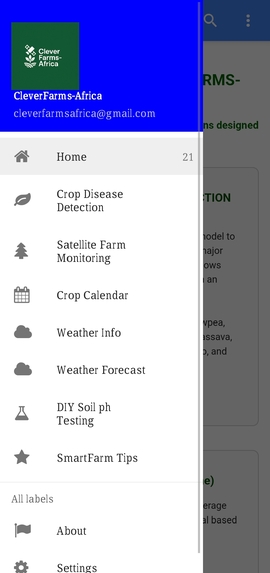
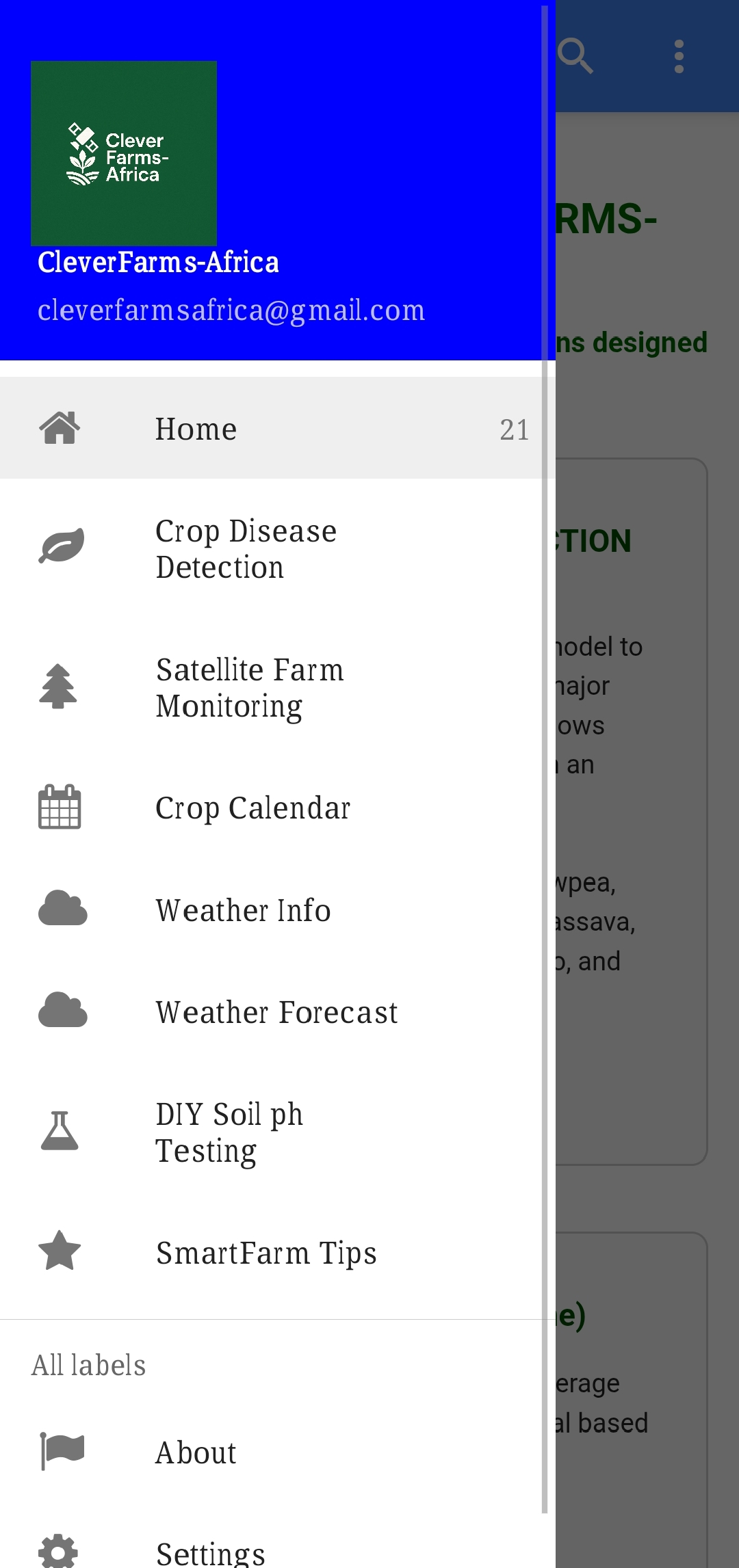
Home Page
-
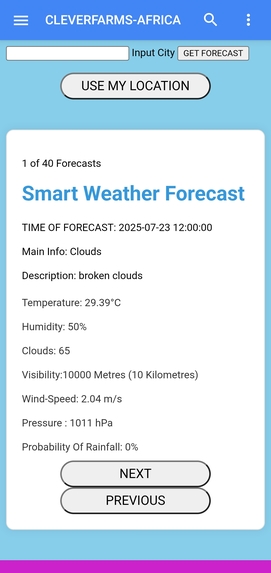
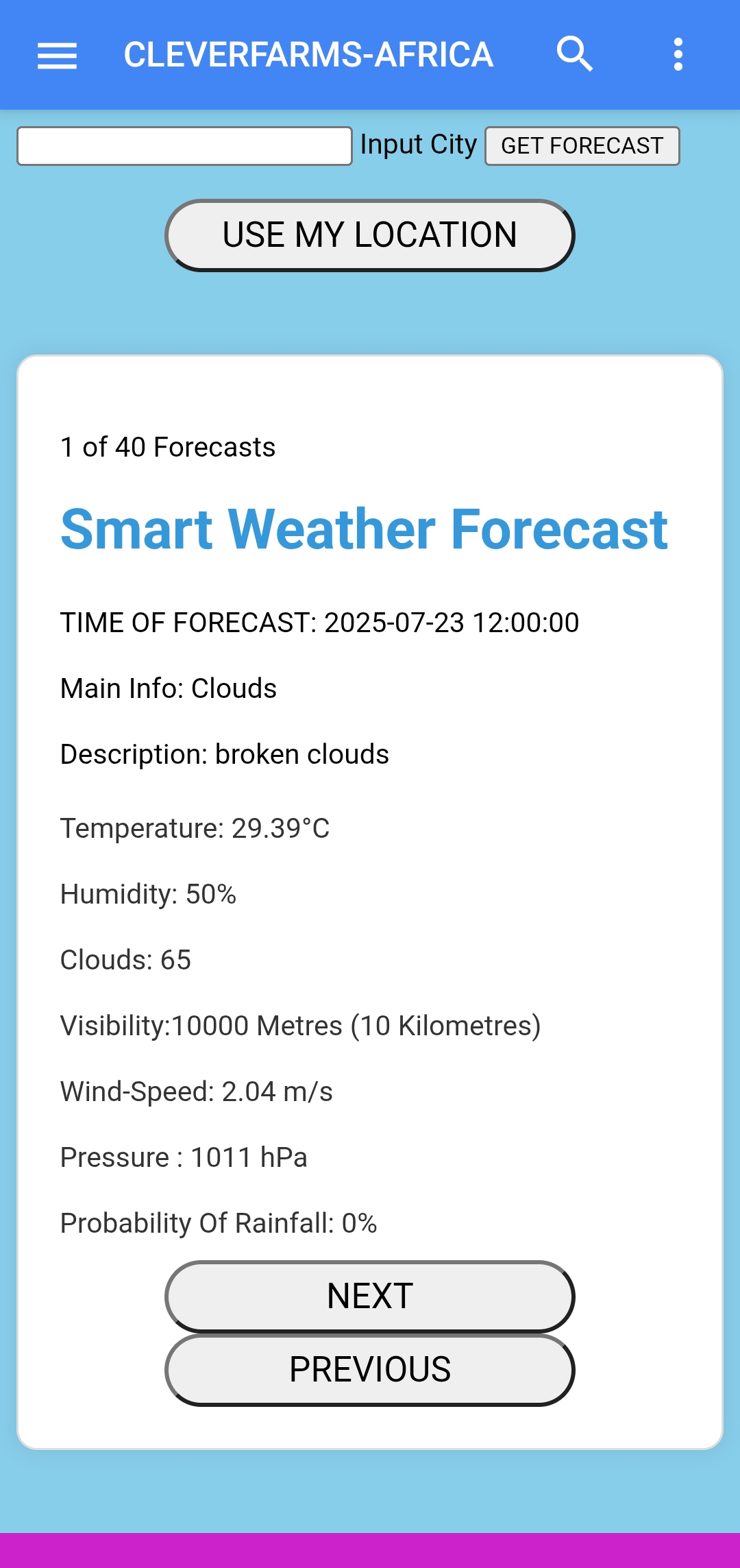
Weather Forecast
-
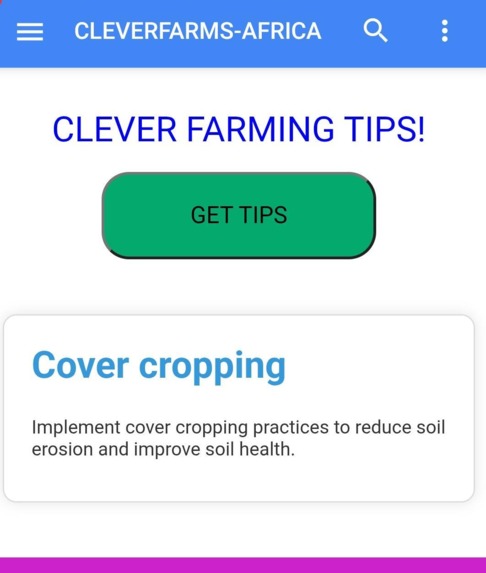
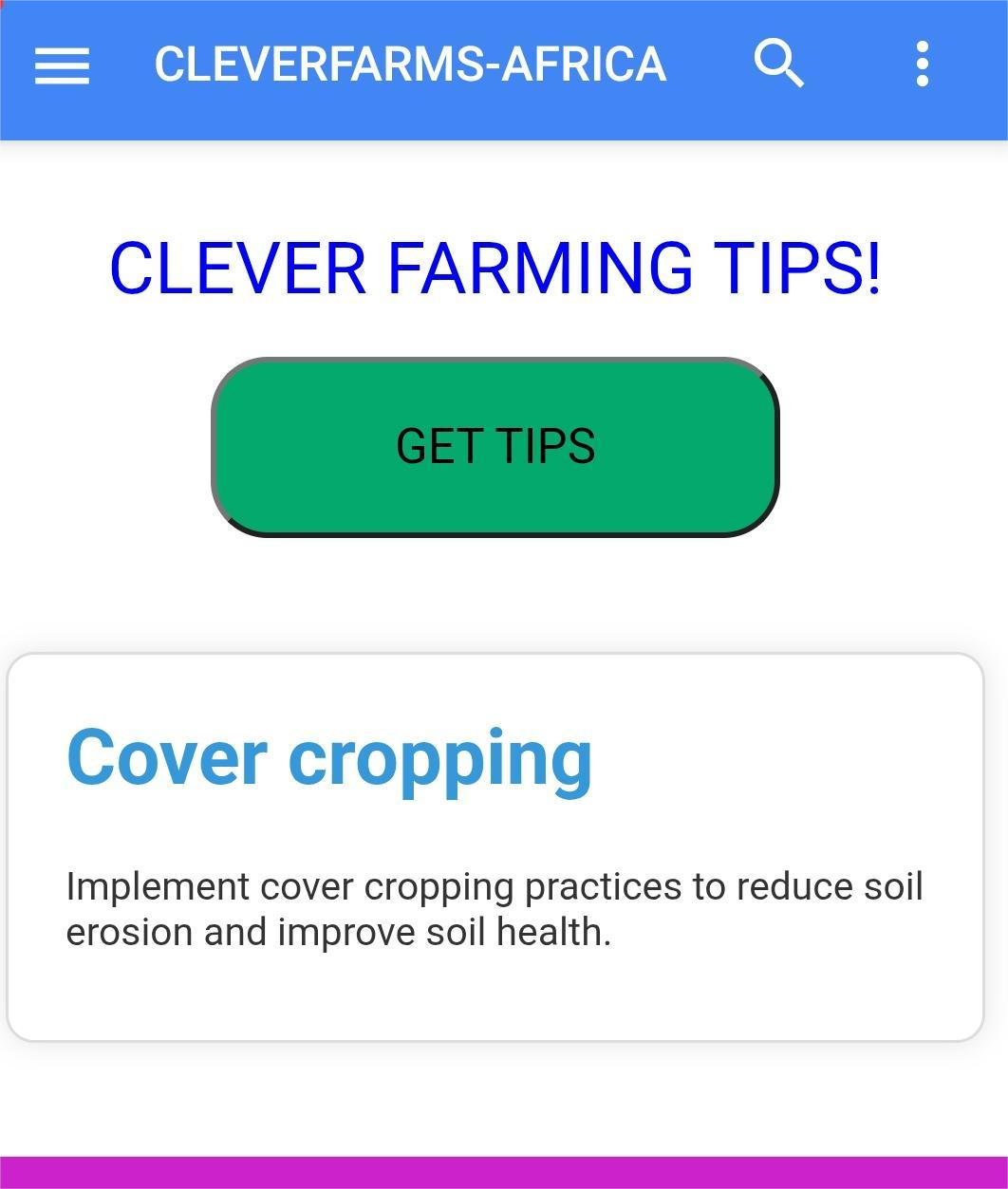
Cleverfarming Tips
-
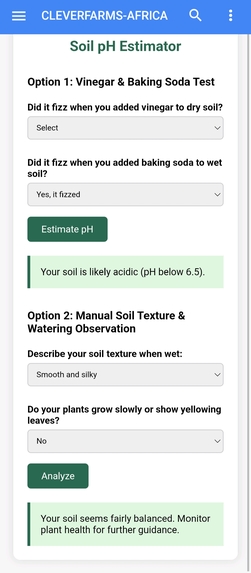
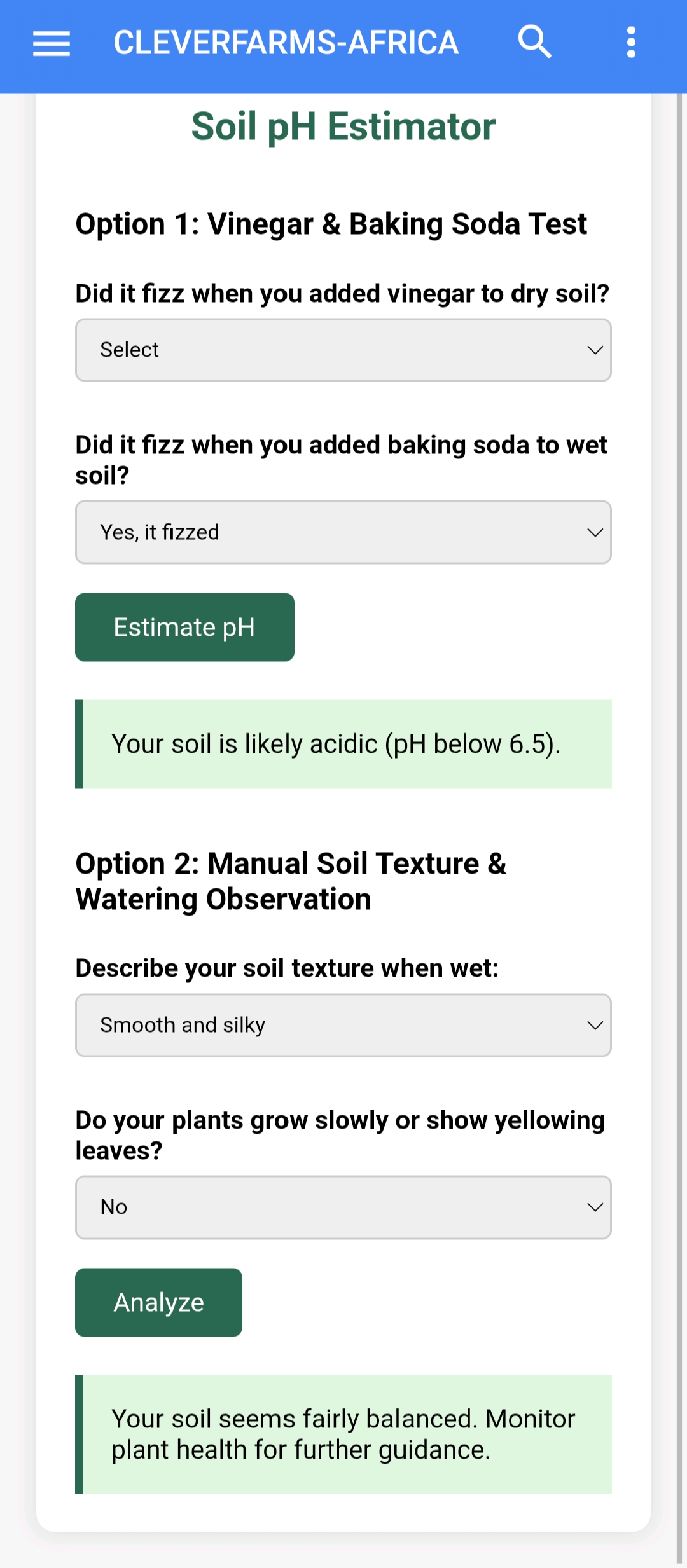
Offline DIY pH Estimator
-
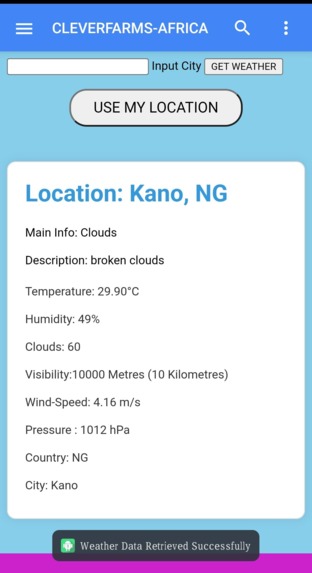
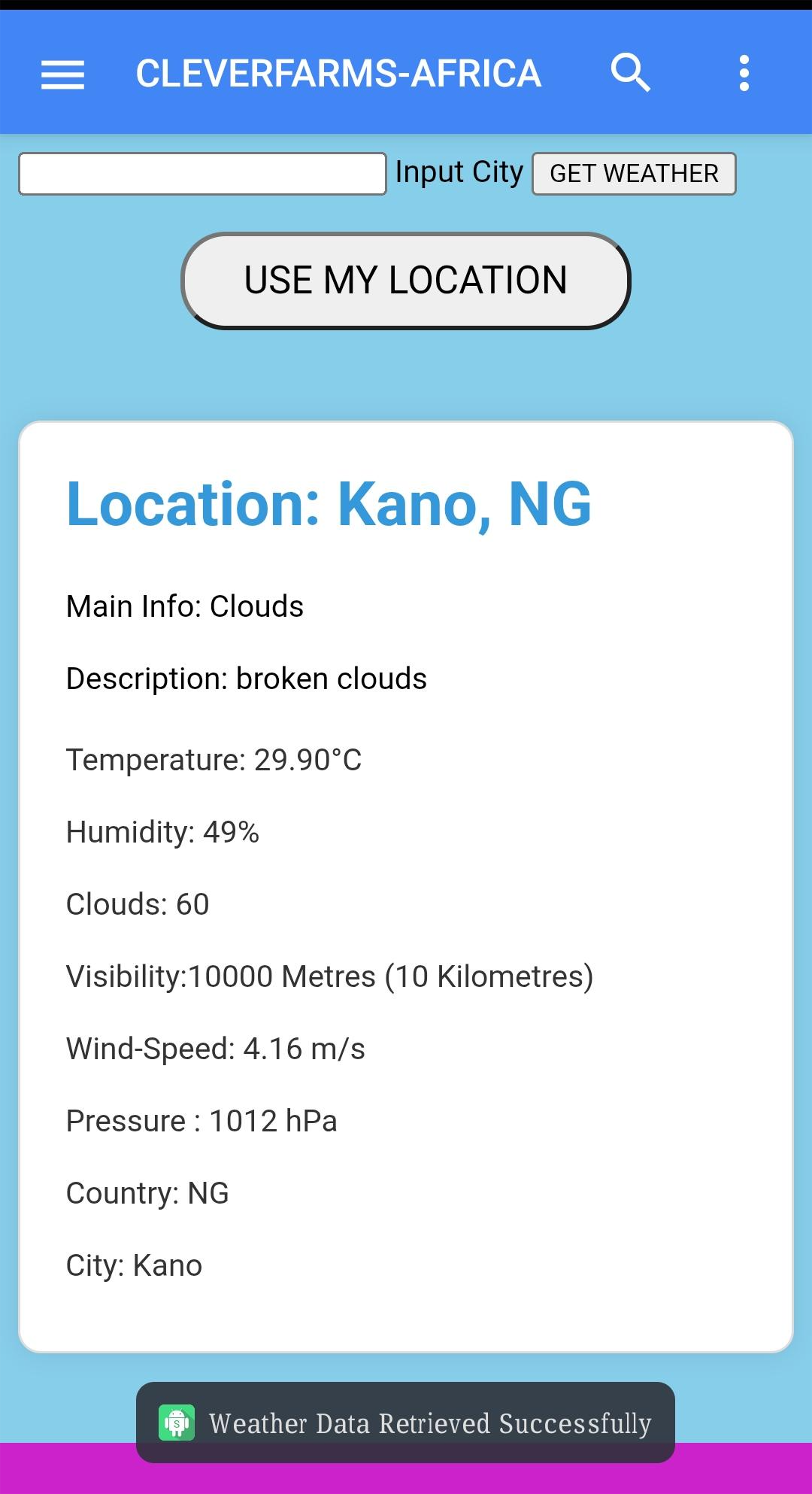
Weather Info
-
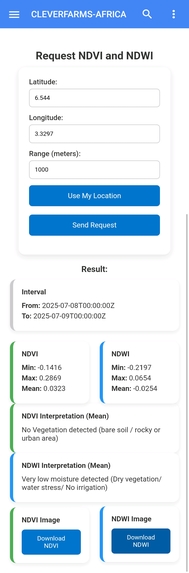
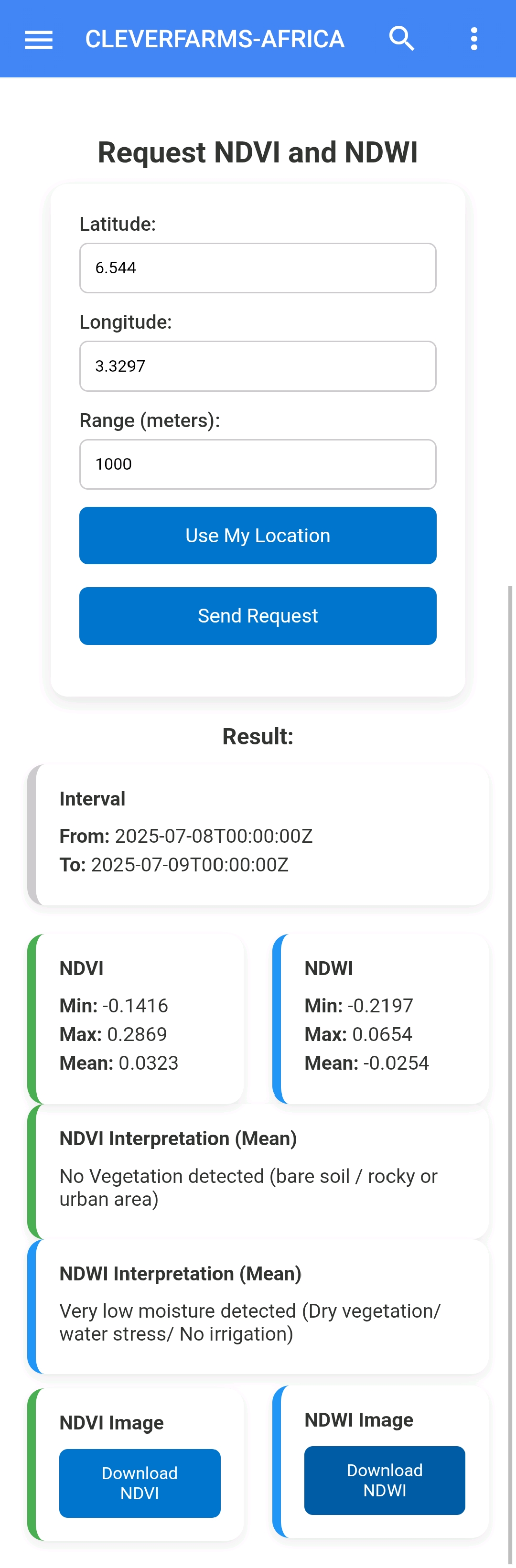
Sentinel-2 Monitoring
-
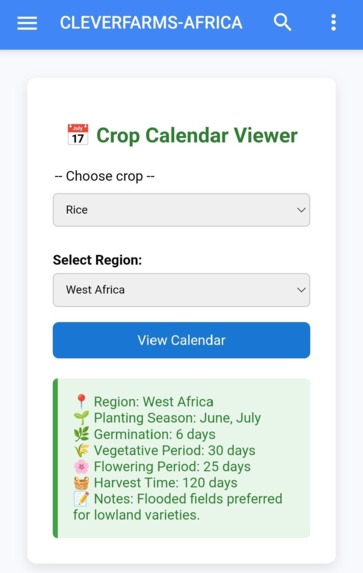
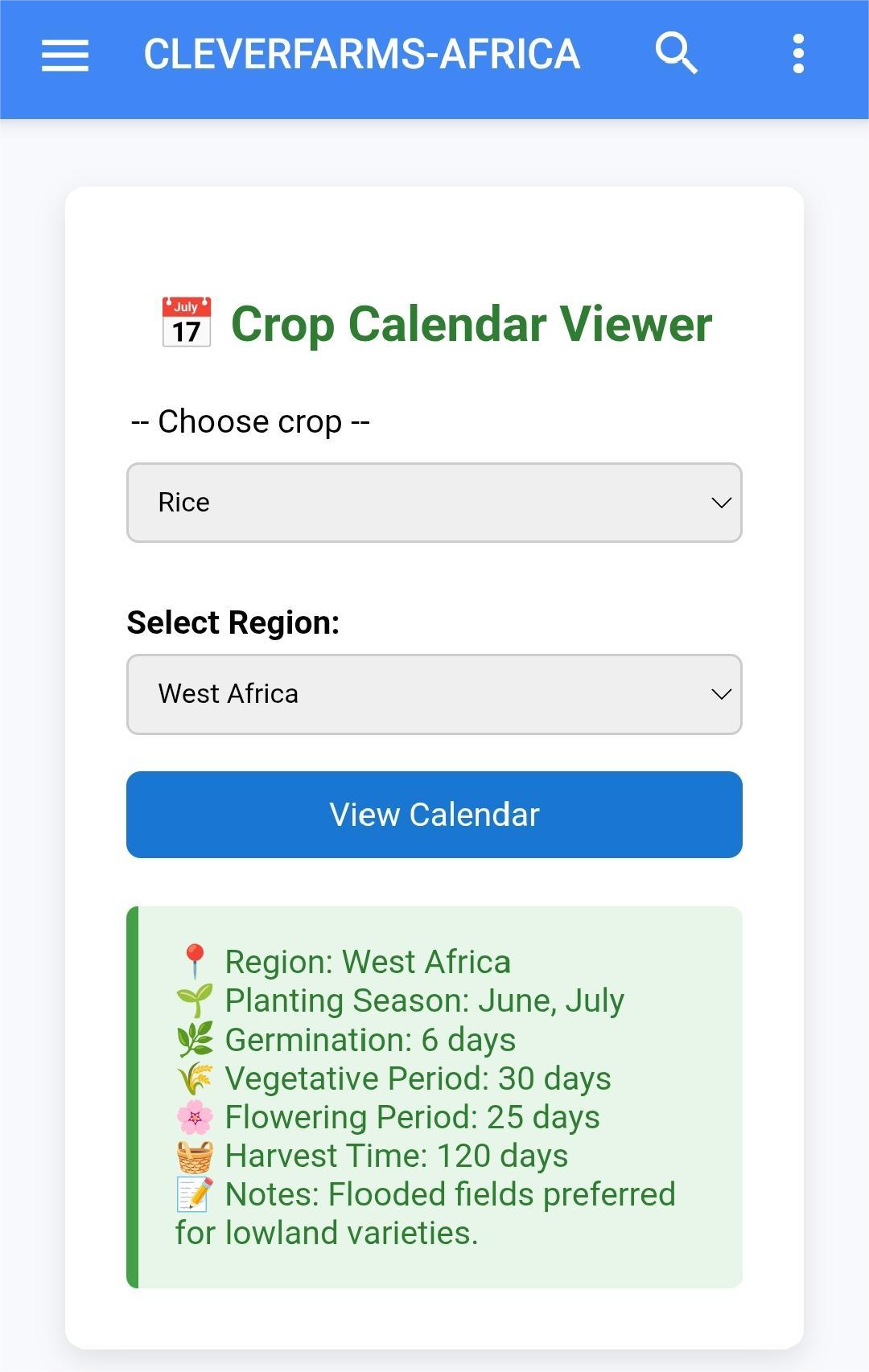
Offline Crop Calendar
-
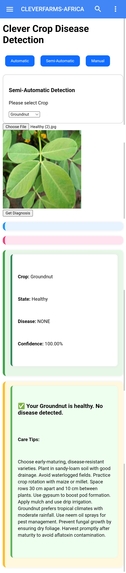
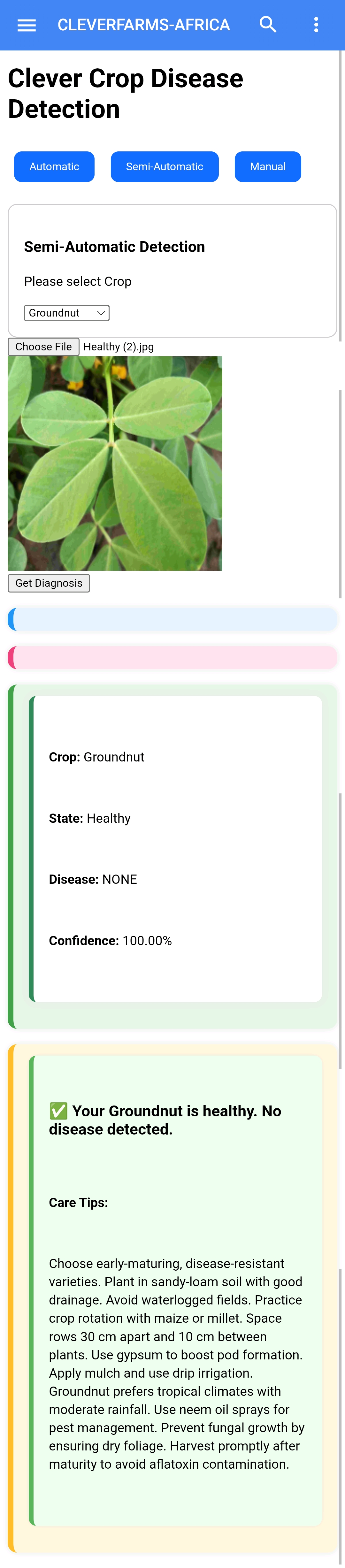
Semi-Automatic Offline Crop Disease Detection
-

Automatic Offline Crop Disease Detection
-
Logo

Inspiration
Various challenges arise due to farmers in low-connectivity regions often facing a lack of access to expert advice and real-time tools required for efficient modern farming practices. Farmers in remote areas have to rely on crude and outdated methods to farm, they face pest infestation, terrible crop diseases blights, poor soils issues and real time access to weather forecasts which all ultimately translates to low or poor crop yield. This affects Africa as a whole to the point that even with excess arable farmlands some foodstuffs needs to be imported into Africa to meet the food needs of the ever increasing population and also it's cash crops needs for economic purposes. Food is the most basic amenity of life and should be made affordable for everyone. However this cannot be achieved if remote farmers are not able to have access to real time tools and expert access. This is where CleverFarms-Africa steps in to provide a solution that can cater to these needs.
What it does
Our AI-driven app caters to most of its functions offline, ensuring that farmers can get valuable insights into crop diseases, identify causes and appropriate treatments while offline, access offline crop calendars tailored for 64 various crops across Africa, and get weather updates, daily forecasts, and pH testing recommendations, smart farming tips all within a user-friendly mobile interface.
The true game-changer we bring to the table is the utilization of satellite data, specifically Sentinel-2, which enables our app to generate accurate NDVI (Vegetation indices) and NDWI (water indices) analysis for farmers to monitor plant health, assessment of water stress, and determine optimal plant growth conditions. This data can be saved for offline usage thereby making the app scale better across regions.
Through our dedication to impacting the smarter farming landscape on a global scale, CleverFarms-Africa aims to lower operational costs and enhance crop productivity, ultimately benefiting farmers in Africa.
How we built it
We built our crop disease detection AI model from scratch using MobileNetV2 and on thousands of free images online, pre-processed it and trained it using google-compute engine. We built different models, a model to detect if crop image is a leaf or not, another to detect the crop type and then different models for each 13 crops. The models were trained using Pytorch on Python and converted to ONNX for cross platform usage. To reduce size, some of the models were further compressed using QUINT8 quantization. Inference on the model in the app is being achieved using JavaScript and AI libraries such as ORT Web Assembly, ORT(Onnx-Runtime for Web). To improve accuracy, if the user know which crop type it is, he can select it so the model runs just the specific model to increase accuracy to maximum. We researched for causes , spread and treatment methods for each of the different crop diseases and carefully structured the data in json.
We built our satellite monitoring tool using Sentinel-2 API to get NDVI and NDWI images and statistics analysis of user specified location and time interval. This is an online feature using node js server. We researched and reviewed using both online and offline resources for crop calendar of 64 crops in Africa and tips for each specific crops and structured the data with json.
We used Open weather API to get weather info and forecasts and display them in a user friendly interface. We also researched on soil pH characteristics and implemented a DIY soil pH test for users. We researched using both offline and offline resources to get useful clever farming tips and display to users.
After that we made a professional UI interface linking all app capabilities to user and packaged into an Lightweight Android Application weighing less than 50mb that runs on a minimum of Android 6 version. It was tested to run on low RAM devices with 2gb of RAM and takes up only a minute amount of the users device storage. It runs on phones with low processing power (CPU). No GPU required
Challenges we ran into
There were several challenges in developing the AI offline model. At first the model could incorrectly classify non plants image as crop disease type. To solve this, a different leaf detection model was developed to detect plant first before passing it into crop type model and then crop disease detection model. The crop type and crop disease detection model was trained on over 20 epochs with several thousands of images. ONNX-Runtime-Web for JavaScript also doesn't run on native html interface and must be run on a server. To solve this, it was hosted on user localhost in the app automatically without need of user interaction. There were challenges in using Sentinel-2 API but with dedication and time it was done. Other challenges involves researching and carefully reviewing data. With enough dedication and time this was also overcome. We were not able to develop the iOS version of the app yet but we believe that the average iOS user (or farmer) can afford to get a low end Android device and use for it.
Accomplishments that we're proud of
We were able to train all models to 97-98% accuracy on all models. The models performs well on mobile also. The Satellite monitoring tool was well implemented. We were able to integrate location usage at user request to fetch weather info / forecast and for Satellite monitoring. Although this part requires internet access to work, the data retrieved can be saved offline for offline analysis thereby making the app a truly offline first, user-centric application. We are proud to have been able to make lots of comprehensive tools to work seamlessly offline. We were able to provide an intuitive user interface for the app We are happy that we were able to do what seemed impossible at first which is putting cutting edge offline tools and AI into any low processing power android device.
What we learned
We learned why offline first apps is a necessity for African tech space We learnt how to build standard, cutting edge AI solutions, space solutions. We learnt research methods and validations, needs of African farming improvement We learnt how to build comprehensive offline tools
What's next for CleverFarms-Africa
CleverFarms-Africa is on a mission to become the go-to digital farming assistant for African smallholder farmers. In the short term, our next steps include integrating more crop models into the disease detection module, adding automated push alerts for satellite farm health monitoring, and expanding language support (offline) for local communities.
We’re also preparing for a cloud-based sync feature so users can optionally back up data and access insights across devices. Strategic partnerships with agricultural organizations and research institutes are on the horizon to expand our data accuracy and reach.
Long-term, CleverFarms-Africa aims to scale across Sub-Saharan Africa, Integrate financial tools like Microinsurance and Agri-credit access, and support data-driven decision-making for farmers, cooperatives, and policymakers.
With continued support, we envision CleverFarms-Africa transforming rural farming from guesswork to precision, sustainably and affordably. We also aim to build an iOS version of the App in the nearest future.
Built With
- css3
- droidscript
- google-cloud
- google-compute-engine
- html5
- javascript
- json
- node.js
- onnx
- onnx-runtime
- ort
- pil
- proj4
- python
- pytorch
- sentinel-monitoring
- wasm
- weatherapi


Log in or sign up for Devpost to join the conversation.