-
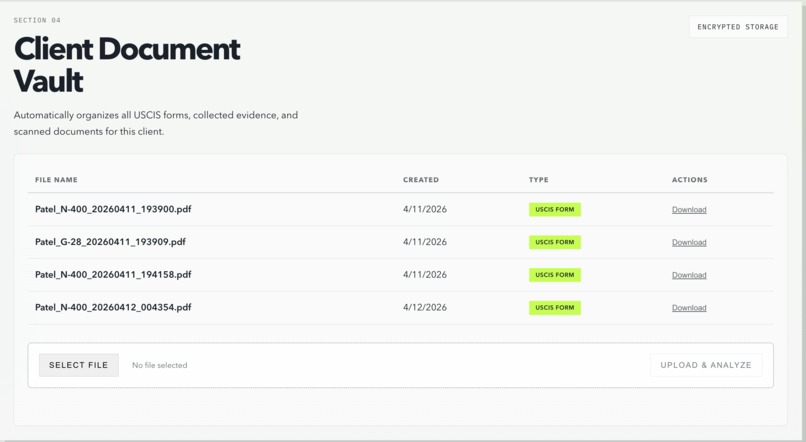
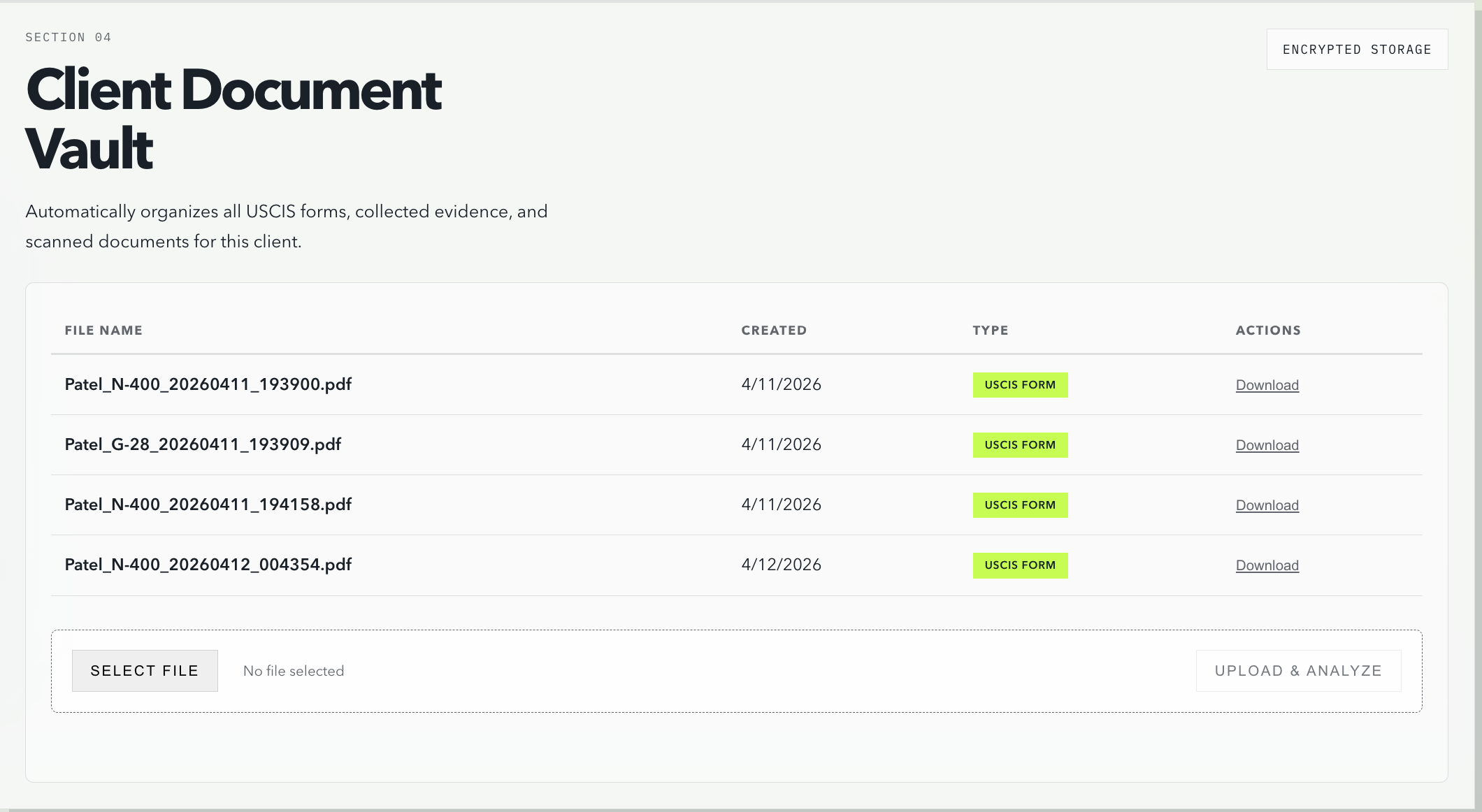
This is the Document Vault which stores the forms for different Clients based on their name for attorneys to access later.
-
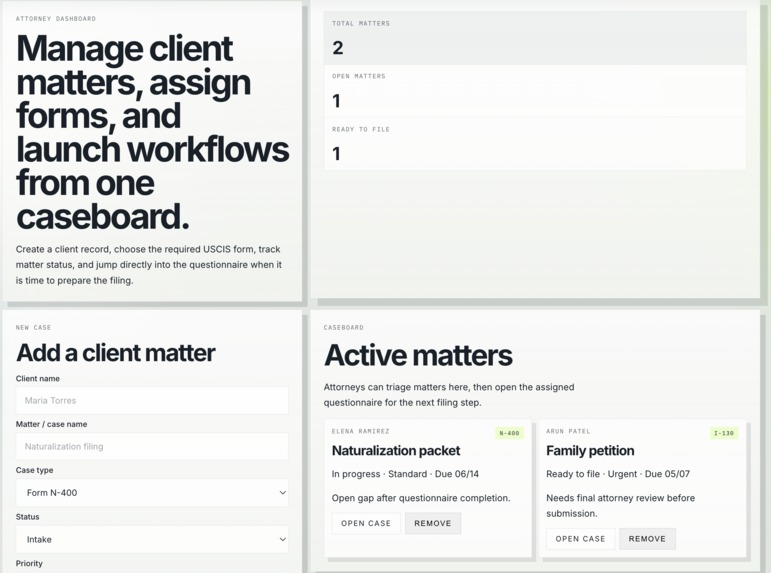
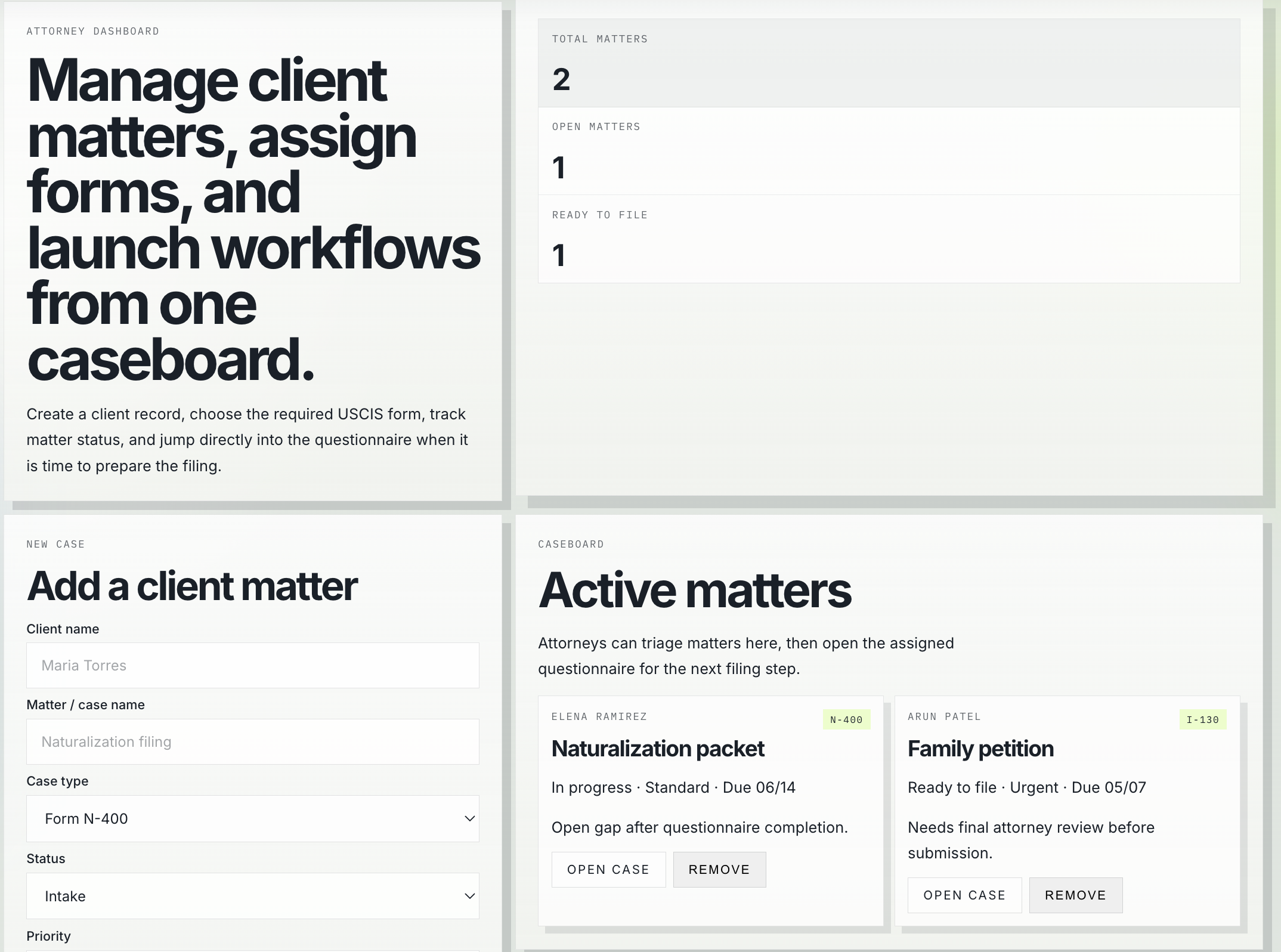
This is the dashboard a user will see when in the process of creating a new case or opening an existing one.
Inspiration
Immigration law is one of the most paperwork-heavy and time-consuming legal domains. Working directly with lawyers, we observed that repetitious data input can take five to seven hours every case, but legal strategy requires less than ninety minutes. We created Clerve in response to these inefficiencies, allowing attorneys to concentrate on their clients rather than paperwork.
What it does
Clerve automates the process of converting structured client data into completed USCIS immigration forms. By reducing hours of manual data entry into a streamlined 10–30 minute workflow, it significantly boosts efficiency and reduces operational costs for law firms.
How we built it
We combined full-stack development with machine learning to create Clerve. Data is extracted from PDFs, transformed into structured language, and then immediately mapped into USCIS forms using our pipeline. A simple user-friendly user interface created especially for lawyers supports the system, guaranteeing accuracy and usability.
Challenges we ran into
One of the biggest challenges was handling inconsistent and messy input data from PDFs and legal documents. Ensuring high accuracy in extraction while maintaining compliance with strict legal requirements required multiple iterations of our ML models and its validation logic.
Accomplishments that we're proud of
We built a product that directly addresses a real-world pain point validated by legal professionals, and a solution that can save thousands of dollars per lawyer annually.
What we learned
We learned that in regulated industries like law, accuracy and trust matter more than speed alone.
What's next for Clerve
Next, we plan to expand Clerve into a full automation platform with multi-form support, AI-powered compliance checks, and a unified client data layer.


Log in or sign up for Devpost to join the conversation.