-
-
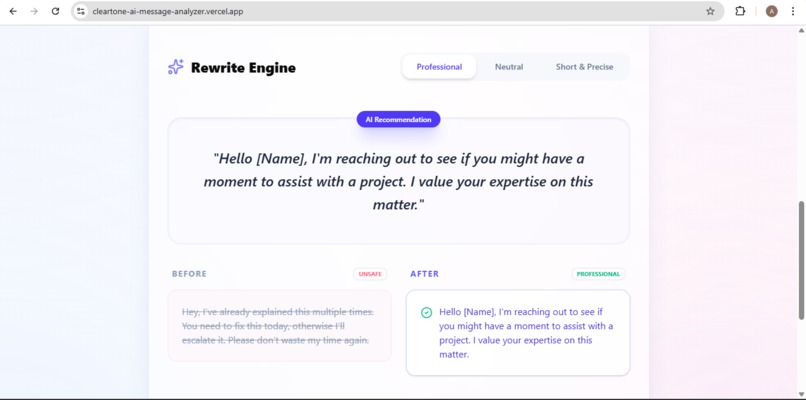
Tones & Suggested Text
-
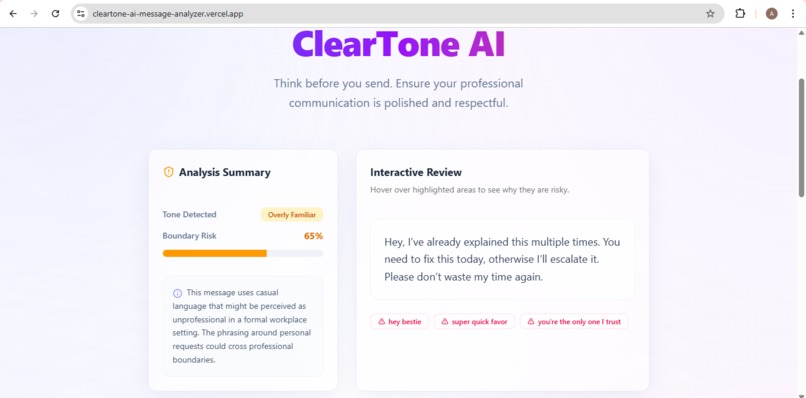
Analysis By ClearTOne
-
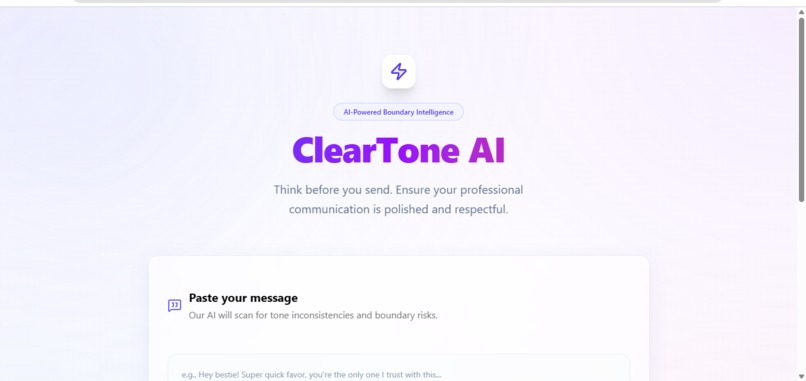
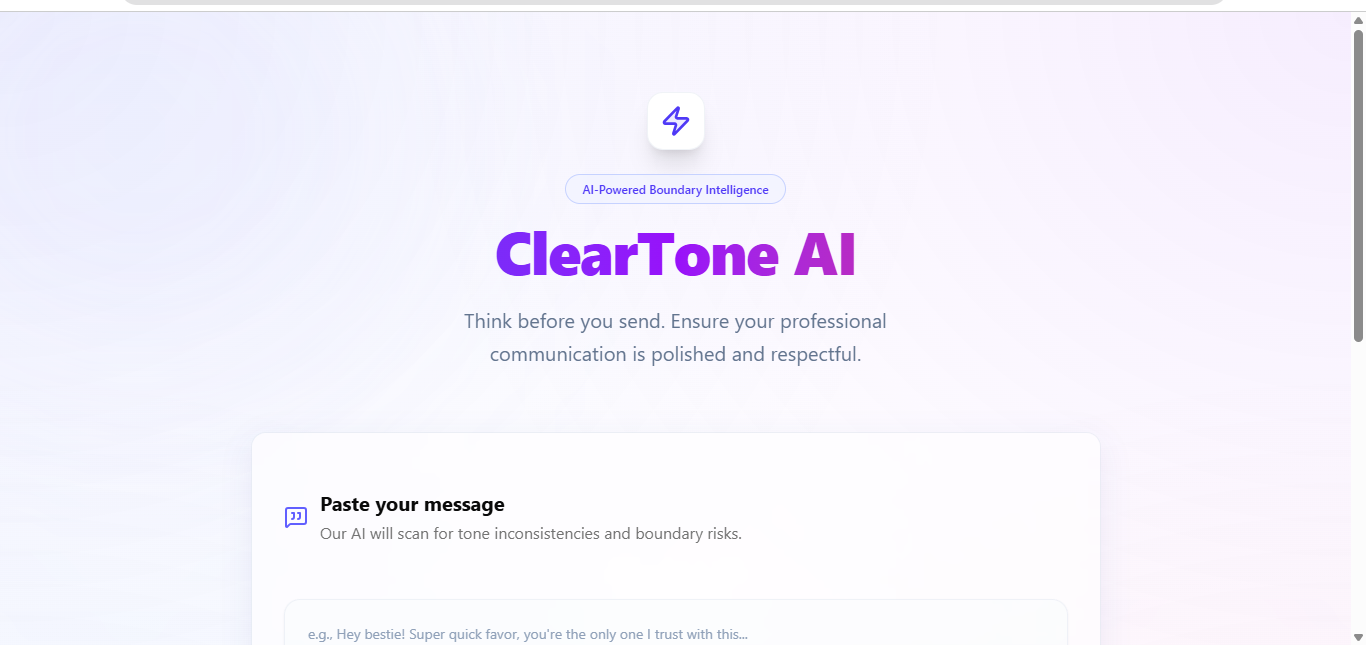
UI of ClearTone
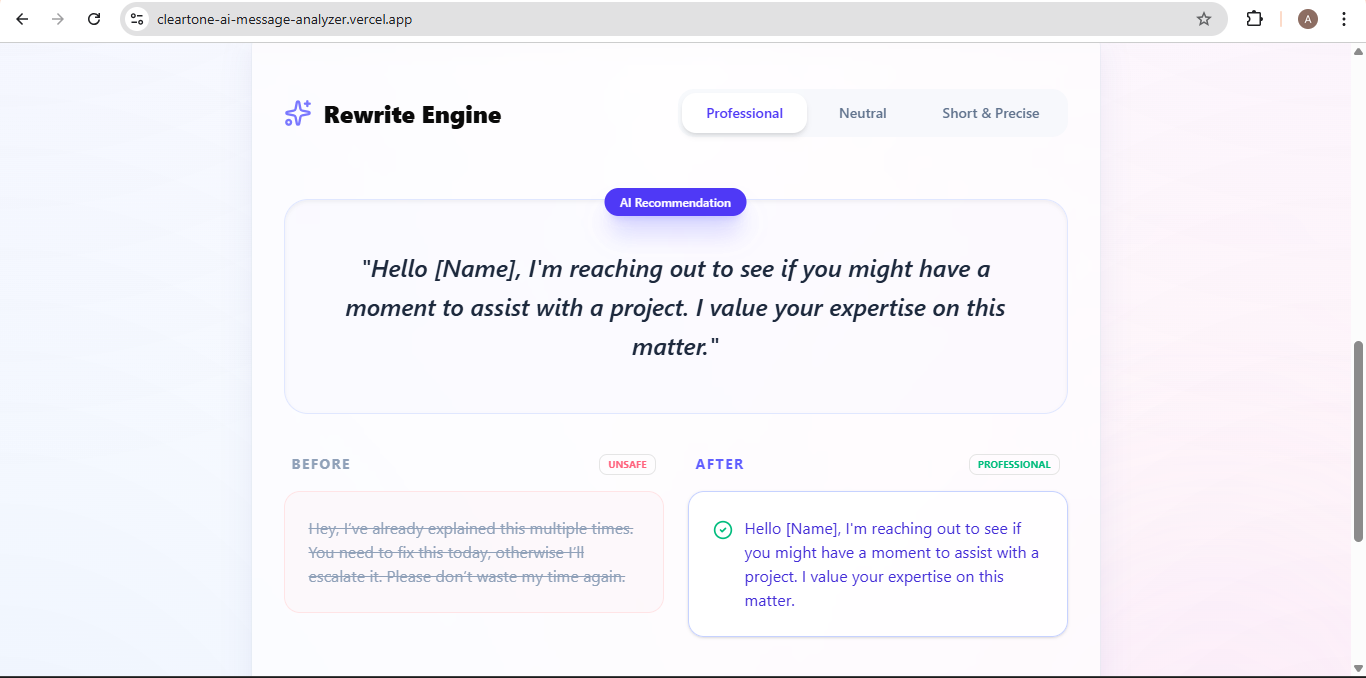

Inspiration
Professional communication often fails not because of bad intent, but because of poor tone, unclear boundaries, or unintended implications. In platforms like Linkedln, email, or professional chats, a message meant to be polite or friendly can easily be misinterpreted as pushy, inappropriate, or unprofessional.
we noticed that while tools exist for grammar and spelling, there is no real-time guidance for professional tone and boundaries before sending a message. ClearTone was inspired by this gap- to help people communicate thoughtfully before mistakes happen, not after.
What it does
ClearTone is a web-based AI assistant that analyzes professional messages before they are sent. It: 1.Detects the tone and intent of message 2.Flags potential boundary or professionalism risks 3.Explains why a message Might be misinterpreted 4.Suggests respectful, Professional rewrites 5.Shows a risk score to help users make informed decisions
The goal is not to censor communication, but to guide users toward clearer, more respectful professional interactions.
How we built it
We built ClearTone as a lightweight, demo-focused web application: 1.Frontend: HTML,CSS and JavaScript for a clean and focused user experience 2.AI Layer: A large language model to analyze tone, classify risk levels, and generate professional rewrites
3.Design Approach: Single-page layout with clear visual feedback to make AI value obvious within seconds The system processes the user's message, evaluates tone and boundary risk, and instantly provides actionable suggestions, making it deal for a live demo
Challenges we ran into
One of the biggest challenges was ensuring that AI feedback felt helpful rather than judgmental. We had to carefully design prompts so the explanations sounded neutral, respectful and educational. Another challenge was balancing simplicity and insight- providing enough analysis to be useful without overwhelming the user or overcomplicating the interface.
Accomplishments that we're proud of
1.Built a fully functional prototype within hackathon constraints 2.Designed a clear before-and-after demo flow that judges can understand instantly 3.Used AI in a meaningful, real-world context, not just for novelty
4.Created a solution that addresses a common but overlooked professional problem
What we learned
1.Clear problem definition matters more than feature count 2.AI is most effective when it assists decision-making, not replaces it 3.A strong demo and storytelling can significantly amplify technical work
4.Small UX choices can greatly impact how trustworthy AI feels to users
What's next for ClearTone
Future improvements could include: 1.Browser or email client integration 2.Custom tone preferences for different contexts(recruiter, Student, peer) 3.Multilingual support 4.Analytics for organizations to promote healthier communication culture ClearTone AI has the potential to evolve into a practical communication safety layer for professional platforms.
Built With
- css
- html
- javascript
- openai
- vercel

Log in or sign up for Devpost to join the conversation.