-
-
logo
-
-
-
-
-
-
-
-
-
-
Inspiration
The idea behind CLEARSPACE AR came from a fairly ordinary experience. Whenever I look at furniture online or think about rearranging a room, I find myself wondering: Will this actually fit here? Will it look good in this space? What if I could see it before making any changes?
Usually, we depend on imagination, measurements, photographs, or rough floor plans to answer these questions. But imagining something and actually seeing it in your own environment are two very different experiences.
That got us thinking: what if we could use augmented reality to make room planning feel more real, interactive, and intuitive?
We wanted to build something that would let people experiment with their spaces without having to physically move furniture around. That idea eventually became CLEARSPACE AR.
Our vision is simple: don't just imagine your dream room. Experience it.
What it does
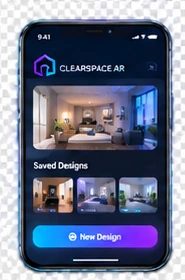
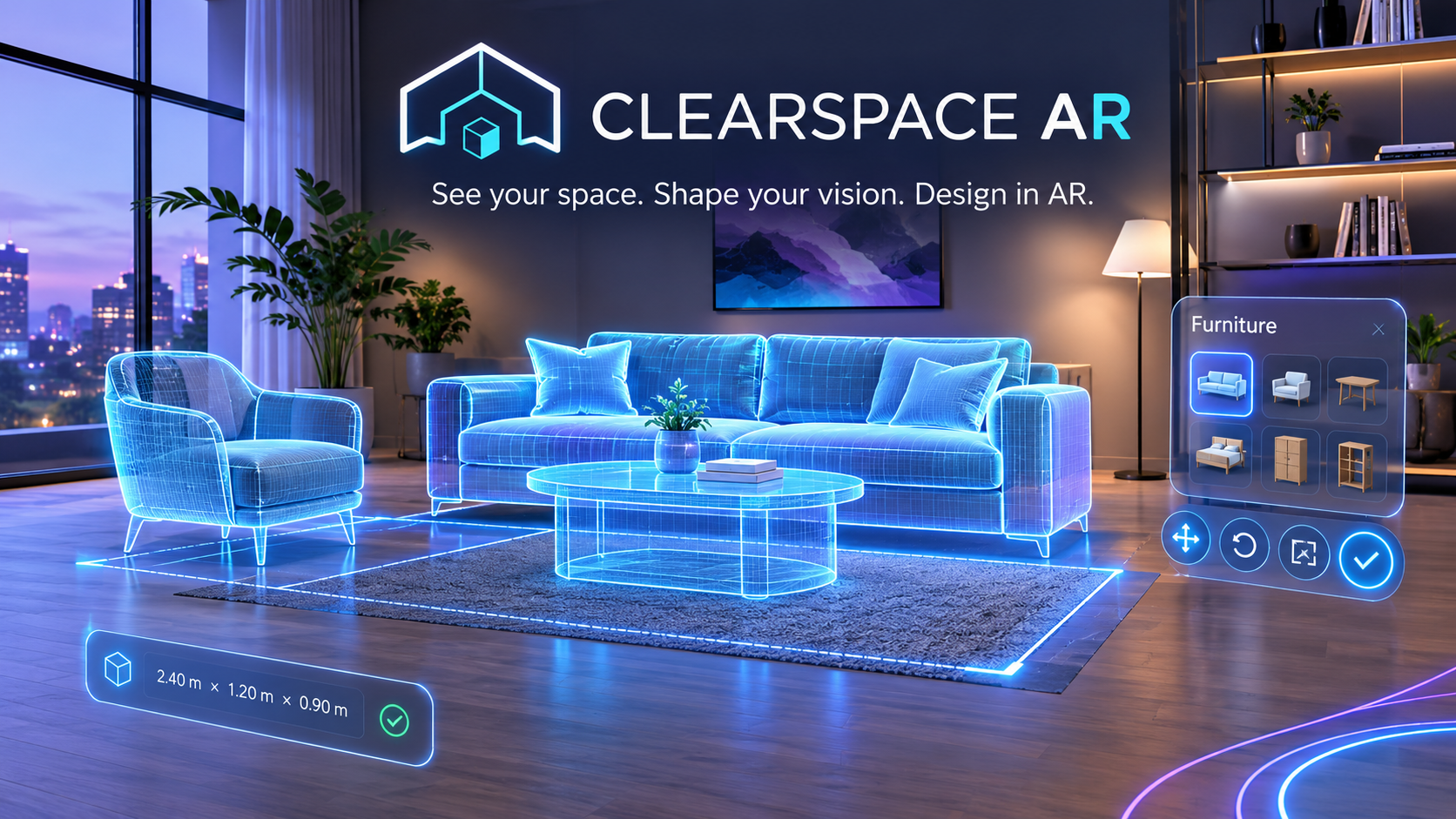
CLEARSPACE AR is an augmented reality room-planning experience designed for Snap Spectacles.
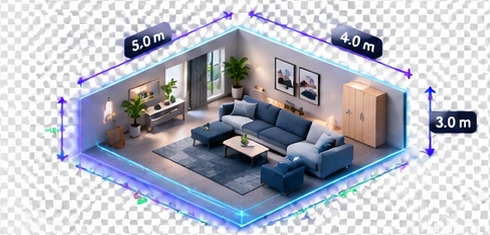
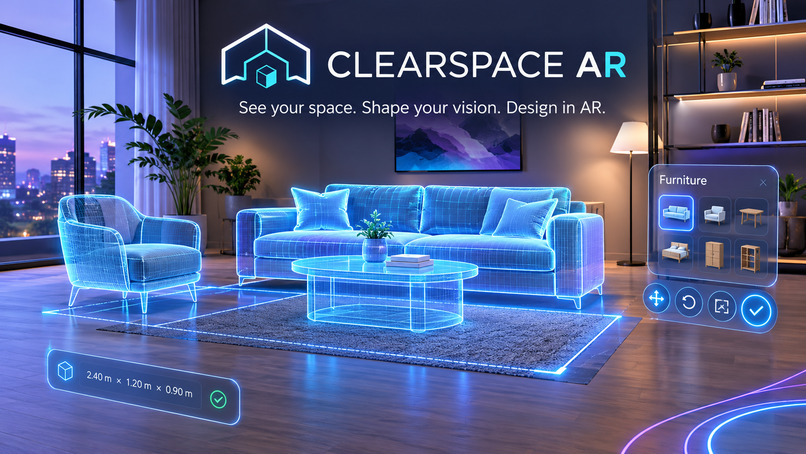
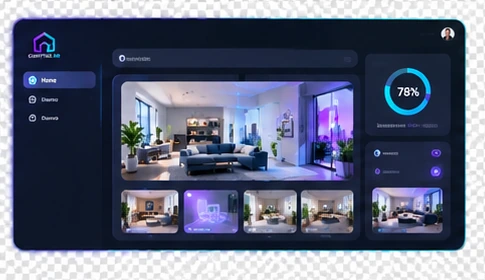
It aims to let users visualize life-sized 3D furniture in their actual surroundings, experiment with different placements, and explore room layouts before making real-world changes.
The core experience is built around:
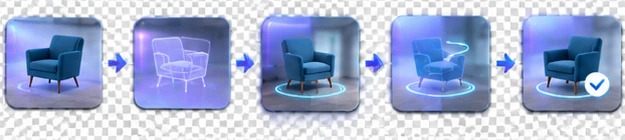
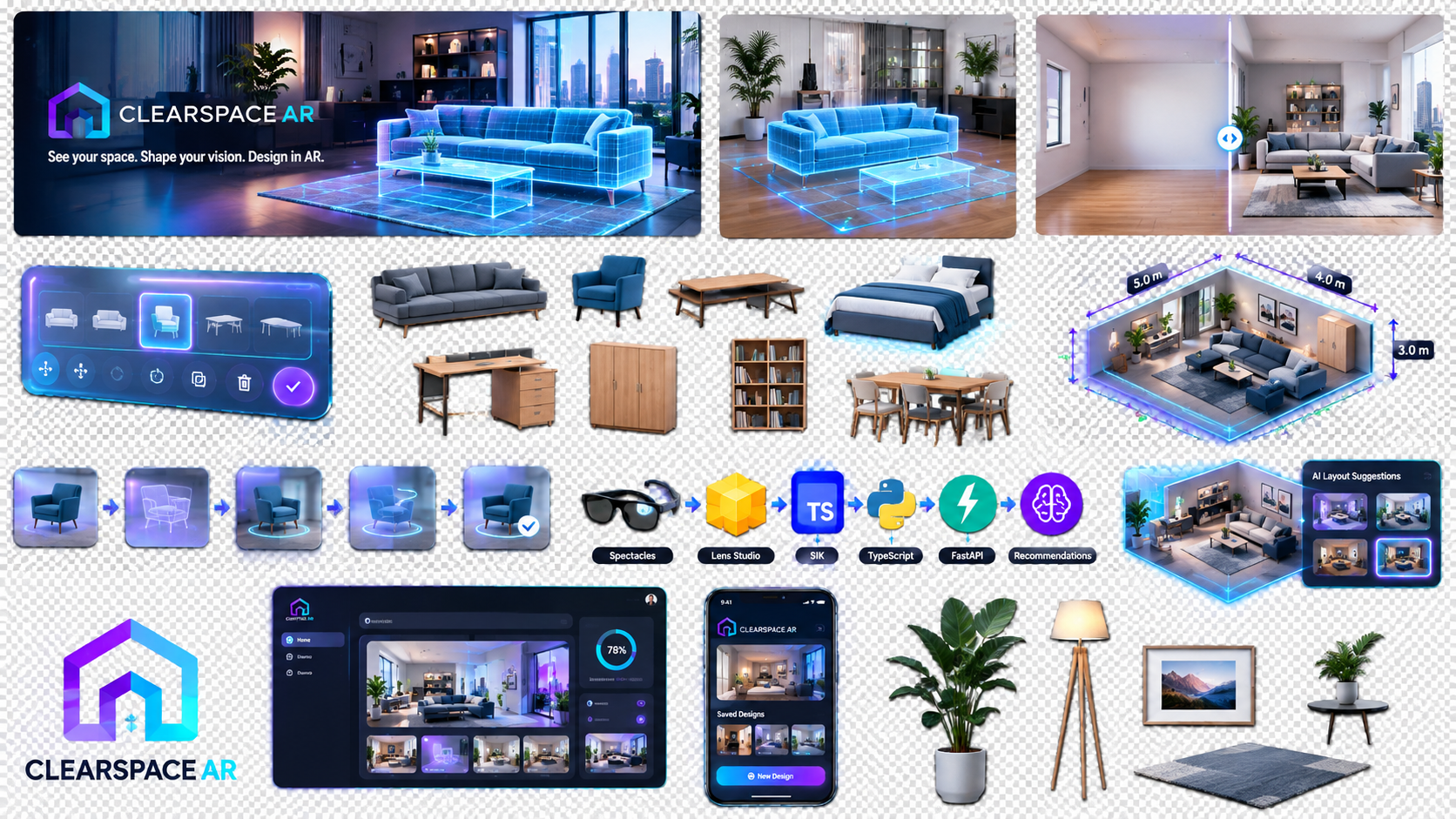
- Real-world furniture visualization: See virtual furniture in your surroundings at realistic proportions.
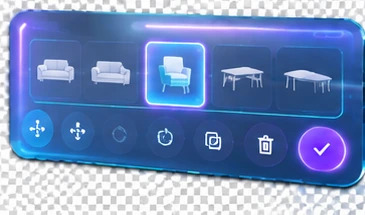
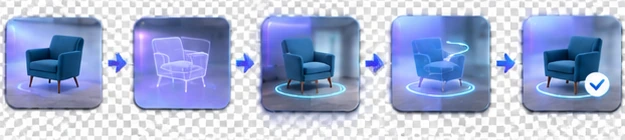
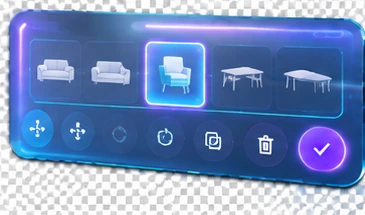
- Interactive placement: Position and rearrange virtual furniture within your space.
- Object manipulation: Move and rotate furniture to experiment with different arrangements.
- Spatial awareness: Use the surrounding environment as the reference for virtual object placement.
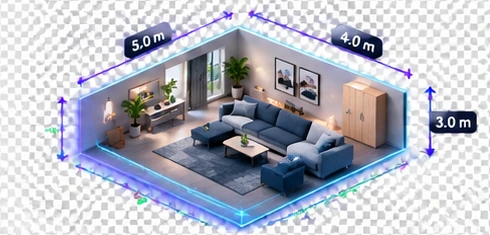
- Placement validation: Use dimensions and geometry to help determine whether furniture can fit in a selected area.
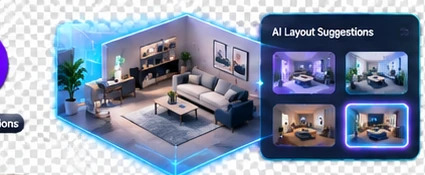
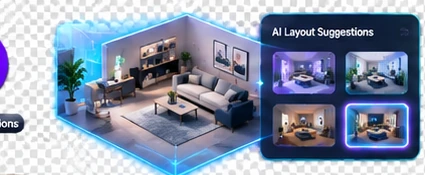
- Future intelligent recommendations: Explore how AI could suggest better furniture arrangements based on room dimensions and user preferences.
The bigger idea is to make room planning something users can experience rather than simply visualize on a flat screen.
How we built it
We started by breaking the idea into smaller technical components instead of trying to develop the entire experience at once.
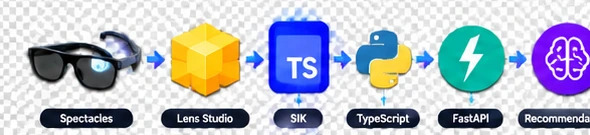
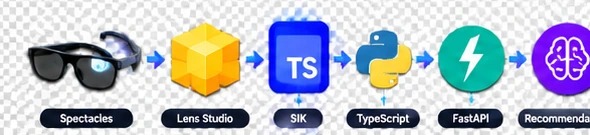
We chose Lens Studio as the foundation for the Spectacles experience and explored Codex with CLAD (Closed Loop Agentic Development) to assist with development, debugging, and iteration.
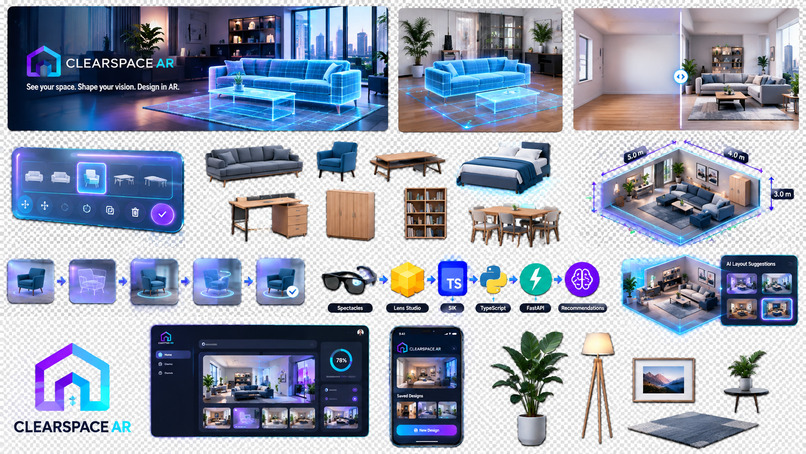
Our architecture is organized around several components:
- Lens Studio: The development environment for creating the Spectacles AR experience.
- Spatial understanding: Establishing how virtual objects relate to the user's real surroundings.
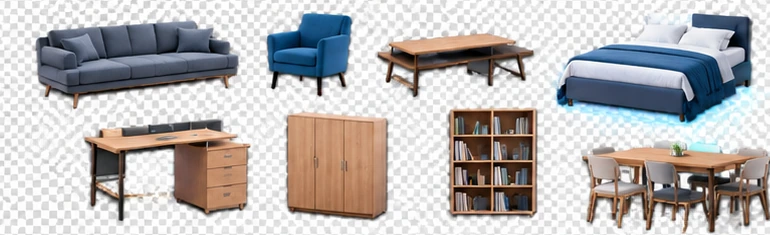
- 3D furniture system: Representing furniture using models with realistic dimensions and proportions.
- Interaction system: Building the foundation for moving, rotating, and repositioning virtual objects.
- TypeScript geometry engine: Handling dimensions, positioning, transformations, and placement constraints.
- FastAPI backend: Providing a foundation for backend functionality and future AI-assisted recommendations.
- Spectacles Interaction Kit (SIK): The intended interaction framework for creating natural Spectacles controls.
- LEAF: Exploring automated interaction scenarios and preview-based testing.
We chose a modular architecture because we wanted the project to be expandable. Improving furniture placement, adding new models, or introducing intelligent recommendations should not require rebuilding the entire system.
Challenges we ran into
Building an AR experience that interacts with the real world turned out to be much more challenging than simply displaying a 3D model.
1. Real-world scale
A virtual chair should look like an actual chair, not a miniature model or an oversized object. Maintaining realistic dimensions and proportions is essential for a useful room-planning experience.
2. Spatial understanding
Virtual furniture needs to relate consistently to the user's surroundings. This requires careful consideration of spatial tracking, coordinate systems, and object positioning.
3. Natural interactions
We didn't want users to struggle with complicated controls. Moving, rotating, and positioning furniture should feel intuitive, especially when interacting through Spectacles rather than a traditional touchscreen.
4. Platform compatibility
Spectacles development involves specific Lens Studio, firmware, and interaction-framework requirements. Ensuring that the development environment and components are compatible has been an important part of the process.
5. Testing beyond the editor
A feature that works in an editor preview is not automatically ready for real-world use. We had to consider automated testing, preview validation, and the additional work needed to verify behaviour on compatible physical hardware.
These challenges taught us that a good AR experience is not just about making technology work; it is about making it work naturally for people.
Accomplishments that we're proud of
We are particularly proud of taking a familiar everyday problem and exploring how emerging technology could solve it in a more interactive way.
Some of the things we value most about this project are:
- Turning an initial idea into a structured Spectacles AR project.
- Establishing a modular architecture connecting AR functionality, geometry logic, and backend components.
- Exploring AI-assisted development through Codex and CLAD.
- Designing the foundation for life-sized furniture visualization and interactive placement.
- Planning interaction validation using SIK and LEAF.
- Thinking beyond a simple AR demonstration and considering the possibilities of an intelligent spatial design assistant.
What makes us especially proud is that we approached the problem from the user's perspective. We didn't just want to demonstrate augmented reality; we wanted to explore how it could genuinely improve an everyday experience.
What we learned
One of our biggest takeaways was that making something appear in augmented reality is only the beginning.
Making a virtual object correctly scaled, consistently positioned, stable, and easy to manipulate requires much more engineering than we initially expected.
We learned about spatial tracking, 3D coordinate systems, object transformations, geometry, interaction design, and modular software architecture.
We also learned how to work more effectively with AI development tools. AI can accelerate development significantly, but generated code still needs to be understood, verified, and tested. Understanding the underlying APIs is just as important as getting something working.
Another important lesson was the difference between a working development preview and a reliable real-world product. Compatibility, testing, and user experience are essential parts of building something that people can actually use.
What's next for CLEARSPACE AR
We see CLEARSPACE AR as more than a virtual furniture-placement tool. Our long-term vision is to evolve it into an intelligent spatial design assistant.
Imagine entering a room, visualizing different furniture pieces, experimenting with multiple layouts, and receiving suggestions based on available space, dimensions, and personal preferences.
Some of the directions we want to explore next include:
- AI-powered layout suggestions: Recommend furniture arrangements based on room dimensions and available space.
- Smarter spatial awareness: Improve how virtual objects interact with walls, floors, and other environmental elements.
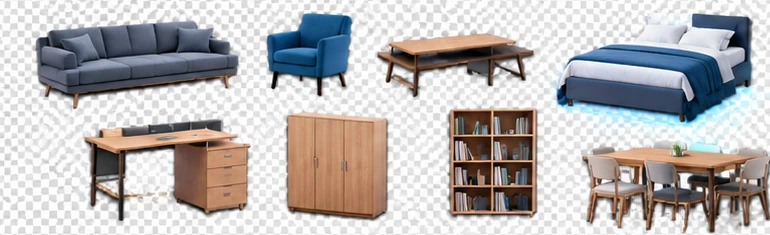
- An expanded furniture library: Introduce more furniture models, styles, sizes, and customization options.
- Intelligent placement validation: Help users understand whether furniture fits within a selected area.
- More natural AR interactions: Make the experience smoother and more intuitive through Spectacles.
- Real-world validation: Test the complete experience on compatible Spectacles hardware and improve it through actual user feedback.
Ultimately, we want CLEARSPACE AR to make room planning less about guessing and more about experiencing possibilities.
Why imagine your dream space when you could actually see it?
Built With
- clad-(closed-loop-agentic-development)
- codex
- fastapi
- github
- javascript
- leaf-testing-framework
- lens-studio
- python
- snap-spectacles
- spectacles-interaction-kit-(sik)
- typescript
