Inspiration
The invisible killer—that’s how many health experts describe urban air pollution. We were inspired by the realization that while air quality data exists, it is often trapped in complex spreadsheets or hidden on government websites. We wanted to build ClearSky Sentinel to bridge the gap between raw environmental data and human action. Our goal was to create a "guardian" for urban residents that translates invisible chemical concentrations into clear, life-saving information.
What it does
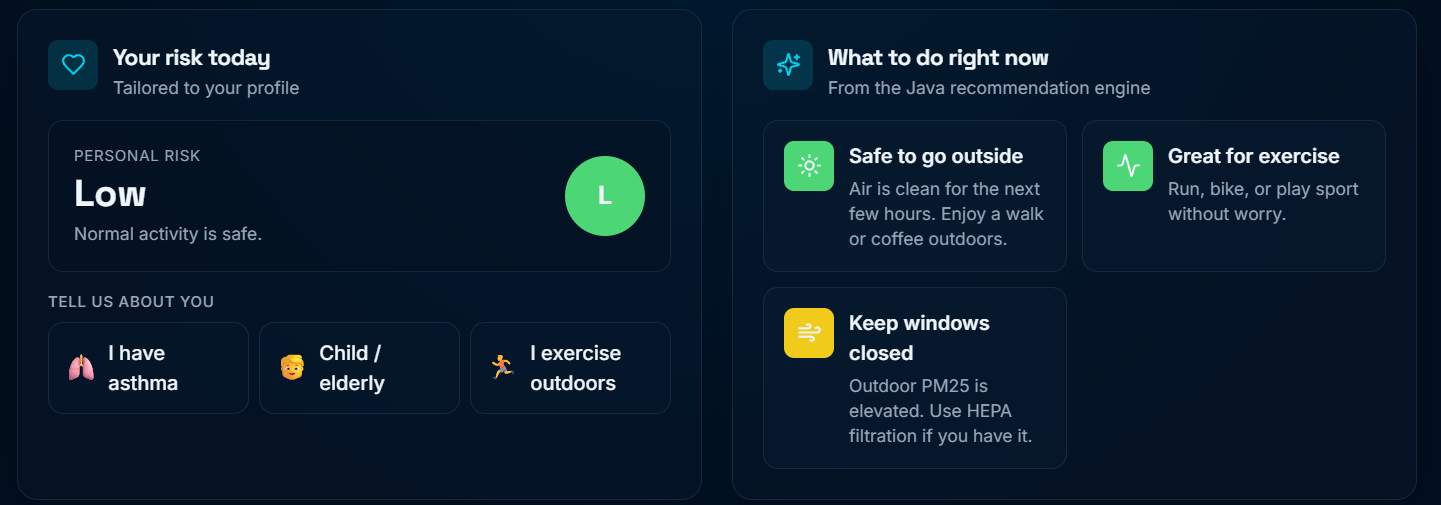
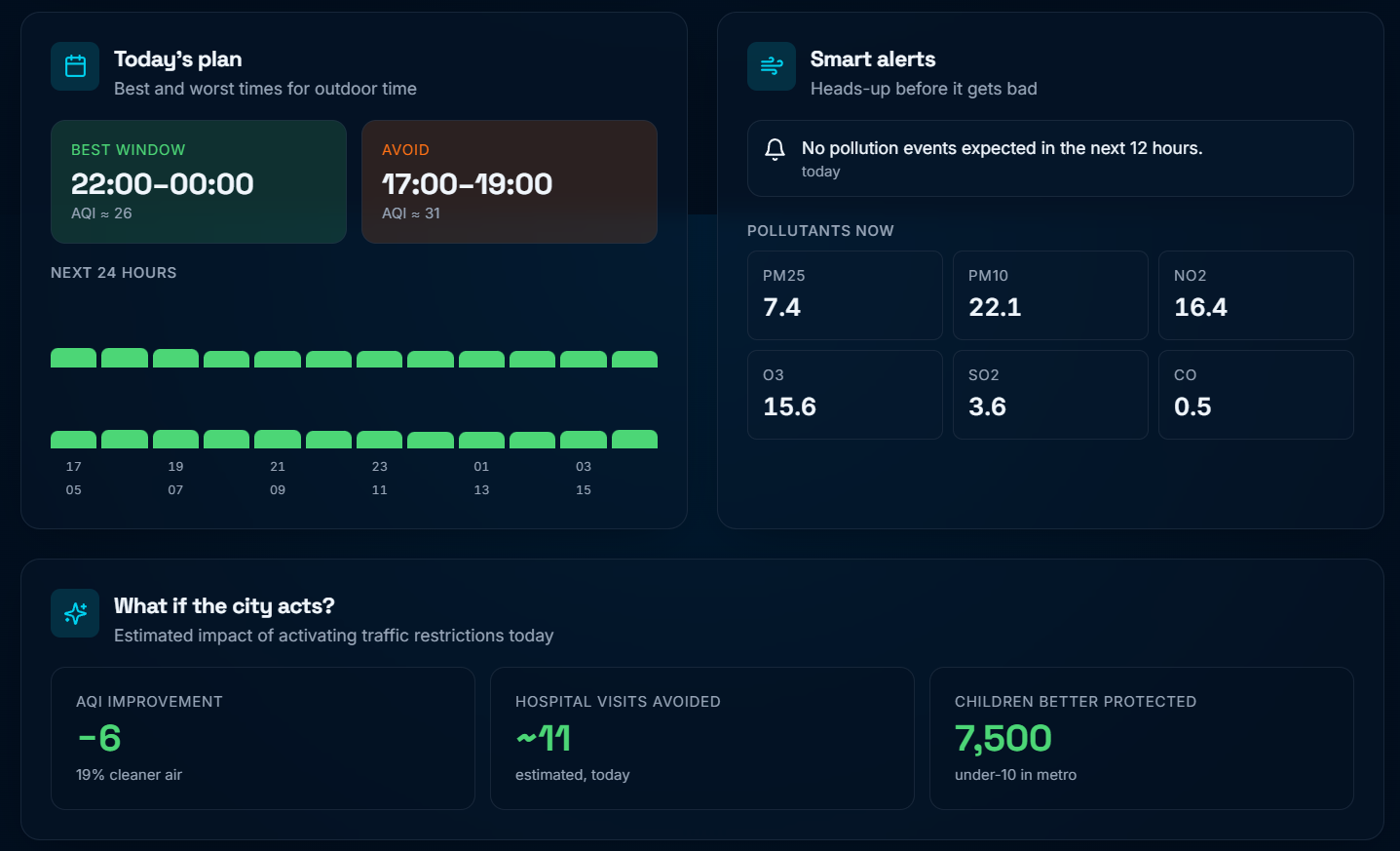
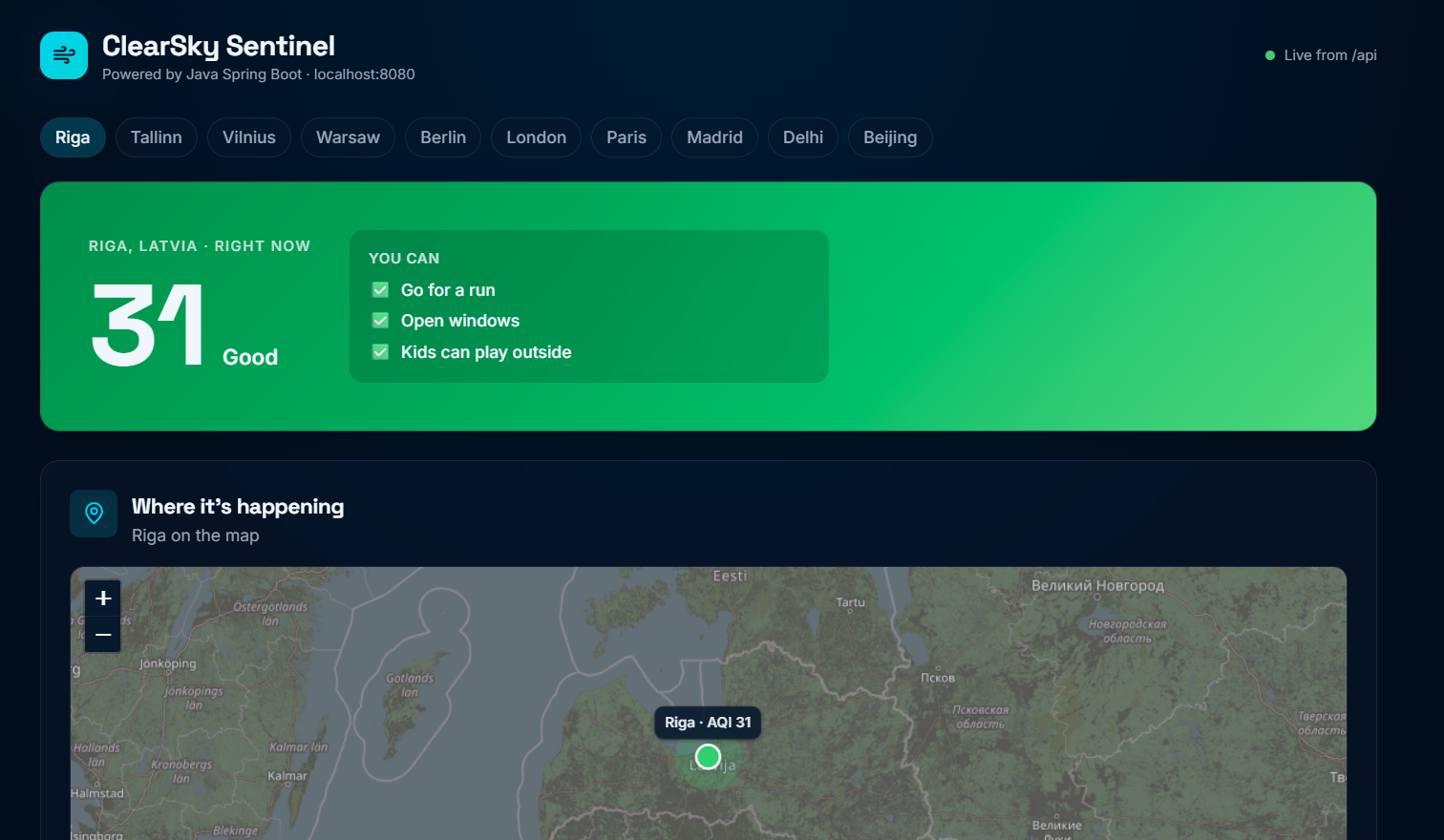
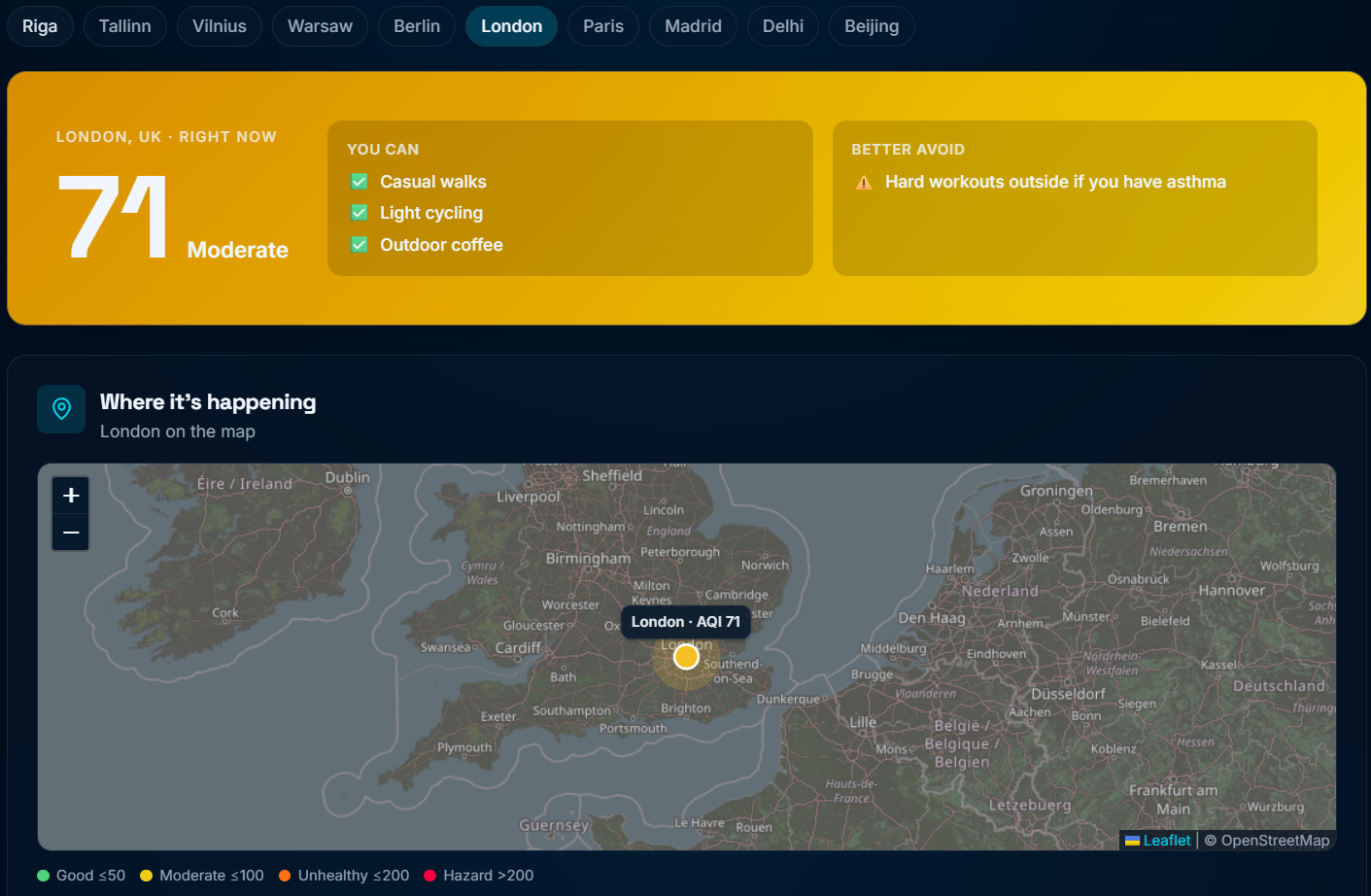
ClearSky Sentinel acts as a central nervous system for urban environmental health. It aggregates data from various city sensors, analyzing levels of fine particulate matter CO2, carbon dioxide, and nitrogen dioxide. Instead of just showing numbers, it prioritizes "danger zones" in real-time. It identifies where the air is worst and provides instant, actionable health advice—telling parents when it's safe to take children to the park or warning athletes to move their workouts indoors.
How we built it
We focused on building a high-performance analytical engine capable of processing multiple data streams simultaneously. The core logic was designed to categorize environmental risks into intuitive "Safety Tiers." We built a ranking system that automatically flags the most critical areas of a city, ensuring that environmental crises are never buried under "normal" data. Every part of the system was designed with scalability in mind, allowing a city to grow from ten sensors to ten thousand without losing speed.
Challenges we ran into
The biggest hurdle was "Sensor Noise"—dealing with the fact that different pollutants have vastly different safety scales. A small numerical increase in one chemical might be harmless, while the same increase in another could be critical. Designing a logic that could normalize these different scales into a single, reliable Air Quality Index was a significant hurdle. We also had to ensure the system could distinguish between a temporary spike (like a passing truck) and a sustained environmental hazard.
Accomplishments that we're proud of
We are incredibly proud of the "Hotspot Detection" feature. Being able to instantly isolate the most polluted areas from a massive dataset ensures that help or warnings can be sent exactly where they are needed most. We also took pride in the simplicity of the output; we turned complex chemistry into "Good," "Caution," or "Danger," making the data accessible to everyone, regardless of their scientific background
What we learned
This project taught us that the biggest challenge in sustainability isn't just collecting data—it's communication. We learned how to interpret environmental safety standards and discovered that effective "Green Tech" must be both fast and trustworthy. We also realized how interconnected urban systems are, and how much impact a single well-placed sensor can have on a community's well-being.
What's next for ClearSky Sentinel
The future of ClearSky Sentinel is all about "Predictive Breathability." We want to implement machine learning to predict pollution spikes before they happen based on traffic patterns and weather changes. We also aim to create a community-driven "Crowdsourced Sensing" layer, allowing citizens to contribute their own data, creating a truly democratic and transparent map of the air we all share.

Log in or sign up for Devpost to join the conversation.