-
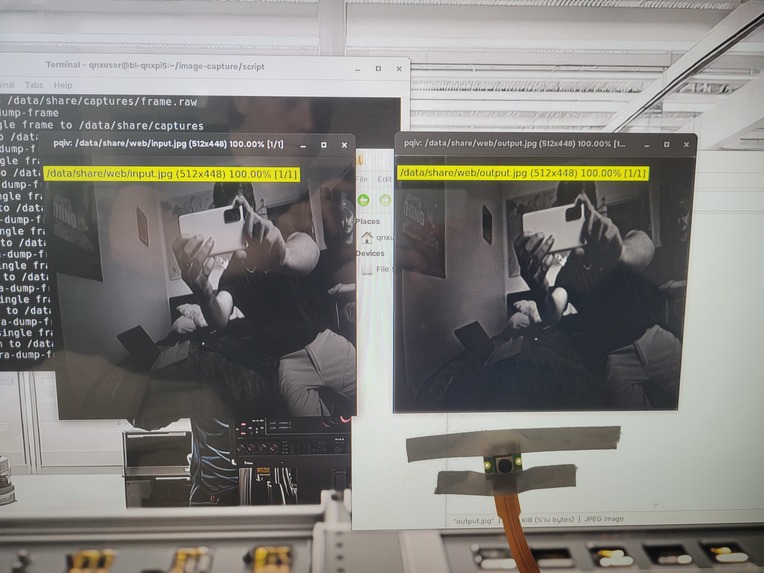
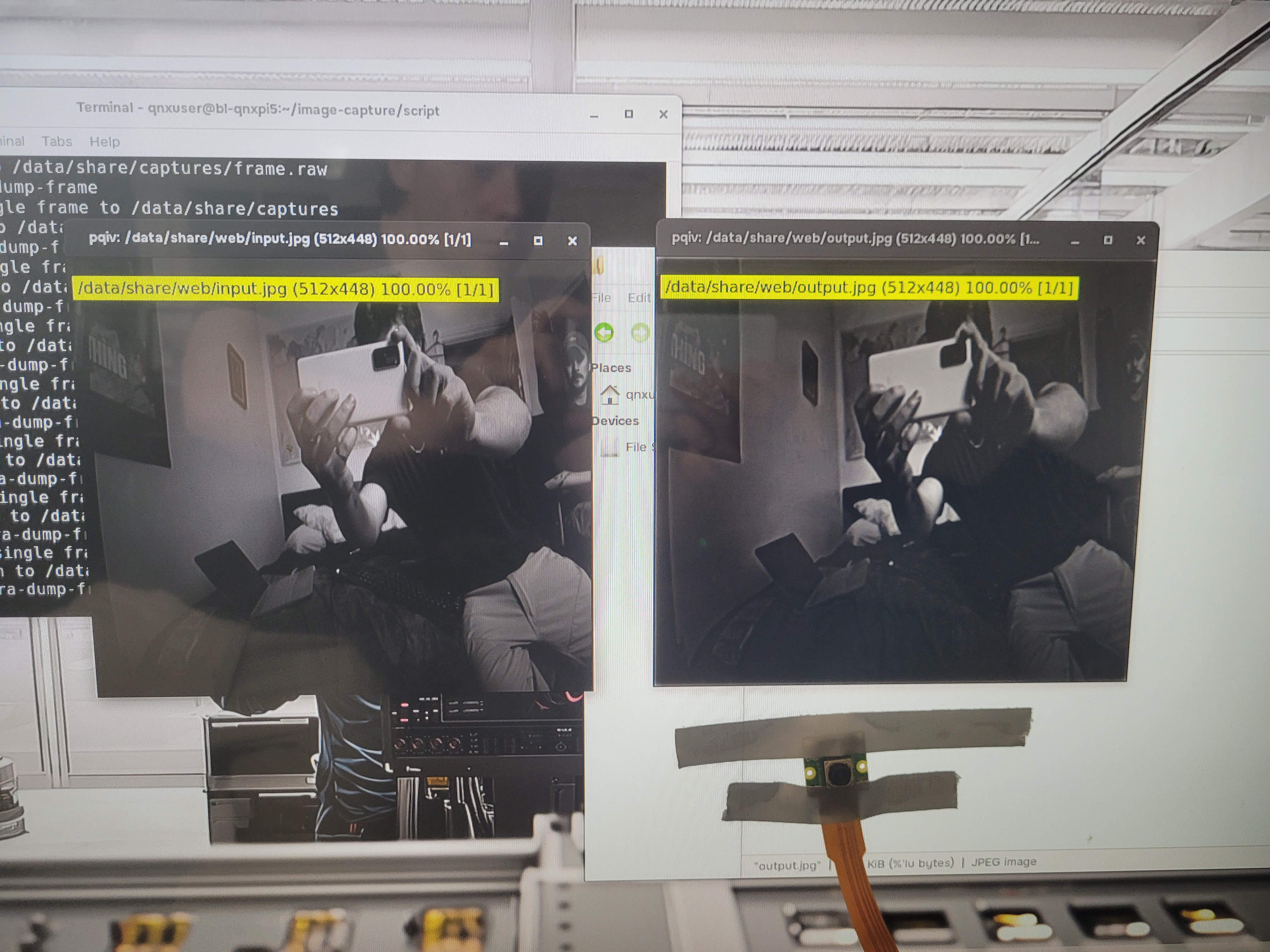
Real-time image stream
-
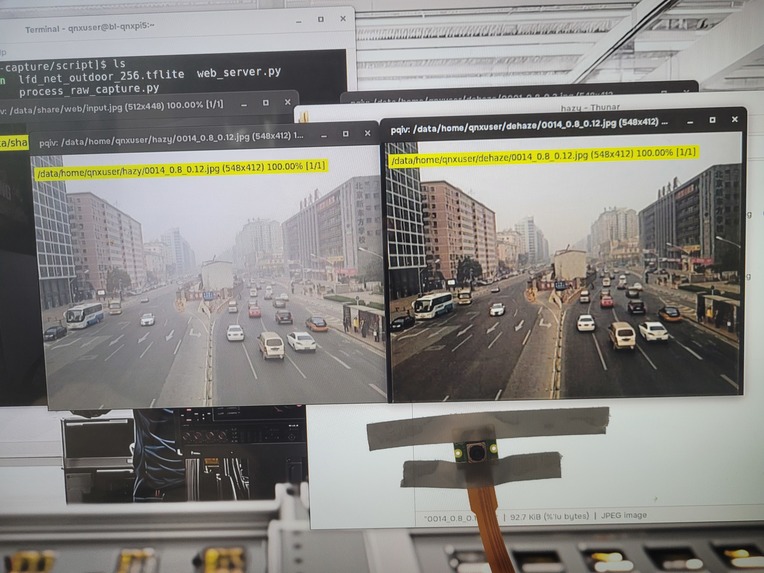
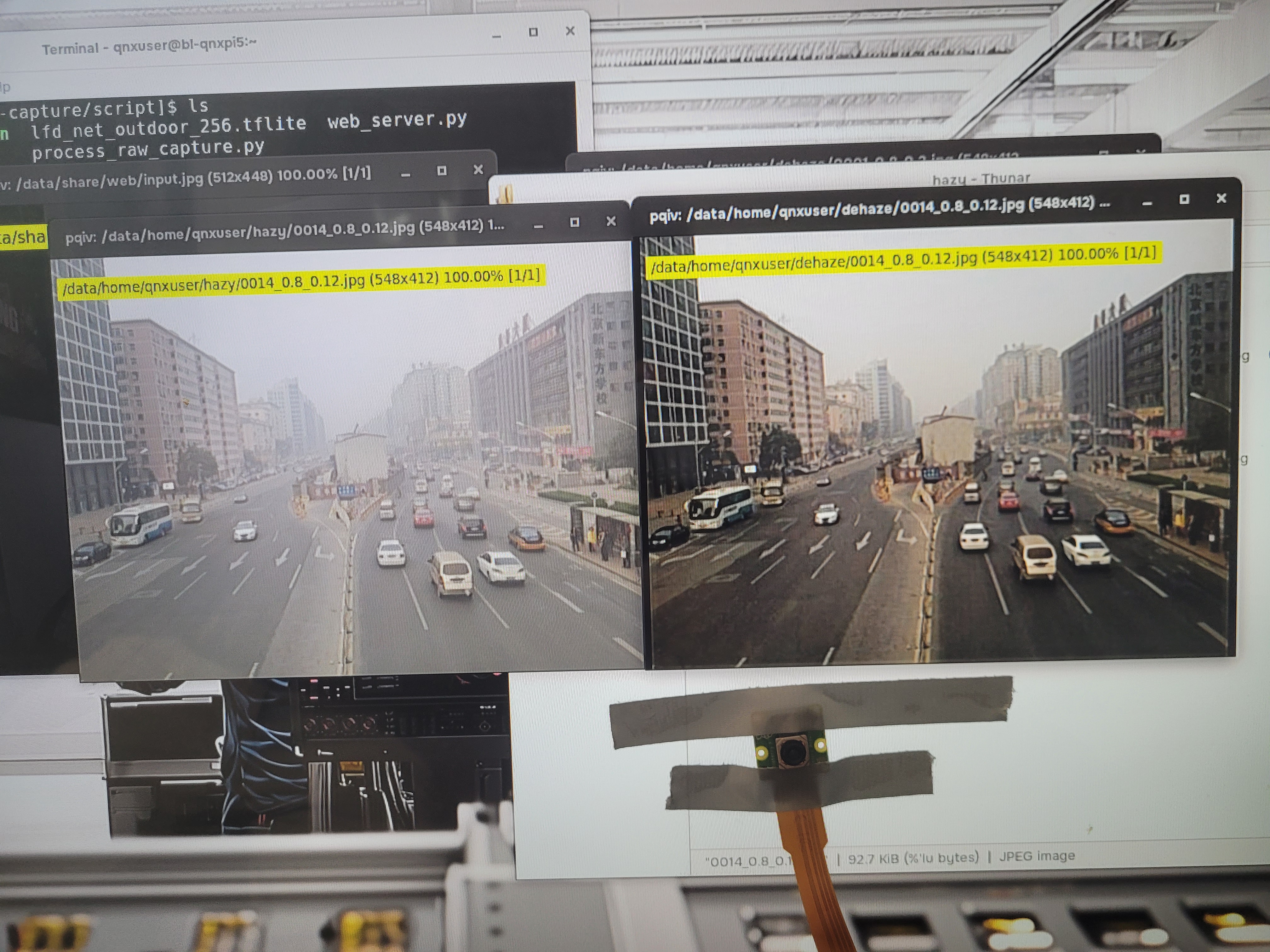
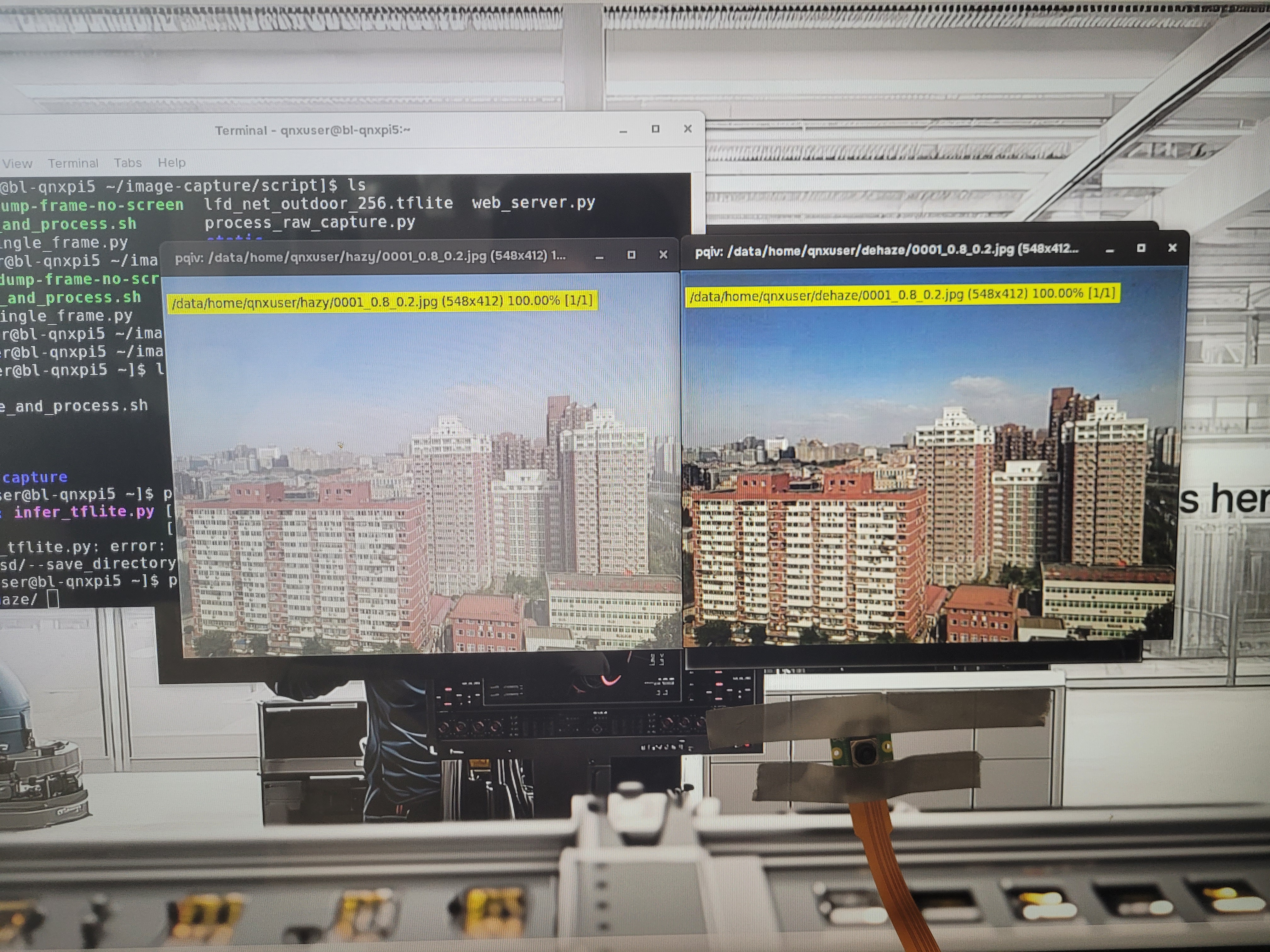
Dehazing on RESIDE dataset
-
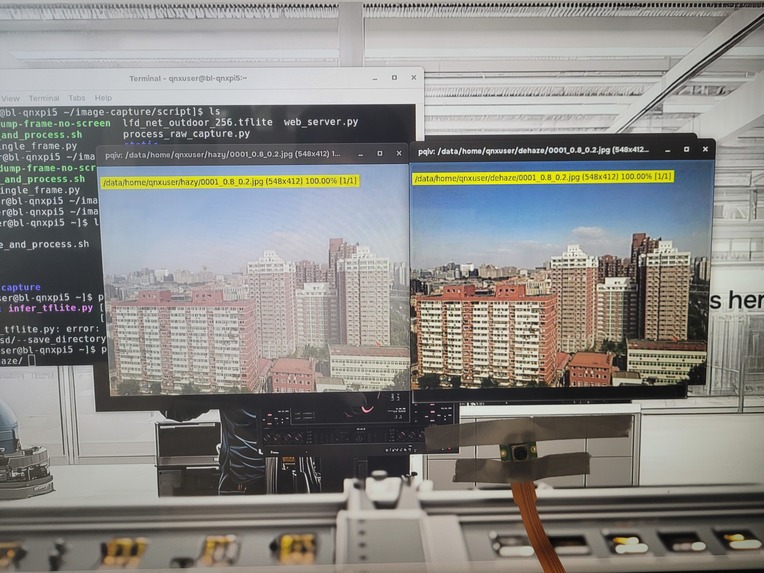
Dehazing on RESIDE dataset
Inspiration
The primary inspiration came from pondering the effects of dust on the camera systems UGVs, which can be kicked up while the vehicle is driving. This project seeks to address this potential problem.
What it does
Clearshot uses a machine learning approach to dehaze (remove fog and smoke from) images in real time.
How we built it
The model is based on LFD-NET, the model explored in this 2023 paper by Y. Jin, J. Chen, F. Tian and K. Hu: https://ieeexplore.ieee.org/document/10241986. The PyTorch weights and layers were converted to the TensorFlow format using the Google AI Edge python package. Using TFLite, openCV, and pillow, the model was successfully deployed on the QNX Neutrino target. The frame capture process leveraged QNX's Sensor Framework to initialize, validate, and stream frames to a processing script written in Python.
Challenges we ran into
Configuration of QNX OS was our primary hurdle, running into significant difficulties while connecting the device to the internet.
Accomplishments that we're proud of
We are very proud of our ability to deploy ML inference on a QNX target.
What we learned
Above all else we practiced our project-based decision making skills.
What's next for Clearshot
We noticed performance limitations in our implementation, and will address them in our own time to improve the software.


Log in or sign up for Devpost to join the conversation.