-
-
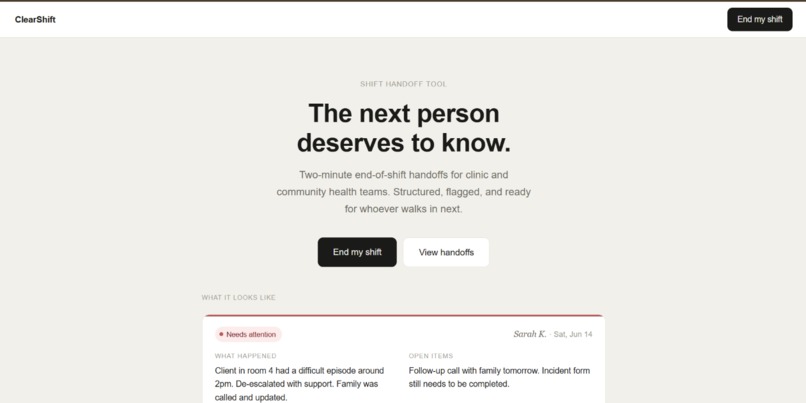
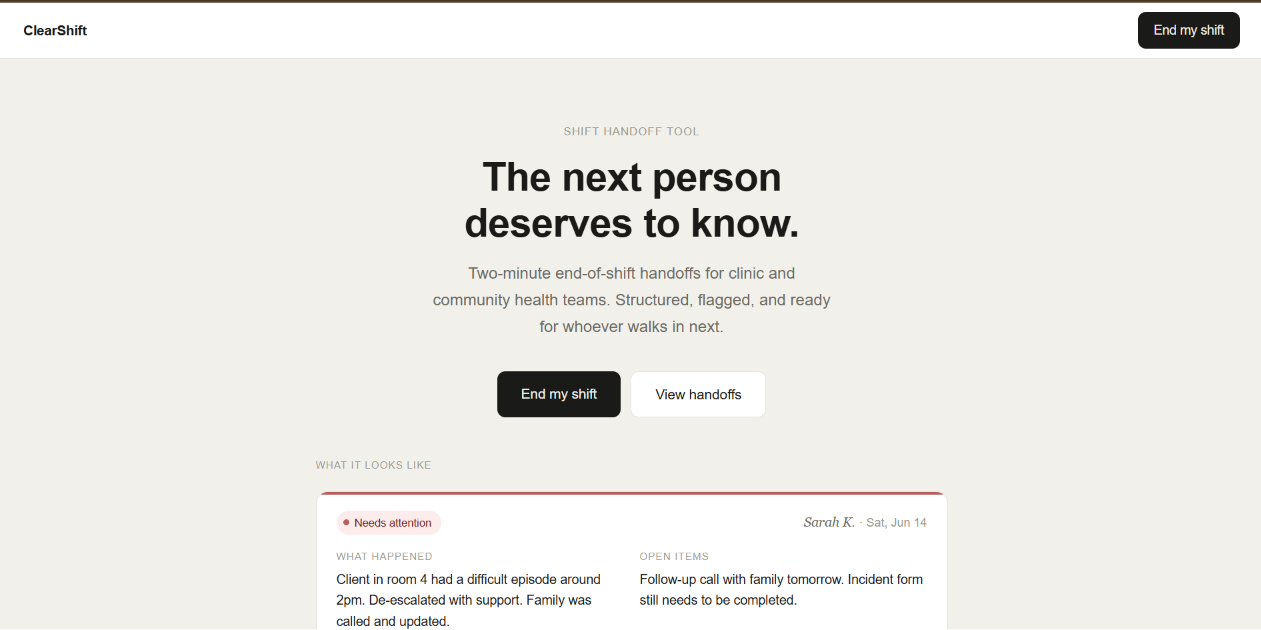
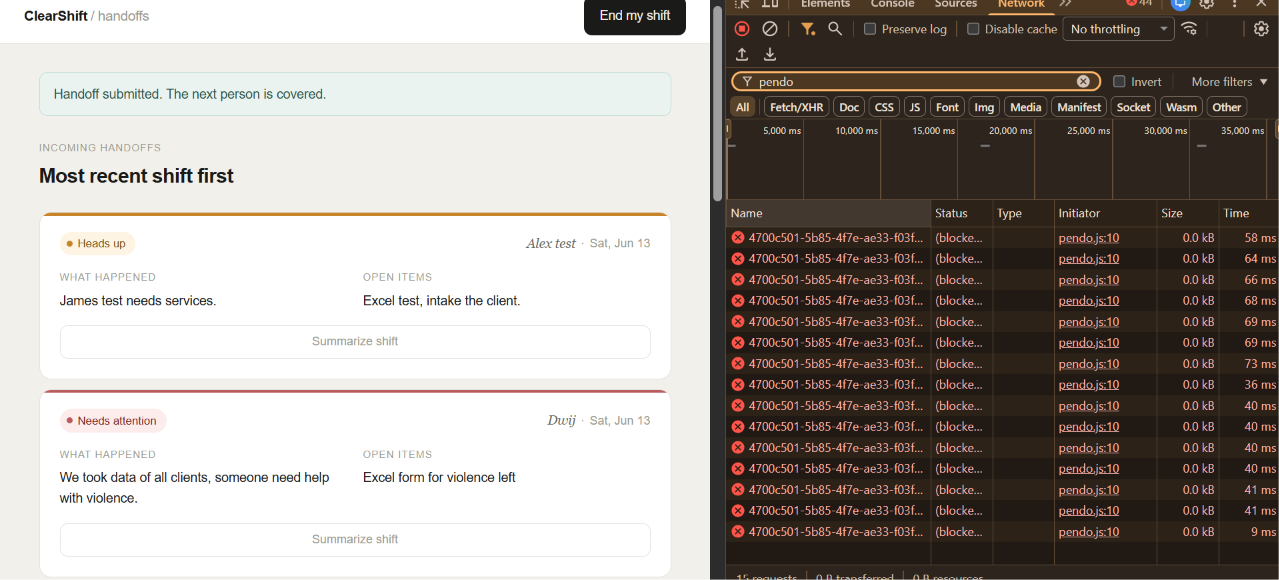
The landing page with example of what ClearShift is.
-
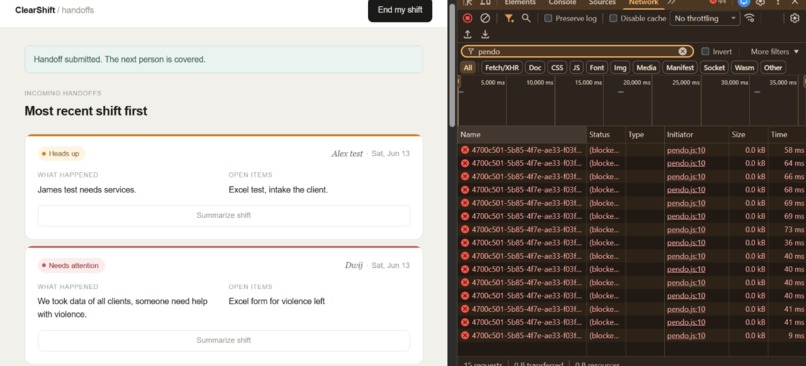
Proof of connection
-
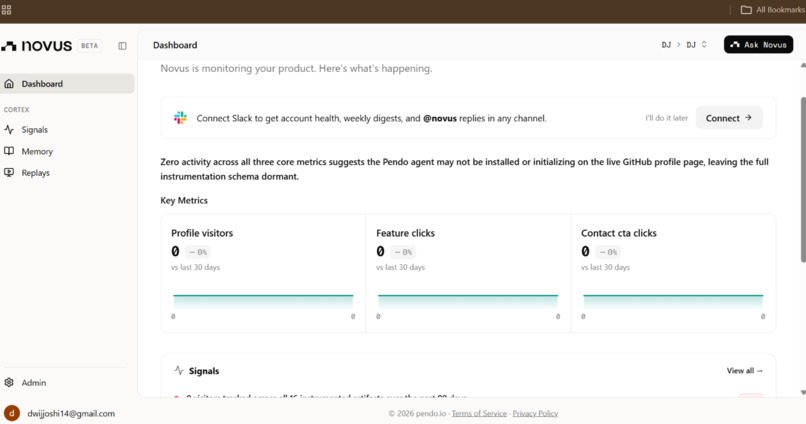
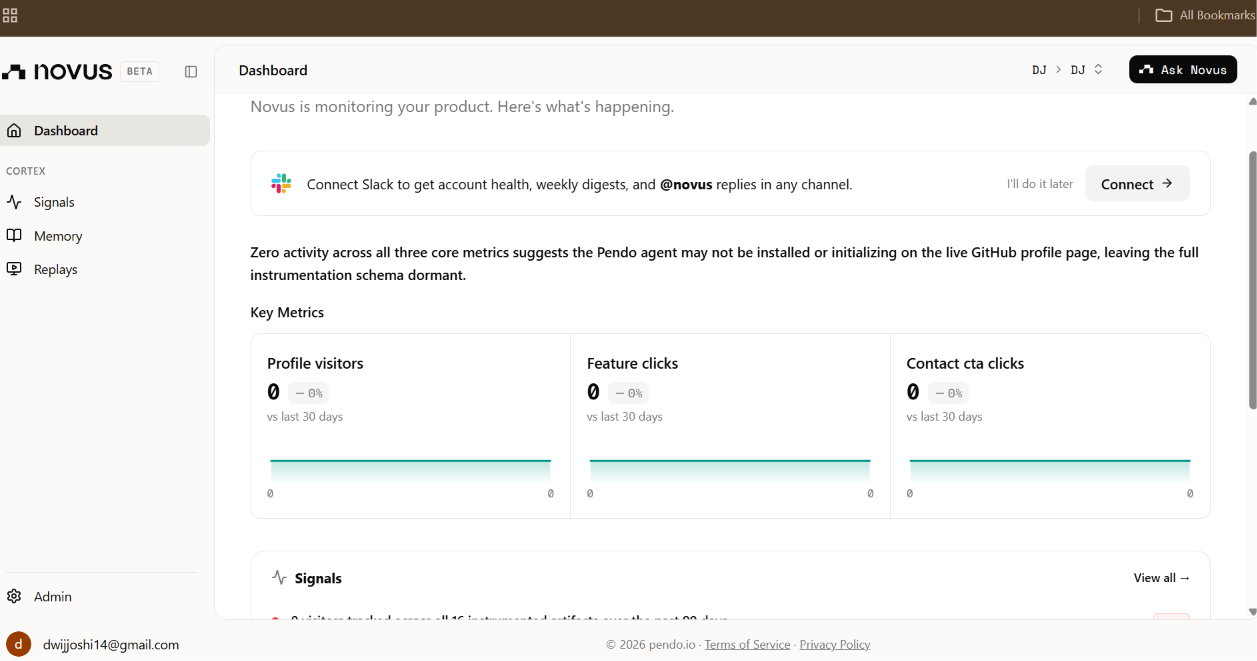
Novus Dashboard
Inspiration
I used to work at a mental health clinic. Every day when a shift ended, the handoff was the same — a quick verbal summary to whoever was coming in, maybe a sticky note on the desk, and then the previous person was gone. The next staff member would walk in and have to piece together what happened on their own before they could even start helping anyone.
I watched real information fall through the cracks because of it. Not because anyone was careless. Just because there was no real system.
This summer I started working as an intake worker at a social services organization where our team runs across shifts. We leave sticky notes on each other's desks. We write things on whiteboards. Sometimes the note is still there in the morning. Sometimes it is gone. Someone always starts their shift half-blind to what happened before them.
ClearShift is the tool I wish existed in both of those places.
What it does
ClearShift lets any shift worker log a structured end-of-shift handoff in under two minutes. You fill in what happened during your shift, note anything still open, and set an urgency flag — routine, follow-up needed, or needs immediate attention. That entry is saved to a shared board that the next person can pull up the moment they walk in.
Each card shows the staff member, timestamp, a short summary of events, and any open action items. There is also an AI-powered Summarize button that generates a plain-language brief of the handoff so the incoming person can get up to speed in seconds, not minutes.
No sticky notes. No verbal relay. No information lost between shifts.
How we built it
ClearShift is built with Next.js (App Router) deployed on Vercel, with Supabase handling form submissions and real-time data persistence. The AI brief is generated via the Claude API — when a user clicks Summarize, the handoff note is sent to the model and a plain-language summary is returned inline on the card.
The entire stack is serverless. The frontend is a single Next.js app with module-level CSS and no external UI libraries — just clean, functional components built from scratch.
Challenges we ran into
The biggest technical hurdle was a Vercel deployment failure caused by Supabase environment variables being referenced at module level during SSR static prerendering. Next.js tried to evaluate those imports at build time before the env vars were available, which silently broke the entire app on deploy while it worked fine locally.
The fix required wrapping the affected pages in Suspense boundaries, guarding env var access behind a runtime check in the Supabase client, and correcting the Vercel framework preset from "Other" to "Next.js." It took real debugging to trace — the error was not obvious from the build logs alone.
Accomplishments that we're proud of
Getting a live, working product with real data persistence, a clean UI, and an AI summary layer shipped within the hackathon window felt meaningful — especially because the problem it solves is one I have personally watched cause real harm in care settings.
The landing page headline — "The next person deserves to know." — came from a real place. That is the whole product in one sentence.
What we learned
SSR and client-side environment variable handling in Next.js requires much more care than most tutorials cover, especially when deploying to Vercel with a third-party backend like Supabase. Understanding where in the lifecycle env vars are resolved (build time vs. runtime) is something I now have a much clearer mental model of.
On the product side: building for a real user in a real context — not a hypothetical persona — makes every design decision easier. When I was not sure whether to add a feature, I asked myself whether it would have helped at the clinic or at my current job. That kept the scope tight and the product honest.
What's next for ClearShift
The most important next step is team-level accounts so multiple staff members at the same clinic or care home can share a single handoff board. Right now the board is open — adding lightweight auth per organization would make this safe to deploy in a real clinical setting.
Beyond that: email or SMS alerts when a high-urgency flag is submitted, so the next person does not have to check the board — the board finds them. And an export feature so supervisors can pull a week of handoff logs for incident review or compliance documentation.
Built With
- claude-api-(anthropic)
- css-modules
- git
- javascript
- next.js
- react
- supabase
- vercel

Log in or sign up for Devpost to join the conversation.