-
-
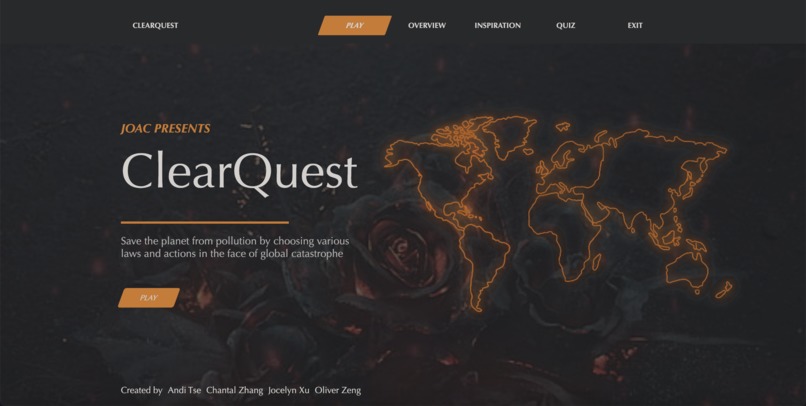
First day on the job...
-
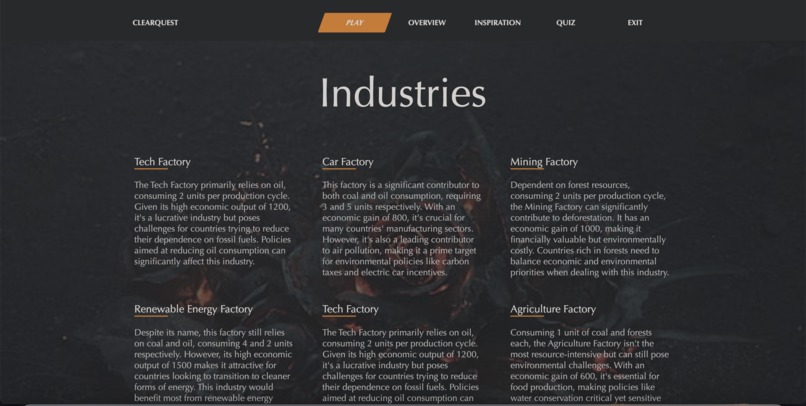
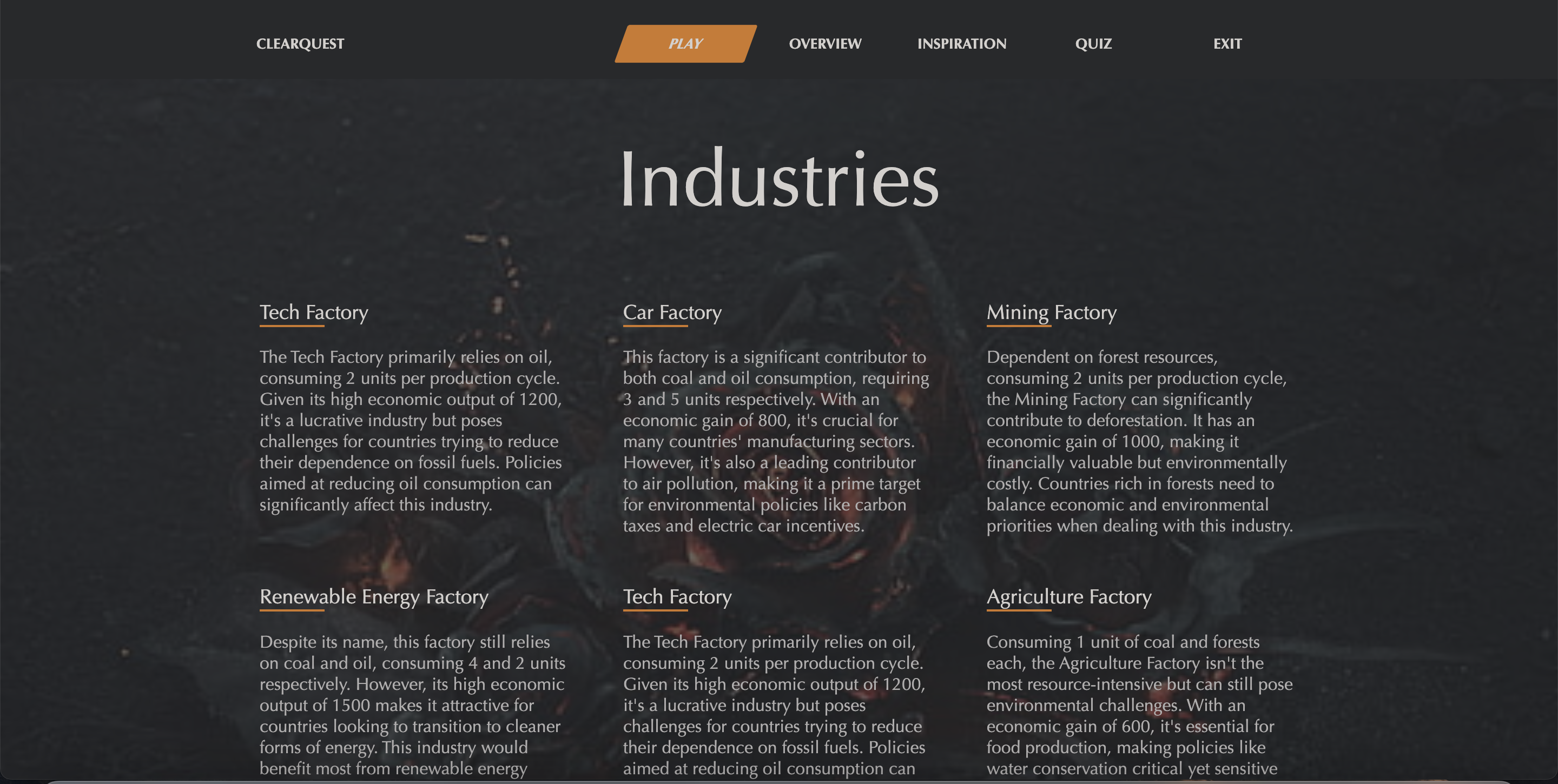
What industry does your country have?
-
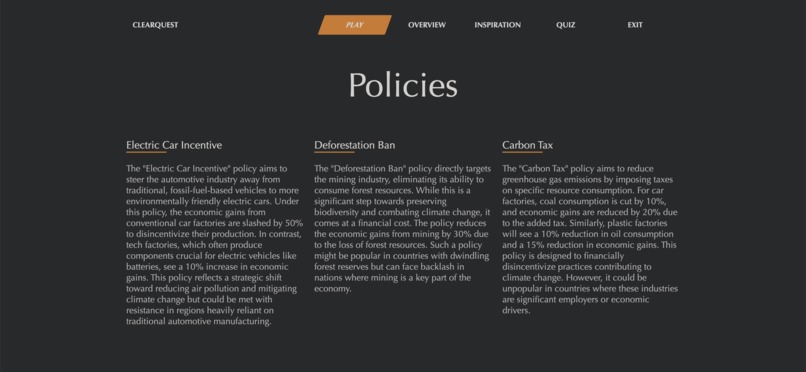
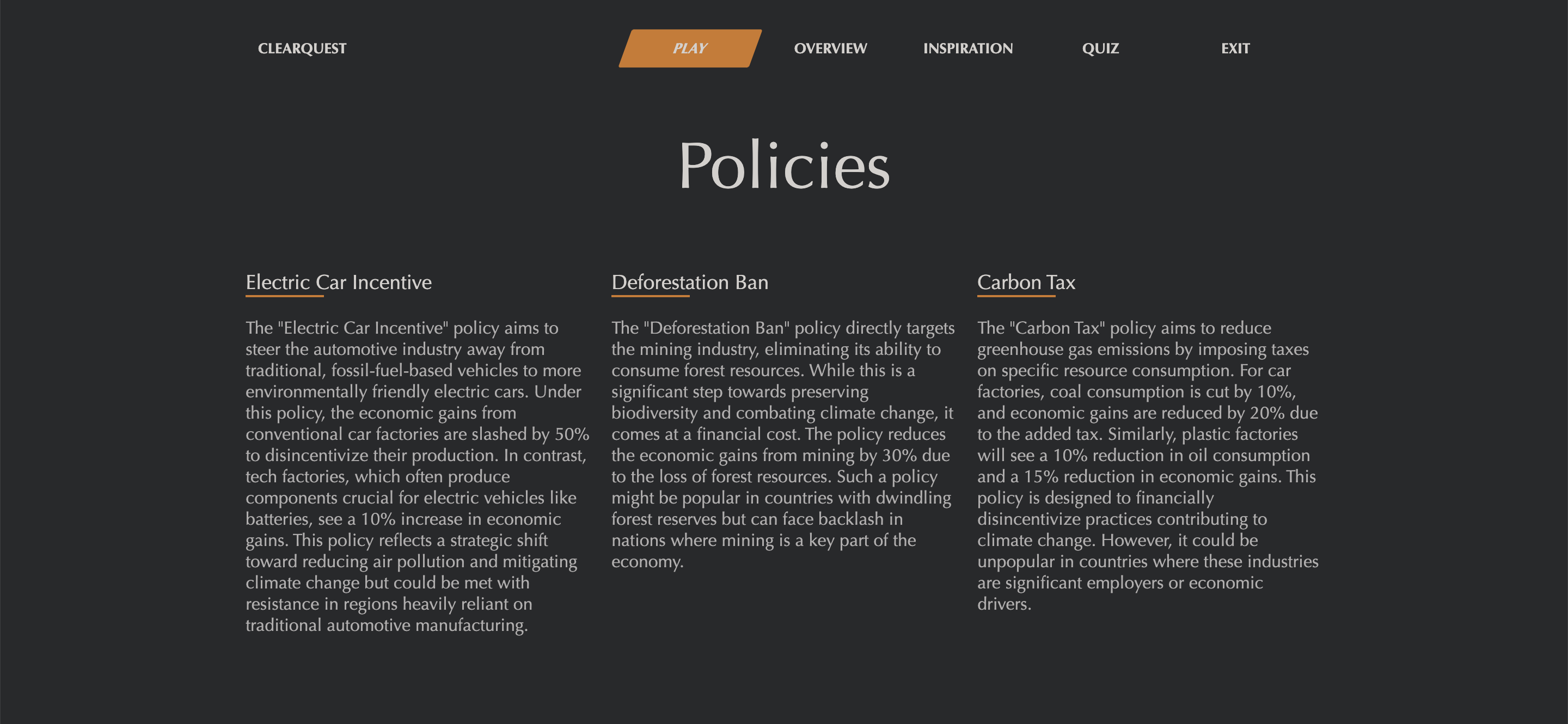
What policy will you choose?
-
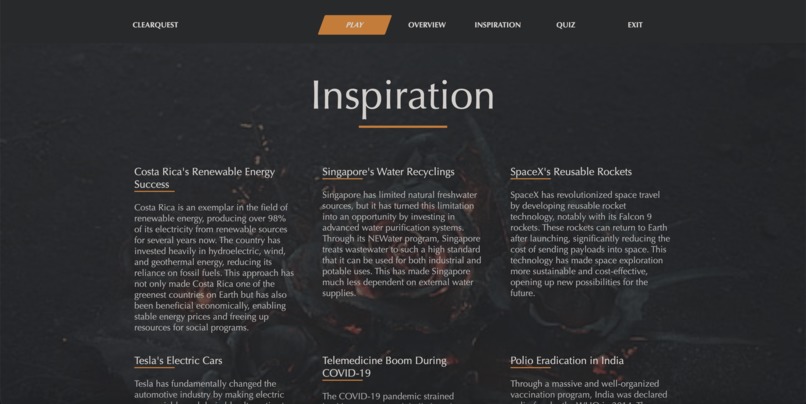
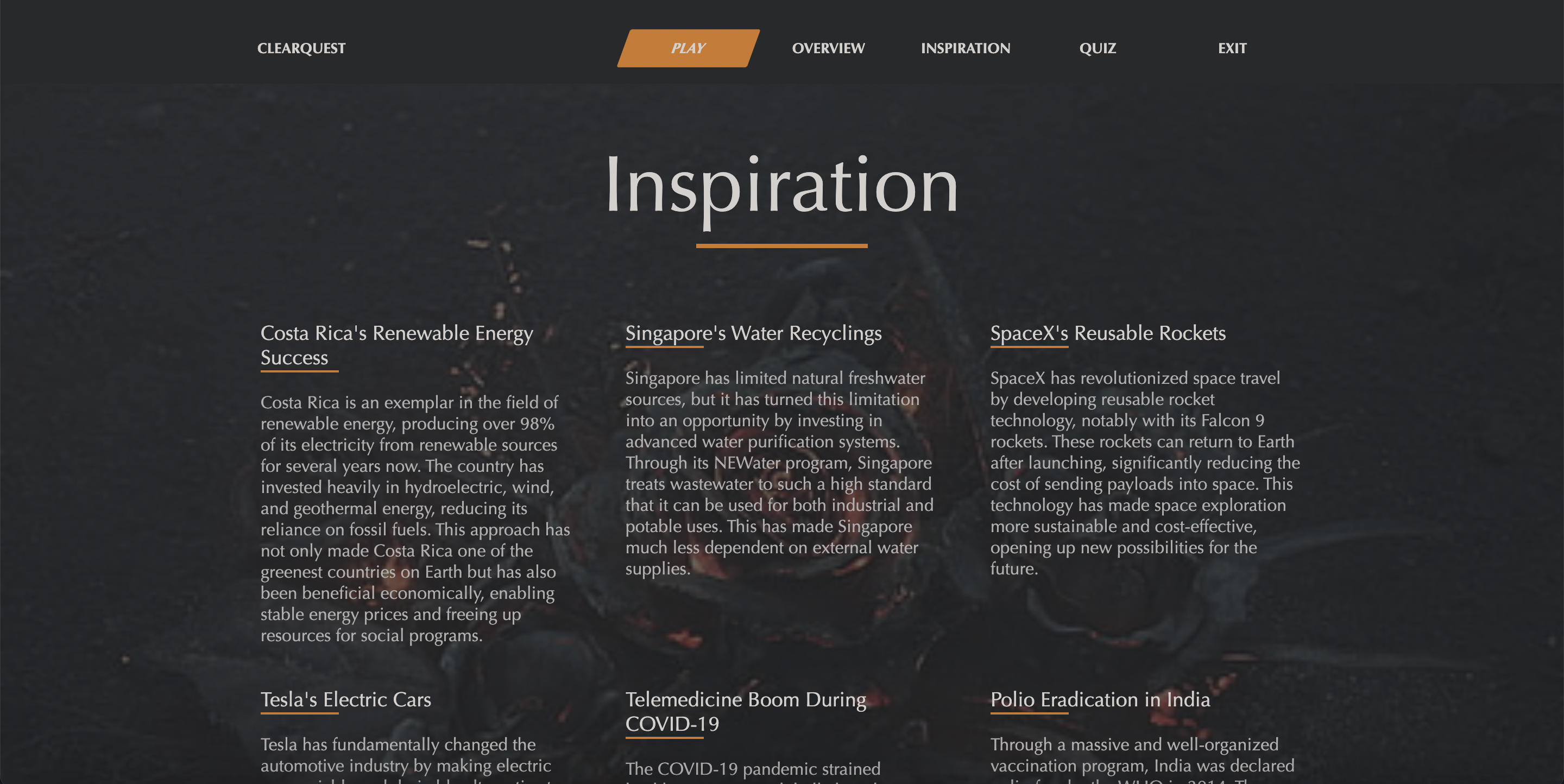
Success stories!
-
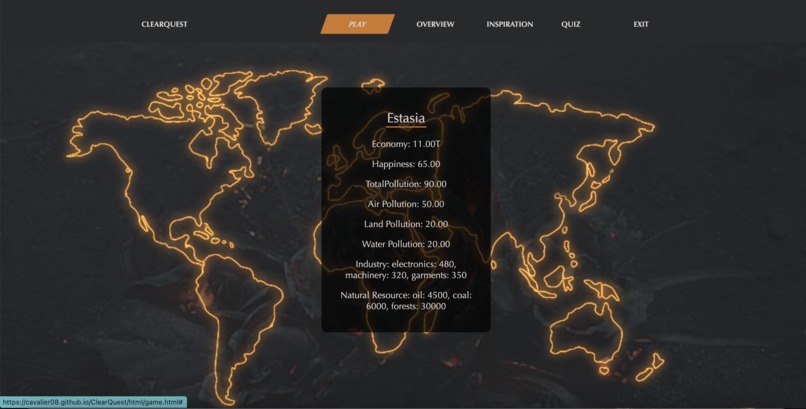
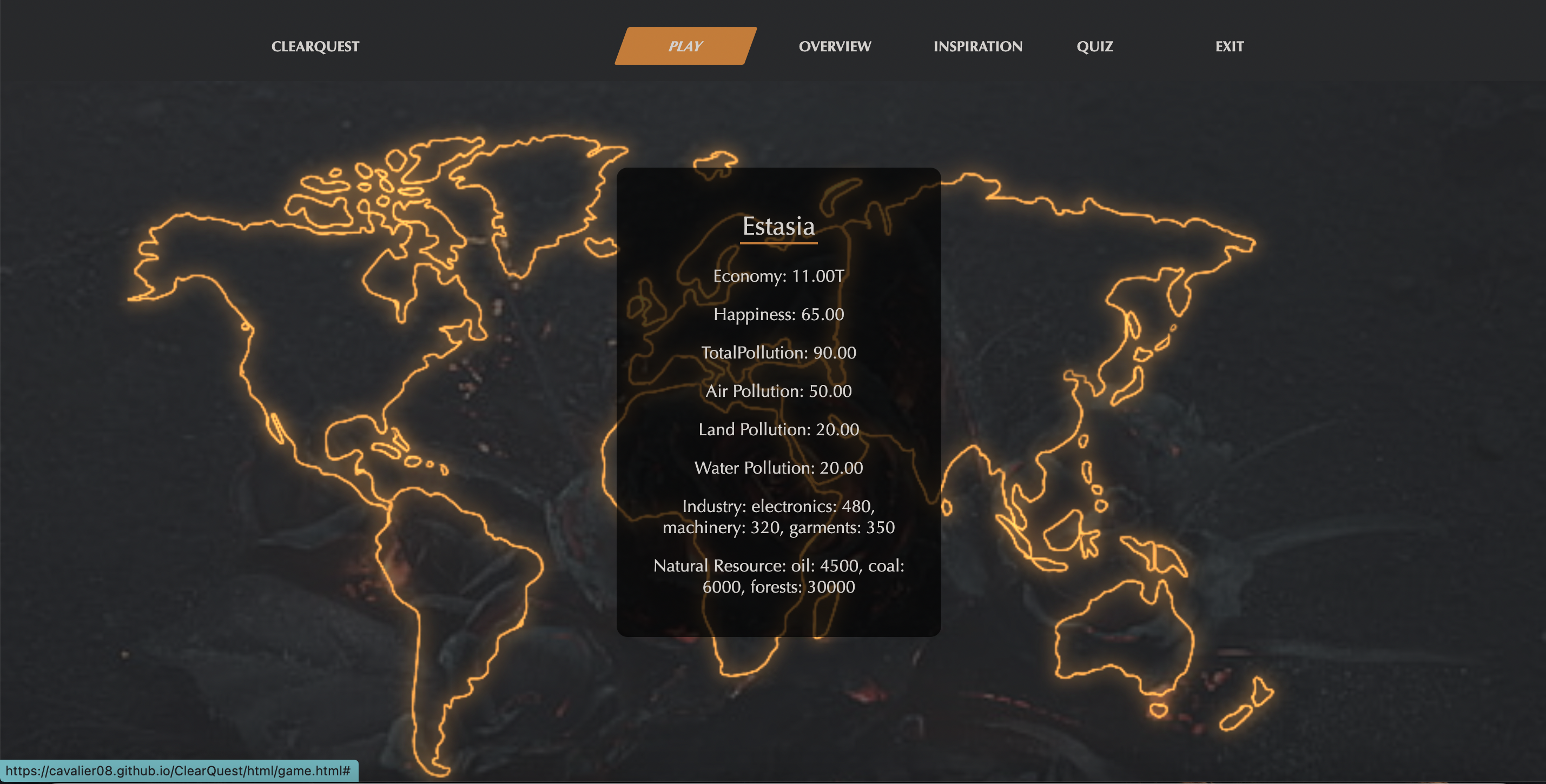
Learn more about Estasia
-
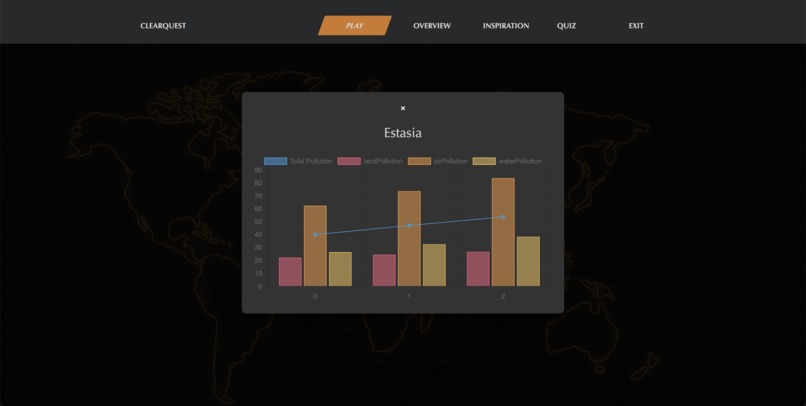
Estasia isn't looking too good...
-
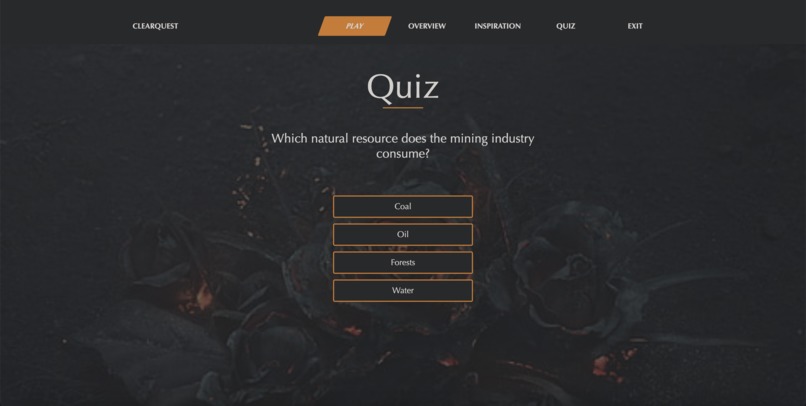
What have you learned?
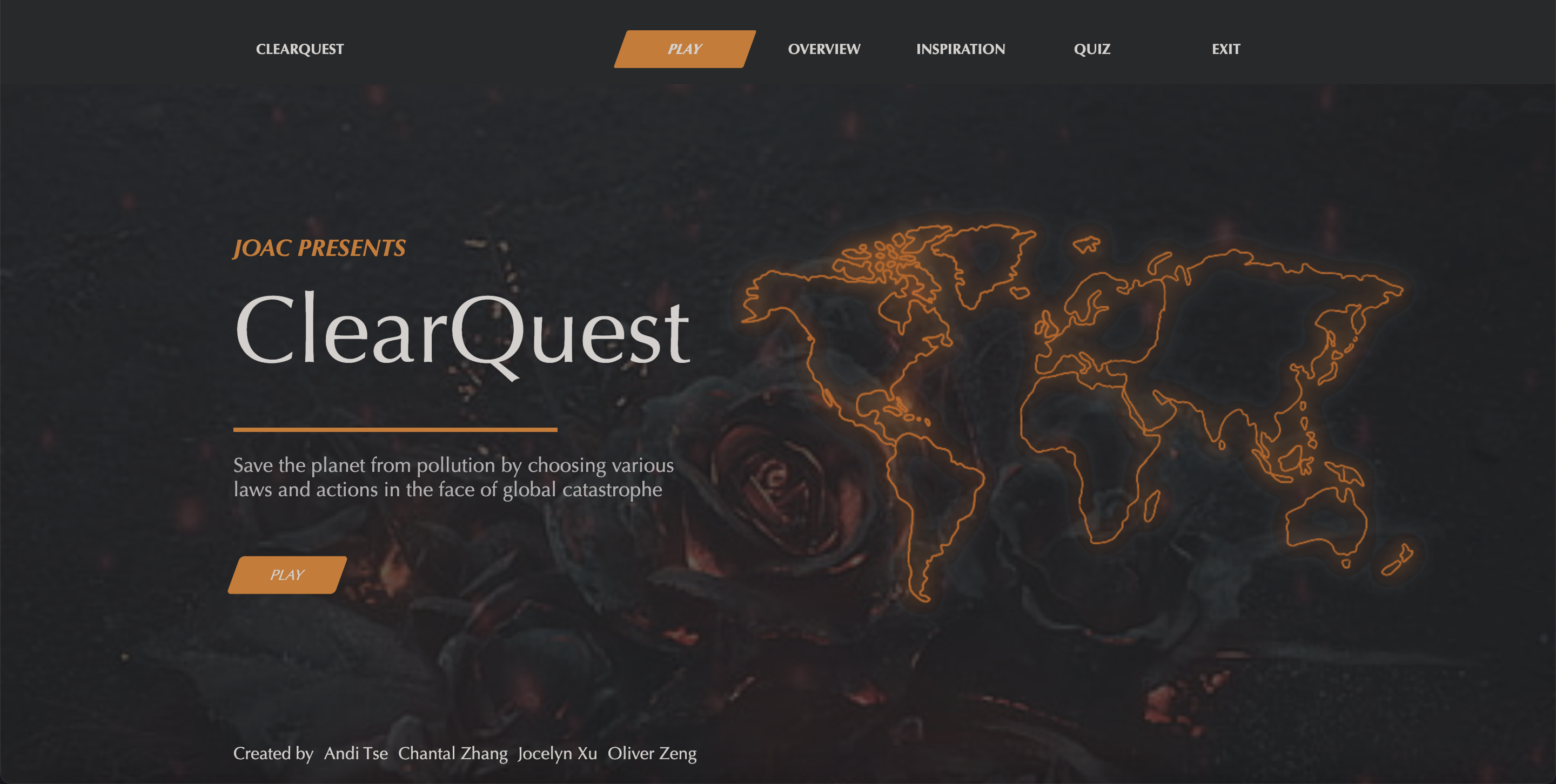
Inspiration
Inspired by the urgent need for climate action, we've developed an educational simulation game that blends the intricacies of role-playing games (RPGs) with real-world policy challenges. Players step into the shoes of the UN's new Environmental Officer for Earth Prime, a parallel version of our planet. With the power to implement one of three carefully crafted policies, players face the delicate balance of pros and cons that real-world policymakers grapple with daily. Our project aims to entertain and educate, fostering a nuanced understanding of the complexities surrounding environmental policy. We hope to inspire the next generation of climate leaders through immersive storytelling and engaging gameplay.
What it does
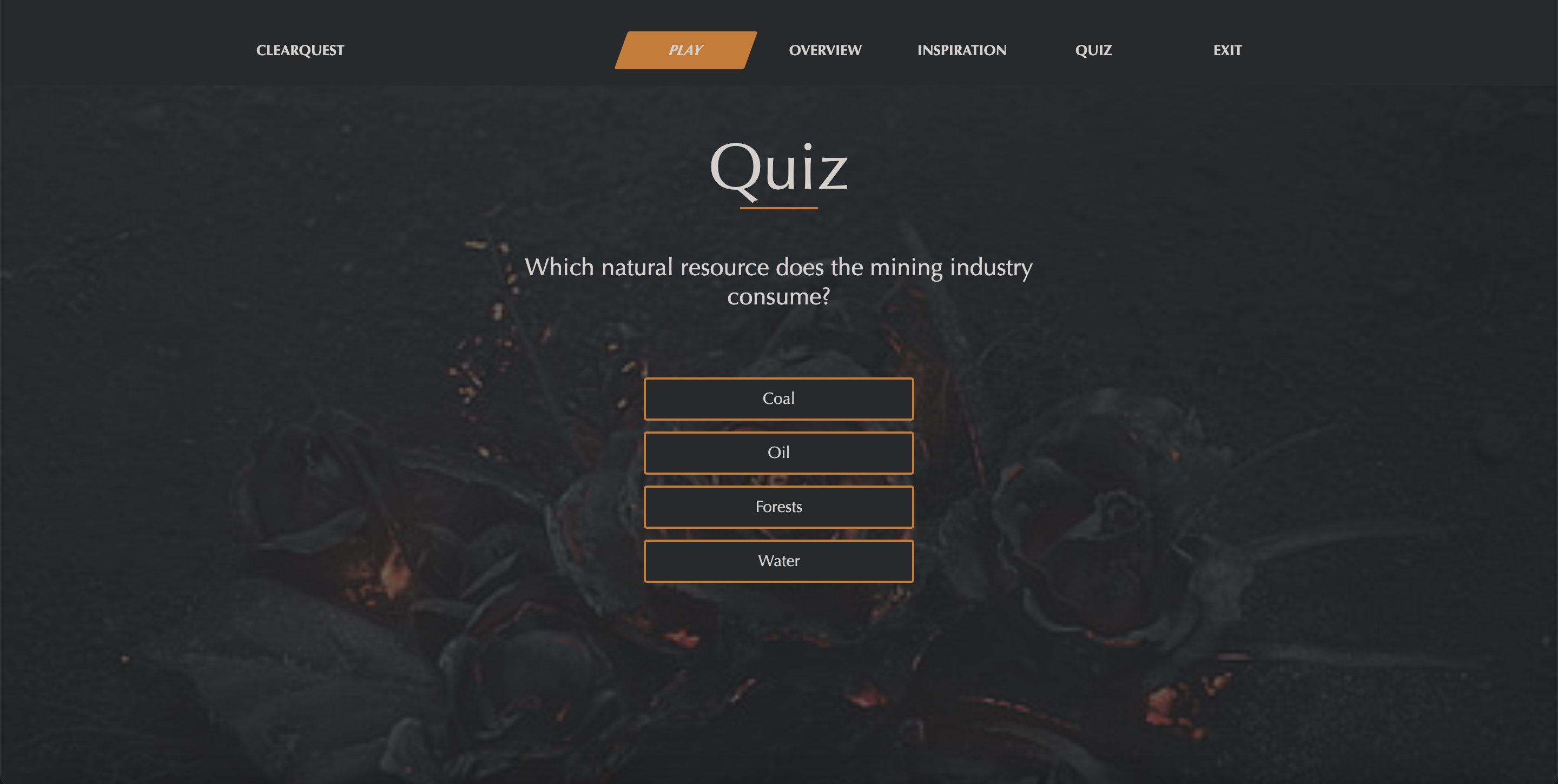
Our program places players in a dynamically evolving world, complete with random natural disasters that test the efficacy and adaptability of their policy choices. Featuring five custom countries representing the major continents—each with its own unique set of natural resources, industries, pollution levels, happiness metrics, and population—the simulation offers a microcosm of the complex, interconnected challenges that global leaders face. As the UN's new Environmental Officer for Earth Prime, players must navigate this intricate web of factors, making policy decisions that could have far-reaching implications for the environment and humanity alike. Through this immersive experience, our educational simulation aims to illuminate the multifaceted nature of climate policy and foster a deeper understanding of global sustainability.
How we built it
We built our educational simulation using a robust combination of HTML, CSS, and JavaScript. HTML served as the foundational structure, enabling us to layout the various game elements and UI components, while CSS was instrumental in styling and bringing a visually engaging design to life. JavaScript played a pivotal role in powering the simulation's dynamic aspects, including the random natural disasters, policy impact calculations, and country-specific variables like natural resources and pollution levels.
Challenges we ran into
We faced several key challenges while building our simulation. The first was developing an algorithm to accurately represent complex interactions between elements like pollution and population. Striking a balance between educational content and gameplay was also tricky. Randomizing natural disasters while making them consequential added another layer of complexity. Finally, ensuring the application's scalability and performance across devices required optimization, and coordinating among a team of four demanded effective communication and version control. Despite these hurdles, we succeeded in creating an immersive, educational experience.
Accomplishments that we're proud of
We're incredibly proud of several accomplishments in this project. First and foremost, we've created a simulation that is not just a game, but also an educational tool that brings awareness to the complexities of environmental policy-making. It's gratifying to see players engage thoughtfully with the challenging scenarios we present, and we believe this bodes well for fostering a more nuanced understanding of climate issues among the youth.
We're also pleased with the technical finesse we've achieved. Successfully implementing a complex algorithm that handles multiple variables in real-time—while maintaining a smooth user experience—is no small feat. The random natural disasters add an element of unpredictability and realism that elevates the educational impact of the simulation.
Lastly, we're proud of our team's effective collaboration. Despite the challenges of coordinating among four people with different skill sets, we've managed to create a cohesive and robust application, learning a great deal about teamwork and project management in the process.
What we learned
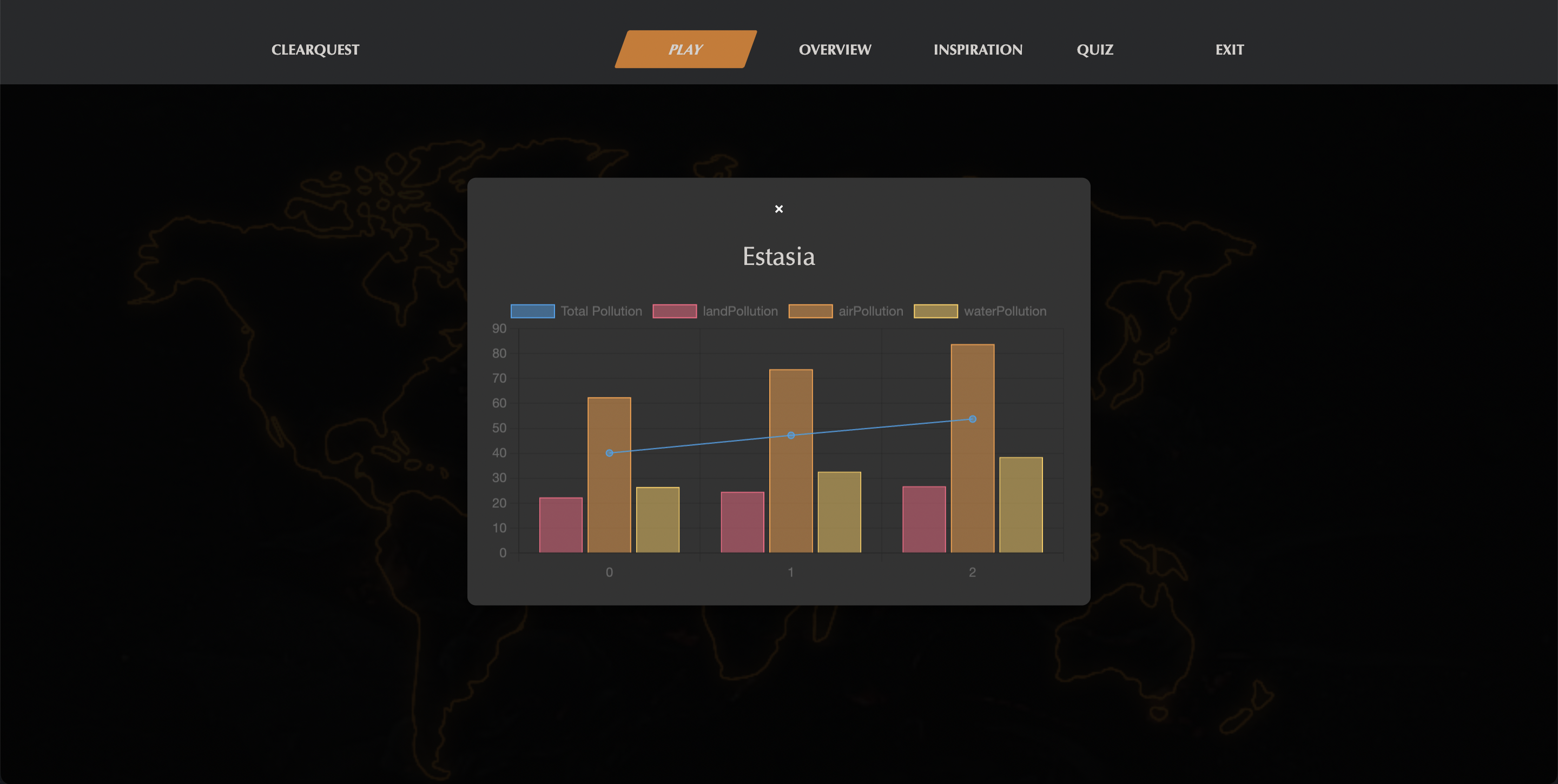
We learned invaluable skills and insights throughout the development process. For instance, leveraging Chart.js allowed us to visualize complex data in an accessible way, enhancing the user's understanding of the immediate and long-term effects of their policy choices. This hands-on experience taught us the importance of data visualization in making complex topics user-friendly.
We also discovered the nuances of crafting a user-centric experience, from designing intuitive UI to creating engaging gameplay, which heightened the educational impact of our project. The challenges of optimizing performance and scalability emphasized the necessity of clean, efficient code.
What's next for ClearQuest
The next steps for ClearQuest involve both expanding and refining the simulation. We plan to introduce more policy options and variables to make the game even more realistic and educational. We're also considering adding multi-player functionality, allowing players to experience the complexities of international collaboration on environmental issues.
From an educational perspective, we aim to partner with schools or educational organizations to integrate ClearQuest into curricula, providing a hands-on experience in environmental science and policy-making. We believe this simulation can be an impactful resource for teachers and students alike.
Technologically, we’re looking to optimize the application for mobile devices and perhaps even develop a standalone app. With the groundwork laid, we are excited to add layers of complexity and reach a broader audience, driving home the importance of understanding and acting on climate change.


Log in or sign up for Devpost to join the conversation.