Inspiration
It was through extensive research during the hackathon to find a solution to our chosen path we found out to what extent the problem actually affects our local area: Edison is a place filled with immigrants, mostly from India, and is half foreign-born. The clear problem found was how such families often don't know how to navigate a system that works completely differently from the one back home, so the help they qualify for just slips right past them.
What it does
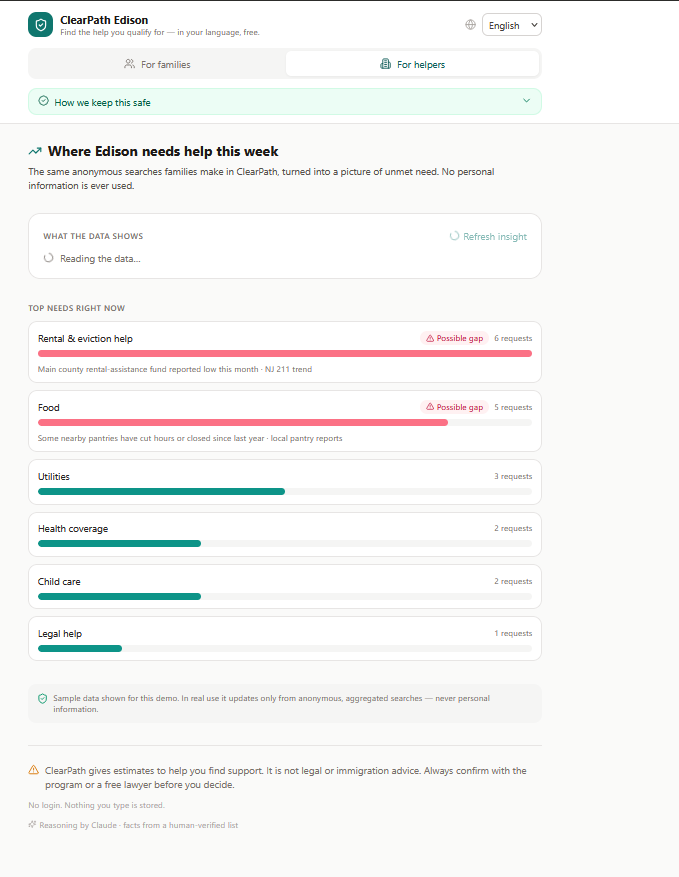
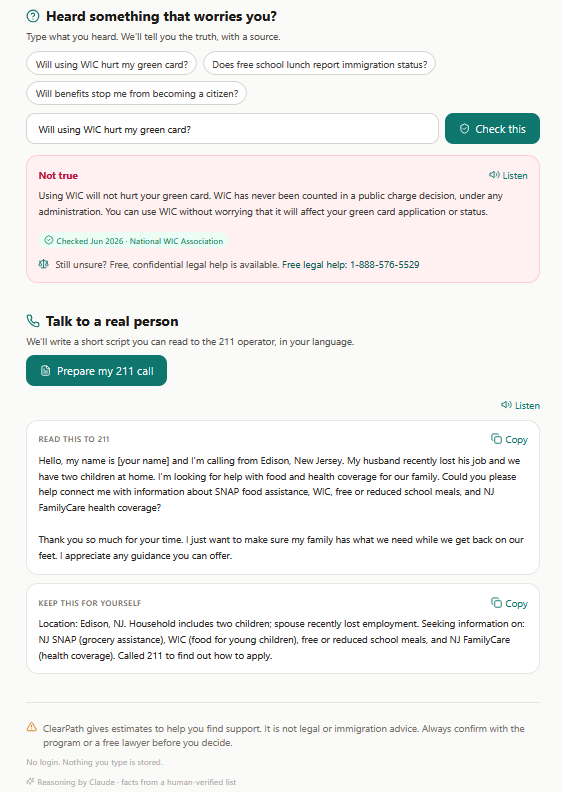
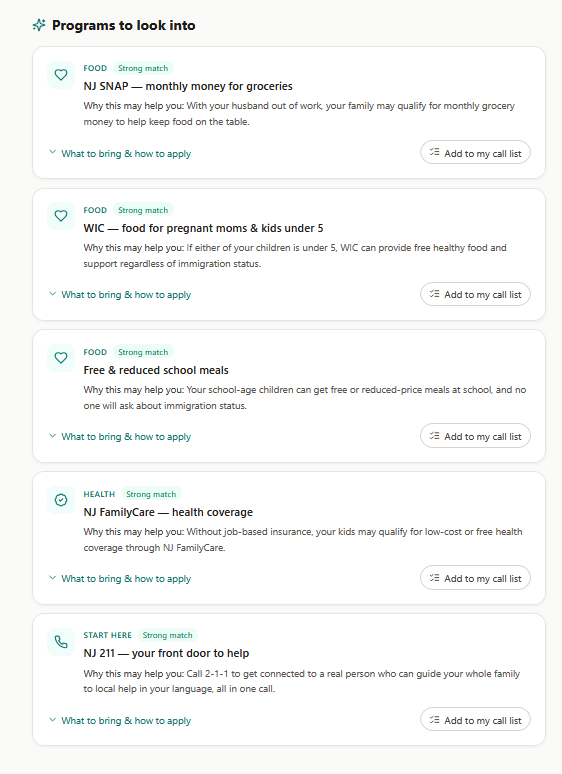
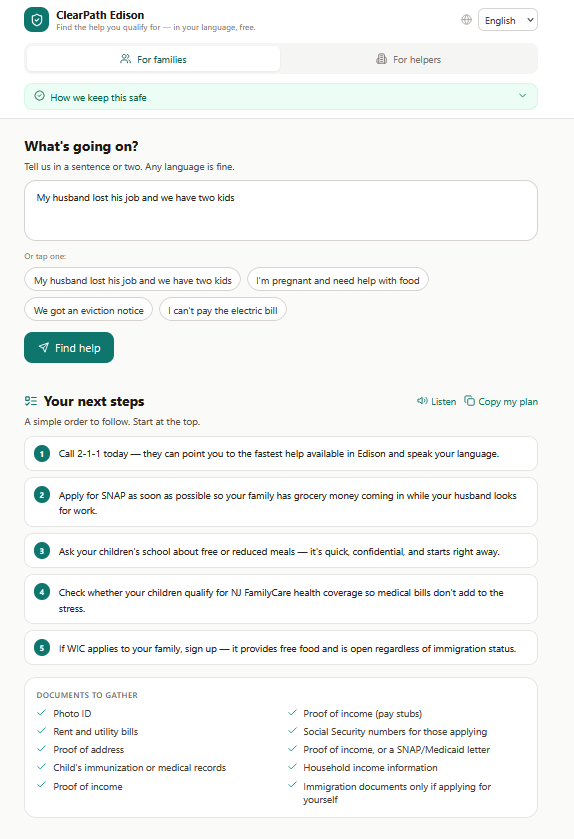
ClearPath Edison is a free, Claude powered web app that helps toward finding community support that immigrant families of Edison and Middlesex County qualify for though their own language. This can include food, utilities, health coverage, and school meals available for them. For example, a parent describes their situation in the text box ("my husband lost his job and we have two kids"), which Claude AI will analyze analyze and return a prioritized action plan, a combined document checklist, the specific programs they likely are eligible for (who is it for, how to apply, exact verified contact and checked date+source), and a rumor verifier that answers fears like "will WIC be bad for my green card?" with truthful sources. It can read the plan and answers out loud, and it writes a short script they can read to a 211 operator. Additionally, there is a whole another section for helpers which takes the same anonymous requests from the people in need into a dashboard that shows the top needs in Edison plus Claude-AI driven insights along with recommendations on where to direct help for those in need.
How we built it
We built ClearPath as a React AP (with HTML, CSS< and JavaScript) that calls Claude through Anthropic's APL. We Vibe coded it with Claude by using its Sonnet 4.6 model to power the app and the Opus 4.8 to help us build and research, as we we steered every decision the AI model took: we designed the anti-hallucination approach, curated the human-verified list of programs and rumor corrections the app pulls the facts from, and shaped the four language + helpers/families tabs. Claude did most of the code, we were there to guide it and take decisions on its behalf, while ensuring facts were real.
Challenges we ran into
A challenge we ran into was stopping the AI engine from inventing/hallucinating facts that a vulnerable family wouldn't realize is wrong before acting on it. We also faced the issue of figuring out how to install the web-speech API into the app. Another challenge was getting the AI to understand what we envisioned and getting it down to the last detail, and getting the interface to be compatible for the other four language that we curated to help the Edison population.
Accomplishments that we're proud of
we are proud of creating an anti-hallucination feature that keeps a human in control of the AI, and of building a simple, easy to follow interface for the families in need. Most of all, we're proud that we built for both sides of the problem: the family gets the advice they need and the helper side aids in showing organizations where Edison needs help the most.
What we learned
The hardest part of help being hard to find isn't finding the information or organizations, but rather the lack of compatible languages along with lack of knowledge on how to approach the issue at hand. We also learned how AI is at its strongest when it does the reasoning, and at its weakest when its trusted in producing hard facts, which is why we have every hard fact come from a verified source.
What's next for ClearPath Edison
We will work toward expanding the verified program list with local nonprofits, adding more languages, and pushing the helper dashboard to real Edison community organizations or the township.
Built With
- anthropic-claude
- claude-opus-4.8
- claude-sonnet-4.6
- curated-dataset
- html
- javascript
- lucide-react
- react
- tailwind-css
- web-speech-api


Log in or sign up for Devpost to join the conversation.