-
-
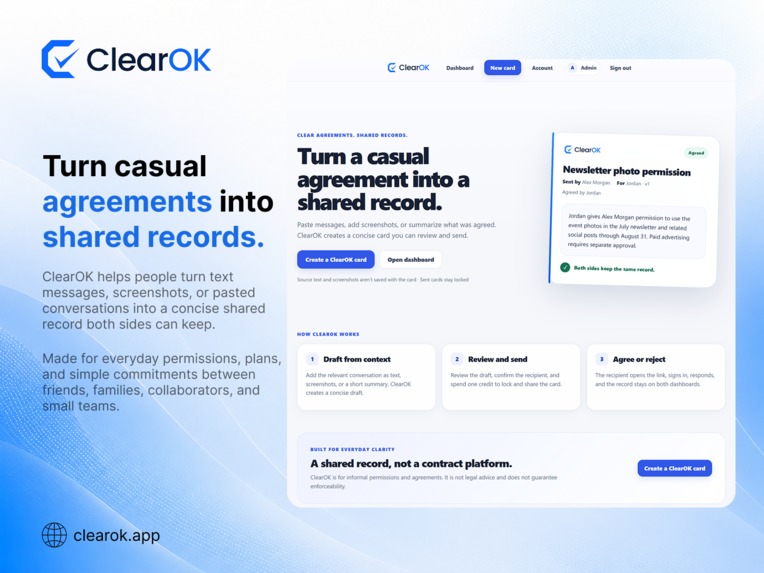
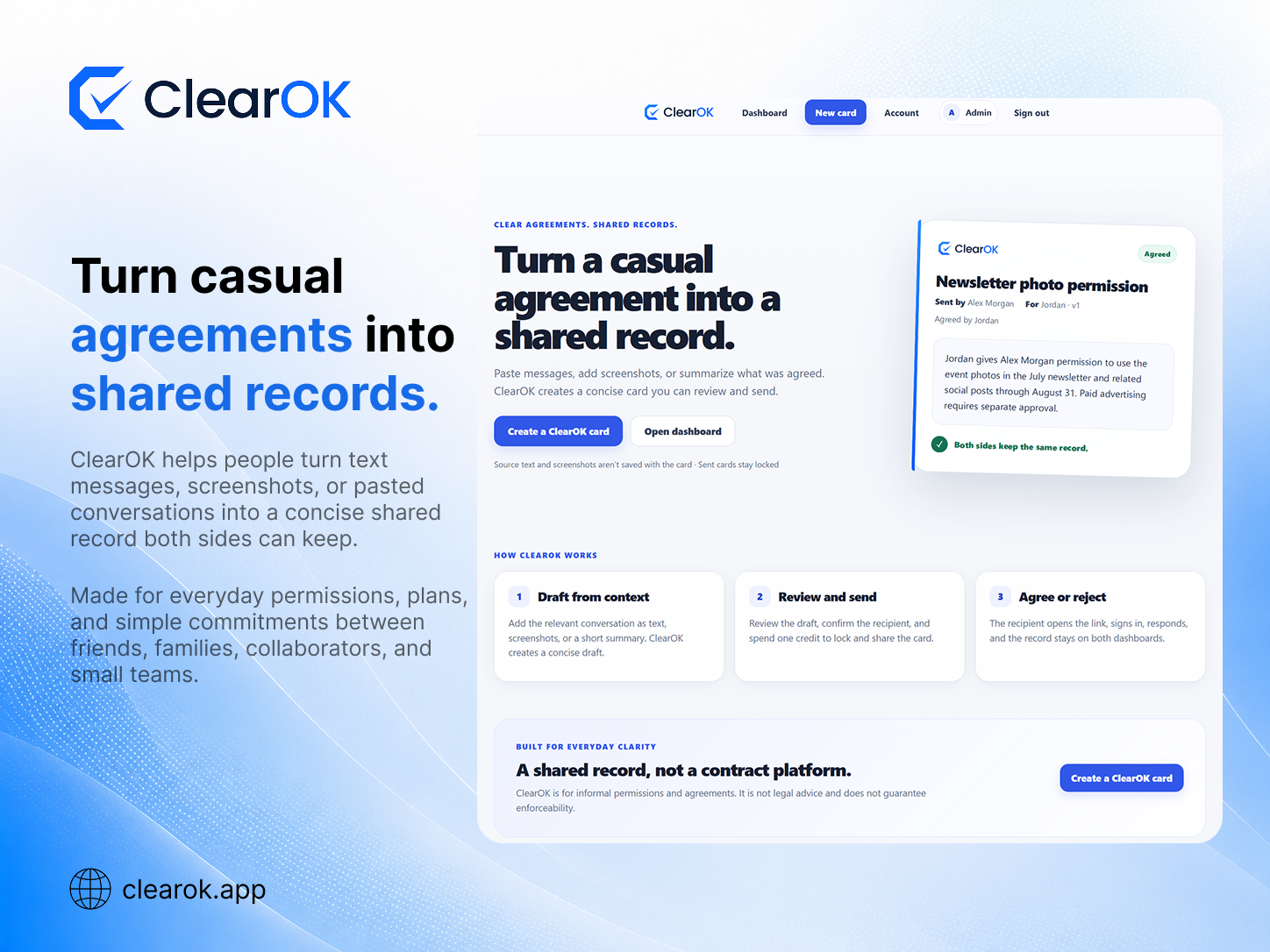
ClearOK turns everyday agreements into shared records both sides can keep.
-
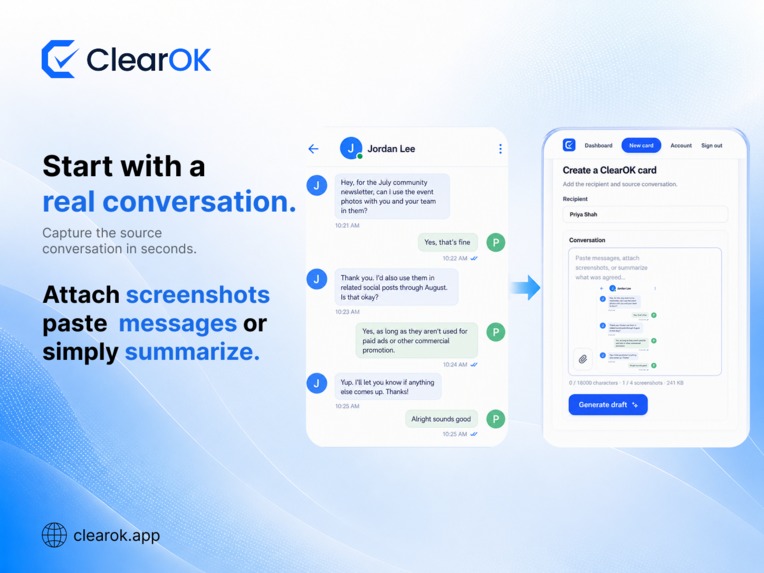
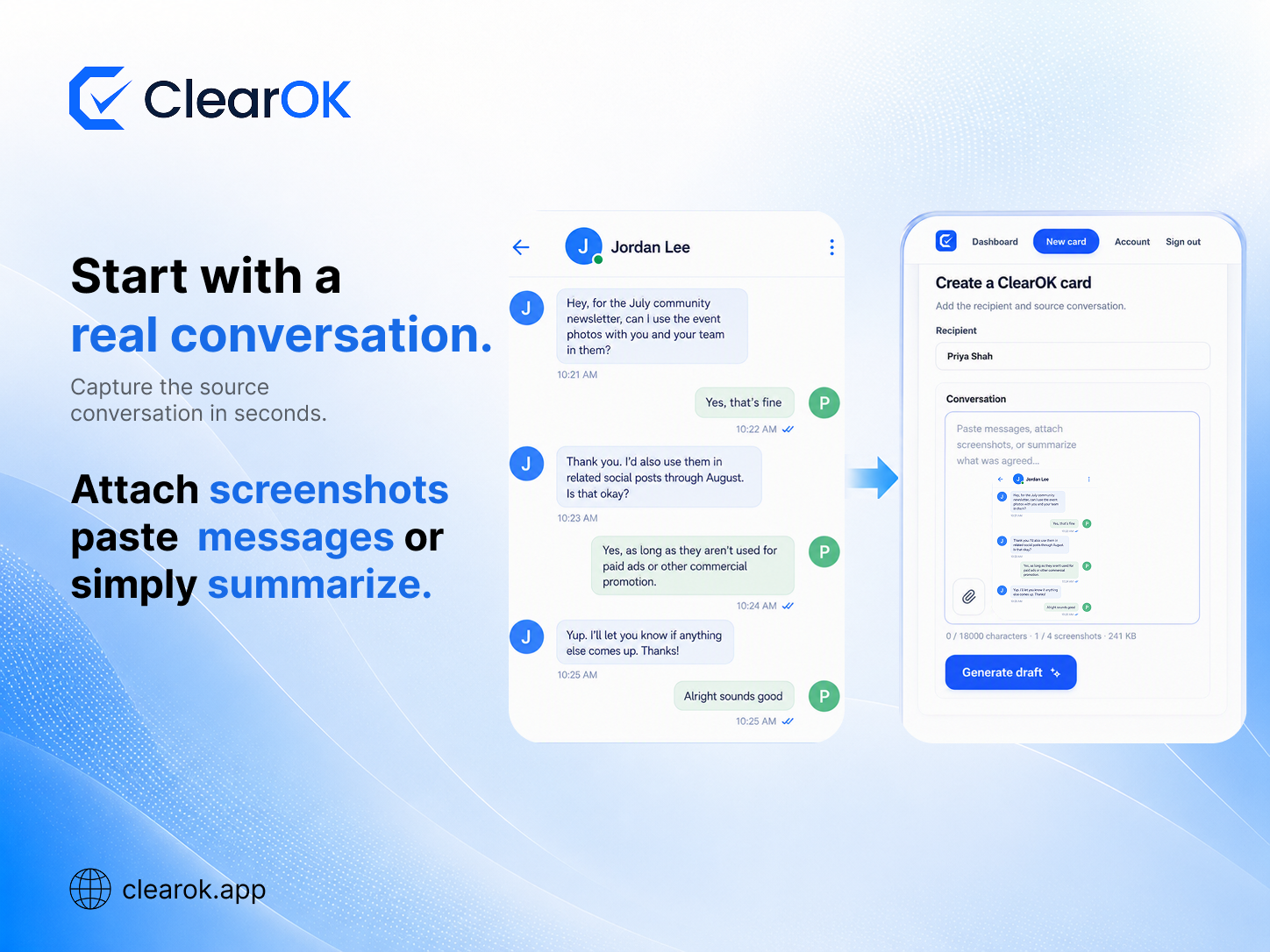
Capture the source conversation by pasting messages, adding a summary, or attaching screenshots.
-
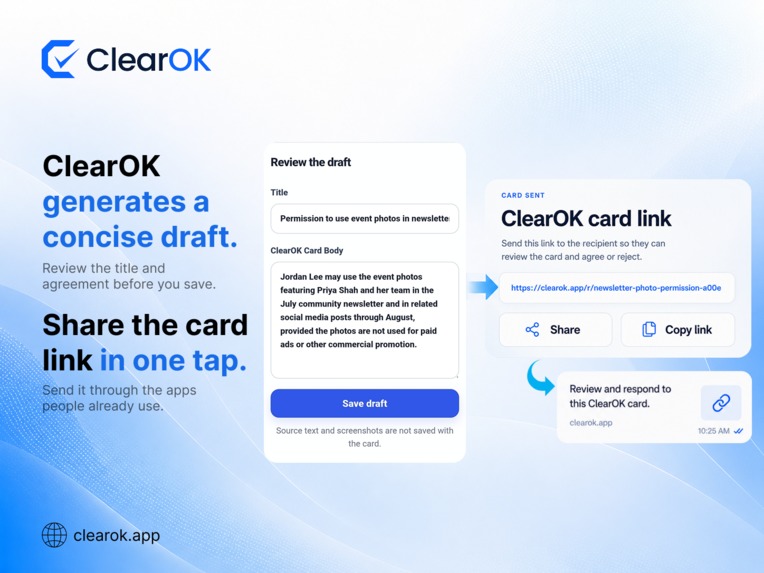
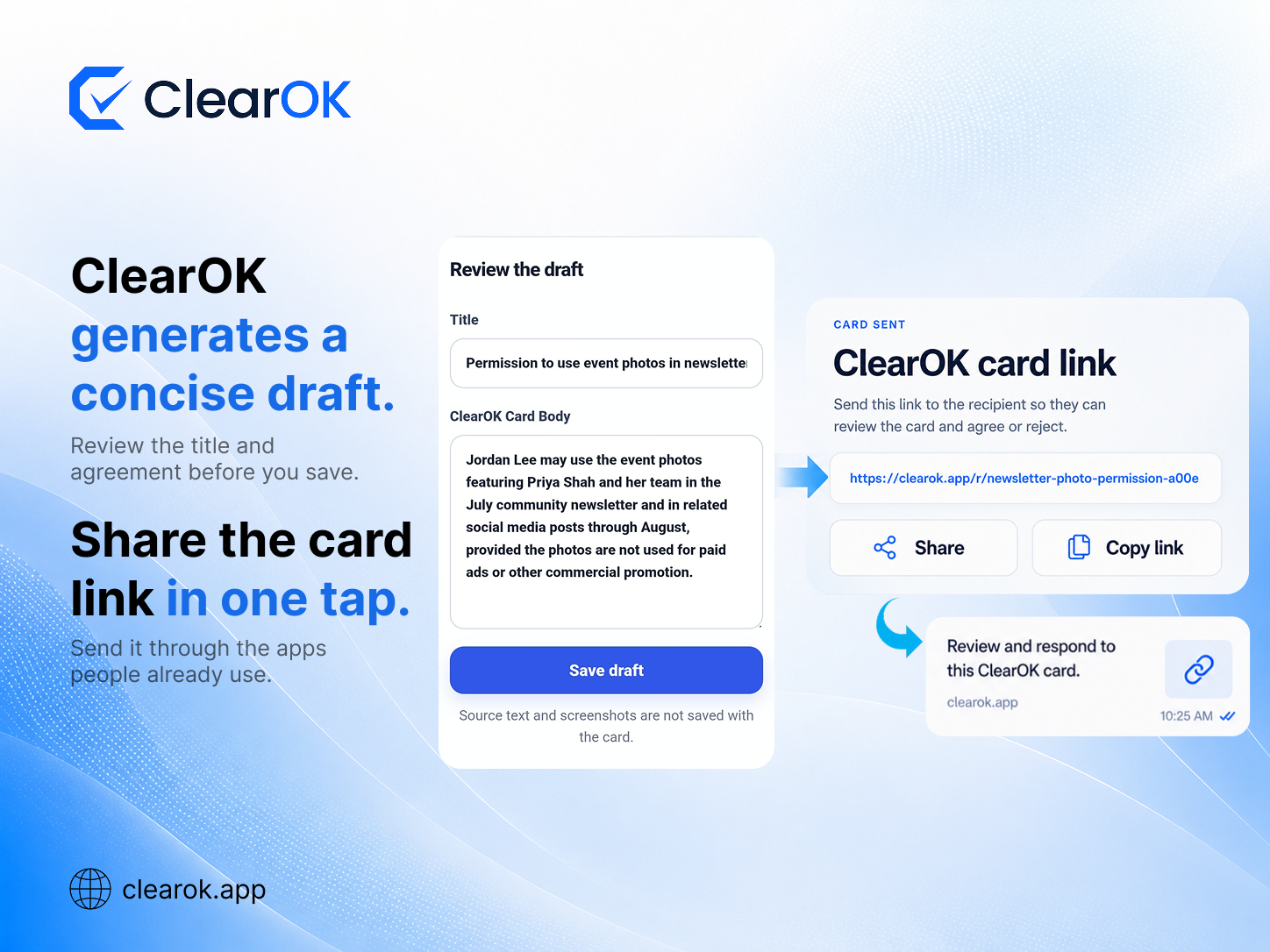
Review the generated draft, then copy or share the ClearOK card link.
-
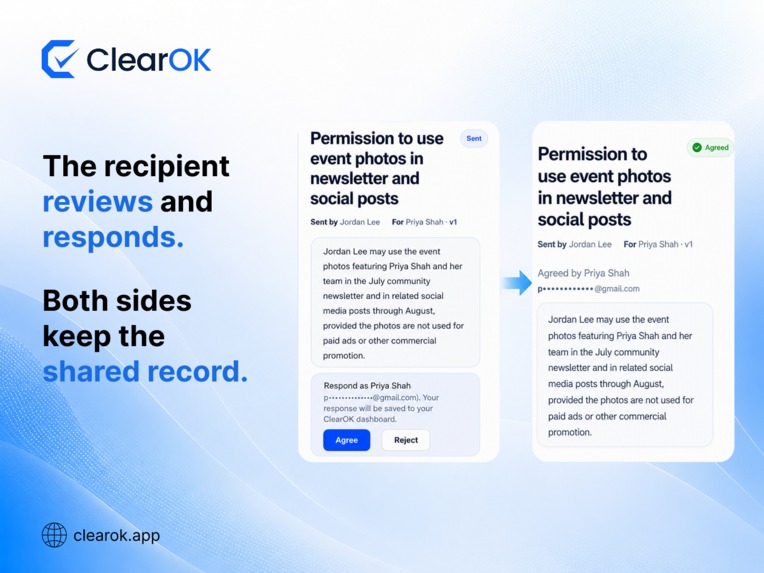
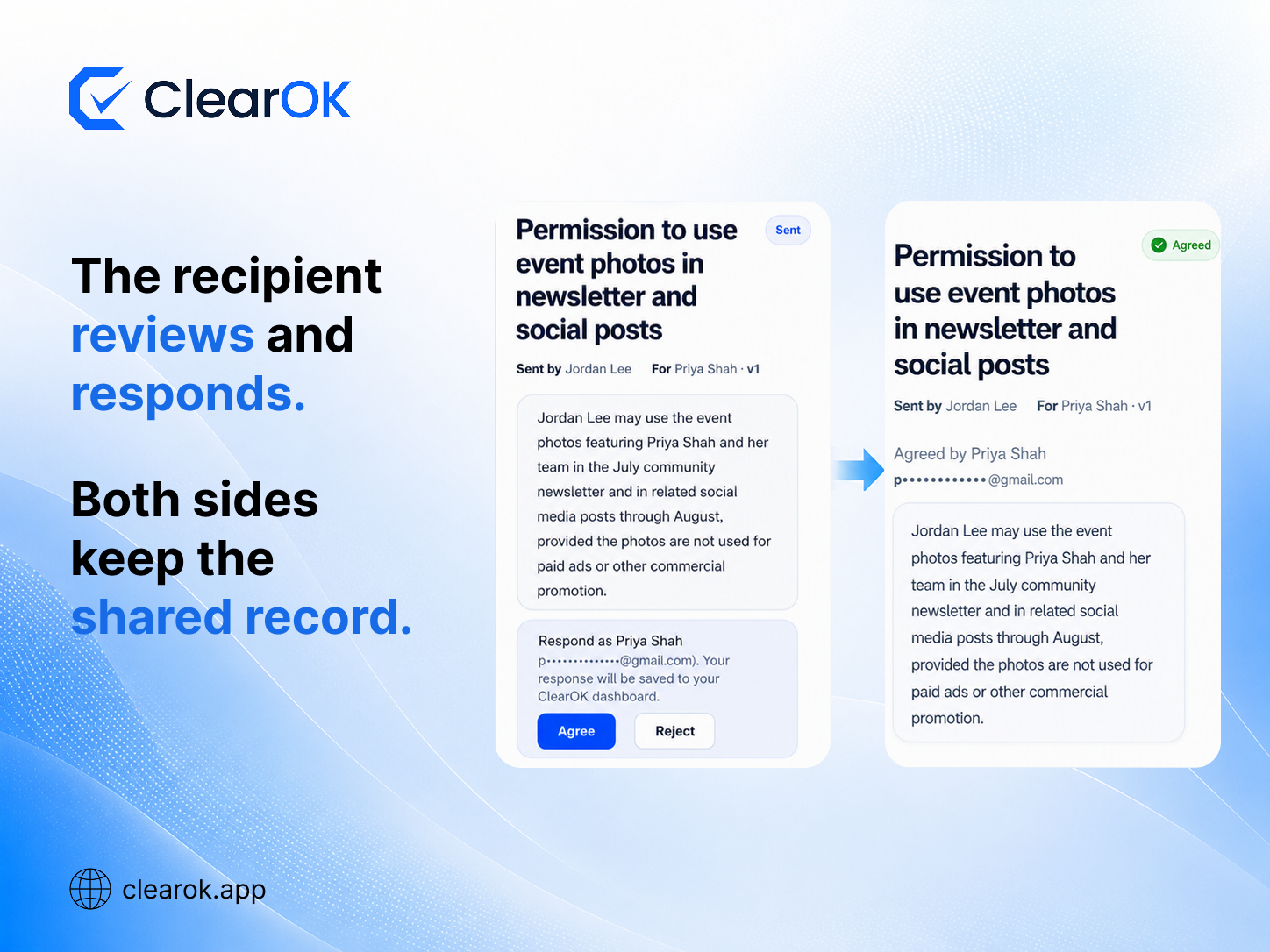
The recipient agrees or rejects, and both sides keep the resulting shared record.
-
ClearOK is live at clearok.app.
Inspiration
People argue about the things they've agreed to in the past. Some agreements happen in text messages, group chats, but mostly verbally. I myself run into this issue with my wife and friends often. The problem is not always reaching an agreement. It is remembering exactly what both people understood afterward.
ClearOK was created for that space between a casual message and a formal contract. Hoping to provide the service to reduce potential messy expensive disputes, as we say, you don't need it until you do. A clear record of agreement could nudge people to respect the agreement before it becomes a thing.
What it does
ClearOK turns ordinary conversations into concise shared records.
A user can paste messages, summarize a conversation, attach up to four screenshots, or combine text and screenshots. ClearOK reads the supplied context and creates a draft that identifies the people involved and the commitment they reached.
The creator reviews and edits the draft before sending it. The recipient then signs in and can agree or reject. Both people retain the same shared record.
ClearOK is designed for everyday situations such as:
- confirming who is bringing something
- clarifying a small change in plans
- recording a freelancer or client approval
- confirming permission or responsibility
- preserving a decision that would otherwise disappear inside a chat
- or simply ridiculous promises made among friends
ClearOK does not present these records as contracts or legal advice. It provides clarity, review, and a shared history.
How we built it
ClearOK is a TypeScript application running on Cloudflare Workers with a D1 database.
Development began on June 27. During Build Week, I used GPT-5.6 Work mode to continue product development, refine the interface, build and polish screenshot intake, evaluate multimodal behavior, and test the application across desktop and mobile.
ClearOK launched publicly on July 15 with live Stripe payments.
After the screenshot-intake experiment was complete, I used Codex with GPT-5.6 to compare the experimental and production repositories, selectively integrate the multimodal functionality, preserve the live OAuth, Stripe, Web Push, D1, credits, and card-lifecycle behavior, validate the production release, and prepare the versioned repository.
The screenshot workflow uses GPT-5 mini. The original text-generation path continues to use GPT-4o mini.
Challenges we ran into
I am not a software engineer, or have any software product launch experience. GPT has been my only paid subscription AI platform and learning how to actually build a software product without any knowledge has been a big challenge. But I've learned things that I didn't know existed through this product.
Another challenge was creating the demo video. Just like building software product, I've never created a video before. It was a learning curve, but now I have more tools under my belt.
Accomplishments that we're proud of
I am proud that ClearOK did not remain a prototype during Build Week.
During the event, it became:
- a publicly launched product
- a functioning paid application with live Stripe purchases
- a complete two-person workflow
- a production Cloudflare deployment
- a multimodal application supporting text, screenshots, or both
- a mobile-friendly sharing experience
The screenshot-intake work was not released as a separate demonstration. It was integrated into the same live product at clearok.app.
ClearOK now supports:
- text-only input
- screenshot-only input
- combined text and screenshots
- mobile attachment and sharing flows
- user review before sending
- two-sided response and shared record retention
But the biggest win is that I have actually launched a product. Whether ClearOK would become a normal behavior for people or not is unknown, but I'm just happy that I've created and published something.
What we learned
Multimodal input is not just a matter of adding images to a model request. The relationship between sources must be designed explicitly.
Labels such as “optional context,” content ordering, and source placement can significantly change what the model considers important. Reliable combined-source generation required clear source roles and explicit rules for compatible, irrelevant, and contradictory information.
I also learned that product trust depends on what happens before and after the model call. ClearOK keeps the user responsible for reviewing the draft, does not automatically send generated content, and does not present AI output as legal truth.
Finally, integrating a feature into an existing live product is a different challenge from building an isolated prototype. Preserving production behavior was as important as adding the new functionality.
What's next for ClearOK
The next phase is distribution and learning from real use.
Planned work includes:
- public use-case pages
- privacy-conscious activation analytics
- improved social-link previews
- introductory recipient-to-creator credits
- scenario-based promotional content
- clearer discovery for freelancers, families, creators, and small groups
The broader goal is to learn which everyday moments most benefit from a shared ClearOK record.
Built With
- api
- cloudflare
- codex
- google-oauth
- gpt-5.6
- openai
- stripe
- typescript

Log in or sign up for Devpost to join the conversation.