-
-
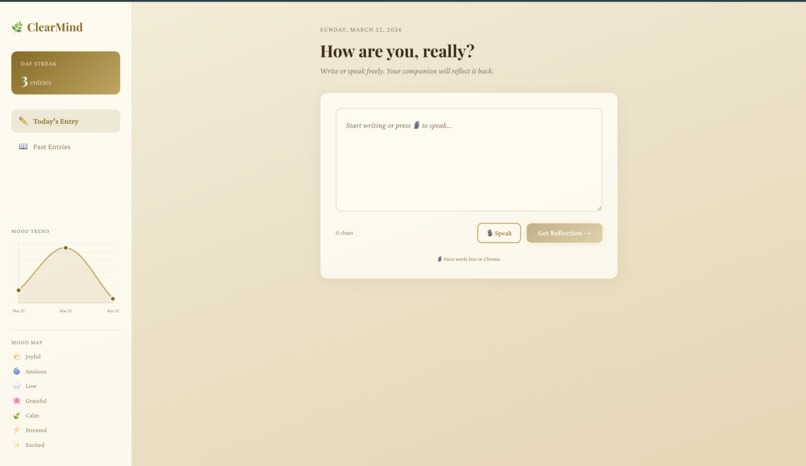
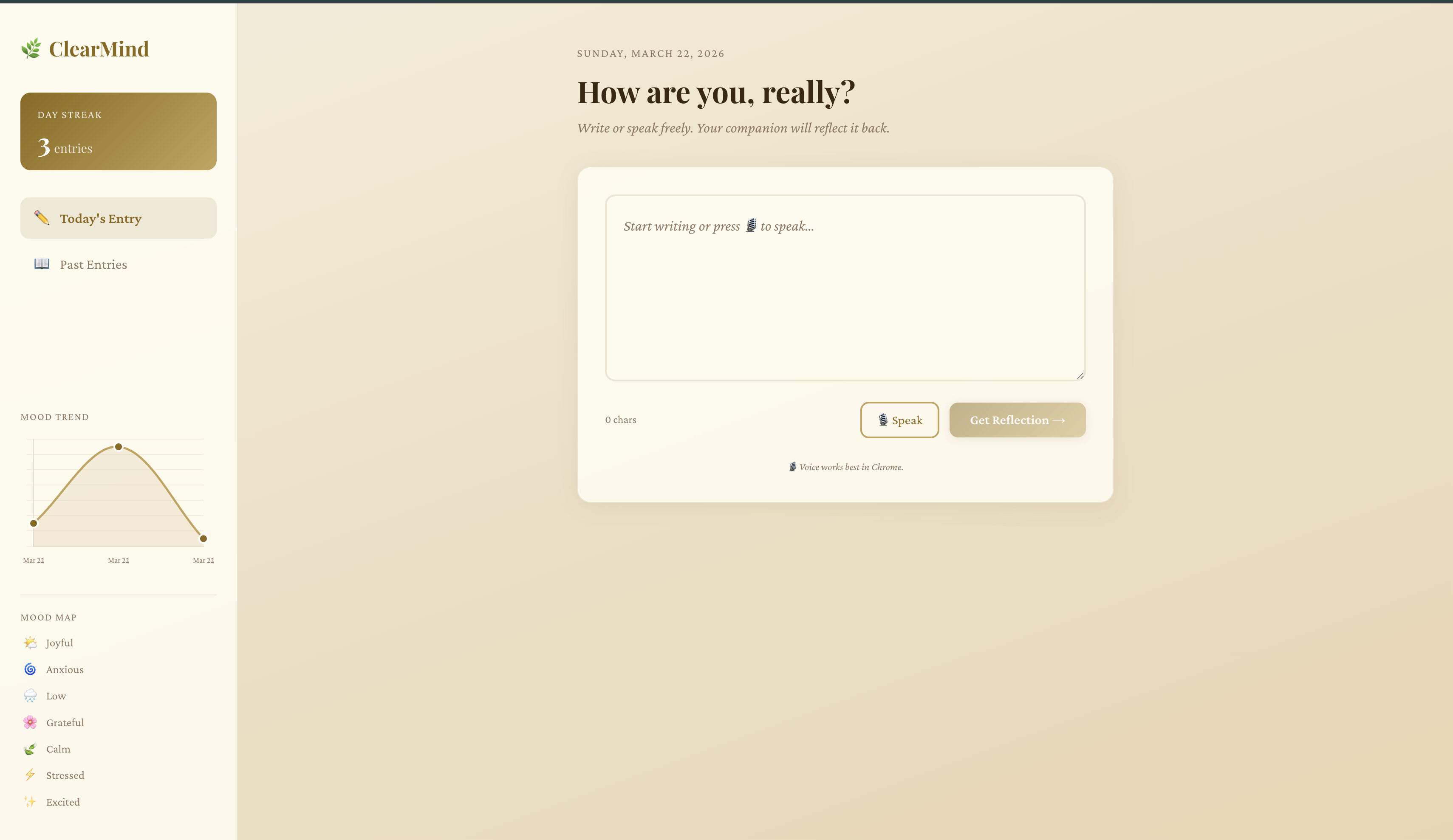
Home Page
-
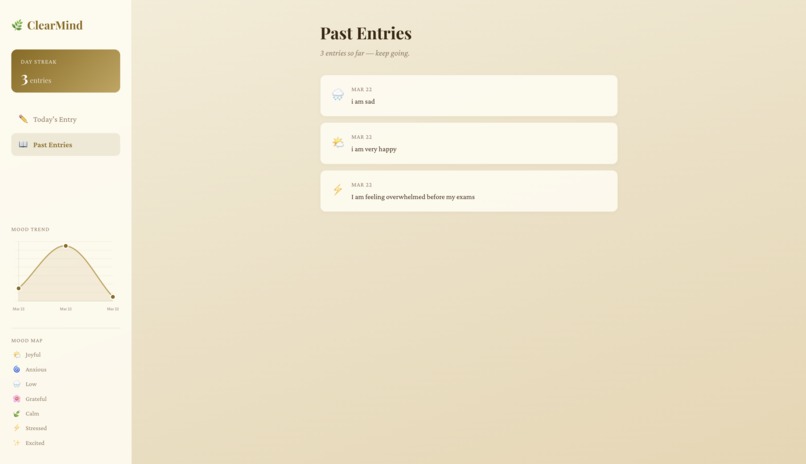
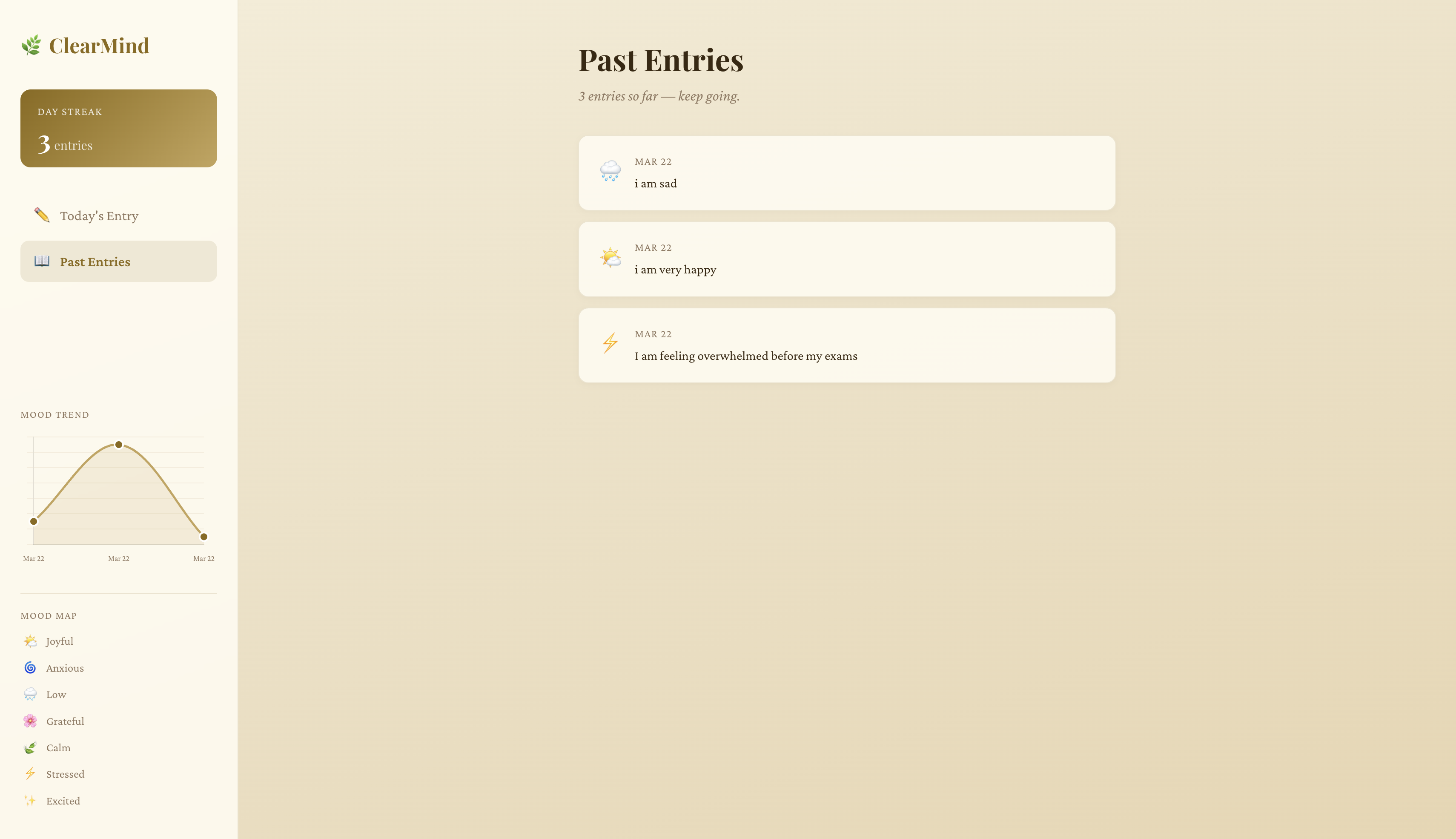
Past Entries
-
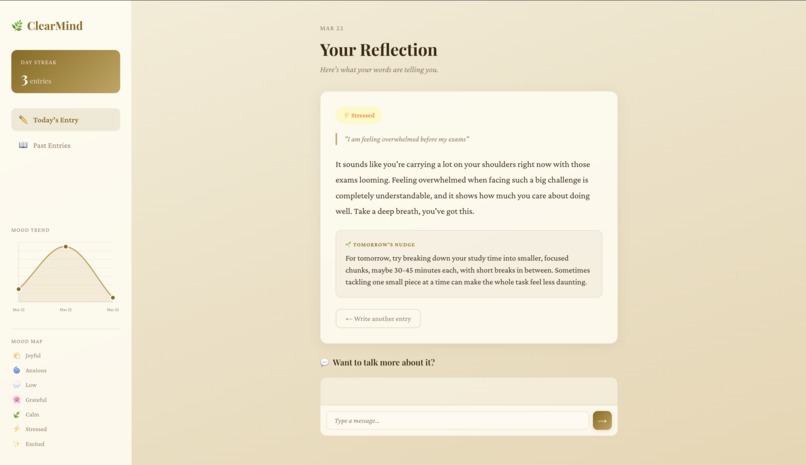
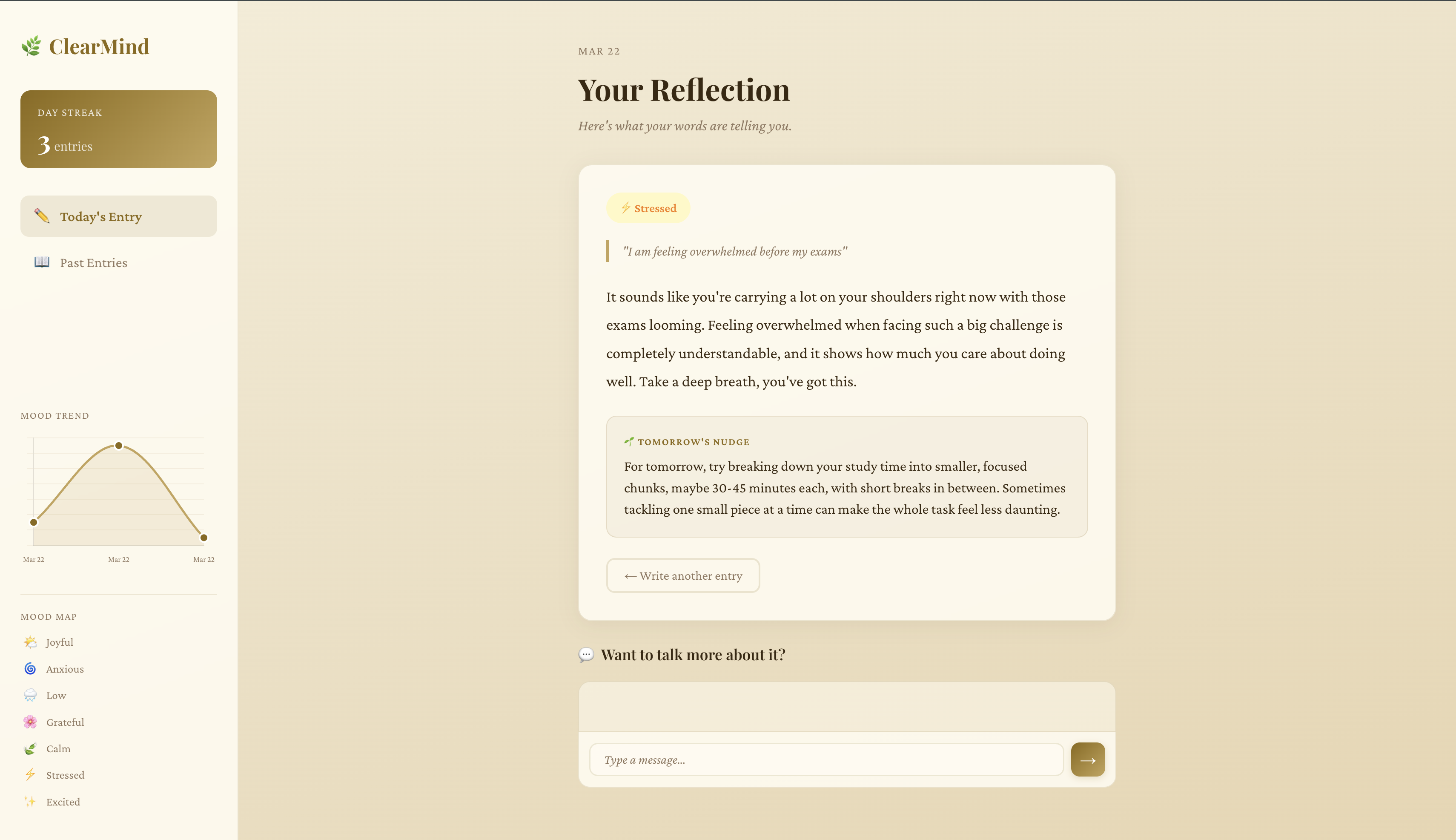
Entry Evaluation
-
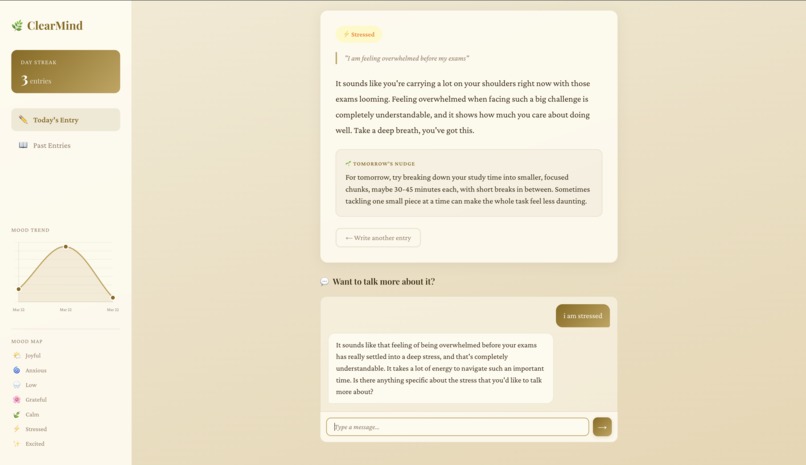
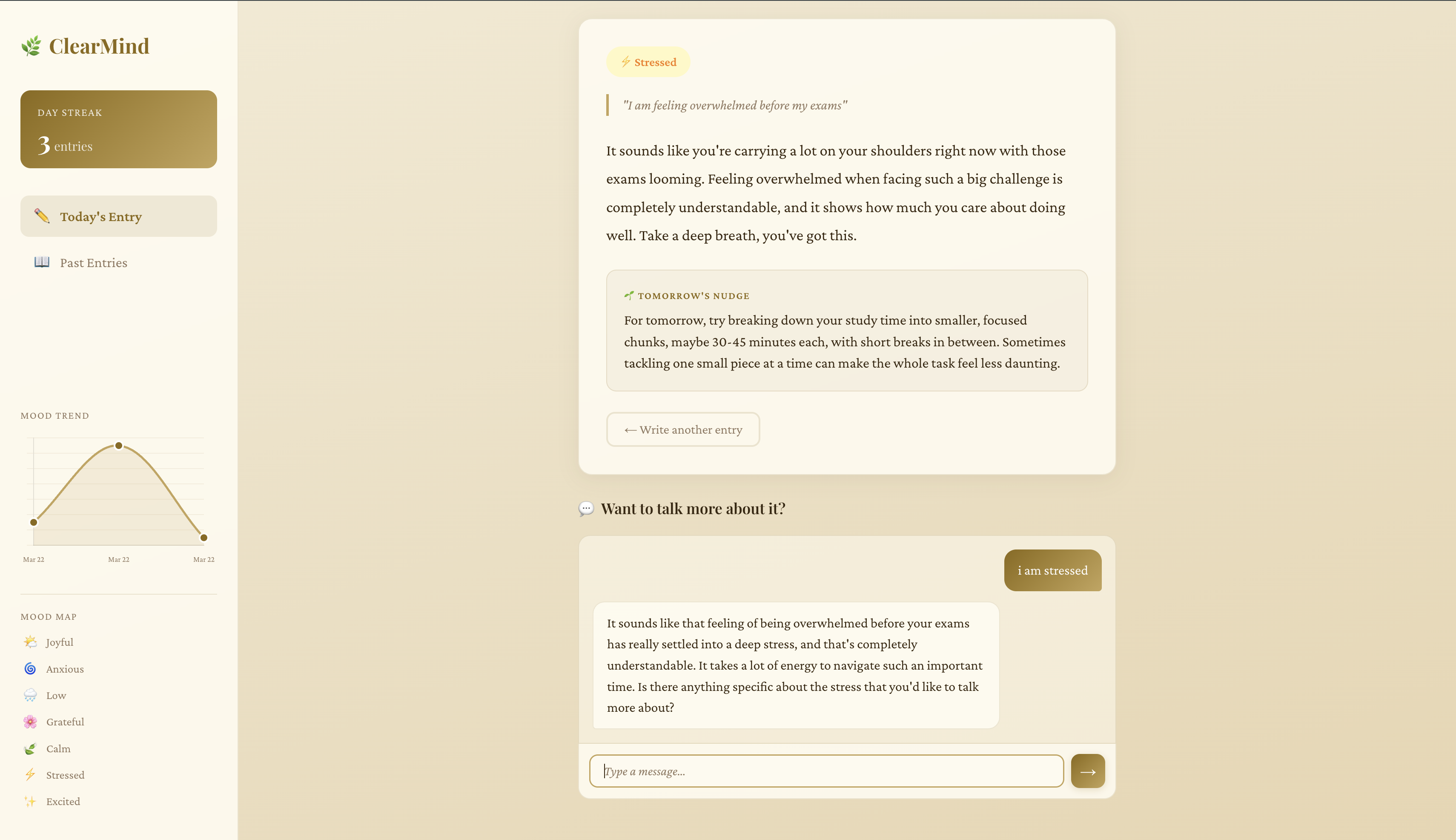
AI Response
Inspiration
Growing up in India, I watched people around me silently struggle with stress, anxiety, and burnout, especially students. Mental health support is either too expensive, too stigmatised, or simply not available. Most people have no outlet at all. I wanted to build something that anyone could access at 2am when they're overwhelmed and have no one to talk to. The idea was simple: what if technology could just listen?
What it does
ClearMind is an AI-powered journaling companion built for students. You write or speak freely about how you're feeling, and the AI responds with a genuinely personalised mood reading, a warm reflection, and one small actionable nudge for tomorrow. Beyond the initial reflection, you can continue the conversation through a built-in follow-up chat where the AI remembers your full entry and responds like a thoughtful friend. ClearMind also detects signs of serious distress and quietly surfaces verified Indian mental health helplines (iCall, Vandrevala Foundation) before showing the reflection. A mood trend chart tracks emotional patterns over time so users can see themselves improving.
How I built it
Built entirely solo as a vanilla HTML, CSS, and JavaScript app, no frameworks, no backend. The AI reflection and chat engine runs through the Gemini/OpenAI API, with a carefully engineered system prompt that handles mood classification, empathetic response generation, and crisis detection simultaneously. Voice journaling uses the browser's built-in Web Speech API. Mood history and past entries are stored in localStorage. The mood trend chart uses Chart.js loaded via CDN. The whole app is deployed on Vercel as a static site, zero infrastructure cost.
Challenges I ran into
The hardest part was getting the AI to feel genuinely warm rather than clinical. Generic mental health responses can feel cold or patronising, so I iterated heavily on the system prompt to strike the right tone. Handling crisis detection responsibly was also a challenge, I needed it to be sensitive enough to catch real distress signals without false-flagging normal sadness. Structuring the API response as JSON so mood, reflection, and tip could each render separately, while keeping the conversational tone intact, took multiple rounds of prompt engineering.
Accomplishments that I'm proud of
Shipping a fully functional, live, AI-powered mental health tool completely solo in under 24 hours. The crisis detection feature in particular feels meaningful, it's a small thing technically, but it could genuinely matter to someone having a really bad night. The fact that it requires no account, no download, and no money to use means the barrier to access is essentially zero.
What I learned
Prompt engineering is product design. The difference between a response that feels robotic and one that feels human comes down to how carefully you craft the system prompt. I also learned that responsible AI isn't an afterthought, building the crisis detection and helpline integration early shaped how the entire product feels. And honestly, I learned that you can build something genuinely useful and meaningful completely solo, faster than you'd expect.
What's next for ClearMind
Multilingual support — Hindi, Tamil, Bengali, so students across India can journal in their first language. A weekly AI-generated insight report summarising your emotional patterns. Breathing and grounding exercises triggered by specific mood states. And eventually, an optional anonymous community space where users can share entries and support each other. The long-term vision is to make ClearMind the mental health companion for every student who can't afford therapy but deserves to be heard.

Log in or sign up for Devpost to join the conversation.