
Inspiration
What it does
How we built it## Inspiration
AI assistants now remember things about us, but that memory is a black box. You can't see what they remember, fix it when it's wrong, or control which agent reads what. Old facts quietly come back, and nothing tells you where a "memory" came from. I wanted a personal memory layer you can see, correct and trust.
What it does
Clearmind keeps your world as versioned, sourced memories and entities, and learns as you use it.
- Versioned memory. A correction replaces the old version. The old version is kept as history, but recall only returns the current one, so stale facts can't come back.
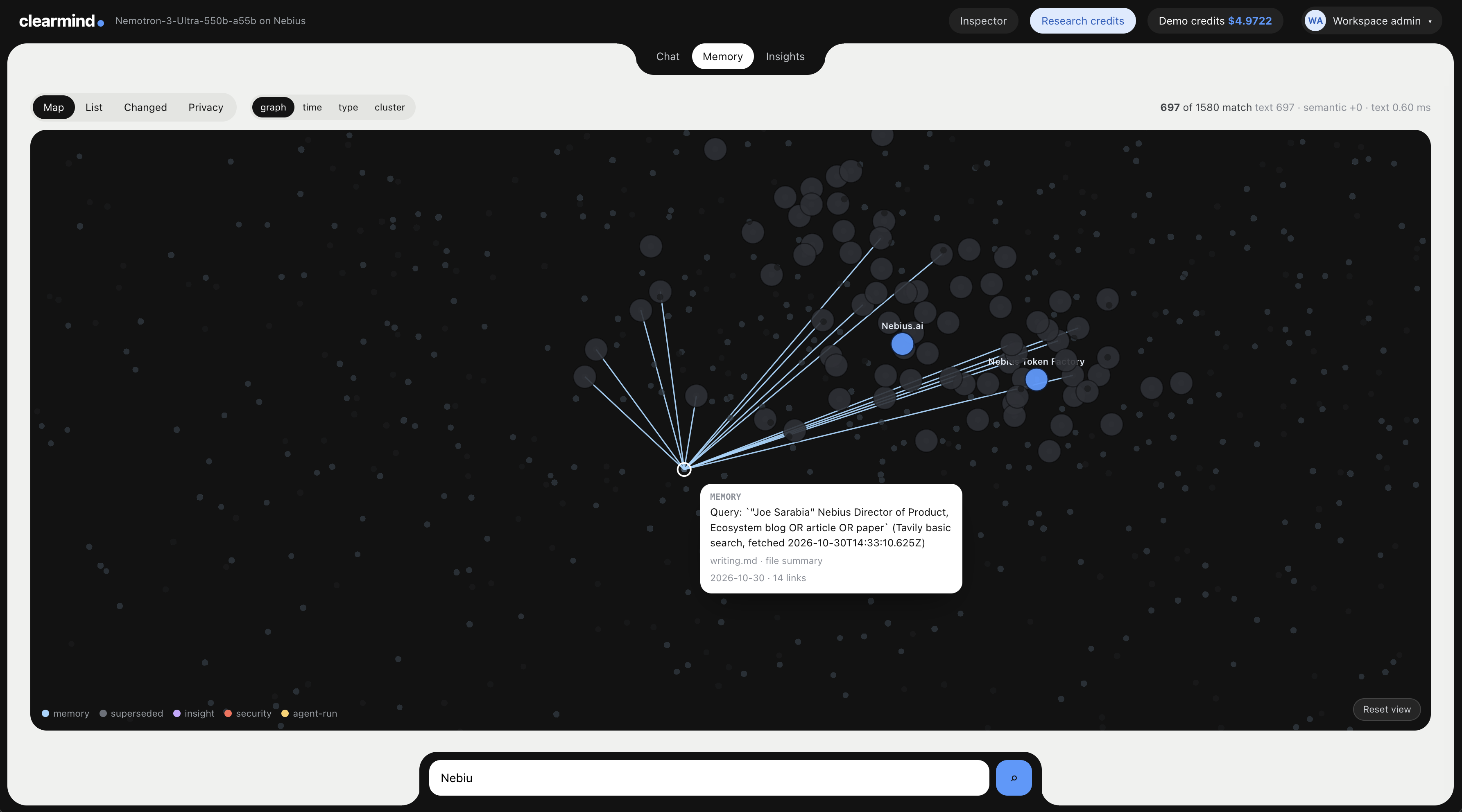
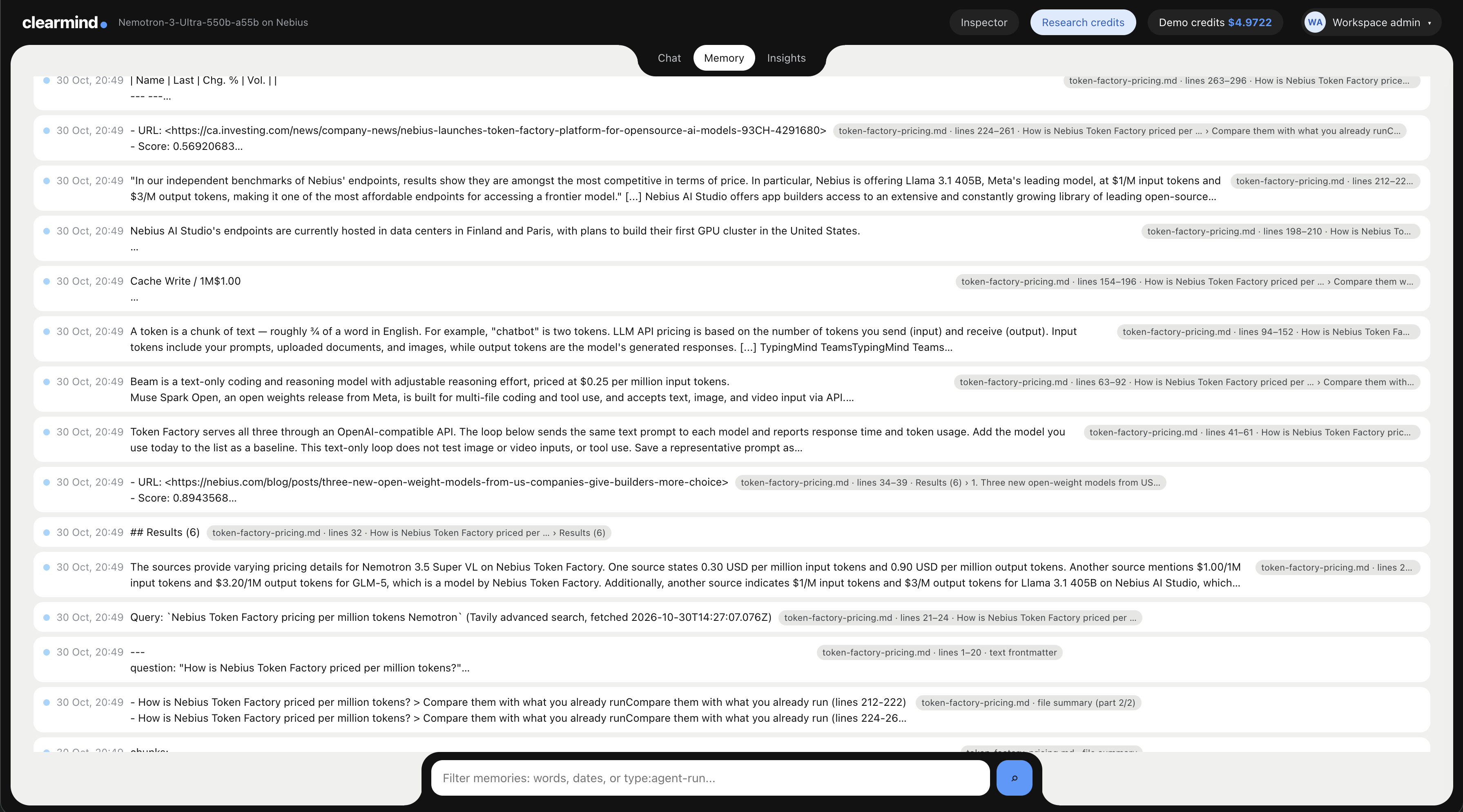
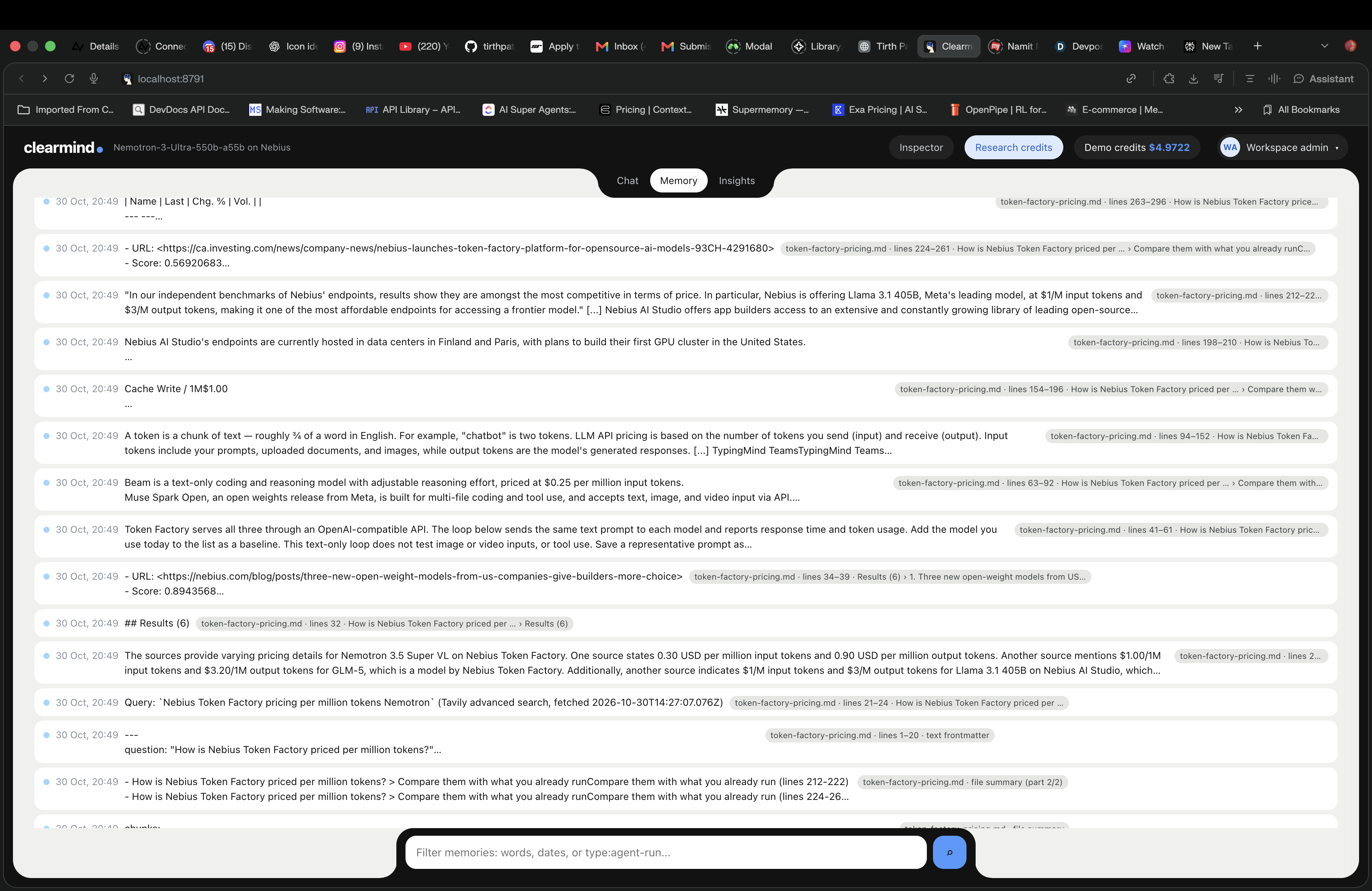
- Sourced. Every memory records where it came from, when it was learned, its confidence, and the models that processed it.
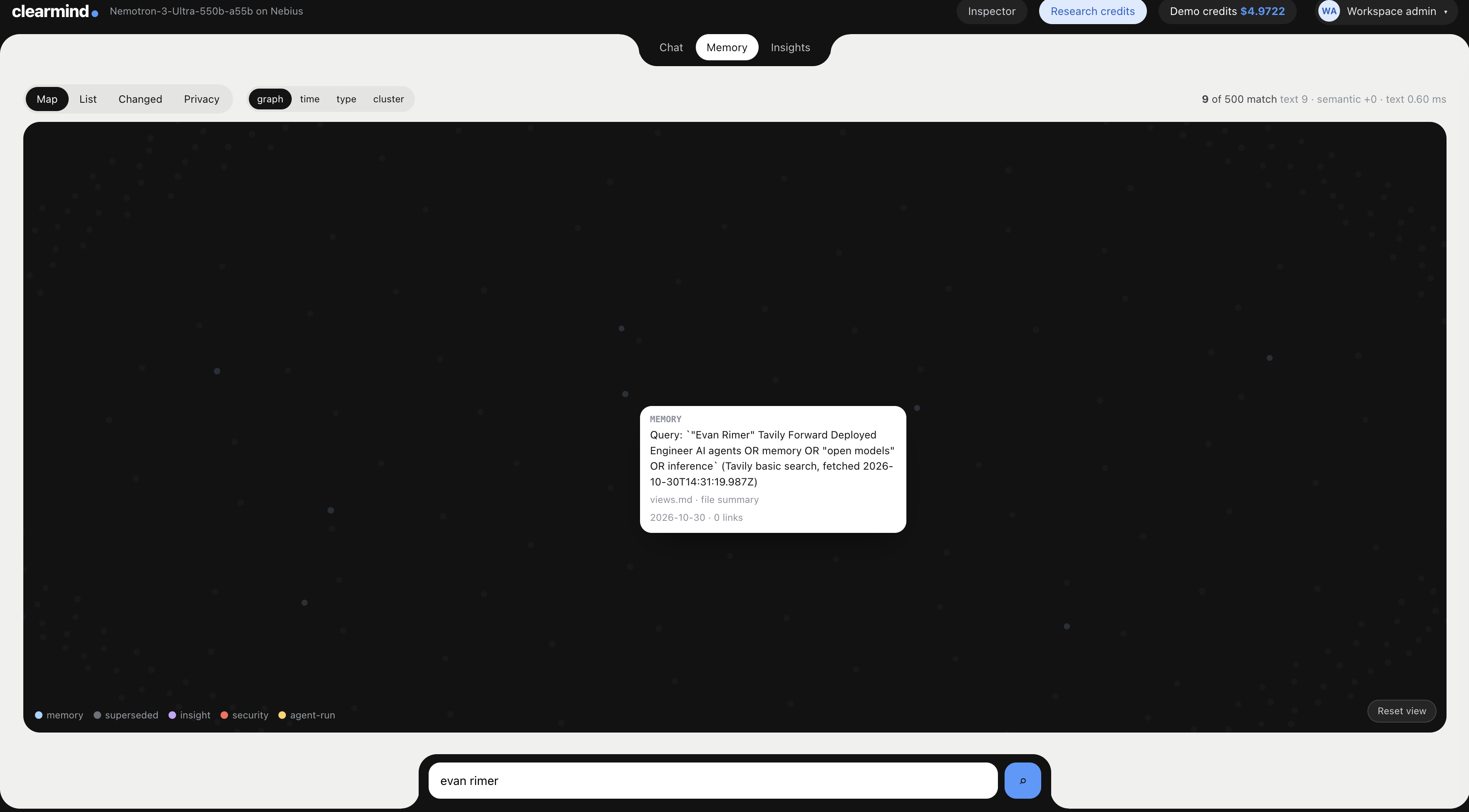
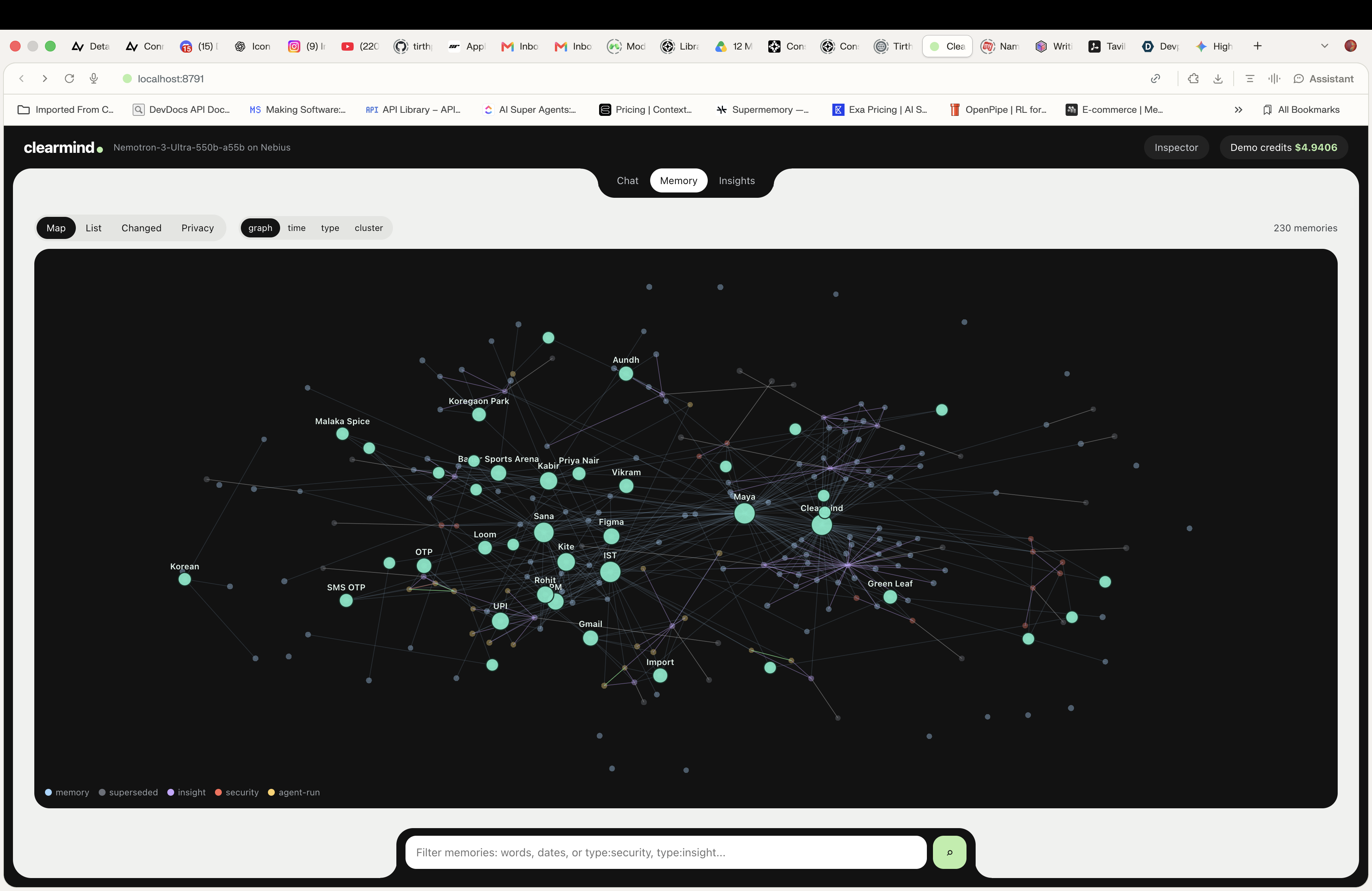
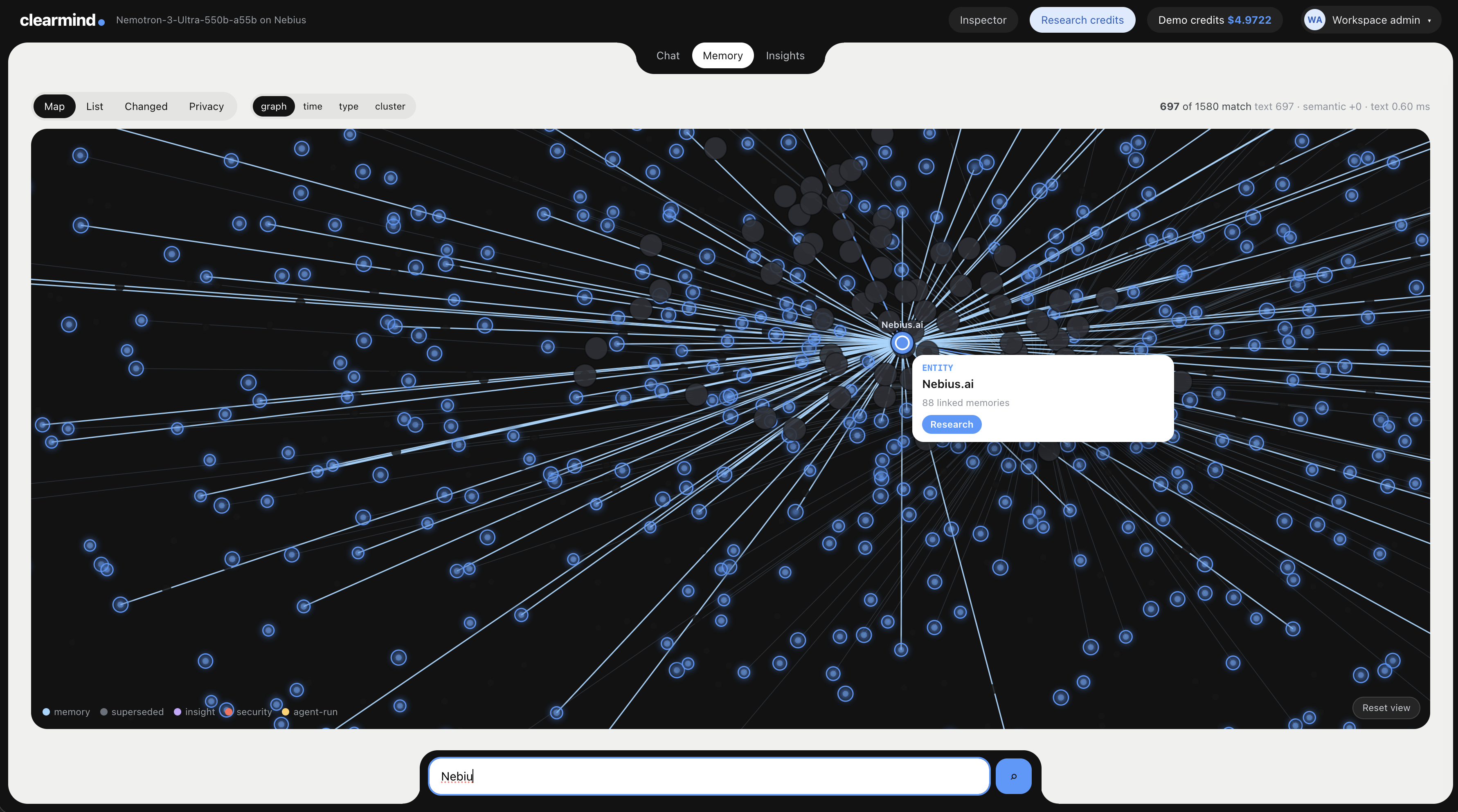
- Entities. People, organizations, products and code symbols are extracted into a linked entity store, so you can browse who and what your memory is about on an interactive memory map.
- Learns. It spots conflicts (two different flight times), patterns (repeated facts over days, shown with evidence) and agent lessons distilled by Nemotron from failed agent runs. Confidence rises when you confirm a fact and decays over time.
- Private by design. Multi-tenant workspace: every memory and entity has an owner and visibility, each user sees only what they're allowed to, and agents read only through consented, purpose-bound, revocable grants with every access logged.
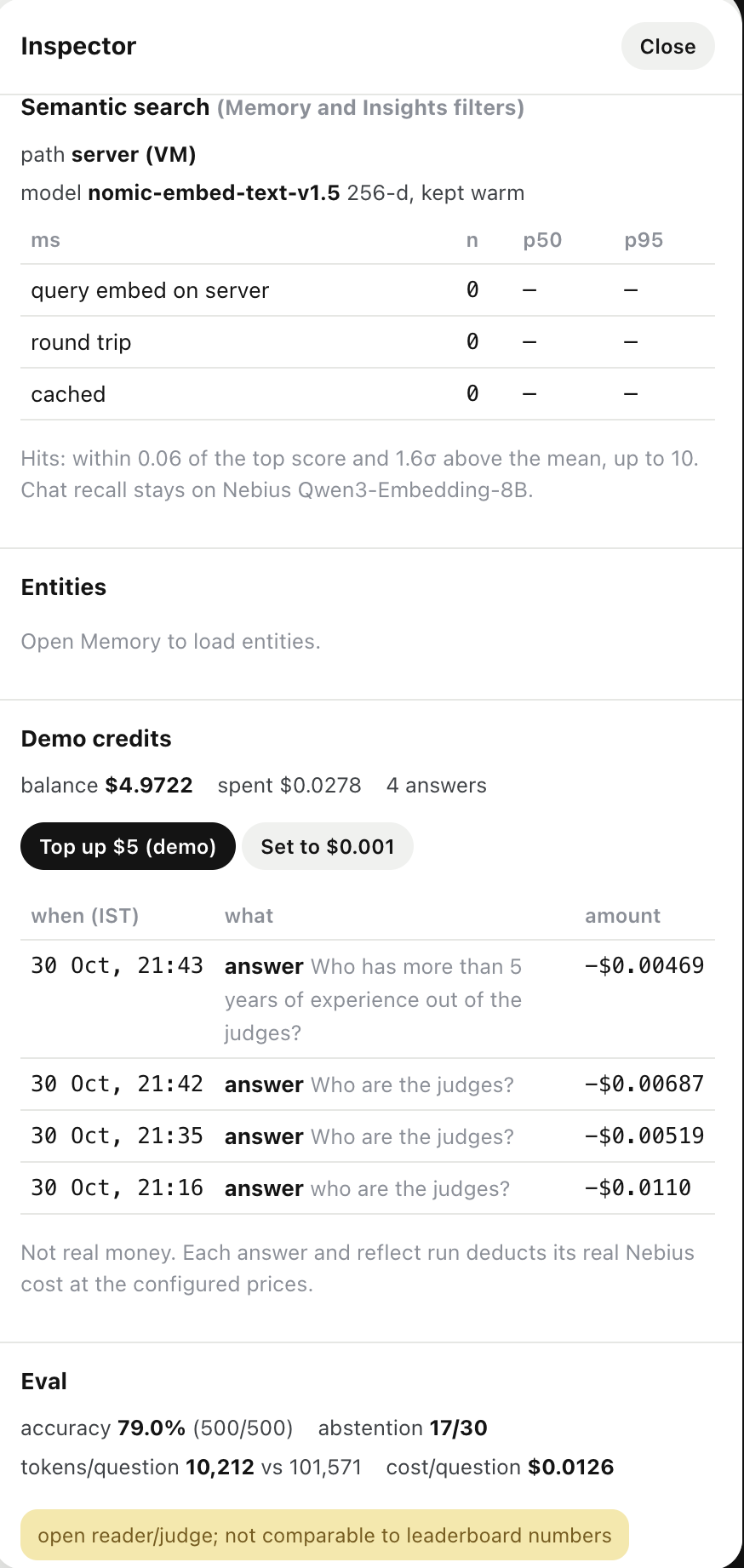
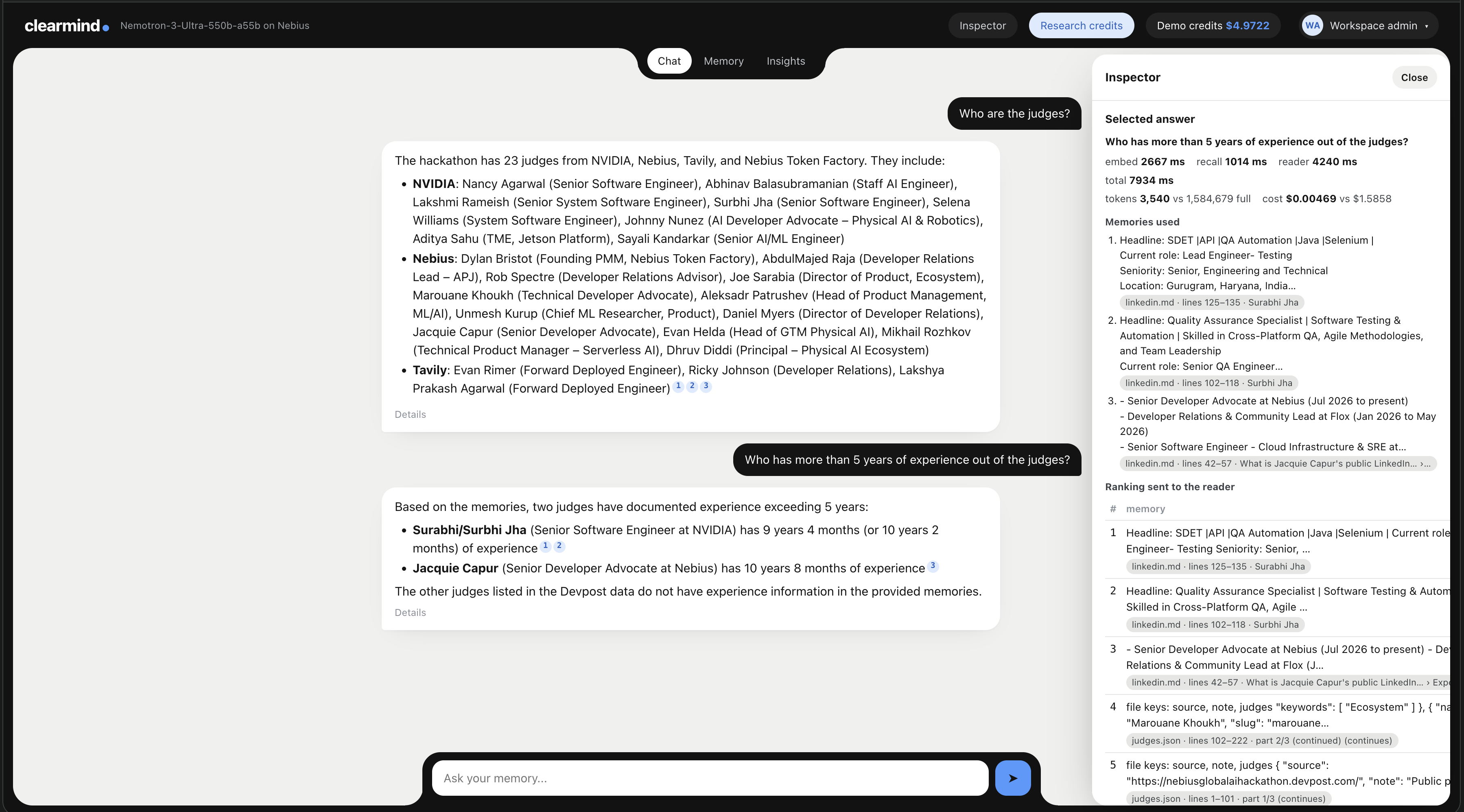
- Answers with Nemotron. Questions are answered by NVIDIA Nemotron on Nebius Token Factory, strictly from memories the user is allowed to see, with citations, or it says it doesn't know.
- Researches live. When memory can't answer, Clearmind automatically runs a Tavily search, answers with sources, and remembers the results with their links, within per-user and workspace credit limits that are shown in the UI.
The demo workspace contains Clearmind's own codebase (every file, symbol and how they connect) plus public research on the hackathon, its sponsors and its judges. Each judge can sign in as themselves and ask it questions.
How we built it
- TypeScript monorepo: a core memory package on SQLite, a Node server, and a React + Vite app.
- Hybrid recall: Qwen3-Embedding-8B on Nebius Token Factory, cosine similarity blended with BM25 keyword search.
- Reasoning: NVIDIA Nemotron-3-Ultra-550B-A55B on Token Factory through its OpenAI-compatible API, with spend metering and a hard spend cap.
- Code ingest: tree-sitter parses code into context-rich chunks, plus file summaries and directory overviews, so no line of code is lost. Imports, definitions and calls become entity relations.
- Tavily: a seeder researched the judges and sponsors in advance, and live in-chat search fills gaps at runtime.
- Tests: 130+ automated tests covering versioning, privacy rules, tenancy, ingest completeness and research limits.
Challenges
- Making privacy hold everywhere, across recall, search, the map, entities, insights and the API, not just in one screen.
- Ingesting a codebase without losing context. Naive chunking dropped top-level code and cut long functions, so we rebuilt it so that every line lands in a chunk, verified by a reconstruction test.
- Scaling: once the workspace grew to about 5,000 memories, some whole-store insight computations became too slow and had to be capped and cached.
- Keeping live research useful but bounded with per-user and workspace credit limits, and saying clearly when the limit is reached.
What we learned
Memory people can trust needs versioning, provenance and access control designed in from the start. Retrieval quality matters more than model size, and a strong instruction-following model like Nemotron is what keeps answers grounded and honest.
What's next
Nemotron-powered entity extraction, richer temporal reasoning over memory history, and an SDK so any agent can use Clearmind as its governed memory.

Log in or sign up for Devpost to join the conversation.