-
-
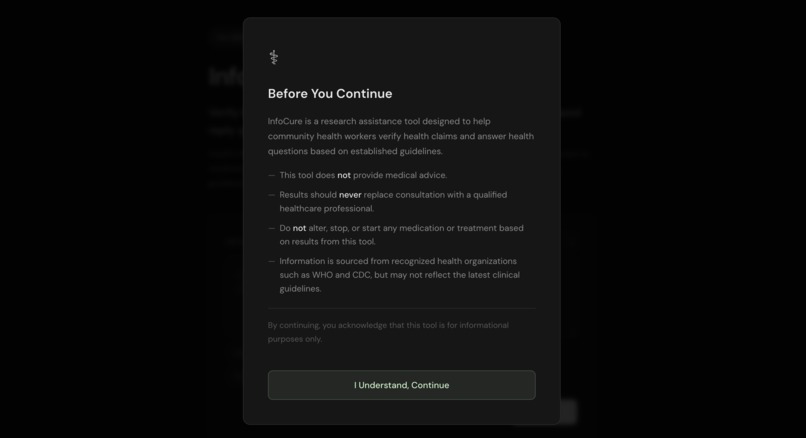
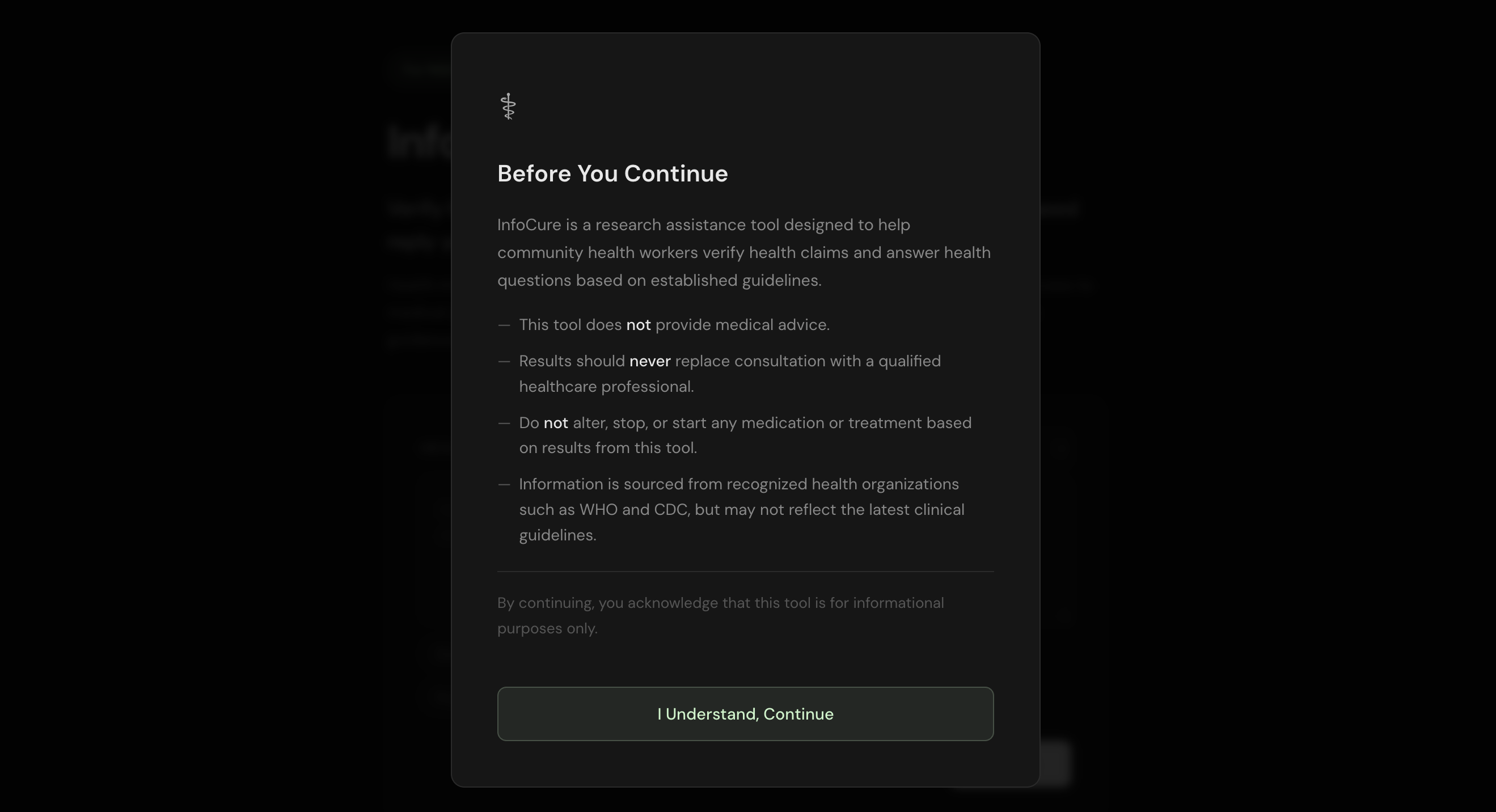
Rules to read before proceeding with InfoCure
-
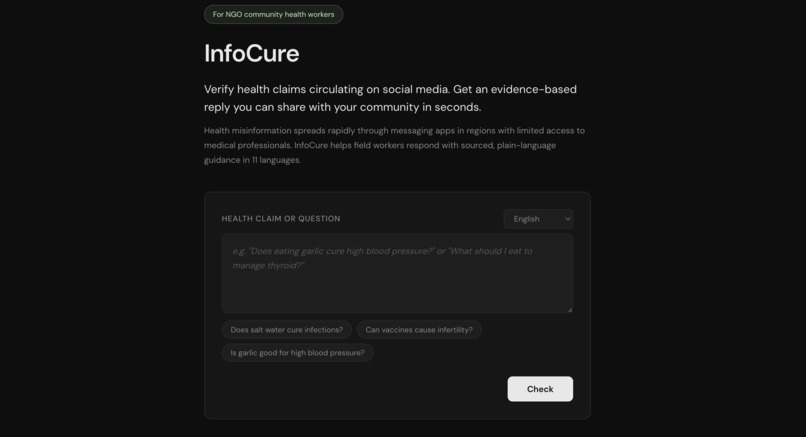
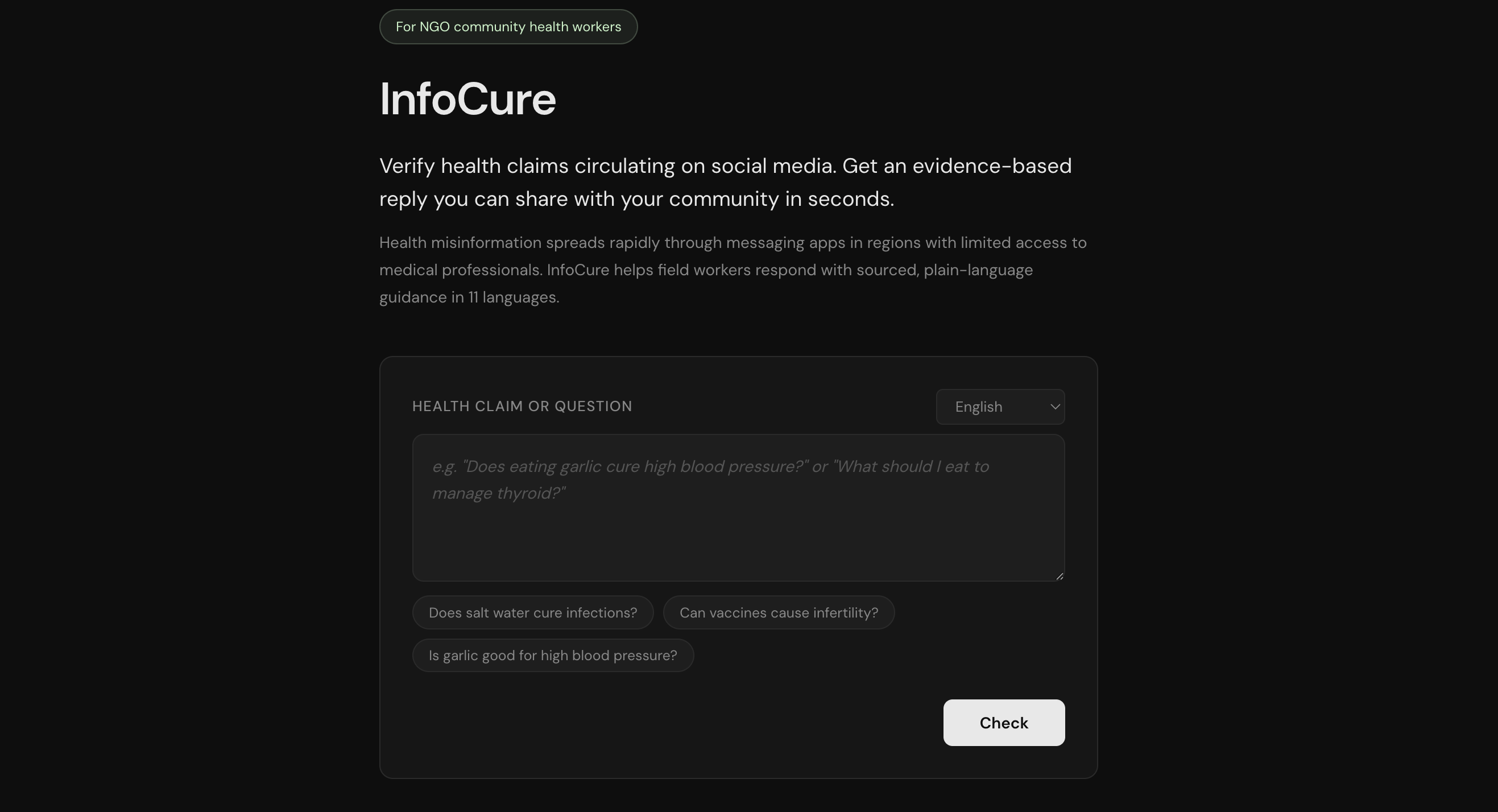
UI of InfoCure
-
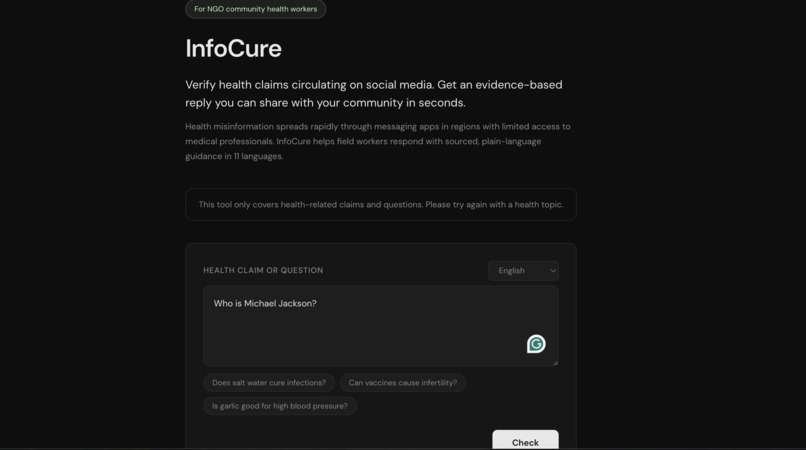
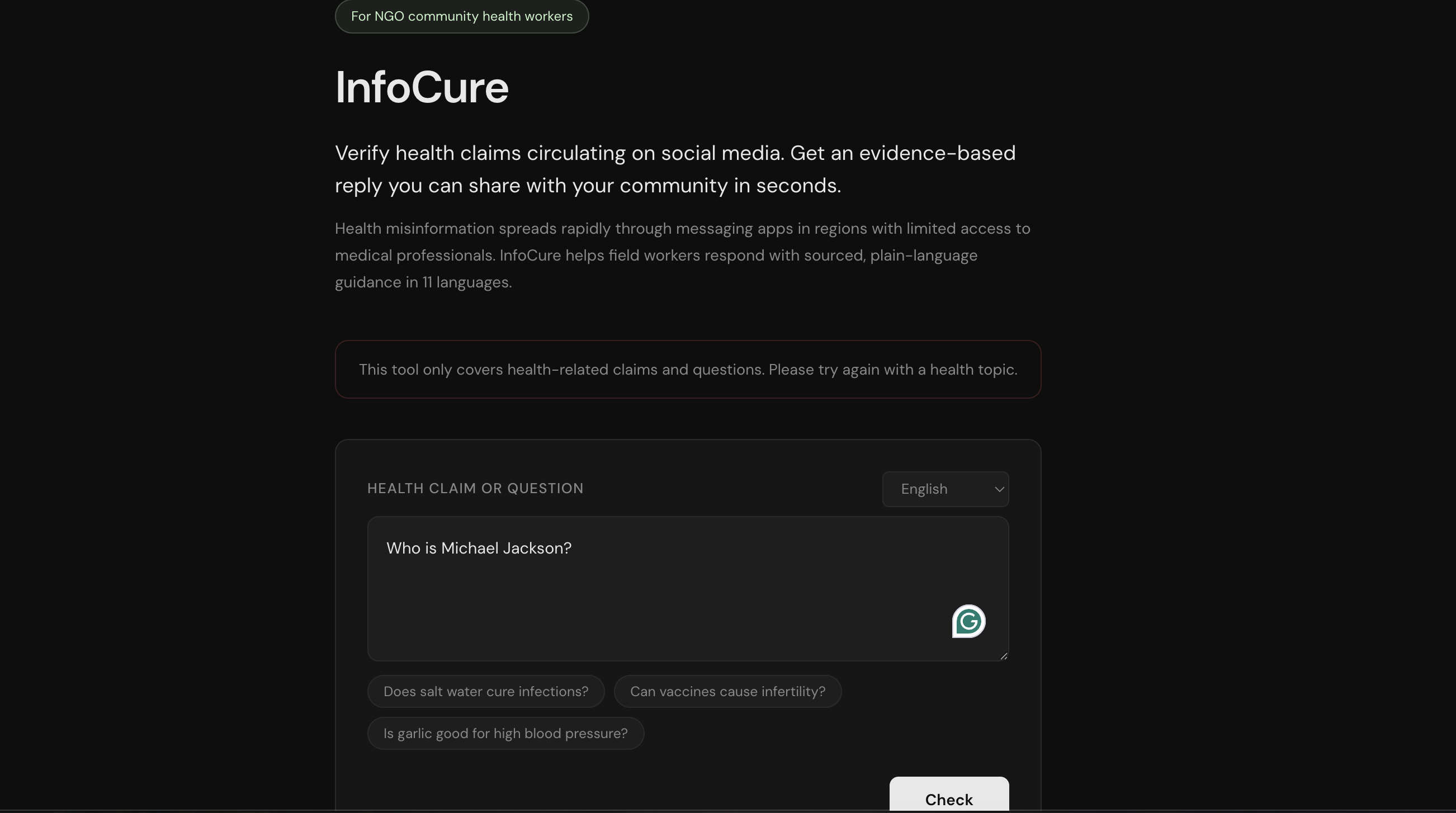
Throwing a warning when searched for an unrelated health claim.
-
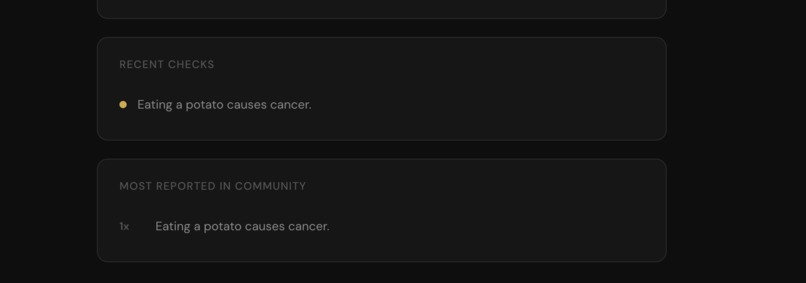
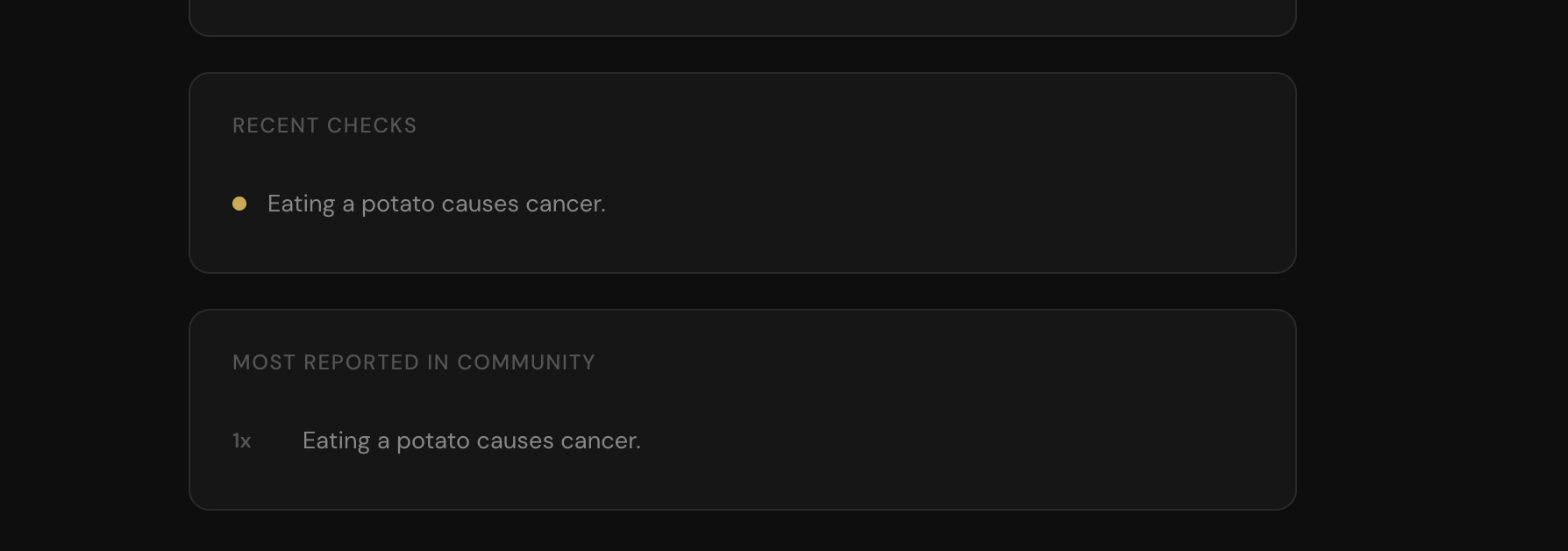
Recent checks and report to the community.
-
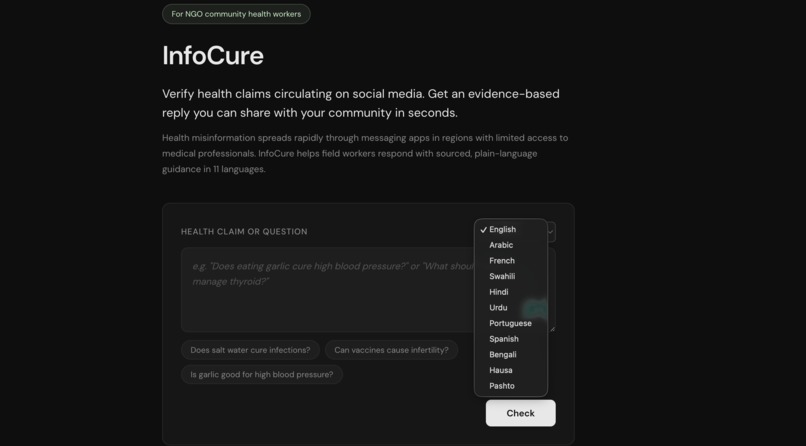
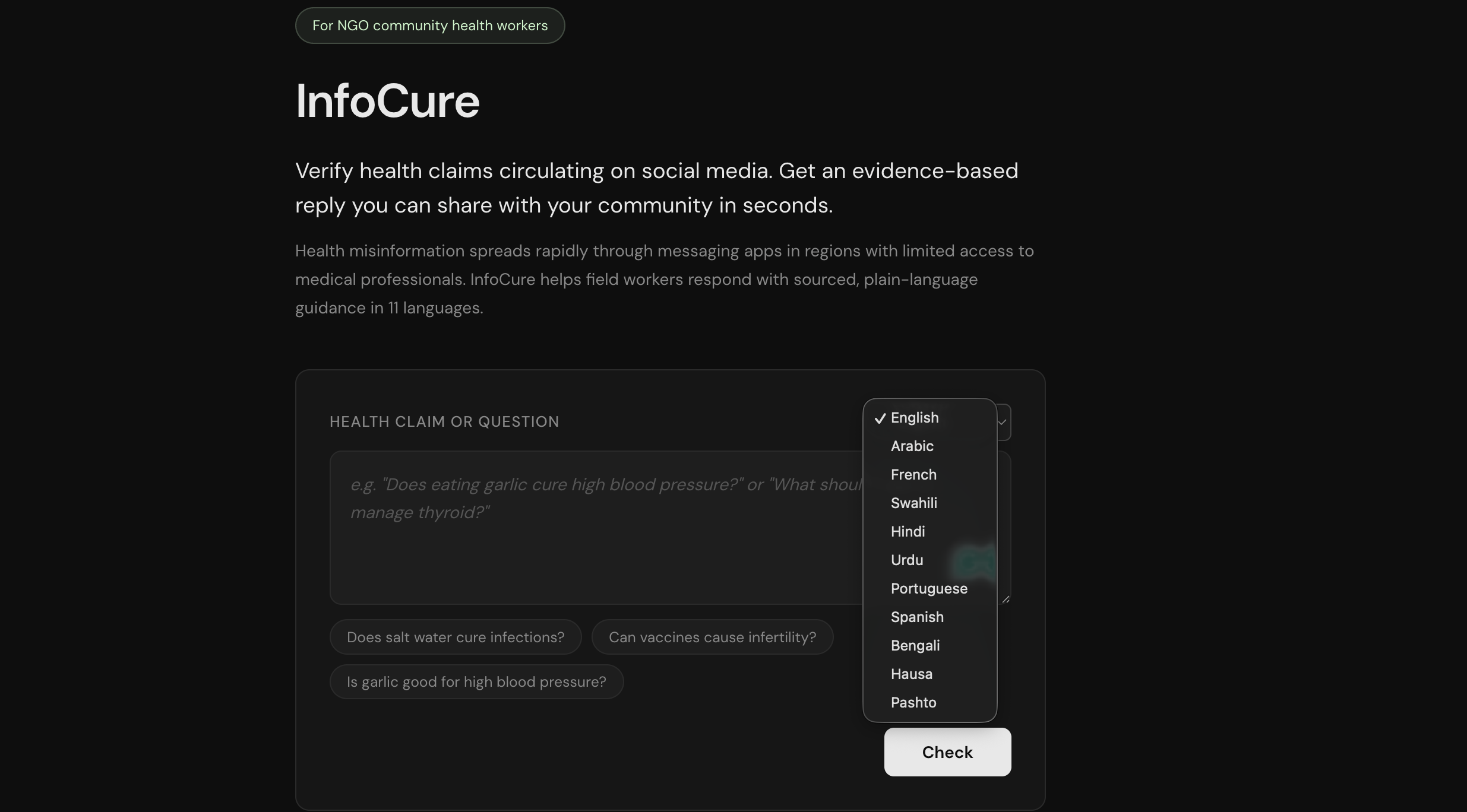
11 different languages supported.
Inspiration
Living in the UAE, I have seen how quickly health misinformation spreads through social media group chats. Communities across MENA, Sub-Saharan Africa, and South Asia receive dangerous false health advice daily, such as "drinking bleach cures COVID" or "vaccines cause infertility," because there is no easy way to verify what is true. NGO community health workers are active in these communities but lack a standard tool to respond. InfoCure was created to change that.
What it does
InfoCure is an AI-powered health misinformation detector built specifically for NGO community health workers. A health worker can paste any health claim or question circulating in their social media community group. Within seconds, they receive a clear evidence-based verdict, a straightforward explanation citing real health authorities like the CDC, NIH, or AHA, and a ready-to-copy reply for their community. It supports 11 languages, including Arabic, French, Swahili, Hindi, Urdu, and Pashto.
The Problems Infocure solves
The Translation-to-Action Gap - General AI tools explain science well, but they don't effectively communicate it to a skeptical person in a rural village. Without InfoCure, a health worker reads a complicated AI response, tries to simplify it, and may unintentionally introduce errors or lose credibility. With InfoCure, the worker receives a pre-verified, culturally suitable message in 11 languages, ready to share immediately. The Verification Latency Problem - Misinformation spreads very quickly. Without InfoCure, a health worker hears a rumor, goes home, searches online, reads articles, and tries to explain why it's wrong. By that time, the rumor may have reached another 500 people. With InfoCure, verification occurs in 20 seconds on-site. Data Fragmentation - NGOs often don't realize what misinformation is trending until they notice a decline in clinic attendance. InfoCure's community reporting feature turns every health worker into a sensor, creating a misinformation map that allows NGOs to see which false claims are increasing in specific regions and allocate resources accordingly. The Responsible AI Barrier - General AI does not offer a health-first interface. A worker might mistakenly use a chatbot for diagnosis, which can be unsafe. InfoCure's mandatory disclaimer and rejection of non-health inquiries clarify the tool's informational purpose, protecting both NGOs and communities. The difference InfoCure makes is in context and action. General AI is like a library; it has all the information, but you must find and interpret it. InfoCure is like a medic's field manual: it provides the exact answer you need, in the language you understand, in a format you can hand to someone else right away.
How I built it
InfoCure is built with React and Vite on the frontend. It is styled with custom CSS in dark mode. The AI layer operates through a Supabase Edge Function that securely calls the OpenRouter API, keeping the API key server-side. The prompt is carefully designed to return structured plain-text responses that include a verdict, explanation, source citation, and a social media-ready reply. The app also features claim history, community reporting, example queries, and a disclaimer modal, all tailored to the real workflow of NGO field health workers.
Challenges I ran into
Free AI model APIs can be unpredictable. Models can go offline, rate limits may kick in, and responses sometimes fail to parse correctly. I tested several API providers before finding a reliable option using Supabase Edge Functions to handle API calls server-side. Supporting multiple languages was a significant challenge as well. I needed the AI to respond in 11 languages while keeping section headers in English for consistent parsing, which required careful prompt design. Responsibly designing the tool was also difficult. Every output can have real health consequences, so I had to carefully consider the disclaimer, limit the tool strictly to health topics, and always cite authoritative sources.
Accomplishments that I am proud of
Building a complete, deployed, production-ready web application from scratch in under two weeks as a solo developer was quite an achievement. The app handles 11 languages, has a secure server-side API architecture, community reporting, claim history, and a thoughtful user experience designed specifically for non-technical NGO field workers in low-resource settings.
What I learned
I learned how to build and deploy Supabase Edge Functions, engineer prompts for structured multilingual AI outputs, design responsibly for sensitive health topics, and create a full-stack product from start to finish. Most importantly, I recognized that the strength of an AI-powered product lies not in the AI itself but in how thoughtfully it is scoped, constrained, and presented to its users.
What's next for InfoCure
I will be connecting the community reporting feature to a shared database so health workers across entire regions can access real-time misinformation trends. I will also be adding a backend dashboard for NGO coordinators to monitor spreading claims in their communities. I also plan to expand language support and potentially integrate directly with the WhatsApp Business API, allowing health workers to fact-check without leaving the app.
Built With
- css
- github
- javascript
- llama3
- openrouterai
- react
- supabase
- vercel
- vite

Log in or sign up for Devpost to join the conversation.