-
-
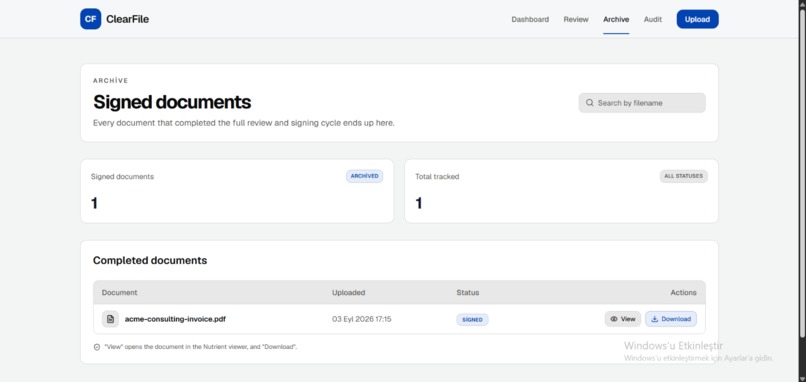
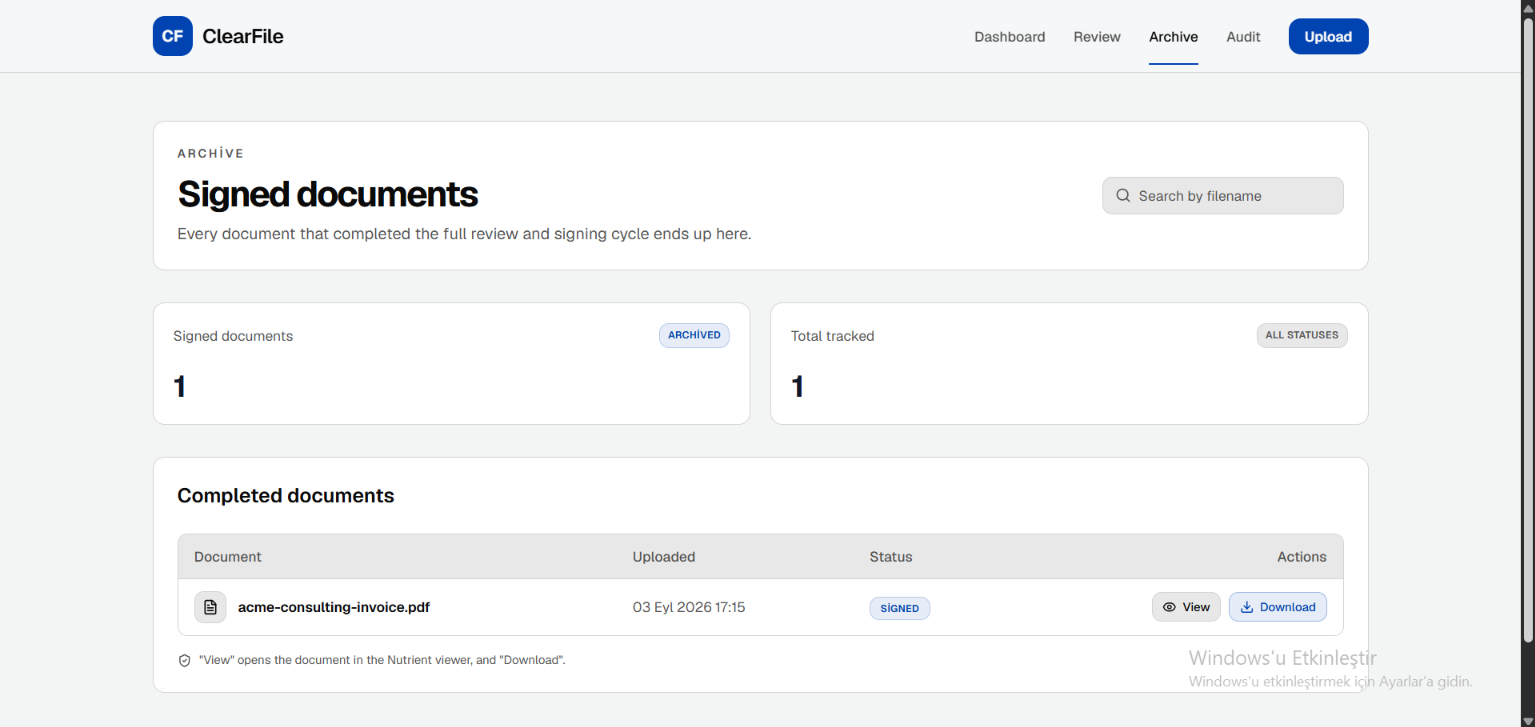
This is the screenshot of Archive page,it shows the past documents that got extracted.
-
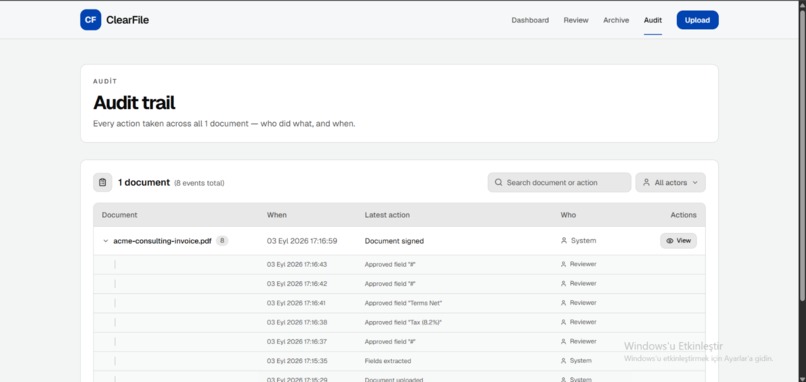
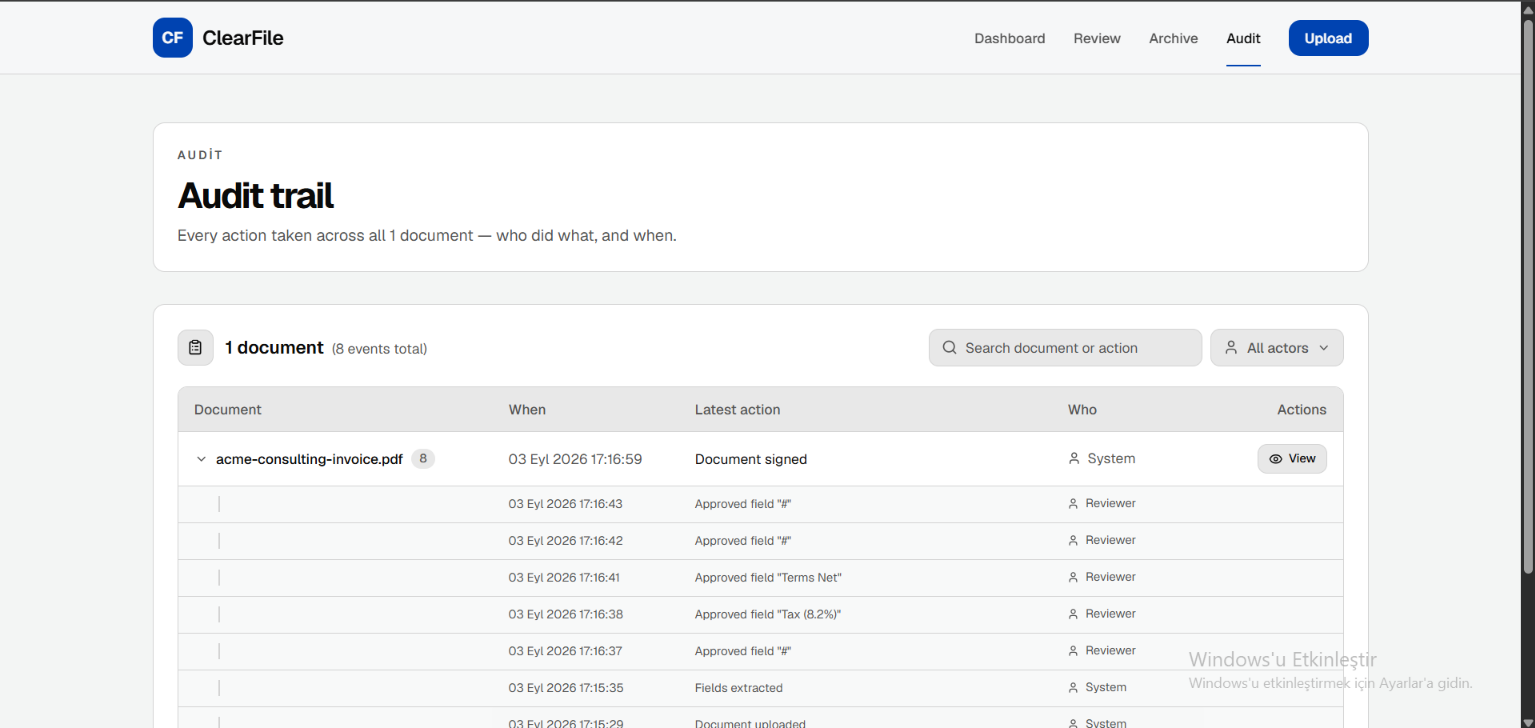
This is the screenshot of Audit page,it shows every logg about the extracted document(when did it happen,who did it,etc.)
-
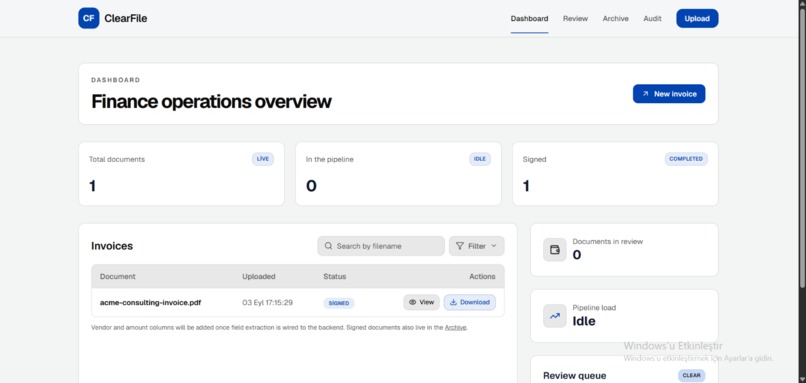
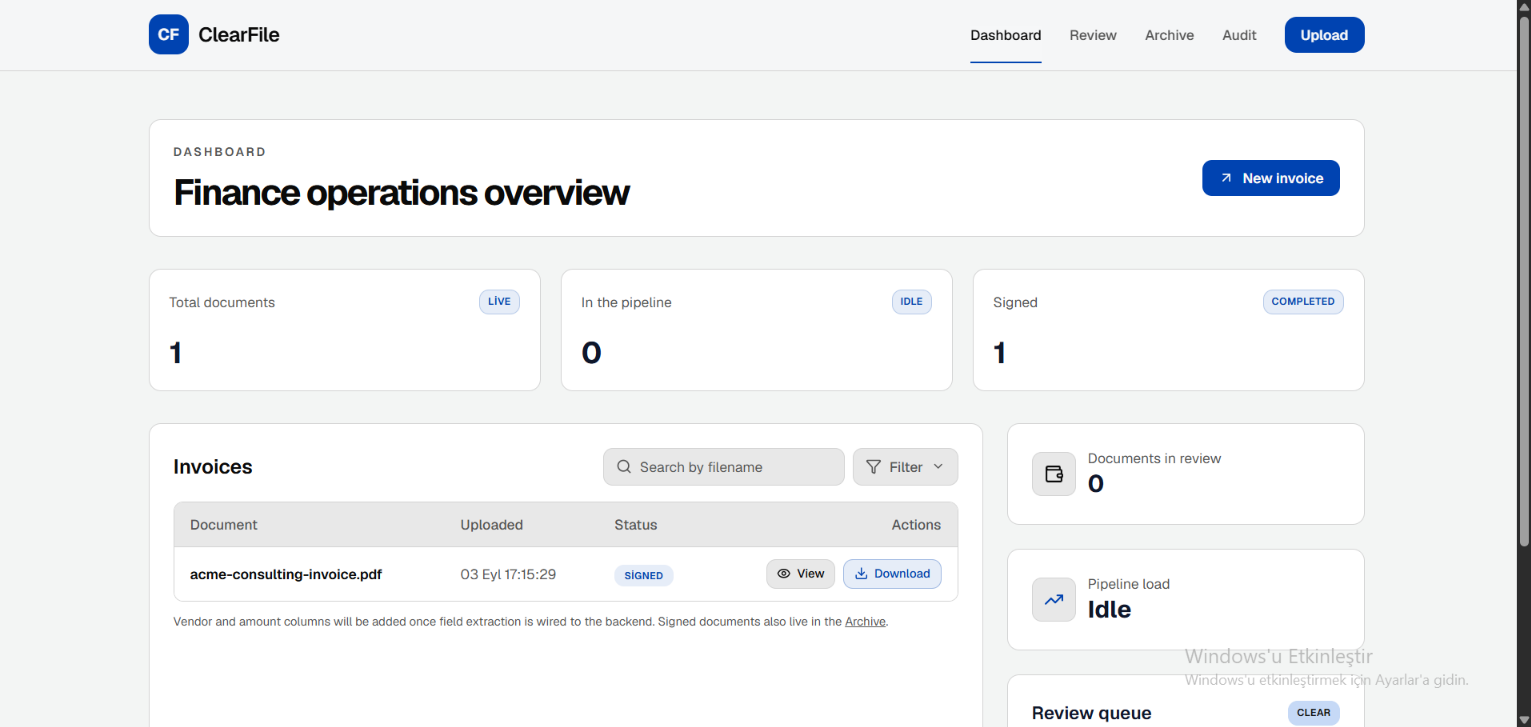
This is the screenshot of Dashboard page,it shows the uploaded documents and their current status
-
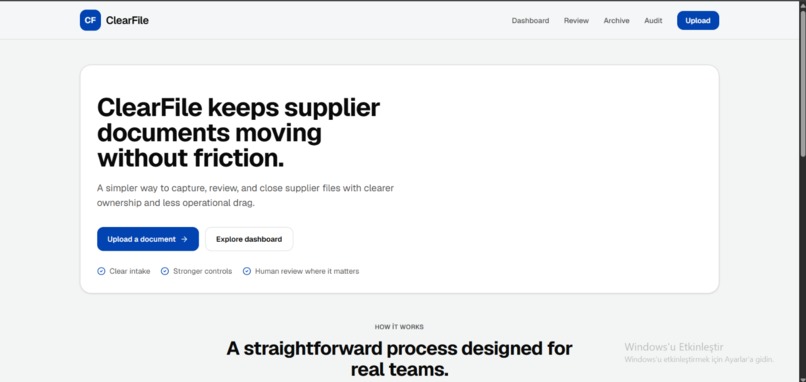
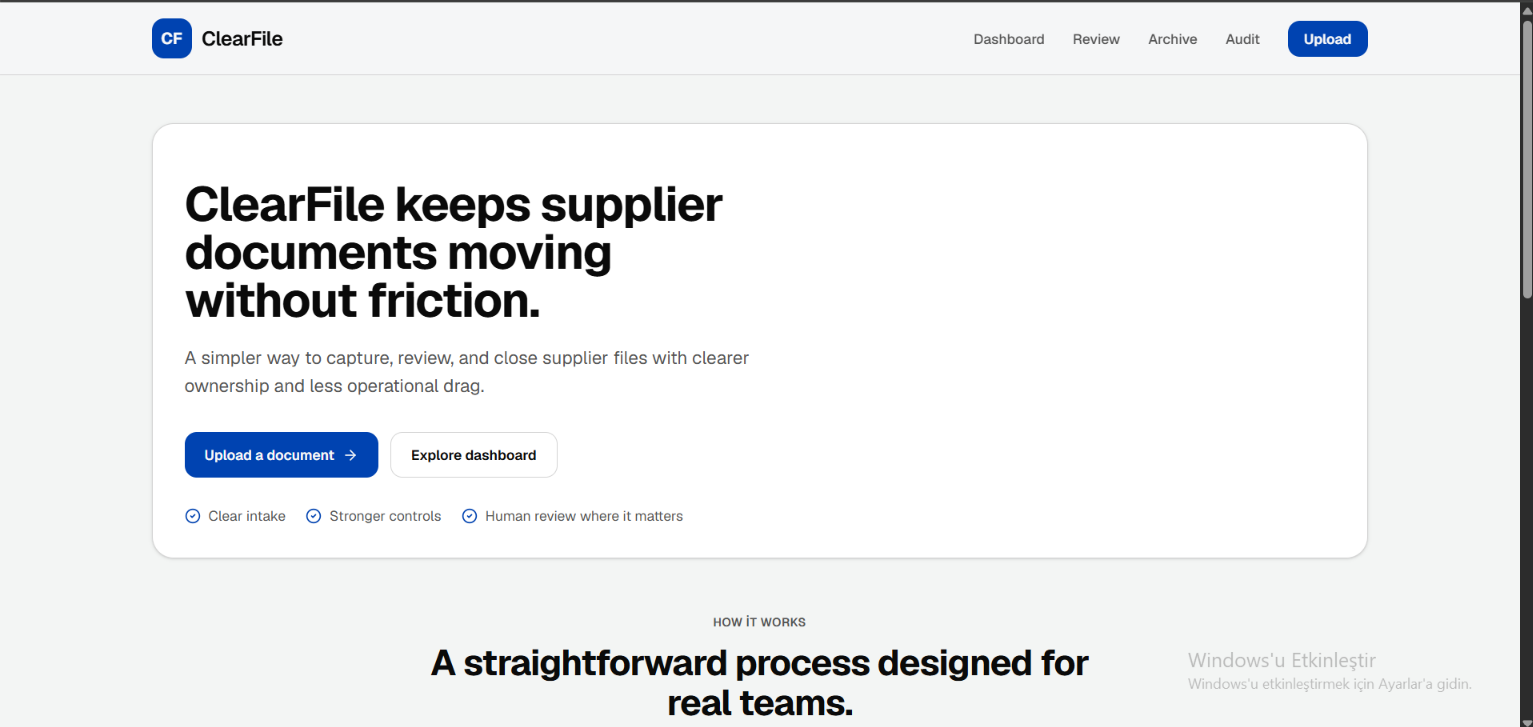
This is the screenshot of Landing page,it is the main page of the website
-
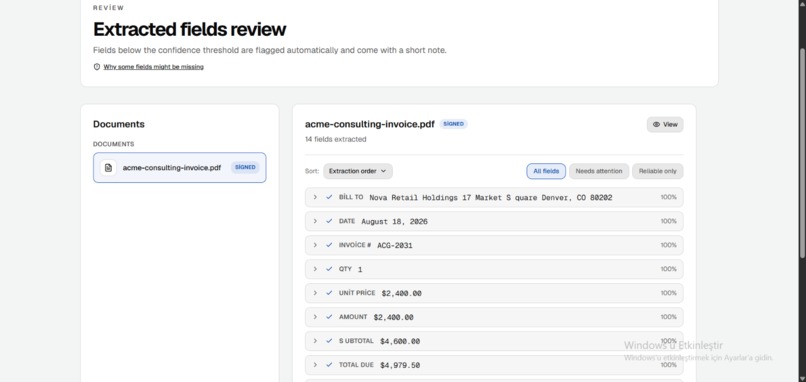
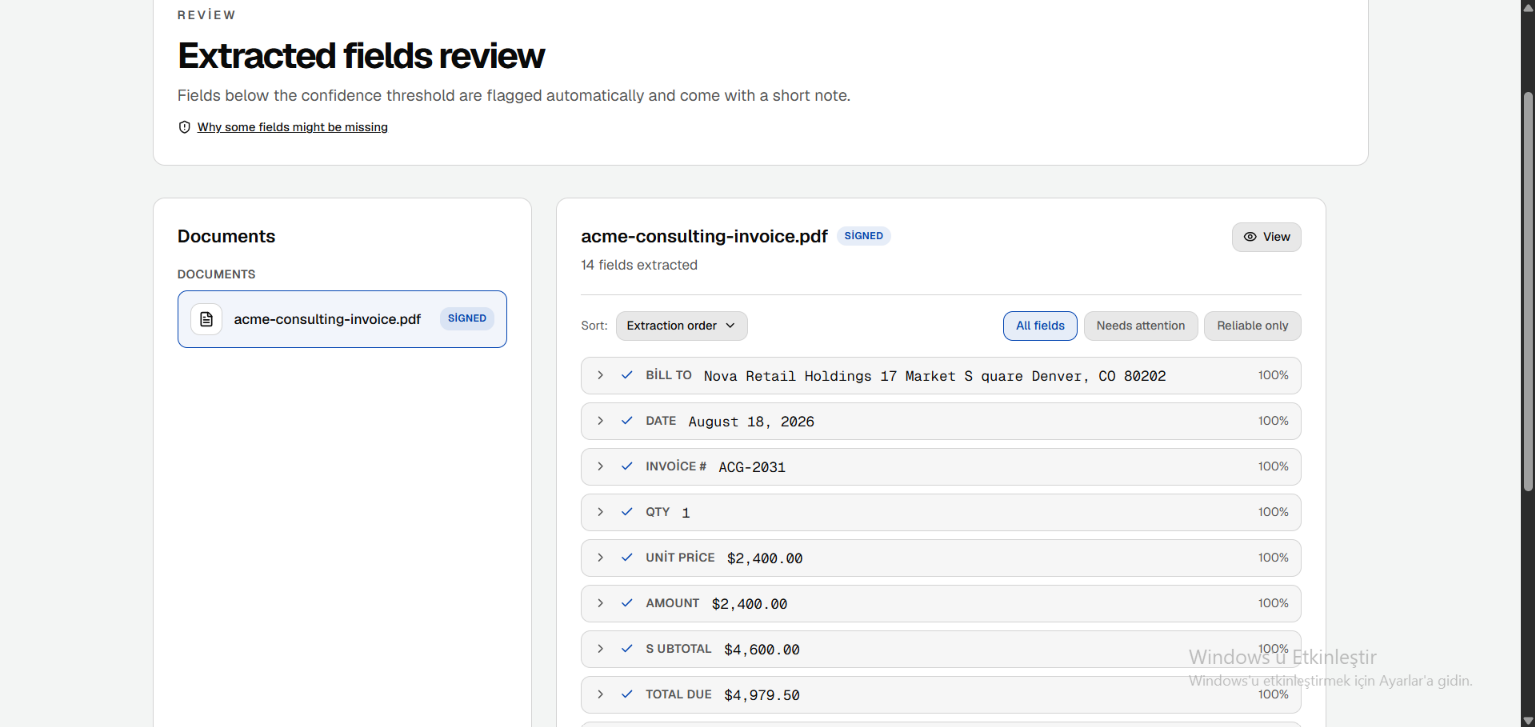
This is the screenshot of Review page,it shows confidence level of every single field after extraction.
Inspiration
Businesses process invoices and compliance documents manually every day — a slow process prone to costly errors. And the timing isn't academic: France's new e-invoicing mandate takes effect September 1, 2026, right in the middle of this hackathon, requiring businesses to submit invoices in a structured, machine-readable format. We wanted to build something that solves a real, current regulatory problem rather than a hypothetical one.
What it does
ClearFile is an AI-powered document compliance agent. Users upload an invoice, and the system:
- Extracts structured fields (amounts, dates, vendor info) using Nutrient DWS Data Extraction API, with a confidence score per field
- Uses AI to separate high-confidence fields (processed automatically) from low-confidence ones (flagged for human review)
- Surfaces uncertain fields to a human reviewer via Nutrient's DWS Viewer
- Converts approved data into a compliant e-invoice format and digitally signs it using Nutrient DWS
- Logs every step in an audit trail — so a regulator or manager can trace exactly how a document was processed
How we built it
- Backend: Python, FastAPI, PostgreSQL
- Document processing: Nutrient DWS (Data Extraction API, Processor API, DWS Viewer)
- AI layer: OpenAI API for confidence evaluation and field guidance
- Frontend: Next.js, React
- Deployment: Docker, Render, Vercel
Challenges we ran into
Getting Nutrient's Python SDK method signatures right took some trial and error, especially the workflow builder for converting HTML to PDF and then signing it — the actual API shape didn't always match what we expected from the docs.
Deploying to a free tier surfaced two real problems we had to solve, not just work around: Render's free instances have an ephemeral filesystem, so any file saved to disk disappears on restart or redeploy. We fixed this by storing uploaded and signed files directly in Postgres as binary data instead of on disk. Separately, our serverless Postgres provider (Neon) silently drops idle connections, which caused intermittent 500 errors after the app had been idle for a bit — fixed with connection pool pre-ping and recycling.
Coordinating a two-person team across frontend and backend meant we occasionally worked from different assumptions about API shapes, which we caught by testing the real, deployed frontend against the real backend rather than relying only on local testing.
What we learned
Confidence scores are only useful if the fallback experience is good. Early on we just showed a percentage; the project got meaningfully better once we used AI to translate each low-confidence field into a plain-language note telling a reviewer exactly what to check.
We also learned to treat "deployed and demoable" as a different bar than "works on my machine" — issues like ephemeral storage and dropped database connections never showed up locally, only after real deployment, which pushed us to test the live URLs throughout instead of just before submitting.
What's next for ClearFile
Support for additional structured e-invoice formats beyond our current schema, such as Peppol/UBL, so the same pipeline can target other countries' mandates. We'd also like batch processing for multiple invoices at once, and a persistent-disk or object-storage backed deployment tier for production use beyond the free-tier constraints of this demo.
Built With
- docker
- fastapi
- nextjs
- nutrient-dws
- openai
- postgresql
- python
- react
- typescript

Log in or sign up for Devpost to join the conversation.