-
-
-
-
-
-
-
-
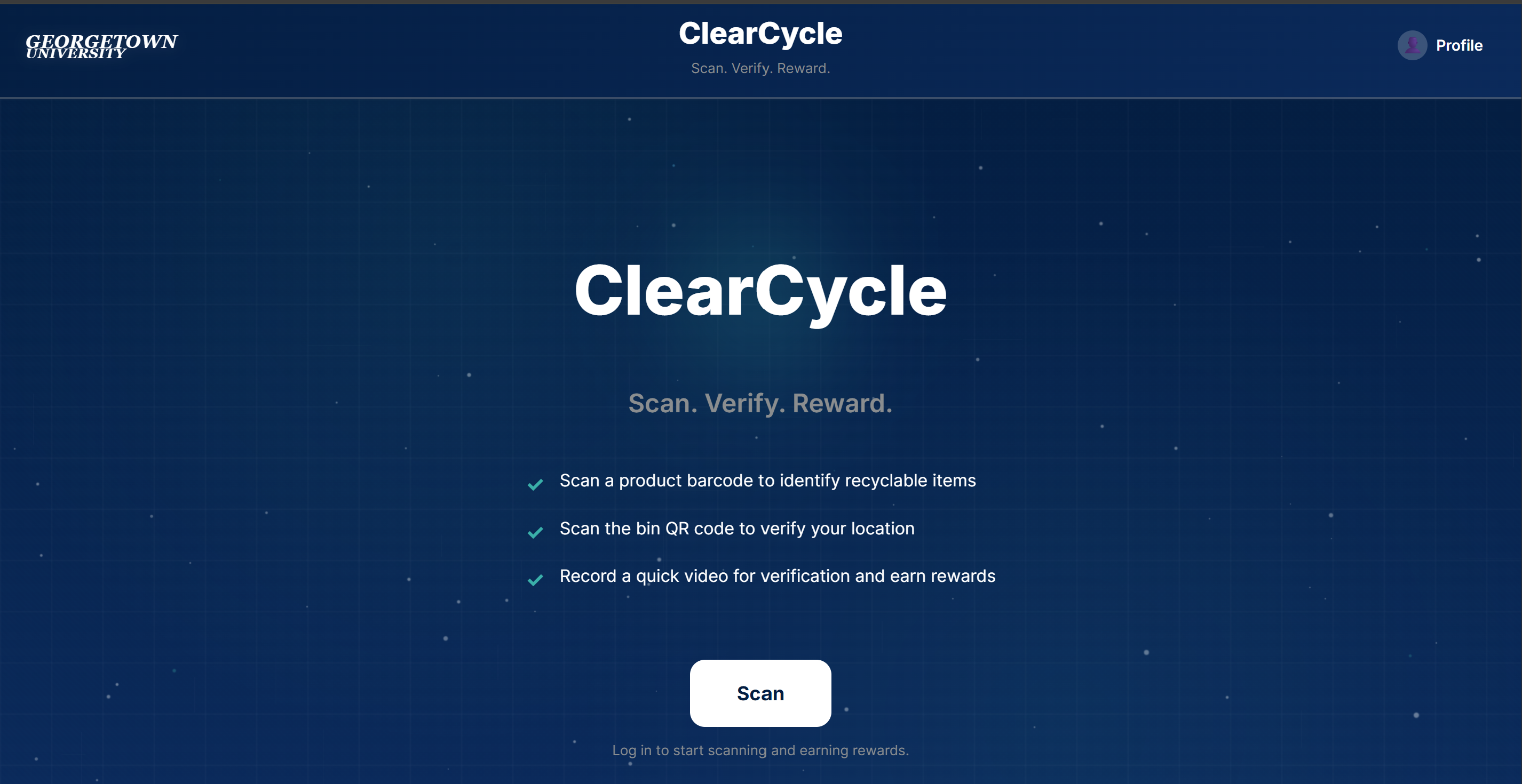
Home Page
-
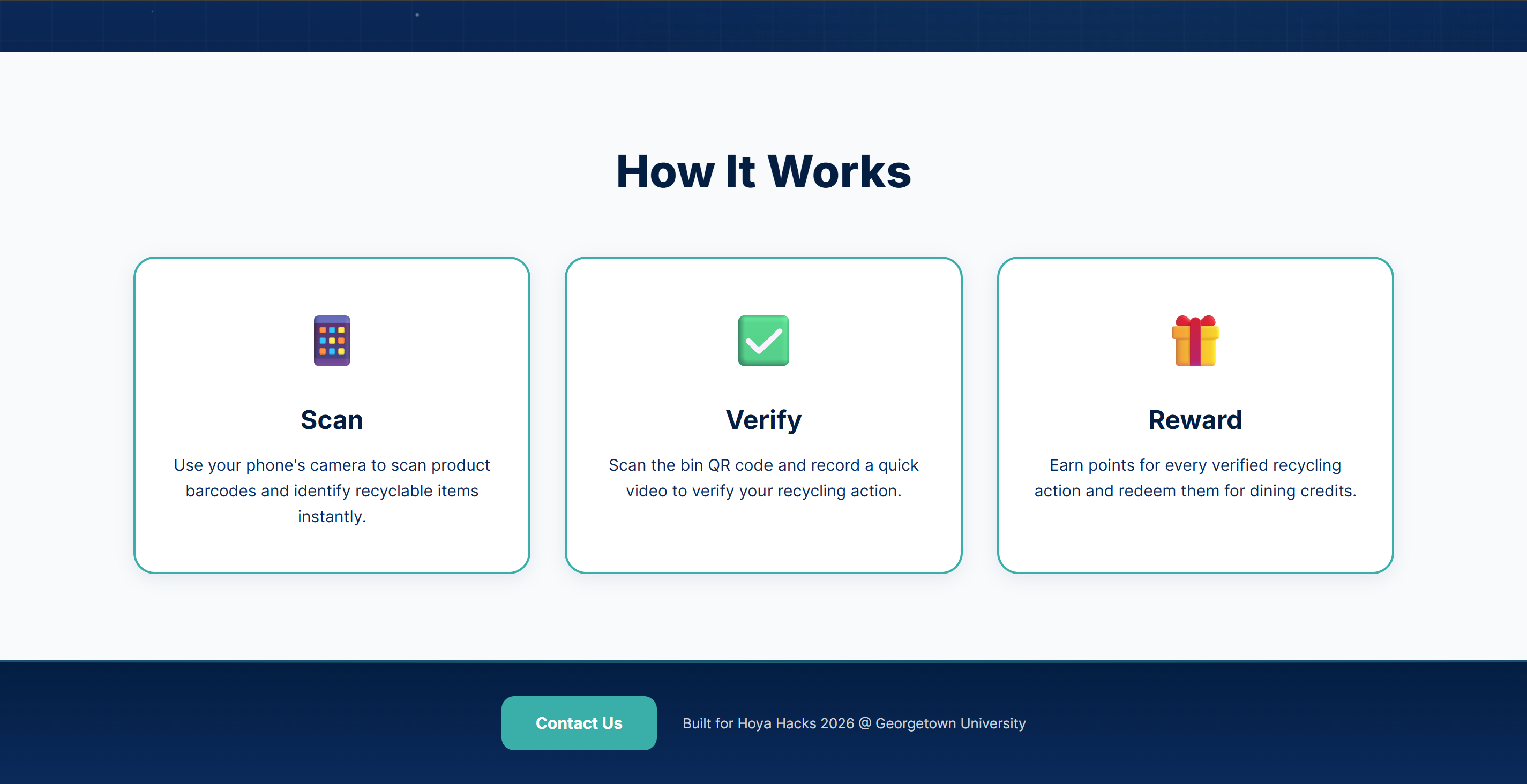
How it works
-
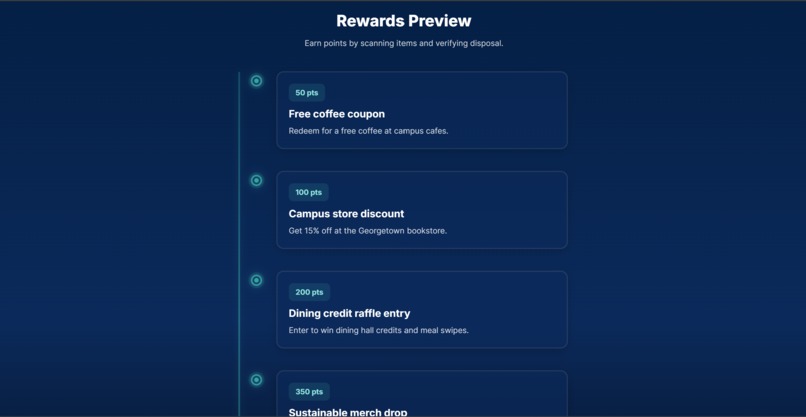
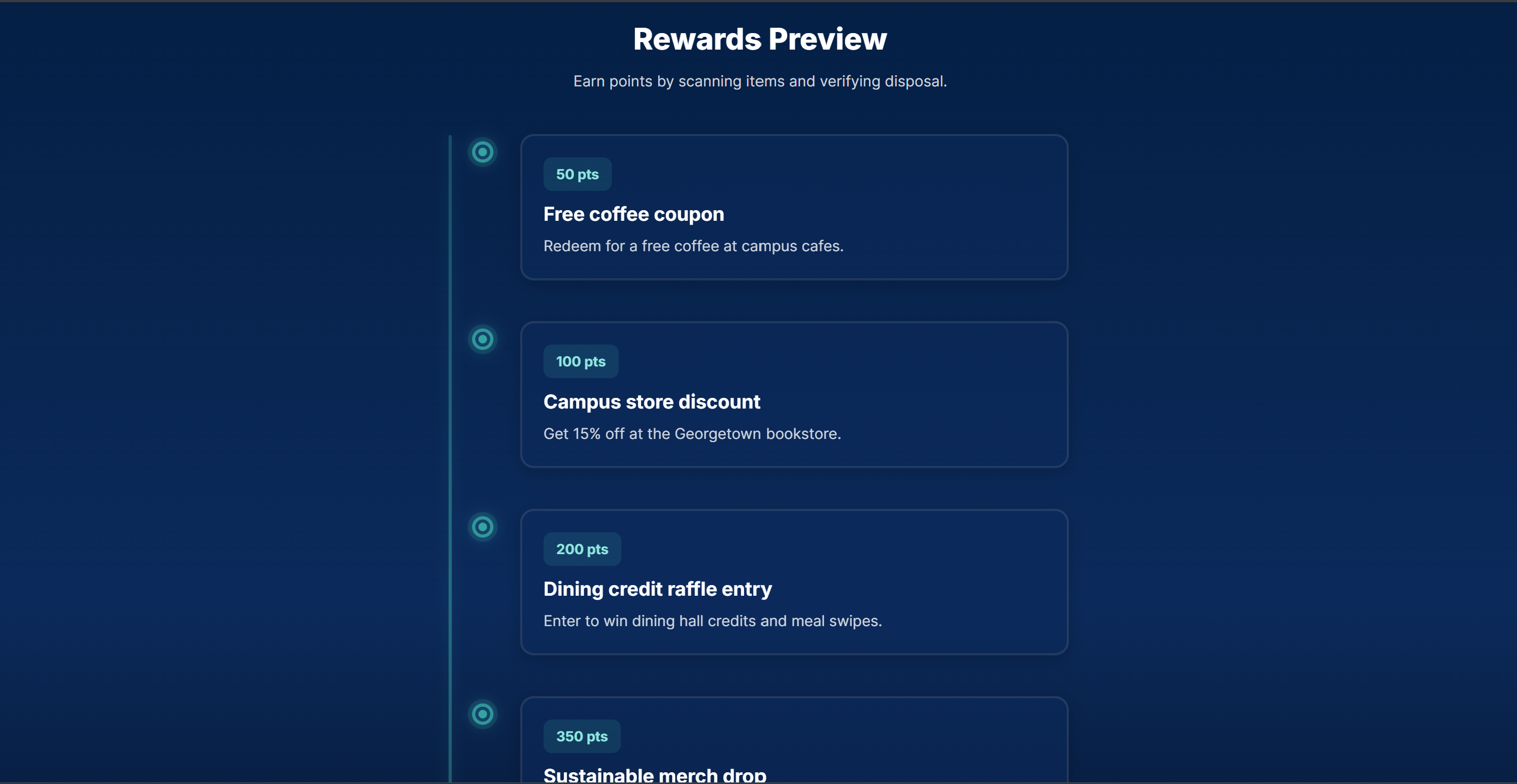
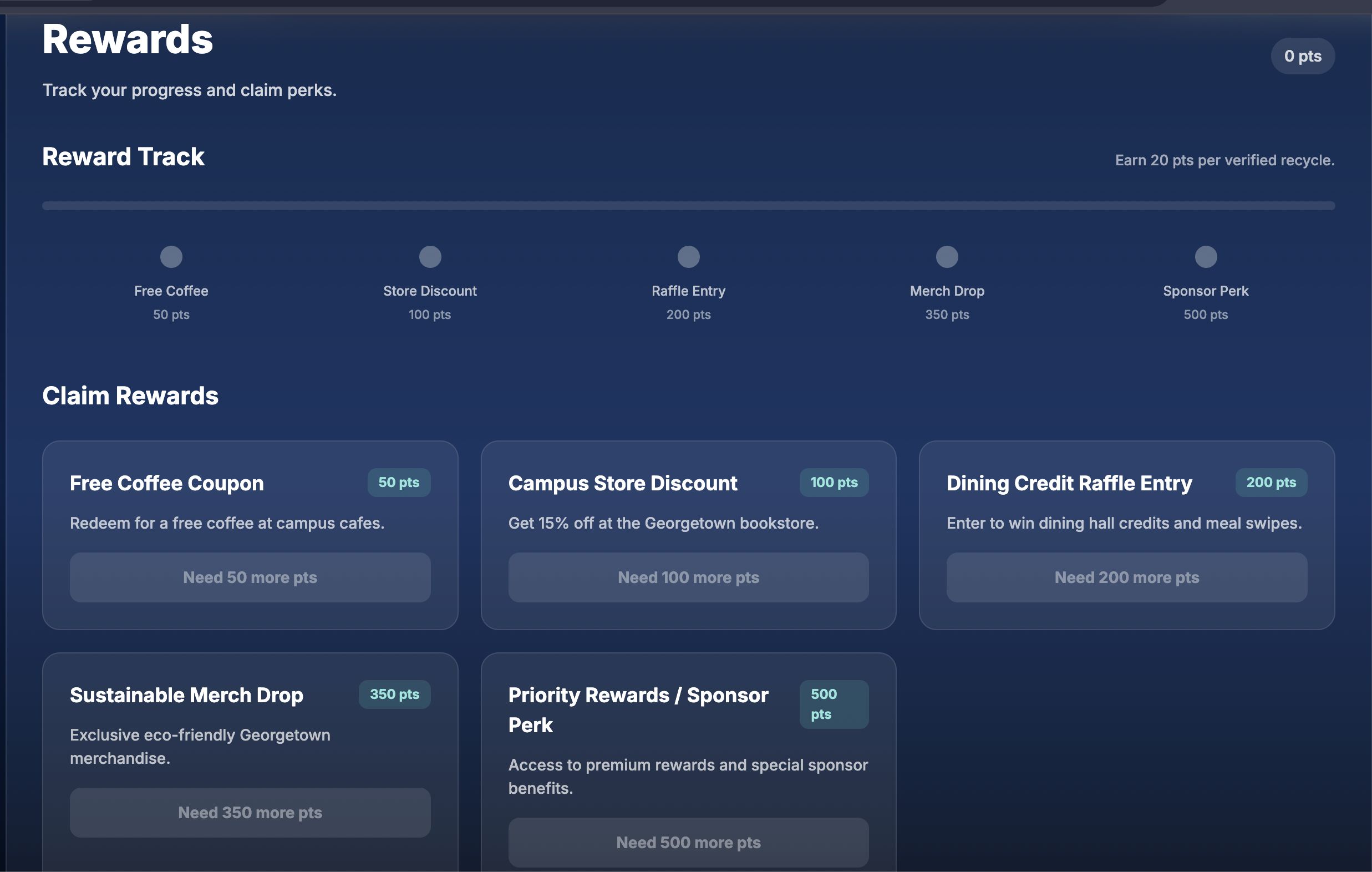
Reward Track
-
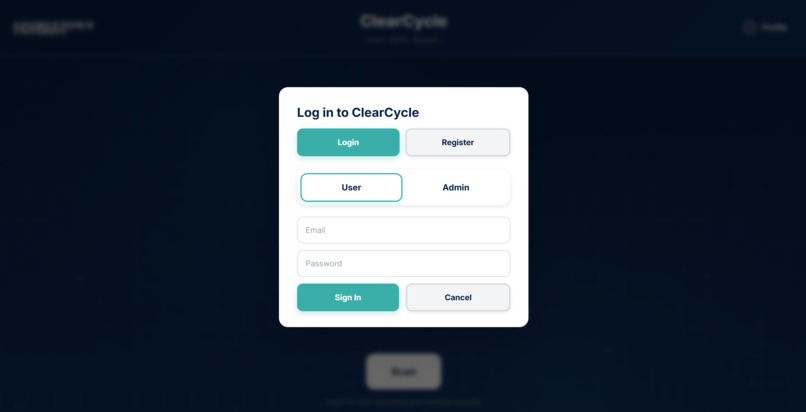
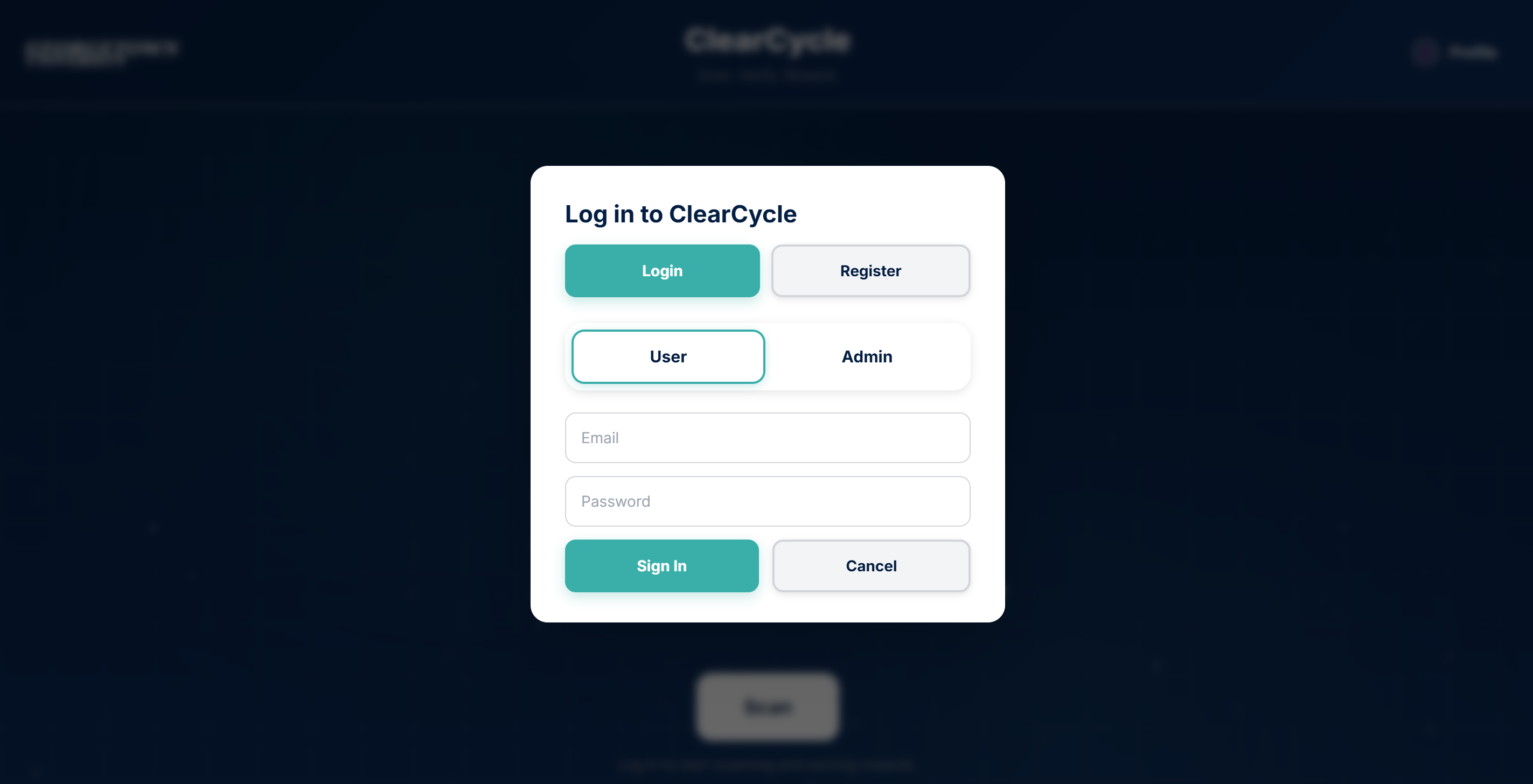
Log in and Register Page
-
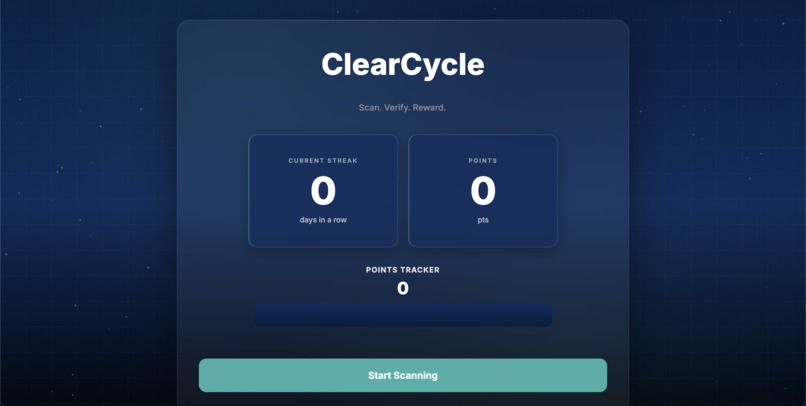
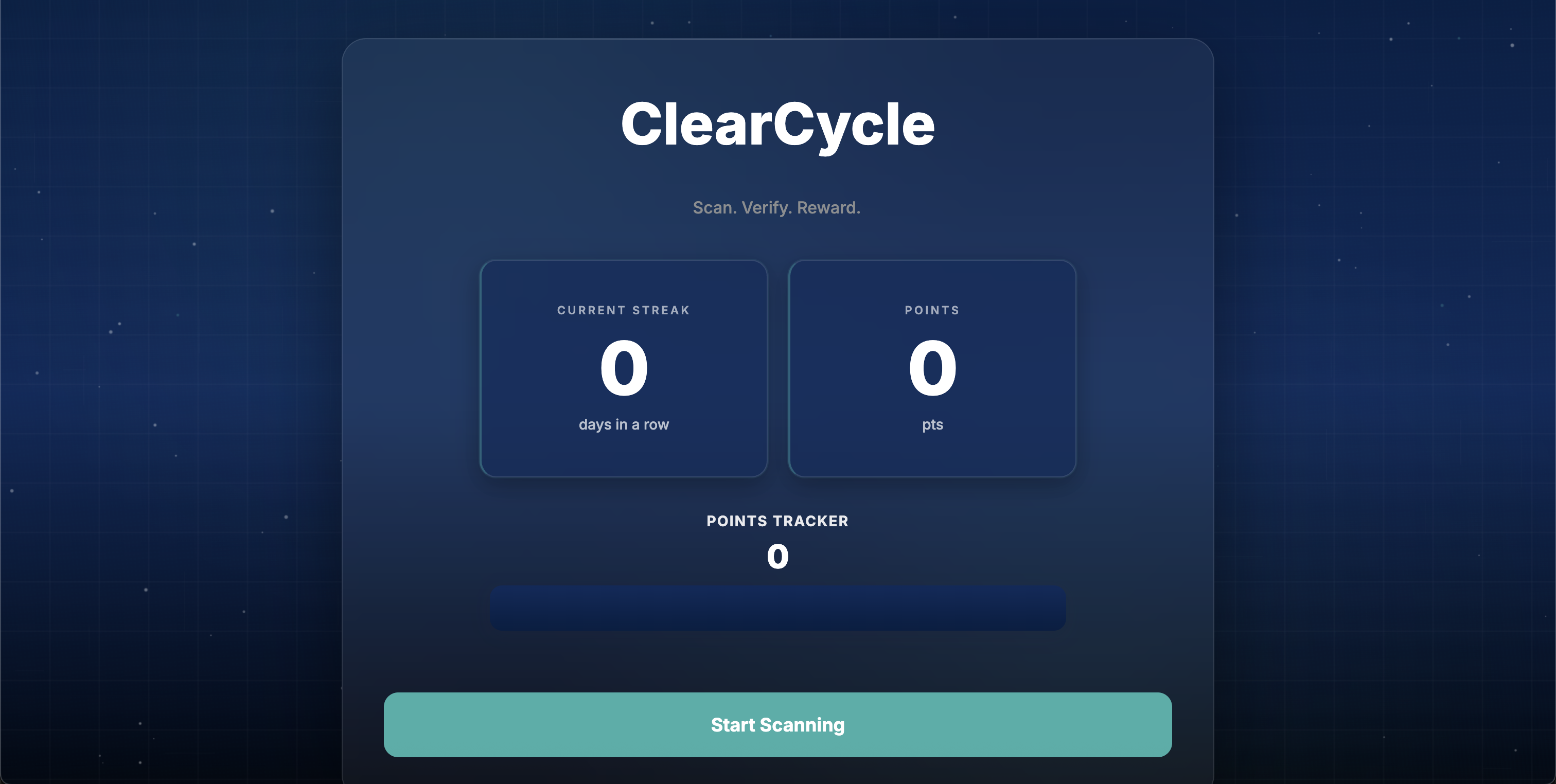
User Home Page
-
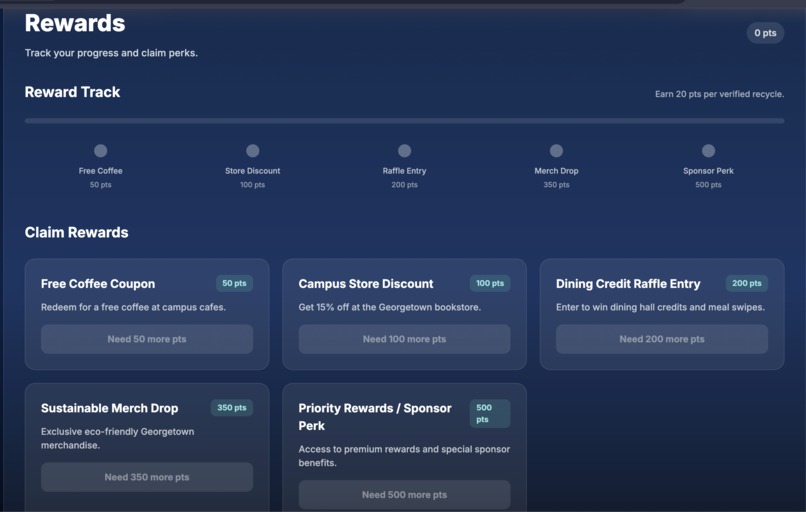
Reward Track for User
-

Scan Page
-
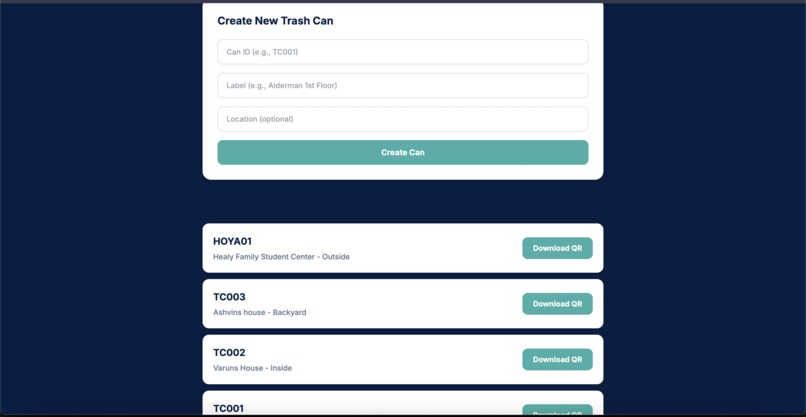
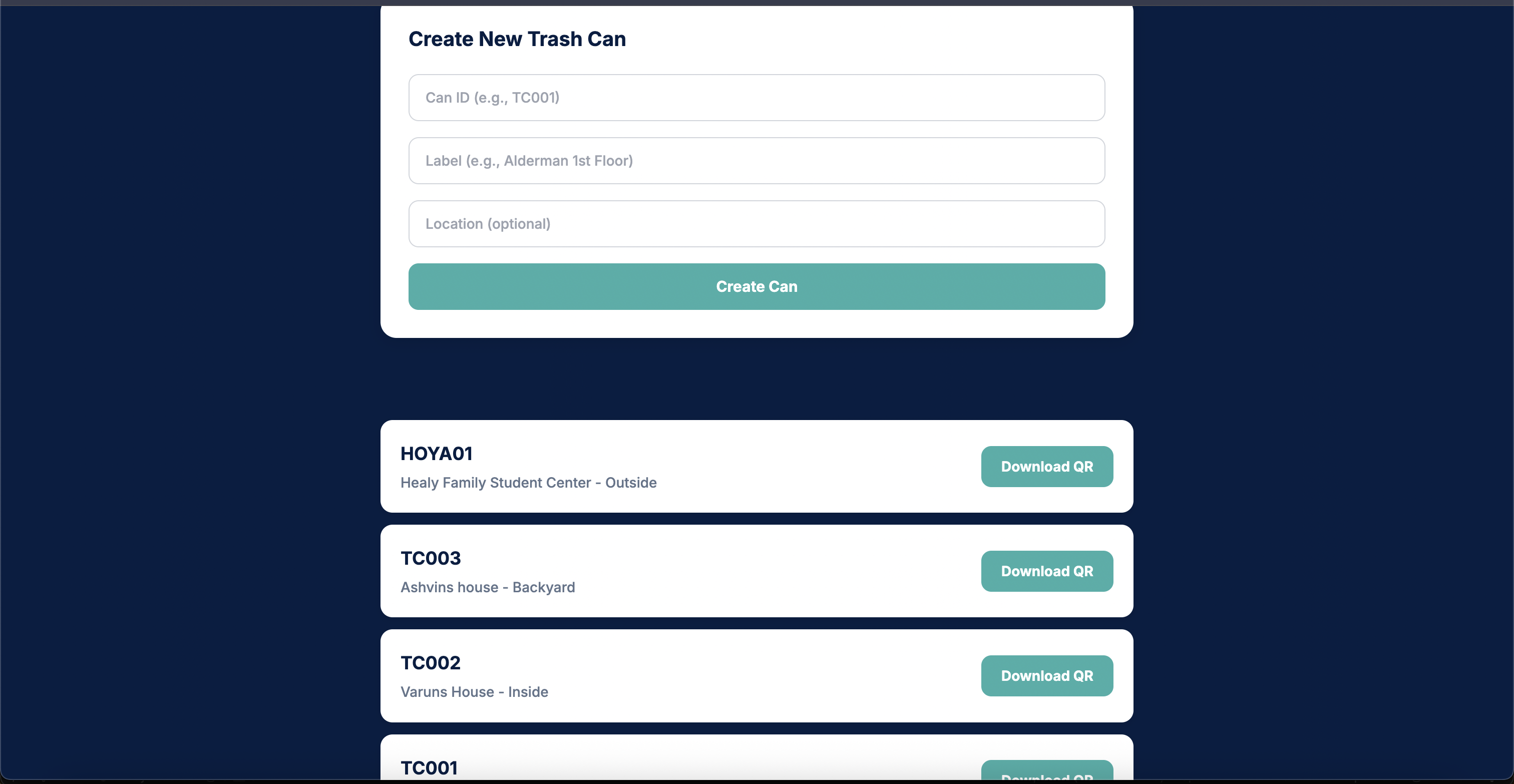
Admin Home Page

Inspiration
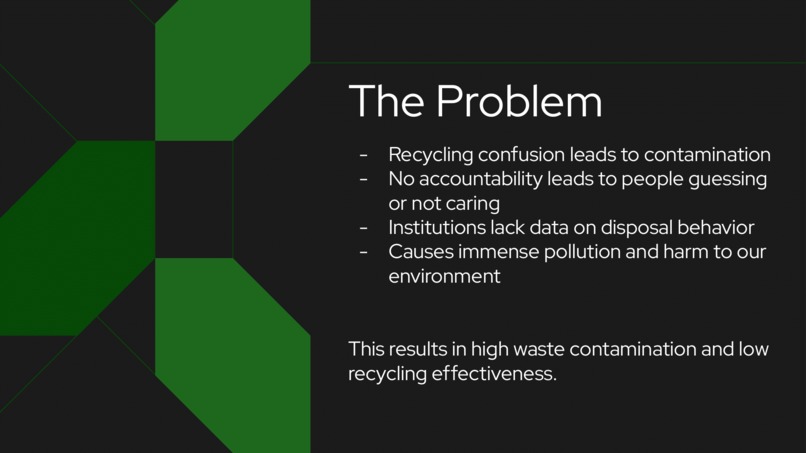
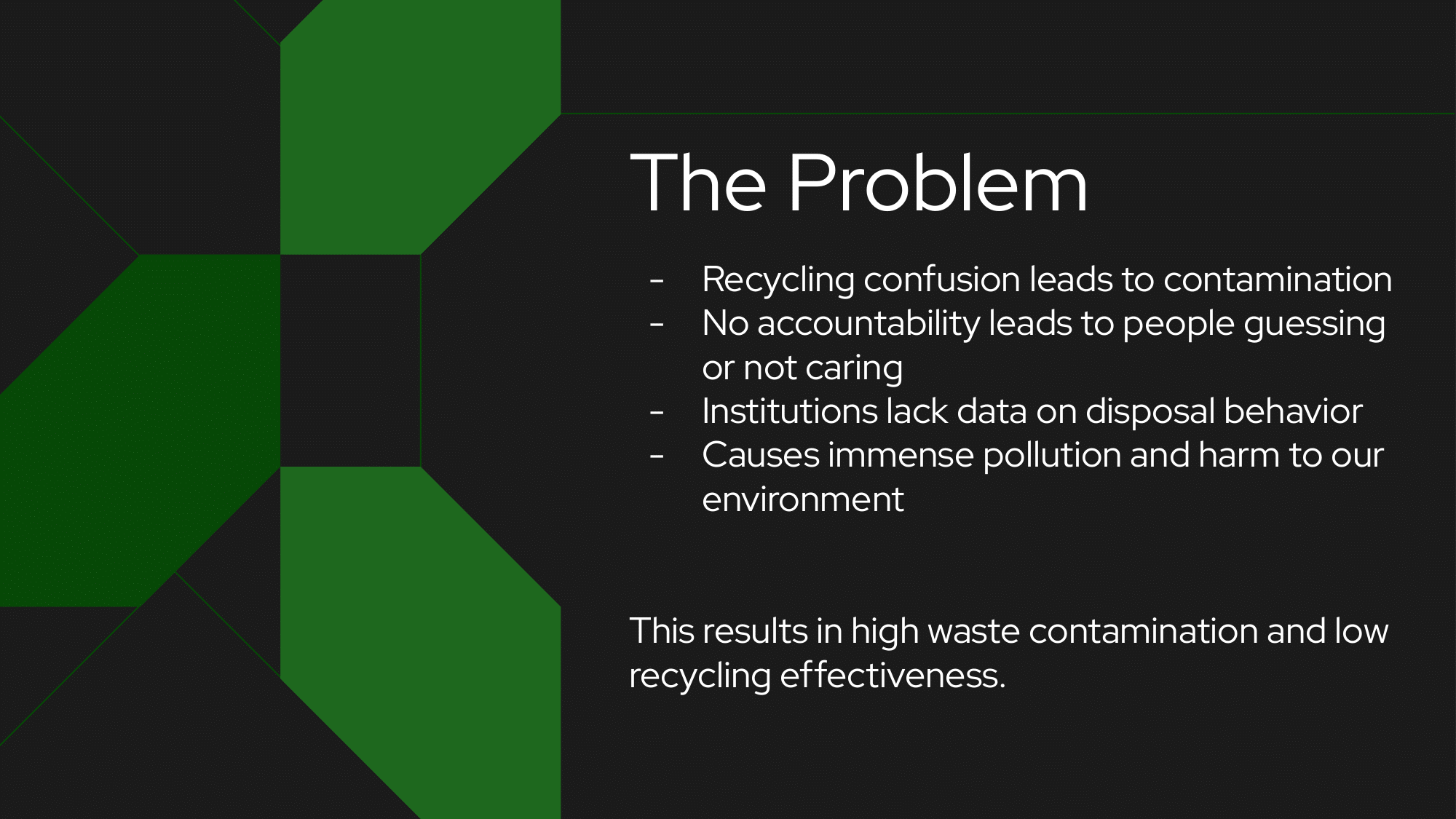
As a team that comes from backgrounds where recyclability and responsible disposal are emphasized from a young age, we wanted to build something that meaningfully encourages better sustainability habits. At previous hackathons, we had focused on chat-based tools, but this time we challenged ourselves to create something physical that interacts with the real world. The sustainability track pushed us to create an app that incentivizes people on campus to recycle more with a point-rewarding system and uses AI to help people learn what is recyclable and what is not. This motivation led us to build ClearCycle.
What it does
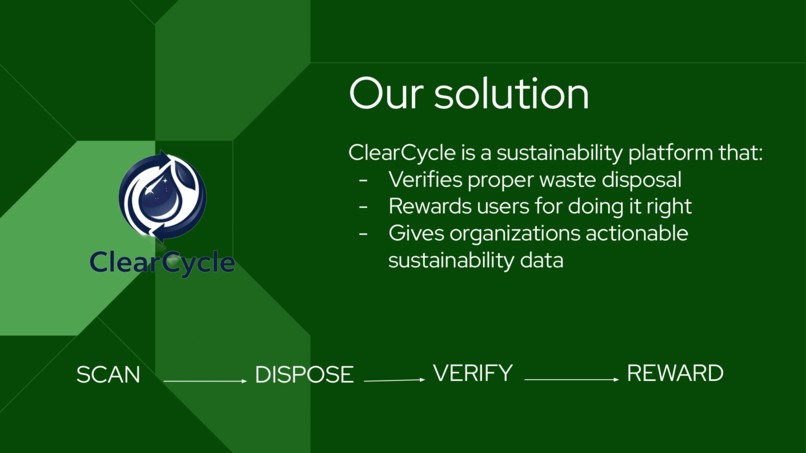
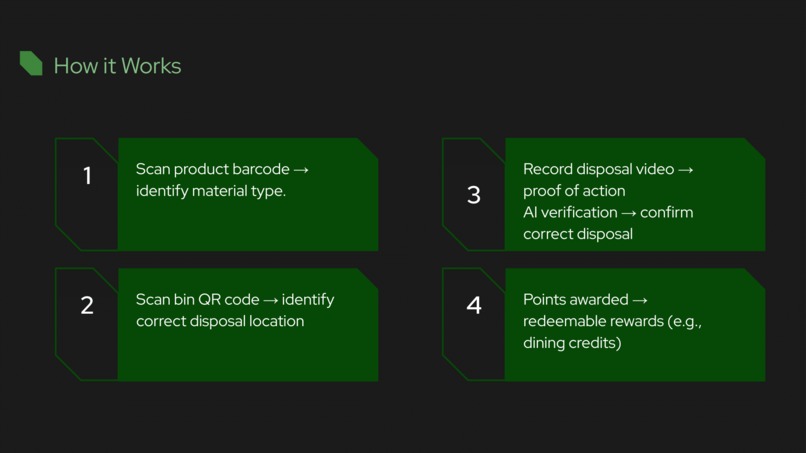
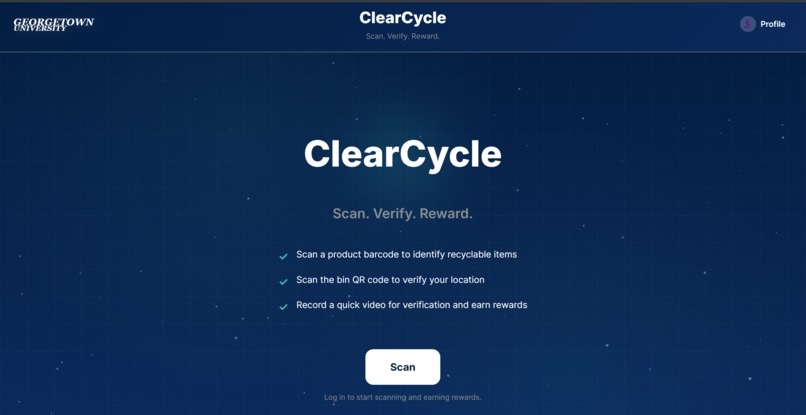
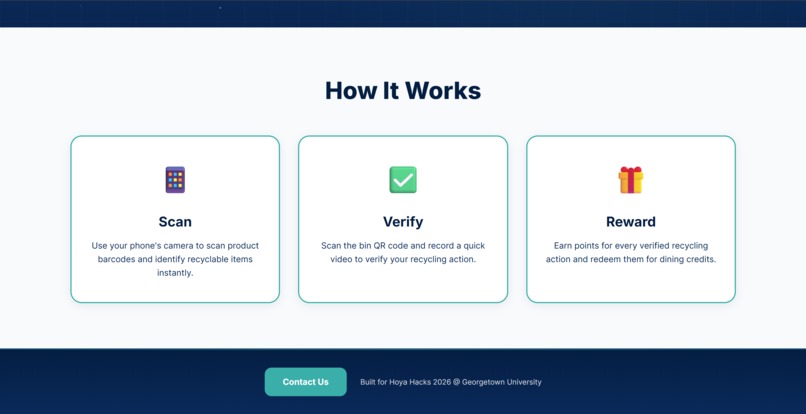
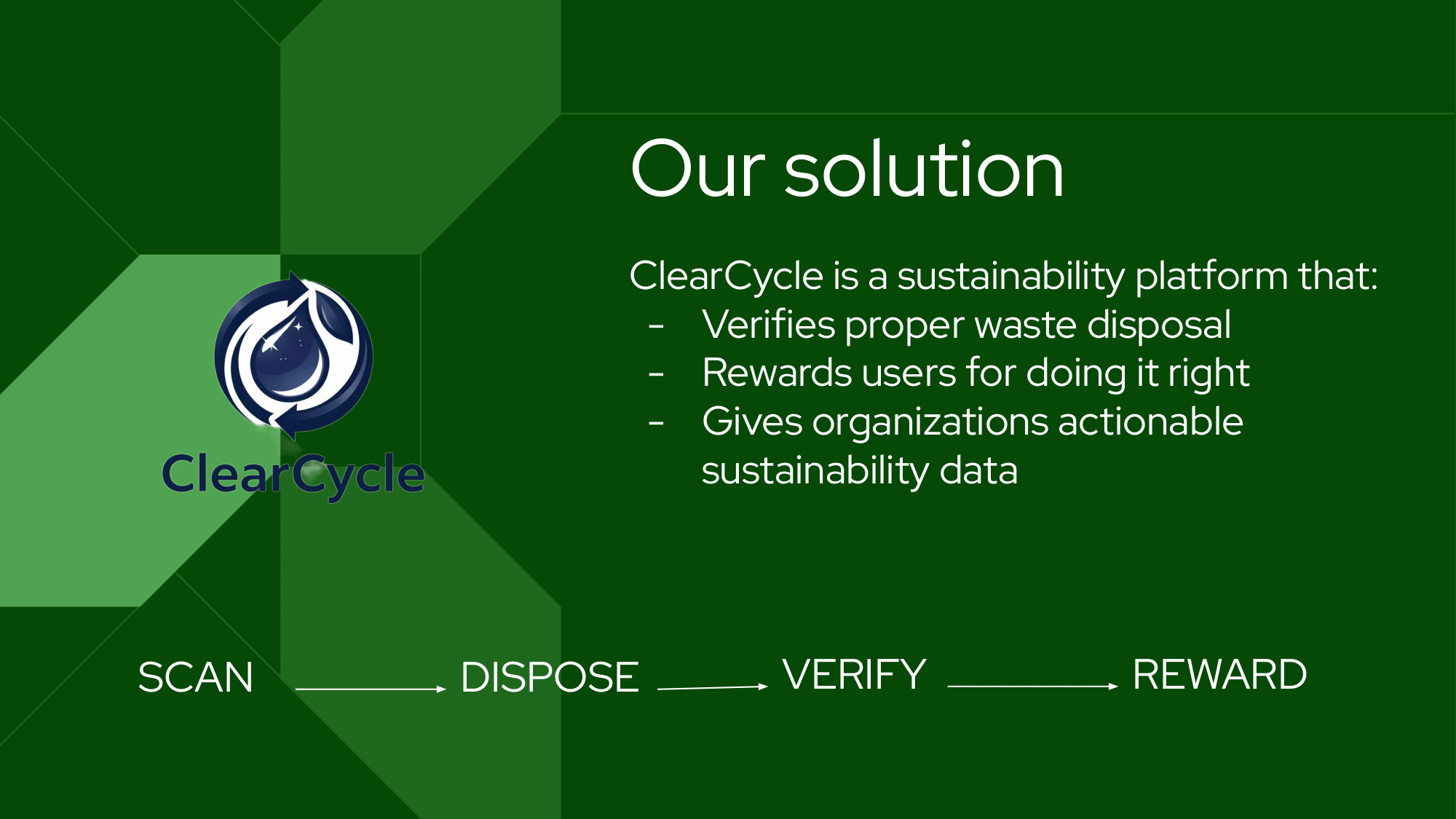
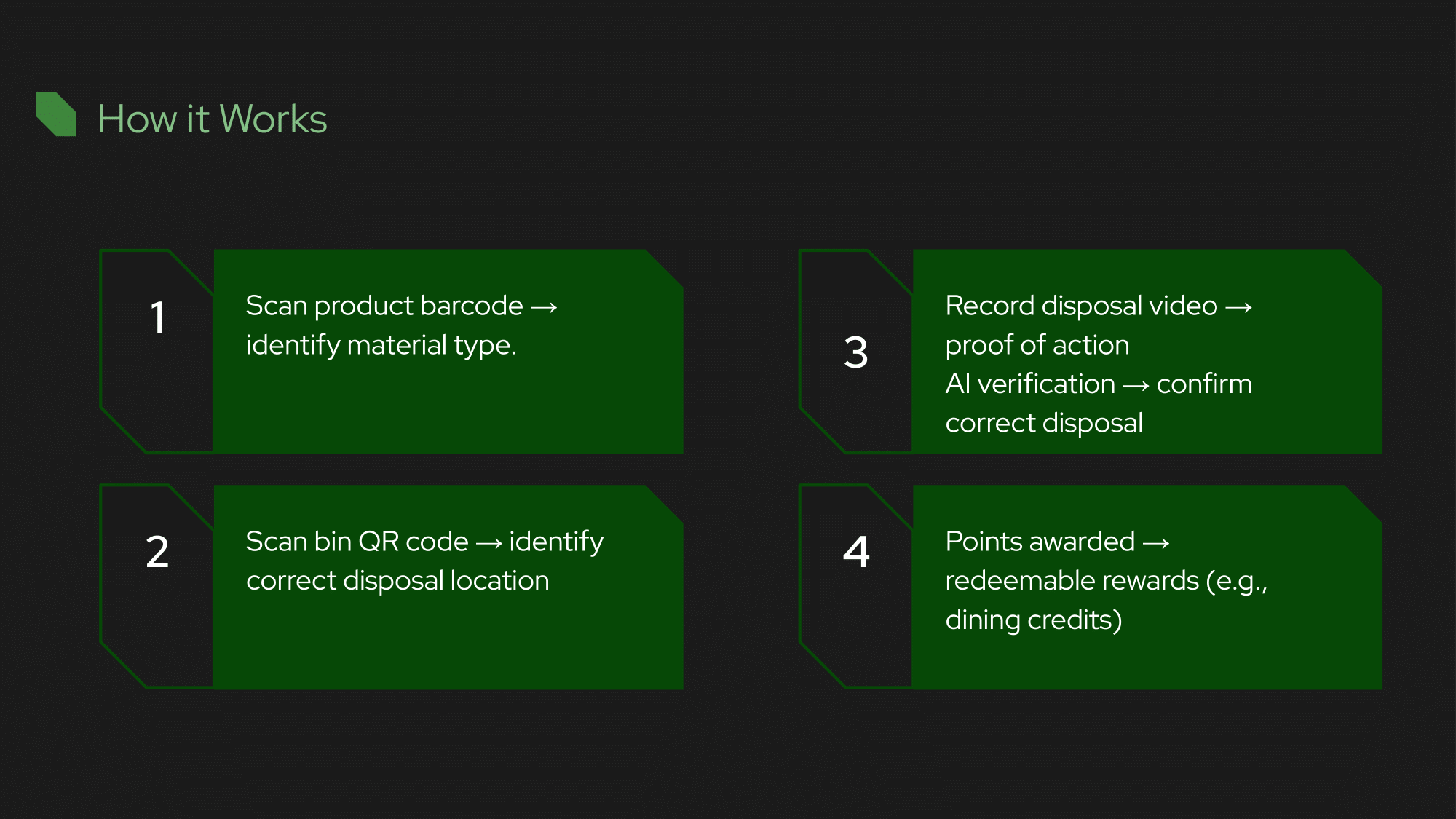
ClearCycle allows users to scan a product’s barcode, determine if that item is trash or recyclable, scan a specific recycling bin via QR code, and then record a short video of the disposal. The system verifies the sequence of actions and uses an AI-powered vision model to determine whether the item was disposed of correctly. When a valid disposal is detected, the event is logged, and users can be rewarded with points or credits, encouraging proper recycling behavior.
How we built it
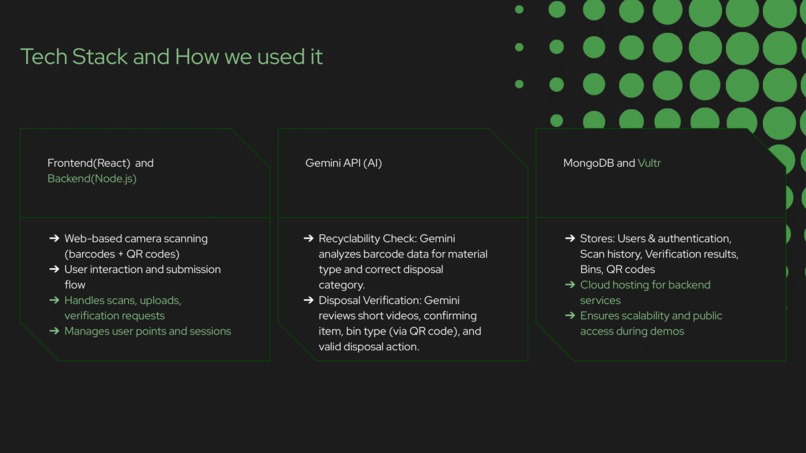
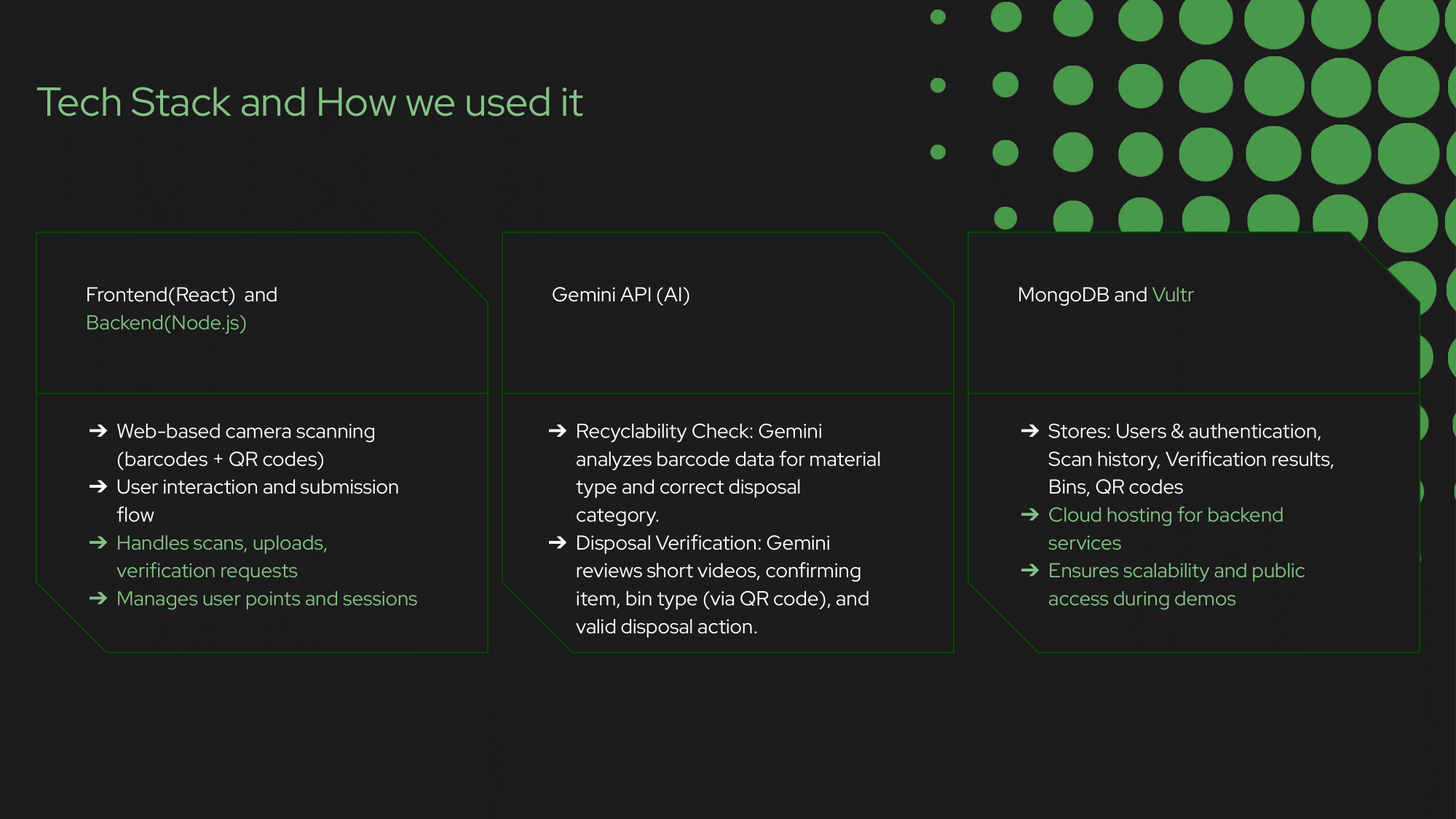
We built ClearCycle as a mobile-friendly web app that combines barcode scanning, backend validation, and AI-powered video analysis. The frontend handles live camera scanning, while the backend manages product lookups, event tracking, and video uploads. To keep things reliable, we implemented a product lookup flow that first checks our database before reaching out to external APIs. An AI vision model is used to analyze the disposal video and confirm that the item went into the correct bin.
Challenges we ran into
One of our biggest challenges was making barcode scanning work consistently across different devices and lighting conditions. Handling short video uploads while keeping the app fast and intuitive was also tricky. We also had to make sure that the frontend and backend stayed in sync so AI verification didn't impact user experience.
Accomplishments that we're proud of
- Integrating a mobile feature so you can use the website on your phone
- Implementing an AI vision model to verify whether an item is disposed of correctly
- Designing and connecting a database to store scan events, products, and user interactions
- Successfully deploying the application on a cloud hosting platform
What we learned
- How AI vision models and image recognition can be applied to real-world use cases
- How to search and query external APIs to identify products from barcode data
- How to design a reliable data flow between the frontend, backend, and database
What's next for ClearCycle
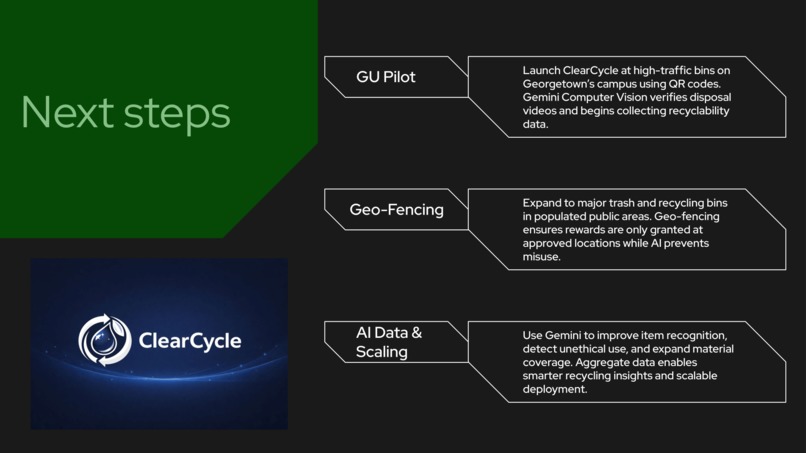
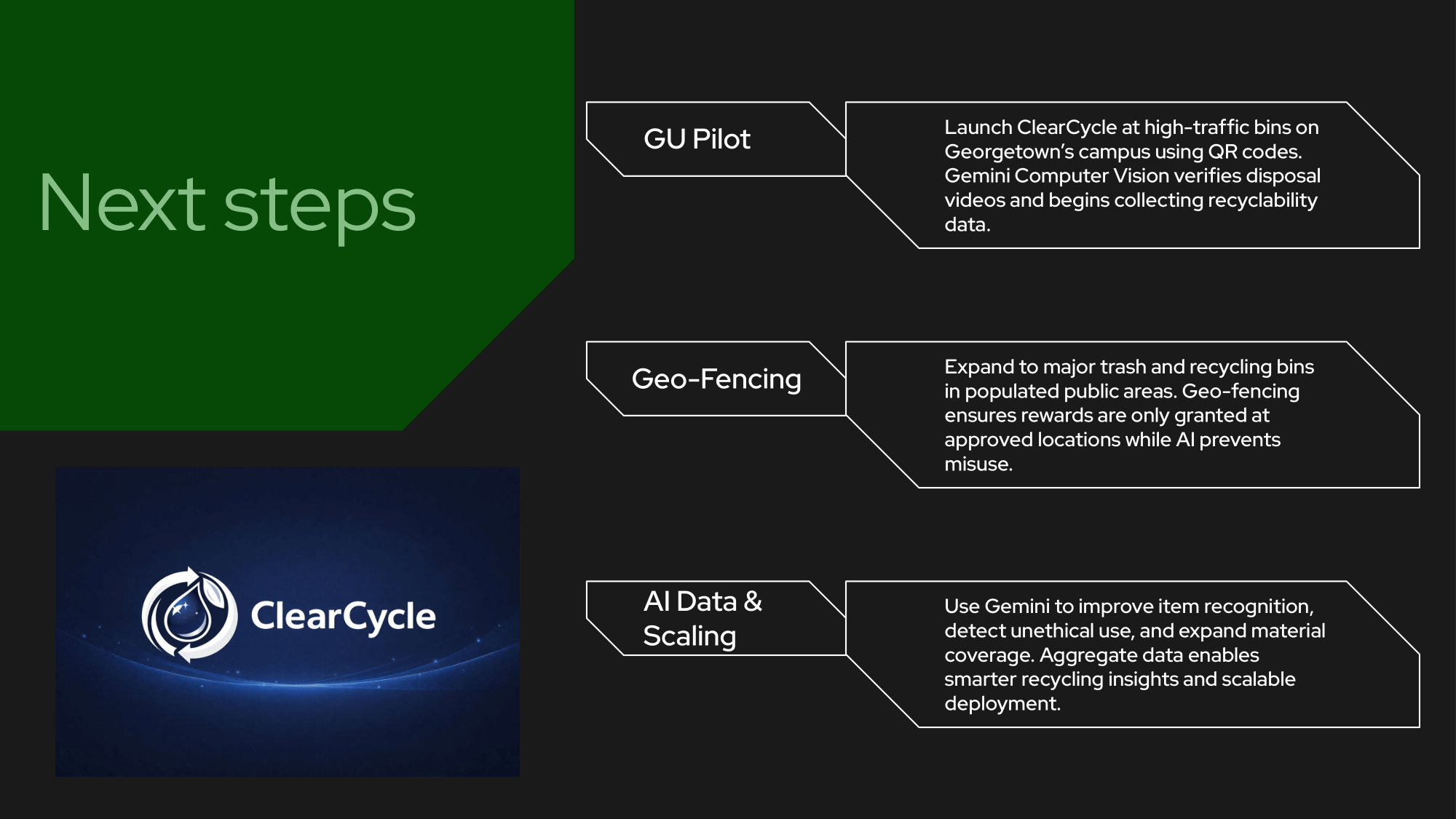
Next, we want to improve the accuracy of the AI model, add user accounts and leaderboards, and expand the product database. Long-term, we hope to partner with campuses or organizations to offer real incentives for proper recycling and make sustainable behavior easier and more rewarding.


Log in or sign up for Devpost to join the conversation.