-
-
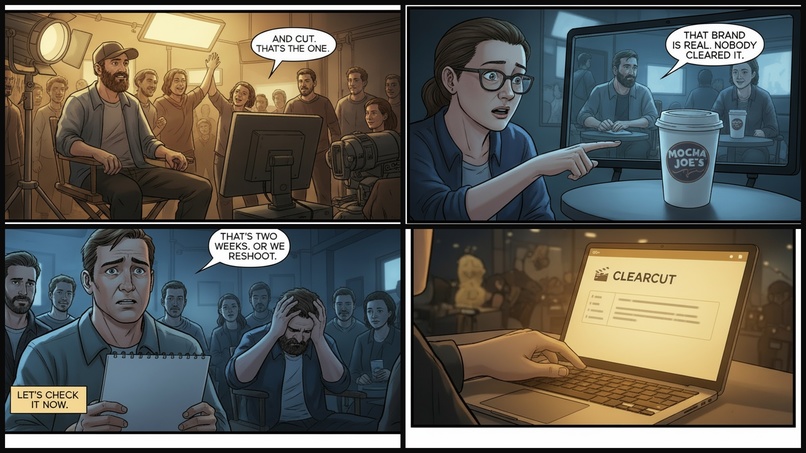
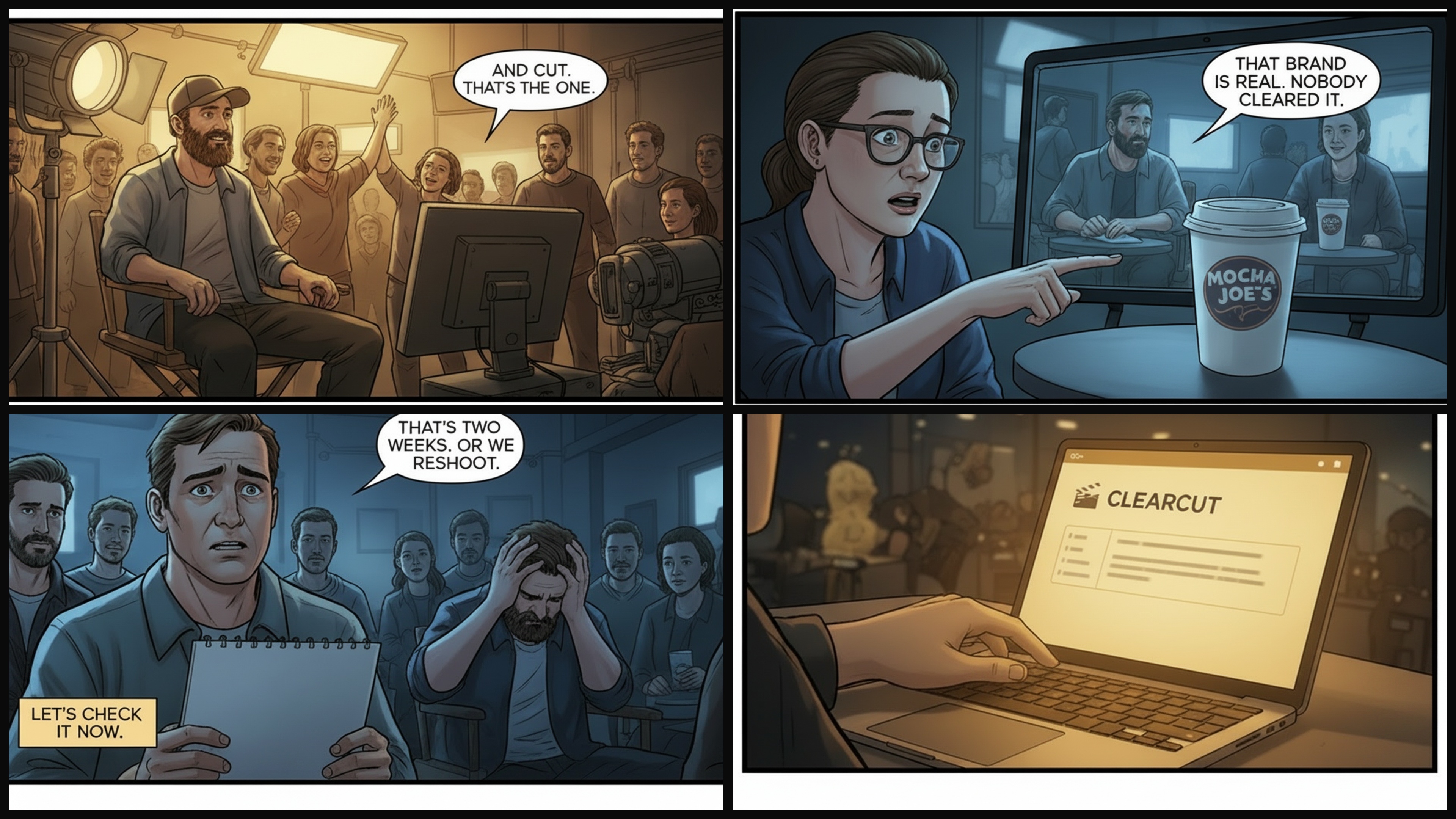
Problem storyboard
-
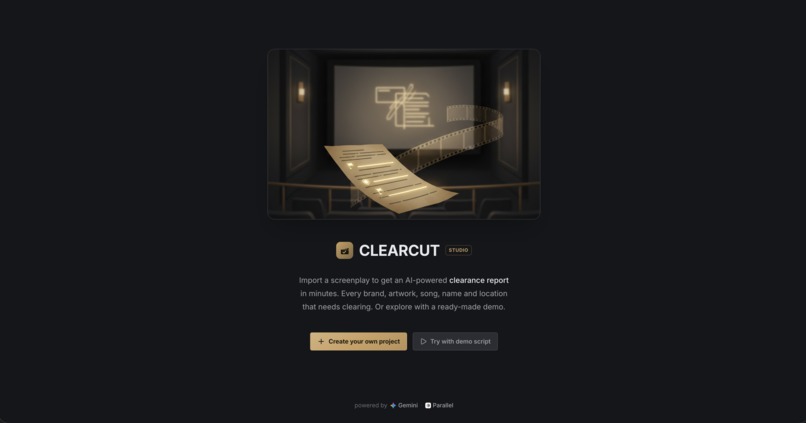
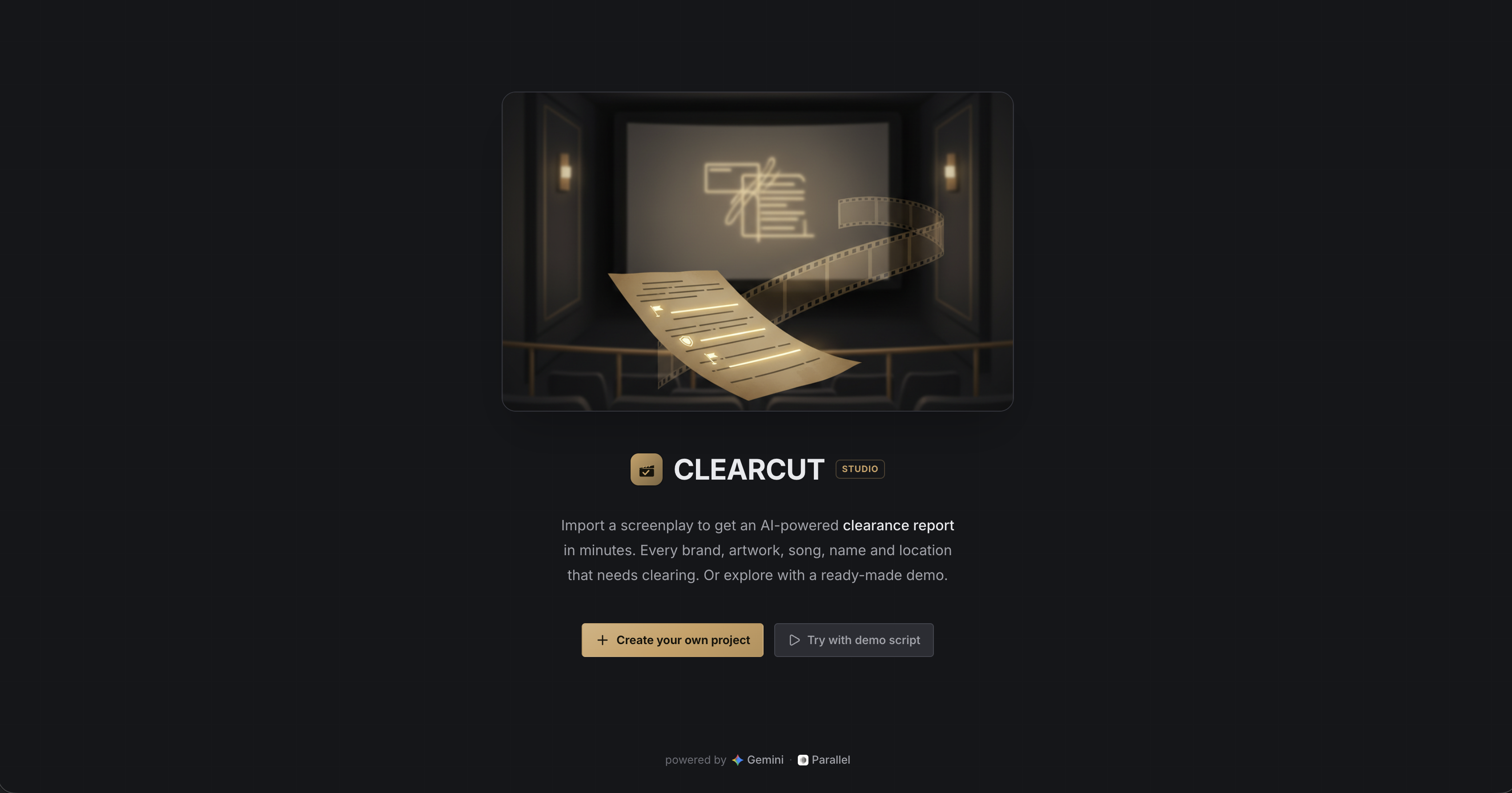
ClearCut landing page
-
ClearCut logo with Gemini, Parallel, and Google Cloud
-
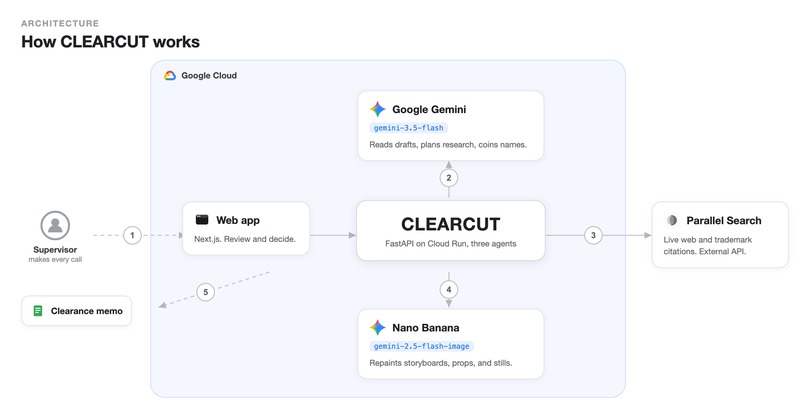
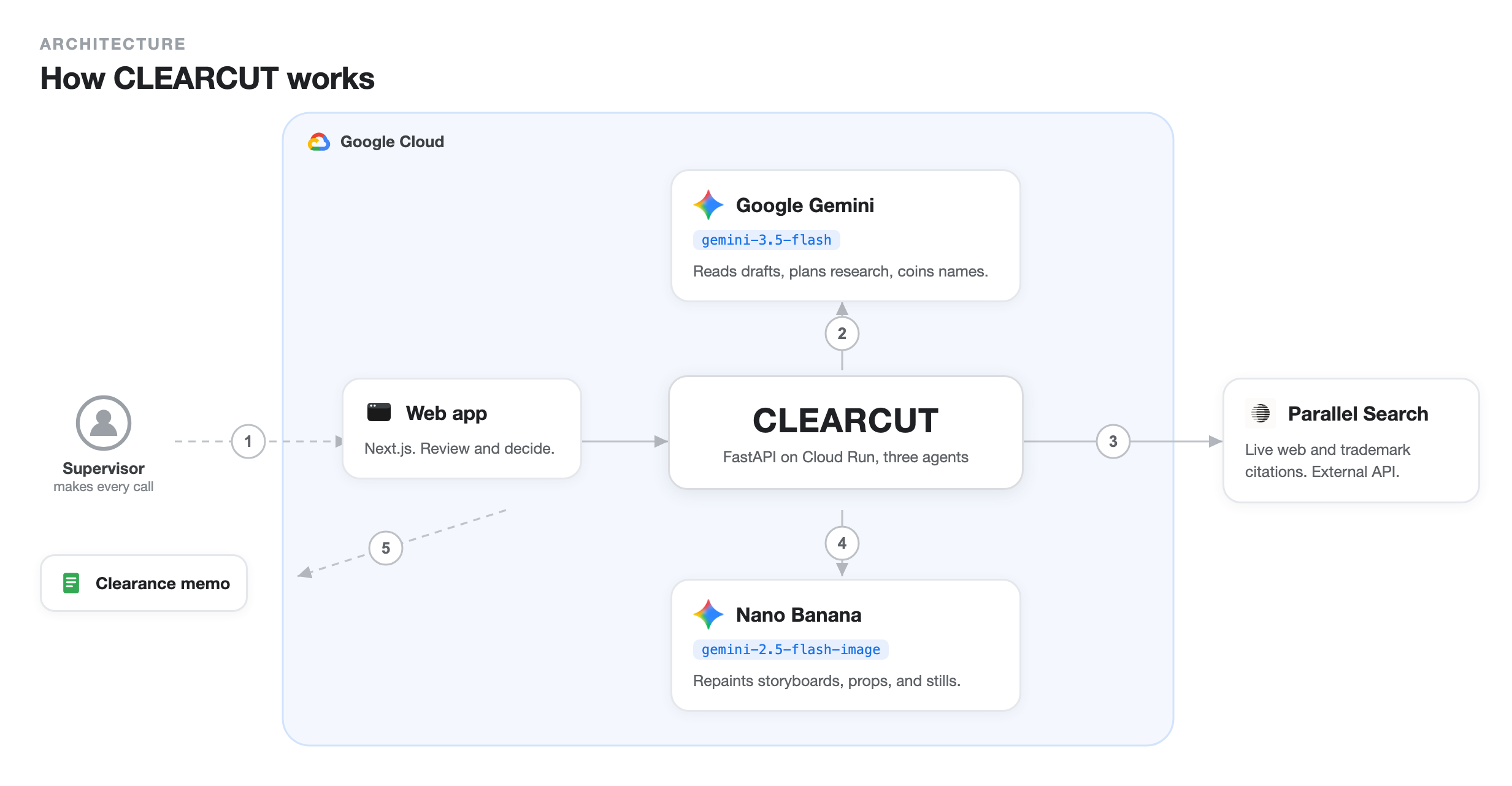
ClearCut architecture
Inspiration
Every film that reaches a screen has cleared every brand, logo, artwork, and song in the frame, or replaced it with something fictional. A distributor will not release a film, and an insurer will not write the errors and omissions policy, until a clearance report says the whole thing is safe. That report is treated as a one-time gate. The script is not. It keeps changing up to the last minute, and every change can undo a decision that was already signed off.
The stakes are not small. When The Hangover Part II recreated a real tattoo on an actor's face, the artist sued and asked a court to block the film's release days before it opened. A prop, a sign, a song on a car radio, a painting on a set wall: any of them can hold up a finished film or end up in court. And the risk is rarely on the page you are reading. A brand gets swapped in a rewrite, and weeks later it is still sitting in a storyboard, on a printed prop, and in footage that already went to camera, because nobody rechecks the old draft's decisions after a new draft lands. Clearance software today is a spreadsheet. It answers "is this cleared." It cannot answer "the script just changed, what is no longer safe." That is the tool we built.
What it does
CLEARCUT keeps a film's clearances in step with its script. You hand it a new draft. It reads the draft against the last one with Gemini and keeps only the changes that touch rights, so nobody wades through every dialogue edit. When a change matters, say a fictional coffee shop becomes a real brand, it reopens the earlier clearance that only held because the name was invented. For each flagged brand it runs a live web and trademark search with Parallel and shows the sources, so the decision is made on current facts and not on memory. Choose to make something fictional and it coins a new name, then checks that name against the live web for collisions before you approve it.
The part that makes it more than a report is what happens next. A script fix does not fix the production. So CLEARCUT looks past the page: it scans the storyboards, the prop stills, and the footage for the brand you just removed, and repaints the ones that still show it with Nano Banana, keeping the shot and changing only the mark. At the end it writes the clearance memo a studio and its insurer sign off on. It never clears anything itself. It does the legwork, a person makes every call, and every call is logged.
How we built it
CLEARCUT is one FastAPI service on Google Cloud, with a state machine that tracks each clearance from open to researched to resolved, and three tool-using agents on top.
- Gemini 3.5 Flash (Vertex AI): reads each draft, finds the rights-bearing changes, turns live search results into a verdict, and coins fictional names, all as structured output so results are typed, not prose.
- Nano Banana (gemini-2.5-flash-image): repaints storyboards, props, and stills so the old brand is gone and the composition stays.
- Parallel Search API: the grounding layer, live web and trademark citations for verifying a brand anname.
- FastAPI and Python: the backend, the clearance state machine, and the three agents.
- Next.js, React, TypeScript, Tailwind: the four-screen workbench, a report, the script with clearance highlights, a review room, and a storyboard board.
- Cloud Run: hosts the whole thing as one container.
The runtime AI is Google Cloud (Gemini) and the Parallel Search API, and nothing else.
Challenges we ran into
The first hard problem was telling a change that matters from one that does not. A clearance tool thaak is noise, so the model is never allowed to guess: every answer has to come from a tool call or anexact lookup, and if the data is not there it escalates instead of inventing. The second was the images. Image models repaint a sign well but garble small text, so the model would fix the neon on the wall and mangle the caption underneath. We let it repaint the scene and draw the small text back on cleanly. The third was keepinthe tool proposes and researches, but a person signs off on every clearance, and every decision isrecorded.
What we learned
Grounding beats cleverness. CLEARCUT is only worth trusting because every answer traces to an exact s the loop. We also learned how much of a production's real risk lives downstream of the script, in art and props and footage that nobody thinks to open again after a rewrite. The script is the easy part to fix. The production is the expensive part.
What's next
The bet is that every production will run this way: clearance that keeps up with the edit instead of gating it at the end. Next: pull in call sheets and prop inventories automatically, track music and likeness the way it already tracks brands and artwork, wire rights-holder outreach into the same loop, and hand a studio's businey can file straight with an insurer. The goal is a clearance layer you can point at any production and trust.
Built With
- cloud-run
- fastapi
- gemini-2.5-flash-image
- gemini-3.5-flash
- google-cloud
- google-genai
- nano-banana
- next.js
- parallel-search-api
- pillow
- pydantic
- python
- react
- tailwindcss
- typescript
- vertex-ai


Log in or sign up for Devpost to join the conversation.