Inspiration
Small businesses and independent professionals often spend too much time creating invoices, tracking payments, and following up with clients. Managing online payments also introduces security risks such as payment manipulation, duplicate transactions, and unauthorized access. ClearCollect was inspired by the idea of bringing AI-powered financial automation and cybersecurity-focused payment protection into one platform.
What it does
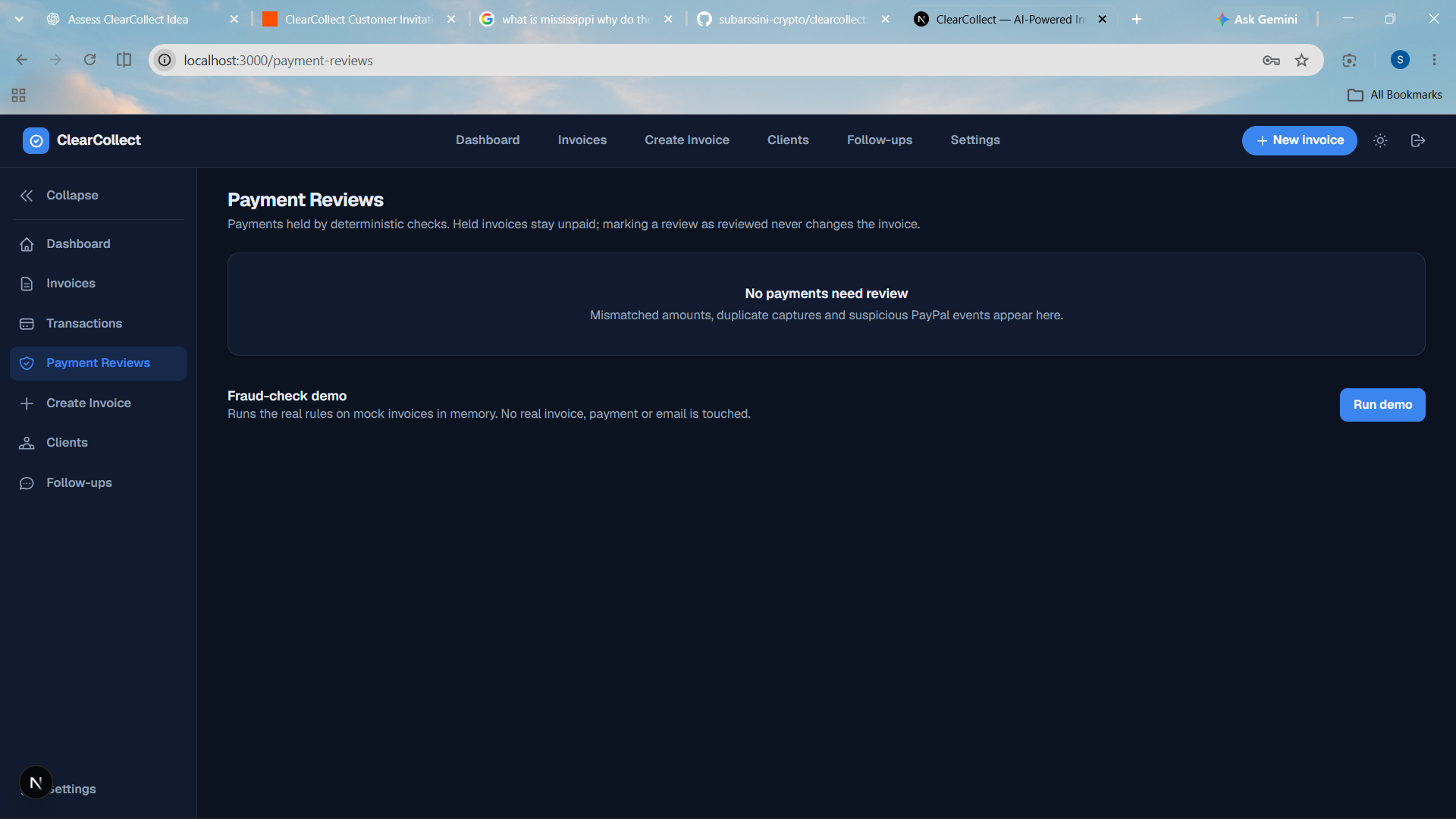
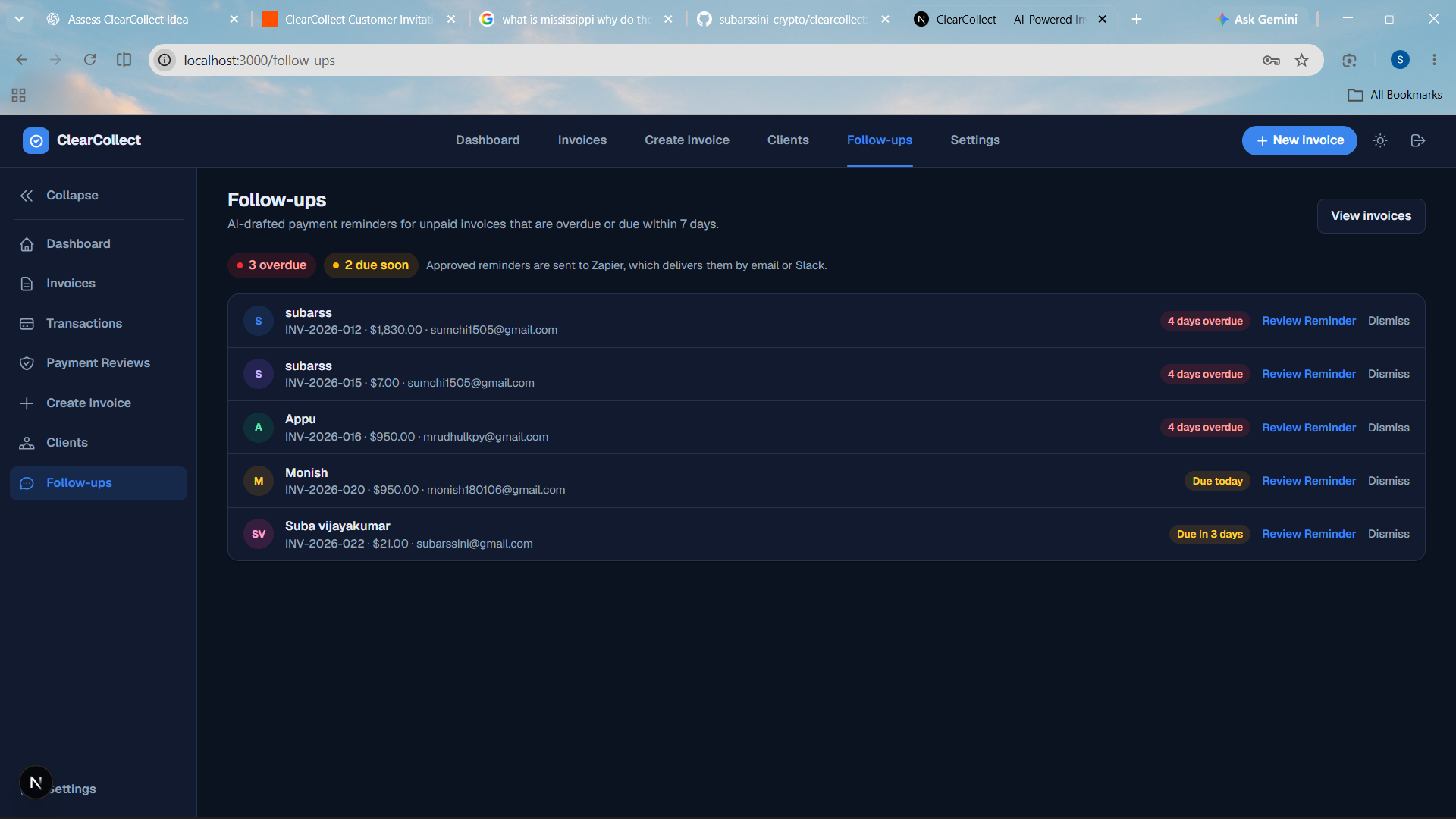
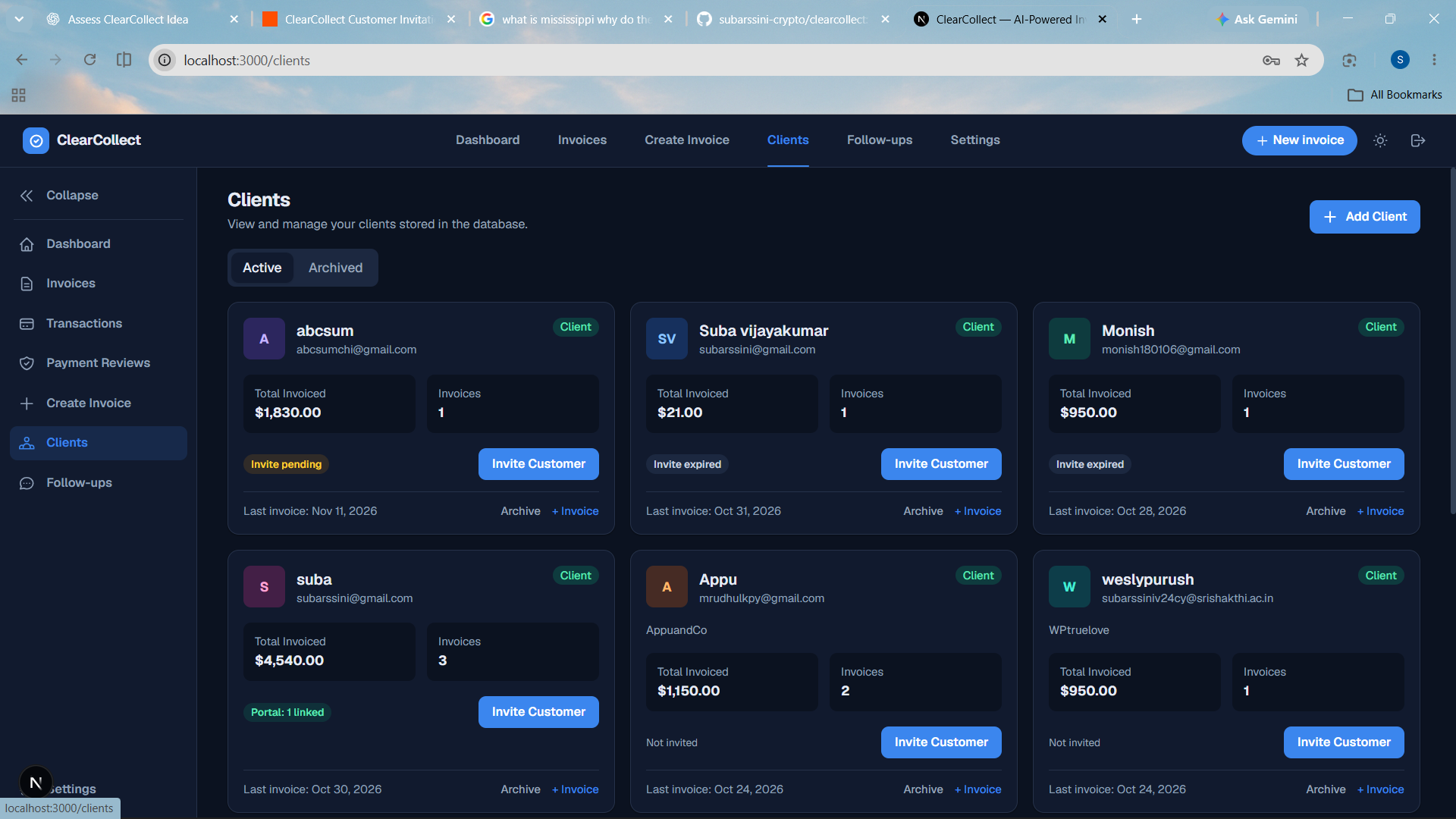
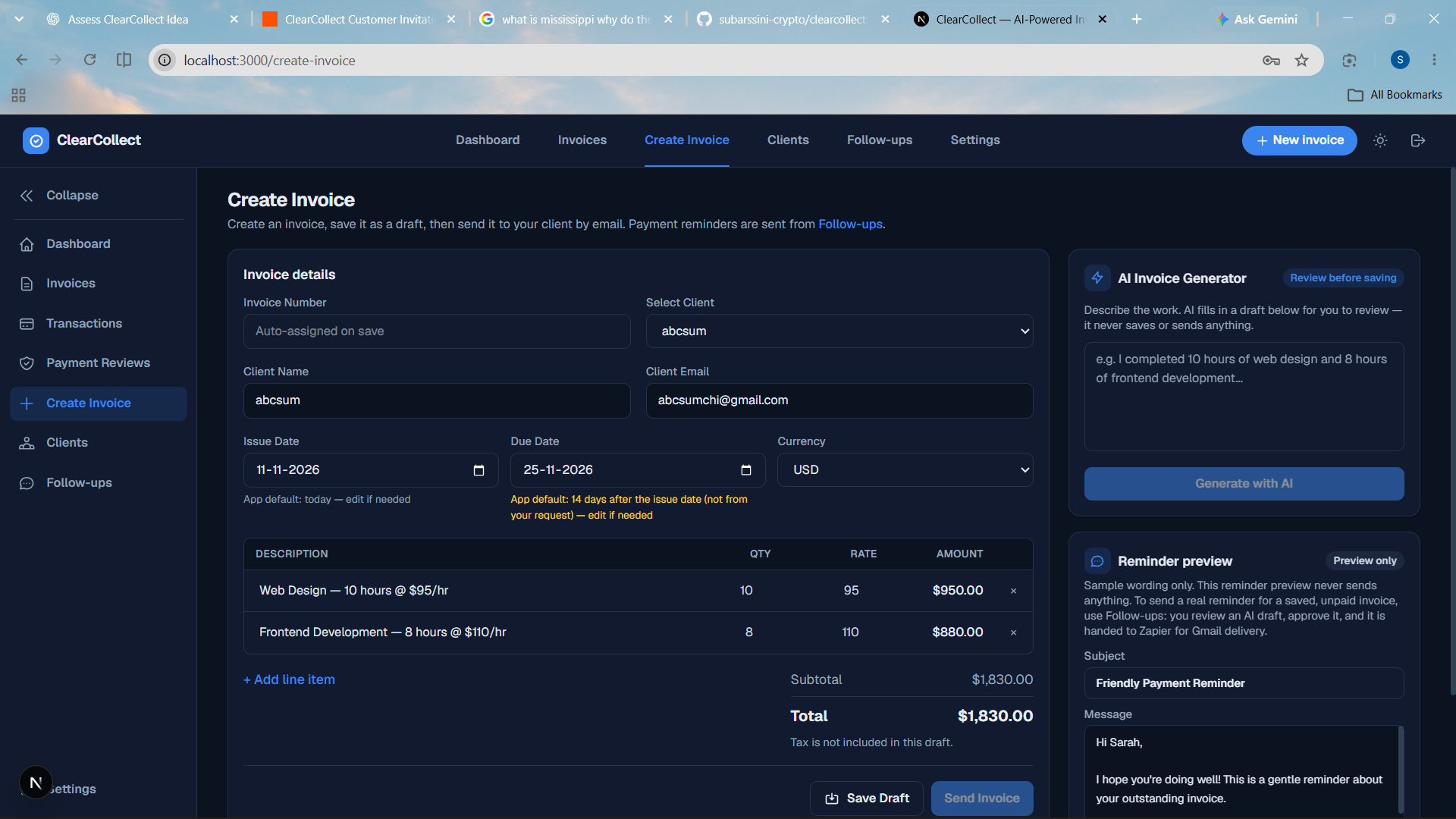
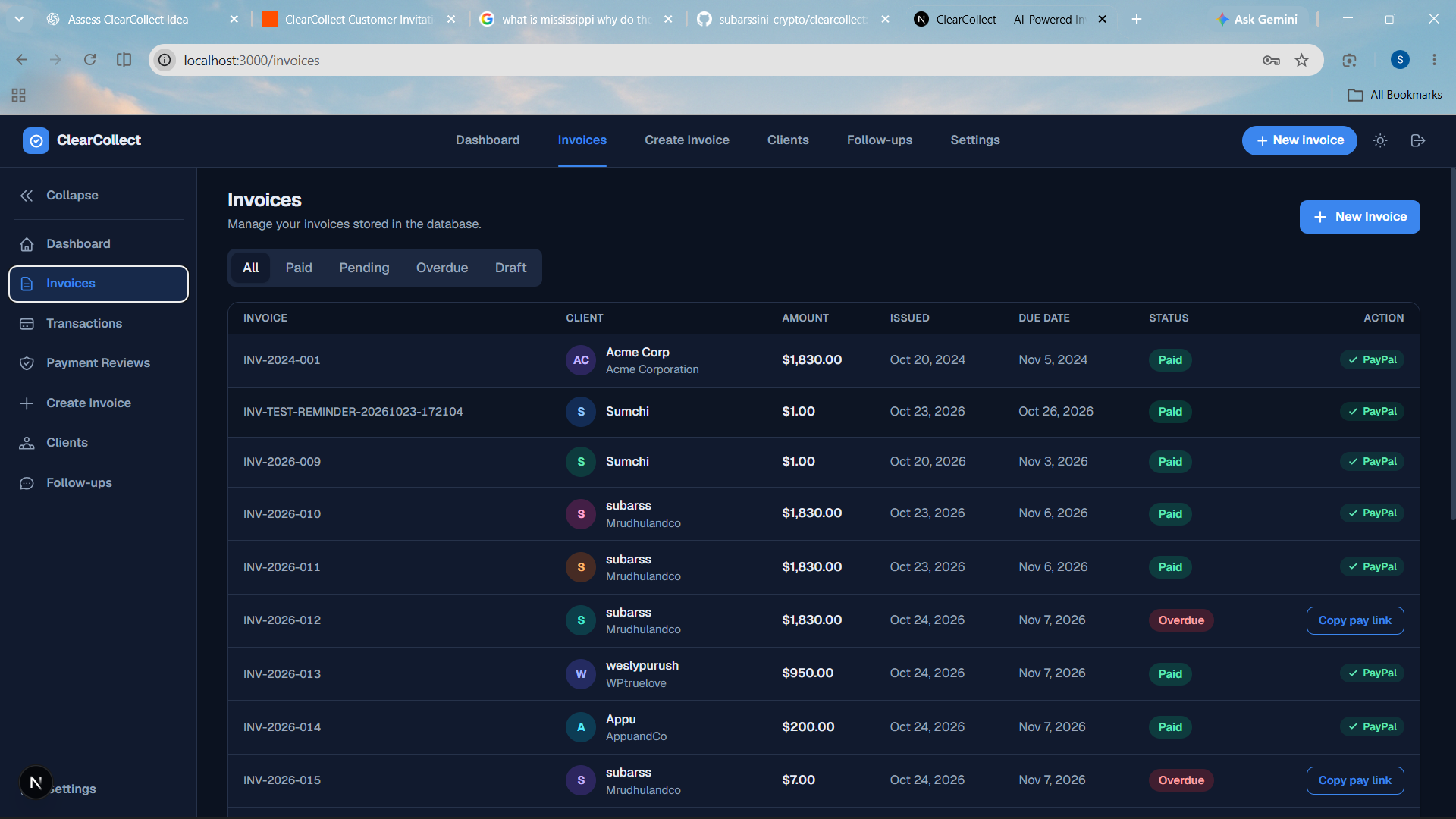
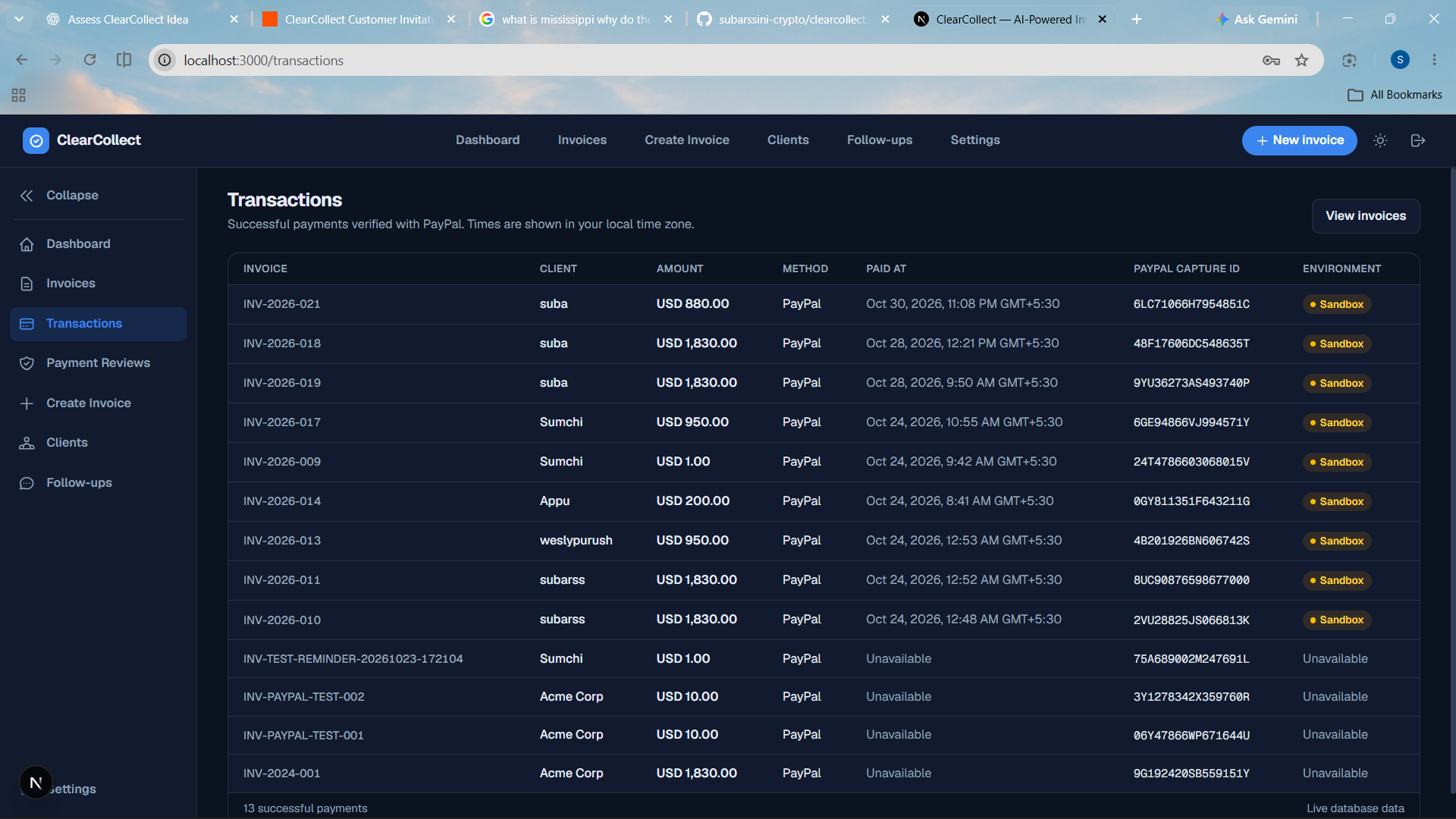
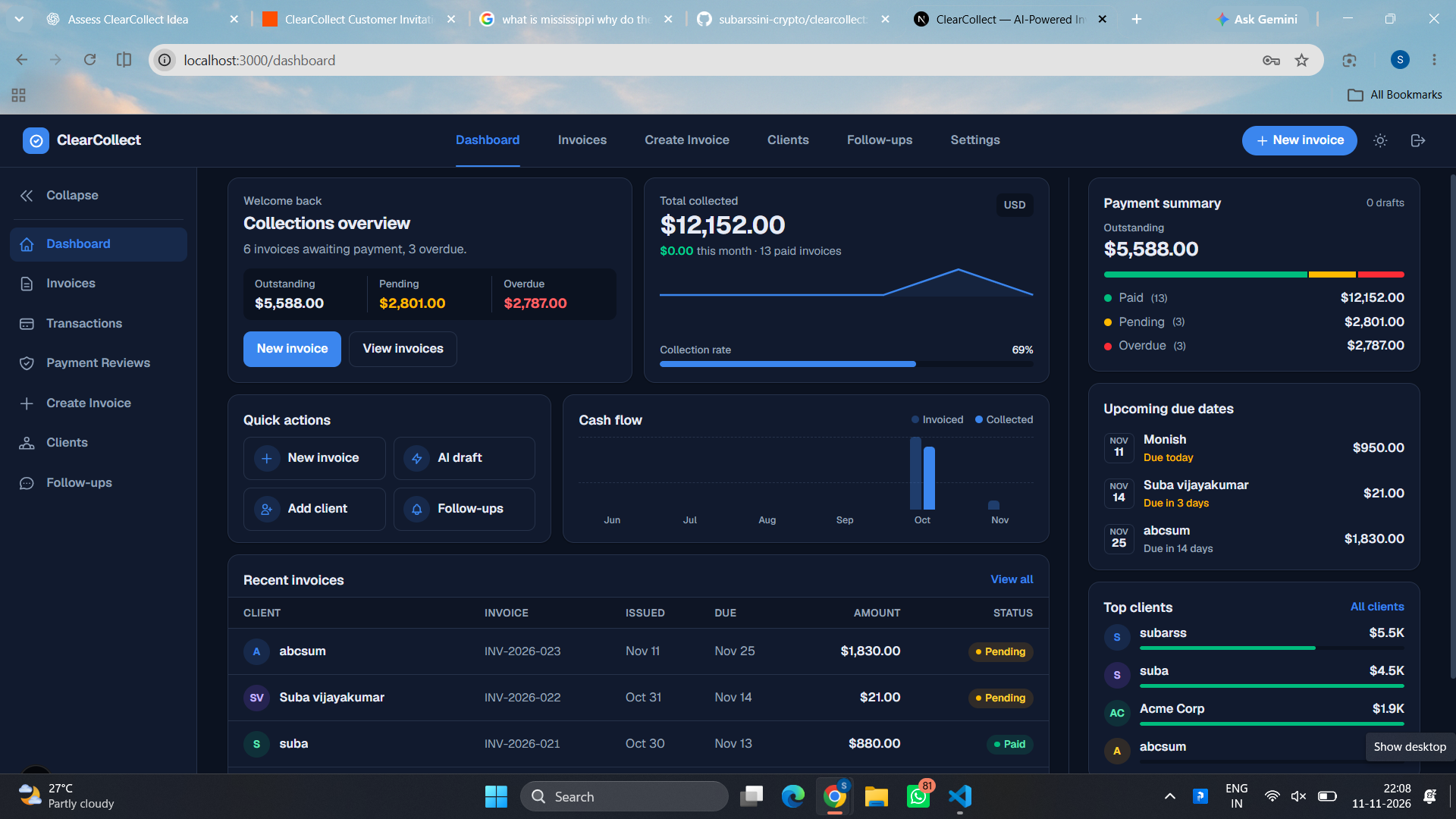
ClearCollect is an AI-powered invoicing and payment management platform that simplifies the journey from invoice creation to secure payment confirmation. Generates structured invoice drafts from natural-language requests using AI. Manages clients, invoices, due dates, and payment statuses. Integrates PayPal Sandbox for secure payment processing and server-side payment verification. Provides a dedicated customer portal for viewing invoices and payment history. Supports secure customer invitations and client-specific access control. Assists with personalized payment follow-ups and email automation. Detects suspicious payment activities, duplicate transactions, and incorrect payment amounts. Holds suspicious transactions for manual review instead of automatically approving them.
How we built it
We built ClearCollect using Next.js, React, TypeScript, and Tailwind CSS for the responsive user interface. The backend uses Next.js API routes, Prisma ORM, and MySQL to manage application data. Gemini AI powers natural-language invoice drafting and AI-assisted payment reminders. PayPal Sandbox handles payment checkout, while server-side webhook signature verification and transaction validation ensure payments match their intended invoices. Zapier connects the application to email workflows for invoice delivery, customer invitations, and payment reminders. We also implemented separate business-owner and customer authentication, secure customer invitations, protected invoice access, duplicate-payment protection, and rule-based payment risk assessment with manual review capabilities.
Challenges we ran into
One major challenge was ensuring that payment statuses could not be manipulated through browser requests or forged webhook notifications. We addressed this through webhook signature verification and server-side validation of payment amounts, currencies, and invoice details. Another challenge was preventing duplicate transactions and unauthorized access to customer records. We implemented idempotency, secure invitation workflows, and server-side access checks. Integrating AI-generated data, payment processing, cybersecurity controls, database transactions, and email automation into one consistent workflow also required careful validation and error handling.
Accomplishments that we're proud of
Built an integrated invoicing platform with AI-assisted invoice creation and client management. Implemented PayPal Sandbox checkout with server-side payment verification. Developed webhook signature verification and transaction validation. Added duplicate-payment detection and suspicious transaction reviews. Created separate owner and customer portals with client-specific invoice access. Implemented secure customer invitation and password-reset workflows. Integrated AI-assisted payment reminders and email automation. Developed automated tests covering authentication, authorization, invoice management, and payment security.
What we learned
We gained practical experience in full-stack development, database design, AI integration, payment gateway security, authentication, and access-control enforcement. We also learned the importance of validating AI-generated information, handling asynchronous payment events, implementing idempotency, testing security failure scenarios, and protecting sensitive customer data.
What's next for ClearCollect
Our next steps include completing browser-based end-to-end testing, strengthening production security, and improving customer onboarding and payment-history visibility. We also plan to enhance payment-risk explanations, introduce more security analytics, and explore AI-assisted fraud analysis while retaining deterministic verification for payment decisions.
