Inspiration
We wanted to build something where AI makes payments easier for blind and low-vision users.
While researching, we found a study where blind shoppers tried a voice shopping assistant. They found it useful, but they asked for extra checks and were nervous about trusting an AI with their money. That study, like others we read, stopped before the payment step.
That gap stuck with us. If an assistant can help someone find a product but can't help them pay for it safely, the job is only half done. ClearCart is our attempt at the other half, with PayPal at its core.
What it does
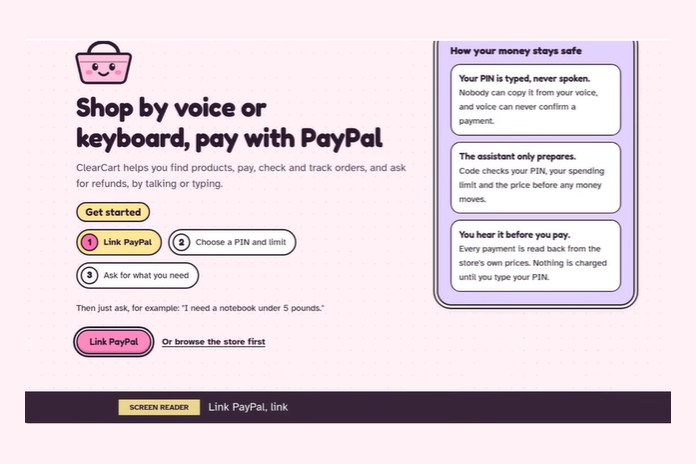
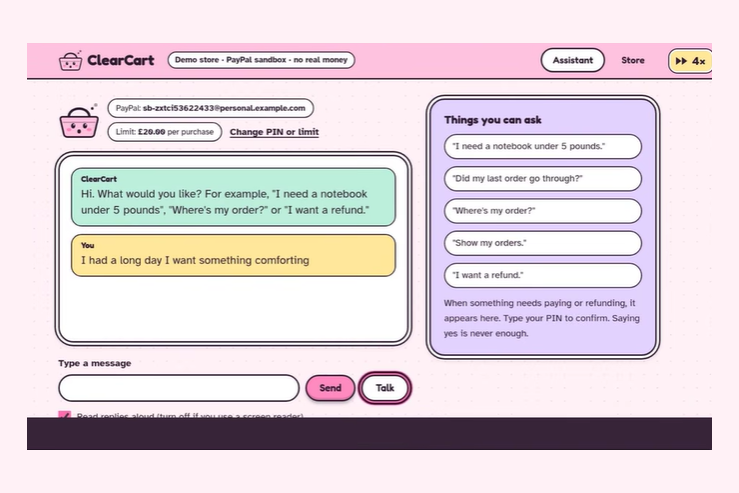
ClearCart is a shopping assistant for PayPal stores that makes buying online easier for blind and low-vision shoppers.
- Works with screen readers and keyboards.
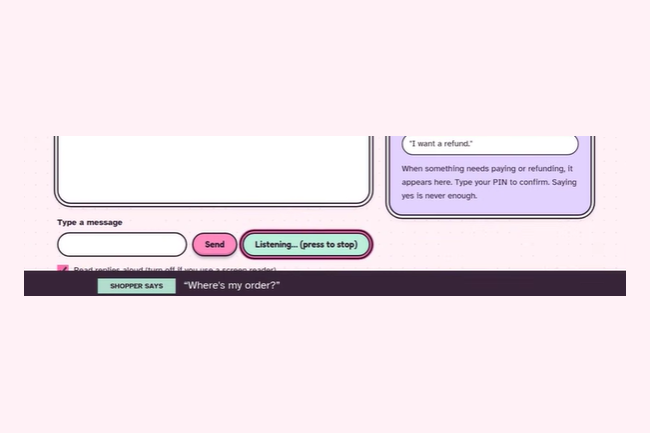
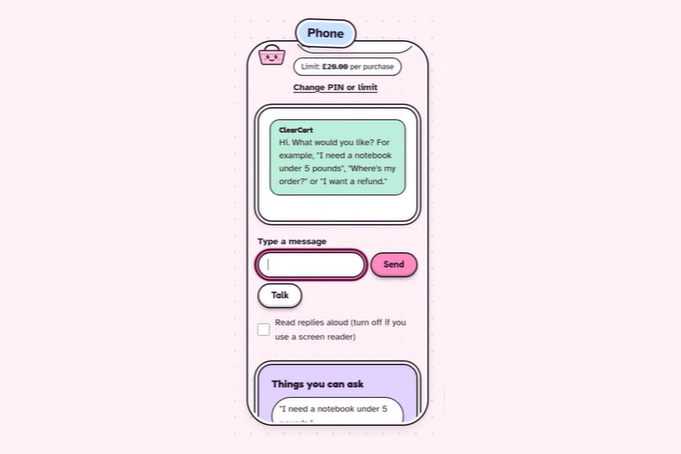
- Talk or type.
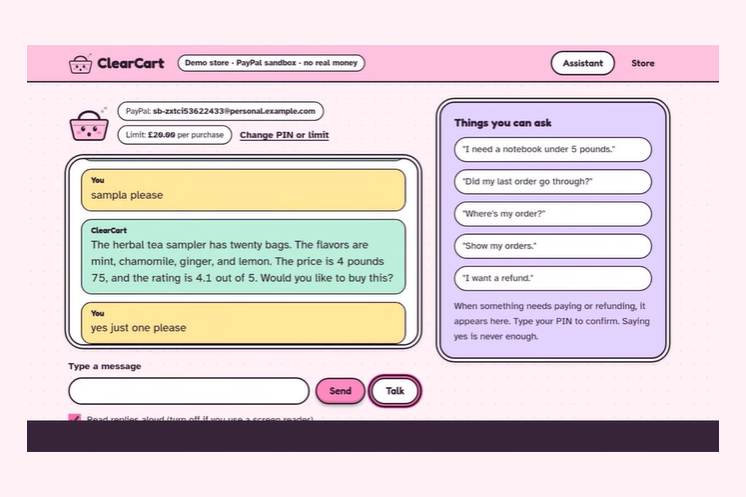
- Chat with an AI agent.
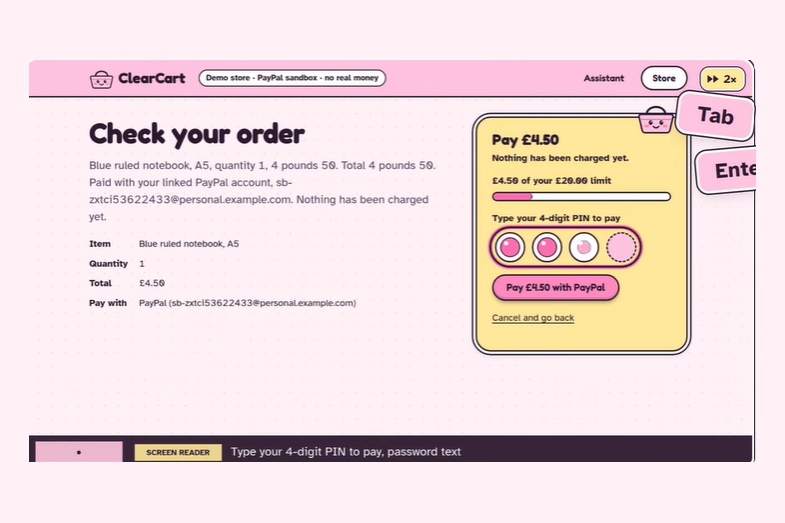
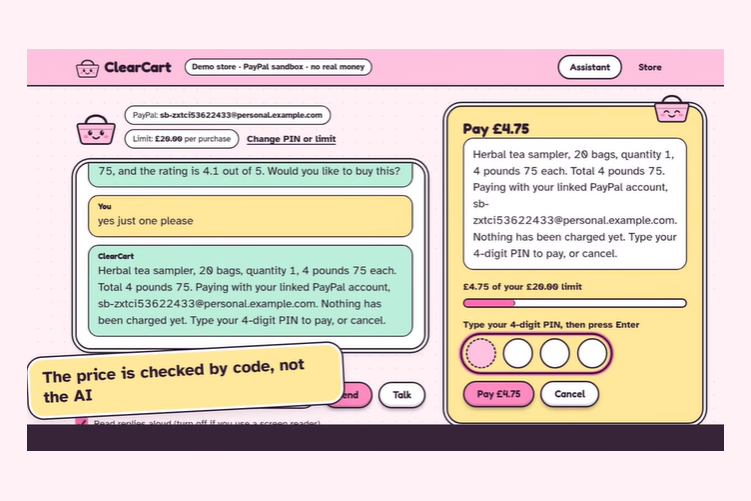
- Easy payments. Shoppers link their PayPal account once. After that, they can pay right from the conversation with no pop-ups.
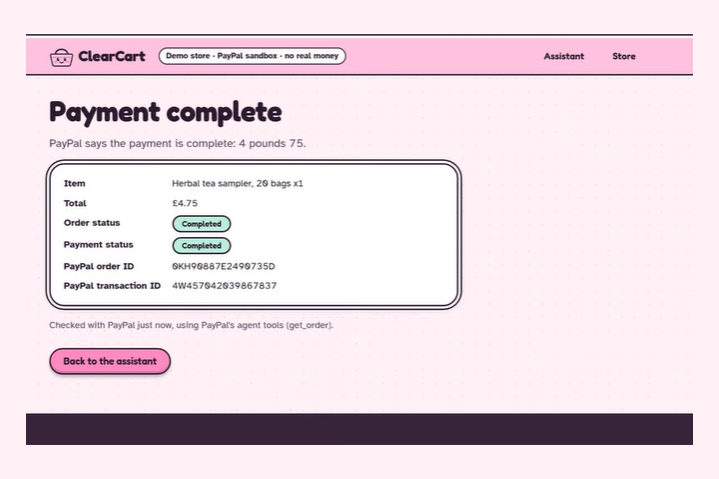
- Track orders, Simple refunds etc through paypal tools
- Built-in safety. A PIN is needed for every payment and refund, a spending limit stops big mistakes, and the AI can never pay or refund on its own.
How we built it
- Backend: Python (FastAPI), deployed on Render with Docker.
- Payments: The shopper saves their PayPal account once using PayPal Vault. After that, our code pays through PayPal's Orders API with no pop-up.
- PayPal agent tools (MCP): Everything after payment uses PayPal's MCP tools:
get_orderfor receipts,create_shipment_trackingandget_shipment_trackingfor tracking,list_transactionsfor history, andcreate_refundfor returns. - AI: Google Gemini runs the assistant, and Groq takes over automatically if Gemini is slow or fails.
- Smart search: Product search uses
gemini-embedding-001, so it matches by meaning, not exact words. "I'm thirsty" finds a water bottle. - Voice: The browser's built-in speech tools, in Chrome and Edge. Typing works in any browser and with screen readers.
- Accessibility testing: Keyboard-only testing, the free NVDA screen reader, and axe DevTools scans on every page.
Challenges we ran into
- Avoiding the PayPal pop-up. We didn't want shoppers dealing with a new PayPal page every time they paid. Getting saved PayPal accounts (Vault) working in the sandbox fixed that.
- Slow replies. At first, one message took almost a minute. Adding a backup AI and cutting down the number of AI calls made replies much quicker.
- Voice in Edge. The microphone gave us trouble.
Accomplishments that we're proud of
- The full journey works on the real PayPal sandbox: link, pay with no pop-up, receipt, tracking and refund.
- Smart search
- axe DevTools found zero accessibility issues on every page.
- The AI can never pay or refund on its own.
- Ensured safety
What we learned
- Accessibility is about more than adding a voice. Many blind users prefer their own screen reader, so the typed mode had to work just as well.
- For anything involving money, the rules should live in code. The AI suggests, and code decides.
- Testing early in the sandbox saved us. Checking Vault and the MCP tools on Day 1 changed how we built payments.
- Voice is a bad way to prove who someone is.
What's next for ClearCart
- Testing with blind and low-vision users. We tested it ourselves with NVDA, but real users are the true test.
- Moving from the sandbox to live payments, which needs PayPal approval for saved accounts.
- Supporting bigger product catalogs and real store integrations.
- Better voice support in more browsers and languages.
