-
-
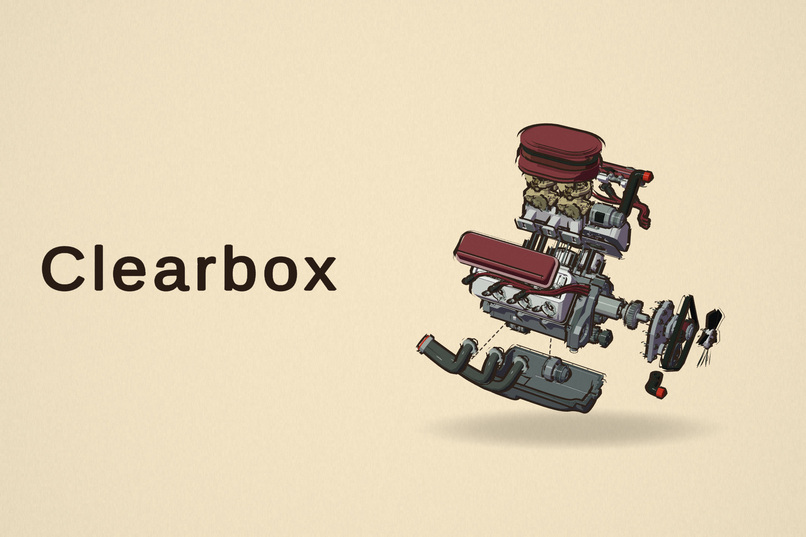
Clearbox: find the fault inside a V6 engine with your own hands.
-
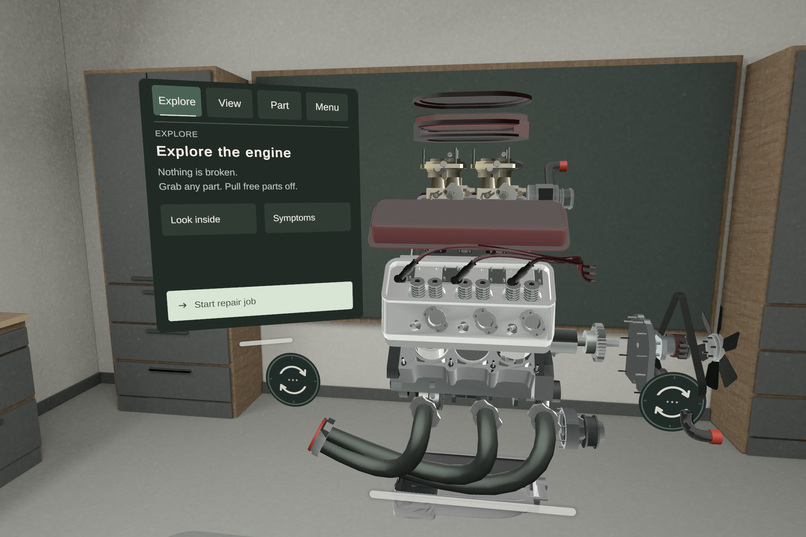
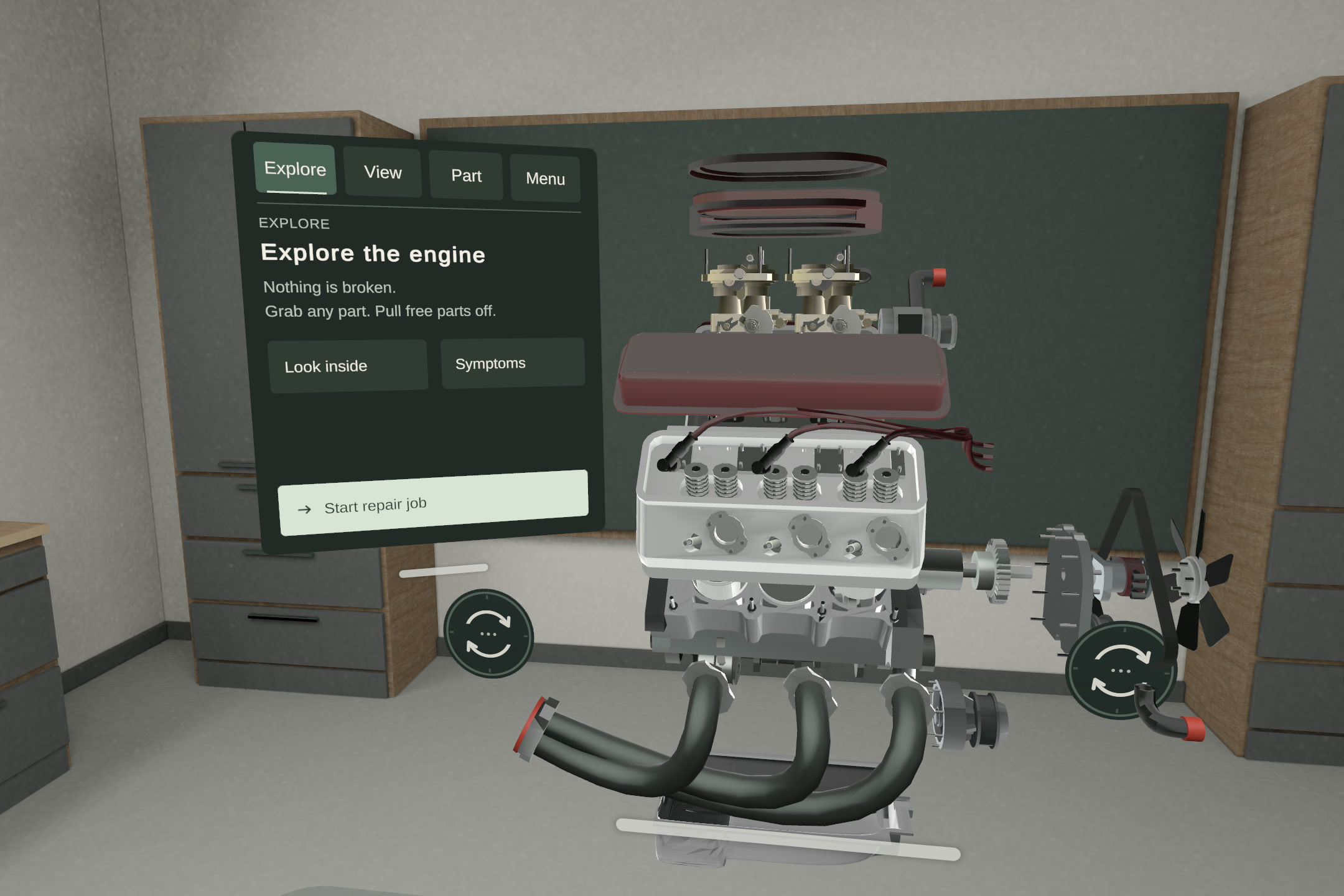
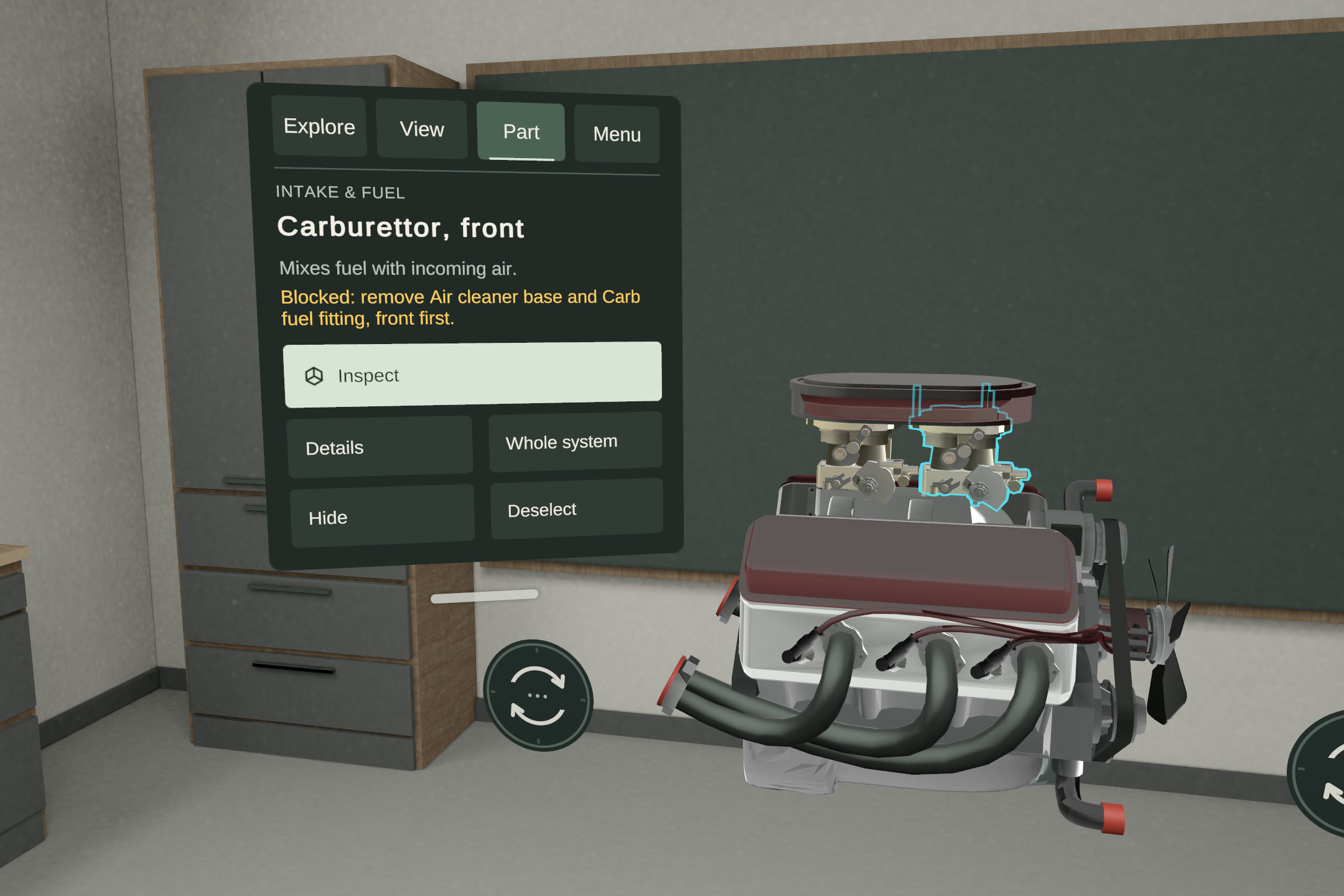
Explore mode: the engine pulled apart. Grab any part, hands only.
-
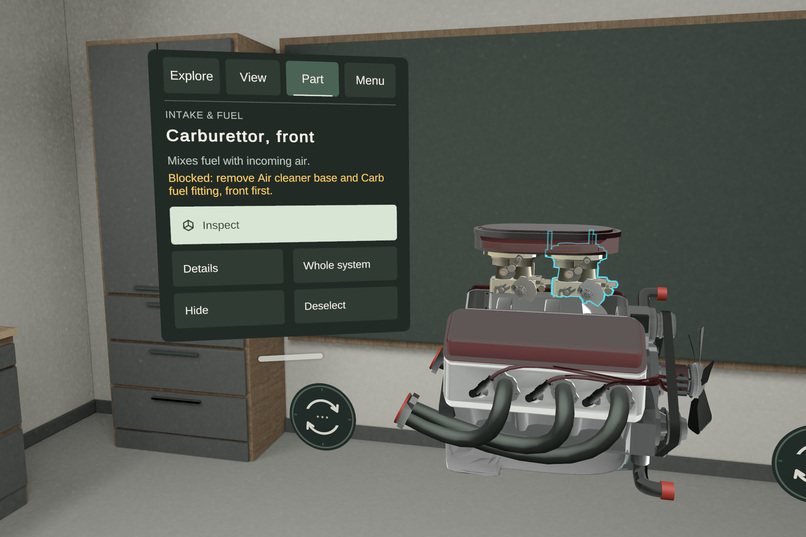
Select a part to see what it does and what has to come off first.
-
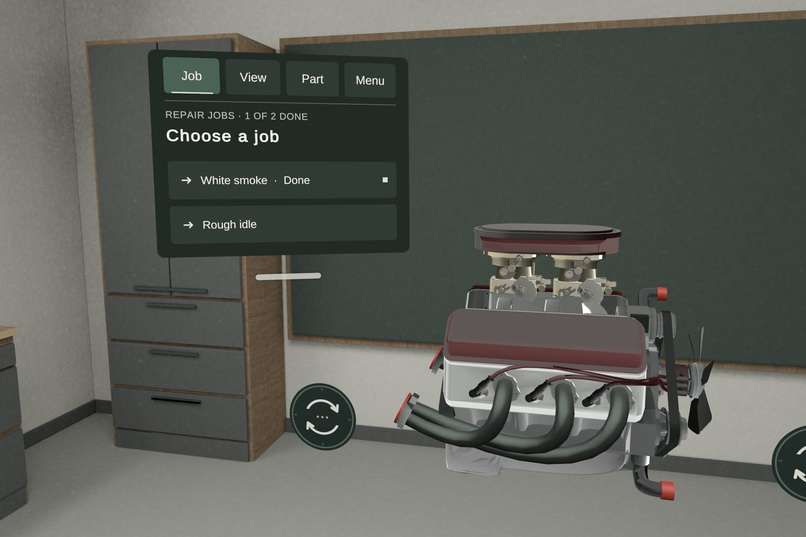
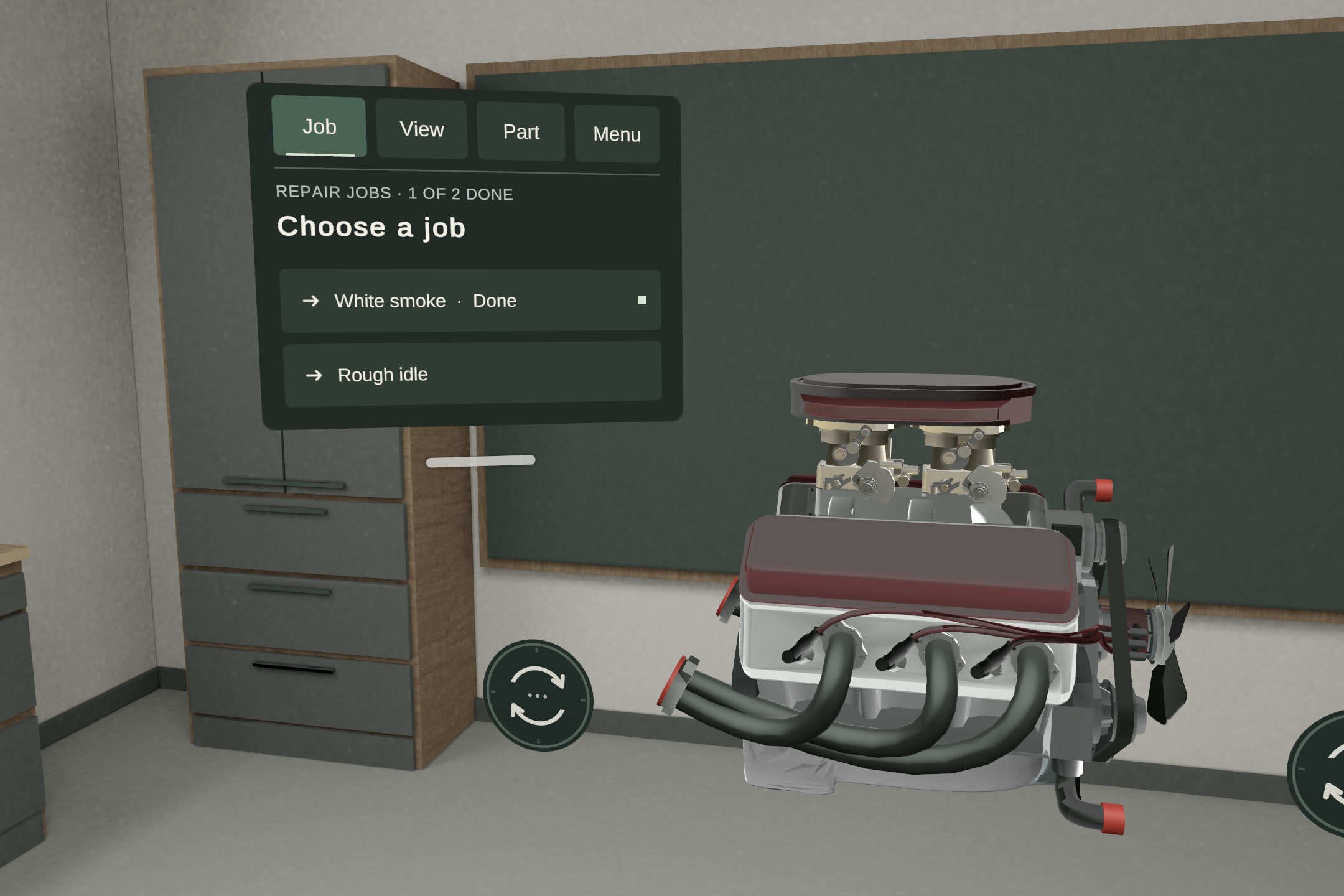
Two repair jobs, White smoke and Rough idle, each starting from a symptom.
-
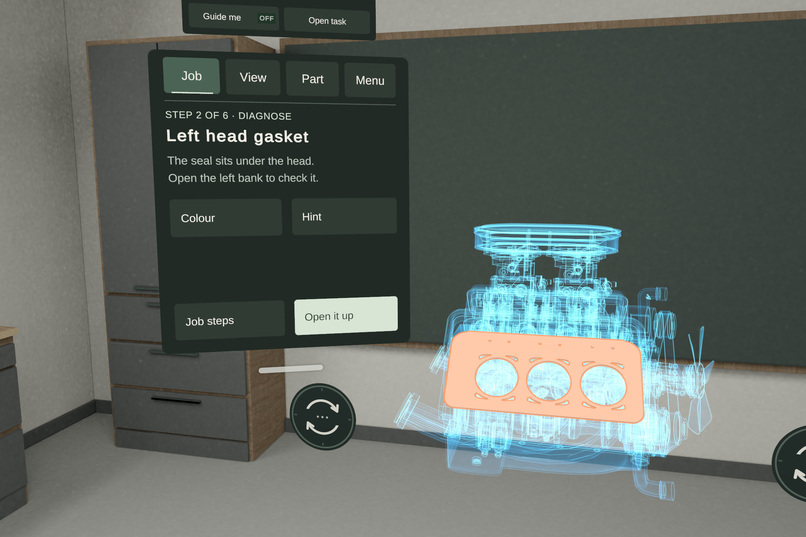
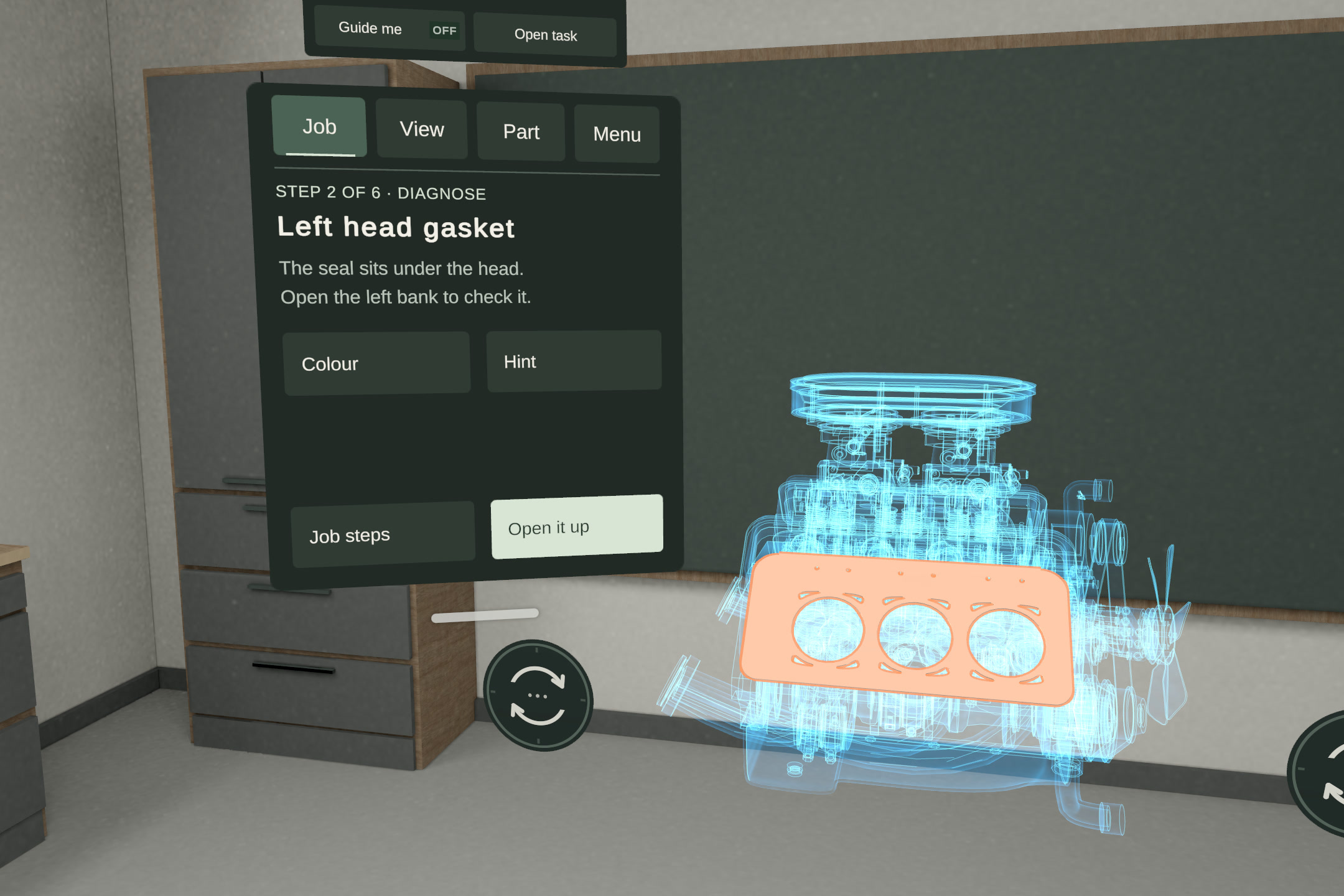
See inside: an X-ray view shows the suspect head gasket glowing in place.
-
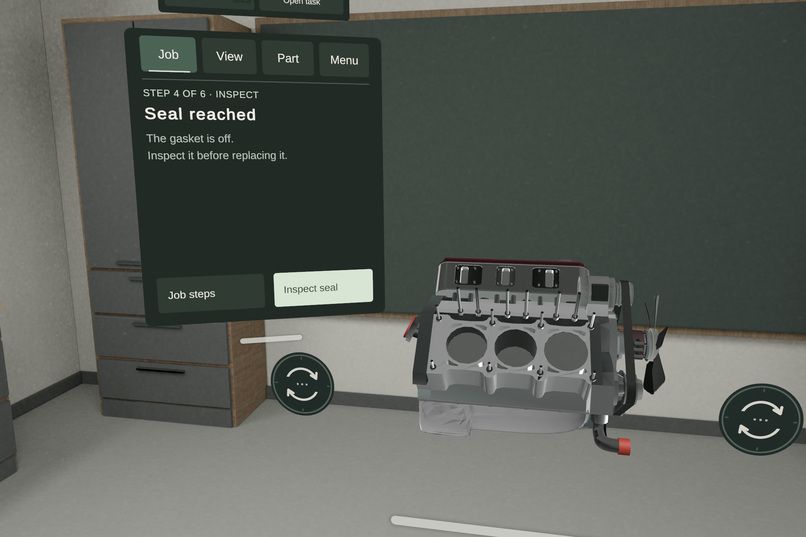
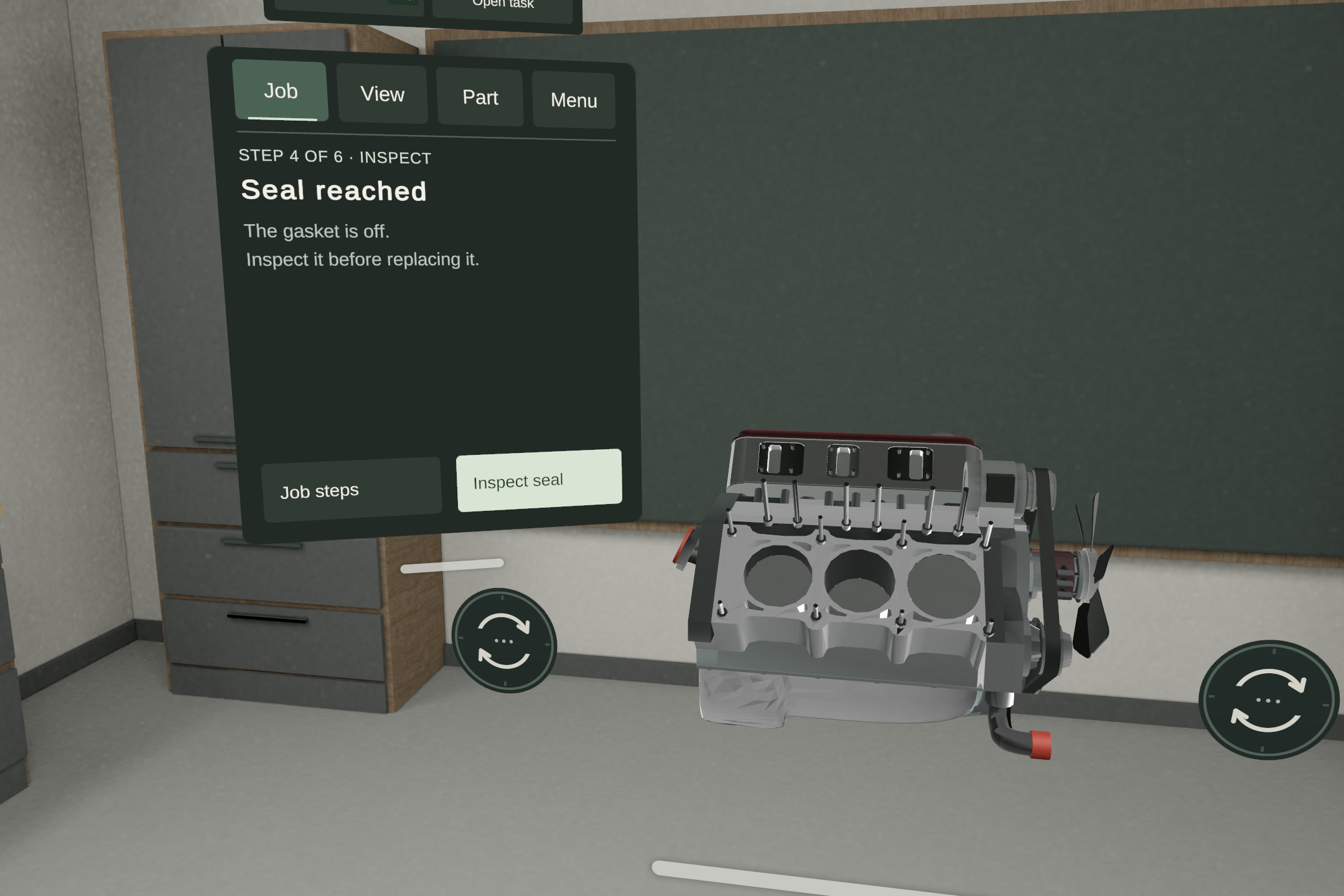
Opened up to the head gasket, in the order the real engine allows.
Inspiration
White smoke. The coolant keeps dropping. What's wrong, and where is it?
Understanding something becomes easier when you can take it apart. But real objects can be expensive, fragile, dangerous, or simply out of reach. Videos and diagrams help, yet they leave you watching someone else explore.
Clearbox started with a question: what if you could see inside an object, take it apart with your own hands, and discover how it works?
The broader idea is a mixed reality space for exploring machines and everyday objects. The first implementation focuses on a V6 engine, combining free exploration with guided repair practice. I chose a V6 because I love cars and have spent years watching broken ones being rebuilt.
What it does
Clearbox lets you explore an engine piece by piece using hand tracking. Pull parts away, inspect them, look through the assembly with an X-ray view, and put everything back together.
In passthrough, Clearbox finds a real table in your room and puts the engine on it, so you work on it at your own bench. A virtual workshop is available as an alternative.
Repair jobs give that exploration a purpose. Start with a symptom, gather evidence, choose a diagnosis, and work your way toward the faulty part. Some clues require action: removing the oil filler cap reveals residue that helps explain what is happening inside.
Parts follow removal dependencies, so reaching a component means understanding what blocks it. Guidance helps you find the next part, replace the damaged component, reassemble the engine, and complete a simulated test.
The current prototype includes two repair jobs: white smoke and rough idle. It's for learners, apprentices and hobbyists who want to understand a repair before touching a real engine. It is a space for simulated practice and discovery, not a substitute for a qualified mechanic.
How we built it
Clearbox was built with Unity 6, URP, and the Meta XR Interaction SDK v207. A V6 model was processed in Blender and separated into 66 individual parts.
The repair logic uses a graph describing parts, fasteners, and removal dependencies. A solver uses those relationships to generate removal sequences. Repair scenarios are defined as data covering checks, clues, diagnoses, and repair steps, making it possible to add faults without writing a separate interaction system for each one.
Everything is hands only. Near parts move 1:1 in your hand. Far parts are picked by pointing with your index finger, then you reach to move them: push out to send a part away, pull in to bring it closer. A blocked part shakes and names what's in the way, a refitted part snaps in when its outline turns green, and Inspect lets you turn a part with one hand and zoom with two.
Challenges we ran into
The hardest challenge was making hand interaction feel predictable. Small parts needed to be selectable, distant parts needed to move comfortably, and a resting hand needed to stay out of the way. Repeated headset tests exposed issues that looked fine in the editor.
Performance also required careful attention. Overlapping part colliders created excessive physics events, causing severe slowdowns; adjusting collision filtering made the detailed assembly practical to interact with. Rotating the whole engine caused a stutter: 2,000+ colliders were being re-synchronised by physics every step, so physics now pauses while the engine itself moves. GPU load is kept in check with dynamic resolution. Measured on Quest 3: 71.5 fps on average and never below 60.
Another challenge was keeping instructions visible without covering the object people came to explore.
Accomplishments that we're proud of
- Making a complex assembly explorable with your own hands, from looking inside with X-ray to removing, inspecting, and refitting individual parts.
- Connecting exploration to a complete repair loop: gather evidence, diagnose a fault, reach the damaged part, replace it, and test the result.
- Building a reusable parts graph that generates removal sequences from dependencies, providing a foundation for more faults and future objects.
- Bringing 66 engine parts together into an interactive prototype, with automated tests for the underlying rules and repeated headset testing to refine the experience.
What we learned
Hand tracking needs clear feedback as much as accurate tracking. People need to understand what they are pointing at, why a part will not move, and what to do next.
Testing on the headset shaped the project throughout development. Automated tests helped validate repair rules, while hands-on testing revealed problems with comfort, readability, and movement.
What's next for Clearbox
Expand the engine scenarios, refine the interactions, and bring the same approach to other objects: see inside, take things apart, and learn by doing. Some other objects being considered are laptops, phones, cameras...
Credits
"V6 car engine with engine [MoreThem]" (https://skfb.ly/pDyRL) by Blendoriano, licensed under Creative Commons Attribution 4.0 (http://creativecommons.org/licenses/by/4.0/). Modified: split into parts, reduced and re-shaded for VR.
Workshop textures from Poly Haven (CC0): Plywood and White Plaster 02 by Rob Tuytel, Smooth Concrete Floor by Dimitrios Savva.


