-
-
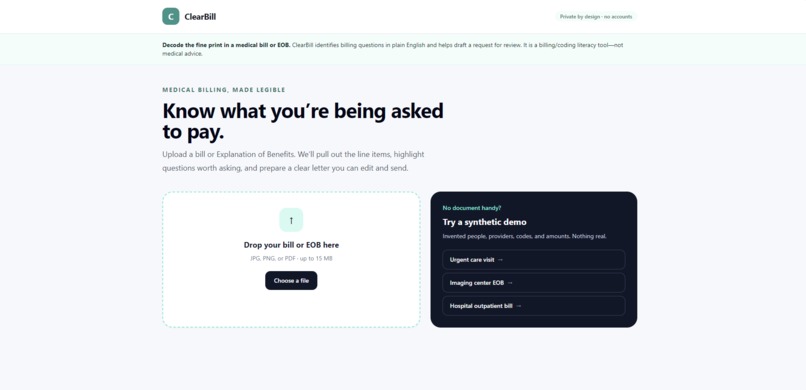
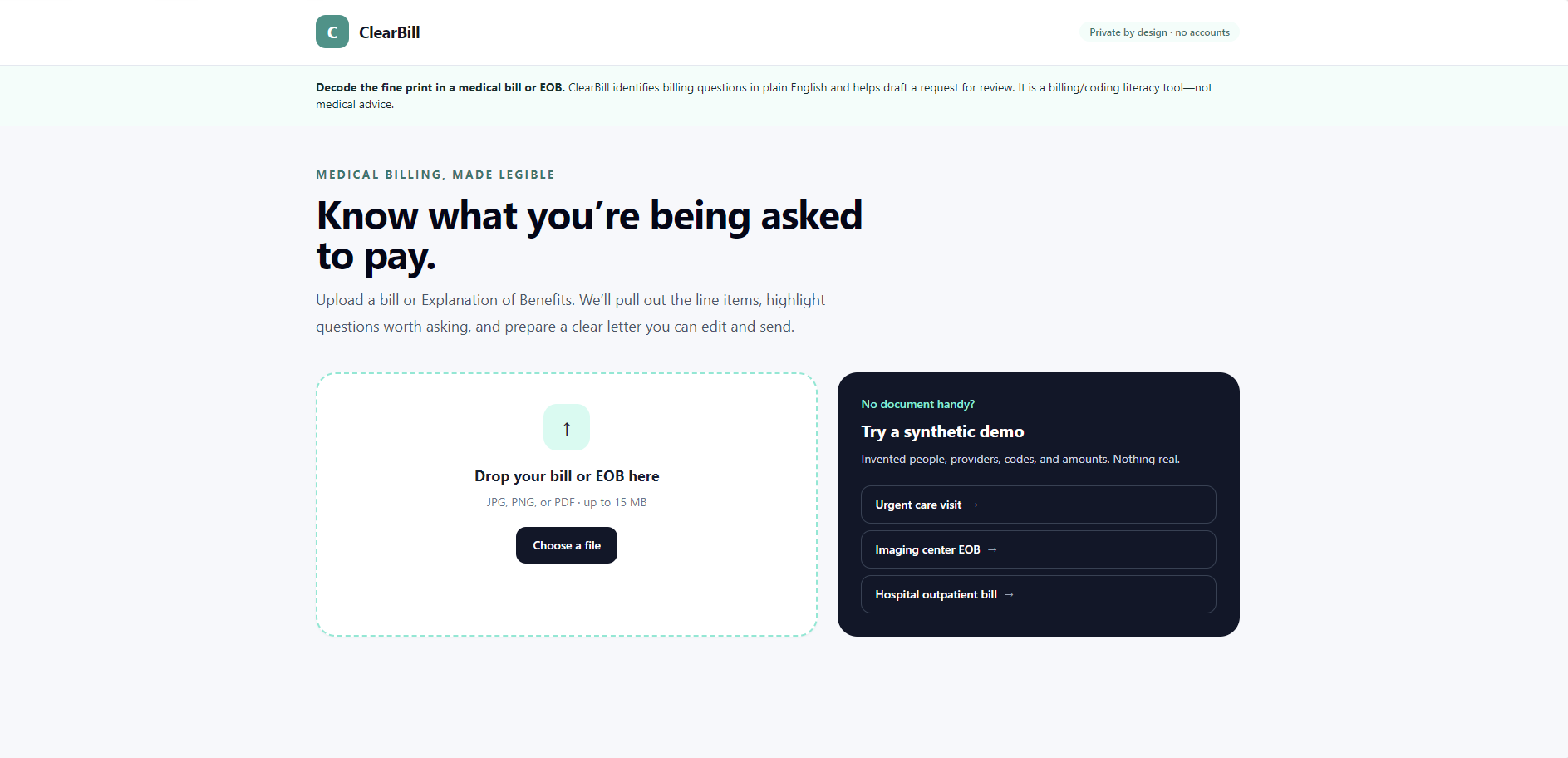
Landing Page
-
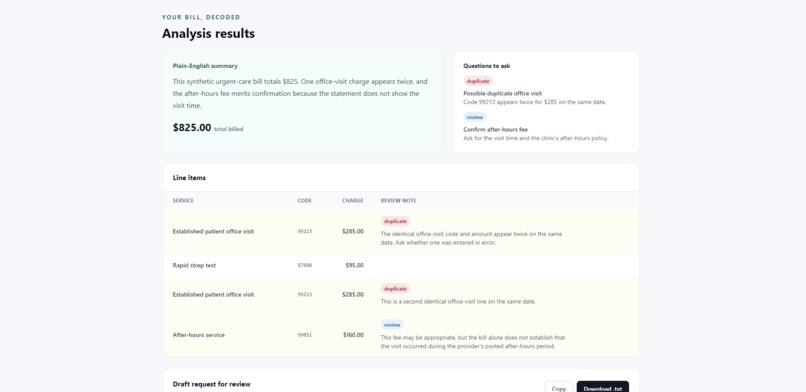
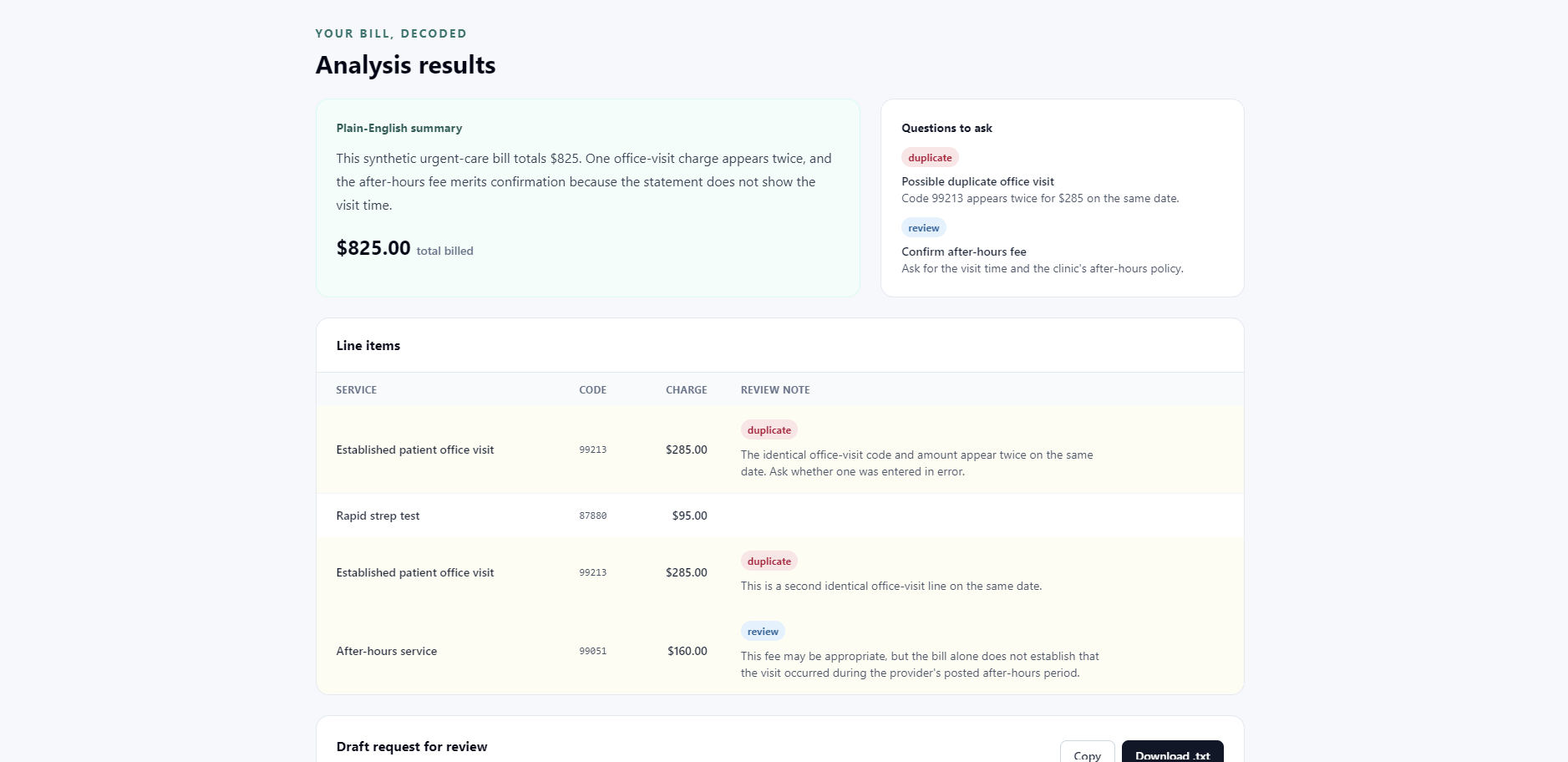
Urgent Care
-
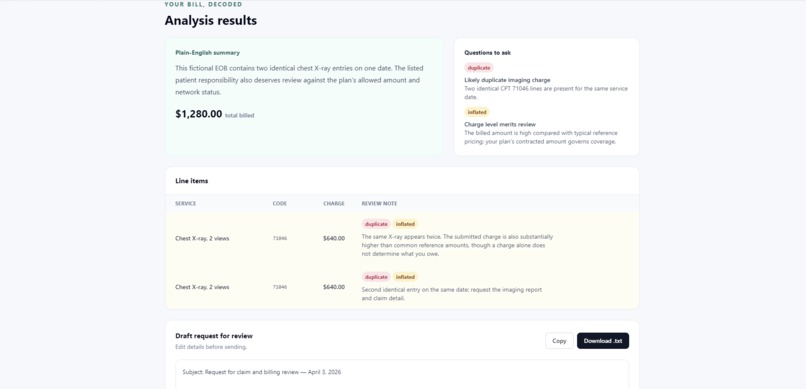
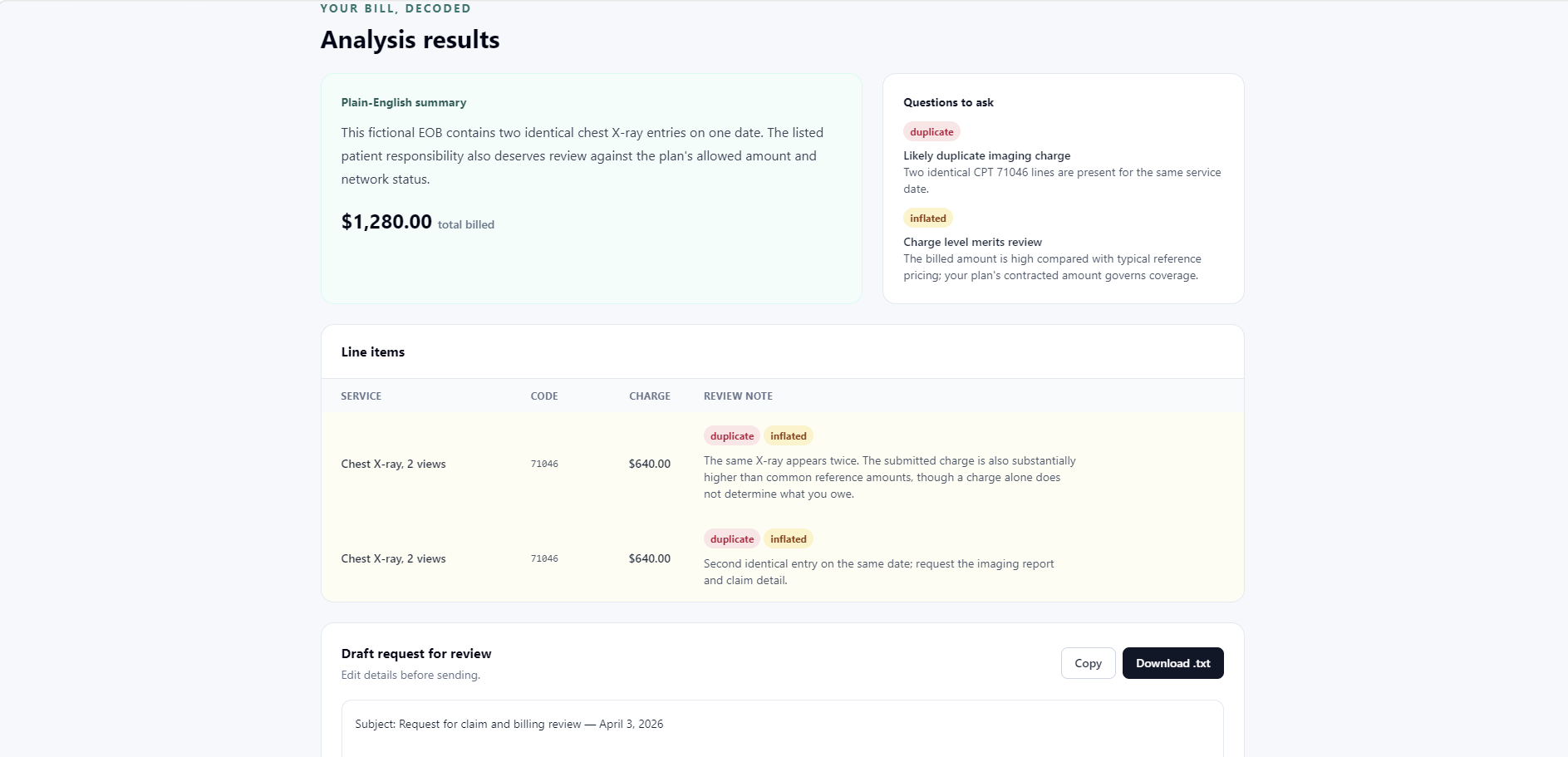
Imaging Center
-
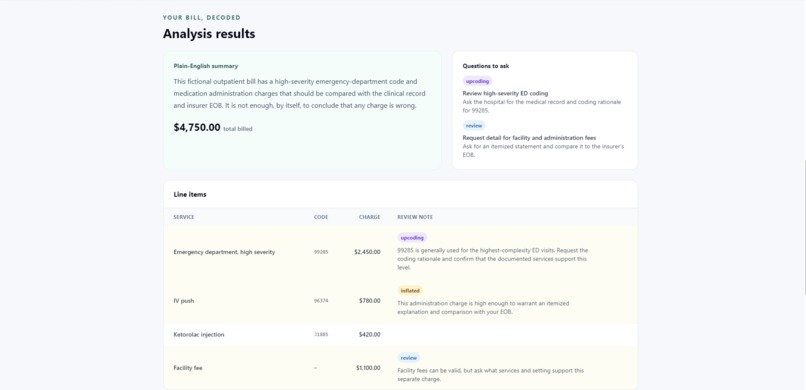
Hospital Outpatient Bill
-
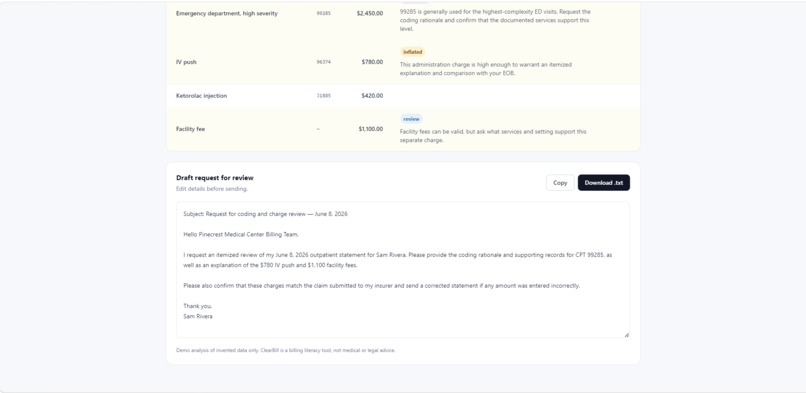
Draft Request
Inspiration
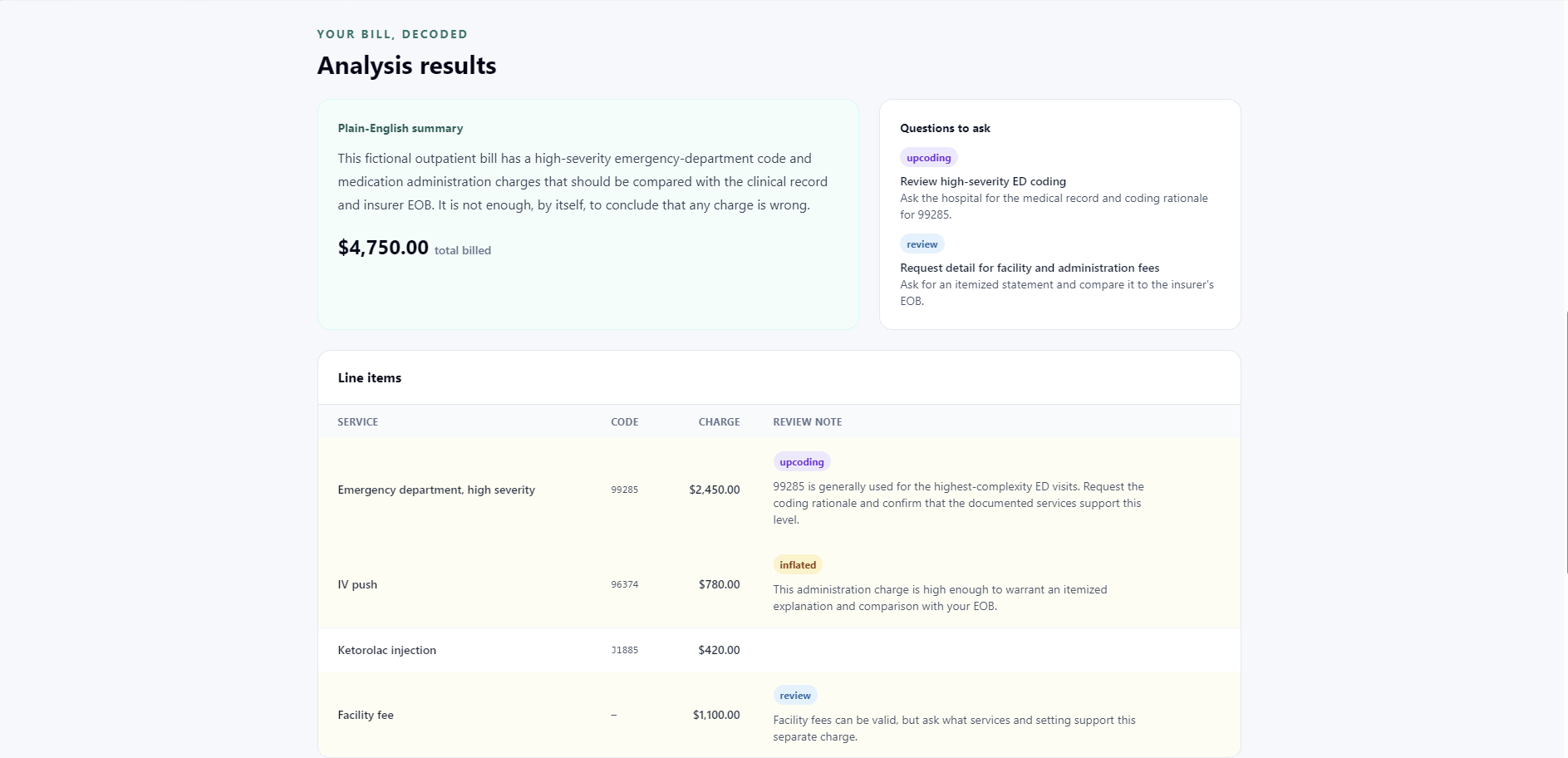
Medical bills and insurance EOBs are full of procedure codes and charges that almost nobody can actually evaluate. Billing errors — duplicate line items, upcoding, balance billing — are common, but catching them requires expertise and time most people don't have. Most people either pay whatever the bill says or give up trying to dispute it. ClearBill removes that barrier: upload a bill, get a plain-English breakdown and a ready-to-send appeal letter.
What it does
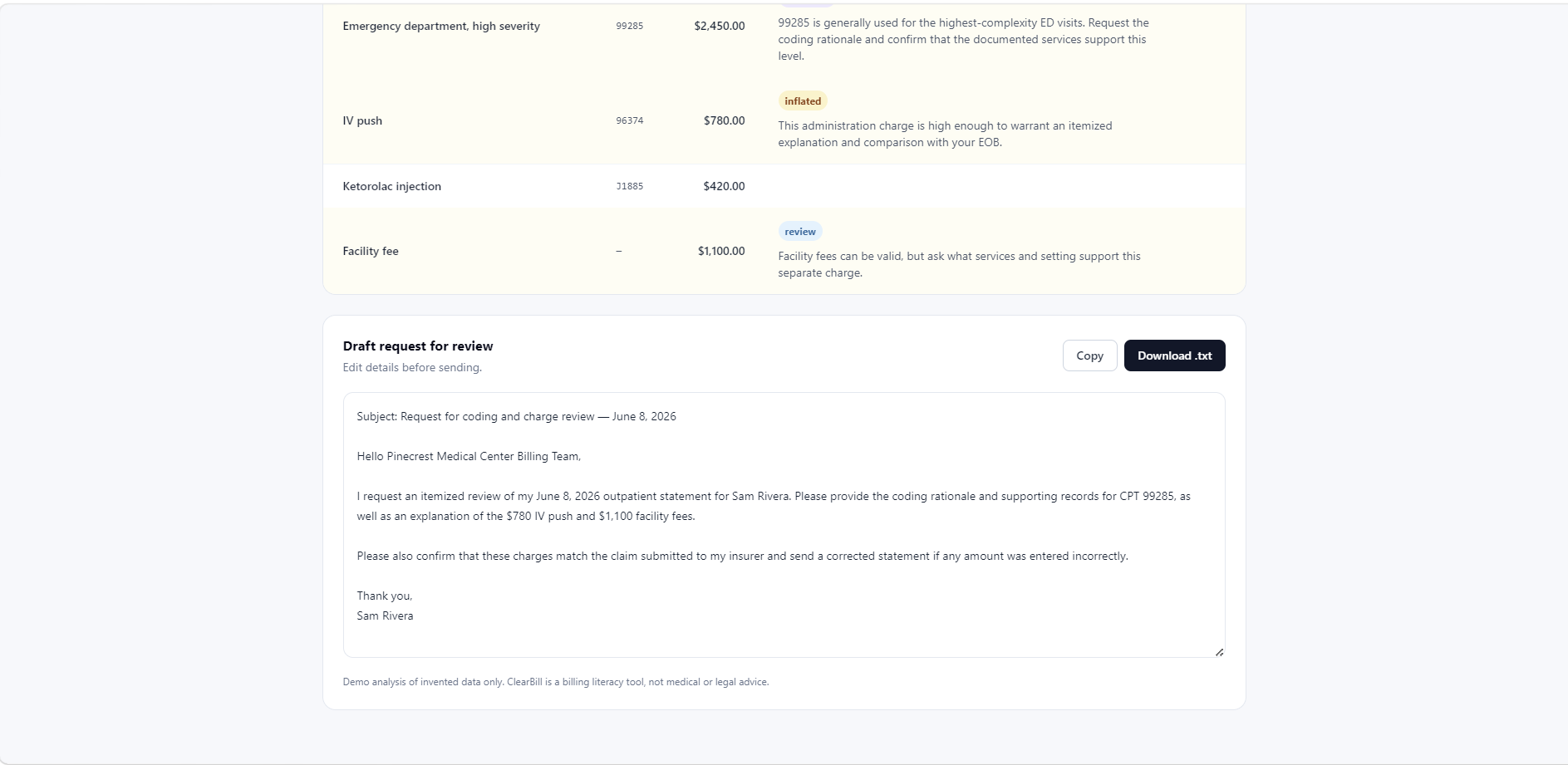
ClearBill takes a photo or PDF of a medical bill or EOB and, using GPT-5.6, extracts every line item, flags charges that look like duplicates or overcharges, explains each flag in plain English, and drafts a specific request-for-review letter referencing the exact charges in question. In testing, it correctly caught a duplicate CPT 71046 (chest X-ray) charge billed twice on the same date of service, out of a $1,280 total bill — exactly the kind of error a person would otherwise have no easy way to spot.
It's a billing and coding literacy tool, not medical advice — it helps people ask sharper questions, not diagnose anything.
How we built it
ClearBill was built primarily in a single Codex session (~29 minutes end to end), using Next.js, TypeScript, and Tailwind for the app, with GPT-5.6 called directly via the OpenAI Responses API using multimodal input — the uploaded document goes straight to the model, no separate OCR step. Codex scaffolded the upload/preview flow, the analysis API route, the results and flagging UI, and three fully synthetic demo bills so the app can be tested without anyone needing to upload a real document.
Challenges we ran into
Getting the anomaly-detection prompt right took iteration — the difference between a flag that's actually useful ("these two line items are identical, on the same date, same code") and a flag that's just noise mattered a lot. We also hit a bug where the drafted letter rendered literal \n characters instead of real line breaks, both on-screen and in the downloaded file — Codex diagnosed and fixed that in the same thread once it was reported.
We also made a deliberate product call early on: no accounts, no database, nothing persisted. Given this is health/billing-adjacent data, the simplest way to keep it safe was to not store it at all.
Accomplishments we're proud of
A working end-to-end flow — upload or pick a demo, get a real, specific, correctly-identified billing anomaly with a plain-English explanation and a usable draft letter — built and verified in one focused session.
What's next
Comparing charges against real reference pricing data (e.g. public Medicare fee schedules) rather than general reasoning alone, and supporting multi-page itemized hospital bills, which tend to be the messiest and highest-value case for this kind of tool.
Built With
- codex
- gpt-5-6
- nextjs
- node.js
- openai
- react
- tailwindcss
- typescript

Log in or sign up for Devpost to join the conversation.