-
-
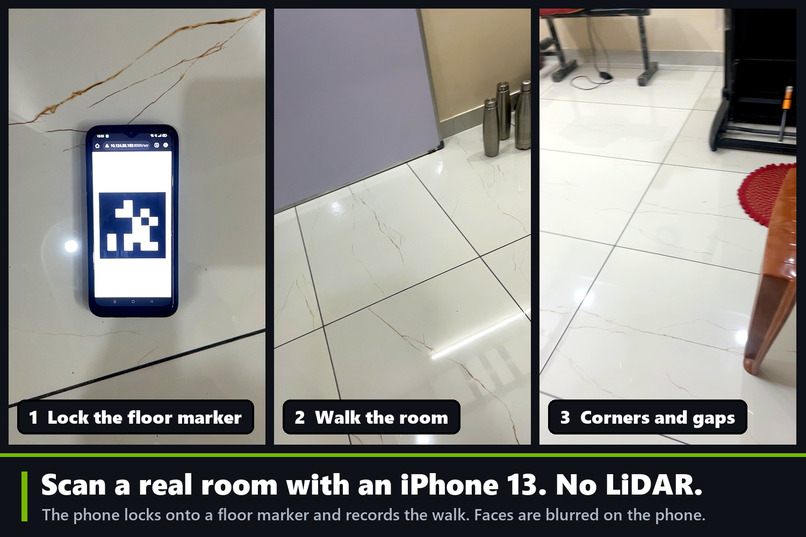
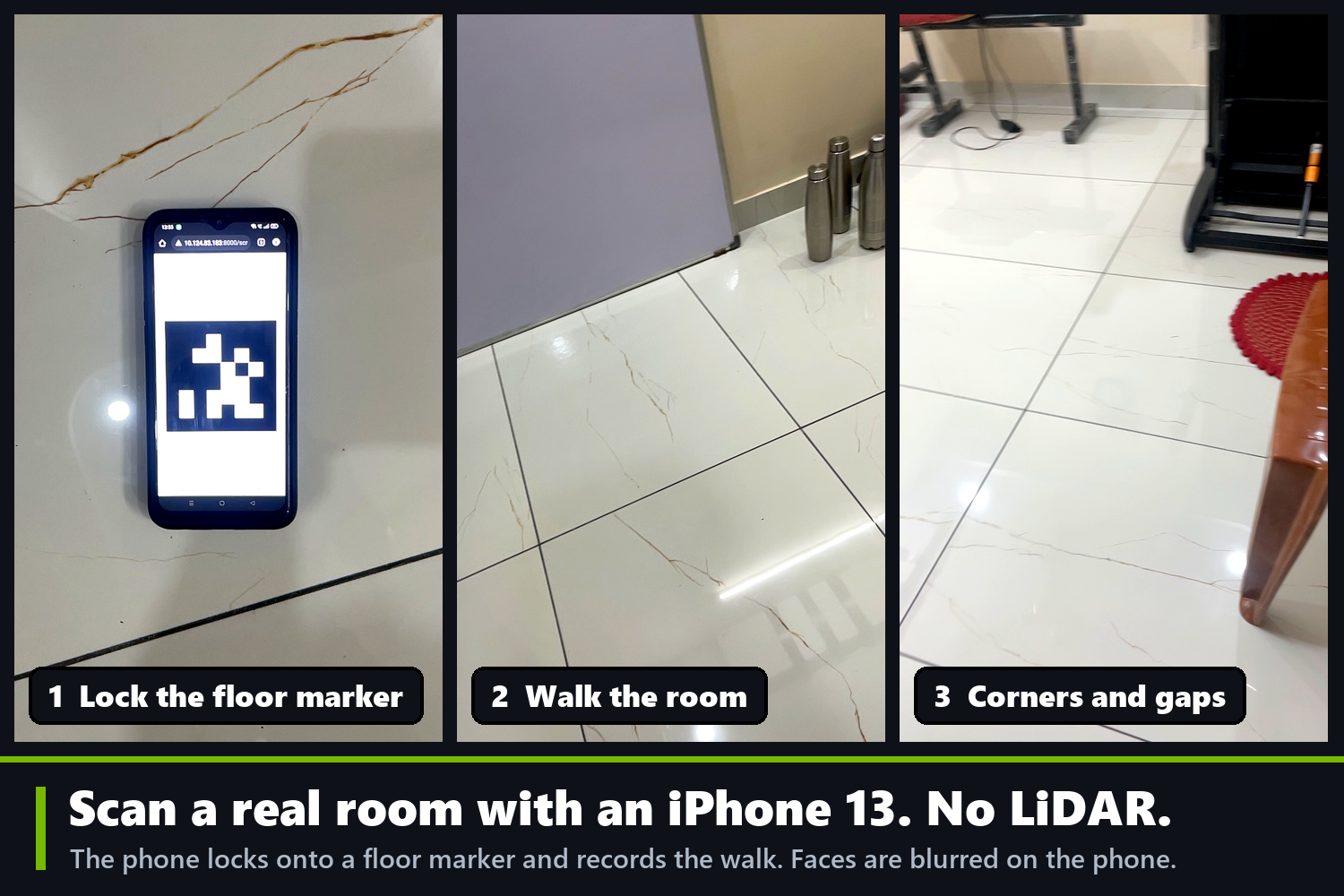
Scan a real room with an iPhone 13. No LiDAR. Faces are blurred on the phone.
-
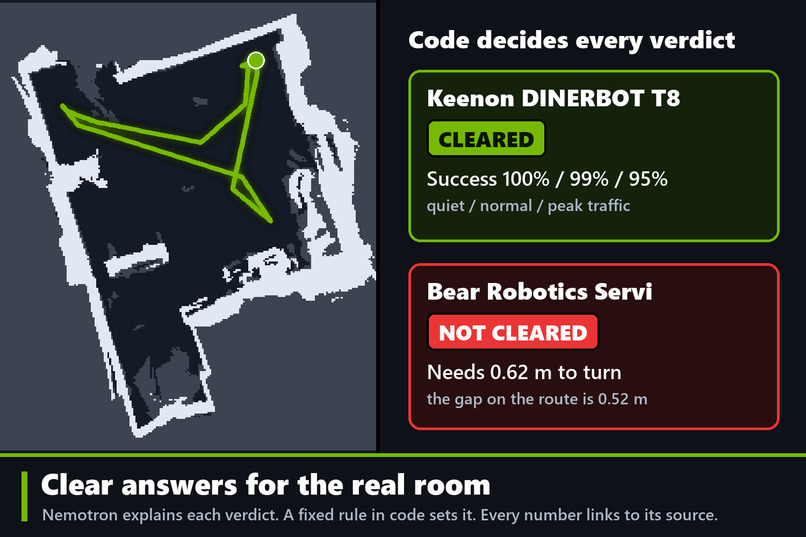
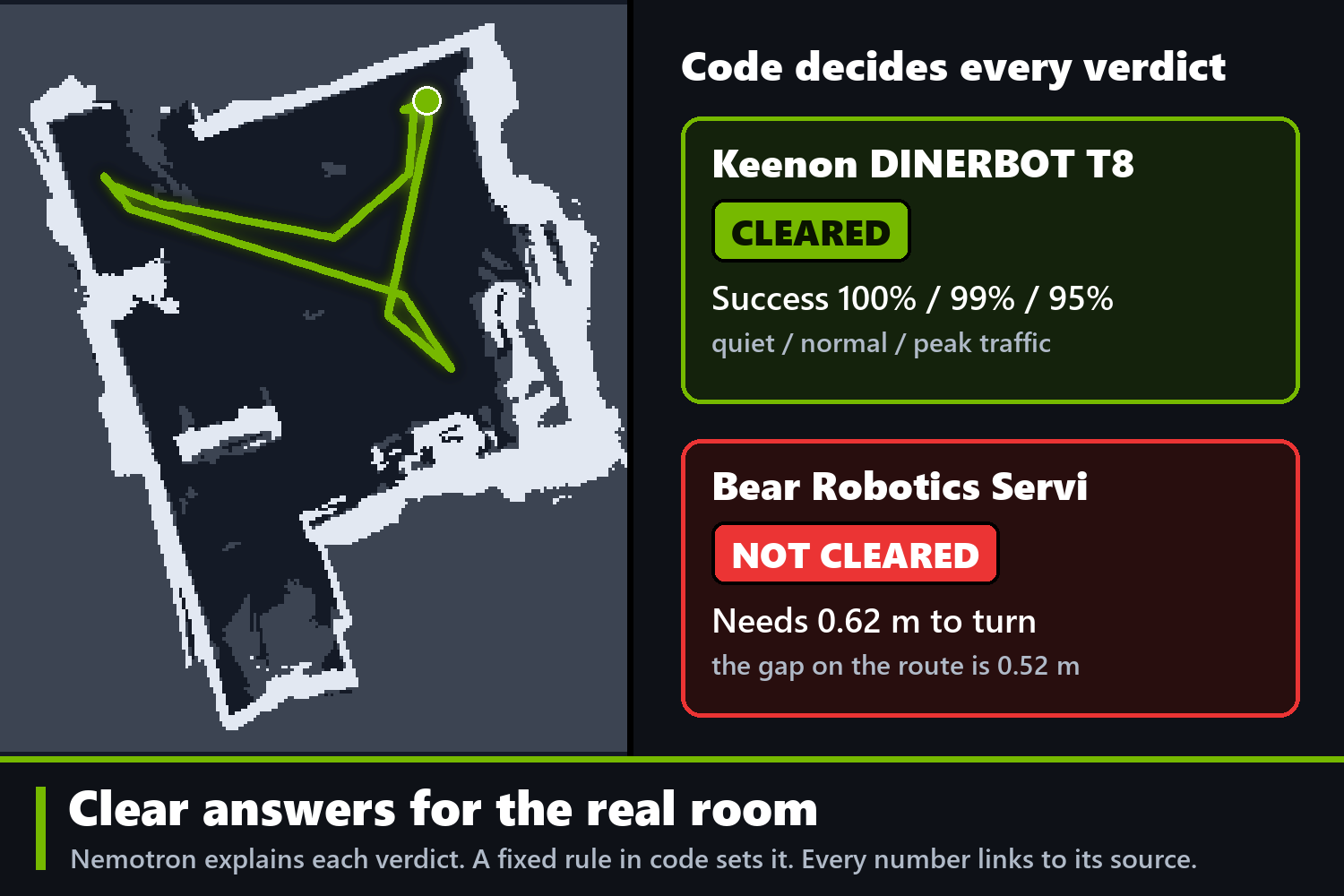
Code decides: DINERBOT T8 Cleared (100/99/95%). Bear Servi Not cleared (needs 0.62 m, gap 0.52 m).
-
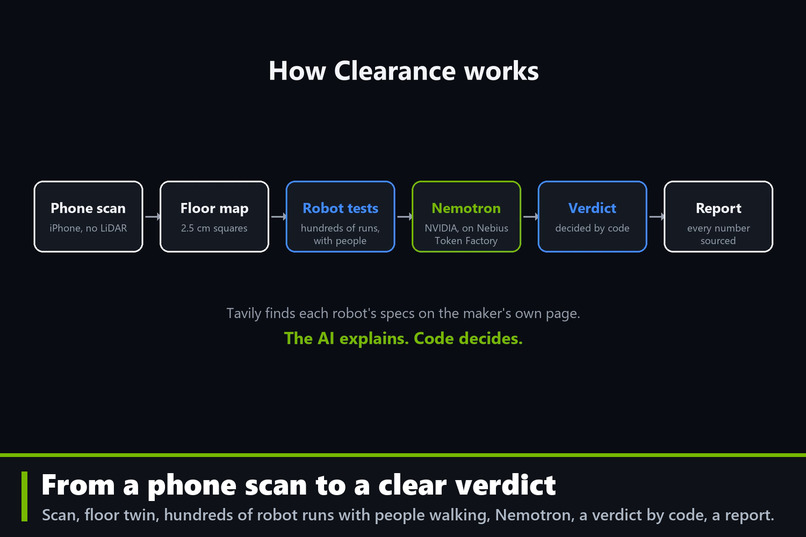
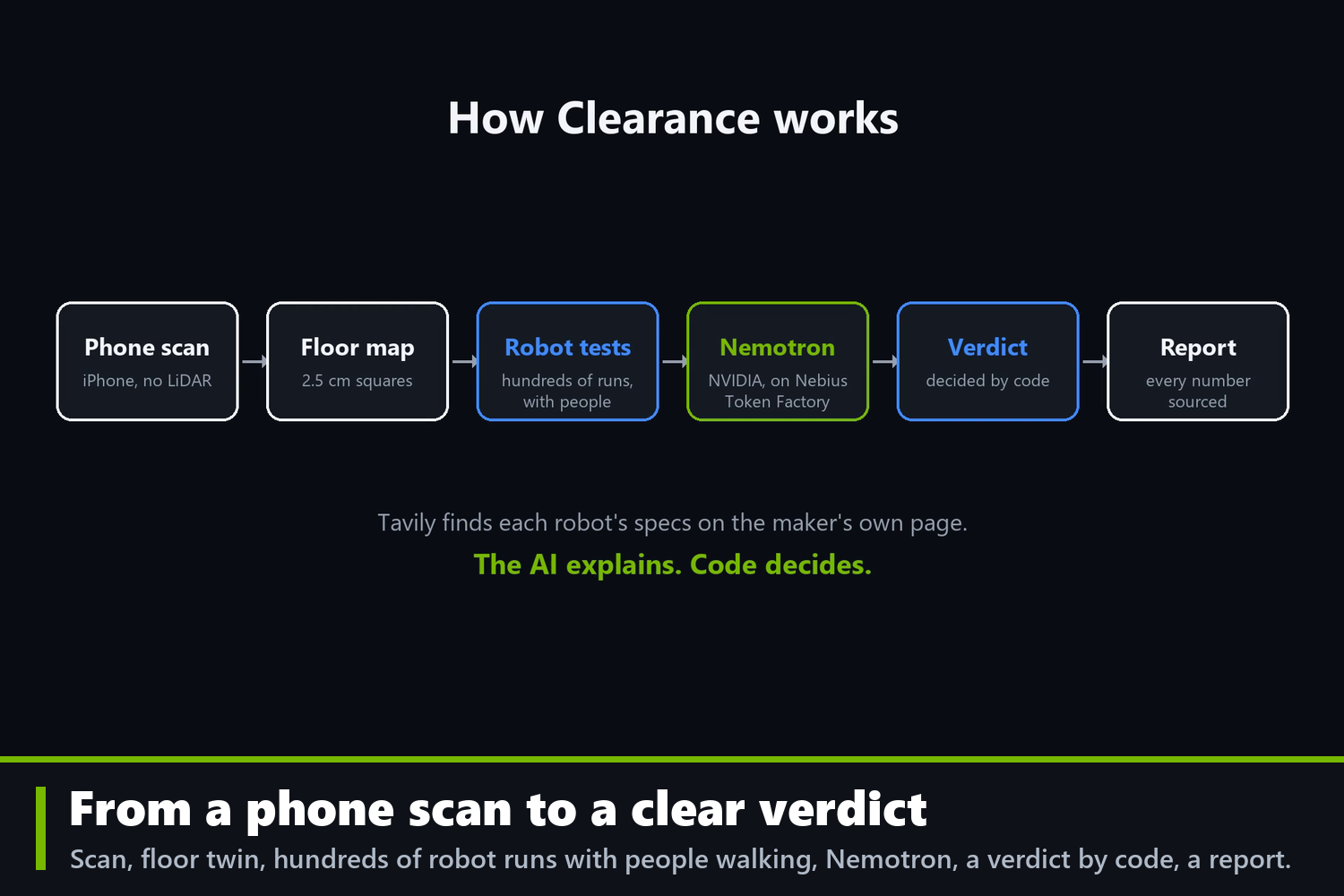
How Clearance works: scan, twin, robot tests, Nemotron, a verdict by code, a report.
-
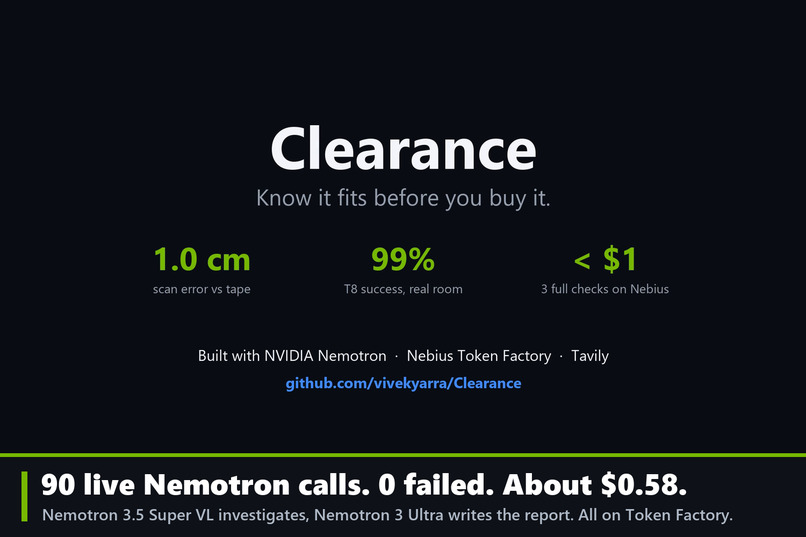
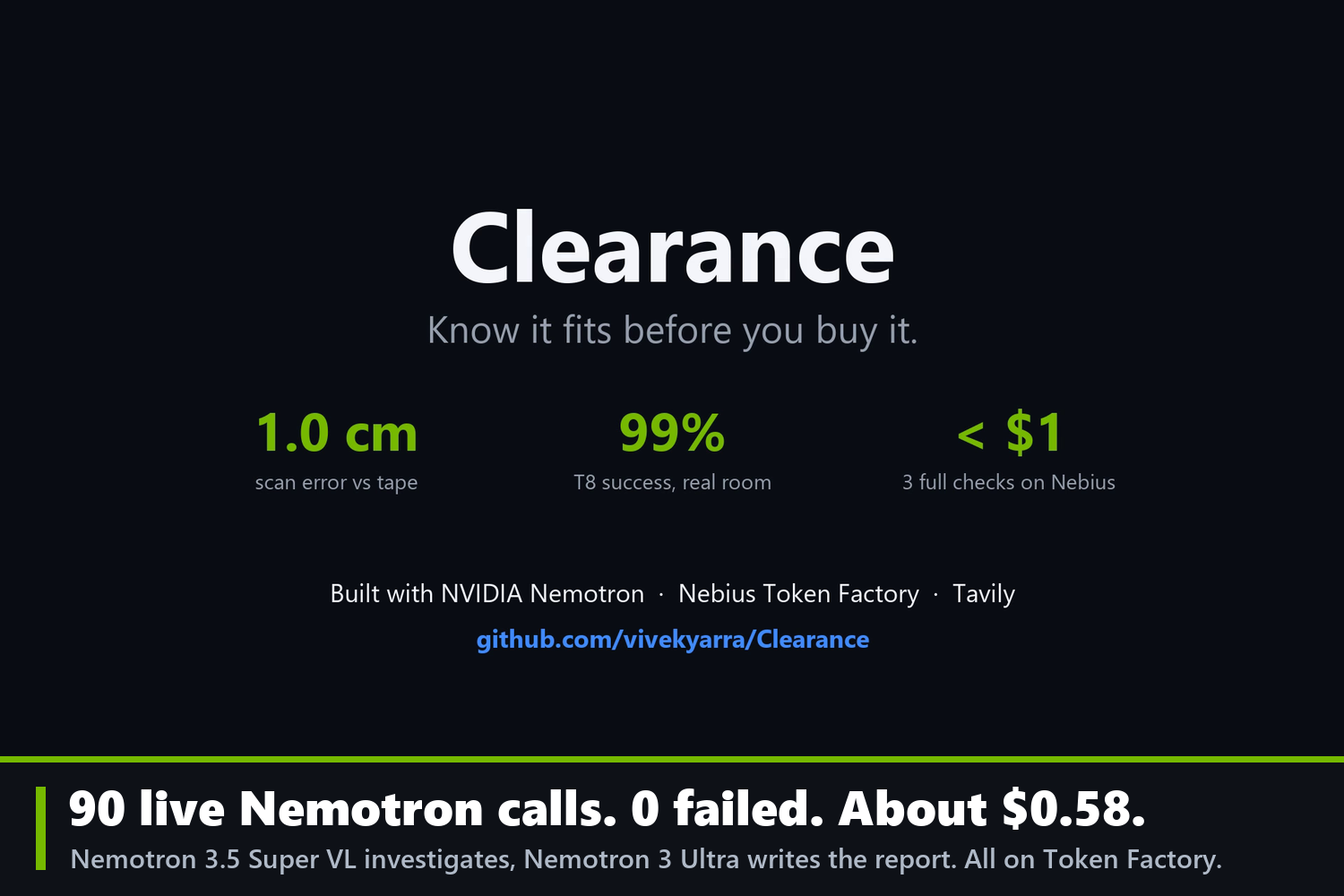
90 live Nemotron calls on Nebius Token Factory, 0 failed, about 0.58 USD.
-
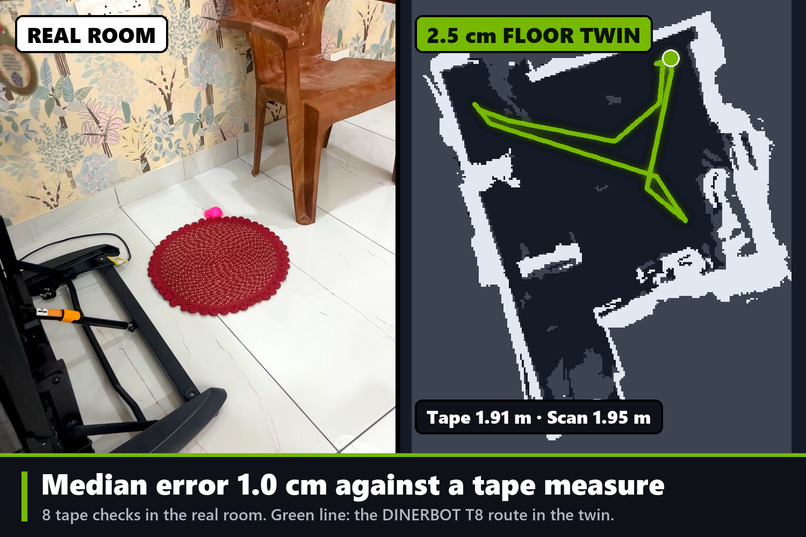
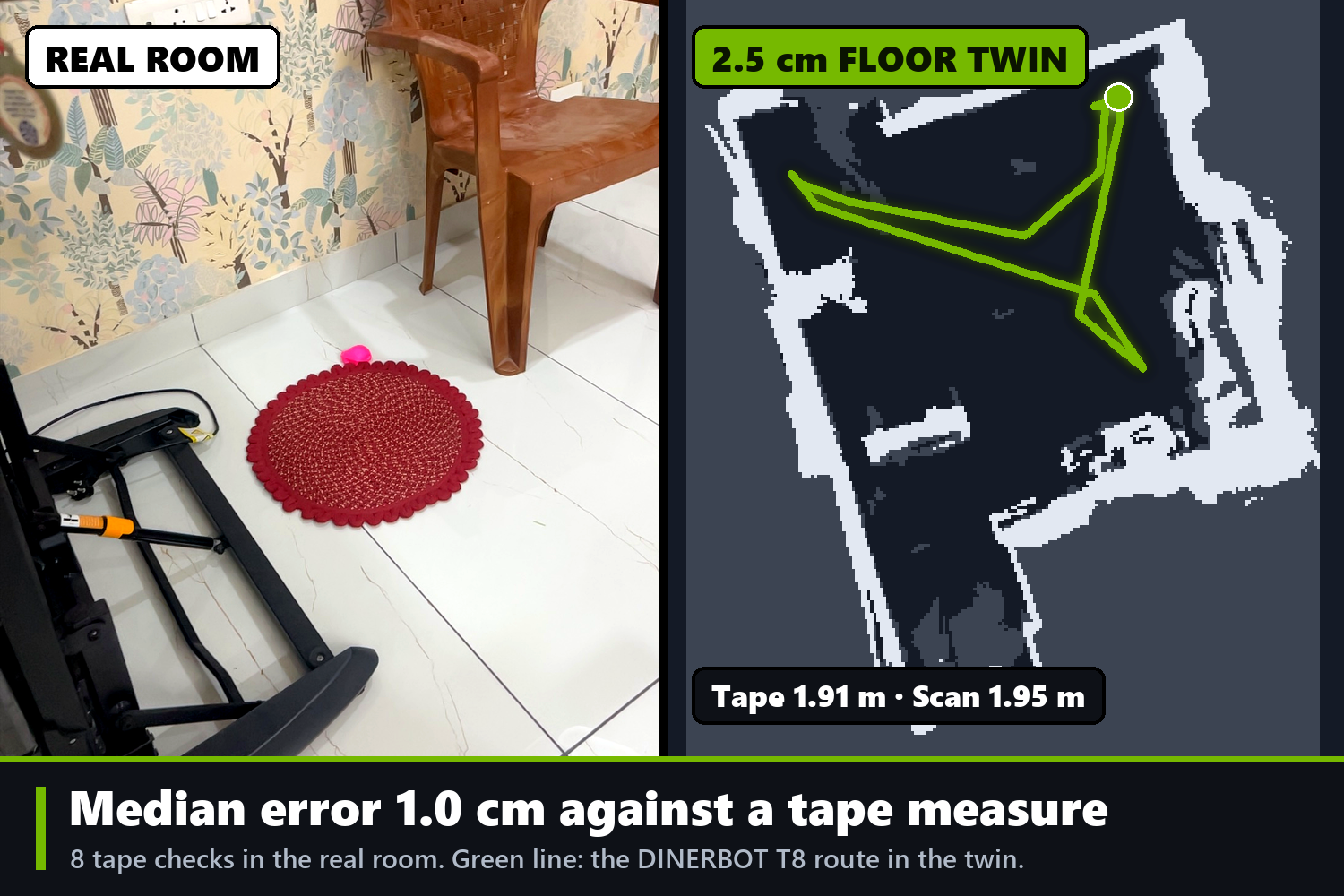
The real room and its 2.5 cm floor twin. Median error 1.0 cm against a tape measure.
-
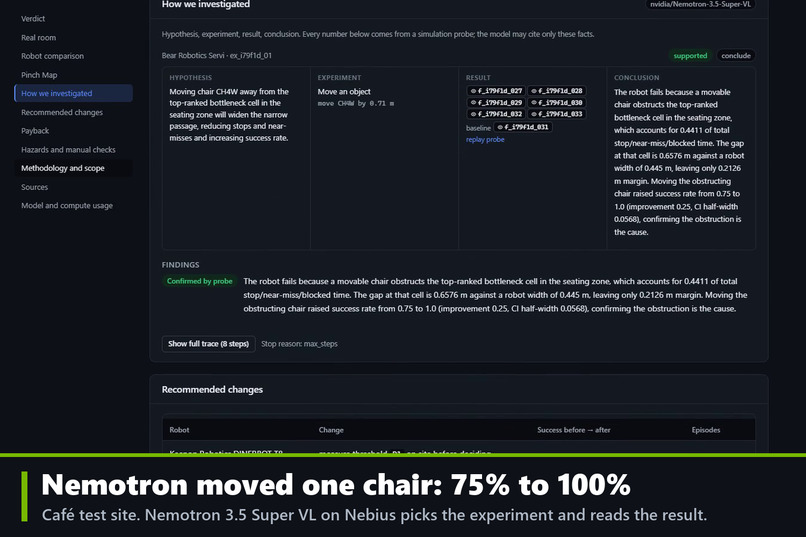
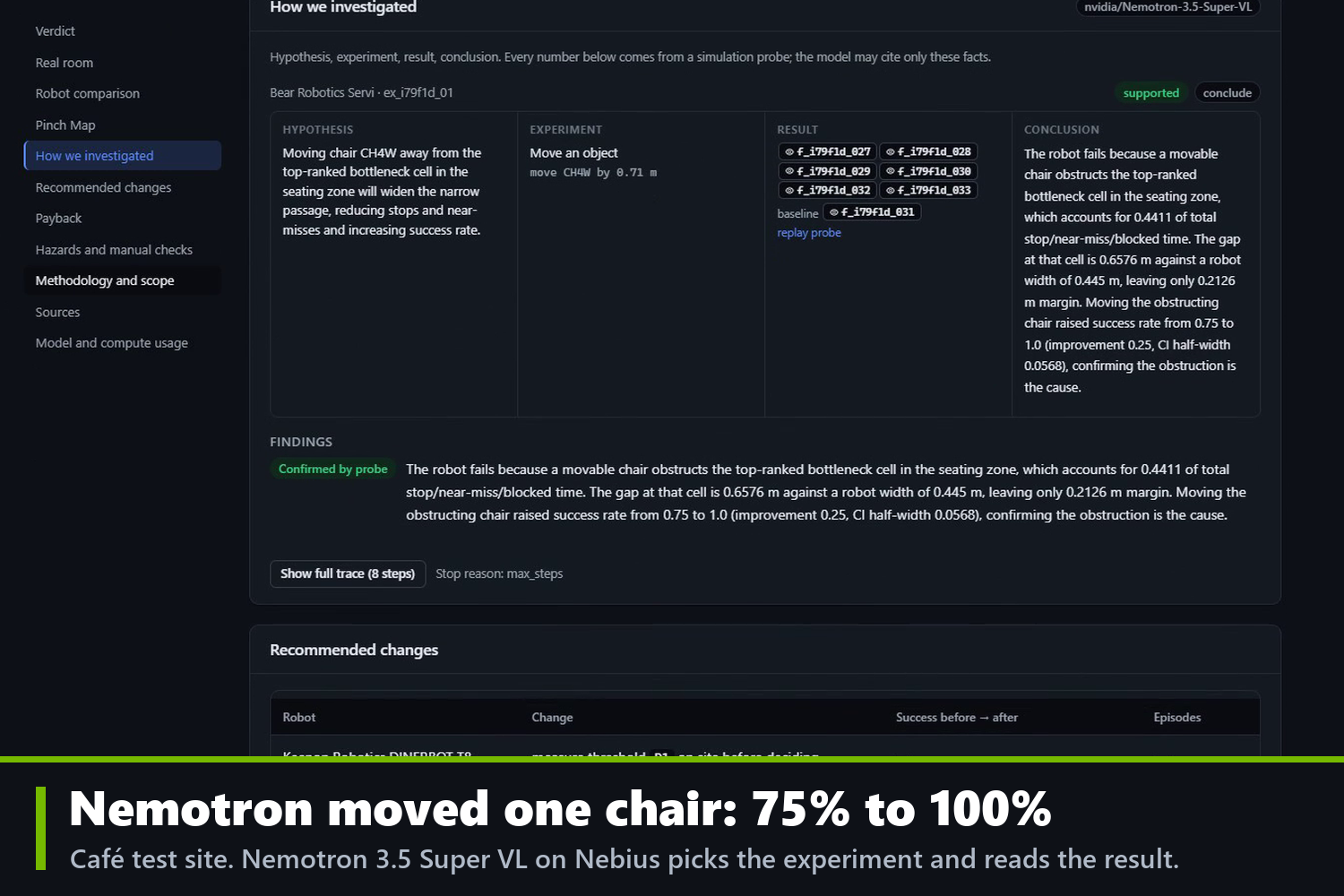
Nemotron on Nebius Token Factory moved one chair in our reference café: success 75% to 100%.
-
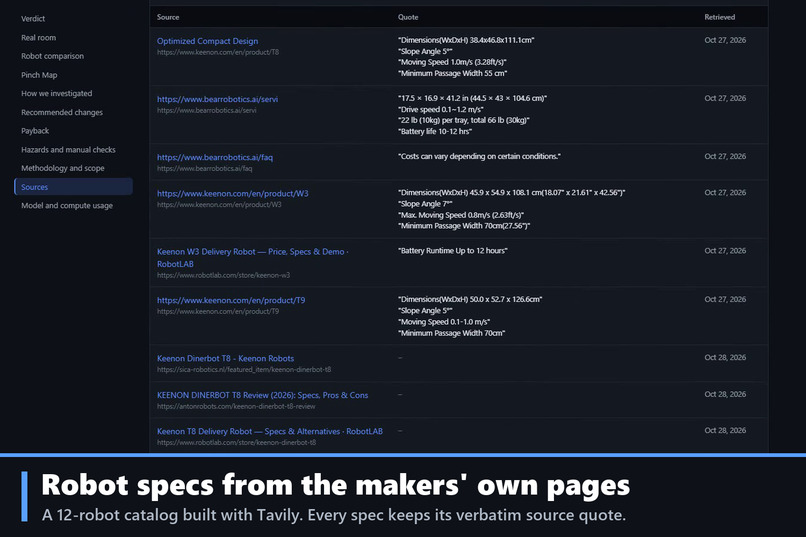
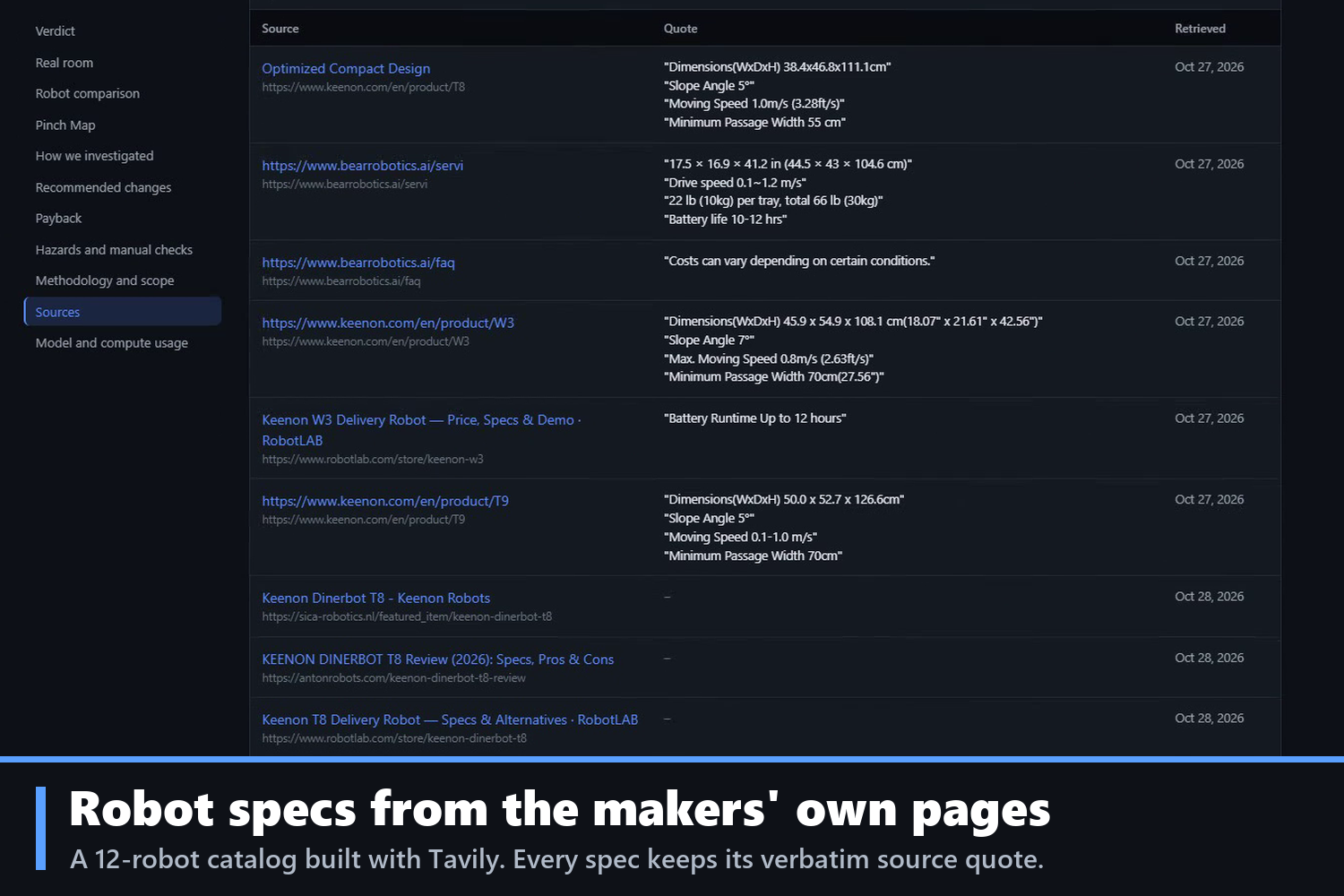
Robot specs from the makers' own pages, found with Tavily, with every source quote kept.
Inspiration
Robots are for sale now. Delivery robots serve tables, AMRs move stock, and humanoids work in factories. Every buyer asks the same question: will one fit in my space?
A service robot can cost as much as a year of staff time. Whether it works depends on that exact site: aisle widths, room to turn, door lips, chairs, and people walking past at peak hour. Today the answer comes from a vendor visit or a paid pilot. We wanted any owner to get a clear, independent answer from a five-minute phone scan.
What it does
Clearance tells you which robots will work in your room before you buy one.
- Scan. Walk the room with the Clearance iPhone app. The phone locks onto a floor marker and records the walk. Faces are blurred on the phone, before anything leaves it. No LiDAR needed.
- Twin. The server turns the walk into a measured floor twin with 2.5 cm squares. In a real room scanned with an iPhone 13, object sizes matched a tape measure with a median error of 1.0 cm over 8 checks.
- Test. Clearance picks the robots that could do the job from a 12-robot catalog. Every spec comes from the maker's own pages, found with Tavily, and keeps its exact source quote. Code checks if each robot can pass and turn, then runs Monte Carlo batches with people walking past at quiet, normal and peak traffic.
- Investigate. When a robot struggles, NVIDIA Nemotron forms a hypothesis, picks the next experiment (move a chair, fewer people in a zone, another robot), runs it in the simulator and reads the result. In our reference café, Nemotron moved one chair and success went from 75% to 100%.
- Verdict. Code gives every robot exactly one verdict: Cleared, Cleared with changes or Not cleared. Nemotron explains the verdict. It never sets it.
- Report. Nemotron writes the Clearance Report. Every number carries a fact tag, and a fact-checker matches it to its source. Click any number to see where it came from.
- See it. Point the iPhone at the marker and watch the robot drive its route in your real room, in AR.
Real-room result (iPhone 13 scan):
- Keenon DINERBOT T8: Cleared. 100% / 99% / 95% success at quiet / normal / peak traffic.
- Bear Robotics Servi: Not cleared. It needs 0.62 m to turn. The gap on the route is 0.52 m.
Who it is for: cafés, restaurants, hotels, offices and warehouses today. Every home tomorrow. Robot makers and integrators can qualify a site from one phone scan instead of a site visit.
How we built it
- NVIDIA Nemotron on Nebius Token Factory. Nemotron 3.5 Super VL runs the investigation loop with tool calls. Nemotron 3 Ultra writes the report narrative. Nemotron 3.5 Lightning extracts robot specs with a verbatim quote for every field.
- One full live run: 90 Nemotron calls, 0 failed, about 0.58 USD at list price for three complete site checks.
- Tavily Search and Extract build the robot catalog. 129 spec fields were checked against their source pages. Our quote checker turned away 60 fields that had no matching quote.
- Phone to twin. Swift, ARKit and RealityKit on the iPhone. Depth Anything V2 Small gives depth for each frame, and we align it to ARKit feature points so a phone without LiDAR still gets true scale. OpenCV, NumPy and PyTorch on the server.
- Simulator. Our own footprint-accurate navigation simulator with social-force pedestrians, fast with Numba. A layout optimizer tries small furniture moves and keeps the ones that help.
- Verdicts in code. A fixed rule with thresholds in config. The same inputs always give the same answer.
- App. FastAPI and SQLite on the server. React, TypeScript, Vite and three.js for the twin editor and the report.
- Ready to deploy on Nebius AI Cloud. Cosmos Reason 2 on vLLM spots scene hazards from keyframes, and Nebius Serverless Jobs run GPU reconstruction and parallel simulation shards. The job definitions ship in the repo.
- CI on GitHub Actions. 2,698 Python tests, a 94-test Swift suite and an iOS build.
Challenges we ran into
- True scale from a phone with no LiDAR. One camera gives depth without scale. We lock the scan to a floor marker shown on a second phone and align every depth frame to ARKit feature points. The result is a 1.0 cm median error against a tape measure.
- People walking through the scan. We remove moving objects, so a passer-by does not turn into a wall.
- Keeping language models away from numbers. Code renders every table and every verdict. Nemotron writes the prose, and each number in it must carry a fact tag. The fact-checker rejects any number that does not match its source and asks for a rewrite. Every published report passed with 0 errors.
- Fair, repeatable runs. The simulator gives bit-identical results for the same inputs, so anyone can run a verdict again and get the same answer.
Accomplishments that we're proud of
- An iPhone 13 with no LiDAR matched a tape measure to a median 1.0 cm in a real room.
- A full Clearance check in that room: the DINERBOT T8 Cleared, and four other robots Not cleared, each with the exact pinch point.
- The robot's route replayed in AR, in the same room, on the same floor marker.
- 90 live Nemotron calls on Nebius Token Factory with 0 failures, for about 0.58 USD.
- We built a go/no-go scan accuracy gate first, before the rest of the product, and passed it on reference rooms and in a real room.
What we learned
- Geometry and foot traffic decide if a wheeled robot works. Good looks do not.
- The best job for a language model here is to investigate and explain, not to measure.
- People trust a verdict when they can click any number and see where it came from.
What's next for Clearance
- Scan with Android phones. Android already works as the floor marker, as a traffic observer with on-device face blur, and as the full console in Chrome. Next: ARCore scanning in the browser, so any recent phone can scan a room.
- More robot classes: cleaning robots, more warehouse AMRs, and humanoids.
- Rollouts with cafés, hotels, offices and warehouses, plus a hosted service so integrators can qualify sites from a phone scan.
- Scale on Nebius AI Cloud: switch on Cosmos Reason 2 and Serverless Jobs for faster checks across many sites at once.
- Every home: scan your living room and know which home robot fits before it ships.
Code: https://github.com/vivekyarra/Clearance
Demo video: https://youtu.be/sYL-GOtZIys

Log in or sign up for Devpost to join the conversation.