Inspiration
In audiovisual production, the cost of a mistake depends heavily on when you discover it.
I learned this firsthand while working as a producer on projects for companies including Netflix, Disney, Cartoon Network, and other major brands. Alongside every creative decision, there was a constant layer of risk: intellectual property, trademarks, visual references, rights, continuity, script changes, and compliance requirements.
But the real problem was timing.
Fixing something in a script can take minutes. Finding the same problem after the storyboard is finished is harder. Discovering it on set can mean changing props, wardrobe, framing, dialogue, or an entire scene. Finding it in post-production can mean VFX corrections, legal escalation, reshoots, delays, or material that can no longer be used.
Production risk compounds over time.
I started discussing this with Mariano Davo, an intellectual property expert with decades of experience. I knew the problem from the production side. He knew what happened when those same problems eventually reached legal teams.
We were looking at the same failure from opposite ends.
That led us to a question: what if every production could have a team of specialized AI agents continuously looking for risks before they become expensive problems?
This felt especially important for independent filmmakers and smaller production companies. Large studios can rely on specialized legal, clearance, continuity, and compliance teams. Independent creators rarely have access to the same resources.
We wanted to bring that intelligence closer to the moment where creative decisions are actually being made.
That became ClearCut.
What it does
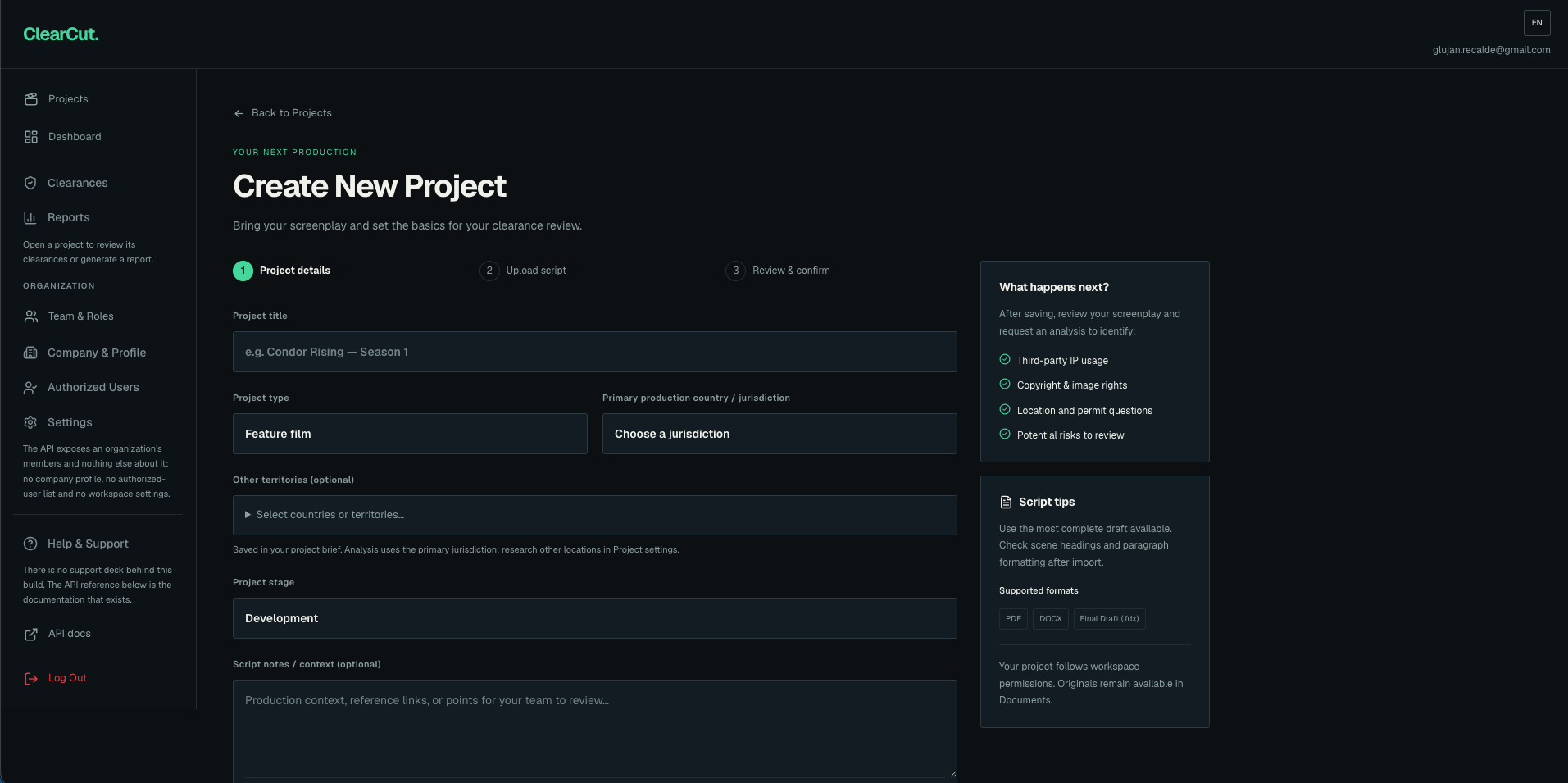
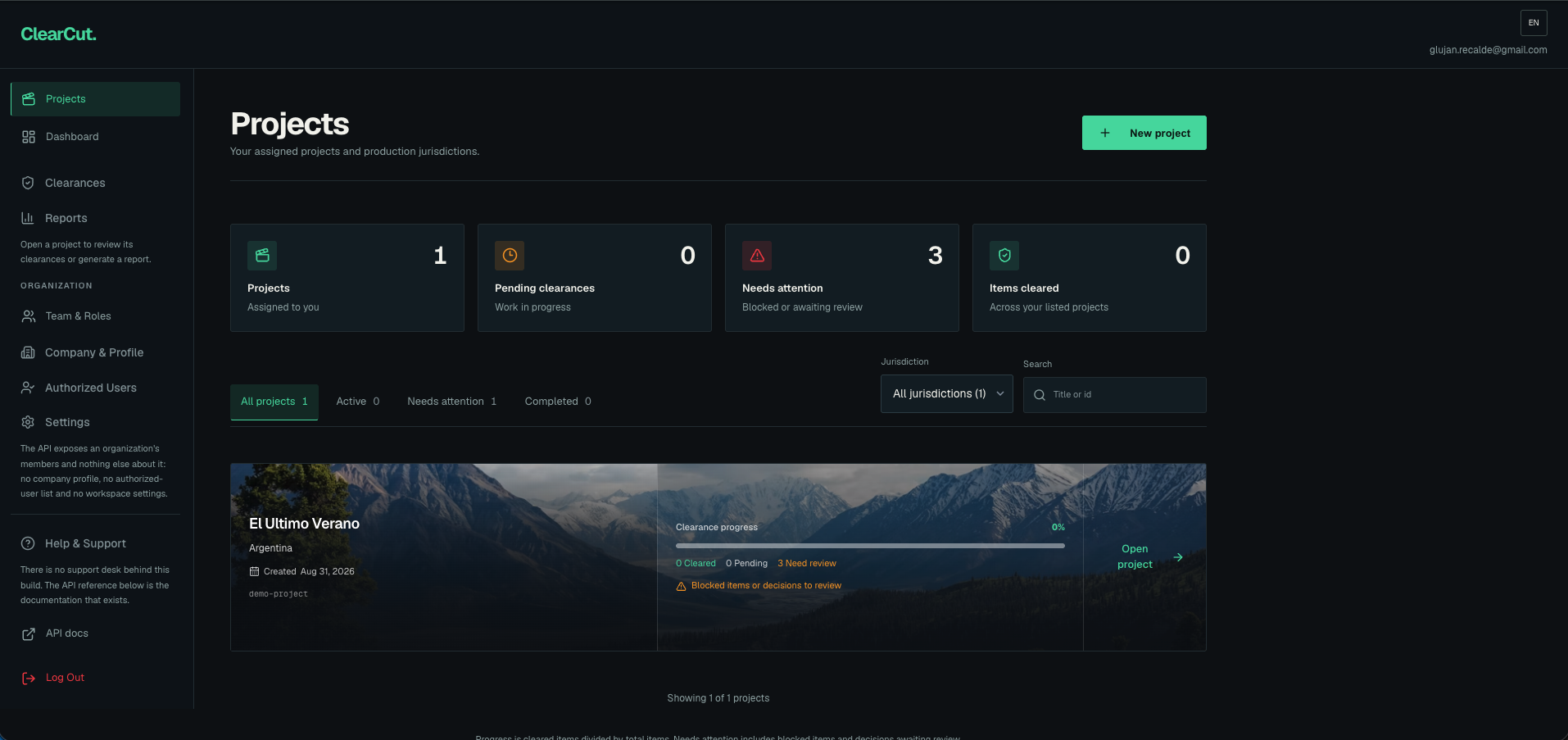
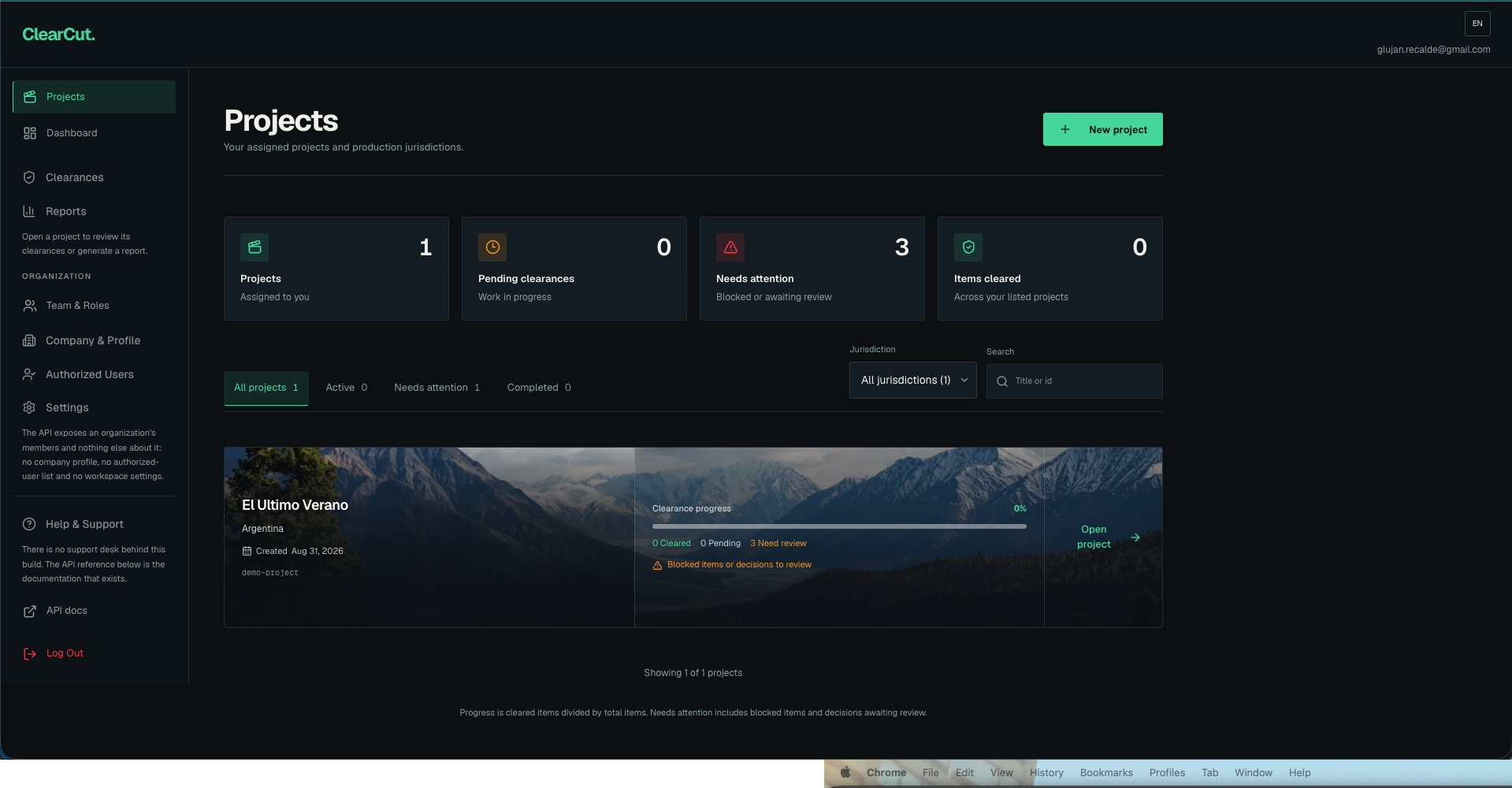
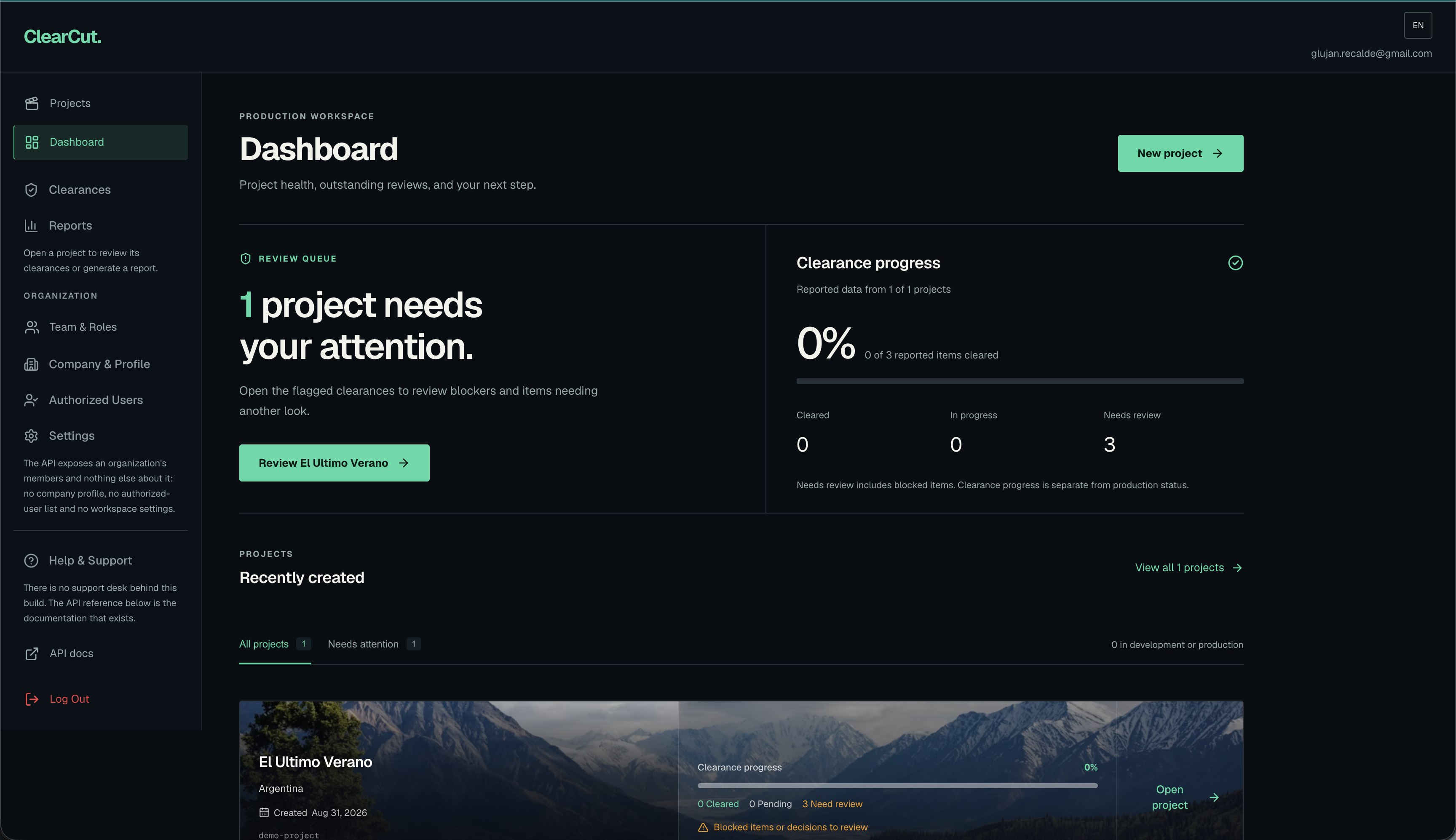
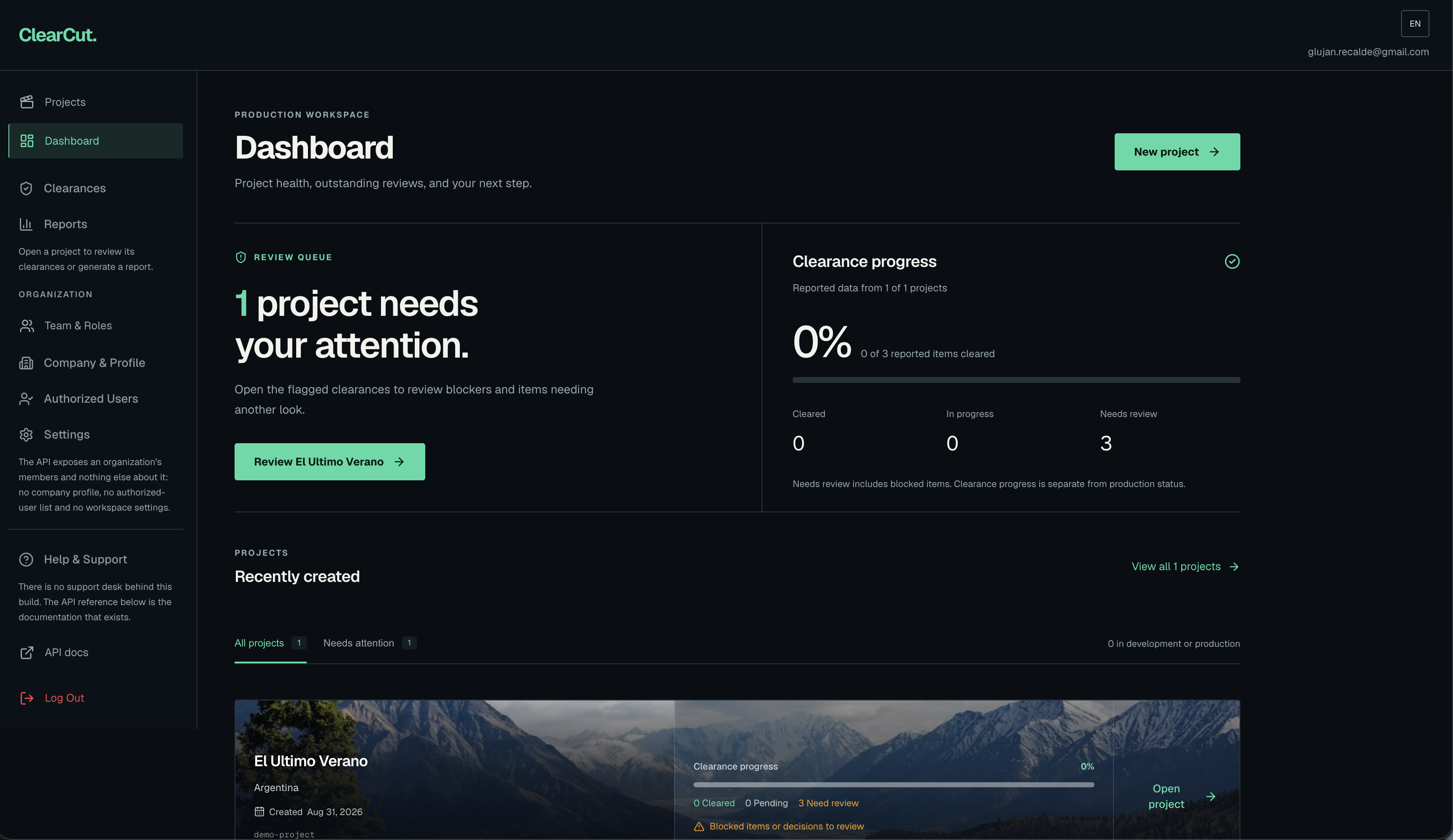
ClearCut is an agentic AI platform for audiovisual production that orchestrates specialized AI agents to continuously detect, investigate, contextualize, and help resolve production risks.
It is designed to follow a project throughout its production lifecycle rather than analyze a single isolated asset.
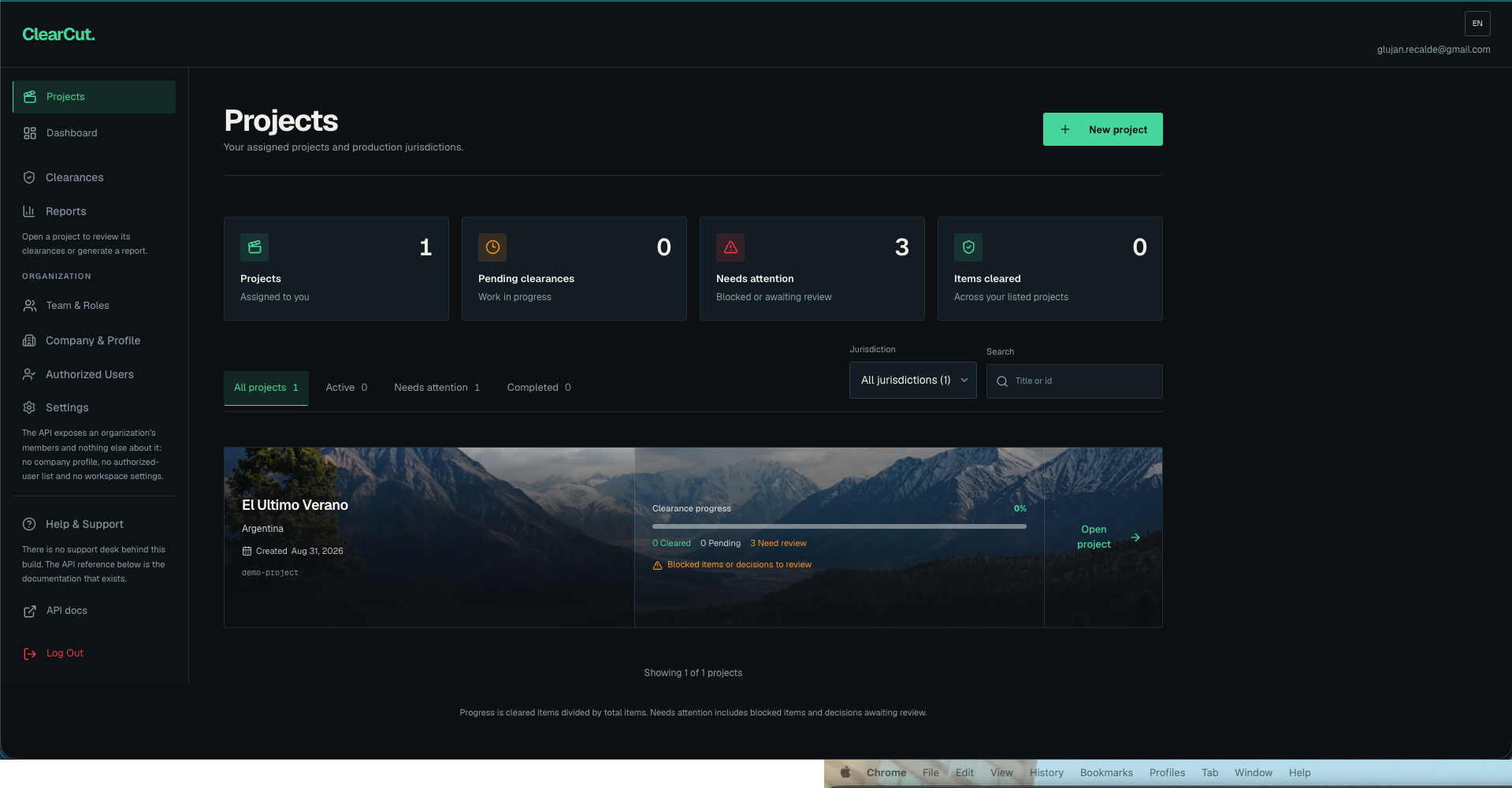
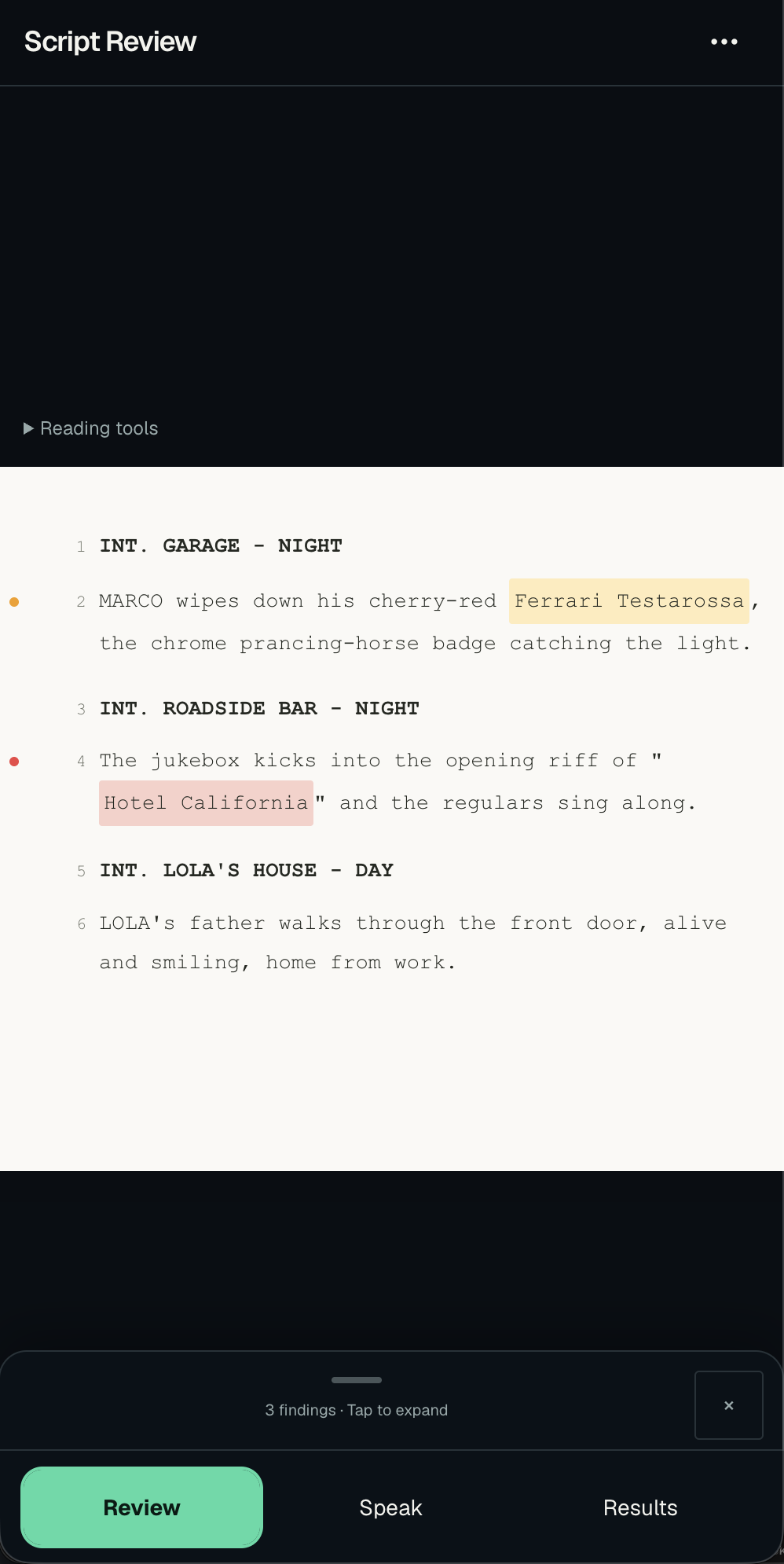
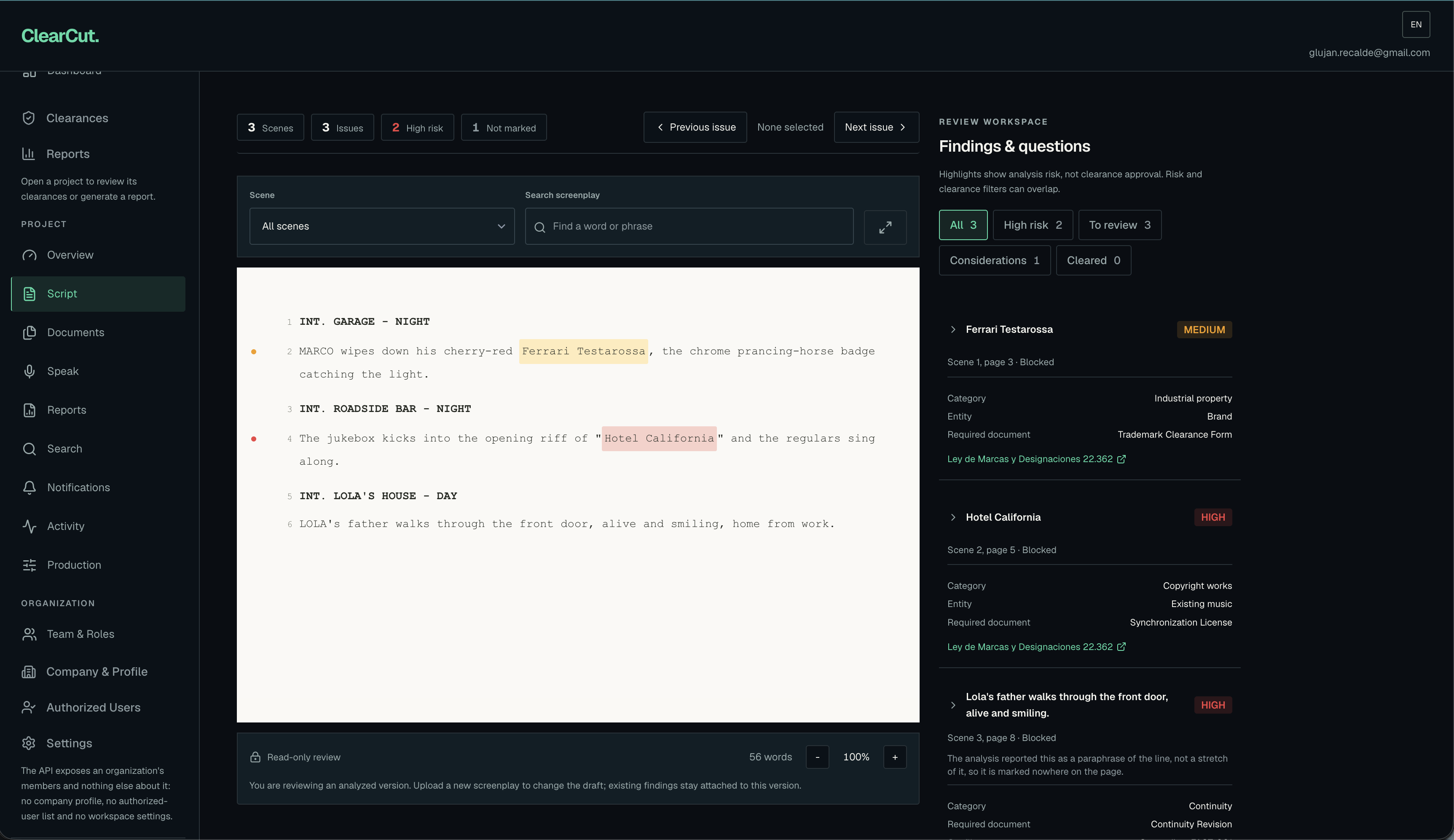
ClearCut builds a living representation of the production, including scripts and revisions, characters, scenes, locations, visual references, production decisions, incoming material, and previously detected risks.
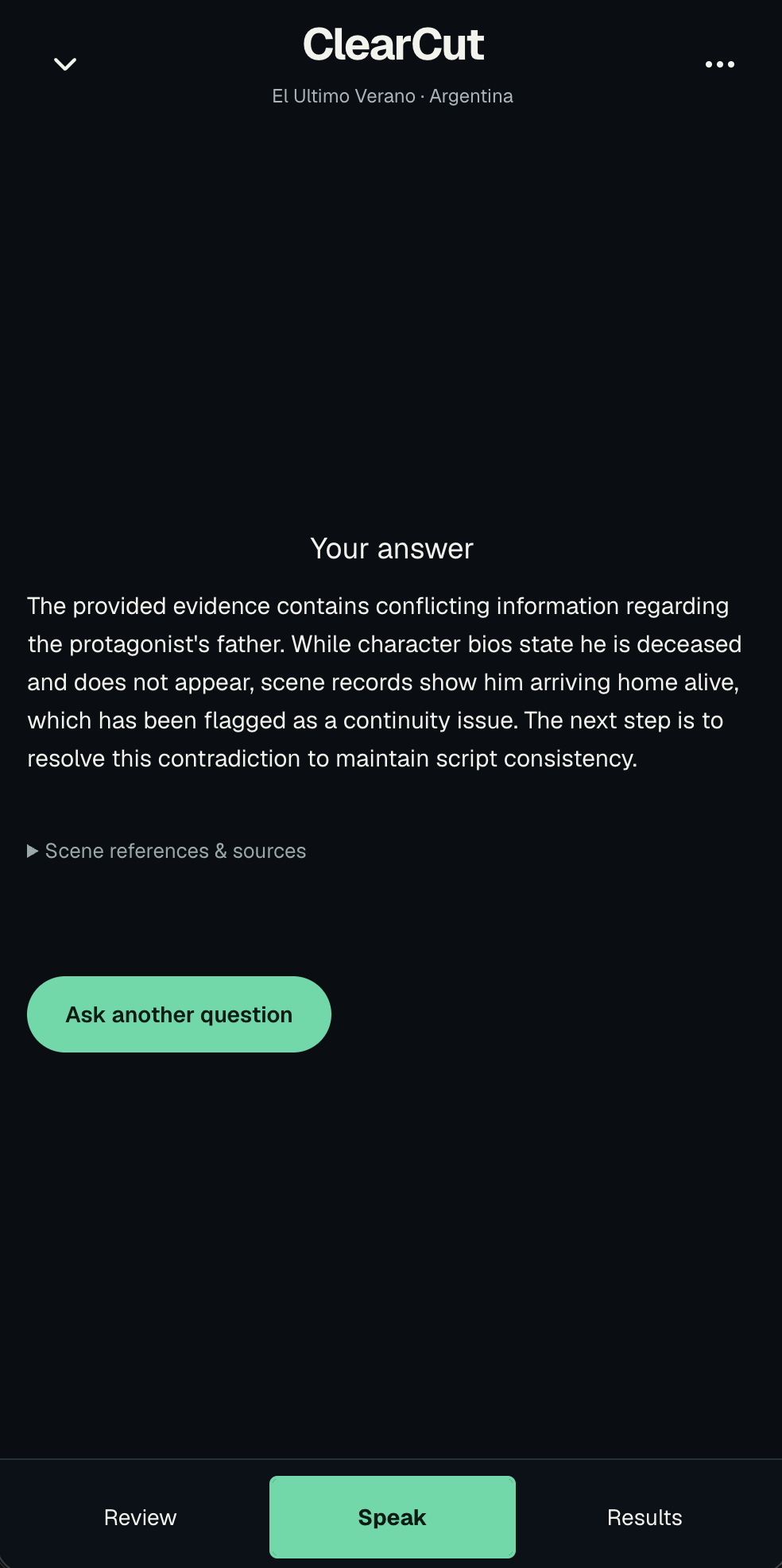
As new material comes in, the platform can identify potential trademark and intellectual property exposure, visual and narrative continuity inconsistencies, discrepancies between what was planned and what is actually being produced, and other production or compliance risks.
But detection is only the beginning.
When ClearCut finds a potential issue, its agents can investigate it using current external information, connect those findings with the context of the production, explain why the issue may matter, and help the team determine what to do next.
The workflow becomes:
Observe → Detect → Investigate → Contextualize → Recommend → Track
And ClearCut does not only identify a problem. It helps move toward resolution.
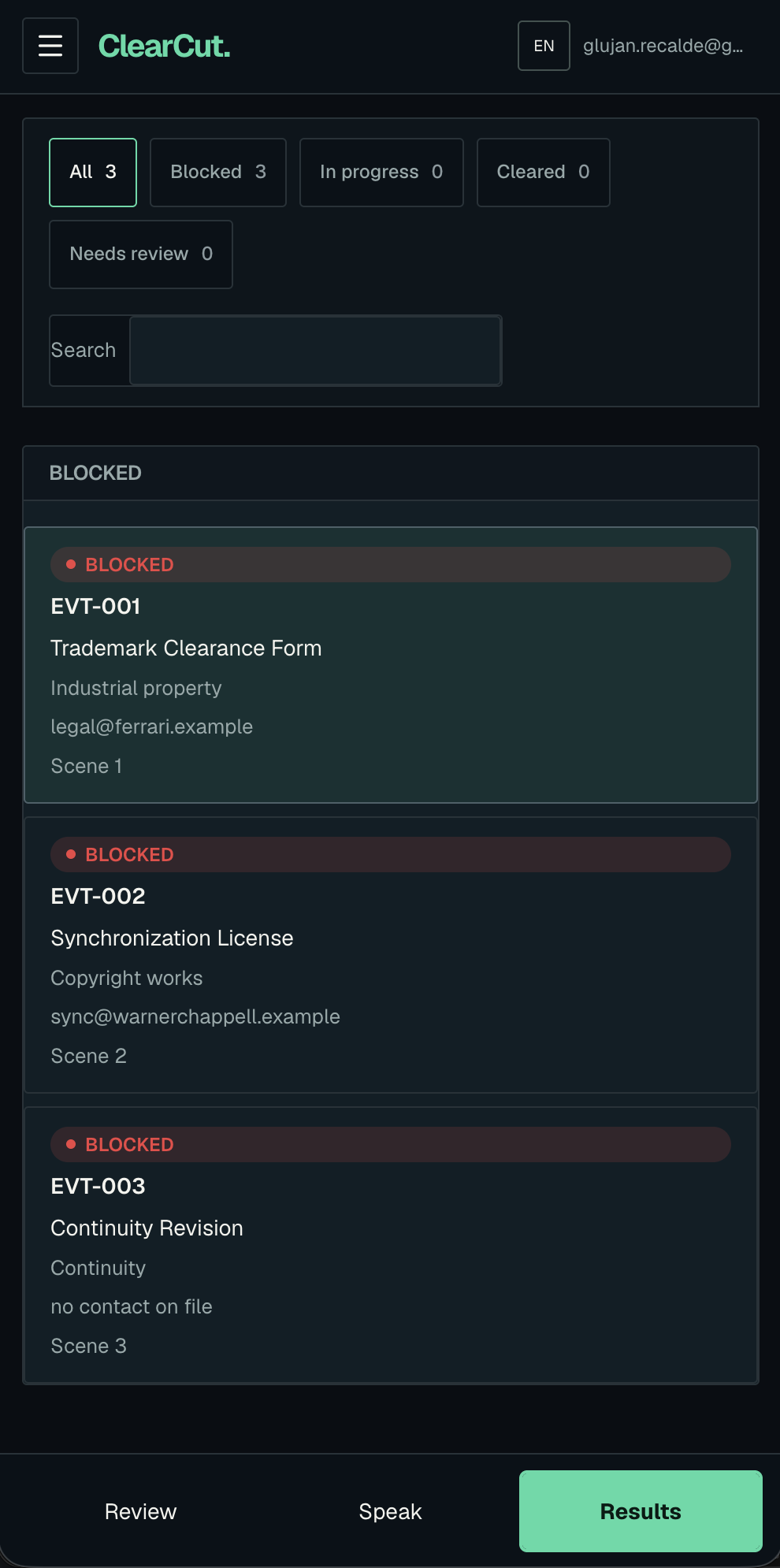
Depending on the risk, the platform can help determine who should be contacted, what information should be gathered, what action could mitigate the issue, and even assist in drafting the communication needed to start resolving it.
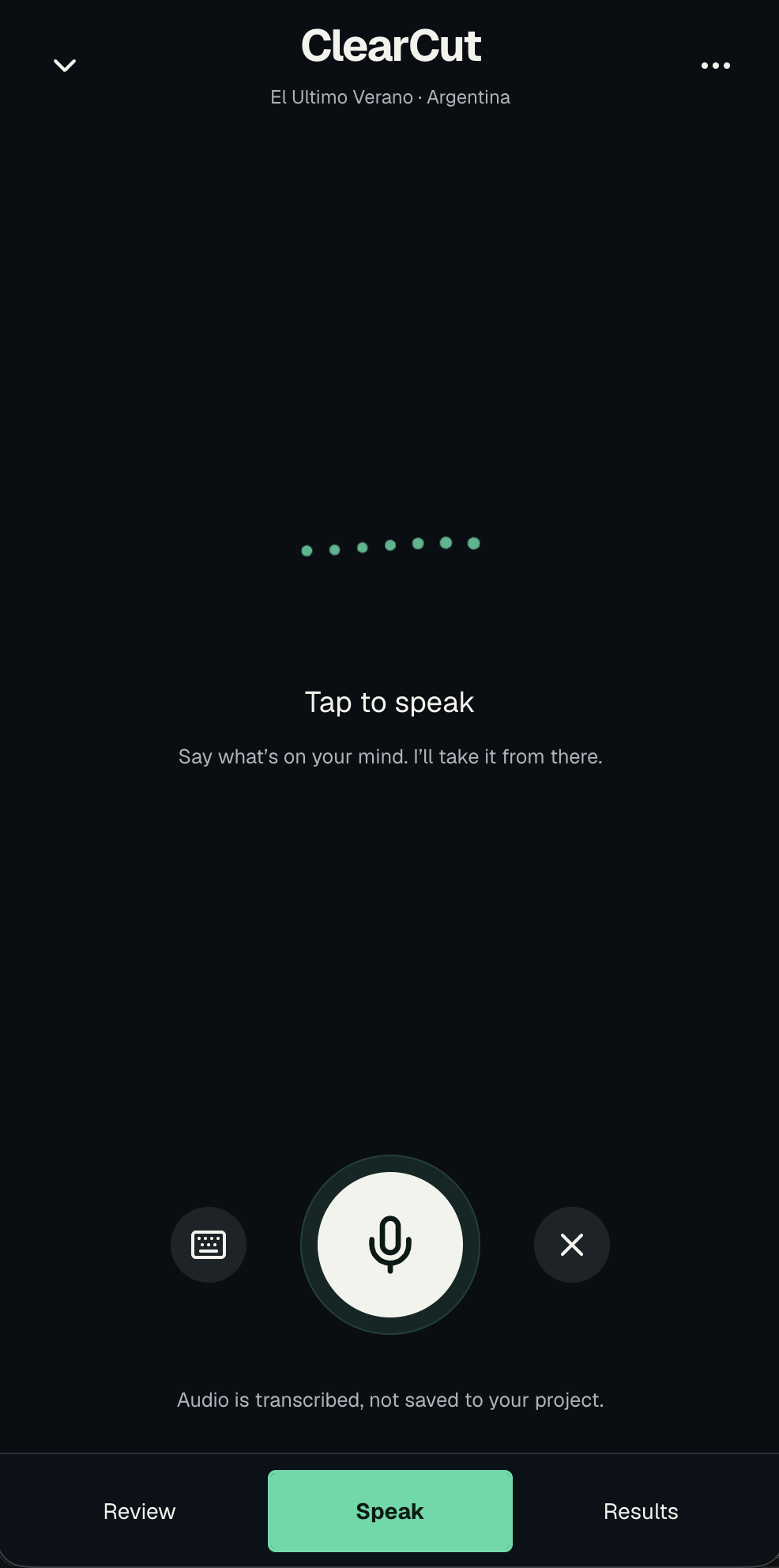
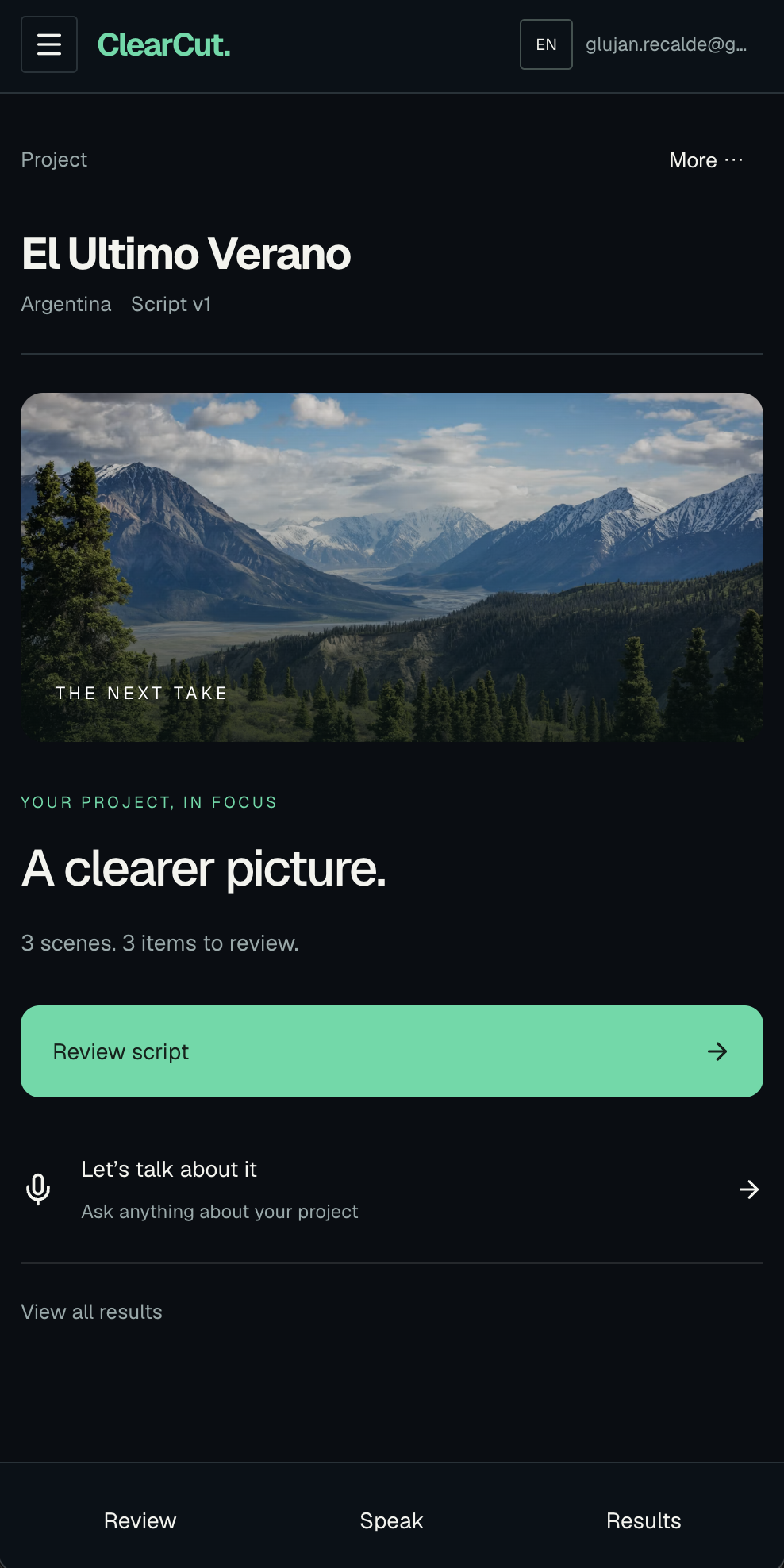
One of the most important aspects of ClearCut is that it can also be used directly from a phone.
Film sets are chaotic. Decisions happen quickly, people are moving, props change, locations introduce unexpected elements, and what reaches the camera is not always exactly what was planned.
ClearCut can travel with the production team.
From the set, a producer can interact with the platform conversationally, including through voice, to check continuity, investigate a visible brand, or evaluate another potential risk while there is still time to change the decision.
The goal is to turn compliance from a final checkpoint into a continuous agentic process embedded directly into production.
How we built it
ClearCut combines specialized AI agents, multimodal reasoning, real-time external research, persistent production context, and observability into a single platform.
We integrated Gemini as a core part of our AI stack.
Audiovisual production is inherently multimodal. The truth of a project does not live only in a screenplay. It exists simultaneously across text, images, visual references, characters, objects, locations, scenes, and audiovisual material.
Gemini allows ClearCut to reason across those different modalities and connect what it observes with the broader context of the production.
This became particularly important for our on-set experience, where the system needs to understand what is actually happening in front of the camera, not only what was originally written.
We also integrated Parallel to give our agents real-time external research capabilities.
For example, identifying a visible logo is only the first step. ClearCut can investigate relevant trademark or compliance information, connect that research with the scene and project context, and surface useful information for deciding what to do next.
This allows the platform to combine model reasoning with current external evidence instead of relying exclusively on information contained within the model.
For our data and ingestion infrastructure, we use ClickHouse.
A production generates a continuously evolving stream of structured and unstructured information, so ClearCut needs to remember much more than a conversation.
ClickHouse allows us to ingest, process, store, and query production information so that new observations can be connected to previous decisions, assets, scenes, and detected risks.
In that sense, ClearCut does not simply analyze assets. It accumulates production intelligence over time.
We also implemented Grafana dashboards for observability.
Building an agentic platform means understanding not only what the user sees, but what is happening across the different agents, integrations, data flows, and infrastructure underneath the experience.
Together, these components allow ClearCut to combine:
production context + multimodal AI + specialized agents + real-time retrieval + persistent data + observability
into one continuous production intelligence workflow.
Challenges we ran into
One of our biggest challenges was orchestration.
ClearCut depends on multiple AI capabilities working together as one coherent system. The difficult part was not simply connecting APIs. We had to determine which capability should be invoked, with which context, and at which point in the workflow.
Another major challenge was building a living production context.
Productions constantly evolve.
The screenplay says one thing. The storyboard interprets it. The set modifies it. The camera captures something slightly different. Post-production transforms it again.
We could not treat the original script as a static source of truth.
ClearCut needed to understand the production as a dynamic system whose state changes over time.
Connecting multimodal detection with external evidence was another important challenge.
Recognizing a logo, object, or inconsistency is technically interesting. Determining whether it represents a meaningful production risk requires much more context.
The system needs to connect:
visual detection + scene context + project history + external research + production implications
Integrating Gemini into this architecture was also new for us. We had never used Gemini in this type of AI workflow before the hackathon, which made the integration both challenging and genuinely fun.
Exploring how its multimodal capabilities could interact with our agents ended up adding much more to the project than we initially expected.
The integration with Parallel presented a different challenge: deciding when an agent actually needs fresh external information and how to bring those results back into the production context in a useful way.
Our ClickHouse architecture also required us to think carefully about how to ingest and organize continuously changing production information so the platform could reason about the project over time rather than treating every interaction independently.
Finally, we had to build for the reality of an audiovisual set.
Many AI products assume stable connectivity, a desktop computer, long interactions, and users with time to write detailed prompts.
A film set gives you almost none of those conditions.
Designing ClearCut so that it could remain useful from a phone, in the middle of production, forced us to think differently about how users interact with an agentic system.
Accomplishments that we're proud of
We are proud that ClearCut became much more than a proof of concept or a chatbot attached to a screenplay.
We built a working agentic AI platform that connects multimodal understanding, real-time research, persistent production context, specialized AI agents, and observability around a real production problem.
We are especially proud of bringing ClearCut onto the set.
The idea that a producer can be standing in front of a scene, notice something questionable, and immediately use an AI platform to analyze the situation, connect it with everything ClearCut already knows about the production, investigate external information, and determine possible next steps captures exactly why we wanted to build this.
We are also proud of how the team came together.
ClearCut combines three very different perspectives: real-world audiovisual production experience, decades of intellectual property expertise, and deep technical experience building scalable technology.
That combination shaped the platform from the beginning.
It was never AI looking for a problem to solve.
It started with a problem we had experienced from different sides and then asked what becomes possible when agentic and multimodal AI are applied to it.
Most importantly, we built something that can make sophisticated production intelligence more accessible to independent creators who do not have the legal, compliance, and production infrastructure of a major studio.
What we learned
The biggest thing we learned is that the opportunity for AI in audiovisual production is not simply automating existing workflows.
It is changing when intelligence becomes available.
Traditional compliance often happens at checkpoints, after decisions have already been made.
Agentic AI allows us to imagine a different model:
Create ↔ Analyze ↔ Detect ↔ Investigate ↔ Resolve
Instead of waiting for a review at the end of a stage, specialized agents can continuously participate throughout the production lifecycle.
We also learned how much more powerful multimodal AI becomes when it is combined with real-time retrieval and persistent project context.
Gemini helps ClearCut understand what is happening inside the production.
Parallel allows its agents to investigate what is happening outside of it.
ClickHouse connects those observations to the history and context of the project.
Grafana helps us understand what is happening inside the platform itself.
But perhaps our most important learning was that AI does not have to sit between creativity and compliance.
It can help bring them closer together.
Instead of compliance becoming the process that says "no" after something has already been created, it can become an intelligence layer that helps teams make better decisions while they are creating.
The result is not simply an AI assistant.
It is the foundation of an agentic intelligence layer for audiovisual production.
What's next for Clear Cut
We don't see ClearCut ending with this hackathon.
Our next step is to continue developing the project as a spin-off that brings together two complementary worlds: the AI and product capabilities of my startup and the intellectual property expertise of my co-founder's IP practice.
That combination is at the core of what makes ClearCut possible.
We are not trying to replace legal or production expertise with AI. We want to transform that expertise into an agentic intelligence layer that can be present throughout the production lifecycle, exactly when decisions are being made.
We want ClearCut to become an always-present intelligence layer that follows an audiovisual project from script to screen.
A system that understands what the team intended to create.
One that remembers what was decided.
One that observes what is changing.
One that researches what it does not know.
One that detects when something does not match.
And one that helps the production team act before the problem becomes expensive.
Our next technical step is to expand the network of specialized agents and the types of production risks they can understand, while making the platform increasingly proactive across pre-production, production, and post-production.
Over time, we envision ClearCut becoming more than a risk detection platform. We see it becoming an agentic operating layer for production intelligence, where specialized agents continuously collaborate around the evolving state of an audiovisual project.
Our larger vision is to democratize capabilities that have historically been available mainly to productions with large legal, clearance, compliance, and production teams.
We believe every filmmaker should be able to access that intelligence, whether they are producing for a global studio or shooting their first independent film.
The hackathon gave us the opportunity to build the first version.
Now we want to turn ClearCut into a company.
Because the best time to solve a production problem is not in post-production.
It is before it becomes one.
ClearCut catches the risk before it becomes the reshoot.

Log in or sign up for Devpost to join the conversation.