-
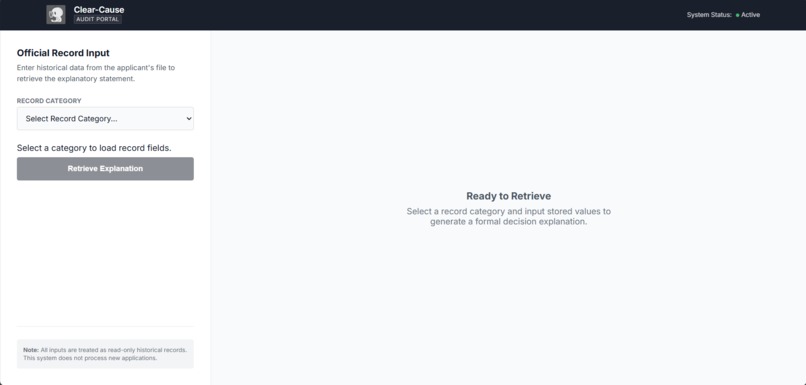
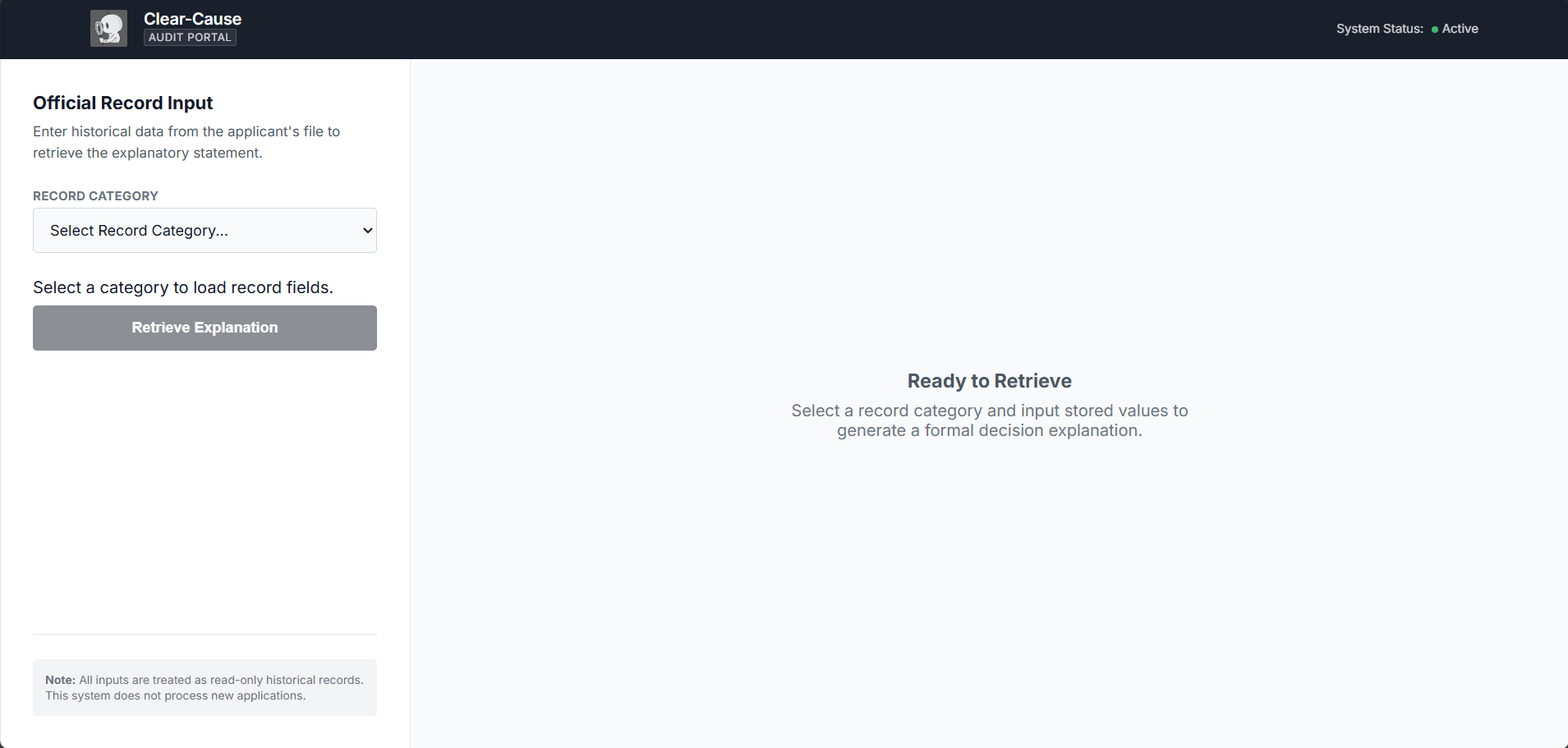
Dashboard
-
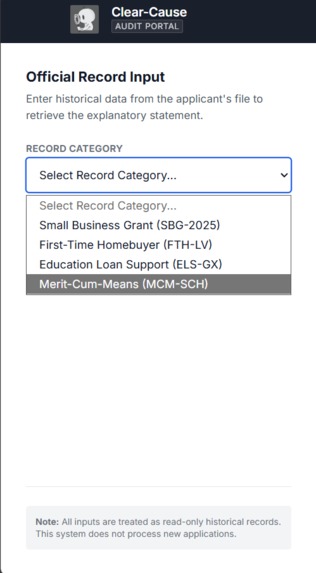
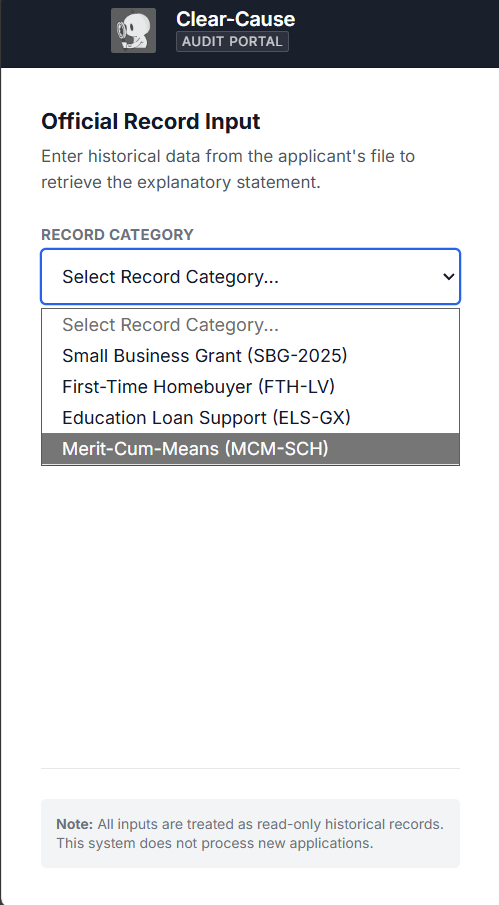
Drop-down menu
-
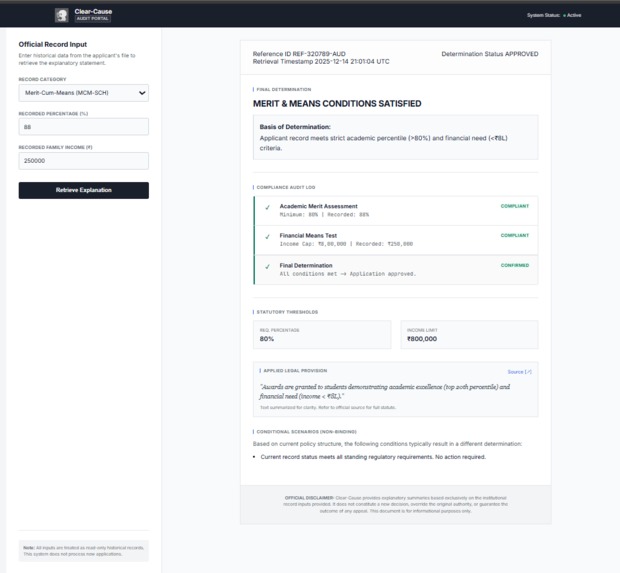
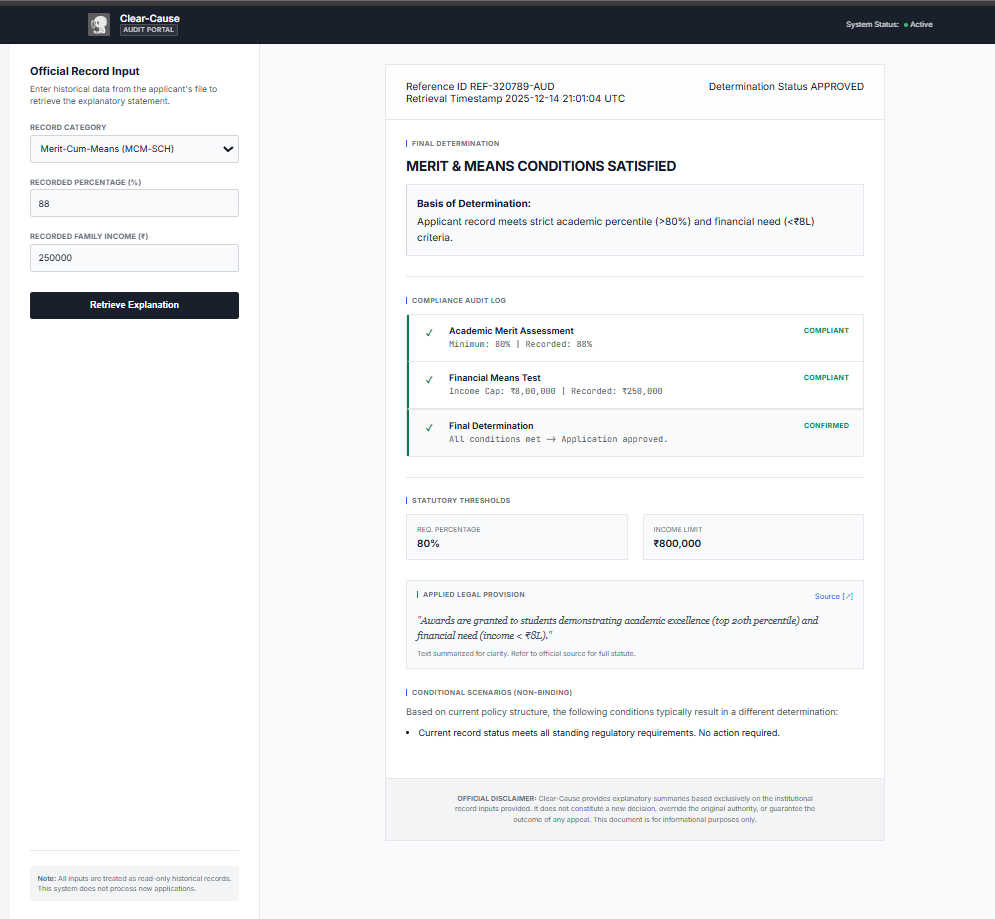
Approved case
-
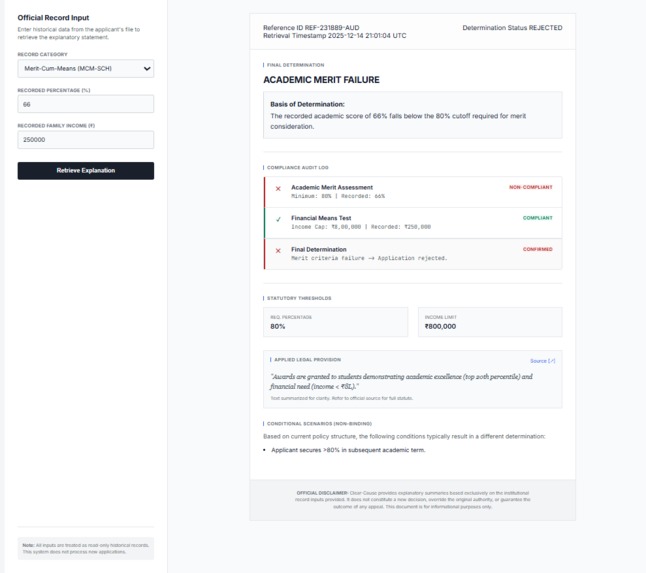
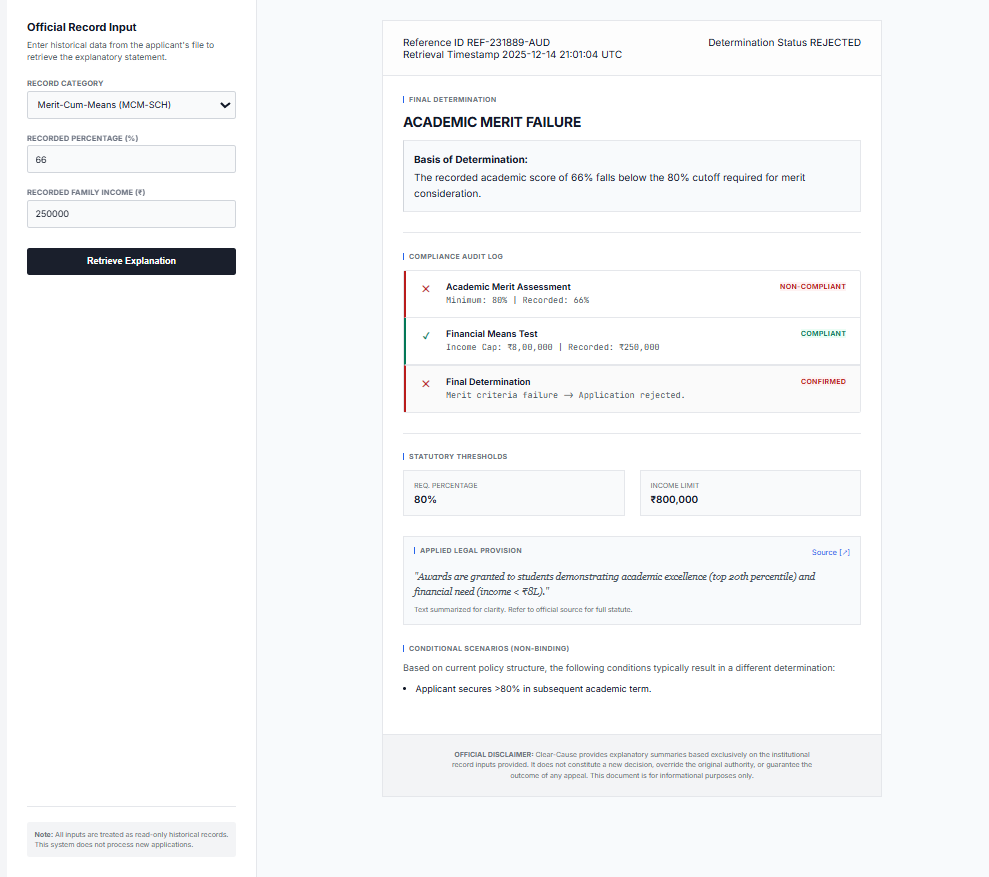
Rejection case
Inspiration
Clear-Cause originated from a situation a friend encountered during their college years. They sought a merit-based scholarship fulfilled the qualifications and provided all paperwork punctually. Weeks afterward the application status switched to "Rejected" without any rationale or advice. The problem wasn’t the rejection itself. It was the absence of explanation. Upon reviewing accounts, from other students it became apparent that many systems are designed to make decisions yet they fail to articulate those decisions in a comprehensible manner.
What it does
Clear-Cause enables organizations to provide easy-to-understand reasons, for critical decisions. Than ambiguous refusal notifications or complex policy language it offers a brief overview of the decision clarifying: ->which principle was used, ->which element affected the result ->What might alter the outcome. The aim is to achieve understanding, not to challenge decisions.
How we built it
We developed Clear-Cause as an explanation component that operates following a decision. For the MVP our attention was, on scholarship and institutional decisions crafting organized explanation templates that convert rules into language without compromising precision.
Challenges we ran into
The primary difficulty lay in maintaining simplicity alongside accuracy. Numerous choices encompass factors and condensing them without losing nuance demanded precise phrasing. Additionally we needed to make sure the system appeared helpful of adversarial toward institutions.
Accomplishments that we're proud of
->Reframed opaque decisions as a clarity and trust problem ->Designed a simple, human-readable decision explanation format ->Built a concept that improves transparency without changing outcomes
What we learned
We discovered that transparency is an issue of design, than solely a matter of policy. Brief, carefully crafted clarifications can greatly diminish confusion, anxiety and distrust.
What's next for Clear-Cause
Next, we plan to test Clear-Cause with real users, refine explanation templates based on feedback, and explore pilot use cases such as scholarships or grievance systems.


Log in or sign up for Devpost to join the conversation.