CleanScan – Project Story
🌟 Inspiration
Late-night grocery runs became 45-minute label-decoding marathons for my daughter’s allergies (and my own post-mold-toxicity diet).
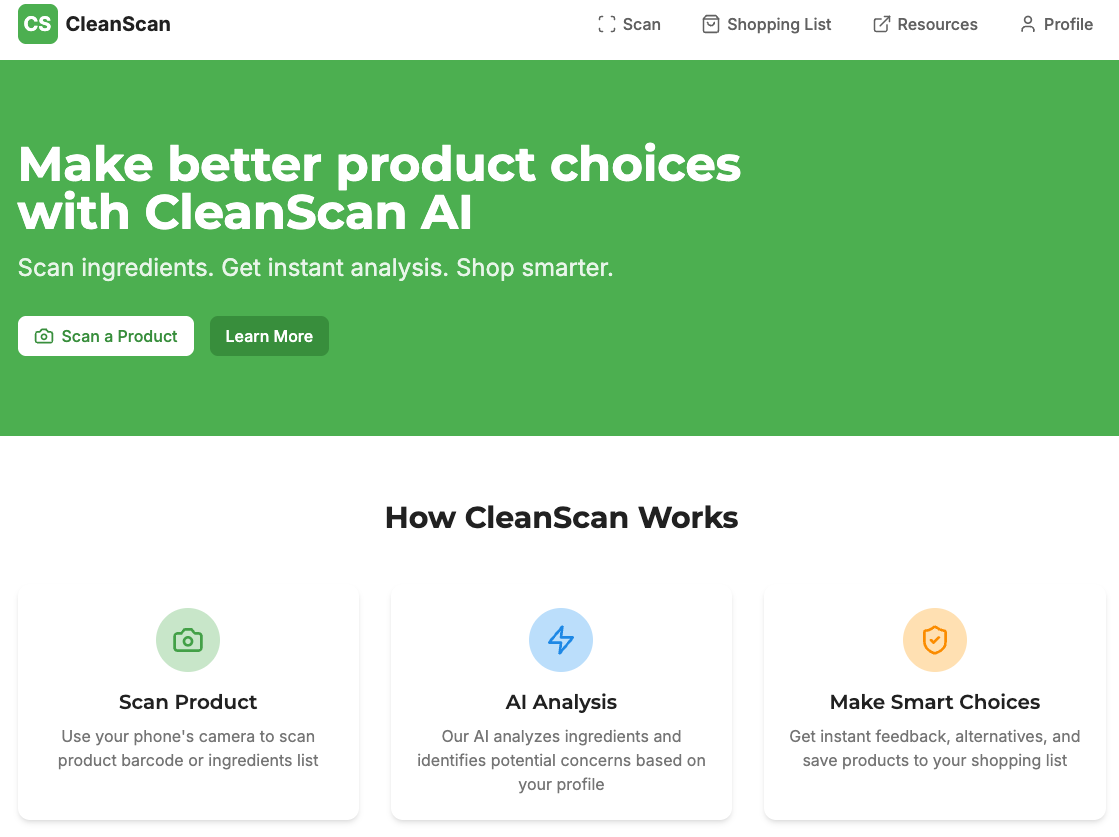
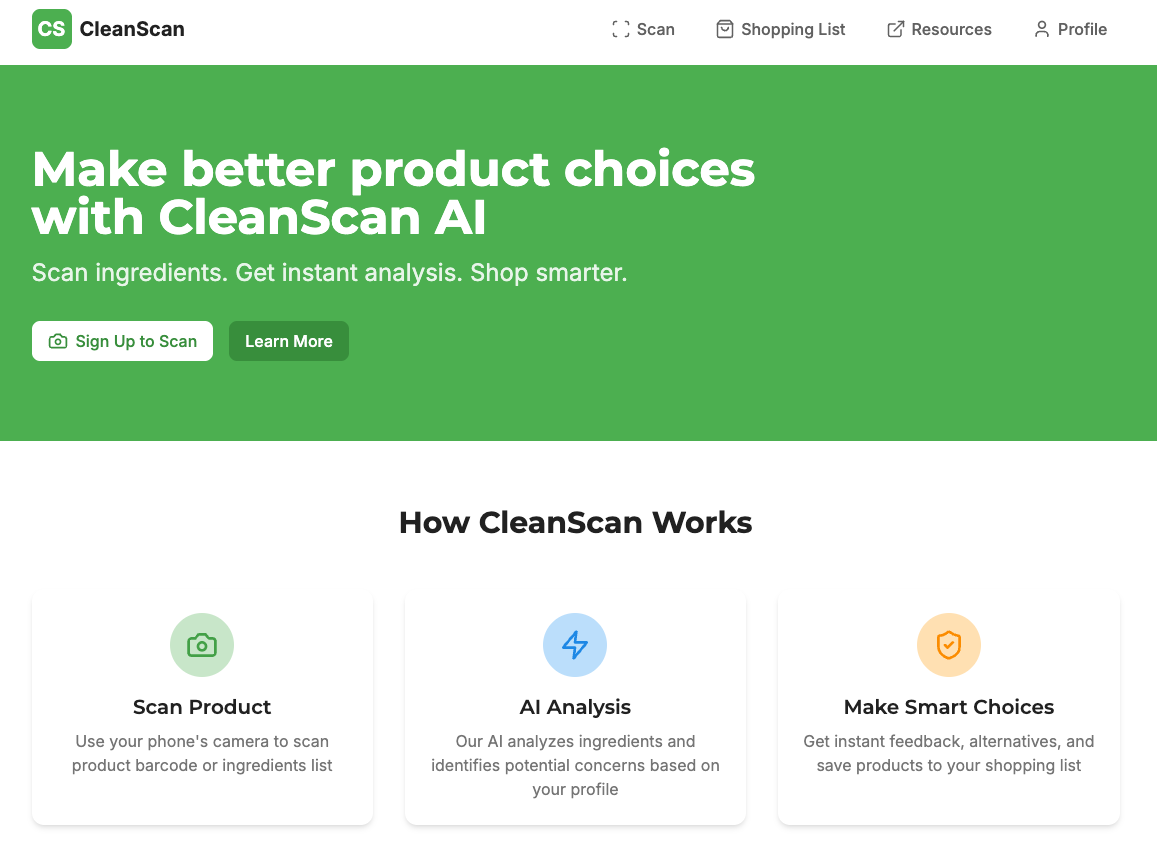
I craved a single-tap scanner that vets ingredients, flags allergens, and suggests cleaner swaps.
📚 What I Learned
- Glossy packaging kills OCR—lighting tweaks and adaptive thresholding are essential.
- Ingredient aliasing (“rapeseed” vs “canola”) requires a robust synonym map.
- Micro-UX touches—flash toggle, auto-crop—boost scan success and user trust.
🛠️ How I Built It
| Layer | Tech & Flow |
|---|---|
| Front-end | React + Vite PWA wrapped with Capacitor for live camera feed. |
| OCR → Parse | Tesseract.js extracts text → OpenAI o4-mini parses & scores ingredients. |
| Data & Auth | Supabase stores profiles, allergy lists, and CleanScore history (RLS enforced). |
| Rules Engine | Flags seed oils, synthetic dyes, and user-specific allergens; ranks “CleanScore.” |
| CI / Hosting | Netlify continuous deployment with preview branches. |
⚠️ Challenges
| Issue | Fix |
|---|---|
| Glare wrecking OCR | Adaptive threshold & quick user prompt to tilt the pack. |
| Latency > 4 s on budget phones | Batched OpenAI calls + local caching of common additives. |
| Privacy vs. aggregate analytics | Anonymised ingredient hashes for trend dashboards. |
🚀 What’s Next
Crowd-sourced database – community-verified CleanScores and recipe suggestions.
CleanScan is evolving into a pocket nutritionist that makes clean eating effortless—one snap at a time.

Log in or sign up for Devpost to join the conversation.