-
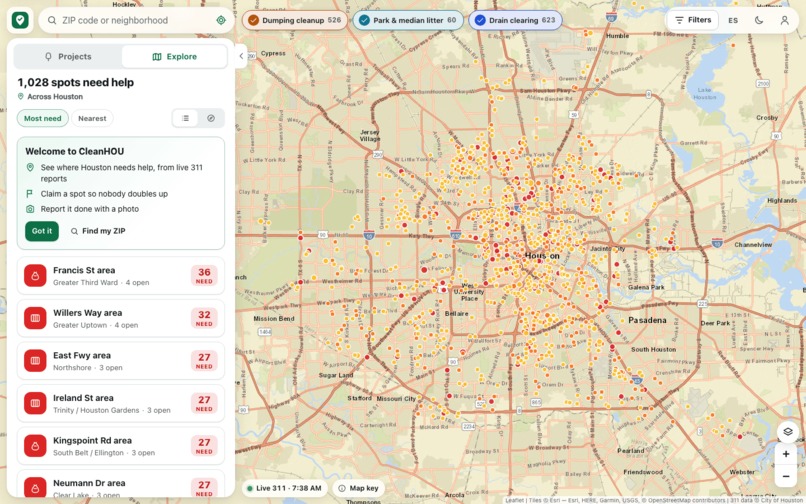
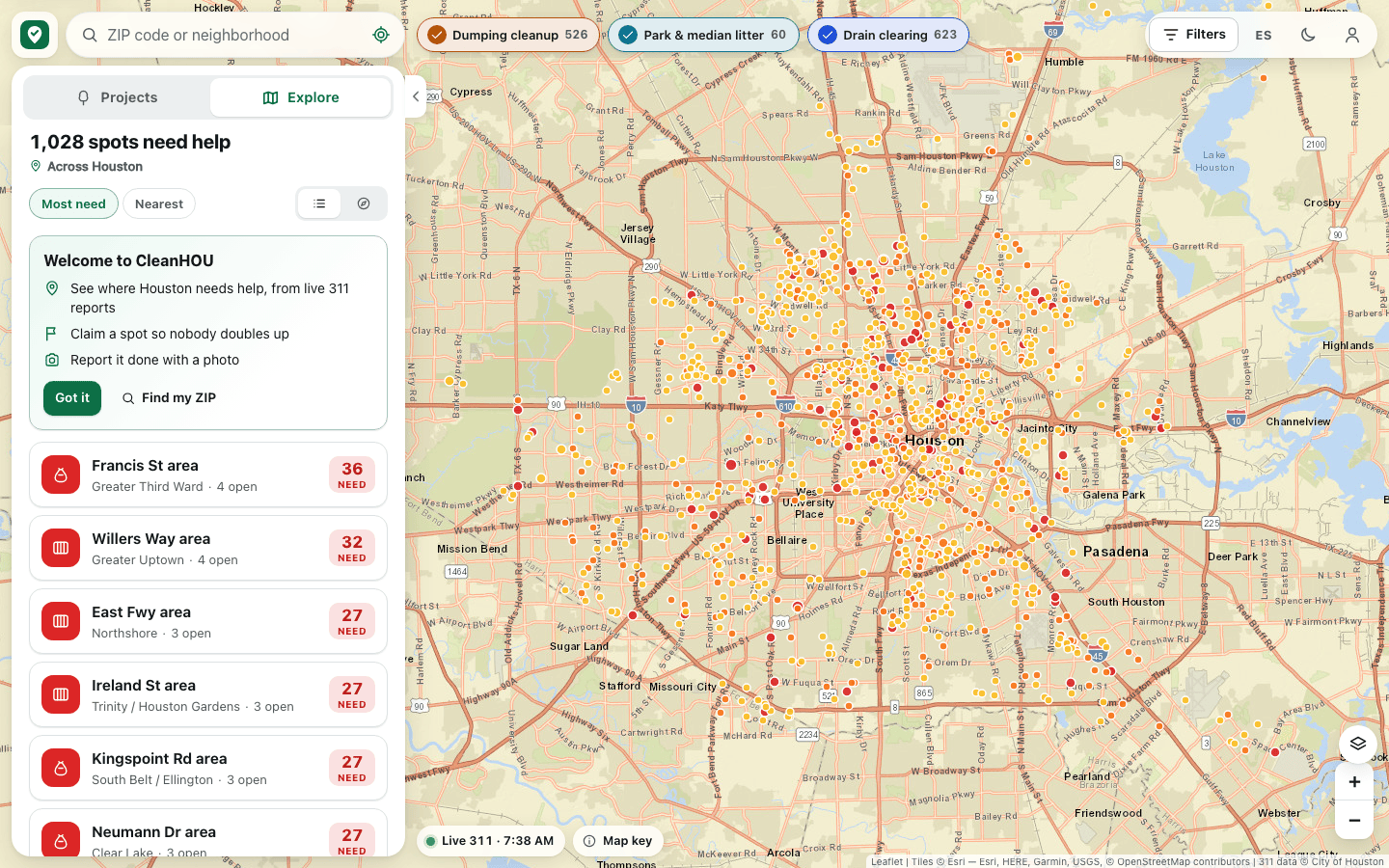
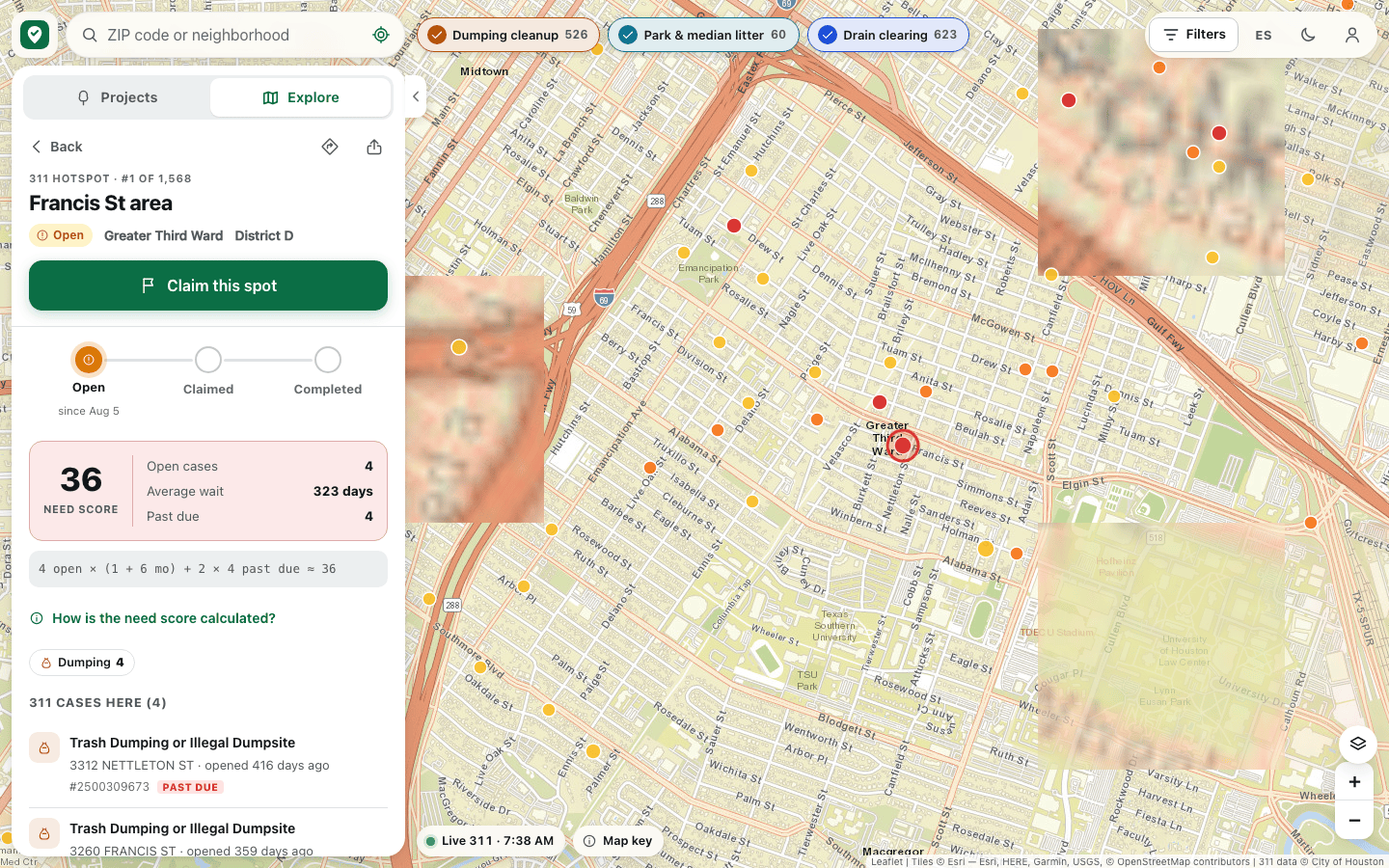
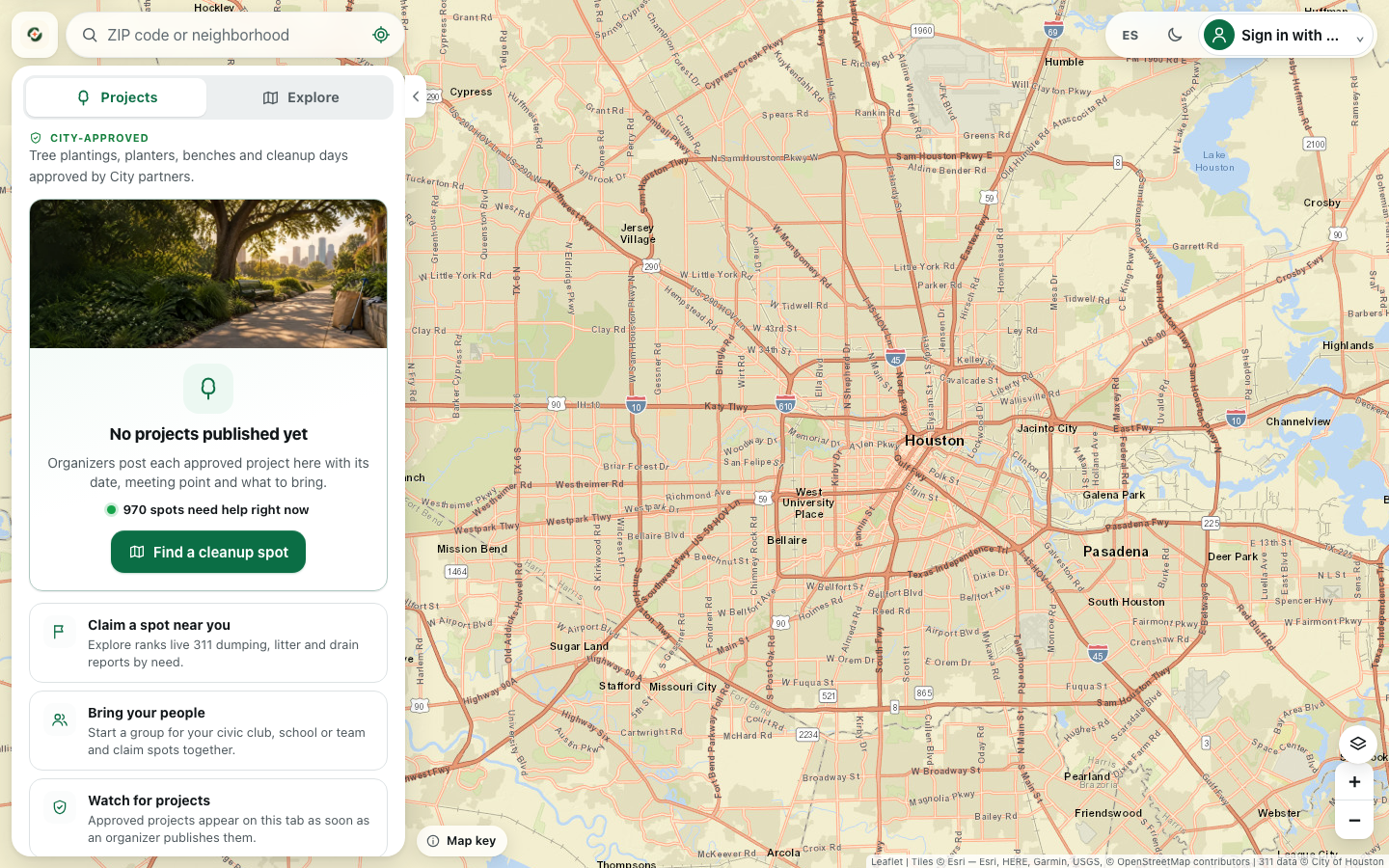
Explore Houston 311 cleanup hotspots on a map or searchable list.
-
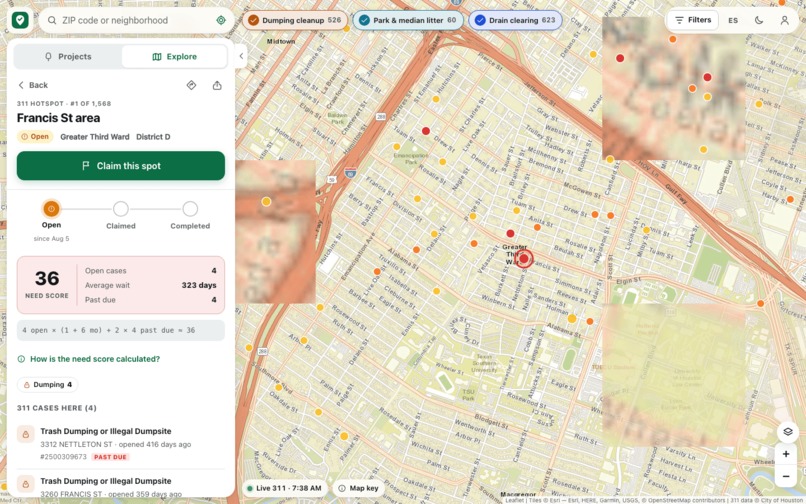
Inspect a hotspot, its source reports and volunteer status.
-

CleanHOU: a report is the beginning. Watch the narrated product demo.
-
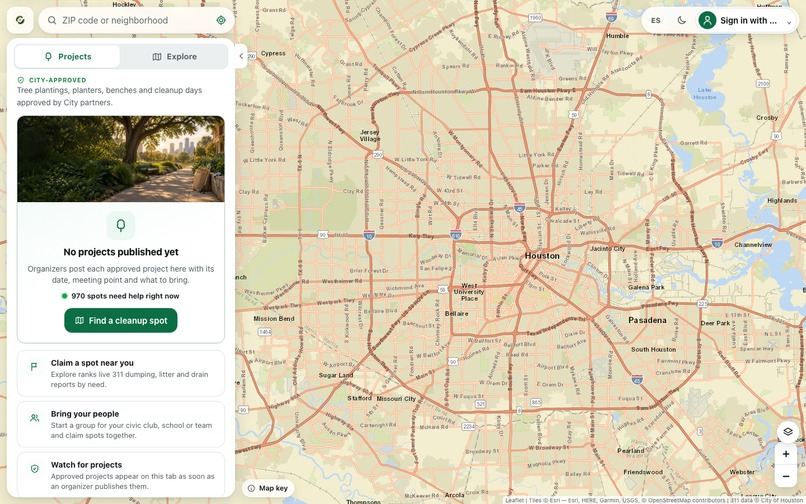
CleanHOU current live app interface (captured 2026-09-27 19:40 UTC).

Inspiration
Houston's 311 reports make problems visible. The Clean Houston challenge asks what happens next: how can residents turn that information into a practical cleanup?
What it does
CleanHOU is a working prototype that turns read-only 311 dumping, litter and drainage signals into a map and searchable list. Residents can inspect a hotspot, make a volunteer plan, invite a crew and record completion with notes, hours, bags and optional photos. Volunteer records remain separate from official City service requests.
How I built it
A Vite frontend with Leaflet connects to an Express/TypeScript API and PostgreSQL through Drizzle. Google sign-in protects actions that change shared data. The application stays useful for browsing before sign-in, with English and Spanish copy and a list alternative to the map.
Challenges
The central design problem was making a report actionable without suggesting it was a City assignment or permission to enter private property. The implementation also needed duplicate-claim protection, private contact details and honest empty states.
Accomplishments
The prototype is deployed with live 311-derived hotspots, authenticated volunteer workflows, completion reporting, a narrated product demo and a pitch deck. These demonstrate progress; they are not claims of completed community cleanups, adoption or official partnerships.
What I learned
Clear source dates and status boundaries matter as much as the map. Public browsing and protected contribution flows can support different levels of participation.
What's next
Run a small pilot with local organizers, validate the most useful cleanup information and establish who reviews and maintains opportunities. Official project/adoption feeds and measured community outcomes remain future work.


Log in or sign up for Devpost to join the conversation.