-
-
Landing_page
-
Dashboard
-
Report
-
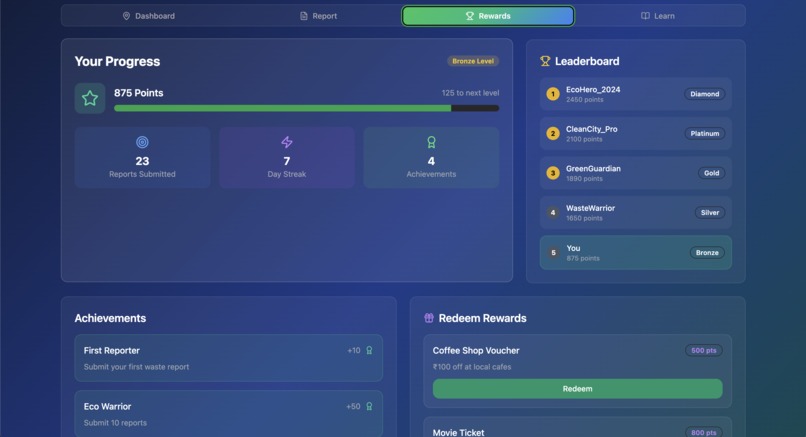
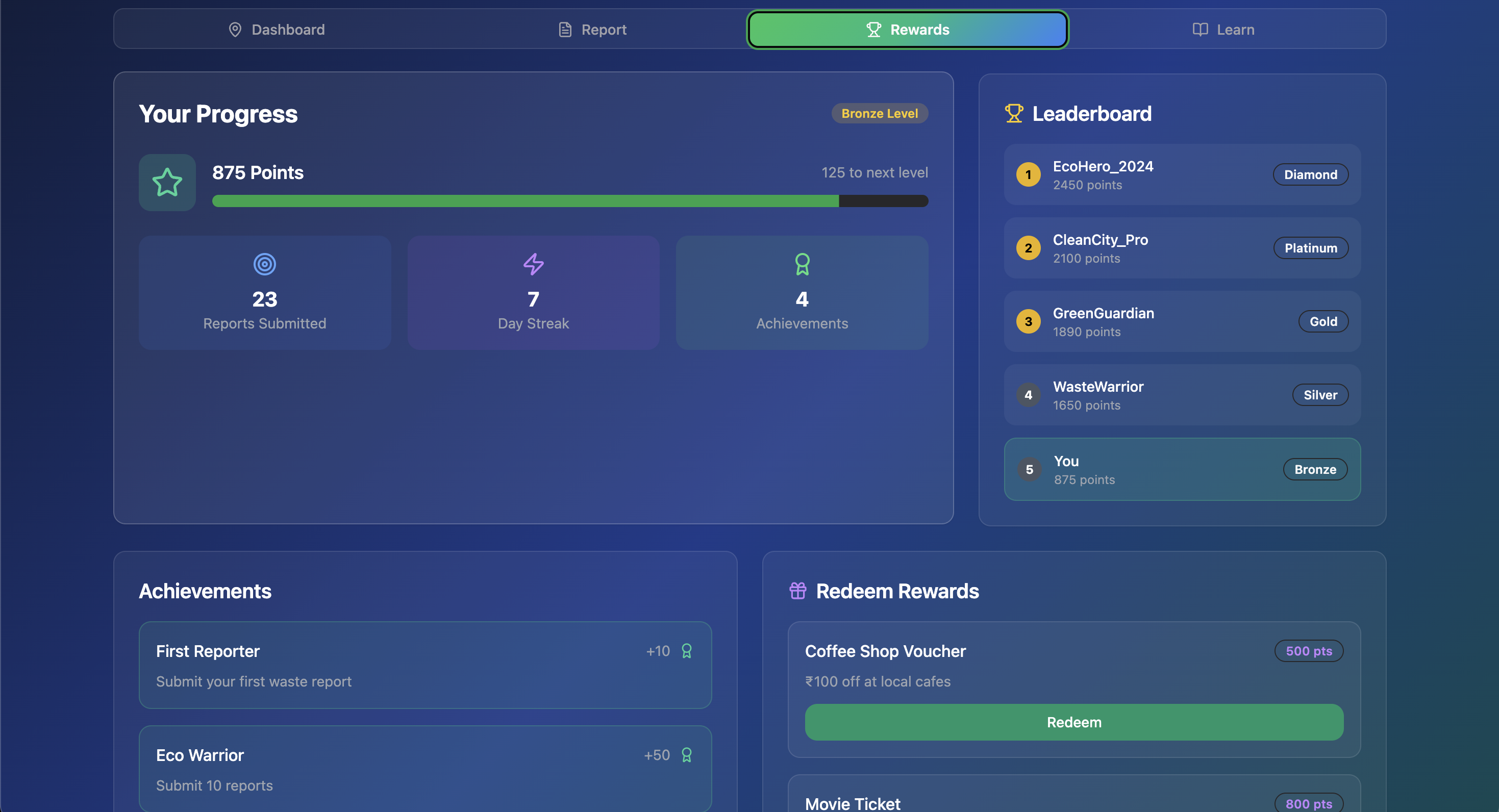
Rewards
-
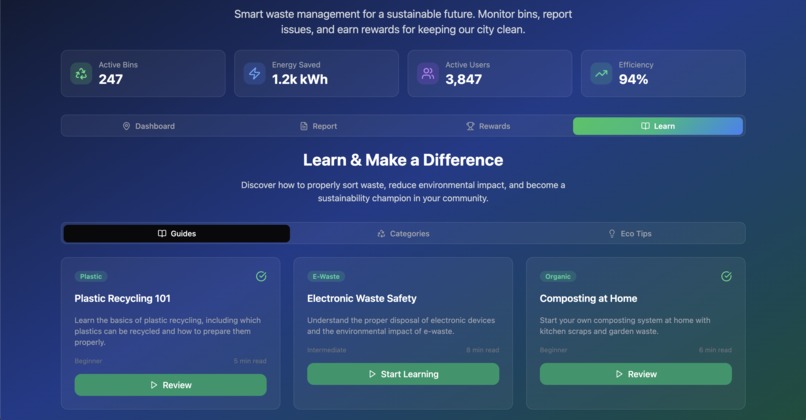
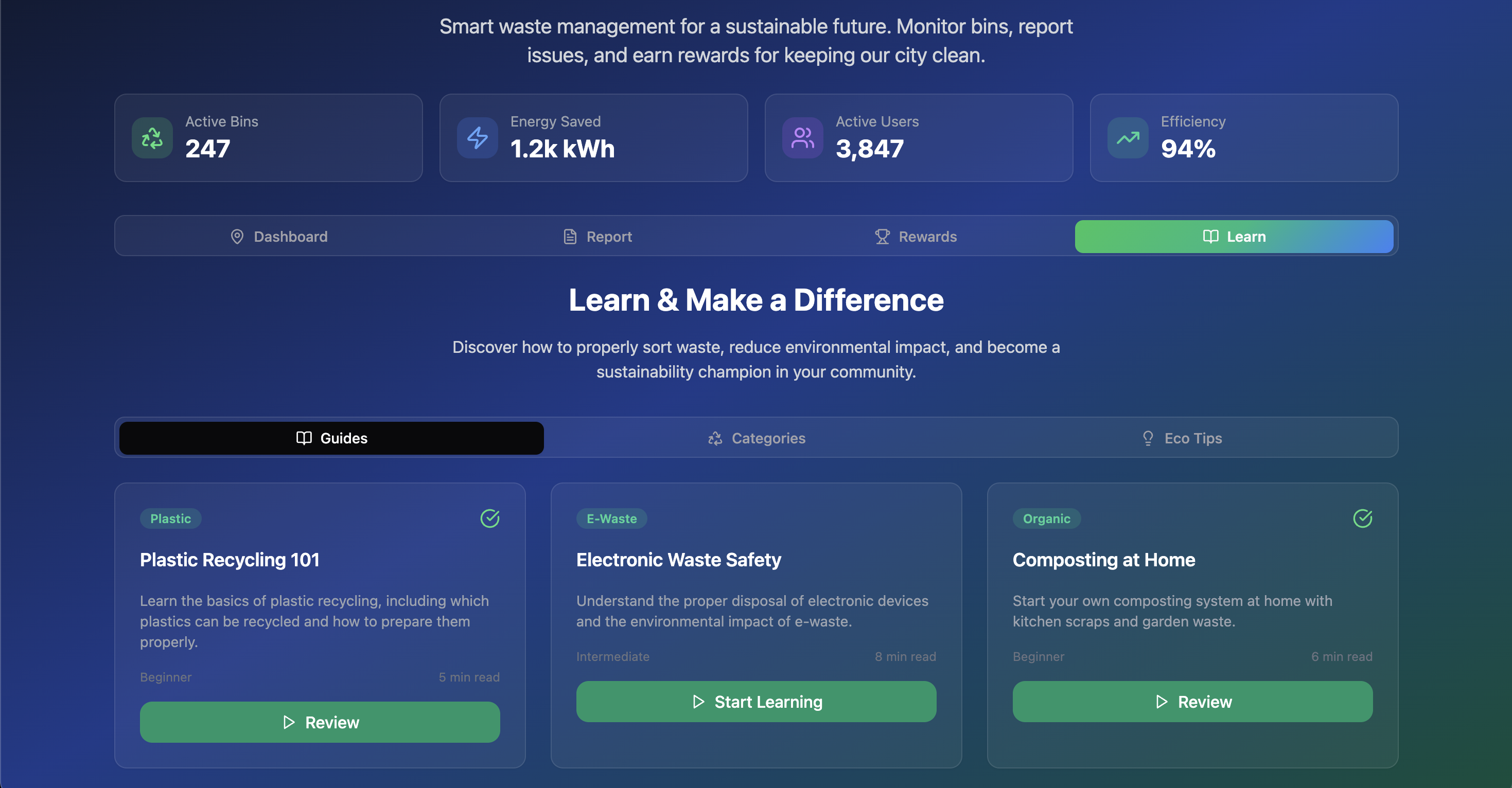
Learn_guides
-
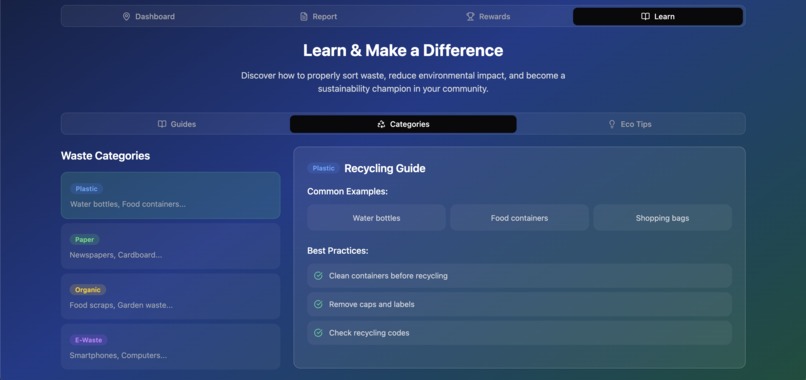
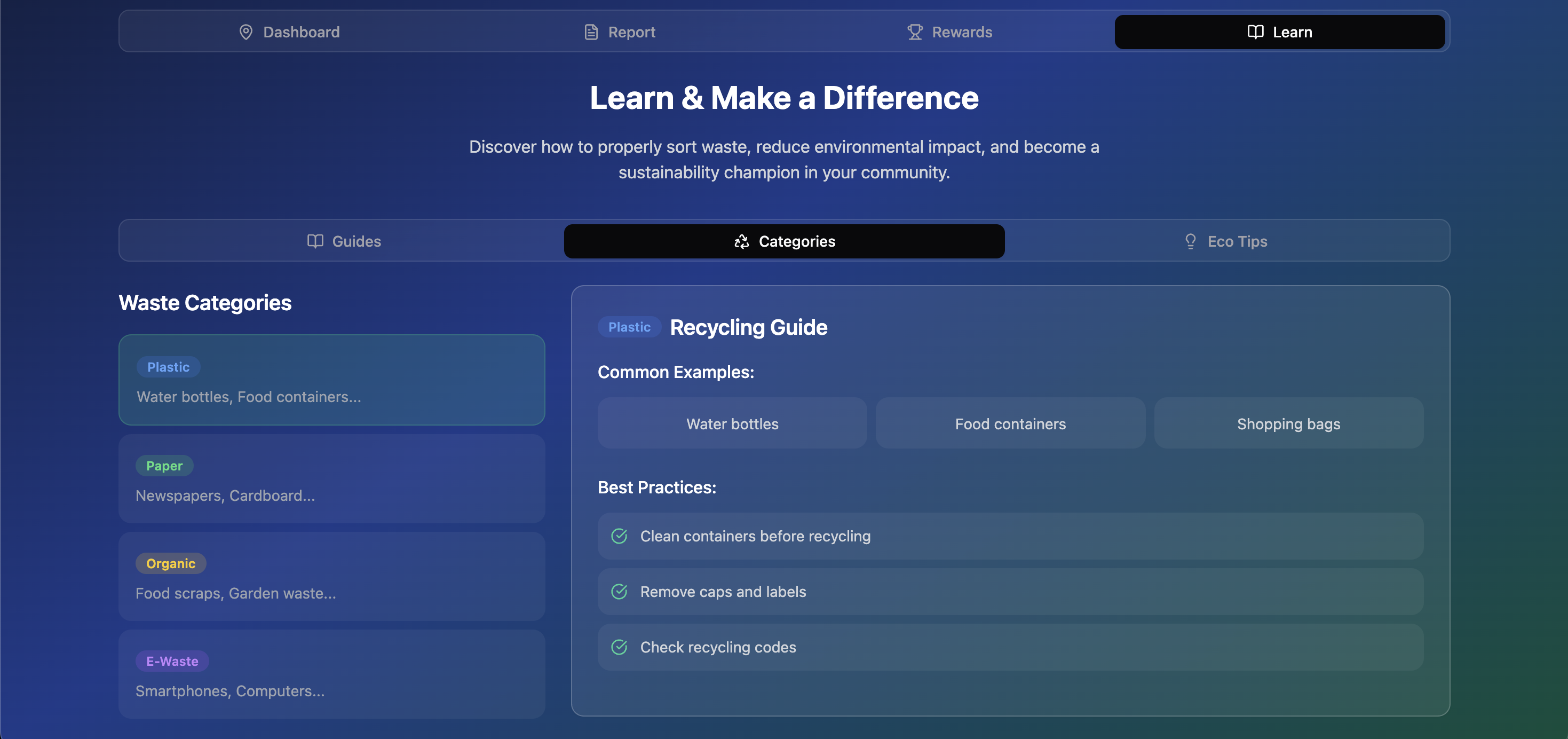
Learn_categories
-
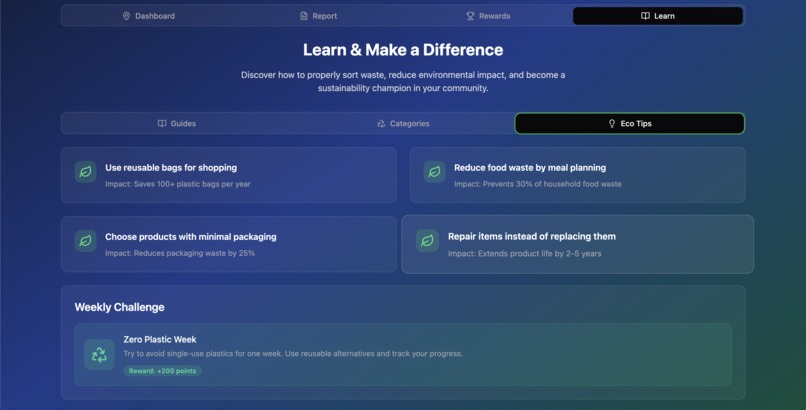
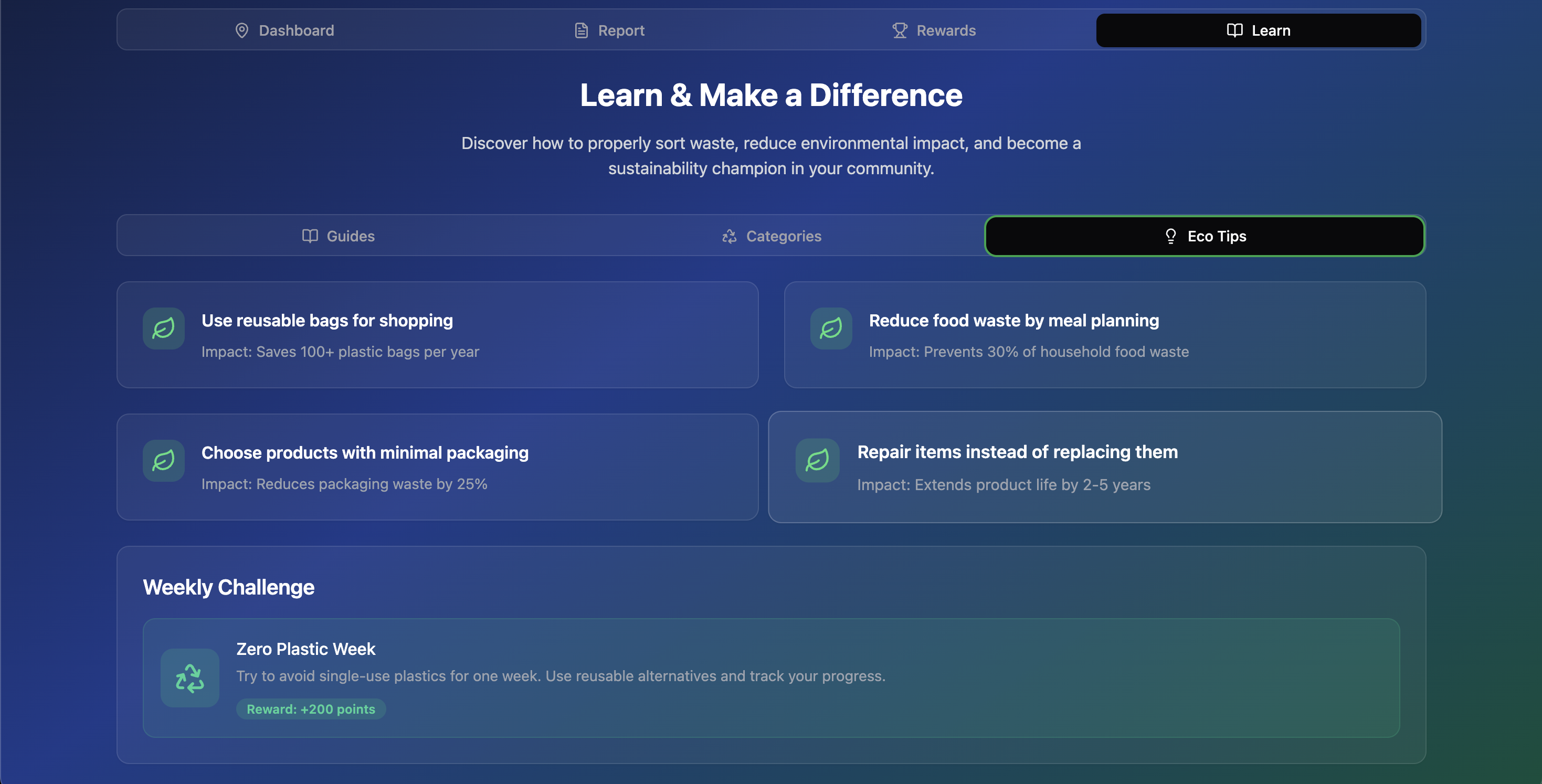
Learn_eco-tips
CleanCity Connect
Inspiration
The inspiration for CleanCity Connect comes from the escalating urban waste crisis, where inefficient collection, overflowing bins, and low recycling rates harm city livability and the environment. Solutions like Bigbelly and Singapore’s smart waste systems demonstrated the power of IoT and AI in transforming waste management. We were driven by the vision of engaging citizens in sustainable practices, making waste management a collaborative effort to build cleaner, smarter cities.
What it does
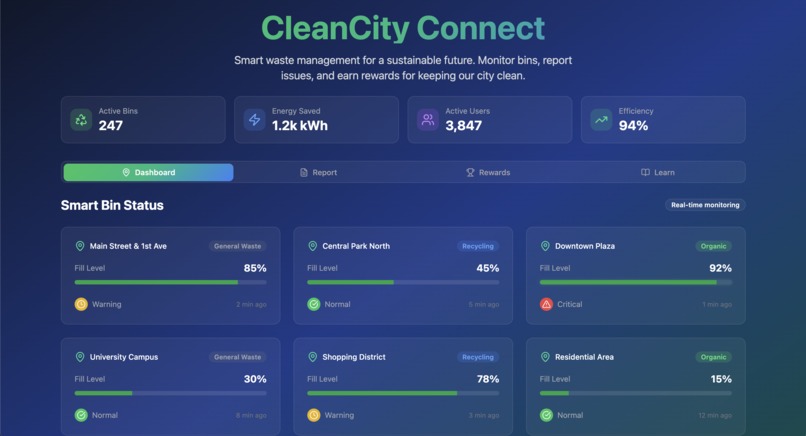
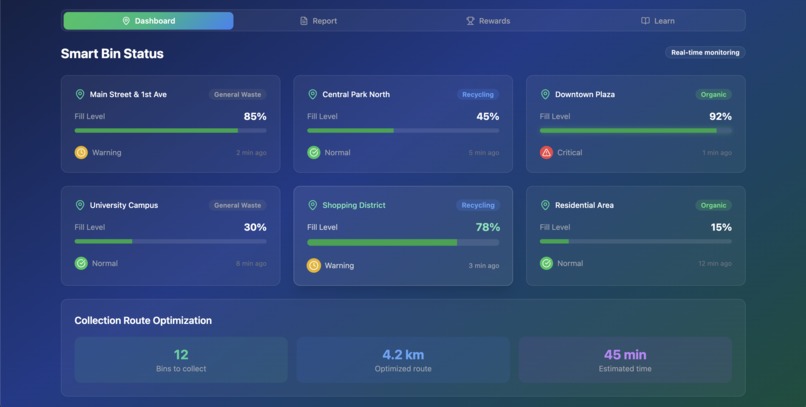
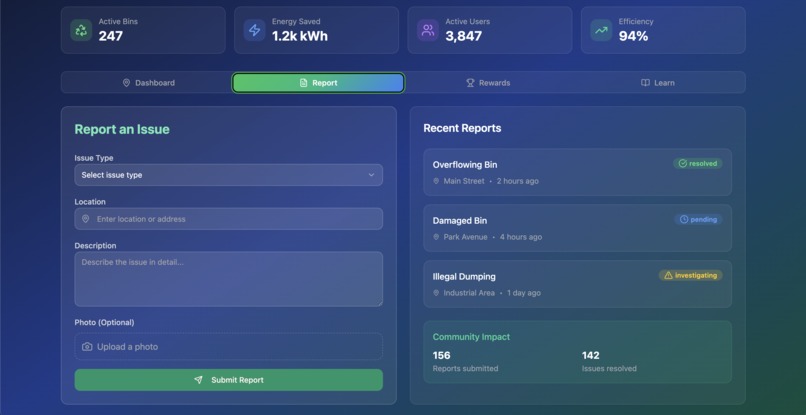
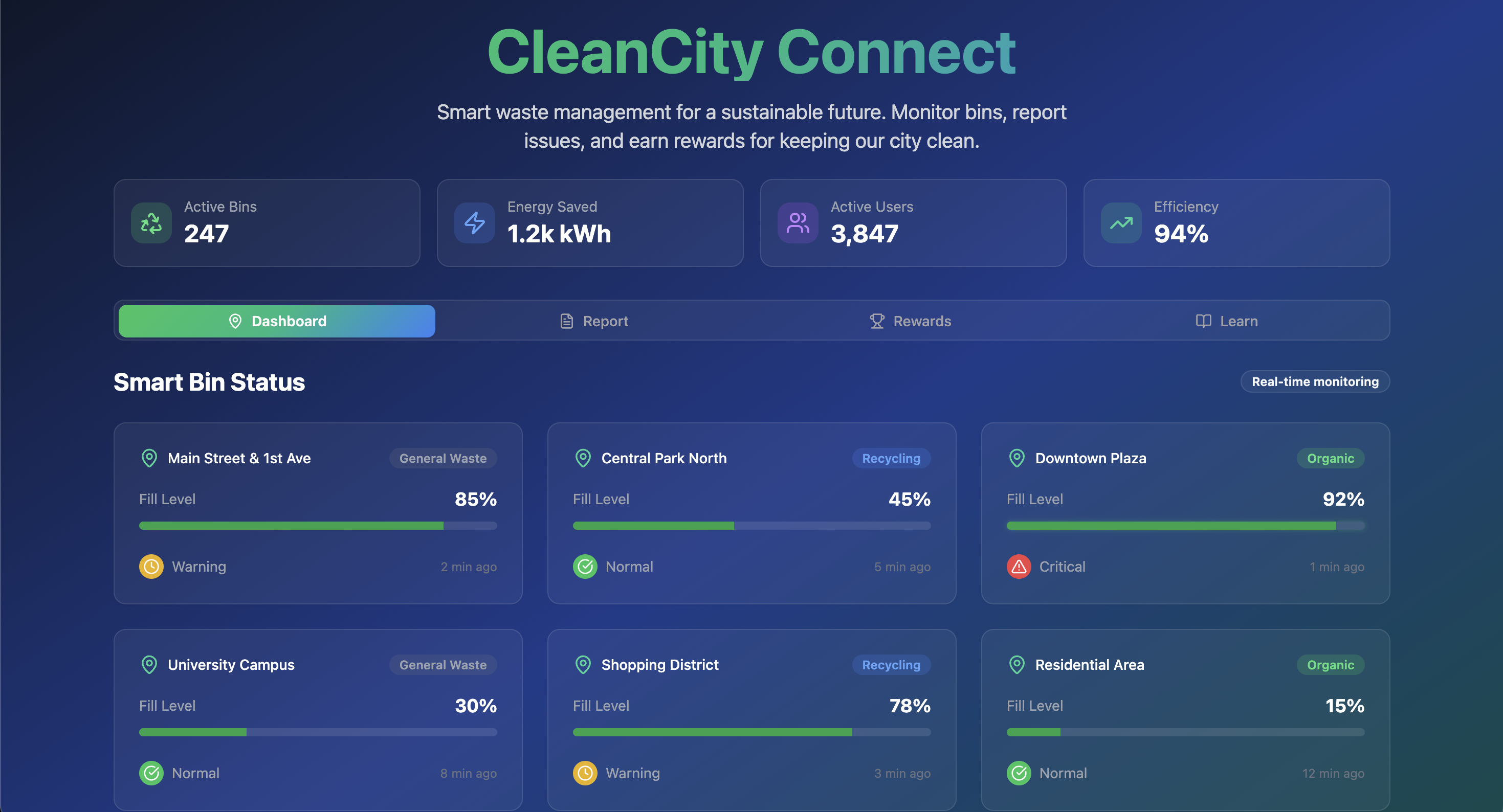
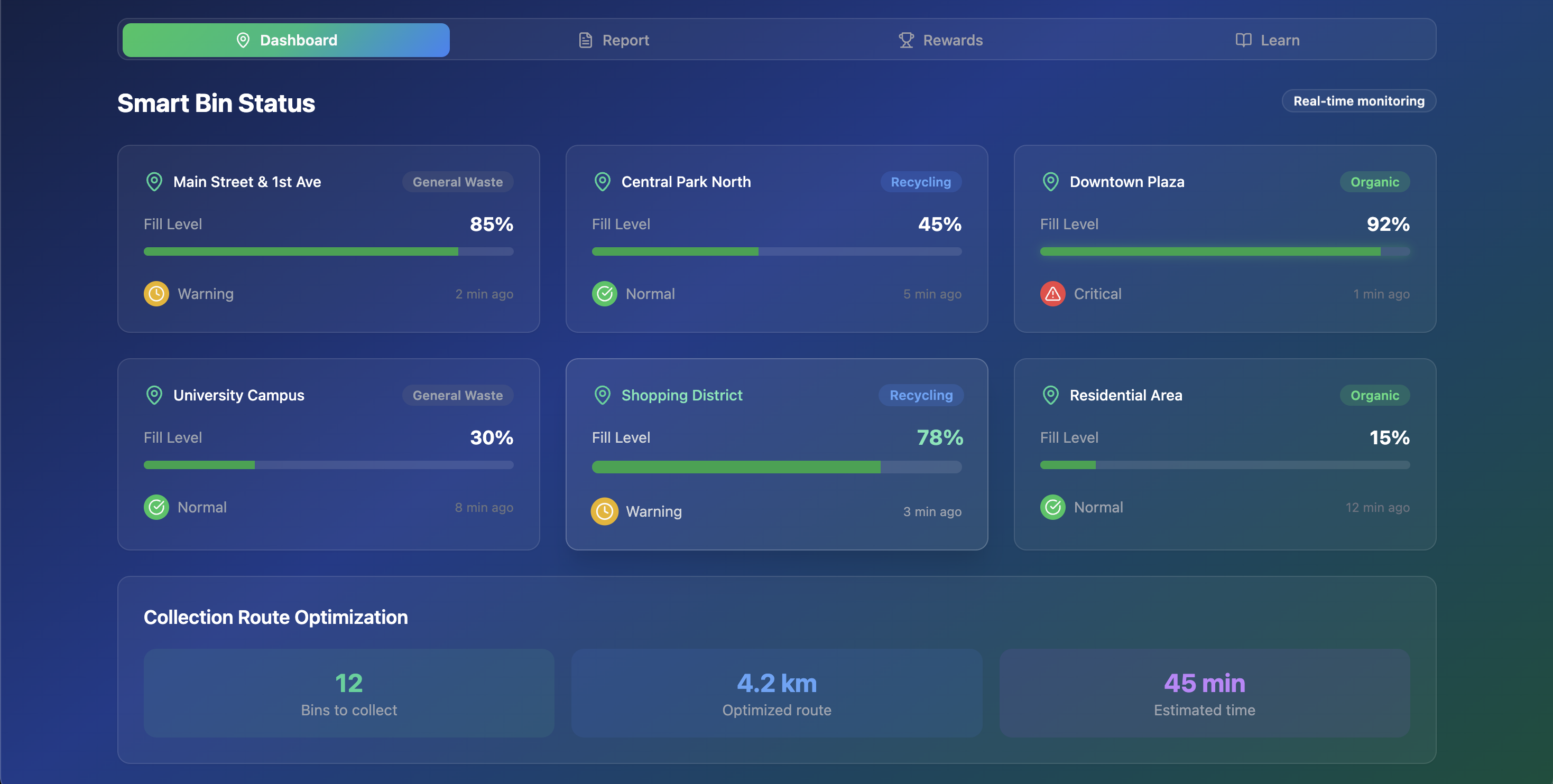
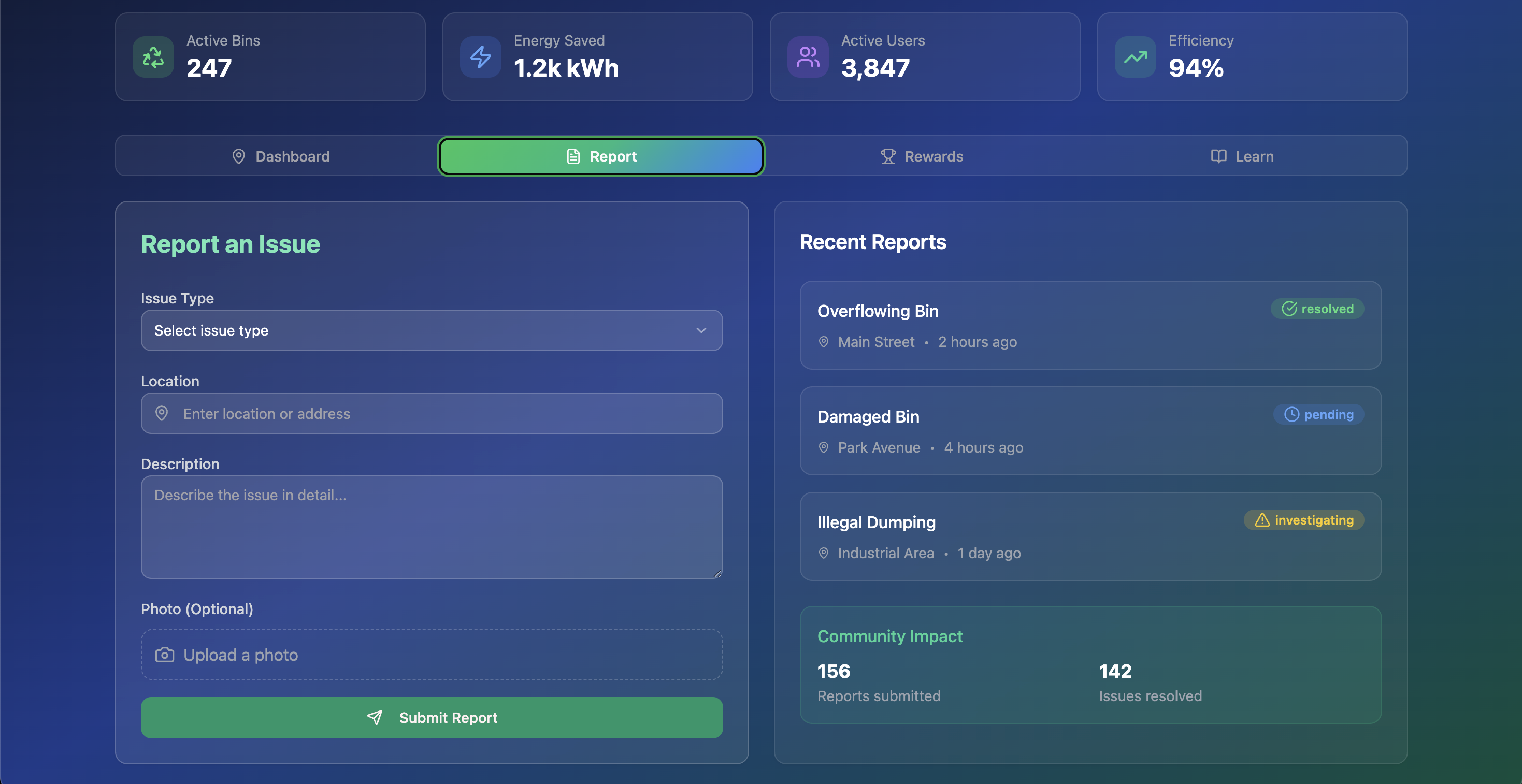
CleanCity Connect is a smart waste management system that optimizes urban waste collection and promotes recycling through IoT, AI, and community engagement. IoT-enabled smart bins monitor fill levels and waste types in real-time, while AI algorithms optimize collection routes to reduce fuel consumption and costs. Citizens use a mobile/web app to report issues (e.g., overflowing bins, illegal dumping) and earn rewards for recycling via gamification. A municipal dashboard provides city officials with analytics on waste trends and sustainability metrics, enabling data-driven policies for cleaner cities.
How we built it
We developed CleanCity Connect using a multi-layered approach within a 48-hour hackathon:
- Frontend: Created a cross-platform mobile app with React Native and a web app with React, featuring an interactive map (Mapbox API), reporting forms, and a gamified user dashboard for citizens.
- Backend: Built with Node.js, Express.js, and MongoDB for data storage, with REST API endpoints for bin status, user reports, and routes.
- IoT: Simulated smart bin sensors (ultrasonic for fill levels, cameras for waste types) using mock data, integrated via IBM Watson IoT Platform with MQTT protocol.
- AI/ML: Implemented a route optimization algorithm (Dijkstra’s) using scikit-learn and leveraged Google Cloud Vision API for waste classification.
- Cloud: Hosted on AWS (EC2, S3) for scalability, using microservices for bin monitoring and analytics.
- Security: Secured data with JWT authentication and AES-256 encryption.
- Tools: Used Git for version control, Postman for API testing, and Docker for backend containerization.
The prototype focused on core features: real-time bin monitoring, route optimization, and citizen reporting.
Challenges we ran into
- IoT Simulation: Lacking physical bins, we simulated sensor data, but replicating real-time latency was difficult.
- AI Accuracy: Limited sample data for waste classification reduced model accuracy, prompting us to use Google Cloud Vision API.
- UI/UX Balance: Designing an intuitive interface for citizens, workers, and officials within time constraints was tough.
- Time Constraints: Integrating IoT, AI, and full-stack development in 48 hours required ruthless prioritization, limiting features like predictive maintenance.
Accomplishments that we're proud of
- Working Prototype: Delivered a functional mobile app with a map interface, mock IoT data, and route optimization in 48 hours.
- Citizen Engagement: Created a gamified system with rewards tied to local businesses, encouraging recycling.
- Sustainability Impact: Showcased potential to reduce CO2 emissions by ~3,500 tons annually (based on similar projects) via optimized routes.
- Team Synergy: Coordinated a multidisciplinary team (developers, designers, data scientists) effectively under tight deadlines.
What we learned
- IoT Integration: Gained expertise in simulating IoT data and integrating it with cloud platforms.
- AI Trade-offs: Understood the benefits of pre-built APIs versus custom models for rapid prototyping.
- User-Centric Design: Learned the importance of intuitive UI for diverse urban users, from citizens to municipal workers.
- Agile Development: Improved task prioritization and adaptability in a fast-paced hackathon setting.
What's next for CleanCity Connect
- Pilot Deployment: Collaborate with a local municipality to test a small network of smart bins.
- AI Advancements: Enhance waste classification models and add predictive maintenance for bins.
- Scalability: Expand to multiple cities with customizable municipal dashboards.
- Community Expansion: Partner with local businesses for reward programs and launch recycling education campaigns.
- Funding: Pursue smart city grants or incubators like B-Nest Foundation to scale CleanCity Connect globally.
Built With
- arduino
- express.js
- mongodb
- next.js
- react
- tailwindcss

Log in or sign up for Devpost to join the conversation.