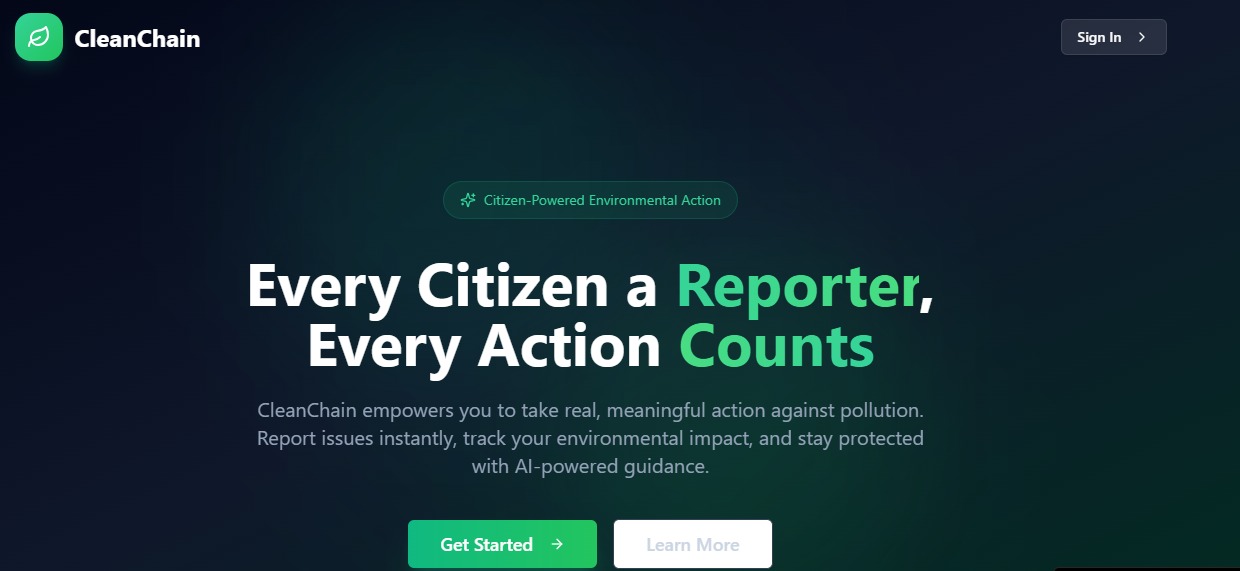
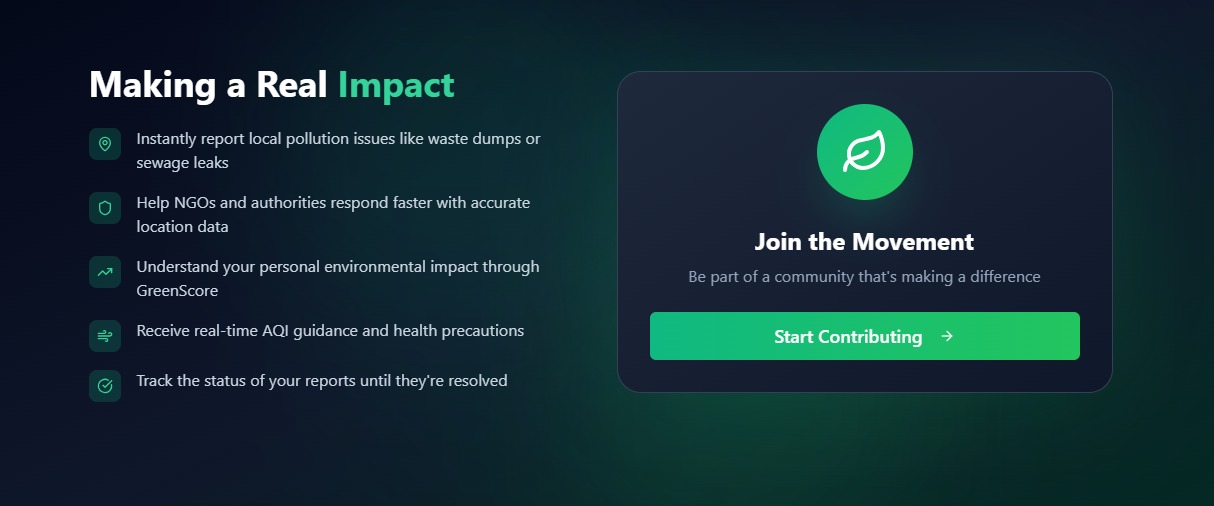
Inspiration Pollution in India is visible everywhere—dumps, sewage leaks, burning waste—yet citizens have no way to report hazards or measure their personal impact. While cities track pollution data, people don't. This gap inspired CleanChain: a platform where every citizen participates in pollution control through reporting, scoring, and protection.
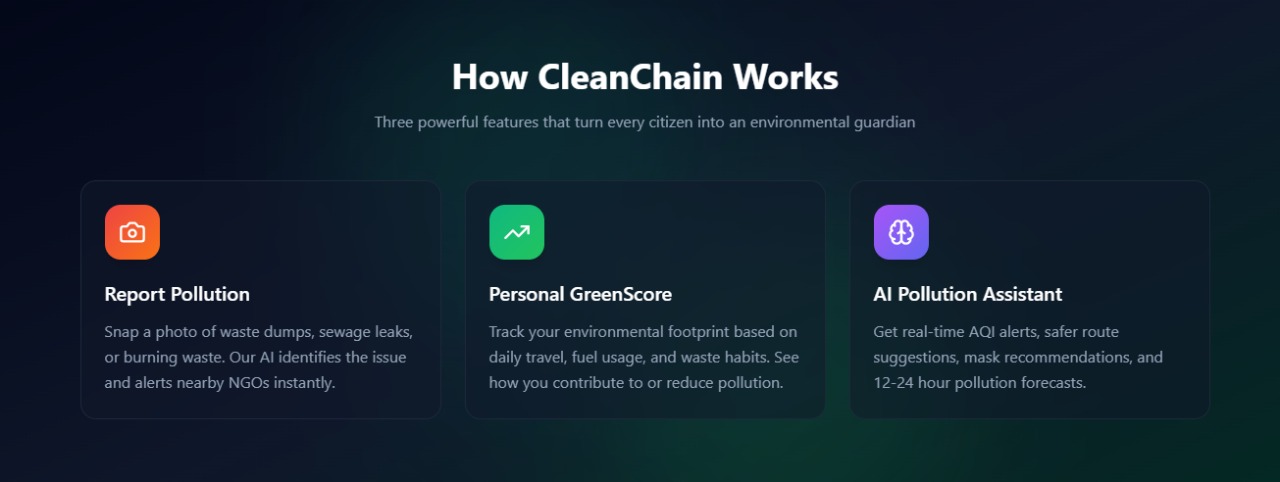
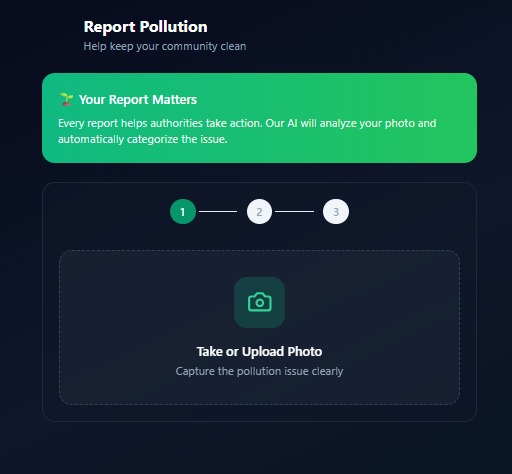
What it does Community Pollution Reporting: Upload a photo of waste/pollution. AI identifies the issue, detects location, and alerts nearby NGOs or authorities. Track status until resolved.
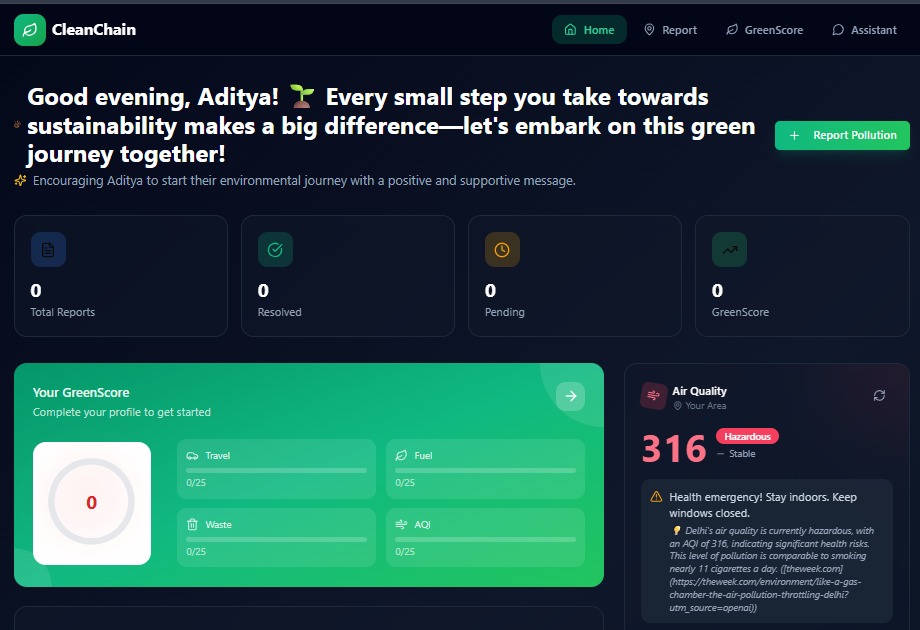
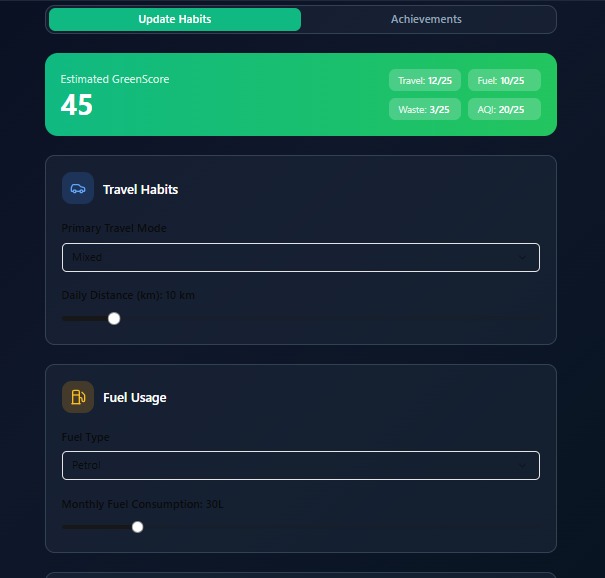
GreenScore: A personal score (0–100) based on your travel, fuel, and waste habits. See exactly how much you contribute to pollution and improve daily.
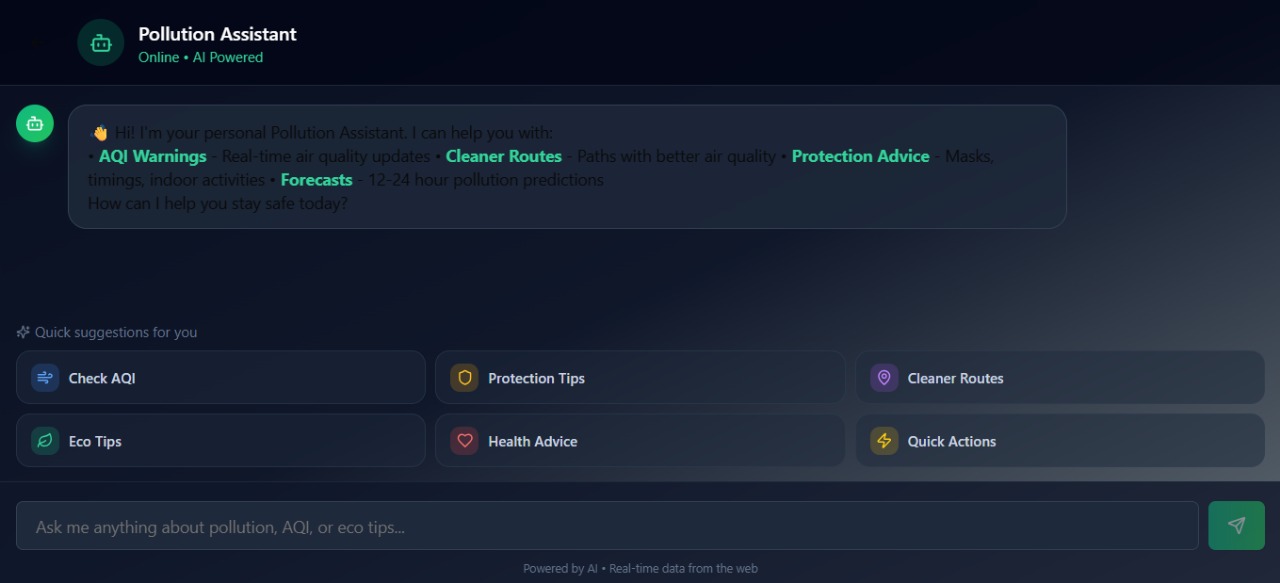
AI Pollution Assistant: Get real-time AQI alerts, cleaner route suggestions, health protection advice, and 24-hour pollution forecasts.
How we built it GreenScore Algorithm: G r e e n S c o r
e
100 − ( 0.4 ⋅ T + 0.3 ⋅ F + 0.3 ⋅ W ) GreenScore=100−(0.4⋅T+0.3⋅F+0.3⋅W)
Where ( T ) = travel impact, ( F ) = fuel usage, ( W ) = waste behaviour.
Tech Stack: TensorFlow for image classification, Google Maps API for geolocation, Firebase for real-time NGO alerts, and ARIMA time-series models for AQI forecasting.
Challenges we ran into Quantifying pollution fairly across different sources (driving vs. non-segregated waste)
Preventing false reports through upvoting and metadata logging
Sparse AQI coverage solved via spatial interpolation and traffic integration
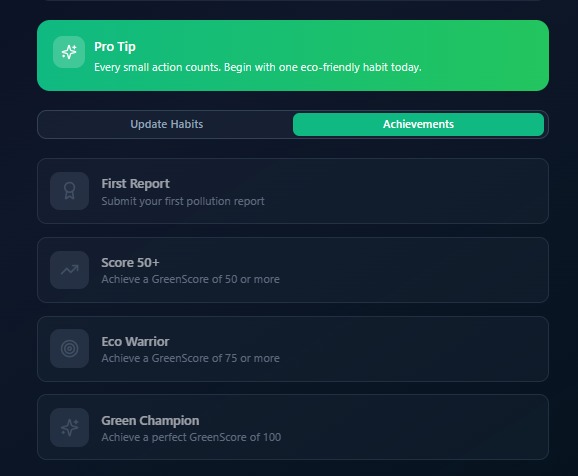
Keeping users engaged through gamification (weekly challenges, badges)
Building NGO trust by designing reports specifically for their workflow
Accomplishments we're proud of Built a complete, working MVP with real image classification and live AQI integration
Designed for real stakeholders: citizens, NGOs, and government bodies
Combined AI, crowdsourcing, and behavioural science into one coherent system
Created actionable citizen reports that authorities actually use
Grounded GreenScore in environmental science, not arbitrary numbers
What we learned Gamification works when real impact is visible (dump gets fixed → people engage)
Crowdsourcing needs structure: combine citizen reports with algorithmic verification
Accuracy beats coverage: interpolated data + sensors + citizen reports > sensors alone
Start small: focus on 3 behaviours (routes, timing, reporting) rather than everything
Partnerships are essential: app + NGOs + government = real-world impact
What's next for CleanChain Build NGO/municipality dashboard for managing reports and tracking hotspots
Launch pilot in one city (Delhi/Bangalore), validate with authorities, then scale nationally
Integrate real rewards (transit credits, eco-discounts) tied to GreenScore
Refine AI: improve image classifier and push AQI forecasting to 90% accuracy
Expand to other South Asian and Southeast Asian cities
The goal: Make CleanChain the default platform where citizens report pollution, track impact, stay healthy—and where governments actually listen and act.
Built With
- amazon-web-services
- arima-(aqi-forecasting)
- aws-ec2-devops:-github
- base64-encoding-machine-learning:-tensorflow/keras-(image-classification)
- cpcb-air-quality-api
- frontend:-react.js
- google-maps
- mapbox-gl-backend:-node.js-+-express.js
- openweather-api
- postgresql-+-postgis-apis-&-cloud:-firebase
- python-(flask)
- react-native
- scikit-learn-database:-mongodb
- tailwind-css


Log in or sign up for Devpost to join the conversation.